Araucaria bidwillii, while not extensively documented in our knowledge base for regenerative agriculture applications, offers potential contributions to diverse farming systems. Its primary uses within regenerative contexts appear to be as a structural element in agroforestry designs and potentially as a long-term component of silvopasture systems, providing shade and habitat. Regenerative benefits could include significant carbon sequestration due to its large size and longevity, contributing to soil building over time. While not a nitrogen fixer, its deep root system may improve soil structure and water infiltration. Integration opportunities lie within established agroforestry and silvopasture practices, where its slow growth and imposing stature can be planned for multi-strata systems. Direct farmer experiences regarding its specific role as a cover crop, forage, or rapid soil builder are limited in our current data. Further research and on-farm observation are needed to fully understand and leverage the regenerative potential of Araucaria bidwillii.

Regenerative Quick Profile

All recommendations assume integrated, regenerative practices—not conventional inputs.

Climate & Soil Fit

Climate: Tropical Rainforest, Tropical Monsoon, Tropical Savanna, Hot Semi-Arid (Steppe), Cold Semi-Arid (Steppe), Hot Desert, Cold Desert, Humid Subtropical, Oceanic (Maritime Temperate), Hot-Summer Mediterranean, Warm-Summer Mediterranean, Monsoon-Influenced Humid Subtropical, Subtropical Highland, Hot-Summer Continental, Warm-Summer Continental, Subarctic, Monsoon-Influenced Hot-Summer Continental

Zones: USDA 8-11, Australian Zones 3-12, EU Atlantic, Mediterranean, Oceanic

Optimal Soil: Loam Soil

System Role & Functions

Primary: Silvopasture

Secondary: Food Forest, Specialty

Key Benefits: Pest resistant

Management Level

Experience: Advanced

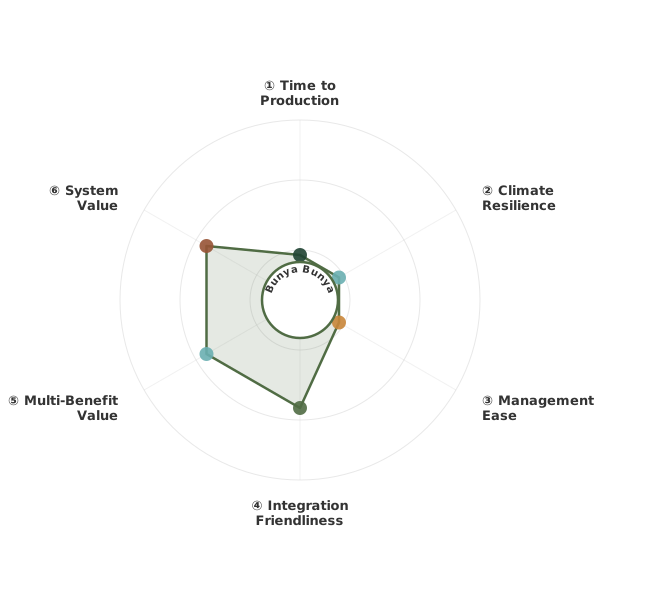
Maintenance: Moderate maintenance - As a slow-growing species, Bunya pine thrives with good soil drainage and ample space, integrating seamlessly into a system that prioritizes soil health and biodiversity, requiring minimal intervention.

Time to Production: Slow (5+ years) - Patience is rewarded as Bunya pine begins substantial edible seed yields in 10-15 years, representing a long-term investment in the food system and ecosystem services.

Value Streams

  • Fruit/nut harvest
1

Climate Suitability Assessment

Will this plant thrive in your climate?

IDEALLY SUITED

Köppen Zone: Af (Tropical Rainforest), Am (Tropical Monsoon), Aw (Tropical Savanna), Cfa (Humid Subtropical), Cwa (Monsoon-Influenced Humid Subtropical)
USDA Zone: 7a, 8a, 9a, 10a, 11a, 12a
Australian Zone: tropical, subtropical

Bunya Bunya thrives in climates with warm to hot summers and mild winters, characterized by consistent rainfall or a distinct wet season that provides ample moisture during its growth and fruiting periods. These conditions are met in Köppen Cfa and Aw zones, USDA zones 8a through 13a, and Australian subtropical and tropical regions. The extended growing seasons, typically 200-300+ frost-free days, allow for robust vegetative growth, reliable cone development, and abundant seed production, crucial for its silvopasture and food forest functions. Temperatures generally range from 70-90°F (21-32°C) during the growing season, with minimal risk of frost damage in winter. Establishment is highly successful, and minimal management is required beyond ensuring adequate water availability during any dry spells. These zones offer the highest potential for consistent, high yields of Bunya Bunya nuts and shade for livestock.

ADEQUATE

Köppen Zone: BSh (Hot Semi-Arid (Steppe)), Cfb (Oceanic (Maritime Temperate)), Csa (Hot-Summer Mediterranean), Csb (Warm-Summer Mediterranean), Cwb (Subtropical Highland), Dfa (Hot-Summer Continental), Dfb (Warm-Summer Continental)
USDA Zone: 5a, 5b, 6a
Australian Zone: temperate
EU Climate Region: atlantic

Bunya Bunya can perform adequately in climates with moderate temperatures and sufficient rainfall, though with some limitations compared to ideal zones. This includes Köppen Cfb zones, USDA zones 7a and 7b, Australian temperate regions, and EU Atlantic climates. These areas typically have growing seasons of 150-200 frost-free days and experience milder summers and cooler winters than ideal zones. While the species can establish and survive, fruit production may be reduced due to less optimal temperatures or shorter warm periods. Consistent rainfall is essential, and supplemental irrigation may be necessary during drier spells to ensure good yields and tree health. Management might involve slightly more attention to water needs and potentially some protection against occasional colder snaps, but it remains a viable option for silvopasture and food forest applications with careful planning.

NOT RECOMMENDED

Köppen Zone: ET (Tundra), BSk (Cold Semi-Arid (Steppe)), BWh (Hot Desert), BWk (Cold Desert), Dfc (Subarctic), Dwa (Monsoon-Influenced Hot-Summer Continental)
USDA Zone: 2a, 3a, 3b, 4a
EU Climate Region: mediterranean

Bunya Bunya is not recommended for climates characterized by extreme winter cold, prolonged summer drought, or very short growing seasons, making cultivation economically and practically questionable. This includes Köppen Csa and Csb zones, USDA zones 6a and 6b, and EU Mediterranean regions. In cold zones, winter temperatures below 0°F (-18°C) cause severe damage or death, rendering perennial establishment impossible. In hot, dry Mediterranean climates, the lack of consistent moisture during the critical fruiting period severely limits yield and stresses the tree, requiring intensive and often uneconomical irrigation. Establishment success is low (<70%) due to these challenging conditions. While technically possible to grow with significant intervention, the high costs associated with irrigation, protection, and potential replanting make it an ill-advised choice for silvopasture or food forest systems in these areas. Alternative, more climate-adapted species are strongly advised.

Better alternatives for these "not recommended" zones: Carob Tree (Ceratonia siliqua) (highly drought-tolerant Mediterranean native, provides pods for animal feed), Olive Tree (Olea europaea) (drought-tolerant, provides fruit and oil, adaptable to Mediterranean conditions), Fig Tree (Ficus carica) (tolerates Mediterranean climates, provides edible fruit), Hardy Pecan (Carya illinoinensis) (cold-hardy nut tree that can tolerate zone 6 winters)

Note: Zones listed above represent climates where this plant can produce reliably with reasonable management. Climate zones not mentioned would require intensive climate modification (greenhouses, extensive infrastructure) and are not economically viable for regenerative agriculture purposes.

2

Soil Suitability Assessment

Which soil types work best for this plant?

IDEALLY SUITED

Loam Soil

This plant thrives in these soil types without requiring amendments or remediation. Natural soil conditions support optimal growth and productivity.

ADEQUATE

Clay Soil, Rich Soil, Rocky Soil, Sandy Soil

This plant performs acceptably in these soil types with moderate, manageable remediation such as pH adjustment, compost addition, or drainage improvement. The required amendments are practical and cost-effective for regenerative agriculture.

NOT RECOMMENDED

Acidic Soil, Alkaline Soil, Desert Soil, Saline Soil, Wet Soil

Growing this plant in these soil types would require impractical remediation such as complete soil replacement, extensive amendments, or cost-prohibitive infrastructure. These conditions are not economically viable for regenerative agriculture.

Note: Soil suitability assessments focus on remediation requirements. "Ideally Suited" means the plant generally thrives without the need for substantial amendments, "Adequate" means manageable remediation (lime, compost, mulch), and "Not Recommended" means impractical soil changes would be required. Climate factors like rainfall and temperature also influence success.

3

Seasonal Considerations

Planting timing, growth duration, and harvest windows

Establishing bunya bunya trees is a long-term investment, with patience yielding significant rewards. For nursery planting, containerized seedlings can be transplanted after the last expected frost, allowing them to establish roots during the active growing season. Bare-root stock is best planted during the dormant season, before new growth begins in early spring. Expect several years for trees to become truly established, typically around 3-5 years before they begin to produce their first edible cones. Full production, where yields are substantial, may take 10-15 years, with trees remaining productive for many decades thereafter.

Seasonal management focuses on nurturing this slow-growing giant. Pruning, if necessary for shaping or removing damaged branches, should occur during the dormant season, well before the onset of spring growth. The cones themselves mature and are ready for harvest in late summer to early autumn. Observe the trees for signs of cone development, as this signals the approach of harvest. During winter, bunya bunya enters a period of dormancy, conserving energy for the vigorous growth that will resume in spring.

4

System Role & Multi-Benefit Value

Functional roles, integration strategies, and stacked benefits

Functional Role

Total System Value

Bunya bunya offers significant multi-benefit stacking potential within a regenerative farm system. Its primary value beyond direct harvest (edible nuts) lies in its role as a long-term structural element. In silvopasture, mature trees provide crucial shade and shelter, improving livestock well-being and reducing heat stress, which can indirectly boost productivity. The deep root system enhances soil structure, water infiltration, and carbon sequestration, contributing to ecosystem services and soil health. While not a nitrogen fixer, its presence can create a more stable microclimate, benefiting understory plants and associated wildlife. Its slow growth and long lifespan mean it builds resilience over decades, offering a stable asset that diversifies farm income streams and reduces reliance on annual crops or more ephemeral resources. The substantial canopy also acts as a windbreak, protecting pastures and crops, and providing habitat for beneficial insects and birds.

Integration Characteristics

Multi-Benefit Value: Adequate - This tree provides nutritious edible seeds and significant aesthetic contributions, while also offering habitat and contributing to soil health, showcasing its multi-functional role in a biodiverse landscape.

Integration Friendliness: Adequate - This tree offers valuable edible nuts and, like its relatives, is a substantial, slow-growing component well-suited for specific agroforestry designs and conservation plantings within resilient landscapes.

5

Management & Care Requirements

Integration guidance, maintenance needs, and care practices

How to Integrate This Plant

Bunya bunya (Araucaria bidwillii) is a valuable tree for regenerative agriculture, primarily suited for silvopasture systems due to its robust nature and potential for long-term integration. Its primary function in a farm system is as a structural component, providing shade and shelter for livestock and enhancing the microclimate. While not a nitrogen-fixer, its deep root system contributes to soil health and erosion control, especially on slopes. Compatible practices include silvopasture, where it can be integrated with grazing animals, and potentially food forests or alley cropping systems as a larger canopy species. The timeline to significant contribution is long-term; while it offers shade and soil benefits from earlier years, substantial canopy cover and potential nut production (for human consumption or animal feed) will take decades. Its value lies in its longevity, resilience, and multi-functional contribution to a stable agroecosystem, providing shade, windbreak effects, and habitat.

Integration Practices & Management

Information regarding the specific integration of *Araucaria bidwillii* into regenerative agricultural systems is not extensively detailed within the provided knowledge base. The limited mentions do not offer practical insights into establishment methods such as seeding rates, timing, companion planting, or tillage practices. Similarly, details on its integration with grazing, including mob grazing, rotational systems, or specific timing and rest periods, are absent. Termination strategies, like natural winterkill, grazing down, crimping, mowing, or herbicide use, are also not elaborated upon. Furthermore, the knowledge base does not provide information on management considerations like fertility needs, competition management, or succession planning related to *Araucaria bidwillii*. Consequently, practical farmer experiences and specific insights into how regenerative farmers utilize this plant in cash crop systems through relay cropping, intercropping, or rotation sequences cannot be ascertained from the available text.

Management Profile

Maintenance Intensity: Adequate - As a slow-growing species, Bunya pine thrives with good soil drainage and ample space, integrating seamlessly into a system that prioritizes soil health and biodiversity, requiring minimal intervention.

Pest Disease Pressure: Ideally Suited - Bunya pine trees exhibit remarkable natural resilience to pests and diseases, thriving within a balanced ecosystem that supports robust plant health with minimal external support.

Time To Production: Not Recommended - Patience is rewarded as Bunya pine begins substantial edible seed yields in 10-15 years, representing a long-term investment in the food system and ecosystem services.

6

Economics & Value Streams

Direct harvest, system benefits, ecosystem services, and risk diversification

Comprehensive economic analysis including direct harvest value, system enhancement contributions, ecosystem services, value timeline, and risk diversification strategies.

Per-Tree Production Economics

Metric Value
Establishment Cost $25-45
Years to First Harvest 15-20 years
Annual Maintenance $5-10
Yield 15-40 lbs/year 6-18 kg/year
Market Price $2-5/lb $5-11/kg
Productive Lifespan 50-100 years
Net Annual Return* $19-$194/year

Values shown per mature tree, not per acre. In regenerative systems, trees are integrated at low densities across diverse landscapes. Establishment costs spread over the lifespan of the tree. Early years have costs but no revenue.

* Net Annual Return = (Yield × Market Price) − (Amortized Establishment Cost + Annual Maintenance). This return is realized only at/after first harvest; early years have costs but no revenue. Range shows worst case to best case scenarios.

System Enhancement Value

Beyond harvest: shade for livestock, soil building, and system benefits

Shade Value for Livestock

Cattle $50-150/head/year, Pigs $30-80/head/year. Shade value varies by climate, livestock density, and canopy characteristics.

As a large coniferous tree, the Bunya Pine (Araucaria bidwillii) provides significant shade, a critical component in silvopasture systems. This shade offers substantial benefits to livestock, mitigating heat stress during warmer months, which can lead to improved animal welfare, increased feed intake, and consequently, better weight gain and productivity. The presence of mature Bunya Pines can create microclimates that are more comfortable for grazing animals, reducing their need to seek shade in less desirable areas or expend energy on thermoregulation. The effectiveness of this shade is influenced by factors such as tree density, canopy spread, and the specific climate. In regions with intense solar radiation, the cooling effect of Bunya Pine shade can be particularly pronounced, making it a valuable asset for livestock management and enhancing the overall carrying capacity of pastures.

Windbreak & Erosion Control

Variable, but established windbreaks can protect 3-5 acres per tree row and improve crop yields by 5-15%.

While not explicitly detailed as a windbreak in the provided excerpts, large coniferous trees like the Bunya Pine (Araucaria bidwillii) inherently possess traits that contribute to wind protection and erosion control. Their dense foliage and substantial root systems can effectively break prevailing winds, reducing wind speed across agricultural lands. This reduction in wind can protect vulnerable crops from physical damage, reduce soil desiccation, and minimize wind erosion, thus preserving valuable topsoil. The physical barrier created by a row or stand of Bunya Pines can also protect more sensitive understory plantings within a food forest or silvopasture system, creating more stable microclimates. The potential for these trees to influence local microclimates, as suggested by their fog-catching nature in the Bunya Mountains, further indicates their capacity to modify environmental conditions and offer protective benefits to the surrounding ecosystem.

Other System Contributions

Beyond direct shade and potential windbreak functions, the Bunya Pine offers multifaceted system benefits. Its primary function in silvopasture is complemented by its role as a food source, historically important for Indigenous Australians, with edible nuts harvested during tribal gatherings. This mast-producing capability can also support wildlife. Knowledge base excerpt highlights the potential for grafting to accelerate fruiting and create more manageable tree sizes, which could improve accessibility for harvesting specialty food products. The mention of hybridization with *Araucaria angustifolia* for faster growth and Phytophthora resistance suggests potential for enhanced resilience within the agroforestry system. Furthermore, as a large conifer, it contributes to aesthetic value and can support biodiversity by providing habitat and shelter for various fauna.

Ecosystem Service Contributions

Environmental contributions: carbon, pollinators, wildlife, and water

  • Carbon Sequestration: As a large, long-lived conifer, the Bunya Pine has significant potential for carbon sequestration, storing carbon in its substantial biomass (trunk, branches, roots) and contributing to long-term carbon sinks in the landscape.
  • Pollinator Support: Low. While flowering trees can support pollinators, Bunya Pines are primarily wind-pollinated and not typically noted for significant nectar or pollen production attractive to commercial pollinators.
  • Wildlife Habitat: Moderate to High. The large cones and edible nuts provide a significant food source (mast) for wildlife, and the dense evergreen foliage offers shelter and nesting sites for birds and other arboreal animals.
  • Water Quality: Not applicable (unless planted in riparian zones, where large trees can contribute to bank stabilization and some level of water uptake).

Value Timeline: When Benefits Begin

When you'll see results: shade in years 1-5, fruit/nut harvest 3-10, timber 20+

Years 1-2

Initial establishment of erosion control benefits due to root development. Minimal shade provision. Potential for early establishment of symbiotic fungal relationships critical for seedling survival (as mentioned in KB).

Years 3-5

Developing shade canopy begins to offer some microclimate benefits for livestock. Potential for early fruiting if grafting techniques (KB) are employed, otherwise still some years from significant nut production. Windbreak effects start to become noticeable.

Years 10-20

Significant shade provision for silvopasture systems. Mature trees offer substantial nut harvest potential, supporting food forest and specialty food market streams. Full windbreak and erosion control benefits are realized. Established habitat for wildlife.

20+ Years

Mature, long-lived trees continue to provide all established benefits: excellent shade, consistent food source, robust windbreak, significant carbon sequestration, and substantial aesthetic and ecological value. Potential for timber harvest in the very long term.

Farm Risk Reduction

How this reduces farm risk: backup income, weather protection, market hedges

  • Multiple Revenue Streams: Specialty food products (nuts), silvopasture shade benefits (improved livestock productivity), potential timber value (long-term), environmental services (carbon sequestration, habitat).
  • Temporal Income Spread: Ongoing, continuous provision of ecosystem services (shade, habitat, windbreak) alongside periodic harvests of nuts. Long-term potential for timber revenue.
  • Market Risk Hedge: Reduces reliance on a single commodity by diversifying revenue streams. The long lifespan and resilience of the Bunya Pine can provide stability against short-term market fluctuations. Its adaptation to specific climates (though potentially sensitive as noted in KB) can offer a buffer against localized environmental stresses if chosen appropriately.
7

Regenerative Suitability Details

Comprehensive trait ratings for system integration assessment

Comparative ratings for this plant across key regenerative agriculture traits.

Trait Suitability Explanation
Drought Tolerance Adequate Once established, Bunya Bunya Pine demonstrates resilience to dry periods, benefiting from thoughtful water management and mulch layers to enhance soil moisture retention for optimal growth and seed production.
Establishment Ease Not Recommended Successful establishment relies on preparing a healthy soil ecosystem with ample organic matter and consistent moisture, acknowledging that this species benefits from patient nurturing during its initial growth phases.
Time To Production Not Recommended Patience is rewarded as Bunya pine begins substantial edible seed yields in 10-15 years, representing a long-term investment in the food system and ecosystem services.
Multi Benefit Value Adequate This tree provides nutritious edible seeds and significant aesthetic contributions, while also offering habitat and contributing to soil health, showcasing its multi-functional role in a biodiverse landscape.
Climate Adaptability Not Recommended Thrives in subtropical to warm temperate climates (zones 9-11), benefiting from protection from frost and mindful soil moisture management, highlighting its specific niche within diverse agroecological systems.
Hardiness Zone Range Not Recommended Primarily suited for subtropical zones (9-11), it flourishes with consistent warmth and thoughtful integration into landscapes that provide frost protection, aligning with its climatic preferences.
Maintenance Intensity Adequate As a slow-growing species, Bunya pine thrives with good soil drainage and ample space, integrating seamlessly into a system that prioritizes soil health and biodiversity, requiring minimal intervention.
Pest Disease Pressure Ideally Suited Bunya pine trees exhibit remarkable natural resilience to pests and diseases, thriving within a balanced ecosystem that supports robust plant health with minimal external support.
Integration Friendliness Adequate This tree offers valuable edible nuts and, like its relatives, is a substantial, slow-growing component well-suited for specific agroforestry designs and conservation plantings within resilient landscapes.

Comparative System: Ratings compare plants within their economic category (e.g., cover crop nitrogen fixation compared to other cover crops, not to all plants). Individual farm conditions and management practices significantly influence actual performance.

8

Learn More

Why farmers use this plant and additional resources

Why Regenerative Farmers Use This Plant

Araucaria bidwillii, commonly known as the Bunya Pine, is a magnificent evergreen conifer that offers substantial long-term value within regenerative agriculture systems. As a slow-growing but exceptionally long-lived tree, it provides a legacy asset for farms, capable of sequestering significant amounts of atmospheric carbon. Mature trees can sequester an estimated 2-5 tons of CO2e per acre per year, contributing directly to climate change mitigation. Beyond carbon, the dense, spreading canopy of the Bunya Pine offers crucial ecological services, including shade regulation for livestock and understory crops, acting as a robust windbreak that protects fields and structures, and creating a stable microclimate that can buffer against extreme weather events. Its deep root system, often reaching depths of 15-30 feet (4.5-9 meters) or more, enhances soil structure and water infiltration, making it resilient to drought and reducing erosion. The canopy intercepts rainfall, slowing its descent and allowing for greater infiltration, which can increase soil moisture levels by 15-25% in the root zone.

The economic returns from Araucaria bidwillii are primarily derived from its edible nuts, which are a highly prized food source in their native Australia and increasingly sought after globally. While initial establishment requires patience, with trees typically reaching first significant nut production between 15-25 years and full commercial yields by 30-50 years, the multi-decade economic outlook is substantial. The quality and unique flavor of Bunya nuts command premium prices in niche markets. Furthermore, the timber of the Bunya Pine is also valuable, though sustainable harvesting practices would be paramount in a regenerative context. The accumulation of asset value over generations, coupled with its ecological contributions, positions the Bunya Pine as a cornerstone species for long-term farm resilience and profitability.

Integrating Araucaria bidwillii into multi-story agroforestry systems leverages its mature canopy benefits. It can be planted in silvopasture systems, providing shade and shelter for grazing animals, with the potential for understory forage crops that tolerate dappled light. In alley cropping designs, rows of Bunya Pines can be spaced widely, allowing for the cultivation of annual crops or pasture between the trees, with the trees acting as windbreaks and nutrient cyclers. The fallen foliage contributes organic matter to the soil, enriching its fertility and supporting a thriving soil food web. Mature trees can add an estimated 50-100 lbs (23-45 kg) of organic carbon to the soil annually through shed foliage and root turnover. Its presence can help to break pest cycles by introducing a stable, perennial component into annual cropping systems. The dense canopy can also act as a living mulch, suppressing weeds and reducing the need for mechanical cultivation or synthetic herbicides.

9

How to Integrate This Plant

Practical guidance for regenerative systems

Establishing Araucaria bidwillii requires careful planning due to its slow growth and long lifespan. Propagation is typically from seed, which requires stratification and careful handling, or from seedlings. Seeds are often sown directly into pots or trays filled with a well-draining potting mix, usually at a depth of 0.5-1 inch (1.3-2.5 cm). Germination can be variable and may take several months. Seedlings are best planted out as young trees, ideally 1-2 years old, to minimize transplant shock. For direct field planting, the optimal planting depth for young trees is generally to plant them at the same depth they were in their nursery container, ensuring the root flare is not buried. Planting is best undertaken during the wet season or with reliable irrigation to ensure establishment. In the Northern Hemisphere, this often means planting in spring (March-May) or early autumn (September-October), while in the Southern Hemisphere, spring (September-November) is ideal.

Spacing is a critical consideration for mature canopy development and windbreak effectiveness; rows should be planted 30-50 ft (9-15 m) apart, with trees within rows spaced 20-30 ft (6-9 m) apart to allow for full crown development and access for management. For alley cropping or silvopasture designs, maintaining row spacing of 30-40 ft (9-12 m) is recommended to allow for machinery access or grazing.

Once planted, the primary management focus for the first 3-5 years is ensuring adequate moisture and protection. Young trees require consistent watering, aiming for approximately 1-2 inches (2.5-5 cm) of water per week, especially during dry spells. While Bunya Pines are not heavy feeders, initial fertilization can be beneficial, prioritizing compost or well-rotted manure to build soil organic matter and provide slow-release nutrients. Avoid excessive nitrogen, which can lead to weak, leggy growth. As the trees mature, their water and nutrient needs decrease significantly. Pruning is generally minimal, focused on removing dead or crossing branches to maintain tree health and structure. Protection from browsing animals, such as deer or rabbits, is crucial during the early establishment phase, often requiring physical barriers or fencing for the first 5-10 years.

Integrating Araucaria bidwillii into a regenerative system requires a long-term perspective on establishment and system design. Trees typically take 1-3 years to establish a robust root system, with full canopy closure and significant nut production occurring over 30-50 years. While not grafted, selecting high-quality seed from proven parent trees is essential. Canopy management involves allowing the tree to develop its natural form, with pruning focused on health and structure. Light penetration to the understory will be reduced as the canopy develops, so selecting shade-tolerant species for intercropping or ground cover is essential. Consider planting nitrogen-fixing ground cover like clover, vetch, Desmodium, or Centrosema beneath the canopy from year 3-5 to enhance soil fertility. Measurable soil carbon increases beneath established Bunya Pines can be observed by year 7-10, with significant contributions to soil organic matter over subsequent decades. Long-term infrastructure considerations include initial irrigation for establishment, robust deer or browse protection, and potentially support structures for young trees in windy locations.

Araucaria bidwillii can be successfully integrated across various regional adaptations. In the humid subtropics of Queensland, Australia, it thrives in established orchards or as a component of mixed native food forests, with planting occurring after the first significant autumn rains. In regions with Mediterranean climates like Southern Spain or California, careful site selection and supplemental irrigation during establishment are key to success, with planting during autumn rains preferred to leverage natural precipitation. In temperate oceanic climates such as parts of New Zealand or the Pacific Northwest of the USA, it can be grown as a specimen tree or within agroforestry plots, provided winter temperatures do not drop too severely for young, unestablished trees. Its ability to withstand some drought once mature makes it suitable for drier temperate zones with careful water management. In parts of Brazil, similar Araucaria species are used in agroforestry systems alongside coffee and cacao plantations, providing shade and contributing to the ecological stability of the farm, with planting timed to coincide with the start of the wet season. In the southeastern United States, they can be planted in spring, with potential for understory integration of shade-tolerant berries or medicinal herbs as the canopy develops.