Asian Pear Cultivars
Regenerative Quick Profile
All recommendations assume integrated, regenerative practices—not conventional inputs.
Climate & Soil Fit
Climate: Hot Semi-Arid (Steppe), Cold Semi-Arid (Steppe), Cold Desert, Humid Subtropical, Oceanic (Maritime Temperate), Hot-Summer Mediterranean, Warm-Summer Mediterranean, Monsoon-Influenced Humid Subtropical, Subtropical Highland, Hot-Summer Continental, Warm-Summer Continental, Subarctic, Monsoon-Influenced Hot-Summer Continental
Zones: USDA 5-9, Australian Zones 3-6
Optimal Soil: Loam Soil
System Role & Functions
Primary: Food Forest
Secondary: Cash Crop With Services, Specialty
Management Level
Experience: Advanced
Maintenance: High maintenance - With superior disease tolerance, these Asian Pear Cultivars require fewer interventions for pest and disease management, reducing overall maintenance needs compared to the typical Pyrus pyrifolia.
Time to Production: Moderate (2-5 years) - Asian pears integrate into the orchard's long-term productivity cycle, typically offering fruit within 3-5 years and contributing to the system's evolving abundance.
Value Streams
- Fruit/nut harvest
- Diversifies farm income
- Enhances biodiversity
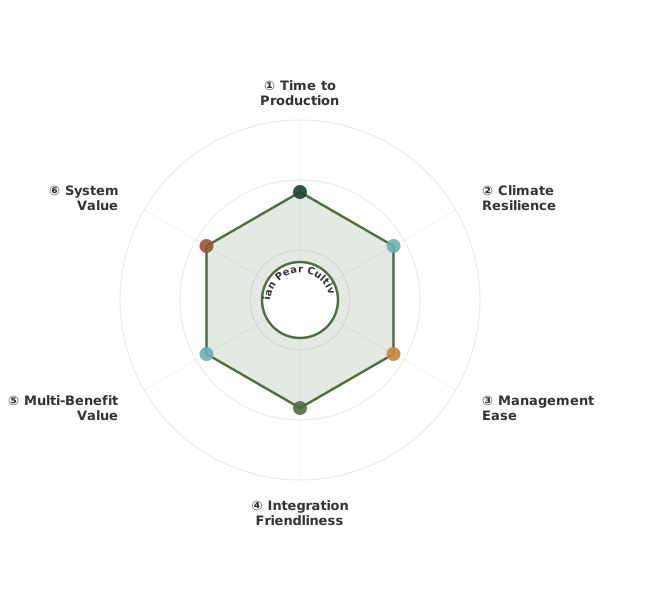
Regenerative Trait Ratings
How These Traits Are Calculated
Trait dimensions are ordered clockwise starting from the top of the chart (12 o'clock position):
1. Time to Production
Years from planting to first harvestable yields
WHAT: Measures the waiting period from tree establishment to first meaningful production. Fast-producing trees yield within 2-5 years; slow producers require 8-15+ years before significant harvests.
WHY: Time to production determines cash flow timing and financial feasibility for farm businesses. Long wait times create significant opportunity costs—land and labor tied up for years without income. Fast producers allow quicker experimentation and cash flow recovery, reducing risk for new tree crop farmers.
HOW: Ratings based on years to first harvest documented in economics data. Exceptional (3.0): Production within 2-4 years (elderberry, mulberry, some nut bushes). Typical (2.0): 5-8 years (many fruit trees). Limited (1.0): 10-15+ years (hardwood timber, some nut trees like pecan, walnut).
2. Climate Resilience
Weighted: hardiness zones (50%) + drought tolerance (30%) + adaptability (20%)
WHAT: Combines temperature tolerance (hardiness zone range), water stress resilience (drought tolerance), and overall climate flexibility. Multi-decade tree investments require reliable climate matching to prevent total loss.
WHY: Wrong climate choices mean complete failure for permanent plantings. A tree that dies in year 5 from unexpected cold or prolonged drought represents catastrophic loss of 5 years' investment. Climate resilience determines geographic range and weather variability tolerance—critical as climate patterns become less predictable.
HOW: Weighted formula prioritizes hardiness zone range (50% weight) for core temperature tolerance, drought tolerance (30% weight) for water stress, and overall adaptability (20% weight) for general climate flexibility. Exceptional (3.0): Wide hardiness range (8+ zones) with strong drought tolerance. Typical (2.0): Moderate range and tolerance. Limited (1.0): Narrow climate requirements.
3. Management Ease
Weighted: establishment (40%) + low maintenance (30%) + pest resistance (30%)
WHAT: Combines establishment difficulty, ongoing maintenance requirements, and disease/pest pressure into overall management workload. Low-maintenance trees fit easily into busy farm operations without specialized expertise or intensive inputs.
WHY: Labor is the limiting factor for most diversified farms. High-maintenance trees requiring pruning expertise, disease management, and intensive pest control compete for limited time with other farm enterprises. Easy-care trees deliver production with minimal intervention, making them viable for time-constrained farmers.
HOW: Weighted formula balances establishment ease (40% weight) for startup success, inverted maintenance intensity (30% weight) for ongoing care, and inverted pest/disease pressure (30% weight) for health management. Exceptional (3.0): Easy to establish, self-sufficient growth, naturally pest-resistant. Typical (2.0): Moderate care needs. Limited (1.0): Difficult establishment, intensive maintenance, or heavy pest pressure.
4. Integration Friendliness
Compatibility with silvopasture, alley cropping, and multi-species systems
WHAT: Measures how well the tree integrates with other farm enterprises—grazing livestock, annual crops, or other perennials. Integration-friendly trees tolerate livestock browsing, don't heavily shade out crops, and coexist with diverse plantings.
WHY: Integrated tree systems (silvopasture, alley cropping, food forests) provide higher total returns per acre than monoculture plantings. Trees that work well with livestock provide shade + forage + production simultaneously. Integration flexibility allows farmers to stack enterprises and adapt to market opportunities.
HOW: Ratings based on the integration_friendliness trait documenting compatibility with grazing, cropping, and multi-species systems. Exceptional (3.0): Tolerates livestock browsing, provides livestock benefits (shade, browse), compatible with understory crops. Typical (2.0): Some integration possible with management. Limited (1.0): Requires isolation, incompatible with livestock or cropping.
5. Multi-Benefit Value
Stacked benefits beyond primary product—shade, wildlife, nitrogen, erosion control
WHAT: Measures the diversity of ecosystem services provided beyond the main harvest product. Multi-benefit trees deliver shade, windbreak, wildlife habitat, nitrogen fixation, erosion control, pollinator support, and aesthetic value simultaneously.
WHY: Single-purpose trees are economically fragile—market price swings or production failures eliminate all value. Multi-benefit trees provide resilience through diverse value streams. A nitrogen-fixing tree that produces nuts, provides shade for livestock, supports wildlife, and controls erosion delivers 4-5x the system value of a production-only tree.
HOW: Ratings based on the multi_benefit_value trait documenting service diversity. Exceptional (3.0): 4+ significant services stacked (nitrogen-fixing legume trees providing nuts + shade + wildlife + windbreak). Typical (2.0): 2-3 moderate services. Limited (1.0): Single-purpose production trees with minimal additional benefits.
6. System Value
Total ecosystem and economic value across short, medium, and long timeframes
WHAT: Synthesizes the total regenerative value delivered across multiple decades, including immediate ecosystem services (years 1-5), medium-term production value (years 5-15), and long-term system transformation (years 15-50). Captures the compounding benefits of permanent plantings.
WHY: Trees are multi-decade investments requiring patient capital. System value measures whether the total package—early ecosystem services, eventual production, and long-term legacy benefits—justifies the wait time and land commitment. High system value trees pay back investment through diverse, stacking, compounding benefits.
HOW: Scored via LLM synthesis of economics timelines, ecosystem service diversity, and long-term soil/water/carbon impacts. Exceptional (3.0): Strong early services + valuable production + transformative long-term impacts. Typical (2.0): Moderate benefits across timeframes. Limited (1.0): Long wait with limited service stacking or weak economic returns.
Ratings are based on documented performance in regenerative systems, not conventional high-input scenarios. All traits assume integrated management practices focused on soil health and ecosystem services.
1
Climate Suitability Assessment
Will this plant thrive in your climate?
Climate Suitability Assessment
Will this plant thrive in your climate?
Köppen Zone: Cfa (Humid Subtropical), Dfa (Hot-Summer Continental), Dfb (Warm-Summer Continental)
USDA Zone: 6a, 7a, 8a
Australian Zone: Zone 4, Zone 5, temperate
EU Climate Region: atlantic
Asian pear cultivars perform exceptionally well in climates with consistent winter chill (typically 600-1000 chill hours) and a long, warm growing season, as found in Köppen Cfb, USDA 7a-8b, Australian Zones 4, 5, and temperate, and EU Atlantic regions. These zones offer mild winters that provide adequate chilling without severe frost damage, and summers with sufficient heat units for optimal fruit development and ripening. Rainfall is generally adequate, or easily supplemented, and extreme temperature fluctuations are minimal, reducing stress on the trees. This leads to high establishment success rates, reliable multi-year productivity, minimal need for protective measures, and excellent fruit quality and yield, making them prime locations for food forests and cash cropping.
Köppen Zone: Cfb (Oceanic (Maritime Temperate)), Csa (Hot-Summer Mediterranean), Csb (Warm-Summer Mediterranean), Cwa (Monsoon-Influenced Humid Subtropical), Cwb (Subtropical Highland)
USDA Zone: 5a, 5b, 9a, 10a
Australian Zone: Zone 3, subtropical
EU Climate Region: continental
Asian pear cultivars can be adequately grown in regions with moderate winter chill and growing season length, including Köppen Cfa, Cfb, Dfb, Cwa, Cwb, USDA 5b-6b, 9a-9b, Australian Zones 3, subtropical, and EU continental regions. These zones may present some challenges such as borderline winter chill in warmer areas (requiring careful cultivar selection), potential for late frosts, or summer heat that requires diligent water management. While establishment is generally good (70-85%) with proper timing and cultivar choice, yields and fruit quality might be slightly reduced compared to ideal zones. Standard management practices, including irrigation and disease control, are often sufficient for economically viable production, making them suitable for food forests with careful planning.
Köppen Zone: Af (Tropical Rainforest), Am (Tropical Monsoon), Aw (Tropical Savanna), ET (Tundra), BSh (Hot Semi-Arid (Steppe)), BSk (Cold Semi-Arid (Steppe)), BWh (Hot Desert), BWk (Cold Desert), Dfc (Subarctic), Dwa (Monsoon-Influenced Hot-Summer Continental)
USDA Zone: 2a, 3a, 3b, 4a, 11a, 12a
Asian pear cultivars are not recommended in zones with extreme winter cold or insufficient winter chill, encompassing Köppen Dwb, USDA 3a-5a, 10a-10b, and parts of EU Boreal. In very cold zones (USDA 3a-5a), the risk of severe winter kill and short growing seasons prevent reliable establishment and fruit maturation, making them technically possible only as annuals with intensive protection. Conversely, in very warm zones (USDA 10a-10b), the lack of sufficient winter chill leads to poor fruit set and quality, rendering them economically unviable. These conditions result in establishment success rates below 70%, high management costs due to protective measures or irrigation, and unreliable productivity, making them ill-advised for regenerative agriculture. Alternative plants better suited to these specific climatic extremes are recommended.
Note: Zones listed above represent climates where this plant can produce reliably with reasonable management. Climate zones not mentioned would require intensive climate modification (greenhouses, extensive infrastructure) and are not economically viable for regenerative agriculture purposes.
2
Soil Suitability Assessment
Which soil types work best for this plant?
Soil Suitability Assessment
Which soil types work best for this plant?
Loam Soil
This plant thrives in these soil types without requiring amendments or remediation. Natural soil conditions support optimal growth and productivity.
Acidic Soil, Alkaline Soil, Clay Soil, Desert Soil, Rich Soil, Rocky Soil, Sandy Soil
This plant performs acceptably in these soil types with moderate, manageable remediation such as pH adjustment, compost addition, or drainage improvement. The required amendments are practical and cost-effective for regenerative agriculture.
Saline Soil, Wet Soil
Growing this plant in these soil types would require impractical remediation such as complete soil replacement, extensive amendments, or cost-prohibitive infrastructure. These conditions are not economically viable for regenerative agriculture.
Note: Soil suitability assessments focus on remediation requirements. "Ideally Suited" means the plant generally thrives without the need for substantial amendments, "Adequate" means manageable remediation (lime, compost, mulch), and "Not Recommended" means impractical soil changes would be required. Climate factors like rainfall and temperature also influence success.
3
Seasonal Considerations
Planting timing, growth duration, and harvest windows
Seasonal Considerations
Planting timing, growth duration, and harvest windows
Establishing Asian pears requires careful timing. Nursery trees, whether bare-root or container-grown, thrive when planted during the dormant season, typically in late fall after leaf drop or very early spring before bud break. This allows roots to establish before the stress of active growth. Expect a few years for trees to truly establish; you might see a light harvest within 3 to 5 years, with full production ramping up by year 7 to 10. These trees are long-lived, often producing excellent fruit for decades.
Seasonal management is crucial for sustained vigor. Dormant pruning, performed in late winter while trees are still inactive, shapes the tree and encourages future fruiting wood. Spring will bring delicate blossoms, followed by fruit set as temperatures warm. Summer is a period of rapid fruit development and growth. As autumn arrives, the air cools and the fruit ripens, signaling harvest time. Following harvest, the trees prepare for winter dormancy, shedding leaves and entering a rest period before the cycle begins anew.
4
System Role & Multi-Benefit Value
Functional roles, integration strategies, and stacked benefits
System Role & Multi-Benefit Value
Functional roles, integration strategies, and stacked benefits
Functional Role
Integration Characteristics
Multi-Benefit Value: Adequate - This tree provides nourishing fruit for human consumption and wildlife, supports pollinators through its bloom, and contributes to a biodiverse habitat, while healthy soil management naturally enhances its contribution to the ecosystem.
Integration Friendliness: Adequate - Asian pears offer a unique fruit offering and integrate seamlessly into diverse orchard systems, contributing to the overall ecological and productive tapestry of the landscape.
5
Economics & Value Streams
Direct harvest, system benefits, ecosystem services, and risk diversification
Economics & Value Streams
Direct harvest, system benefits, ecosystem services, and risk diversification
Comprehensive economic analysis including direct harvest value, system enhancement contributions, ecosystem services, value timeline, and risk diversification strategies.
Per-Tree Production Economics
| Metric | Value |
|---|---|
| Establishment Cost | $20-35 |
| Years to First Harvest | 4-6 years |
| Annual Maintenance | $8-15 |
| Yield | 50-100 lbs/year 22-45 kg/year |
| Market Price | $0-1/lb $1-3/kg |
| Productive Lifespan | 20-30 years |
| Net Annual Return* | $-16 to $91/year |
Values shown per mature tree, not per acre. In regenerative systems, trees are integrated at low densities across diverse landscapes. Establishment costs spread over the lifespan of the tree. Early years have costs but no revenue.
* Net Annual Return = (Yield × Market Price) − (Amortized Establishment Cost + Annual Maintenance). This return is realized only at/after first harvest; early years have costs but no revenue. Range shows worst case to best case scenarios.
System Enhancement Value
Beyond harvest: how understory complements overstory in polyculture
Food Forest System Contributions
Asian pears (Pyrus pyrifolia) can contribute to a food forest system by enhancing soil health and potentially supporting beneficial microbes. Research indicates that organic residue management, specifically compost and mulching, significantly increases leaf nutrient content (e.g., nitrogen) and promotes plant growth, including root biomass, which improves soil structure and water retention. The application of Paecilomyces variotii extract (PVE), containing beneficial microbes, has demonstrated the ability to enhance drought tolerance, improve photosynthetic capacity, and boost soil enzyme activities in Asian pears. This suggests a potential for these trees to contribute to overall system resilience by improving the soil microbiome and its capacity to support plant health under stress. Furthermore, as a fruiting species, Asian pears provide a food source for wildlife and can contribute to biodiversity within an integrated farm system, though specific details on this are not elaborated in the provided excerpts. Their role in a food forest context also implies a contribution to a multi-layered agroecosystem, maximizing land use efficiency.
Ecosystem Service Contributions
Environmental contributions: carbon, pollinators, wildlife, and water
- Carbon Sequestration: Asian pears, particularly when managed with organic residue, show potential for carbon sequestration. Studies indicate increased above- and belowground carbon density in Pyrus pyrifolia fields with compost application and mulching. As a perennial tree crop, it contributes to long-term carbon storage in biomass and soil.
- Pollinator Support: Medium. While not explicitly detailed, fruit trees in general, including pears, typically produce flowers that attract pollinators, which are crucial for fruit set and wider ecosystem health. Specific pollinator attraction data for Pyrus pyrifolia is not provided.
- Wildlife Habitat: Asian pear trees can provide habitat and a food source for various wildlife, particularly birds and small mammals, through their fruit production. The structure of the tree itself can offer nesting sites or shelter.
- Water Quality: Not applicable
Value Timeline: Understory Development
When you'll see results: groundcover/herbs year 1, shrubs 2-3, full layer integration 5-10
Years 1-2
Initial soil improvement from organic matter application (compost, mulch) enhancing soil structure and microbial activity. Potential for early establishment of beneficial microbial communities. Grafted trees on mountain ash rootstock may begin fruiting within 2-3 years.
Years 3-5
Established fruit production, contributing to harvest revenue. Continued improvement in soil organic carbon stocks and plant growth metrics. Enhanced drought tolerance due to PVE treatments. Trees on mountain ash rootstock will be in full production.
Years 10-20
Mature tree size and full production capacity, maximizing harvest yield. Significant contributions to soil carbon density and overall ecosystem function within the food forest. Potential for increased resilience to environmental stressors.
20+ Years
Long-term stable production and ecosystem services. Potential for increased biomass contributing to carbon sequestration. The perennial nature ensures ongoing soil health benefits and habitat provision.
Farm Risk Reduction
How multi-layer systems diversify production and income
- Multiple Revenue Streams: Direct fruit sales (cash crop), potential for value-added products (e.g., preserves, dried fruit), ecosystem services value (soil health, carbon sequestration), and potential for scion wood sales or propagation.
- Temporal Income Spread: Value is spread across multiple streams: annual harvest revenue from fruit, ongoing ecosystem services (soil health, carbon storage), and the potential for long-term timber value if trees are managed for that purpose in the distant future. Grafting on mountain ash offers a faster route to production compared to traditional rootstocks.
- Market Risk Hedge: Diversifies income away from single-commodity reliance. The inclusion in a food forest system enhances resilience by improving soil health and potentially reducing the need for external inputs. The potential for drought tolerance with PVE offers a hedge against water scarcity. Availability of diverse varieties from germplasm repositories allows for selection of traits suited to local conditions or niche markets.
6
Regenerative Suitability Details
Comprehensive trait ratings for system integration assessment
Regenerative Suitability Details
Comprehensive trait ratings for system integration assessment
Comparative ratings for this plant across key regenerative agriculture traits.
| Trait | Suitability | Explanation |
|---|---|---|
| Drought Tolerance | Adequate | Asian pears thrive with mindful water management, benefiting from enhanced moisture retention through mulching and healthy soil biology during dry periods to optimize fruit quality and yield. |
| Establishment Ease | Not Recommended | Establishing Asian pears involves nurturing their natural growth, with a focus on building robust soil health and potentially utilizing grafting to accelerate their integration into the living orchard system. |
| Time To Production | Adequate | Asian pears integrate into the orchard's long-term productivity cycle, typically offering fruit within 3-5 years and contributing to the system's evolving abundance. |
| Multi Benefit Value | Adequate | This tree provides nourishing fruit for human consumption and wildlife, supports pollinators through its bloom, and contributes to a biodiverse habitat, while healthy soil management naturally enhances its contribution to the ecosystem. |
| Climate Adaptability | Adequate | Thriving in zones 5-9, Asian pears adapt to moderate climates, flourishing when soil moisture is consistently managed and well-drained, and their resilience is supported by a healthy, diverse ecosystem that naturally mitigates pest and disease pressures like fire blight. |
| Hardiness Zone Range | Adequate | Adapted to zones 5-9, this variety prefers temperate climates with well-managed soil moisture; cross-pollination and protection from late frosts are key elements of its successful integration into the landscape. |
| Maintenance Intensity | Not Recommended | With superior disease tolerance, these Asian Pear Cultivars require fewer interventions for pest and disease management, reducing overall maintenance needs compared to the typical Pyrus pyrifolia. |
| Pest Disease Pressure | Adequate | Asian pears exhibit inherent resilience to many common ailments, and their integration into a biodiverse planting further strengthens this natural resistance, minimizing the need for external interventions. |
| Integration Friendliness | Adequate | Asian pears offer a unique fruit offering and integrate seamlessly into diverse orchard systems, contributing to the overall ecological and productive tapestry of the landscape. |
Comparative System: Ratings compare plants within their economic category (e.g., cover crop nitrogen fixation compared to other cover crops, not to all plants). Individual farm conditions and management practices significantly influence actual performance.
7
Learn More
Why farmers use this plant and additional resources
Learn More
Why farmers use this plant and additional resources
Why Regenerative Farmers Use This Plant
Asian pears are highly valued for their crisp, apple-like texture and sweet, juicy pear flavor, making them a premium fresh-market fruit with significant economic potential. Many cultivars offer excellent natural resistance to common diseases like fire blight, reducing the need for chemical interventions and supporting a more biologically-driven farm system. Varieties such as 'Chojuro' and 'Korean Giant' are particularly noted for their robust disease resistance, contributing to lower input costs and enhanced farm resilience over the long term.
At maturity, established Asian pear trees can sequester an estimated 2-5 tons of CO2e per acre annually, contributing significantly to carbon drawdown and soil health. Their perennial nature means they build asset value over decades, providing stable, long-term economic returns and contributing to a diversified farm income stream. Integrating Asian pear trees into a regenerative farming landscape offers a suite of ecosystem services beyond fruit production. As long-lived perennial trees, they contribute to significant carbon sequestration, building soil organic matter and enhancing soil structure over their lifespan of 50+ years. Their developing canopy provides valuable shade regulation, moderating temperatures for understory crops or livestock, and can act as effective windbreaks, protecting more sensitive crops or soil from wind erosion. The root systems of mature trees can reach depths of 6-15 feet (1.8-4.5 m), improving water infiltration and access to deeper soil nutrients, thereby reducing reliance on irrigation and external fertility inputs. The presence of these trees can also support a diverse community of beneficial insects and pollinators, contributing to natural pest control and overall farm biodiversity.
The long-term economic and ecological benefits of Asian pear orchards are substantial. Trees typically begin bearing fruit within 3-7 years of planting, with full commercial production achieved between 7-15 years, offering a consistent and increasing yield of high-value fruit. This extended production timeline allows for significant asset accumulation and provides a stable income source for multi-generational farm planning. Beyond fruit, the trees themselves represent a long-term investment in land productivity and ecological health. Their deep root systems enhance soil water holding capacity and nutrient cycling, while their mature canopy provides habitat for wildlife and contributes to a more stable microclimate within the orchard. Mature trees can support a diverse array of beneficial insects, with studies indicating increased populations of predatory beetles and parasitic wasps within orchards compared to monoculture annual cropping systems. Pollinator visits per flower are high, contributing to the reproductive success of both the pear trees and surrounding flora.
Asian pears have demonstrated success in various regenerative farming systems globally. In the Pacific Northwest of the United States, orchards are integrated into diversified fruit farms, often utilizing cover cropping and minimal tillage practices to build soil health. In Australia, growers are exploring their use in drier regions, focusing on drought-tolerant rootstocks and water-efficient irrigation to ensure consistent yields. European growers, particularly in regions with suitable temperate climates like France and Italy, are incorporating Asian pears into agroforestry systems, interplanting them with other fruit trees or utilizing the orchard floor for grazing or specialty crops. In South America, particularly in countries like Chile and Argentina, Asian pear orchards are becoming a significant export commodity, with farmers adopting integrated pest management and soil conservation techniques to enhance sustainability. In the Midwestern United States (e.g., Iowa, USDA Zones 4-6), growers often select hardy varieties and ensure adequate winter protection for young trees, integrating them into diversified fruit farms or as part of windbreak systems. In the United Kingdom (RHS Zones H5-H7), they perform well in temperate maritime climates, often grown on dwarfing rootstocks for easier management and can be incorporated into orchards alongside other fruit trees. In the drierland farming regions of Australia, success hinges on selecting drought-tolerant rootstocks and implementing water-harvesting techniques, with the trees often grown in wider spacing to maximize water availability. In Brazil's subtropical regions (e.g., Southern Brazil, Köppen Cfa), choosing heat-tolerant and disease-resistant varieties is important, with planting occurring during the cooler, wetter months of winter or early spring.
8
How to Integrate This Plant
Practical guidance for regenerative systems
How to Integrate This Plant
Practical guidance for regenerative systems
Establishing an Asian pear orchard involves careful planning for long-term success. For new plantings, it is recommended to plant bare-root trees in late winter or early spring, typically March-April in the Northern Hemisphere and September-October in the Southern Hemisphere, when the trees are dormant. Spacing between trees will vary depending on the rootstock and desired management intensity, but a common range is 15-20 feet (4.5-6 m) for standard trees, allowing for mature canopy development and equipment access. For new orchards, planting 100-200 trees per acre (250-500 trees/hectare) is common. Planting depth is critical; ensure the graft union remains at least 2-4 inches (5-10 cm) above the soil line to prevent scion rooting. Initial establishment requires adequate moisture, with approximately 1-2 inches (2.5-5 cm) of water per week during the first 1-3 years, especially during dry periods. Deer and browse protection, such as tree guards or fencing, is often essential during the establishment phase to prevent damage to young trees.
Management practices for Asian pears focus on building soil health and promoting tree vigor. While young trees are establishing, which typically takes 1-3 years to become well-rooted, focus on maintaining consistent soil moisture and suppressing competing vegetation. Fertility should be prioritized through biological means: incorporate compost annually, manage cover crop residues, and consider nitrogen-fixing companion plants in the understory. While trees can produce fruit within 3-7 years, full production is generally achieved by year 7-15, yielding 100-300+ bushels per acre (approximately 4,500-13,500+ kg/ha) depending on variety, age, and management. Mature trees typically reach heights of 15-25 feet (4.5-7.5 m), depending on rootstock and pruning. Pest and disease management should follow a regenerative hierarchy, starting with selecting disease-resistant varieties, maintaining tree health through proper nutrition and pruning, encouraging beneficial insects, and using cultural practices before considering any chemical interventions as a last resort during transitional phases.
Integrating Asian pear trees into a multi-story or alley cropping system requires thoughtful design. For alley cropping, rows of Asian pear trees are typically spaced 30-40 feet (9-12 m) apart to allow for the cultivation of annual crops or grazing between the rows during the 3-15 year period it takes for trees to reach full production. In the early years (years 2-3), planting nitrogen-fixing ground covers like vetch or clover beneath the canopy can provide forage, suppress weeds, and build soil fertility for the developing root systems. Rootstock selection is crucial, with dwarfing or semi-dwarfing rootstocks often preferred for easier management and earlier fruit production in intercropping systems. Canopy management should aim for 50-60% light penetration to the alley floor to support understory growth. Measurable soil carbon increases are often observed by year 5-7 as the trees establish and root systems develop. Long-term infrastructure considerations include establishing reliable irrigation for the initial establishment years and ensuring robust deer or browse protection remains effective.
Asian pear trees can be successfully adapted to various regional farming practices. In the Mediterranean climates of Southern Europe, they can be integrated into existing olive or vineyard systems, benefiting from the established infrastructure and microclimates. In the humid continental climates of North America, such as the Great Lakes region, growers often plant them in orchards with a focus on winter hardiness and disease resistance, using cover crops like buckwheat or rye in the alleys for soil improvement and weed control. In the subtropical regions of Eastern Asia, where the fruit originates, they are often grown in well-drained soils with careful attention to humidity management and pest control through biological means. In the Midwestern United States (e.g., Iowa, USDA Zones 4-6), growers often select hardy varieties and ensure adequate winter protection for young trees, integrating them into diversified fruit farms or as part of windbreak systems. In the United Kingdom (RHS Zones H5-H7), they perform well in temperate maritime climates, often grown on dwarfing rootstocks for easier management and can be incorporated into orchards alongside other fruit trees. In Australia, growers in cooler, higher-altitude regions (Australian Zones 2-4) have found success, with careful attention to water management in drier areas. In South America, such as in the fruit-growing regions of Brazil and Argentina (Köppen Cfa), they can be integrated into existing orchard systems, benefiting from the warm summers and mild winters, though specific microclimate selection is important to ensure sufficient winter chill for certain varieties.