Its potential as a component in diverse systems is noteworthy. Primarily, it appears to function as a valuable element within polyculture layers, contributing to biodiversity and potentially offering habitat or forage for beneficial insects and wildlife. Its inclusion in agroforestry systems is suggested, where it could provide ground cover and support soil health. While not explicitly identified as a nitrogen fixer, its presence in mixed plantings may contribute to overall system resilience and nutrient cycling. The knowledge base does not detail specific farmer experiences or direct applications in practices like cover cropping or rotational grazing. Further research and on-farm observation would be beneficial to fully understand its regenerative benefits, such as soil building or carbon sequestration potential, and how it best integrates into no-till or other regenerative methodologies. Its primary regenerative value seems to lie in enhancing ecological complexity within established perennial systems. While coverage in our knowledge base is limited, the above represents documented uses in regenerative systems.

Regenerative Quick Profile

All recommendations assume integrated, regenerative practices—not conventional inputs.

Climate & Soil Fit

Climate: Tropical Rainforest, Tropical Monsoon, Tropical Savanna, Hot Semi-Arid (Steppe), Cold Semi-Arid (Steppe), Hot Desert, Cold Desert, Humid Subtropical, Oceanic (Maritime Temperate), Hot-Summer Mediterranean, Warm-Summer Mediterranean, Monsoon-Influenced Humid Subtropical, Subtropical Highland, Hot-Summer Continental, Warm-Summer Continental, Subarctic, Monsoon-Influenced Hot-Summer Continental, Tundra

Zones: USDA 8-10, Australian Zones 3-12, EU Atlantic, Oceanic, Mediterranean

Optimal Soil: Loam Soil

System Role & Functions

Primary: Pollinator Support

Secondary: Cash Crop With Services, Soil Remediation

Key Benefits: Pest resistant

Management Level

Experience: Advanced

Maintenance: Moderate maintenance - Carpenteria thrives in well-drained soils and benefits from organic mulch for moisture retention; its inherent resilience minimizes the need for intensive interventions to ensure optimal performance.

Time to Production: Slow (5+ years) - As an ornamental, Carpenteria's value lies in its aesthetic contribution to the landscape rather than rapid resource production, offering long-term ecological and visual benefits.

Value Streams

  • Fruit/nut harvest
  • Diversifies farm income
  • Enhances biodiversity
1

Climate Suitability Assessment

Will this plant thrive in your climate?

IDEALLY SUITED

Köppen Zone: Af (Tropical Rainforest), Am (Tropical Monsoon), Cfa (Humid Subtropical), Cwa (Monsoon-Influenced Humid Subtropical)
USDA Zone: 6a, 7a, 8a, 9a, 10a, 11a, 12a
Australian Zone: temperate
EU Climate Region: atlantic

Tree Anemone thrives in climates with mild winters and moderate summers, characterized by consistent rainfall and absence of extreme temperatures. These conditions are met in Köppen Cfb zones and EU Atlantic regions, as well as USDA zones 7a through 8b, and Australian temperate zones. Such environments provide ample moisture and suitable temperature ranges (typically 50-75°F / 10-24°C during the growing season) for robust establishment and prolonged flowering, maximizing its pollinator support function. Minimal management is required, with high success rates for establishment and reliable multi-year persistence. The plant's lifecycle aligns perfectly with the growing season, ensuring continuous bloom and nectar/pollen availability for a wide array of pollinators. These zones offer the most reliable and rewarding performance for Tree Anemone, supporting its secondary functions of cash crop with services and soil remediation with minimal input.

ADEQUATE

Köppen Zone: Aw (Tropical Savanna), Cfb (Oceanic (Maritime Temperate)), Csa (Hot-Summer Mediterranean), Csb (Warm-Summer Mediterranean), Cwb (Subtropical Highland), Dfa (Hot-Summer Continental), Dfb (Warm-Summer Continental)
USDA Zone: 5a, 5b
Australian Zone: subtropical

Tree Anemone can perform adequately in climates that present some challenges, such as moderate summer heat or occasional dry spells, but are not extreme. This includes Köppen Cfa and Csb zones, USDA zones 6a, 6b, 9a, 9b, Australian subtropical zones, and EU Atlantic regions. While establishment is generally good, performance may be enhanced with supplemental watering during drier periods or careful site selection to mitigate heat stress. Flowering may be slightly less prolific or shorter in duration compared to ideal zones. Persistence is generally good, but stands might benefit from occasional attention. These conditions allow the plant to fulfill its primary function of pollinator support and contribute to secondary functions, though yields or reliability might be slightly reduced compared to ideal settings. Management inputs are generally standard, with occasional irrigation being the primary additional requirement.

NOT RECOMMENDED

Köppen Zone: ET (Tundra), BSh (Hot Semi-Arid (Steppe)), BSk (Cold Semi-Arid (Steppe)), BWh (Hot Desert), BWk (Cold Desert), Dfc (Subarctic), Dwa (Monsoon-Influenced Hot-Summer Continental)
USDA Zone: 2a, 3a, 3b, 4a

Tree Anemone is not recommended for climates characterized by prolonged extreme heat and/or significant summer drought, such as Köppen BSh zones, USDA zones 10a and 10b, and Mediterranean climates (Köppen Csa). These conditions lead to severe heat stress, reduced flowering, poor establishment success (below 70%), and potential plant loss, making it an unreliable choice for pollinator support. The plant's requirements for consistent moisture and moderate temperatures are fundamentally mismatched with these environments. While technically possible to grow with intensive irrigation and microclimate management, the economic and practical viability is low, with high input costs and uncertain returns. Alternative plants adapted to heat and drought are significantly better suited for these challenging regions, offering more reliable ecological services and agricultural benefits.

Better alternatives for these "not recommended" zones: California Poppy (Eschscholzia californica) (Drought-tolerant native wildflower that thrives in Mediterranean and hot climates, providing excellent pollinator support.), Lavender (Lavandula spp.) (Drought-tolerant and heat-loving perennial that attracts a wide range of pollinators.), Salvia spp. (Sage) (Many varieties are well-adapted to dry, hot conditions and are highly attractive to pollinators.), California Buckwheat (Eriogonum fasciculatum) (Drought-tolerant native that thrives in hot climates and provides excellent pollinator resources.)

Note: Zones listed above represent climates where this plant can produce reliably with reasonable management. Climate zones not mentioned would require intensive climate modification (greenhouses, extensive infrastructure) and are not economically viable for regenerative agriculture purposes.

2

Soil Suitability Assessment

Which soil types work best for this plant?

IDEALLY SUITED

Loam Soil

This plant thrives in these soil types without requiring amendments or remediation. Natural soil conditions support optimal growth and productivity.

ADEQUATE

Clay Soil, Rich Soil, Rocky Soil, Sandy Soil

This plant performs acceptably in these soil types with moderate, manageable remediation such as pH adjustment, compost addition, or drainage improvement. The required amendments are practical and cost-effective for regenerative agriculture.

NOT RECOMMENDED

Acidic Soil, Alkaline Soil, Desert Soil, Saline Soil, Wet Soil

Growing this plant in these soil types would require impractical remediation such as complete soil replacement, extensive amendments, or cost-prohibitive infrastructure. These conditions are not economically viable for regenerative agriculture.

Note: Soil suitability assessments focus on remediation requirements. "Ideally Suited" means the plant generally thrives without the need for substantial amendments, "Adequate" means manageable remediation (lime, compost, mulch), and "Not Recommended" means impractical soil changes would be required. Climate factors like rainfall and temperature also influence success.

3

Seasonal Considerations

Planting timing, growth duration, and harvest windows

Establishing your Carpenteria Californica involves careful timing to ensure robust growth. For nursery trees, the ideal planting season is during the dormant period, typically in late fall or early spring before active growth begins. If opting for bare-root stock, this dormant planting is crucial. Container-grown trees offer more flexibility, allowing for planting throughout the active growing season, though early spring after the last expected frost is still optimal.

Your Carpenteria will take a few years to truly establish its root system, usually around 2-3 years. While not typically grown for fruit harvest, its ornamental value shines. Expect beautiful blooms to appear each year as the plant matures, generally by its third or fourth year of establishment. Full production, in terms of peak bloom and vigor, can be expected within 5-7 years, with these trees continuing to perform for decades.

Seasonal management focuses on encouraging healthy growth and bloom. Pruning is best undertaken during the dormant season, typically in late fall or winter, to shape the plant and remove any dead or damaged wood. Be mindful of winter dormancy; the plant will enter a resting phase, and pruning during this time minimizes stress. The vibrant bloom season generally occurs in late spring to early summer, offering a spectacular display.

4

System Role & Multi-Benefit Value

Functional roles, integration strategies, and stacked benefits

Functional Role

Total System Value

The tree anemone's contribution to whole-farm resilience is centered on its role as a vital late-season nectar and pollen source for pollinators. While it offers no direct harvest value or significant system enhancements like nitrogen fixation or shade, its ecosystem service of supporting pollinator health is paramount. By providing resources when many other plants are dormant, it ensures the survival and activity of bees and other beneficial insects crucial for the pollination of nearby crops and wild plants. This, in turn, enhances overall farm biodiversity and can indirectly boost yields of adjacent agricultural enterprises. Its risk diversification comes from bolstering the natural biological controls and pollination services that are essential for a stable and productive agricultural landscape, making the system less reliant on external inputs.

Integration Characteristics

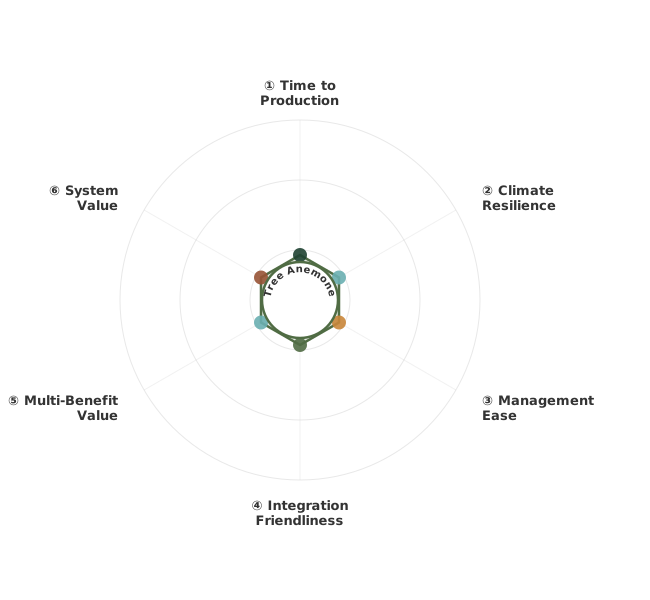
Multi-Benefit Value: Not Recommended - This shrub provides significant aesthetic appeal and supports local pollinators, contributing to a vibrant ecosystem and enhancing biodiversity within the landscape.

Integration Friendliness: Not Recommended - Carpenteria readily integrates into diverse landscapes, contributing aesthetic value and supporting beneficial insect populations without demanding significant external inputs or posing integration challenges.

5

Management & Care Requirements

Integration guidance, maintenance needs, and care practices

How to Integrate This Plant

Tree anemone (Carpenteria Californica) is primarily valuable for its role in pollinator support within regenerative farm systems. While not a direct food source or a plant providing nitrogen fixation or significant shade, its late-season blooms are a crucial resource for bees and other beneficial insects when many other plants are finishing their cycles. It can be integrated into perennial systems like food forests and hedgerows, particularly in buffer zones or along edges where it can receive adequate moisture. Its primary function is ecological, enhancing biodiversity and supporting the populations of natural pest predators. Its contribution begins modestly in Year 1 with establishment, with peak pollinator support observable by Year 3-5 as the plant matures and flowers prolifically. The total system value lies in its contribution to a resilient ecosystem by supporting a healthy pollinator population, which in turn benefits crop yields and overall farm health.

Integration Practices & Management

Information regarding the specific integration methods of Carpenteria Californica by regenerative farmers is limited within the provided knowledge base. While the plant is mentioned, detailed insights into its establishment, such as seeding rates, optimal timing, companion planting strategies, or specific tillage approaches (no-till vs. minimal tillage), are not elaborated upon. Similarly, the knowledge base does not offer practical details on how Carpenteria Californica is integrated with grazing systems, including mob grazing, rotational patterns, grazing timing, or necessary rest periods. Termination strategies, including natural winterkill, grazing down, crimping, mowing, or herbicide use, are also not described. Management considerations like fertility requirements, competition management, and succession planning in relation to this plant are not detailed. Furthermore, its integration with cash crops through relay cropping, intercropping, or rotation sequences is not specified. Consequently, practical farmer experiences and specific insights into the 'how' of Carpenteria Californica integration within regenerative agriculture practices remain largely undocumented in this dataset.

Management Profile

Maintenance Intensity: Adequate - Carpenteria thrives in well-drained soils and benefits from organic mulch for moisture retention; its inherent resilience minimizes the need for intensive interventions to ensure optimal performance.

Pest Disease Pressure: Ideally Suited - As a robust native, Carpenteria exhibits exceptional resistance to pests and diseases, thriving in its natural setting with minimal intervention due to strong ecological balance.

Time To Production: Not Recommended - As an ornamental, Carpenteria's value lies in its aesthetic contribution to the landscape rather than rapid resource production, offering long-term ecological and visual benefits.

6

Economics & Value Streams

Direct harvest, system benefits, ecosystem services, and risk diversification

Comprehensive economic analysis including direct harvest value, system enhancement contributions, ecosystem services, value timeline, and risk diversification strategies.

Per-Tree Production Economics

Metric Value
Establishment Cost $10-20
Years to First Harvest 4-6 years
Annual Maintenance $3-5
Yield 5-10 lbs/year 2-4 kg/year
Market Price $1-2/lb $2-4/kg
Productive Lifespan 20-30 years
Net Annual Return* $-1 to $16/year

Values shown per mature tree, not per acre. In regenerative systems, trees are integrated at low densities across diverse landscapes. Establishment costs spread over the lifespan of the tree. Early years have costs but no revenue.

* Net Annual Return = (Yield × Market Price) − (Amortized Establishment Cost + Annual Maintenance). This return is realized only at/after first harvest; early years have costs but no revenue. Range shows worst case to best case scenarios.

System Enhancement Value

Beyond harvest: pollination services for your crops and ecosystem

Pollination Service Provision

The Tree Anemone (Carpenteria Californica) offers significant system value primarily through its exceptional pollinator support. As noted in the knowledge base, its abundant blooms from May to July, particularly the 'Elizabeth' cultivar with its double white flowers and yellow stamens, are highly attractive to bees and hummingbirds. This direct support for pollinators is crucial for the reproductive success of many agricultural crops and native plants within the farm ecosystem, contributing to overall biodiversity and farm productivity. Beyond pollination, the plant is described as a "rare native California shrub", suggesting its role in supporting local flora and fauna. While not explicitly detailed, its inclusion in recommendations for native gardens implies a role in enhancing ecological function and potentially providing habitat. The secondary function of 'Cash Crop With Services' and 'Soil Remediation' also indicates potential for integrated farming systems, where the plant could be managed for its aesthetic or horticultural value while simultaneously providing ecosystem services. Its drought tolerance once established further contributes to system resilience, reducing reliance on supplemental irrigation in drier periods.

Ecosystem Service Contributions

Environmental contributions: carbon, pollinators, wildlife, and water

  • Carbon Sequestration: As a woody shrub, Carpenteria Californica sequesters carbon in its biomass (stems, leaves, roots). Mature plants can contribute to soil organic matter through leaf litter decomposition, enhancing long-term carbon storage.
  • Pollinator Support: High. The plant is explicitly noted for attracting bees and hummingbirds during its May-July bloom period, providing a vital resource for these crucial pollinators.
  • Wildlife Habitat: Provides habitat and floral resources for native pollinators (bees, hummingbirds). As a native shrub, it can contribute to the overall biodiversity of the farm landscape, potentially offering nesting sites or supplemental food sources for other small wildlife.
  • Water Quality: Not applicable

Value Timeline: Bloom & Establishment

When you'll see results: annuals bloom year 1, perennials mature 2-3 years

Years 1-2

Initial establishment of root systems, contributing to soil stability in its planting location. Early pollinator attraction begins as the plant matures and flowers.

Years 3-5

Established plant provides consistent and significant pollinator support during its blooming season. Secondary functions like 'Cash Crop With Services' (e.g., cut flowers) or initial 'Soil Remediation' benefits may begin to be realized. Drought tolerance becomes more pronounced.

Years 10-20

Mature plant provides peak pollinator support. Ecosystem services like enhanced biodiversity and soil health from its presence become more significant. Potential for higher value from 'Cash Crop With Services' if managed for specific markets.

20+ Years

Long-term establishment contributes to a stable and resilient farm ecosystem. Continued provision of significant pollinator support and habitat enhancement. Potential for propagation and wider integration across the farm.

Farm Risk Reduction

How pollinator support reduces crop failure risk

  • Multiple Revenue Streams: Potential income from 'Cash Crop With Services' (e.g., horticultural sales, cut flowers). Ecosystem services like enhanced pollination can indirectly increase yields of other crops. Potential for propagation and sale of plants.
  • Temporal Income Spread: Value is spread across the growing season through pollinator support, with potential for harvest of secondary products. Long-term ecological benefits contribute to ongoing farm resilience.
  • Market Risk Hedge: Reduces reliance on single-commodity income by providing integrated ecosystem services that boost the productivity of other farm enterprises. Its drought tolerance offers resilience against water scarcity. As a native plant, it aligns with growing consumer demand for sustainably produced goods and biodiversity.
7

Regenerative Suitability Details

Comprehensive trait ratings for system integration assessment

Comparative ratings for this plant across key regenerative agriculture traits.

Trait Suitability Explanation
Drought Tolerance Adequate This California native shrub efficiently manages moisture once established, its moderately deep root system contributing to resilience in drier periods and reducing the need for supplemental water management.
Establishment Ease Not Recommended Establishing Carpenteria from cuttings is generally straightforward, though seed propagation requires patient nurturing of soil biology and protection for successful seedling development.
Time To Production Not Recommended As an ornamental, Carpenteria's value lies in its aesthetic contribution to the landscape rather than rapid resource production, offering long-term ecological and visual benefits.
Multi Benefit Value Not Recommended This shrub provides significant aesthetic appeal and supports local pollinators, contributing to a vibrant ecosystem and enhancing biodiversity within the landscape.
Climate Adaptability Not Recommended Native to mild, moist California climates, Carpenteria thrives in its preferred zones, demonstrating effective adaptation by integrating with local microclimates rather than requiring external climate modification.
Hardiness Zone Range Not Recommended Thriving in its native zones 8-9, Carpenteria demonstrates a strong affinity for specific regional conditions, indicating its successful integration into those particular ecological niches.
Maintenance Intensity Adequate Carpenteria thrives in well-drained soils and benefits from organic mulch for moisture retention; its inherent resilience minimizes the need for intensive interventions to ensure optimal performance.
Pest Disease Pressure Ideally Suited As a robust native, Carpenteria exhibits exceptional resistance to pests and diseases, thriving in its natural setting with minimal intervention due to strong ecological balance.
Integration Friendliness Not Recommended Carpenteria readily integrates into diverse landscapes, contributing aesthetic value and supporting beneficial insect populations without demanding significant external inputs or posing integration challenges.

Comparative System: Ratings compare plants within their economic category (e.g., cover crop nitrogen fixation compared to other cover crops, not to all plants). Individual farm conditions and management practices significantly influence actual performance.

8

Learn More

Why farmers use this plant and additional resources

Why Regenerative Farmers Use This Plant

Carpenteria Californica, commonly known as the Bush Anemone or Tree Anemone, is a valuable evergreen shrub for regenerative agricultural systems, particularly in Mediterranean and temperate climates. While not a primary food or fiber crop, its significant ecological contributions and aesthetic appeal make it a robust choice for long-term landscape resilience.

Ecological Benefits:

  • Carbon Sequestration: At maturity, established woody perennials can sequester an estimated 2-5 tons CO2e/acre/year, depending on density and growth rate, contributing to climate change mitigation.
  • Habitat and Biodiversity: Its dense foliage provides excellent habitat for beneficial insects, pollinators (including native bees and butterflies), and birds, contributing to biodiversity within the farm ecosystem. Its flowers are a significant nectar and pollen source throughout their blooming period in late spring and early summer.
  • Soil Health and Stabilization: The deep root system, extending up to 6-15+ feet (1.8-4.5+ meters) in mature specimens, aids in soil stabilization, improves water infiltration, reduces erosion risk, and enhances soil structure and long-term organic matter accumulation. It can also scavenge nutrients from deeper soil profiles, making them available to shallower-rooted companion plants.
  • Microclimate Regulation: Its dense, evergreen habit provides valuable shade regulation, reducing heat stress on understory crops or livestock. As a component of hedgerows or windbreaks, it can significantly reduce wind velocity, protecting crops from physical damage and minimizing soil moisture loss.

System Integration and Economic Value:

  • Agroforestry and Hedgerows: Carpenteria Californica is best integrated into agroforestry designs such as hedgerows, windbreaks, or as a component of silvopasture systems. It can act as a living mulch, suppressing weeds and retaining soil moisture.
  • Long-Term Asset: The long-term economic and ecological returns are realized over decades. While it doesn't produce a direct cash crop, its role in enhancing the productivity and resilience of the overall farm system is substantial. Its evergreen nature provides year-round visual interest and ecological function.
  • Agritourism and Ornamental Value: Its ornamental value can support agritourism initiatives and contribute to high-value ornamental markets.
  • Reduced Input Needs: By supporting biodiversity, improving soil health, and reducing the need for external inputs like synthetic fertilizers and pesticides, it contributes to a more sustainable and profitable farming operation.

The full aesthetic and ecological impact develops over 5-15 years, with measurable soil carbon increases potentially evident by year 5-7 due to improved soil structure and organic matter accumulation.

9

How to Integrate This Plant

Practical guidance for regenerative systems

Establishing Carpenteria Californica is typically achieved through planting nursery-grown specimens. Direct seeding is less common and slower for establishing woody plants.

Planting and Spacing:

  • Planting Time: The ideal planting time is in the fall or early spring, coinciding with cooler temperatures and increased soil moisture, allowing roots to establish before summer heat. In the Northern Hemisphere, this is typically October-November or February-March. In the Southern Hemisphere, April-May or August-September is preferred. In cooler temperate zones, spring planting (March-April) after the last frost is common.
  • Spacing:
  • For hedgerows or windbreaks: 4-15 feet (1.2-4.5 meters) on center, depending on desired density.
  • For specimen plantings or multi-story systems: 5-25 feet (1.5-7.5 meters) apart, allowing for full canopy development.
  • For alley cropping or silvopasture: Rows ideally spaced 20-40 feet (6-12 meters) apart to allow for equipment access and grazing or intercropping.
  • Planting Depth: Ensure the root ball is level with the surrounding soil surface, typically 6-12 inches (15-30 cm) deep for a 1-gallon container. Planting holes should be twice the width of the root ball.

Establishment and Management:

  • Watering: During the establishment phase (first 1-2 years), approximately 1 inch (2.5 cm) of water per week is beneficial, especially in hotter, drier climates. Once established, it is remarkably drought-tolerant, requiring minimal supplemental watering except during prolonged extreme dry spells.
  • Fertility: Prioritize biological approaches. Incorporate compost into the planting hole and mulch with organic matter annually to provide sustained nutrient release, retain moisture, and suppress weeds. Avoid excessive nitrogen fertilization, which can lead to weak, leggy growth.
  • Pest and Disease Management: Generally minimal. Good air circulation and avoiding overwatering help prevent fungal issues. Natural predators and a healthy soil ecosystem typically keep minor issues in check.
  • Pruning: Generally minimal, focusing on removing dead or crossing branches and shaping the plant for its intended role in the landscape. Ensure adequate light penetration to the understory if intercropping is planned.

Long-Term Integration:

  • Establishment Timeline: Establishment typically takes 1-3 years for plants to become well-rooted and resilient. Full canopy development and maximum ecological service provision occur over 5-15 years.
  • Companion Planting: Planting nitrogen-fixing ground cover like clover or vetch beneath the canopy at year 2-3 can further enhance soil fertility and provide forage.
  • Infrastructure: Long-term infrastructure considerations include initial irrigation for establishment and potentially protective barriers (fencing, tree guards) against browsing animals if deer or other herbivores are present.

Regional Adaptations:

  • California's Central Valley (USDA Zones 8-9): Incorporated into vineyard hedgerows for beneficial insect habitat, visual screening, and windbreaks. Also used in drought-tolerant landscaping and riparian restoration for soil stabilization and habitat.
  • Western Australia's Wheatbelt (Australian Zones 4-6): Planted in farm dams or along contour lines for soil stabilization and livestock shade. Integrated into permaculture designs and farm forestry projects.
  • Mediterranean Regions (Spain, Italy, Portugal - Köppen Csa/Csb): Used in olive groves, citrus orchards, or as border shrubs in agroforestry systems to contribute to biodiversity and soil health.
  • US Southeast (USDA Zone 8) and Europe (RHS H5-H6): Spring planting is common after the last frost.
  • Cooler Temperate Zones (USDA Zones 7, Canadian Zones 5a-7b): Ensuring a sheltered location and providing winter protection for young plants may be beneficial. In the UK, spring planting is preferred.
  • Brazilian Coffee Plantations: Integrated into shade tree systems, providing ornamental value and microclimate benefits without heavy resource competition.
  • Australia (Temperate Regions): Component of mixed native plantings or farm shelterbelts, contributing to landscape resilience and wildlife habitat.