American Chestnut
While the American chestnut (*Castanea dentata*) is not directly described as a cover crop, forage, or nitrogen fixer in these excerpts, its historical role and ongoing restoration efforts offer significant insights for regenerative agriculture. Historically, vast American chestnut forests supported a thriving ecosystem, famously enabling large-scale pig farming where animals were finished on fallen nuts, highlighting its potential as a high-energy food source in silvopasture systems. The loss of this species due to blight drastically altered regional economies and ecological functions. Current regenerative applications focus on reintroduction and developing blight-resistant varieties. Studies are evaluating its establishment on challenging substrates like reclaimed quarry overburden, with findings suggesting careful management of soil amendments and grading is crucial for survival in degraded landscapes. Its potential for carbon sequestration and restoring forest composition is being explored through landscape modeling, indicating a long-term benefit for soil building and ecosystem resilience. While direct farmer experiences with current *Castanea dentata* integration in regenerative systems are limited in the knowledge base, the historical precedent and ongoing research into blight resistance and establishment on difficult sites underscore its potential value for future agroforestry and ecological restoration projects.
For a full botanical description see: Plants For A Future(opens in new window) (external link)
Regenerative Quick Profile
All recommendations assume integrated, regenerative practices—not conventional inputs.
Climate & Soil Fit
Climate: Tropical Rainforest, Tropical Monsoon, Tropical Savanna, Hot Semi-Arid (Steppe), Cold Semi-Arid (Steppe), Hot Desert, Cold Desert, Humid Subtropical, Oceanic (Maritime Temperate), Hot-Summer Mediterranean, Warm-Summer Mediterranean, Monsoon-Influenced Humid Subtropical, Subtropical Highland, Hot-Summer Continental, Warm-Summer Continental, Subarctic, Monsoon-Influenced Hot-Summer Continental, Tundra
Zones: USDA 5-8, Australian Zones 3-5
Optimal Soil: Rich Soil
System Role & Functions
Primary: Silvopasture
Secondary: Food Forest, Timber With Food
Key Benefits: Multi-benefit value
Management Level
Experience: Advanced
Maintenance: High maintenance - Maintaining American chestnut health is best achieved through system integration and supporting its natural resilience. Focusing on robust soil fertility management and blight-resistant selections minimizes external interventions.
Time to Production: Slow (5+ years) - Mature American chestnut trees yield nuts, but their journey to robust production is gradual. Focusing on building soil health and supporting the tree's resilience through integrated practices encourages eventual bearing.
Value Streams
- Fruit/nut harvest
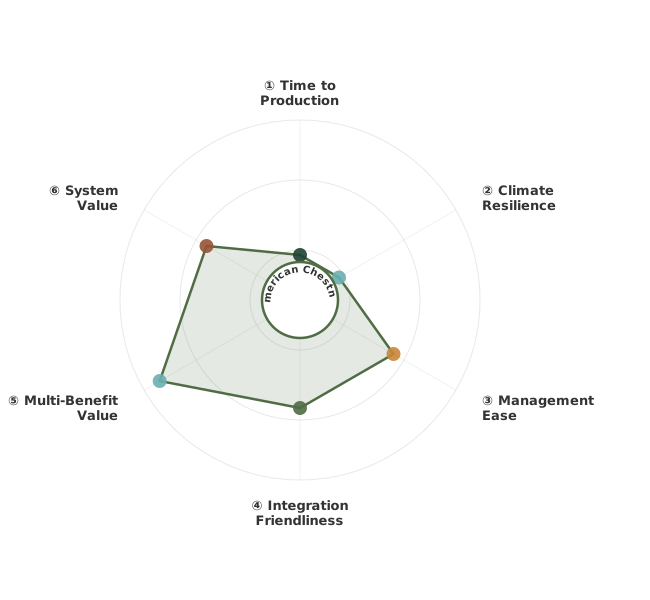
How These Traits Are Calculated
Trait dimensions are ordered clockwise starting from the top of the chart (12 o'clock position):
1. Time to Production
Years from planting to first harvestable yields
WHAT: Measures the waiting period from tree establishment to first meaningful production. Fast-producing trees yield within 2-5 years; slow producers require 8-15+ years before significant harvests.
WHY: Time to production determines cash flow timing and financial feasibility for farm businesses. Long wait times create significant opportunity costs—land and labor tied up for years without income. Fast producers allow quicker experimentation and cash flow recovery, reducing risk for new tree crop farmers.
HOW: Ratings based on years to first harvest documented in economics data. Exceptional (3.0): Production within 2-4 years (elderberry, mulberry, some nut bushes). Typical (2.0): 5-8 years (many fruit trees). Limited (1.0): 10-15+ years (hardwood timber, some nut trees like pecan, walnut).
2. Climate Resilience
Weighted: hardiness zones (50%) + drought tolerance (30%) + adaptability (20%)
WHAT: Combines temperature tolerance (hardiness zone range), water stress resilience (drought tolerance), and overall climate flexibility. Multi-decade tree investments require reliable climate matching to prevent total loss.
WHY: Wrong climate choices mean complete failure for permanent plantings. A tree that dies in year 5 from unexpected cold or prolonged drought represents catastrophic loss of 5 years' investment. Climate resilience determines geographic range and weather variability tolerance—critical as climate patterns become less predictable.
HOW: Weighted formula prioritizes hardiness zone range (50% weight) for core temperature tolerance, drought tolerance (30% weight) for water stress, and overall adaptability (20% weight) for general climate flexibility. Exceptional (3.0): Wide hardiness range (8+ zones) with strong drought tolerance. Typical (2.0): Moderate range and tolerance. Limited (1.0): Narrow climate requirements.
3. Management Ease
Weighted: establishment (40%) + low maintenance (30%) + pest resistance (30%)
WHAT: Combines establishment difficulty, ongoing maintenance requirements, and disease/pest pressure into overall management workload. Low-maintenance trees fit easily into busy farm operations without specialized expertise or intensive inputs.
WHY: Labor is the limiting factor for most diversified farms. High-maintenance trees requiring pruning expertise, disease management, and intensive pest control compete for limited time with other farm enterprises. Easy-care trees deliver production with minimal intervention, making them viable for time-constrained farmers.
HOW: Weighted formula balances establishment ease (40% weight) for startup success, inverted maintenance intensity (30% weight) for ongoing care, and inverted pest/disease pressure (30% weight) for health management. Exceptional (3.0): Easy to establish, self-sufficient growth, naturally pest-resistant. Typical (2.0): Moderate care needs. Limited (1.0): Difficult establishment, intensive maintenance, or heavy pest pressure.
4. Integration Friendliness
Compatibility with silvopasture, alley cropping, and multi-species systems
WHAT: Measures how well the tree integrates with other farm enterprises—grazing livestock, annual crops, or other perennials. Integration-friendly trees tolerate livestock browsing, don't heavily shade out crops, and coexist with diverse plantings.
WHY: Integrated tree systems (silvopasture, alley cropping, food forests) provide higher total returns per acre than monoculture plantings. Trees that work well with livestock provide shade + forage + production simultaneously. Integration flexibility allows farmers to stack enterprises and adapt to market opportunities.
HOW: Ratings based on the integration_friendliness trait documenting compatibility with grazing, cropping, and multi-species systems. Exceptional (3.0): Tolerates livestock browsing, provides livestock benefits (shade, browse), compatible with understory crops. Typical (2.0): Some integration possible with management. Limited (1.0): Requires isolation, incompatible with livestock or cropping.
5. Multi-Benefit Value
Stacked benefits beyond primary product—shade, wildlife, nitrogen, erosion control
WHAT: Measures the diversity of ecosystem services provided beyond the main harvest product. Multi-benefit trees deliver shade, windbreak, wildlife habitat, nitrogen fixation, erosion control, pollinator support, and aesthetic value simultaneously.
WHY: Single-purpose trees are economically fragile—market price swings or production failures eliminate all value. Multi-benefit trees provide resilience through diverse value streams. A nitrogen-fixing tree that produces nuts, provides shade for livestock, supports wildlife, and controls erosion delivers 4-5x the system value of a production-only tree.
HOW: Ratings based on the multi_benefit_value trait documenting service diversity. Exceptional (3.0): 4+ significant services stacked (nitrogen-fixing legume trees providing nuts + shade + wildlife + windbreak). Typical (2.0): 2-3 moderate services. Limited (1.0): Single-purpose production trees with minimal additional benefits.
6. System Value
Total ecosystem and economic value across short, medium, and long timeframes
WHAT: Synthesizes the total regenerative value delivered across multiple decades, including immediate ecosystem services (years 1-5), medium-term production value (years 5-15), and long-term system transformation (years 15-50). Captures the compounding benefits of permanent plantings.
WHY: Trees are multi-decade investments requiring patient capital. System value measures whether the total package—early ecosystem services, eventual production, and long-term legacy benefits—justifies the wait time and land commitment. High system value trees pay back investment through diverse, stacking, compounding benefits.
HOW: Scored via LLM synthesis of economics timelines, ecosystem service diversity, and long-term soil/water/carbon impacts. Exceptional (3.0): Strong early services + valuable production + transformative long-term impacts. Typical (2.0): Moderate benefits across timeframes. Limited (1.0): Long wait with limited service stacking or weak economic returns.
Ratings are based on documented performance in regenerative systems, not conventional high-input scenarios. All traits assume integrated management practices focused on soil health and ecosystem services.
4
System Role & Multi-Benefit Value
Functional roles, integration strategies, and stacked benefits
System Role & Multi-Benefit Value
Functional roles, integration strategies, and stacked benefits
Functional Role
Total System Value
The American chestnut offers significant multi-benefit stacking potential in regenerative agriculture. Historically, it was crucial for silvopasture systems, with millions of pigs being finished on its nuts, demonstrating its direct harvest value for livestock feed. Beyond direct nut production, its large stature provides essential shade in silvopasture, improving animal welfare and pasture utilization. While not a nitrogen fixer, its role in supporting wildlife and enhancing biodiversity is considerable. The historical ecological legacy highlights its importance in ecosystem services, including carbon storage. The risk of blight is a major consideration, but successful restoration with blight-resistant varieties diversifies the farm's ecological and economic assets. Its contribution to whole-farm resilience lies in its ability to provide a high-energy food source for livestock, improve microclimates through shade, and restore a keystone species to the landscape, thereby enhancing ecological stability.
Integration Characteristics
Multi-Benefit Value: Ideally Suited - Historically a source of valuable timber and nuts, the American chestnut's root system also enhances soil stability. Restoring it supports biodiversity and ecosystem function, though disease resilience is key to realizing its full potential.
Integration Friendliness: Adequate - Once blight-resistant strains are established, the American chestnut offers valuable nuts and timber. It integrates well as a woodland component, enhancing biodiversity and soil health within a regenerative landscape.
Sources behind this view
 Research
-
The implications of American chestnut reintroduction on landscape dynamics and carbon storage (opens in new window)
Reintroducing American chestnut to eastern U.S. forests could take over 1000 years and only modestly increase carbon storage, with pests significantly influencing outcomes and forest composition.
5
Management & Care Requirements
Integration guidance, maintenance needs, and care practices
Management & Care Requirements
Integration guidance, maintenance needs, and care practices
How to Integrate This Plant
American chestnut (Castanea dentata) can be integrated into regenerative farm systems primarily through silvopasture due to its substantial nut production, historically supporting livestock. Its large canopy offers valuable shade for animals. The primary challenge to integration is the devastating chestnut blight, necessitating a focus on blight-resistant varieties or restoration efforts. Compatible practices include silvopasture and potentially food forests. In Year 1-2, consider establishment support with grading and soil amendments as per studies. By Year 5, it can begin contributing shade and some nut fall. By Year 10-20, it will be a significant producer of mast for livestock, enhancing forage quality and reducing feed costs. Its total system value extends beyond direct harvest by providing shade, contributing to carbon sequestration, supporting wildlife, and diversifying farm income streams, making it a resilient component of a regenerative system, especially when focusing on blight resistance.
Integration Practices & Management
While the knowledge base highlights the historical economic importance of chestnut forests for raising livestock and discusses its potential role in future forest composition and carbon storage, it does not detail specific regenerative agriculture practices for its establishment, integration with grazing, termination, or use in cash crop systems. The research mentioned explores methods for establishing American chestnut on reclaimed land and breeding blight-resistant hybrids, which are crucial for its survival. However, practical insights into how regenerative farmers currently utilize *Castanea dentata* in contemporary farming operations, such as seeding rates, companion planting, mob grazing, or specific rotation sequences, are not present in these regenerative agriculture-focused mentions. Therefore, based on the provided text, specific integration methods into regenerative agriculture are not detailed. While coverage in our knowledge base is limited, the above represents documented uses in regenerative systems.
Management Profile
Maintenance Intensity: Not Recommended - Maintaining American chestnut health is best achieved through system integration and supporting its natural resilience. Focusing on robust soil fertility management and blight-resistant selections minimizes external interventions.
Pest Disease Pressure: Not Recommended - The American chestnut faces significant challenges from blight, necessitating a focus on blight-resistant strains and fostering a biodiverse ecosystem that supports overall plant health and resilience.
Time To Production: Not Recommended - Mature American chestnut trees yield nuts, but their journey to robust production is gradual. Focusing on building soil health and supporting the tree's resilience through integrated practices encourages eventual bearing.
Sources behind this view
 Videos & Podcasts
-
Integrates sheep and broiler chickens into chestnut and heart nut silvopasture systems for fertility, pest control (plum curculio), and weed management, with specific grazing withdrawal periods before
-
Agroforestry investment, particularly with chestnut trees, involves long-term leases, land preparation, and addressing climate risks through diversification and crop insurance. Key challenges include

Research
-
The implications of American chestnut reintroduction on landscape dynamics and carbon storage (opens in new window)
Reintroducing American chestnut to eastern U.S. forests could take over 1000 years and only modestly increase carbon storage, with pests significantly influencing outcomes and forest composition.
8
Learn More
Why farmers use this plant and additional resources
Learn More
Why farmers use this plant and additional resources
Why Regenerative Farmers Use This Plant
American Chestnut (Castanea dentata) is a keystone species with immense regenerative potential, historically dominating eastern North American forests. While devastated by the chestnut blight (Cryphonectria parasitica), efforts in breeding blight-resistant varieties and ongoing research offer pathways for its reintroduction into regenerative agriculture systems. At maturity, a healthy American Chestnut tree can sequester an estimated 2-5 tons of CO2e per acre per year, contributing significantly to climate change mitigation. Its rapid growth and towering stature, reaching heights of 60-100 feet (18-30 m) with a trunk diameter of 3-6 feet (0.9-1.8 m), provide substantial biomass and long-term carbon storage.
Beyond carbon, mature trees offer significant canopy services, creating microclimates that can regulate temperature for understory crops and livestock, reduce wind speeds, and improve water infiltration into the soil. The economic returns from its highly valued nuts, coupled with its asset value as a long-lived timber species, present multi-decade economic benefits and contribute to landscape resilience and biodiversity. Its strong, rot-resistant wood has long been valued for timber. The long-term asset value of a healthy chestnut grove can be substantial, with trees continuing to produce nuts and timber for over a century.
Integrating American Chestnut into agroforestry systems offers multifaceted benefits. As a component of silvopasture, its shade can provide relief for livestock during hot periods, while its nuts offer a valuable supplemental forage. In alley cropping systems, rows of chestnut can be planted with arable crops in the intervening alleys, providing a diversified income stream and enhancing soil health over time. The deep root system of mature chestnut trees helps to improve soil structure, break up compaction, and scavenge nutrients from deeper soil profiles, reducing the reliance on external fertility inputs. Furthermore, the presence of chestnut trees supports a rich diversity of insect life, including crucial pollinators and beneficial predators, contributing to a more balanced and resilient farm ecosystem. Its ability to thrive in diverse soil conditions, from well-drained sandy loams to heavier clays, once established, makes it a versatile choice for enhancing landscape function.
The ecosystem services provided by American Chestnut are profound. Mature trees are magnets for biodiversity, supporting a wide array of wildlife from birds to small mammals through their nuts and habitat. Their extensive root systems, reaching depths of 10-25+ feet (3-7.5+ m) or more, are instrumental in preventing soil erosion and improving water infiltration rates, especially on sloped terrain. This enhanced infiltration reduces surface runoff and the risk of downstream flooding. The leaf litter from chestnut trees decomposes to enrich the soil with organic matter, fostering a healthy soil food web and improving its capacity to retain moisture and nutrients. While not a nitrogen fixer, its contribution to overall biomass and organic matter cycling is substantial, indirectly supporting nutrient availability for companion plants and the wider ecosystem. Its flowering period in early summer attracts a wide array of pollinators, including bees and butterflies, crucial for farm-level pollination services.
Historically, American Chestnut was a dominant species across the eastern United States, forming vast, productive forests. While blight has decimated wild populations, efforts to re-establish blight-resistant hybrids are ongoing. Regenerative farmers in regions with suitable temperate climates, such as the Appalachian region of the USA, the temperate forests of Canada, and parts of Europe with similar conditions, can explore integrating blight-resistant varieties or hybrids. These systems can range from small-scale farm orchards to larger agroforestry plantings, aiming to restore ecological function and economic value to the landscape. Successful integration requires careful site selection and long-term commitment, mirroring the historical role of this majestic tree in supporting both ecological and economic systems.
Sources behind this view
Videos & Podcasts
-
Blight-resistant Chinese and hybrid chestnuts offer low pest pressure and high yields, suitable for silvopasture with hogs and poultry. Harvest methods vary by scale, with mechanical harvesters recomm