Available research highlights its potential role in subtropical regenerative agriculture, primarily through its impact on soil health. Studies indicate that *Cinnamomum camphora* plantations influence soil microbial respiration and enzyme activities, which are crucial indicators of soil biological function and nutrient cycling. Specifically, the presence of camphor trees has been investigated in the context of afforestation and its effects on soil physicochemical properties and microbial communities. Furthermore, research on long-term camphor plantations suggests that practices like understory removal can negatively impact soil organic carbon (SOC) content and storage, implying that maintaining the understory or implementing different management strategies could enhance carbon sequestration benefits. While not explicitly detailed as a primary use like cover cropping or nitrogen fixation in these excerpts, its establishment as a plantation species suggests potential for agroforestry systems. Further research is needed to fully understand its integration and benefits within diverse regenerative farming practices. While coverage in our knowledge base is limited, the above represents documented uses in regenerative systems.

Regenerative Quick Profile

All recommendations assume integrated, regenerative practices—not conventional inputs.

Climate & Soil Fit

Climate: Tropical Rainforest, Tropical Monsoon, Tropical Savanna, Hot Semi-Arid (Steppe), Cold Semi-Arid (Steppe), Hot Desert, Cold Desert, Humid Subtropical, Oceanic (Maritime Temperate), Hot-Summer Mediterranean, Warm-Summer Mediterranean, Monsoon-Influenced Humid Subtropical, Subtropical Highland, Hot-Summer Continental, Warm-Summer Continental, Subarctic, Monsoon-Influenced Hot-Summer Continental, Tundra

Zones: USDA 9-11, Australian Zones 11-14, EU Mediterranean, Subtropical, Oceanic (mild winters)

Optimal Soil: Loam Soil

System Role & Functions

Primary: Specialty

Secondary: Windbreak, Food Forest

Management Level

Experience: Advanced

Maintenance: Moderate maintenance - The Camphor tree generally integrates well with minimal intervention, benefiting from natural fertility cycles and strategic pruning to support its role within the farm system.

Time to Production: Slow (5+ years) - The Camphor tree's value for timber and camphor emerges over many years, aligning with long-term agroforestry planning and patience for ecosystem maturity.

Value Streams

  • Fruit/nut harvest

Know the Debate

  • Soil microbial activity varies with management, understory presence.
  • Economic returns take 15-30 years from mature trees.
  • Carbon sequestration potential is significant at maturity.
  • Adaptable to various climates with site-specific adjustments.
1

Climate Suitability Assessment

Will this plant thrive in your climate?

IDEALLY SUITED

Köppen Zone: Af (Tropical Rainforest), Am (Tropical Monsoon), Aw (Tropical Savanna), Cfa (Humid Subtropical), Cwa (Monsoon-Influenced Humid Subtropical)
USDA Zone: 6a, 7a, 8a, 9a, 10a, 11a, 12a
Australian Zone: tropical, subtropical
EU Climate Region: atlantic

Camphor trees are ideally suited to climates characterized by warm to hot summers and mild winters, with consistent moisture availability. This includes humid subtropical (Köppen Cfa), tropical savanna (Köppen Aw), oceanic (Köppen Cfb), and tropical (Australian) zones. In these regions, camphor trees establish readily, exhibiting vigorous growth and reliable perenniality. They perform exceptionally well as windbreaks, offering dense, evergreen cover that effectively mitigates wind speeds. In food forests, their substantial canopy and potential for fruit production (though not primary for this species) contribute to ecosystem complexity and microclimate regulation. Optimal USDA zones range from 8a through 13a, and the EU Atlantic climate also falls into this category. The species benefits from ample rainfall (typically 30-60 inches/750-1500 mm annually) and temperatures that rarely drop below freezing for extended periods, with ideal growing season temperatures between 70-85°F (21-29°C). Minimal management is required beyond initial establishment, making them a low-input, high-performance species for regenerative agriculture in these favored climates.

ADEQUATE

Köppen Zone: BSh (Hot Semi-Arid (Steppe)), Cfb (Oceanic (Maritime Temperate)), Csa (Hot-Summer Mediterranean), Csb (Warm-Summer Mediterranean), Cwb (Subtropical Highland), Dfa (Hot-Summer Continental), Dfb (Warm-Summer Continental)
USDA Zone: 5a, 5b
Australian Zone: temperate
EU Climate Region: mediterranean

Camphor trees are adequately suited to climates with moderate temperature fluctuations and some degree of summer dryness, such as Mediterranean (Köppen Csa, Csb; EU Mediterranean) and some temperate (Australian) zones. In these regions, the primary limitation is the summer dry period, which can stress the trees and slow growth, potentially requiring supplemental irrigation for optimal establishment and performance. While they can survive and establish, their vigor as windbreaks and their contribution to food forests may be less pronounced compared to more humid or consistently moist environments. USDA zones 7a and 7b represent the cooler end of adequate suitability, where occasional frost damage to new growth might occur. The species can still fulfill its functional roles, but success is more dependent on careful site selection to mitigate drought stress and cold exposure, and potentially increased management inputs for watering. Yields and overall resilience are good but not exceptional, making them a viable but not optimal choice.

NOT RECOMMENDED

Köppen Zone: ET (Tundra), BSk (Cold Semi-Arid (Steppe)), BWh (Hot Desert), BWk (Cold Desert), Dfc (Subarctic), Dwa (Monsoon-Influenced Hot-Summer Continental)
USDA Zone: 2a, 3a, 3b, 4a

Camphor trees are not recommended for climates with prolonged periods of extreme cold, specifically USDA zones 6a and 6b, which experience winter lows of -10 to 0°F (-23 to -18°C). In these zones, the risk of severe winter kill is high, making reliable tree-form growth for windbreaks and food forests improbable. Establishment success is significantly reduced, and the species is likely to survive only as a shrub or with extensive, costly winter protection, negating its practical utility in regenerative agriculture. The species requires a minimum of 10-15°F (-12 to -9°C) for reliable perennial survival as a tree. Alternative plants that are significantly more cold-hardy and better adapted to these harsh winter conditions are essential for successful windbreak and food forest establishment in these regions. These alternatives should offer similar ecological functions while ensuring long-term survival and productivity without excessive management inputs.

Better alternatives for these "not recommended" zones: Bald Cypress (Taxodium distichum) (Deciduous conifer tolerant of cold and wet conditions, provides windbreak function.), River Birch (Betula nigra) (Adaptable tree with good cold hardiness, suitable for windbreaks and riparian food forests.), Hawthorn (Crataegus spp.) (Thorny shrubs/small trees providing windbreak and edible fruit for food forests, very cold hardy.)

Note: Zones listed above represent climates where this plant can produce reliably with reasonable management. Climate zones not mentioned would require intensive climate modification (greenhouses, extensive infrastructure) and are not economically viable for regenerative agriculture purposes.

2

Soil Suitability Assessment

Which soil types work best for this plant?

IDEALLY SUITED

Loam Soil

This plant thrives in these soil types without requiring amendments or remediation. Natural soil conditions support optimal growth and productivity.

ADEQUATE

Clay Soil, Rich Soil, Rocky Soil, Sandy Soil

This plant performs acceptably in these soil types with moderate, manageable remediation such as pH adjustment, compost addition, or drainage improvement. The required amendments are practical and cost-effective for regenerative agriculture.

NOT RECOMMENDED

Acidic Soil, Alkaline Soil, Desert Soil, Saline Soil, Wet Soil

Growing this plant in these soil types would require impractical remediation such as complete soil replacement, extensive amendments, or cost-prohibitive infrastructure. These conditions are not economically viable for regenerative agriculture.

Note: Soil suitability assessments focus on remediation requirements. "Ideally Suited" means the plant generally thrives without the need for substantial amendments, "Adequate" means manageable remediation (lime, compost, mulch), and "Not Recommended" means impractical soil changes would be required. Climate factors like rainfall and temperature also influence success.

3

Seasonal Considerations

Planting timing, growth duration, and harvest windows

Establishing camphor trees is a multi-year endeavor, beginning with planting nursery stock. For bare-root trees, the ideal window is during late fall or early spring, after the ground has thawed but before active growth commences. Container-grown trees offer more flexibility, allowing planting throughout the active growing season, though early spring or fall will minimize transplant shock. Expect several years for your trees to reach full establishment, typically 3-5 years, before they begin to yield their first significant harvests. Full production, where trees are reliably producing at their peak, usually takes another 5-7 years. Camphor trees are long-lived, offering productive lifespans measured in decades.

Seasonal management focuses on nurturing this long-term growth. Pruning is best undertaken during the dormant season, typically in late fall or winter, to shape the tree and encourage strong structural development. While blooms appear in spring, the primary harvest season is generally in the fall. Observe your trees’ natural winter dormancy; this is a critical period for recovery and preparation for the next growing cycle.

4

System Role & Multi-Benefit Value

Functional roles, integration strategies, and stacked benefits

Functional Role

Total System Value

The camphor tree (Cinnamomum camphora) offers significant multi-benefit stacking potential within a regenerative farm system. While direct harvest value is not detailed, its primary contributions lie in system enhancement and ecosystem services. As a mature tree, it provides crucial shade for livestock and crops, a factor observed in its use in subtropical plantations. Studies on soil respiration and enzyme activity suggest that camphor trees can positively influence soil microbial communities and carbon dynamics, contributing to soil organic carbon (SOC) storage, as indicated by research on understory removal impacts. This enhancement of soil health is a key ecosystem service. Furthermore, its presence in afforestation projects points to its role in improving soil physicochemical properties. By diversifying farm infrastructure with trees, risk is mitigated through enhanced resilience against climate fluctuations and improved long-term soil fertility. Its value is thus stacked through shade, carbon sequestration, improved soil health, and habitat provision.

Integration Characteristics

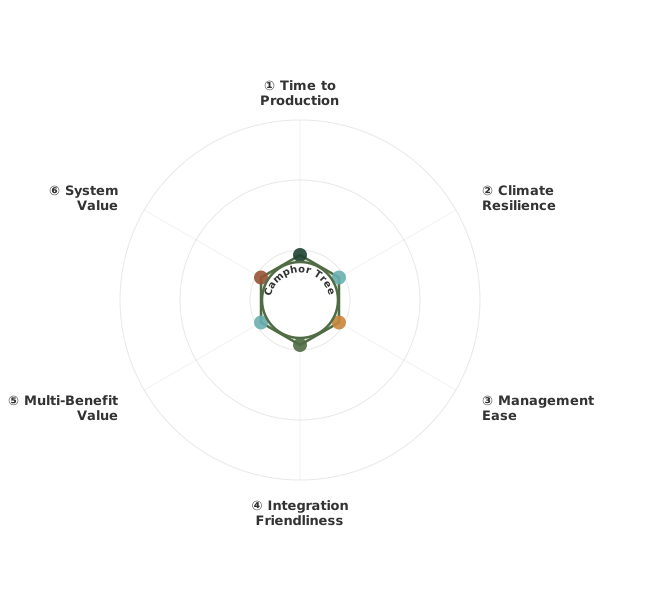
Multi-Benefit Value: Not Recommended - Beyond its primary use for camphor, this tree provides shade and can contribute to a biodiverse farm ecosystem, though its direct benefits to pollinators and soil health are less pronounced.

Integration Friendliness: Not Recommended - While primarily cultivated for camphor, its potential to become a dominant species necessitates thoughtful integration into diverse farm systems to ensure balanced ecological function.

5

Management & Care Requirements

Integration guidance, maintenance needs, and care practices

How to Integrate This Plant

Camphor trees can be integrated into regenerative systems primarily as a component of silvopasture or food forest designs, offering shade and contributing to soil health. While specific compatible practices like silvopasture or alley cropping are not explicitly detailed in the provided excerpts, the plant's role in subtropical plantations suggests its potential for these functions. Studies indicate camphor trees influence soil microbial respiration and can be part of afforestation efforts aimed at improving soil physicochemical properties. As a mature tree, it will provide substantial shade and windbreak benefits. Early contributions (Year 1-2) will be minimal, focusing on establishment. By Year 3-5, moderate shade and initial soil structure improvements will be noticeable. Long-term, by Year 10-20 and beyond, camphor trees will offer significant shade, habitat, and contribute to carbon sequestration and improved soil organic matter, enhancing overall farm resilience. The total system value lies in shade provision, potential habitat creation, and long-term soil carbon enhancement.

Integration Practices & Management

The provided knowledge base offers limited insight into the specific regenerative agriculture integration methods for Cinnamomum camphora (camphor). The sources primarily focus on its role in subtropical plantations and afforestation projects, examining its impact on soil microbial respiration, physicochemical properties, and microbial communities. One study investigated its response to carbon addition in plantation topsoil, while another analyzed its effect on enzyme activities in a cadmium-contaminated environment under elevated CO2 and nitrogen. There is no information within these sources regarding establishment methods like seeding rates or timing, nor details on integration with grazing systems such as mob grazing or rotational grazing, including timing and rest periods. Similarly, termination strategies like natural winterkill, grazing down, crimping, mowing, or herbicide use are not discussed. Management considerations such as fertility needs, competition management, or succession planning, and its integration with cash crops through relay cropping, intercropping, or rotation sequences are also absent from the knowledge base. Consequently, practical farmer experiences and specific insights into how regenerative farmers are currently integrating Cinnamomum camphora are not available in these texts.

Management Profile

Maintenance Intensity: Adequate - The Camphor tree generally integrates well with minimal intervention, benefiting from natural fertility cycles and strategic pruning to support its role within the farm system.

Pest Disease Pressure: Adequate - Maintaining plant vigor through healthy soil and appropriate moisture management helps the Camphor tree resist potential fungal issues and insect pressures.

Time To Production: Not Recommended - The Camphor tree's value for timber and camphor emerges over many years, aligning with long-term agroforestry planning and patience for ecosystem maturity.

6

Economics & Value Streams

Direct harvest, system benefits, ecosystem services, and risk diversification

Comprehensive economic analysis including direct harvest value, system enhancement contributions, ecosystem services, value timeline, and risk diversification strategies.

Per-Tree Production Economics

Metric Value
Establishment Cost $10-20
Years to First Harvest 8-12 years
Annual Maintenance $3-6
Yield 20-40 lbs/year 9-18 kg/year
Market Price $0-0/lb $0-1/kg
Productive Lifespan 50-75 years
Net Annual Return* $-6 to $-3/year (negative)

Values shown per mature tree, not per acre. In regenerative systems, trees are integrated at low densities across diverse landscapes. Establishment costs spread over the lifespan of the tree. Early years have costs but no revenue.

* Net Annual Return = (Yield × Market Price) − (Amortized Establishment Cost + Annual Maintenance). This return is realized only at/after first harvest; early years have costs but no revenue. Range shows worst case to best case scenarios.

System Enhancement Value

Beyond harvest: limited system integration for niche specialty products

System Contributions

Camphor trees offer significant contributions to soil health and microbial activity. Studies indicate that camphor plantations, particularly older ones, show increased soil carbon and nitrogen concentrations, along with enhanced microbial biomass and enzyme activities compared to cropland. This suggests a role in improving soil fertility and structure. Furthermore, camphor trees have demonstrated an ability to offset the negative impacts of environmental stressors like cadmium contamination on carbon-degrading enzyme activities, influenced by elevated CO2 and N deposition. This resilience suggests potential for use in remediation or in degraded environments. While not a legume, their biomass accumulation contributes to soil organic matter, and their inclusion in food forests [secondary function] indicates potential for integrated agroforestry systems, offering habitat and resources beyond their primary specialty function.

Erosion Control (if applicable)

Protects 3-5 acres per tree row, 5-15% crop yield improvement (variable based on wind exposure, crop types, and windbreak design)

Camphor trees, identified as suitable for accumulating shade and biomass, can function as effective windbreaks. Their dense canopy and robust growth habit, as suggested by their inclusion in lists of trees for biomass accumulation, allow them to intercept wind. When planted in rows, camphor trees can significantly reduce wind velocity downwind. This protection is crucial for mitigating soil erosion, preventing wind damage to crops and structures, and creating more favorable microclimates for sensitive plants and livestock. The quantitative benefits of windbreaks are substantial, with protection extending many times the height of the trees. This translates to reduced drying of soils, less stress on plants, and improved conditions for agricultural activities, ultimately contributing to higher yields and reduced input costs.

Ecosystem Service Contributions

Environmental contributions: carbon, pollinators, wildlife, and water

  • Carbon Sequestration: Camphor trees are known for accumulating biomass, indicating significant carbon storage potential. As substantial trees, they contribute to long-term carbon sequestration in their woody tissues and forest floor litter.
  • Pollinator Support: Low. While flowering, camphor trees are not primarily recognized for significant pollinator support in the context of the provided knowledge base. Their main value lies in biomass and structural benefits.
  • Wildlife Habitat: Provides habitat and potential food resources due to its biomass accumulation and inclusion in food forest systems [secondary function]. Its dense structure can offer nesting sites and shelter for various wildlife.
  • Water Quality: Not applicable

Value Timeline: Specialty Product Development

When you'll see results: varies widely by specialty product type

Years 1-2

Initial windbreak establishment and early biomass accumulation for soil organic matter contribution. Minimal shade impact.

Years 3-5

Established windbreak providing significant protection. Noticeable contribution to soil carbon and nitrogen. Potential for early inclusion in food forest systems.

Years 10-20

Mature windbreak offering maximum protection. Significant soil health improvements. Mature food forest components. Potential for specialty product harvest.

20+ Years

Long-term stable windbreak. Mature ecosystem services provider. Significant timber potential if managed for that purpose.

Farm Risk Reduction

How this reduces farm risk: premium pricing but niche market dependency

  • Multiple Revenue Streams: ['Specialty product revenue (e.g., camphor oil, wood)', 'Windbreak economic benefits (crop yield increase, reduced erosion)', 'Biomass for soil amendment or bioenergy', 'Potential timber value']
  • Temporal Income Spread: Value is spread across ongoing ecosystem services (windbreak, soil health) and periodic harvests of specialty products or timber. Early benefits from windbreak and soil improvements, with mature product revenue occurring later.
  • Market Risk Hedge: Provides a diverse revenue stream beyond primary crops, reducing reliance on single markets. Its drought tolerance and resilience to environmental stressors offer stability in challenging climatic conditions. The windbreak function directly protects existing agricultural investments, hedging against weather-related losses.
7

Regenerative Suitability Details

Comprehensive trait ratings for system integration assessment

Comparative ratings for this plant across key regenerative agriculture traits.

Trait Suitability Explanation
Drought Tolerance Adequate Once established, the Camphor tree demonstrates resilience to periods of reduced moisture, thriving with effective water management and mulching to maintain soil hydration.
Establishment Ease Not Recommended This species benefits from site preparation that ensures consistent soil moisture and shelters young plants from competition during their initial growth stages.
Time To Production Not Recommended The Camphor tree's value for timber and camphor emerges over many years, aligning with long-term agroforestry planning and patience for ecosystem maturity.
Multi Benefit Value Not Recommended Beyond its primary use for camphor, this tree provides shade and can contribute to a biodiverse farm ecosystem, though its direct benefits to pollinators and soil health are less pronounced.
Climate Adaptability Not Recommended Optimal performance is observed in warmer climates where frost is minimal, suggesting careful consideration of microclimates within a regenerative system.
Hardiness Zone Range Not Recommended Thriving in subtropical to tropical regions, its success is tied to environments with ample warmth and protection from frost, influencing its placement in diverse landscapes.
Maintenance Intensity Adequate The Camphor tree generally integrates well with minimal intervention, benefiting from natural fertility cycles and strategic pruning to support its role within the farm system.
Pest Disease Pressure Adequate Maintaining plant vigor through healthy soil and appropriate moisture management helps the Camphor tree resist potential fungal issues and insect pressures.
Integration Friendliness Not Recommended While primarily cultivated for camphor, its potential to become a dominant species necessitates thoughtful integration into diverse farm systems to ensure balanced ecological function.

Comparative System: Ratings compare plants within their economic category (e.g., cover crop nitrogen fixation compared to other cover crops, not to all plants). Individual farm conditions and management practices significantly influence actual performance.

8

Know the Debate

Integrating camphor trees into regenerative farming offers long-term benefits for soil health, carbon sequestration, and provides valuable ecosyste...

Integrating camphor trees into regenerative farming offers long-term benefits for soil health, carbon sequestration, and provides valuable ecosystem services like shade and windbreaks. However, their success and economic viability are tied to specific contexts. While adaptable to subtropical and warm temperate climates (USDA Zones 7-10), performance can vary significantly based on local rainfall patterns and soil conditions. Establishing camphor trees requires planning for long timelines, with significant returns appearing 15-30 years after planting mature trees, and requires commitment to managing their dense canopy and potential allelopathic effects. Entry costs focus on seedlings, browse protection, and initial watering, with labor demands increasing during establishment and for canopy management.

How does camphor tree management affect soil microbial activity?

Positive impact with understory

Research indicates camphor trees can improve soil microbial respiration and enzyme activities, crucial for nutrient cycling. Maintaining the understory is key, as its removal can negatively impact soil organic carbon storage and overall soil health.

Sources behind this view

Sources behind this view

Research
  • Assessing temperature-based adaptation limits to climate change of temperate perennial fruit crops. (opens in new window)

    This study found: A global study looked at how changing temperatures due to climate change will affect where five key fruit crops – apples, cherries, almonds, olives, and grapes – can be grown. These perennial trees need specific winter cold periods to produce fruit. The research used climate models to predict future growing areas. By the end of the century, under a high-emission scenario, growing areas in the Southern Hemisphere could shrink by over 40%, while areas in the Northern Hemisphere might expand significantly. A lower-emission scenario shows smaller but still notable shifts. Essentially, suitable growing regions are moving towards the poles. For the Southern Hemisphere, there's less room to move to higher latitudes. Farmers and breeders can adapt by selecting or developing varieties that need less winter chill, choosing appropriate cultivars, and using techniques like shade netting, sprinklers for cooling, and precise irrigation to manage heat stress.

  • Tree Diversity and Carbon Stock Dynamics in the Coffee Agroforestry Systems of Kodagu, Western Ghats (opens in new window)

    This study found: In the coffee-growing region of Kodagu, India, a study compared different ways of shading coffee plants with trees. They found that coffee farms using a mix of local, native trees had more tree species and stored significantly more carbon in the trees and soil compared to farms using mostly non-native trees. Arabica coffee plantations also stored more carbon overall than Robusta. Soil organic matter made up over half of the total carbon stored. The research suggests that using native and mixed tree species in coffee farms is better for biodiversity, carbon storage, and overall soil health, promoting long-term sustainability.

Variable impact depending on context

Field experience suggests that camphor trees' effects on the soil food web can be inconsistent. In arid climates or systems with aggressive overstory management, their dense shade and potential allelopathy can hinder understory growth and negatively impact soil biology.

Sources behind this view

Sources behind this view

Videos & Podcasts
  • A shade strategy for arid climates uses diverse trees like Leucaena, Albizia Lebbeck, and Poinciana, managed through pruning and pollarding to provide winter light and dense summer shade, enhancing fertility and supporting fruit trees.
    Thumbnail for Shade as a Drylands Strategy
Making Sense of the Differences

The impact of camphor trees on soil biology depends heavily on management and environment. While research supports benefits to microbial activity and carbon storage when the understory is maintained, field observations note that dense shade and arid conditions can impede plant growth and soil health. Farmers should monitor soil health indicators, particularly microbial activity and organic matter accumulation, and tailor management, such as maintaining understory vegetation, to their specific climate to optimize benefits.

What is the realistic timeline for economic returns from camphor trees?

Long-term asset accumulation (15-30+ years)

Camphor trees offer significant long-term value, with returns from timber and essential oils accumulating over decades. Full production potential and substantial carbon sequestration (2-5 tons CO2e/acre/year) are achieved 15-30 years after planting.

Sources behind this view

Sources behind this view

Videos & Podcasts
  • Discusses four key tree fodder species: Willow (high biomass, tannins, easy propagation), Black Locust (tree alfalfa, nitrogen-fixing, rot-resistant wood), Poplar (high biomass, balanced nutrition, adaptable), and Mulberry (high digestibility for non-ruminants). Focuses on nutritional benefits, propagation, and suitability for temperate climates.
    Thumbnail for Tree Fodders in Silvopasture, 11/2018 Webinar
Returns depend on management and context

While long-term assets, economic returns are highly variable. Early integration focuses on ecosystem services, and realizing cash flow from timber or oils requires substantial time and strategic planning, making immediate financial returns unlikely.

Sources behind this view

Sources behind this view

Videos & Podcasts
  • Black currants are a cold-hardy, shade-tolerant perennial superfood suitable for Midwest agroforestry. They offer pollinator habitat, grow in various soils, and resist deer. Disease-resistant cultivars are now available, with varieties like Whistler, Tacos, Blackam, and Cheekomas showing promise.

    Thumbnail for How to Grow Black Currants in the Midwest
  • Lowquats and Pineapple Guavas are discussed for Texas; Lowquats produce edible fruit but struggle with freezes, while Pineapple Guavas are hardy evergreen windbreaks. Companion planting with nitrogen-fixers like Catclaw Acacia and ground covers enhances resilience.
    Thumbnail for Turning a Bare Hill Into a Water-Harvesting Paradise (All Episodes)
  • Effective silvo-horticulture design uses trees as windbreaks and for shade, increasing temperature by 4-5°C and extending the season. Crop placement (phasing) is key, with sun-loving crops further from trees and shade-tolerant crops closer, optimizing for light, temperature, and wind protection.

    Thumbnail for 324
Making Sense of the Differences

The timeline for economic returns from camphor trees is long, typically 15-30 years for timber and oil production. While they offer significant long-term value through carbon sequestration and ecosystem services like shade and windbreaks, immediate cash flow is limited. Farmers should align their financial planning with these long timelines and consider integrating intercrops or livestock during the establishment phase to offset costs and leverage the trees' environmental benefits.

9

Learn More

Why farmers use this plant and additional resources

Why Regenerative Farmers Use This Plant

Camphor trees offer significant long-term value in regenerative agriculture systems, primarily as a multi-purpose agroforestry species. These evergreen trees are notable for their slow but steady growth, reaching maturity and full production potential over several decades. At full maturity, typically between 15-30 years, a well-established camphor tree can sequester an estimated 2-5 tons of CO2e per acre per year, contributing substantially to carbon drawdown and soil organic matter enhancement. Their dense canopy provides valuable shade regulation, creating microclimates that can benefit understory crops and livestock, and acting as effective windbreaks to protect fields and reduce soil erosion. The economic returns from camphor trees are realized through timber, essential oils, and potentially medicinal compounds, accumulating asset value over many decades. With a lifespan of 50-100 years or more, camphor trees represent a valuable, long-term asset accumulation strategy for regenerative farms, providing consistent ecosystem services and potential economic returns.

Integrating camphor trees into farm landscapes offers a suite of ecosystem services beyond direct production. As a perennial species, they contribute to soil health by developing deep root systems, often extending 15-30+ feet (4.5-9+ m) into the soil profile at maturity. These roots help to break up compacted layers, improve soil structure, enhance water infiltration, and scavenge nutrients from deeper soil profiles, reducing runoff and the risk of erosion. While not nitrogen fixers, their leaf litter contributes organic matter to the soil surface, feeding soil microbes and slowly releasing nutrients, fostering a healthy soil food web and improving soil fertility over time. The shade provided by their canopy can reduce soil moisture evaporation, creating a more stable environment for soil life and supporting a greater diversity of bird species and beneficial insects, acting as habitat and refuge. Camphor trees can also be strategically planted to suppress weeds through shading and competition, reducing the need for mechanical or chemical weed control. Their presence can help to stabilize soil on slopes and riparian zones, preventing erosion and improving water quality.

The quantitative ecosystem benefits of camphor trees are considerable. Their presence can lead to a measurable increase in soil organic matter by an estimated 0.5-1.5% over a decade, improving soil fertility and water-holding capacity. Improved water infiltration beneath their canopy can reduce surface runoff and the risk of soil erosion, particularly on sloped terrain, leading to an estimated 20-40% increase in water infiltration rates. Studies on similar large-canopied trees suggest they can contribute 5-15 tons of dry biomass per acre annually at maturity, which decomposes to enrich soil organic matter. This increased organic matter significantly enhances soil water-holding capacity, reducing irrigation needs and improving drought resilience. Furthermore, the dense foliage supports a diverse array of insect life, including pollinators and predatory insects that help manage pest populations naturally.

Camphor trees have demonstrated success in various agricultural systems globally. In Southeast Asia, they are traditionally used in mixed plantations and as shade trees in tea and coffee cultivation, often integrated into mixed farming systems for their timber and aromatic properties. In parts of Australia, they are planted as windbreaks and for timber production in rural landscapes, utilized in shelterbelts and for land reclamation projects due to their resilience and soil-binding capabilities. In the southern United States, they have been utilized for their ornamental value, shade, and potential for essential oil extraction, often integrated into silvopasture systems where their shade benefits grazing livestock. In the Mediterranean basin, their drought tolerance once established makes them suitable for drier agroforestry systems, and they are used for windbreaks and shade in olive and grape vineyards. Their adaptability to subtropical and warm temperate climates makes them a versatile choice for enhancing the ecological and economic resilience of diverse farming operations in parts of the United States, South America, and Africa.

10

How to Integrate This Plant

Practical guidance for regenerative systems

Establishing camphor trees typically begins with nursery-grown seedlings or saplings, as direct seeding is less common for achieving optimal growth and form, though direct seeding can be done at a rate of 5-10 seeds per planting spot, or 0.5-1 lb of seed per acre (0.56-1.12 kg/ha) planted at a depth of 0.5-1 inch (1.3-2.5 cm). For agroforestry applications, planting density can vary, but a common approach for windbreaks or timber production involves spacing trees 20-30 feet (6-9 m) apart. For alley cropping or silvopasture, rows are often spaced 30-40 ft (9-12 m) apart to allow for equipment access and light penetration for interplanted crops or forage. Planting is best undertaken at the beginning of the rainy season, typically March-April in the Northern Hemisphere and September-October in the Southern Hemisphere, or during the rainy season in the target region to aid establishment.

The establishment phase requires careful attention to watering, especially during the first 1-3 years, with approximately 1-2 inches (2.5-5 cm) of water per week during dry periods. Protection from browsing animals, such as deer or rabbits, is crucial during these early years, often requiring tree guards or fencing. Initial fertility needs can be met through compost application and mulching around the base of young trees. As the trees mature, they become highly drought-tolerant and their nutrient requirements decrease significantly.

Management practices for camphor trees focus on long-term health and productivity. While they are relatively low-maintenance once established, annual pruning may be necessary to shape the tree, remove dead or diseased branches, and manage canopy density for optimal light penetration to the understory. This pruning schedule is vital for systems integrating other crops or forages. Canopy management, if employed for understory light, might involve selective thinning or pruning to maintain 50-70% light penetration to the ground.

Camphor trees are well-suited for integration into multi-story agroforestry systems. Establishment typically takes 1-3 years to become well-rooted and self-sufficient, with significant growth and canopy development occurring over 3-15 years, leading to full production potential. In alley cropping or silvopasture designs, rows of camphor trees are often spaced 30-40 ft (9-12 m) apart to allow for equipment access and the cultivation of intercrops or grazing of livestock. Nitrogen-fixing ground covers, such as clover or vetch, can be planted beneath the canopy starting in year 2-3 to build soil fertility and provide forage. Measurable soil carbon increases can be observed by year 5-7 as the root system expands and organic matter accumulates. Long-term infrastructure considerations include ensuring adequate irrigation for the initial establishment period and robust browse protection for young trees.

Regional adaptations for camphor trees are significant. In the humid subtropics of the southeastern United States (USDA Zones 8-10), they can be planted in spring or fall, integrated into silvopasture systems with cattle or poultry, planted as shade trees in pecan orchards or as windbreaks in vegetable fields, with saplings planted in early spring. In Mediterranean climates like parts of Australia (Zones 3-4) or southern Europe (USDA Zones 9-10, RHS H3-H5), they require supplemental irrigation during establishment and are well-suited for windbreaks or ornamental planting, integrated into olive or citrus groves, planted during the cooler, wetter autumn months to leverage natural precipitation. In warmer temperate regions (USDA Zones 7-8), planting in early spring allows them to establish before winter frost. In Australia's temperate to subtropical regions (Zones 1-3), they are effectively used in alley cropping systems with cereals, planted in rows 10-15 m apart, with establishment timed for autumn rains. In parts of Brazil, they can be incorporated into coffee plantations as shade trees, planted during the wet season to support the understory microclimate. In South Africa's Western Cape, they are used in vineyards and orchards, requiring careful water management during establishment in drier summer months. Their evergreen nature also makes them valuable in areas with mild winters for providing year-round cover and habitat.