
Flooded Gum
Available data suggests its potential role within regenerative agriculture systems, particularly in silvopasture applications. Excerpt highlights its integration into rotational grazing systems for dairy cows, where it contributed to lower animal respiratory rates and rectal temperatures during warmer seasons, indicating a potential microclimate benefit. The plant appears in mixed plantations with nitrogen-fixing Acacia mangium, hinting at its use in polyculture systems aimed at improving soil quality, though the specific benefits of E. grandis in this context require further investigation. Long-term studies compare its impact on soil organic matter (SOM) and carbon management index (CMI) against native forests and other Eucalyptus species, though E. grandis's specific performance in carbon sequestration or soil building is not definitively established in these excerpts. The data also suggests potential negative impacts on soil biology when subjected to continuous planting and high-intensity inorganic fertilization, underscoring the importance of careful management within regenerative frameworks. While coverage in our knowledge base is limited, the above represents documented uses in regenerative systems.
For a full botanical description see: Plants For A Future(opens in new window) (external link)
Regenerative Quick Profile
All recommendations assume integrated, regenerative practices—not conventional inputs.
Climate & Soil Fit
Climate: Tropical Rainforest, Tropical Monsoon, Tropical Savanna, Hot Semi-Arid (Steppe), Cold Semi-Arid (Steppe), Hot Desert, Cold Desert, Humid Subtropical, Oceanic (Maritime Temperate), Hot-Summer Mediterranean, Warm-Summer Mediterranean, Monsoon-Influenced Humid Subtropical, Subtropical Highland, Hot-Summer Continental, Warm-Summer Continental, Subarctic, Monsoon-Influenced Hot-Summer Continental, Tundra
Zones: USDA 8-11, Australian Zones 3-14
Optimal Soil: Loam Soil
System Role & Functions
Primary: Silvopasture
Secondary: Food Forest, Specialty
Key Benefits: Fast production, Easy establishment
Management Level
Experience: Beginner-Friendly
Maintenance: Moderate maintenance - Fast growth is supported by proactive soil fertility management and resilient system design, minimizing the need for external interventions and enhancing its structural integrity.
Time to Production: Fast (1-2 years) - Flooded gum is a fast-growing species, often ready for harvest in 7-12 years, showcasing its rapid biomass accumulation potential within a regenerative system.
Value Streams
- Fruit/nut harvest
Know the Debate
- Timber yield offers economic returns in 10-30 years.
- Carbon sequestration potential is 2-5 tons CO2e/acre/year.
- Deep roots stabilize soil and improve infiltration.
- Water use varies significantly by climate and management.
- Soil health impacts range from neutral to degradation.
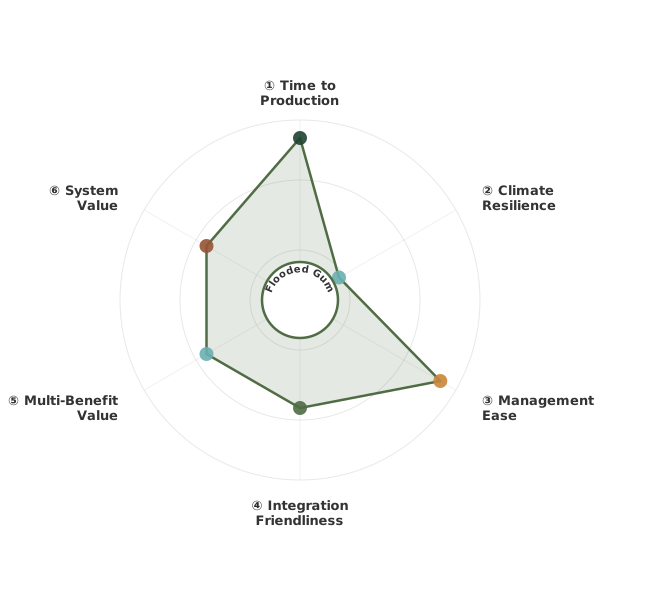
How These Traits Are Calculated
Trait dimensions are ordered clockwise starting from the top of the chart (12 o'clock position):
1. Time to Production
Years from planting to first harvestable yields
WHAT: Measures the waiting period from tree establishment to first meaningful production. Fast-producing trees yield within 2-5 years; slow producers require 8-15+ years before significant harvests.
WHY: Time to production determines cash flow timing and financial feasibility for farm businesses. Long wait times create significant opportunity costs—land and labor tied up for years without income. Fast producers allow quicker experimentation and cash flow recovery, reducing risk for new tree crop farmers.
HOW: Ratings based on years to first harvest documented in economics data. Exceptional (3.0): Production within 2-4 years (elderberry, mulberry, some nut bushes). Typical (2.0): 5-8 years (many fruit trees). Limited (1.0): 10-15+ years (hardwood timber, some nut trees like pecan, walnut).
2. Climate Resilience
Weighted: hardiness zones (50%) + drought tolerance (30%) + adaptability (20%)
WHAT: Combines temperature tolerance (hardiness zone range), water stress resilience (drought tolerance), and overall climate flexibility. Multi-decade tree investments require reliable climate matching to prevent total loss.
WHY: Wrong climate choices mean complete failure for permanent plantings. A tree that dies in year 5 from unexpected cold or prolonged drought represents catastrophic loss of 5 years' investment. Climate resilience determines geographic range and weather variability tolerance—critical as climate patterns become less predictable.
HOW: Weighted formula prioritizes hardiness zone range (50% weight) for core temperature tolerance, drought tolerance (30% weight) for water stress, and overall adaptability (20% weight) for general climate flexibility. Exceptional (3.0): Wide hardiness range (8+ zones) with strong drought tolerance. Typical (2.0): Moderate range and tolerance. Limited (1.0): Narrow climate requirements.
3. Management Ease
Weighted: establishment (40%) + low maintenance (30%) + pest resistance (30%)
WHAT: Combines establishment difficulty, ongoing maintenance requirements, and disease/pest pressure into overall management workload. Low-maintenance trees fit easily into busy farm operations without specialized expertise or intensive inputs.
WHY: Labor is the limiting factor for most diversified farms. High-maintenance trees requiring pruning expertise, disease management, and intensive pest control compete for limited time with other farm enterprises. Easy-care trees deliver production with minimal intervention, making them viable for time-constrained farmers.
HOW: Weighted formula balances establishment ease (40% weight) for startup success, inverted maintenance intensity (30% weight) for ongoing care, and inverted pest/disease pressure (30% weight) for health management. Exceptional (3.0): Easy to establish, self-sufficient growth, naturally pest-resistant. Typical (2.0): Moderate care needs. Limited (1.0): Difficult establishment, intensive maintenance, or heavy pest pressure.
4. Integration Friendliness
Compatibility with silvopasture, alley cropping, and multi-species systems
WHAT: Measures how well the tree integrates with other farm enterprises—grazing livestock, annual crops, or other perennials. Integration-friendly trees tolerate livestock browsing, don't heavily shade out crops, and coexist with diverse plantings.
WHY: Integrated tree systems (silvopasture, alley cropping, food forests) provide higher total returns per acre than monoculture plantings. Trees that work well with livestock provide shade + forage + production simultaneously. Integration flexibility allows farmers to stack enterprises and adapt to market opportunities.
HOW: Ratings based on the integration_friendliness trait documenting compatibility with grazing, cropping, and multi-species systems. Exceptional (3.0): Tolerates livestock browsing, provides livestock benefits (shade, browse), compatible with understory crops. Typical (2.0): Some integration possible with management. Limited (1.0): Requires isolation, incompatible with livestock or cropping.
5. Multi-Benefit Value
Stacked benefits beyond primary product—shade, wildlife, nitrogen, erosion control
WHAT: Measures the diversity of ecosystem services provided beyond the main harvest product. Multi-benefit trees deliver shade, windbreak, wildlife habitat, nitrogen fixation, erosion control, pollinator support, and aesthetic value simultaneously.
WHY: Single-purpose trees are economically fragile—market price swings or production failures eliminate all value. Multi-benefit trees provide resilience through diverse value streams. A nitrogen-fixing tree that produces nuts, provides shade for livestock, supports wildlife, and controls erosion delivers 4-5x the system value of a production-only tree.
HOW: Ratings based on the multi_benefit_value trait documenting service diversity. Exceptional (3.0): 4+ significant services stacked (nitrogen-fixing legume trees providing nuts + shade + wildlife + windbreak). Typical (2.0): 2-3 moderate services. Limited (1.0): Single-purpose production trees with minimal additional benefits.
6. System Value
Total ecosystem and economic value across short, medium, and long timeframes
WHAT: Synthesizes the total regenerative value delivered across multiple decades, including immediate ecosystem services (years 1-5), medium-term production value (years 5-15), and long-term system transformation (years 15-50). Captures the compounding benefits of permanent plantings.
WHY: Trees are multi-decade investments requiring patient capital. System value measures whether the total package—early ecosystem services, eventual production, and long-term legacy benefits—justifies the wait time and land commitment. High system value trees pay back investment through diverse, stacking, compounding benefits.
HOW: Scored via LLM synthesis of economics timelines, ecosystem service diversity, and long-term soil/water/carbon impacts. Exceptional (3.0): Strong early services + valuable production + transformative long-term impacts. Typical (2.0): Moderate benefits across timeframes. Limited (1.0): Long wait with limited service stacking or weak economic returns.
Ratings are based on documented performance in regenerative systems, not conventional high-input scenarios. All traits assume integrated management practices focused on soil health and ecosystem services.
5
Management & Care Requirements
Integration guidance, maintenance needs, and care practices
Management & Care Requirements
Integration guidance, maintenance needs, and care practices
How to Integrate This Plant
Flooded gum (Eucalyptus grandis) is best integrated into regenerative systems as a key component of silvopasture. Its primary role is providing shade and shelter for livestock, as demonstrated in trials with Jersey cows where silvopasture resulted in lower respiratory rates and rectal temperatures during warmer periods. While not explicitly mentioned for nitrogen fixation, its use in mixed plantations with nitrogen-fixing species like Acacia mangium suggests potential for soil improvement when managed appropriately. Compatible practices include silvopasture and potentially agroforestry systems. Early contributions (Year 1-2) are minimal beyond establishment. By Year 5, the trees will offer significant shade, and by Year 10-20, they will provide substantial environmental benefits and biomass. The total system value extends beyond direct harvest, encompassing improved animal welfare, potential soil conditioning when mixed with legumes, carbon sequestration, and enhanced biodiversity within the pasture.
Integration Practices & Management
The provided knowledge base offers limited direct insights into how regenerative farmers integrate Eucalyptus grandis, with mentions primarily focusing on its use in silvopasture and mixed plantations rather than detailed agricultural practices. Source describes a silvopasture system with Eucalyptus grandis (≈10m height, 20m row spacing) integrated with rotational grazing for lactating Jersey cows. This system showed benefits in animal welfare, with lower respiratory rates and rectal temperatures during warmer seasons, suggesting potential for livestock integration. Source compares pure Eucalyptus grandis plantations with mixed plantations including Acacia mangium, and with nitrogen fertilization, evaluating soil quality indicators. This suggests an awareness of fertility management and potential for nitrogen-fixing companion species, though specific establishment or management techniques are not detailed. The knowledge base does not provide information on establishment methods, termination strategies, integration with cash crops, or specific farmer experiences regarding regenerative agriculture practices with Eucalyptus grandis.
Management Profile
Maintenance Intensity: Adequate - Fast growth is supported by proactive soil fertility management and resilient system design, minimizing the need for external interventions and enhancing its structural integrity.
Pest Disease Pressure: Not Recommended - Susceptibility to certain biotic challenges is mitigated through fostering a biodiverse ecosystem and promoting plant health via rich soil organic matter and balanced moisture.
Time To Production: Ideally Suited - Flooded gum is a fast-growing species, often ready for harvest in 7-12 years, showcasing its rapid biomass accumulation potential within a regenerative system.
Sources behind this view
 Research
-
Changing the land use from degraded pasture into integrated farming systems enhance soil carbon stocks in the Cerrado biome (opens in new window)
This study found: Integrated farming systems in Brazil's Cerrado, combining trees with crops/grasses, significantly boosted soil carbon and nitrogen over 11 years, restoring soil quality in degraded pastures.
6
Economics & Value Streams
Direct harvest, system benefits, ecosystem services, and risk diversification
Economics & Value Streams
Direct harvest, system benefits, ecosystem services, and risk diversification
Comprehensive economic analysis including direct harvest value, system enhancement contributions, ecosystem services, value timeline, and risk diversification strategies.
Per-Tree Production Economics
| Metric | Value |
|---|---|
| Establishment Cost | $5-15 |
| Years to First Harvest | 5-8 years |
| Annual Maintenance | $2-5 |
| Yield | 60-120 lbs/year 27-54 kg/year |
| Market Price | $0-0/lb $0-0/kg |
| Productive Lifespan | 30-50 years |
| Net Annual Return* | $-5 to $-2/year (negative) |
Values shown per mature tree, not per acre. In regenerative systems, trees are integrated at low densities across diverse landscapes. Establishment costs spread over the lifespan of the tree. Early years have costs but no revenue.
* Net Annual Return = (Yield × Market Price) − (Amortized Establishment Cost + Annual Maintenance). This return is realized only at/after first harvest; early years have costs but no revenue. Range shows worst case to best case scenarios.
System Enhancement Value
Beyond harvest: shade for livestock, soil building, and system benefits
Shade Value for Livestock
Cattle $50-150/head/year, Pigs $30-80/head/year. Shade value varies by climate, livestock density, and canopy characteristics.
Flooded gum (Eucalyptus grandis) plantations, particularly when integrated into silvopasture systems, offer significant shade benefits for livestock. As indicated in excerpt, a silvopasture system with Eucalyptus grandis improved animal welfare by mitigating heat stress responses. During warmer periods (summer and fall), cattle in these systems exhibited lower respiratory rates and rectal temperatures, leading to increased grazing and resting times. This reduction in heat stress can translate to improved animal health, reduced susceptibility to disease, and better feed conversion efficiency. The canopy characteristics of mature Eucalyptus species provide substantial shade coverage, creating a more comfortable environment for animals. The value of this shade is influenced by climate, the density of livestock, and the specific canopy structure of the trees. In environments prone to heat stress, the presence of adequate shade can be critical for maintaining animal productivity and well-being.
Nitrogen Fixation (if legume)
Variable, dependent on the proportion and efficacy of integrated leguminous species. Potential reduction in synthetic N fertilizer application.
While Eucalyptus grandis itself is not a nitrogen-fixing species, its integration with nitrogen-fixing species, such as Acacia mangium, can significantly enhance soil fertility. Excerpt highlights that mixed E. grandis and A. mangium stands showed higher Soil Management Assessment Framework (SMAF) scores compared to pure Eucalyptus stands. Specifically, the mixed stands demonstrated improvements in soil pH and available phosphorus. The presence of nitrogen-fixing companion species contributes to the overall nutrient cycling within the ecosystem. By fixing atmospheric nitrogen, these companion plants can reduce the reliance on synthetic nitrogen fertilizers for the Eucalyptus and other associated understory vegetation. This biological nitrogen input improves soil organic matter and enhances nutrient availability for plant growth, potentially reducing input costs and environmental impact associated with synthetic fertilizers. This synergistic effect is crucial for sustainable silvopasture and agroforestry systems.
Windbreak & Erosion Control
Protects 3-5 acres per tree row, 5-15% crop yield improvement (general agroforestry benefit, specific to Eucalyptus grandis windbreak efficacy needs further study).
While not explicitly detailed in the provided excerpts for Eucalyptus grandis, mature eucalyptus plantations, as widely recognized in agroforestry, can function as effective windbreaks. Their tall stature and dense canopy can significantly reduce wind speed across adjacent agricultural lands. This reduction in wind velocity helps to mitigate soil erosion caused by wind, thereby preserving topsoil and its associated nutrients. For crops, windbreaks can lead to improved microclimates, reducing desiccation and physical damage, which can result in enhanced crop yields. Livestock also benefit from reduced wind exposure, especially during colder months, leading to less stress and potentially improved feed conversion. The protective effect of a windbreak typically extends several times the height of the trees into the leeward area, creating a buffer zone that enhances the productivity and resilience of surrounding agricultural activities.
Other System Contributions
Beyond direct shade and potential soil improvement through companion planting, flooded gum integrated into farm systems offers a range of other benefits. Its presence contributes to enhanced soil quality, as noted in excerpt, where mixed stands with Acacia mangium improved biological and chemical indicators like microbial biomass carbon and available phosphorus. This improved soil health supports better water infiltration and retention, potentially reducing runoff. Furthermore, the diverse structure of silvopasture and food forest systems incorporating Eucalyptus can provide habitat and forage for beneficial insects and wildlife. The potential for coppicing, as mentioned in excerpt, offers a renewable source of biomass for bioenergy or mulch, contributing to a circular economy within the farm. The aesthetic value and contribution to landscape biodiversity are also important, though harder to quantify economically.
Ecosystem Service Contributions
Environmental contributions: carbon, pollinators, wildlife, and water
- Carbon Sequestration: Eucalyptus grandis is a fast-growing tree species with significant potential for carbon sequestration in both its biomass and soil, especially in well-managed plantations.
- Pollinator Support: Medium. Eucalyptus species can provide nectar and pollen resources during their blooming periods, supporting local pollinator populations.
- Wildlife Habitat: Moderate. Mature Eucalyptus trees offer nesting sites for birds and habitat for various arboreal species. The understory in silvopasture systems can provide browse and shelter for livestock and wild animals.
- Water Quality: Not applicable (unless planted in riparian zones, which is not specified as a primary function).
Value Timeline: When Benefits Begin
When you'll see results: shade in years 1-5, fruit/nut harvest 3-10, timber 20+
Years 1-2
Initial erosion control from establishment, potential for early nitrogen contribution if interplanted with legumes, modest shade development.
Years 3-5
Established shade benefits for livestock, noticeable soil health improvements, early biomass for coppicing (if applicable), increased habitat value.
Years 10-20
Mature shade provision, significant carbon sequestration, potential for first timber harvest (depending on management), established ecosystem services (habitat, biodiversity).
20+ Years
Long-term timber production, sustained ecosystem services, mature habitat, potential for soil carbon accumulation.
Farm Risk Reduction
How this reduces farm risk: backup income, weather protection, market hedges
- Multiple Revenue Streams: Timber/biomass, livestock shade/welfare improvement, soil health enhancement (reduced input needs), potential for specialty products (e.g., essential oils), habitat provision.
- Temporal Income Spread: Ongoing ecosystem services (shade, habitat, soil health) alongside periodic harvests of timber or biomass, providing a blend of continuous and discrete revenue streams.
- Market Risk Hedge: Diversifies farm revenue away from single commodities, provides climate resilience through shade and improved soil water retention, potential for drought tolerance in mature trees.
Sources behind this view
Research
-
Eucalyptus Succession on Croplands in the Highlands of Northwestern Ethiopia: Economic Impact Analysis Using Farm Household Model (opens in new window)
This study found: The northwestern highlands of Ethiopia are characterized by severe land degradation and apparently low agricultural productivity. This situation is continuously threatening the livelihoods of smallhol
8
Know the Debate
The effectiveness and ecological impact of *Eucalyptus grandis* vary considerably based on its setting. In humid, temperate climates with reliable ...
Know the Debate
The effectiveness and ecological impact of *Eucalyptus grandis* vary considerably based on its setting. In humid, temperate climates with reliable ...
The effectiveness and ecological impact of *Eucalyptus grandis* vary considerably based on its setting. In humid, temperate climates with reliable rainfall and well-managed, diverse systems, it can offer substantial timber returns and moderate soil health benefits through biomass contribution. However, in drier regions or where monoculture plantations are established on sensitive soils, it can lead to significant water depletion and soil degradation. Management intensity, from thinning schedules to companion planting, plays a crucial role in mitigating risks and maximizing benefits across different scales.
Eucalyptus timber yield vs. invasive potential
Valuable timber with ecological benefit
Managed plantations can yield significant timber and carbon sequestration, with some evidence suggesting older plots on degraded land may even increase understory diversity, offering potential ecological co-benefits.
Sources behind this view
Sources behind this view
 Videos & Podcasts
-
Discusses managing a dense Eucalyptus clatralics plantation (planted ~1998) in a dry, competitive environment. Emphasizes thinning to a single stem is crucial for resource allocation and growth, with potential for firewood/saw log harvest after 30 years.

-
Eucalyptus in syntropic farming is used for its timber qualities and growth rate within diverse agroecosystems, not monocultures, mitigating risks like wildfires and allelopathy through scale and diversity management.
Research
-
Should Exotic Eucalyptus be Planted in Subtropical China: Insights from Understory Plant Diversity in Two Contrasting Eucalyptus Chronosequences. (opens in new window)
This study found: Research in southern China looked at how planting Eucalyptus trees, which are not native, affected the variety of plants growing underneath them. In one area where Eucalyptus replaced Chinese fir, the plant diversity under the trees didn't change much. However, in another area where Eucalyptus was planted on bare land, the diversity increased significantly after 24 years, with more woody plants and fewer smaller herbaceous plants compared to younger Eucalyptus stands. The study suggests that mixing Eucalyptus with native trees could help maintain biodiversity in fast-growing plantations, and Eucalyptus might be useful for restoring degraded lands.
Ecological risk and invasive potential
In non-native regions with poor management, *Eucalyptus grandis* can be invasive, outcompeting natives and degrading soil and water resources. Monocultures on sensitive soils have shown significant long-term negative impacts, questioning its broad ecological compatibility.
Sources behind this view
Sources behind this view
Research
-
Changes in soil chemical properties under two contrasting plantation systems on the Zululand coastal plain, South Africa (opens in new window)
This study found: A nearly 50-year study in South Africa compared how two types of tree plantations affected sandy coastal soils. Soils under Eucalyptus trees showed signs of degradation in the top few inches, with organic matter and minerals being washed out, forming a bleached layer. This effect was not seen under Pine trees, indicating the pine had less impact. While this degradation rate is similar to some natural forests, the study raises concerns about the long-term health of these sandy soils if they are used for short, fast-growing tree rotations, as this could deplete soil resources.
-
Carbon Storage and Environmental Adaptation of <i>Eucalyptus camaldulensis </i>Dehnn, in Bangladesh (opens in new window)
This study found: A study in Bangladesh tracked *Eucalyptus camaldulensis* (River Red Gum) trees for 20 years to understand their carbon storage and environmental impact. The trees grew significantly in size, with trunk diameter reaching nearly 30 cm and height over 17 meters by year 20. Over the years, these trees stored substantial amounts of carbon, with the amount per tree increasing from about 46 kg at 5 years to over 430 kg at 20 years. Annually, the trees captured between 5 and 17 kg of carbon per year. While these trees are fast-growing and help meet timber demand, they can also harm soil fertility. This is due to their chemical effects on other plants, high need for nutrients, and significant water use. The study suggests that while eucalyptus can be beneficial for carbon capture, its widespread planting in new areas should be approached with caution. Practices like adding soil amendments or planting other soil-improving plants alongside eucalyptus could help reduce negative impacts on soil health.
Making Sense of the Differences
The economic benefits of *Eucalyptus grandis* timber are clear, but its ecological impact varies by location and management. In its native habitat or carefully managed polyculture systems in regions like Brazil and China, it can offer ecological co-benefits. However, monocultures in drier climates or on sensitive soils pose significant risks of invasiveness, water depletion, and soil degradation, often outweighing the economic advantages.
Eucalyptus impact on soil nutrients and moisture
Neutral to beneficial soil effects in diverse systems
In various agroforestry settings and humid climates, Eucalyptus can have neutral effects on soil nutrients or even improve soil health by contributing biomass and supporting understory growth, particularly on degraded lands.
Sources behind this view
Sources behind this view
Videos & Podcasts
-
Eucalyptus trees in agroforestry systems provide deep root nutrient access, biomass for chop-and-drop, and growth hormones. They support diverse understory crops like lettuce and cauliflower.
Research
-
Soil physicochemical properties under eucalyptus tree species planted in alley maize cropping agroforestry practice in Decha Woreda, Kaffa zone, southwest Ethiopia (opens in new window)
This study found: In a farming system in southwest Ethiopia that combines eucalyptus trees with corn (maize) in rows, a study looked at how the trees affected the soil. Researchers compared soil under four types of eucalyptus trees planted in rows with soil in nearby open fields. After analyzing soil samples, they found that the eucalyptus trees did not significantly change key soil health indicators like total nitrogen, phosphorus, pH, organic matter, soil moisture, or organic carbon, even with short-term tree growth. The only notable difference was in the amount of sand in the soil. This suggests that in this specific high-rainfall clay soil environment, eucalyptus trees grown for a short time in this agroforestry setup don't negatively impact the soil's basic physical and chemical properties.
-
Carbon sequestration potential of eucalyptus-based agroforestry and cropping systems (opens in new window)
This study found: Eucalyptus trees, especially when integrated into farming systems with crops or livestock (agroforestry), are effective at capturing carbon and helping to reduce greenhouse gases. In India, eucalyptus plantations can store significant amounts of carbon, with some studies showing rates of over 10 Mg per hectare per year. Older trees and healthy soil contribute to higher carbon storage. Agroforestry systems with eucalyptus not only store carbon in trees and soil but also improve soil health, biodiversity, and farmer livelihoods. However, eucalyptus trees use a lot of water, which has led to restrictions in some areas. Careful planning, choosing the right species, and sustainable management are key to maximizing carbon benefits while avoiding negative impacts like water depletion.
Negative impacts on soil moisture and structure in certain conditions
In dry climates, monocultures, or on sandy soils, Eucalyptus can severely deplete soil moisture, lead to soil degradation, and exhibit allelopathic effects that harm companion plants and soil biology.
Sources behind this view
Sources behind this view
Videos & Podcasts
-
Eucalyptus flammability in Australia is due to lack of wet undergrowth; maintaining a lush understory is key to fire mitigation and soil regeneration, with eucalyptus being a powerful tool for this.

Research
-
Surface and Subsurface Water Impacts of Forestry and Grassland Land Use in Paired Watersheds: Electrical Resistivity Tomography and Water Balance Analysis (opens in new window)
This study found: A three-year study in southern Brazil compared how eucalyptus plantations and grasslands affect water resources in nearby watersheds. Researchers found that during wetter periods, eucalyptus trees used significantly more water through evaporation and plant transpiration than grasslands did, resulting in less runoff from the grassland. However, during dry spells, the eucalyptus plantations drew down more underground water, lowering the water table compared to the grassland. By combining water measurements with a special imaging technique to see underground, the study provides valuable information for managing water resources sustainably, especially when considering forestry or grassland production.
-
Changes in soil chemical properties under two contrasting plantation systems on the Zululand coastal plain, South Africa (opens in new window)
This study found: A nearly 50-year study in South Africa compared how two types of tree plantations affected sandy coastal soils. Soils under Eucalyptus trees showed signs of degradation in the top few inches, with organic matter and minerals being washed out, forming a bleached layer. This effect was not seen under Pine trees, indicating the pine had less impact. While this degradation rate is similar to some natural forests, the study raises concerns about the long-term health of these sandy soils if they are used for short, fast-growing tree rotations, as this could deplete soil resources.
-
Carbon Storage and Environmental Adaptation of <i>Eucalyptus camaldulensis </i>Dehnn, in Bangladesh (opens in new window)
This study found: A study in Bangladesh tracked *Eucalyptus camaldulensis* (River Red Gum) trees for 20 years to understand their carbon storage and environmental impact. The trees grew significantly in size, with trunk diameter reaching nearly 30 cm and height over 17 meters by year 20. Over the years, these trees stored substantial amounts of carbon, with the amount per tree increasing from about 46 kg at 5 years to over 430 kg at 20 years. Annually, the trees captured between 5 and 17 kg of carbon per year. While these trees are fast-growing and help meet timber demand, they can also harm soil fertility. This is due to their chemical effects on other plants, high need for nutrients, and significant water use. The study suggests that while eucalyptus can be beneficial for carbon capture, its widespread planting in new areas should be approached with caution. Practices like adding soil amendments or planting other soil-improving plants alongside eucalyptus could help reduce negative impacts on soil health.
Making Sense of the Differences
The impact of *Eucalyptus grandis* on soil is highly context-dependent. In systems with adequate rainfall, diverse companions like nitrogen-fixing plants or other tree species, and on already degraded lands, it may have neutral to positive effects by contributing biomass and supporting understory growth. However, in dry climates, monocultures, or on sensitive soil types like sandy soils, it can severely deplete moisture, degrade soil structure, and exhibit allelopathic effects, necessitating careful site selection and management strategies.