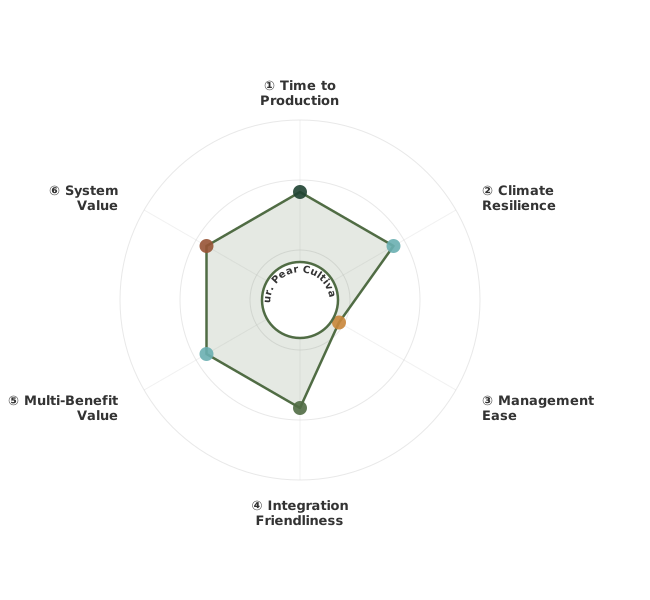
Regenerative Quick Profile

All recommendations assume integrated, regenerative practices—not conventional inputs.

Climate & Soil Fit

Climate: Tropical Rainforest, Tropical Monsoon, Tropical Savanna, Hot Semi-Arid (Steppe), Cold Semi-Arid (Steppe), Hot Desert, Cold Desert, Humid Subtropical, Oceanic (Maritime Temperate), Hot-Summer Mediterranean, Warm-Summer Mediterranean, Monsoon-Influenced Humid Subtropical, Subtropical Highland, Hot-Summer Continental, Warm-Summer Continental, Subarctic, Monsoon-Influenced Hot-Summer Continental, Tundra

Zones: USDA 5-8, Australian Zones 3-5

Optimal Soil: Loam Soil

System Role & Functions

Primary: Food Forest

Secondary: Cash Crop With Services, Specialty

Key Benefits: Pest resistant

Management Level

Experience: Advanced

Maintenance: High maintenance - Key advantages include potentially double-resistant trees and minimal spraying needs, significantly reducing the necessity for intensive pruning and pest management.

Time to Production: Moderate (2-5 years) - European pears typically begin fruiting within 4-7 years, with full productivity developing over a longer period, requiring a patient, systems-thinking approach to orchard establishment.

Value Streams

  • Fruit/nut harvest
  • Diversifies farm income
  • Enhances biodiversity
1

Climate Suitability Assessment

Will this plant thrive in your climate?

IDEALLY SUITED

Köppen Zone: Cfa (Humid Subtropical), Csb (Warm-Summer Mediterranean), Dfa (Hot-Summer Continental), Dfb (Warm-Summer Continental)
USDA Zone: 6a, 7a, 8a
Australian Zone: temperate
EU Climate Region: atlantic

European pear cultivars perform optimally in climates that provide a consistent and sufficient winter chill (typically 800-1200 chill hours) to ensure proper bud break and flowering, coupled with mild summers that are not excessively hot or dry. These conditions are met in Köppen zones Cfb and Dfb, USDA zones 7a-8b, Australian temperate zones, and EU Atlantic regions. The absence of extreme temperature fluctuations, such as late spring frosts or prolonged heatwaves, allows for reliable fruit set, development, and ripening, leading to high yields and superior fruit quality. Adequate rainfall or manageable irrigation supports tree health throughout the growing season. These zones offer the longest productive lifespan for orchards with minimal need for intensive climate-related management, making them the most economically viable and predictable for European pear cultivation.

ADEQUATE

Köppen Zone: Cfb (Oceanic (Maritime Temperate)), Csa (Hot-Summer Mediterranean), Cwa (Monsoon-Influenced Humid Subtropical), Cwb (Subtropical Highland)
USDA Zone: 5a, 5b, 9a
Australian Zone: subtropical
EU Climate Region: continental

European pear cultivars can be successfully grown in climates that offer a balance of sufficient winter chill and growing season warmth, but may require careful management and cultivar selection. This includes Köppen zones Cfa, Dfa, Dsb, USDA zones 5a-6b, 9a-9b, Australian subtropical zones, and EU continental regions. While winter chill is generally adequate, some cultivars may struggle in warmer zones (9a-9b) requiring low-chill varieties. Hotter summers in Cfa and Dfa zones can lead to heat stress and impact fruit quality, necessitating irrigation and potentially shade. Continental climates may experience greater temperature variability, increasing the risk of frost damage or extreme winter cold. Economic viability is good, but requires attention to cultivar choice, water management, and protection against climate-related stresses to ensure consistent yields and quality.

NOT RECOMMENDED

Köppen Zone: Af (Tropical Rainforest), Am (Tropical Monsoon), Aw (Tropical Savanna), ET (Tundra), BSh (Hot Semi-Arid (Steppe)), BSk (Cold Semi-Arid (Steppe)), BWh (Hot Desert), BWk (Cold Desert), Dfc (Subarctic), Dwa (Monsoon-Influenced Hot-Summer Continental)
USDA Zone: 2a, 3a, 3b, 4a, 10a, 11a, 12a

European pear cultivars are not recommended in climates that present extreme challenges to their survival and fruiting. This includes Köppen zones Cfc, Dfc, Dsa, Dsc, USDA zones 1a-4b, 10a-10b, and EU Boreal regions. The primary limiting factors are insufficient winter chill for bud break and fruit set in very warm climates (USDA 10a-10b, Köppen Dsa/Dsb), and extreme winter cold or insufficient growing season heat in very cold climates (USDA 1a-4b, Köppen Dfc/Dsc). In hot, dry zones, pears suffer from heat stress, poor fruit development, and require intensive, often uneconomical, irrigation. In cold zones, trees face winter kill, and the short, cool growing season prevents fruit from maturing. Establishment success is low, management costs are prohibitive, and yields are unreliable or non-existent, making these zones unsuitable for commercial or even significant home production.

Better alternatives for these "not recommended" zones: Hardy Apple Cultivars (Apples generally tolerate cooler summers and shorter growing seasons better than pears.), Lingonberry (Native to cold climates, requires minimal chill, and tolerates acidic soils.), Cloudberry (Adapted to cold, boggy environments, and produces edible berries.), Fig (Thrives in warm climates and requires less chill.), Pomegranate (Highly drought and heat tolerant, well-suited to arid conditions.), Tropical Fruits (e.g., Mango, Papaya) (Adapted to high heat and low chill conditions.), Citrus (Thrives in warm climates and requires minimal chill.)

Note: Zones listed above represent climates where this plant can produce reliably with reasonable management. Climate zones not mentioned would require intensive climate modification (greenhouses, extensive infrastructure) and are not economically viable for regenerative agriculture purposes.

2

Soil Suitability Assessment

Which soil types work best for this plant?

IDEALLY SUITED

Loam Soil

This plant thrives in these soil types without requiring amendments or remediation. Natural soil conditions support optimal growth and productivity.

ADEQUATE

Clay Soil, Rich Soil, Rocky Soil, Sandy Soil

This plant performs acceptably in these soil types with moderate, manageable remediation such as pH adjustment, compost addition, or drainage improvement. The required amendments are practical and cost-effective for regenerative agriculture.

NOT RECOMMENDED

Acidic Soil, Alkaline Soil, Desert Soil, Saline Soil, Wet Soil

Growing this plant in these soil types would require impractical remediation such as complete soil replacement, extensive amendments, or cost-prohibitive infrastructure. These conditions are not economically viable for regenerative agriculture.

Note: Soil suitability assessments focus on remediation requirements. "Ideally Suited" means the plant generally thrives without the need for substantial amendments, "Adequate" means manageable remediation (lime, compost, mulch), and "Not Recommended" means impractical soil changes would be required. Climate factors like rainfall and temperature also influence success.

3

Seasonal Considerations

Planting timing, growth duration, and harvest windows

Establishing your pear trees, Pyrus communis, is a multi-year journey beginning with careful planting. For bare-root trees, the ideal time is during their winter dormancy, typically in late fall or very early spring before bud break. Container-grown trees offer more flexibility and can be planted throughout the active growing season, though early spring or fall are best to minimize transplant shock.

Expect a few years for your trees to reach solid establishment, usually 2-3 years, with the first light harvest possible around year 3-5. Full production, where trees yield their maximum potential, typically takes 5-8 years. Well-managed pear trees can remain productive for several decades.

Seasonal management is key. Pruning is best done during the dormant season, late winter, to shape the tree and encourage fruit production. Bloom typically occurs in mid-spring, followed by fruit development through summer. Harvest season varies by variety but generally falls in late summer through early fall. As temperatures cool in late fall, trees will naturally enter winter dormancy, preparing for the cycle to begin anew.

4

System Role & Multi-Benefit Value

Functional roles, integration strategies, and stacked benefits

Functional Role

Integration Characteristics

Multi-Benefit Value: Adequate - This species provides nutritious fruit for human consumption and wildlife, offering moderate support for pollinators and habitat; its contribution to soil health is enhanced through integrated management like mulching and cover cropping.

Integration Friendliness: Adequate - European pears integrate well into diverse agroforestry systems, primarily valued for their fruit; their presence can also contribute to shade and wildlife habitat, with their soil-enriching capacity amplified through regenerative practices.

5

Economics & Value Streams

Direct harvest, system benefits, ecosystem services, and risk diversification

Comprehensive economic analysis including direct harvest value, system enhancement contributions, ecosystem services, value timeline, and risk diversification strategies.

Per-Tree Production Economics

Metric Value
Establishment Cost $20-35
Years to First Harvest 5-7 years
Annual Maintenance $8-15
Yield 50-100 lbs/year 22-45 kg/year
Market Price $0-1/lb $1-2/kg
Productive Lifespan 20-30 years
Net Annual Return* $-16 to $91/year

Values shown per mature tree, not per acre. In regenerative systems, trees are integrated at low densities across diverse landscapes. Establishment costs spread over the lifespan of the tree. Early years have costs but no revenue.

* Net Annual Return = (Yield × Market Price) − (Amortized Establishment Cost + Annual Maintenance). This return is realized only at/after first harvest; early years have costs but no revenue. Range shows worst case to best case scenarios.

System Enhancement Value

Beyond harvest: how understory complements overstory in polyculture

Food Forest System Contributions

Common pear (*Pyrus communis*) contributes significantly to the farm ecosystem through pollinator support and potential medicinal applications. As indicated by research (Excerpt), pear nectar hosts distinct bacterial communities that may influence pollinator attraction and efficacy, thereby enhancing pollination services for other crops within the integrated system. Beyond direct pollination, historical texts (Excerpt) highlight the medicinal properties of pears, noting their astringent and binding qualities useful for digestive issues and wound care. This suggests potential for on-farm use of pear leaves or fruit for natural remedies, reducing reliance on external inputs. Furthermore, the complex root systems of established pear trees can contribute to soil structure improvement and water infiltration, indirectly benefiting the overall health and resilience of the farm ecosystem. The cultivation of pear varieties, particularly when paired with specific rootstocks (Excerpts and), can also lead to enhanced fruit quality and yield, indirectly boosting the economic viability of the food forest system.

Ecosystem Service Contributions

Environmental contributions: carbon, pollinators, wildlife, and water

  • Carbon Sequestration: Established pear trees, especially when grown to maturity in a food forest system, can sequester significant amounts of carbon in their biomass (trunk, branches, roots) and contribute to soil organic matter accumulation over time.
  • Pollinator Support: High. Pear trees (*Pyrus communis*) bloom, providing nectar and pollen resources for a variety of pollinators. Research indicates species-specific bacterial communities in pear nectar that may positively influence pollinator attraction and pollination efficacy (Excerpt).
  • Wildlife Habitat: Provides food resources (fruit) for various wildlife, and habitat for beneficial insects and birds within the orchard ecosystem. Mature trees offer nesting and shelter opportunities.
  • Water Quality: Not applicable

Value Timeline: Understory Development

When you'll see results: groundcover/herbs year 1, shrubs 2-3, full layer integration 5-10

Years 1-2

Establishment of root system contributing to soil structure and water infiltration. Early flowering may begin to attract pollinators. Potential for medicinal uses of leaves/young growth.

Years 3-5

First significant fruit harvests, providing direct food forest product and potential cash crop revenue. Enhanced pollinator attraction and support for surrounding crops. Increased contribution to soil organic matter.

Years 10-20

Mature tree production, maximizing direct harvest revenue. Significant contribution to pollinator health and biodiversity within the farm system. Established soil health benefits from root systems. Potential for developing value-added products from fruit.

20+ Years

Long-term sustained fruit production. Mature canopy provides substantial habitat and ecosystem services. Potential for timber value if trees are managed for longevity and eventual harvest. Continued contribution to soil carbon sequestration and ecosystem resilience.

Farm Risk Reduction

How multi-layer systems diversify production and income

  • Multiple Revenue Streams: Direct fruit sales (fresh, processed), potential sales of value-added products (e.g., jams, perry), ecosystem services (pollinator support for other crops), potential medicinal products (from leaves/fruit).
  • Temporal Income Spread: Value is spread across multiple harvest seasons annually, with increasing production and ecosystem service benefits developing over years. Long-term value includes potential timber harvest and sustained ecosystem services.
  • Market Risk Hedge: Diversifies farm income beyond single crops, reducing reliance on volatile commodity markets. Pollinator support enhances yield and quality of other farm products. Potential for niche markets for specialty pear varieties or value-added products. Resilience against certain pests/diseases due to diversified planting within a food forest system.
6

Regenerative Suitability Details

Comprehensive trait ratings for system integration assessment

Comparative ratings for this plant across key regenerative agriculture traits.

Trait Suitability Explanation
Drought Tolerance Adequate European pears exhibit moderate resilience to dry periods, but optimal fruit development and yield are supported by practices that enhance soil moisture retention, such as mulching and cover cropping.
Establishment Ease Not Recommended Establishing European pears involves thoughtful nursery practices and grafting for reliable fruiting; seedling vigor is moderate and establishment success is enhanced by soil health and moisture management.
Time To Production Adequate European pears typically begin fruiting within 4-7 years, with full productivity developing over a longer period, requiring a patient, systems-thinking approach to orchard establishment.
Multi Benefit Value Adequate This species provides nutritious fruit for human consumption and wildlife, offering moderate support for pollinators and habitat; its contribution to soil health is enhanced through integrated management like mulching and cover cropping.
Climate Adaptability Adequate Adapted to Zones 4-8, European pears thrive in moderate climates and require well-drained soils; resilient varieties and proactive soil health management can mitigate challenges from extreme temperatures and disease pressure.
Hardiness Zone Range Adequate Thriving in Zones 4-8, European pears demonstrate good cold tolerance, needing sufficient summer warmth for reliable fruiting within their adapted zones and balanced soil fertility.
Maintenance Intensity Not Recommended Key advantages include potentially double-resistant trees and minimal spraying needs, significantly reducing the necessity for intensive pruning and pest management.
Pest Disease Pressure Ideally Suited The potential for double-resistant trees and a reported 'minimal spray' requirement strongly suggests a significantly reduced susceptibility to common pests and diseases.
Integration Friendliness Adequate European pears integrate well into diverse agroforestry systems, primarily valued for their fruit; their presence can also contribute to shade and wildlife habitat, with their soil-enriching capacity amplified through regenerative practices.

Comparative System: Ratings compare plants within their economic category (e.g., cover crop nitrogen fixation compared to other cover crops, not to all plants). Individual farm conditions and management practices significantly influence actual performance.

7

Learn More

Why farmers use this plant and additional resources

Why Regenerative Farmers Use This Plant

European pears, particularly those grafted onto fire blight-resistant rootstocks, are exceptionally well-suited for regenerative agricultural systems due to their longevity, minimal input requirements, and inherent resilience. These trees can live and produce fruit for over a century, often exceeding 200 years, becoming valuable long-term assets on the farm and representing a cornerstone for regenerative perennial agriculture. Their cultivated varieties often possess inherent resistance to common diseases like fire blight, significantly reducing the need for chemical interventions.

At maturity, a well-established pear orchard can sequester an estimated 2-5 tons of CO2e per acre per year, contributing significantly to soil carbon building and climate mitigation. Their robust root systems extend deep into the soil profile, typically reaching 6-15+ feet (1.8-4.5+ m), enhancing soil structure, improving water infiltration, and accessing nutrients unavailable to shallow-rooted crops. These deep roots also contribute to drought tolerance once established. The expansive canopy provides crucial ecosystem services, including shade regulation for understory crops or livestock, acting as effective windbreaks that reduce soil erosion and protect sensitive areas, and creating beneficial microclimates that support a diverse array of beneficial insects and soil microbes. Mature trees support a complex web of life, hosting hundreds of insect species, many of which are beneficial predators of common pests.

Integrating European pears into a regenerative system offers substantial multi-decade economic returns and asset value accumulation. While young trees may take 3-7 years to produce their first significant harvest and 7-15 years for full commercial yields, their long productive lifespan far exceeds many annual crops. This sustained productivity means a consistent income stream for decades, while the trees themselves increase in value as mature, fruit-bearing assets. Their minimal need for synthetic inputs, especially when managed with biological pest control and fertility strategies, translates to lower operational costs over time. Furthermore, their ability to thrive in diverse soil types and their resistance to common diseases reduce the risk of crop failure and the need for costly interventions.

Beyond direct fruit production, pear trees offer significant ecological benefits that enhance the overall farm ecosystem. Their blossoms provide an early-season nectar and pollen source for pollinators, supporting biodiversity and the health of surrounding crops. The leaf litter and fallen fruit contribute organic matter to the soil, feeding soil microbes and improving soil health year after year. This continuous input of organic material enhances soil structure, increases water-holding capacity, and reduces erosion. In silvopasture systems, the shade provided by pear trees can offer respite for livestock during hot periods, while their root systems help stabilize soil and prevent erosion, particularly on sloped land. Their presence can also attract beneficial insects that prey on common agricultural pests, contributing to natural pest management and reducing reliance on chemical controls. The continuous decomposition of organic matter from leaf fall and pruning residues contributes to a steady increase in soil organic matter, often by 0.5-1.5% over a decade, improving soil structure, water-holding capacity, and nutrient availability. This enhanced soil health can decrease the reliance on irrigation by up to 30-50% once established.

European pears have demonstrated remarkable success in various regenerative farming contexts globally. In the Pacific Northwest of the United States, orchards are often integrated into diversified fruit farms, benefiting from the region's mild, wet winters and dry summers. In parts of France and Italy, traditional pear orchards are managed with minimal intervention, relying on natural rainfall and soil health to sustain production. Australian growers in cooler, temperate regions have found success with specific varieties, often incorporating them into mixed farming systems. Their adaptability allows them to be a cornerstone crop in agroforestry designs, providing both economic and ecological resilience across diverse agricultural landscapes.

8

How to Integrate This Plant

Practical guidance for regenerative systems

Establishing European pear trees regeneratively involves careful site selection and planting practices to ensure long-term success. For optimal growth, select a well-drained loam or sandy loam soil with a pH between 6.0 and 7.0. Trees are typically planted as bare-root whips or as container-grown saplings.

Planting:

  • Timing: For bare-root trees, planting occurs during the dormant season, usually in late winter or early spring before bud break. In the Northern Hemisphere, this generally means planting from October through April, while in the Southern Hemisphere, it's from May through September. For container-grown trees, planting can extend into early summer, provided adequate irrigation is available.
  • Spacing: Spacing is critical for long-term orchard health and productivity, varying significantly based on rootstock vigor and desired orchard system. Common spacing for semi-dwarf rootstocks is 15-20 ft (4.5-6 m) apart in rows that are 20-25 ft (6-7.5 m) apart, allowing for equipment access and light penetration. For alley cropping or silvopasture, rows are typically spaced 30-40 ft (9-12 m) apart to accommodate grazing animals, machinery, hay production, or livestock movement.
  • Depth: Planting depth is crucial; the graft union must remain at least 2-3 inches (5-7.5 cm) above the soil line to prevent scion rooting and ensure the rootstock's characteristics are maintained. For containerized trees, plant at the same depth they were in the pot.

Ongoing Management:

  • Watering: Water needs are highest during the establishment phase (years 1-3), with approximately 1-2 inches (2.5-5 cm) of water per week required, ideally delivered through drip irrigation to conserve water and deliver it directly to the root zone. Once established, their deep root systems make them more drought-tolerant.
  • Fertility: Fertility should be prioritized through biological means. This includes incorporating compost annually around the base of the trees, mulching with organic matter (wood chips or straw), and planting nitrogen-fixing cover crops beneath the trees once they are established (typically by year 2-3). Nitrogen-fixing cover crops like white clover, vetch, or perennial legumes can be sown to provide forage and build soil fertility.
  • Pruning: Pruning is an essential cultural practice, usually initiated in the dormant season (late winter or early spring), to shape the tree, remove diseased or crossing branches, and maintain light penetration into the canopy. This promotes fruit quality and reduces disease pressure. Aim for 50-60% light penetration to the orchard floor at maturity.
  • Pest and Disease Management: Management should always prioritize biological control methods, such as encouraging beneficial insects and using resistant varieties, with chemical interventions reserved only as a last resort during the transition phase to building robust biological resilience. Cultural practices and habitat creation for beneficial insects are key.

Integration into Agroforestry Systems:

  • Establishment: Trees typically reach establishment within 1-3 years and can begin producing fruit within 3-7 years, with full production realized by 8-15 years, depending on the rootstock and variety.
  • Rootstock Selection: Rootstock selection is paramount; dwarf or semi-dwarf rootstocks are often chosen for easier management and quicker fruiting in smaller-scale or intensive systems, while standard rootstocks are suitable for larger orchards or silvopasture where more vigorous growth and larger trees are desired. Disease resistance, especially to fire blight, and soil adaptation are critical factors.
  • Understory Planting: Understory planting, initiated in year 2-3, can include nitrogen-fixing groundcovers, medicinal herbs, or shade-tolerant vegetables, provided they do not compete excessively with the young trees.
  • Soil Carbon: Measurable soil carbon increases are typically observed by year 5-7 as the trees mature, root systems develop, and organic matter accumulates.
  • Long-term Infrastructure: Considerations include reliable irrigation for establishment, robust deer and browse protection (fencing or tree guards), and potentially support structures for specific training systems or heavier fruiting branches in later years.

Regional Adaptations:

  • Pacific Northwest, USA: Orchards are often integrated into diversified fruit farms, with cover crops like crimson clover, vetch, or annual ryegrass planted between rows during the dormant season to fix nitrogen, suppress weeds, and control erosion, terminated by mowing or roller-crimping before fruit set.
  • France and Italy: Traditional orchards might incorporate grazing by sheep during the dormant season to manage understory vegetation and add fertility.
  • United Kingdom and Northern Europe: Varieties known for cold hardiness are selected, and planting may occur in early spring to allow trees to establish before winter.
  • Australia (Tasmania, Victoria): Pears are integrated into mixed orchards or silvopasture systems where they benefit from the region's chilling hours. Understory management focuses on drought-tolerant ground covers and minimal intervention. Planting can occur in autumn or early spring, often using dwarf rootstocks for easier management and intercropping with small fruits or vegetables during establishment.
  • New Zealand: Growers are exploring intercropping pear trees with berry crops in agroforestry designs.
  • Mediterranean Climate (Southern Europe, California): Careful attention to irrigation during hot, dry summers is paramount. Selecting heat-tolerant varieties and ensuring adequate moisture during establishment and dry spells is crucial. Planting in autumn is often preferred.
  • Southern Hemisphere: Planting typically occurs during the winter dormancy period, from May to August, to allow for root establishment before the growing season.