Regenerative Quick Profile

All recommendations assume integrated, regenerative practices—not conventional inputs.

Climate & Soil Fit

Climate: Tropical Rainforest, Tropical Monsoon, Tropical Savanna, Hot Semi-Arid (Steppe), Humid Subtropical, Oceanic (Maritime Temperate), Hot-Summer Mediterranean, Warm-Summer Mediterranean, Monsoon-Influenced Humid Subtropical, Subtropical Highland

Zones: USDA 10-12, Australian Zones 1-3, EU Mediterranean, Subtropical

Optimal Soil: Loam Soil

System Role & Functions

Primary: Food Forest

Secondary: Cash Crop With Services, Specialty

Management Level

Experience: Advanced

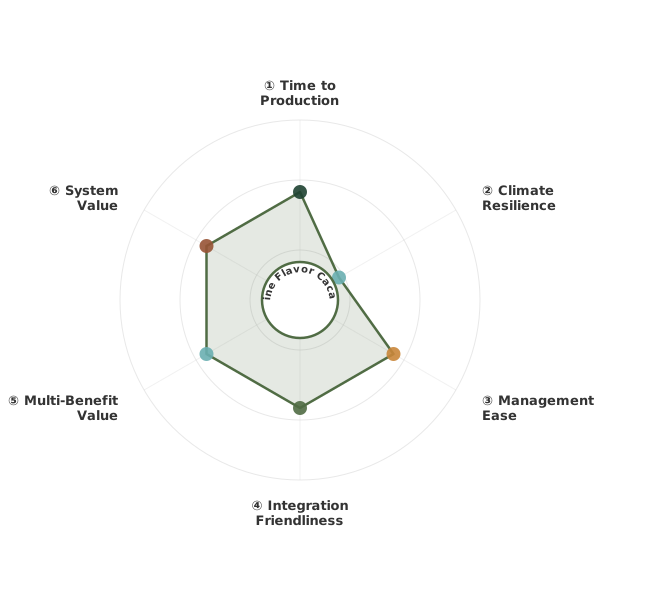
Maintenance: Moderate maintenance - Fine Flavor Cacao's reliance on a shade canopy to thrive implies a need for an integrated, biodiverse system, which supports overall plant health and can reduce specific pest/disease issues.

Time to Production: Moderate (2-5 years) - Cacao trees typically begin contributing to the system's productivity in 3-5 years, with robust yields by year 5-7, reflecting its role in a maturing agroforest.

Value Streams

  • Fruit/nut harvest
  • Diversifies farm income
  • Enhances biodiversity
1

Climate Suitability Assessment

Will this plant thrive in your climate?

IDEALLY SUITED

Köppen Zone: Af (Tropical Rainforest), Am (Tropical Monsoon)
USDA Zone: 10a, 11a, 12a
Australian Zone: tropical

Fine Flavor Cacao thrives in consistently warm, humid tropical climates with abundant rainfall, scoring ideally suited across Köppen zones Af and Am, USDA zones 10b through 13a, and Australian tropical regions. These environments provide the essential high temperatures (25-30°C), high humidity (80-90%), and year-round moisture that cacao requires for optimal growth, flowering, and fruit development. The absence of frost and consistent growing season ensure high yields and quality without the need for significant climate-related interventions. While some zones within this category, like tropical monsoon (Am), may experience a brief dry season, the overall conditions are highly favorable, with supplemental irrigation being a manageable requirement. These regions support the perennial nature of cacao, allowing for long-term productivity and establishment of robust food forest systems. The focus here is on managing water availability during any drier periods and ensuring adequate shade for young trees, rather than overcoming climatic limitations.

ADEQUATE

Köppen Zone: Aw (Tropical Savanna), Cfa (Humid Subtropical), Cwa (Monsoon-Influenced Humid Subtropical)
USDA Zone: 9a
Australian Zone: Zone 5, subtropical

Fine Flavor Cacao can be grown with adequate success in subtropical and some warmer temperate climates, though it requires more careful management. This includes Köppen zone Aw, USDA zones 9a and 9b, and Australian subtropical and Zone 5 regions. The primary challenges in these areas are the presence of a distinct dry season and the potential for occasional frost or cooler winter temperatures. Supplemental irrigation is crucial during dry periods to maintain tree health and fruit set, and in cooler areas, site selection to avoid frost pockets and providing some winter protection for young trees is necessary. While yields may not reach the heights seen in ideal tropical zones, these regions can support viable cacao cultivation, especially within food forest systems where other plants can offer microclimate benefits. The economic feasibility hinges on the cost and availability of irrigation and the level of management required to mitigate climate risks.

NOT RECOMMENDED

Köppen Zone: ET (Tundra), BSh (Hot Semi-Arid (Steppe)), BSk (Cold Semi-Arid (Steppe)), BWh (Hot Desert), BWk (Cold Desert), Cfb (Oceanic (Maritime Temperate)), Csa (Hot-Summer Mediterranean), Csb (Warm-Summer Mediterranean), Cwb (Subtropical Highland), Dfa (Hot-Summer Continental), Dfb (Warm-Summer Continental), Dfc (Subarctic), Dwa (Monsoon-Influenced Hot-Summer Continental)
USDA Zone: 2a, 3a, 3b, 4a, 5a, 5b, 6a, 7a, 8a
Australian Zone: Zone 3, Zone 4, temperate
EU Climate Region: atlantic, mediterranean

Fine Flavor Cacao is not recommended for cultivation in temperate, oceanic, Mediterranean, and most subtropical highland climates due to significant climatic limitations that make it economically and practically unviable. These zones, including Köppen Cfa, Cfb, Cwa, Cwb, USDA zones 6a through 8b, Australian Zones 3 and 4, and EU Atlantic and Mediterranean regions, experience frost, insufficient heat units, or prolonged dry periods that are detrimental to cacao's perennial survival and fruit production. Winter temperatures in many of these zones fall below cacao's minimum tolerance, leading to high mortality rates and requiring extensive, costly protection measures like greenhouses or intensive winter coverings. The growing seasons are often too short for adequate fruit development, and the need for substantial irrigation during dry spells, coupled with the risk of frost damage, makes establishment and long-term productivity highly uncertain. Alternative plants better adapted to these specific climatic conditions are recommended for regenerative agriculture practices in these areas.

Better alternatives for these "not recommended" zones: Pawpaw (Asimina triloba) (native to humid subtropical regions, tolerates frost, produces edible fruit), Persimmon (Diospyros spp.) (many varieties thrive in humid subtropical climates, frost-tolerant, produces edible fruit), Fig (Ficus carica) (well-adapted to humid subtropical conditions, tolerates some frost, produces fruit), Hazelnut (Corylus avellana) (temperate nut tree adapted to cooler climates, provides food and ecosystem services)

Note: Zones listed above represent climates where this plant can produce reliably with reasonable management. Climate zones not mentioned would require intensive climate modification (greenhouses, extensive infrastructure) and are not economically viable for regenerative agriculture purposes.

2

Soil Suitability Assessment

Which soil types work best for this plant?

IDEALLY SUITED

Loam Soil

This plant thrives in these soil types without requiring amendments or remediation. Natural soil conditions support optimal growth and productivity.

ADEQUATE

Clay Soil, Rich Soil, Rocky Soil, Sandy Soil

This plant performs acceptably in these soil types with moderate, manageable remediation such as pH adjustment, compost addition, or drainage improvement. The required amendments are practical and cost-effective for regenerative agriculture.

NOT RECOMMENDED

Acidic Soil, Alkaline Soil, Desert Soil, Saline Soil, Wet Soil

Growing this plant in these soil types would require impractical remediation such as complete soil replacement, extensive amendments, or cost-prohibitive infrastructure. These conditions are not economically viable for regenerative agriculture.

Note: Soil suitability assessments focus on remediation requirements. "Ideally Suited" means the plant generally thrives without the need for substantial amendments, "Adequate" means manageable remediation (lime, compost, mulch), and "Not Recommended" means impractical soil changes would be required. Climate factors like rainfall and temperature also influence success.

3

Seasonal Considerations

Planting timing, growth duration, and harvest windows

Establishing cacao requires careful timing to align with its tropical needs. For nursery planting, aim for the onset of the rainy season, typically in early spring, allowing active growth and root development. Containerized seedlings offer flexibility, but bare-root stock is best planted during the cooler, wetter periods of late fall or early winter to minimize transplant shock.

Cacao trees generally take several years to reach full establishment, often 3-5 years, before their first significant harvest. Full production, yielding substantial crops, can be expected around 5-7 years after planting, with trees remaining productive for many decades, often 30 to 50 years or more.

Throughout the year, management practices are dictated by the cacao cycle. Pruning is best done in the dormant season, typically late fall or early winter, after leaf drop and before the next flush of growth. Cacao flowers and fruits year-round in ideal tropical climates, but in subtropical zones, the main harvest often occurs in late fall and continues through winter. Unlike temperate trees, cacao does not experience a true winter dormancy; instead, growth may slow during cooler or drier periods. Bloom timing is continuous in ideal conditions but may show peaks after significant rainfall events.

4

System Role & Multi-Benefit Value

Functional roles, integration strategies, and stacked benefits

Functional Role

Integration Characteristics

Multi-Benefit Value: Adequate - Cocoa beans are the primary harvest, while the tree contributes significantly to the farm ecosystem by providing shade, fostering biodiversity, and enhancing soil structure.

Integration Friendliness: Adequate - Cacao integrates well into multi-layered agroforestry systems, contributing to canopy structure and providing habitat, but thrives best when its specific needs for shade and moisture are met within the larger farm ecology.

5

Economics & Value Streams

Direct harvest, system benefits, ecosystem services, and risk diversification

Comprehensive economic analysis including direct harvest value, system enhancement contributions, ecosystem services, value timeline, and risk diversification strategies.

Per-Tree Production Economics

Metric Value
Establishment Cost $15-25
Years to First Harvest 3-5 years
Annual Maintenance $5-10
Yield 2-5 lbs/year 0-2 kg/year
Market Price $2-5/lb $5-11/kg
Productive Lifespan 15-25 years
Net Annual Return* $-7 to $19/year

Values shown per mature tree, not per acre. In regenerative systems, trees are integrated at low densities across diverse landscapes. Establishment costs spread over the lifespan of the tree. Early years have costs but no revenue.

* Net Annual Return = (Yield × Market Price) − (Amortized Establishment Cost + Annual Maintenance). This return is realized only at/after first harvest; early years have costs but no revenue. Range shows worst case to best case scenarios.

System Enhancement Value

Beyond harvest: how understory complements overstory in polyculture

Food Forest System Contributions

Cacao (*Theobroma cacao*) offers significant system benefits beyond direct harvest. Crucially, it relies on specific pollinators, primarily tiny flies (chocolate midges, *Ceratopogonidae*), which are essential for fruit set. Integrating cacao into a farm system can therefore support and enhance populations of these crucial pollinators, contributing to biodiversity. While not a nitrogen fixer, cacao thrives in organic-rich soils and benefits from nutrient cycling within an integrated system. Its presence in a food forest can contribute to soil health and structure over time. Furthermore, the development of cacao trees, particularly in agroforestry settings, can provide habitat for various wildlife, offering nesting sites and food sources, thereby increasing farm-level biodiversity. The complexity of cacao flowers and their specific pollination requirements highlight its role as a keystone species for certain insect communities. Research also suggests potential for disease resistance enhancement through treatments like foliar glycerol application, indicating a plant with responsive defense mechanisms that could be leveraged within a whole-farm health strategy.

Nitrogen Fixation (if legume)

Groundcover & Erosion Control

Variable, contributes indirectly to wind mitigation as part of a multi-layered agroforestry system.

While cacao (*Theobroma cacao*) itself is not typically planted as a primary windbreak species due to its relatively moderate stature compared to dedicated windbreak trees, its integration into mixed-species agroforestry systems can indirectly contribute to wind mitigation. Cacao's presence within a more complex, multi-layered planting design, such as a food forest, can help to disrupt wind flow and reduce its erosive force. The canopy structure of established cacao trees, especially when interplanted with other taller species, can contribute to a reduction in wind speed at ground level. This can, in turn, help to minimize soil erosion, protect more sensitive understory crops from desiccation and physical damage, and create a more stable microclimate for the entire system. The effectiveness of cacao in windbreak function is dependent on its density and the surrounding vegetation matrix, but it plays a role in the overall structural integrity of the agroforestry landscape, contributing to a more resilient farming system.

Ecosystem Service Contributions

Environmental contributions: carbon, pollinators, wildlife, and water

  • Carbon Sequestration: Cacao trees, especially when grown in agroforestry systems and food forests, have the potential to sequester significant amounts of carbon in their biomass (trunks, branches, leaves) and in the soil organic matter they help to build. A 5-year analysis in Peru indicated profitable economic indicators for carbon sequestration in fine-aroma cacao agroforestry, demonstrating a tangible economic value for this service.
  • Pollinator Support: High. Cacao flowers are exclusively pollinated by specific, tiny midges (*Ceratopogonidae*). The presence and health of cacao trees directly support these essential pollinators, and conversely, healthy pollinator populations are critical for cacao yield.
  • Wildlife Habitat: Moderate. Cacao's understory growth habit and presence in mixed-species systems can provide habitat for various insects, birds, and small mammals, offering nesting sites, shade, and potential food sources. This is enhanced in well-established food forests.
  • Water Quality: Not applicable

Value Timeline: Understory Development

When you'll see results: groundcover/herbs year 1, shrubs 2-3, full layer integration 5-10

Years 1-2

Initial establishment of soil improvement and microclimate moderation. Potential for some minor shade provision if interplanted with faster-growing nurse trees. Erosion control benefits as the root system develops.

Years 3-5

First significant flowering and potential for early, small harvests. Established shade provision for understory crops or livestock. Continued soil health improvement. Pollinator support becomes more critical as flowering increases.

Years 10-20

Full production capacity for cacao beans. Significant contribution to shade value in integrated systems. Mature trees contribute substantially to carbon sequestration and biomass. Established ecosystem services like pollinator support and wildlife habitat.

20+ Years

Long-term, sustained production of cacao beans. Mature trees offer maximum carbon sequestration potential. Continued provision of shade, habitat, and ecosystem services. Potential for timber value if trees are managed for longevity and eventual harvest.

Farm Risk Reduction

How multi-layer systems diversify production and income

  • Multiple Revenue Streams: Direct harvest of cacao beans (primary cash crop), potential for specialty chocolate products, carbon sequestration credits/payments for environmental services, enhanced yield/welfare of other integrated crops or livestock due to shade and microclimate regulation, potential for timber value from mature trees.
  • Temporal Income Spread: Value accrues over a long period, starting with ecosystem services (soil improvement, shade) in early years, followed by harvests from year 3-5, and peaking in mature trees from year 10-20 onwards. Ecosystem services are ongoing.
  • Market Risk Hedge: Diversifies farm income beyond single commodity crops. Cacao's long-term nature and potential for value-added products can buffer against short-term market volatility. Integration into agroforestry systems enhances resilience to climate fluctuations and pest outbreaks by supporting biodiversity and a more stable microclimate.
6

Regenerative Suitability Details

Comprehensive trait ratings for system integration assessment

Comparative ratings for this plant across key regenerative agriculture traits.

Trait Suitability Explanation
Drought Tolerance Not Recommended Cacao thrives in environments with consistent moisture, benefiting from healthy soil organic matter and strategic mulch layers to maintain humidity and soil moisture.
Establishment Ease Not Recommended Establishing cacao requires careful attention to microclimate, ensuring adequate canopy cover, humidity, and soil health; it is best integrated into existing diverse systems.
Time To Production Adequate Cacao trees typically begin contributing to the system's productivity in 3-5 years, with robust yields by year 5-7, reflecting its role in a maturing agroforest.
Multi Benefit Value Adequate Cocoa beans are the primary harvest, while the tree contributes significantly to the farm ecosystem by providing shade, fostering biodiversity, and enhancing soil structure.
Climate Adaptability Adequate While cacao is tropical, the Fine Flavor variety's specific needs for shade align with biodiversity, indicating it thrives best within a suitable, consistent tropical rainforest environment, not broader adaptation.
Hardiness Zone Range Not Recommended Best suited to tropical rainforest environments (zones 10-11), cacao's success relies on consistent warmth, high humidity, and protection from environmental extremes through integrated landscape design.
Maintenance Intensity Adequate Fine Flavor Cacao's reliance on a shade canopy to thrive implies a need for an integrated, biodiverse system, which supports overall plant health and can reduce specific pest/disease issues.
Pest Disease Pressure Not Recommended Susceptibility to pests and diseases is minimized through building a resilient, biodiverse system that encourages beneficial organisms and healthy plant vigor via optimal soil and water management.
Integration Friendliness Adequate Cacao integrates well into multi-layered agroforestry systems, contributing to canopy structure and providing habitat, but thrives best when its specific needs for shade and moisture are met within the larger farm ecology.

Comparative System: Ratings compare plants within their economic category (e.g., cover crop nitrogen fixation compared to other cover crops, not to all plants). Individual farm conditions and management practices significantly influence actual performance.

7

Learn More

Why farmers use this plant and additional resources

Why Regenerative Farmers Use This Plant

Fine flavor cacao varieties, representing a mere 5-8% of global production, command premium prices, often 2 to 10 times that of bulk commodity cacao. Criollo, a particularly rare and prized variety, exemplifies this market segment, sought after for its delicate aroma and complex taste profile. These exquisite cacao trees are inherently suited to diverse shade canopy environments, making them ideal for integration into multi-layered agroforestry systems.

At maturity, these trees are significant carbon sinks, sequestering an estimated 2-5 tons of CO2e per acre per year, contributing substantially to climate change mitigation. Their deep root systems, extending 6-15+ feet (1.8-4.5+ m), enhance soil structure and water infiltration over decades, building long-term asset value. The long-lived nature of cacao trees establishes a valuable, multi-decade asset on the farm, providing consistent economic returns and enhancing the overall resilience of the farming landscape.

Integrating cacao into a regenerative farm system offers a multitude of benefits beyond its direct economic returns. As a perennial tree, it provides consistent shade regulation, moderating temperatures for understory crops and livestock, and acting as a valuable windbreak. The multi-story nature of cacao agroforestry systems fosters biodiversity, creating habitat for beneficial insects, birds, and pollinators. Over a lifespan of 30-50 years or more, cacao trees establish a robust, perennial asset that can generate stable income streams, contributing to farm resilience and economic diversification.

The ecosystem services provided by mature cacao trees are substantial. Their dense canopy significantly reduces soil erosion by intercepting rainfall and slowing runoff, improving water infiltration rates and recharging groundwater. The decomposition of leaf litter and organic matter from the shade canopy enriches soil organic matter, typically increasing it by 0.5-1.5% over 5-10 years in well-managed systems, leading to improved soil health and fertility. Measurable soil carbon increases are typically observed by year 5-7 as the system matures. Furthermore, the consistent flowering and fruiting of cacao trees provide a reliable food source for a variety of pollinators and beneficial insects, supporting broader ecosystem health and natural pest control within the farm landscape. The extensive root systems also improve soil structure, enhance water infiltration and retention, and scavenge nutrients from deeper soil profiles.

Cacao has a proven track record of success in diverse regional farming systems. In West Africa, it forms the backbone of smallholder farming economies, often integrated with diverse fruit trees and staple crops, frequently grown under native forest trees or planted with fast-growing shade species like Gliricidia sepium. In Latin America, from Ecuador to Brazil, cacao is integrated into diverse shade systems alongside timber trees, fruit trees, and other perennial crops, creating complex, biodiverse, and economically robust farms. In Southeast Asia, particularly Indonesia, cacao is often intercropped with coconut palms and other fruit trees, forming a multi-layered system that maximizes land use and provides multiple income streams. Traditional systems in Central America often involve planting under the shade of leguminous trees or diverse native forest species, mimicking natural forest structure.

8

How to Integrate This Plant

Practical guidance for regenerative systems

Establishing cacao typically involves planting grafted seedlings or rooted cuttings, which offer faster and more predictable yields compared to seed propagation. Grafted trees are preferred for their disease resistance and faster fruiting. Seedling nurseries are often established in controlled environments before transplanting to the field. For direct seeding, though less common for fine flavor varieties, seeds are sown at a depth of 0.5-1 inch (1.3-2.5 cm) in well-draining soil. Grafted trees are planted at a depth that ensures the graft union remains well above the soil line.

Optimal planting spacing for cacao in agroforestry systems ranges from 8-15 feet (2.4-4.5 m) apart, often in rows that align with the contours of the land or the spacing of taller shade trees. For alley cropping or silvopasture designs where cacao is integrated, rows are typically spaced 15-40 ft (4.5-12 m) apart to allow for equipment access and grazing, with careful management to prevent browse damage to young trees. Planting is typically done at the beginning of the rainy season, which varies by region but generally falls between March-May in the Northern Hemisphere and September-November in the Southern Hemisphere, ensuring adequate moisture for establishment. In West Africa, planting often occurs from April to June, while in Central America, it can be from May to August.

Water management is critical during the establishment phase, with cacao requiring approximately 1-2 inches (2.5-5 cm) of water per week, either from rainfall or irrigation, for the first 1-3 years. Once established, mature trees are more drought-tolerant but benefit from consistent moisture. Fertility management should prioritize biological approaches. Incorporating compost, utilizing cover crop residues, and integrating manure from livestock can significantly reduce the reliance on synthetic fertilizers. Nitrogen-fixing companion plants, such as certain legumes (e.g., Erythrina spp., Gliricidia sepium, Inga spp., Leucaena, Desmodium, Centrosema), can be strategically intercropped or planted as shade trees during the establishment phase to provide nitrogen and organic matter. Pruning is essential for light penetration, air circulation, and managing tree structure, typically occurring annually to maintain a desired canopy density and facilitate harvesting.

Cacao trees typically reach their first significant harvest within 3-5 years for grafted varieties, with full production achieved between 5-10 years, yielding 500-1,500 lbs (227-680 kg) of dried beans per acre annually, depending on variety, management, and environmental conditions. Mature trees can reach heights of 15-25 feet (4.5-7.5 m).

Establishing cacao in an agroforestry system requires careful design to balance the needs of the cacao trees with other components of the system. This involves selecting appropriate shade trees that provide dappled light, protect from wind, and potentially offer additional products or ecological services. Nitrogen-fixing ground cover, such as certain varieties of Mucuna or Pueraria, can be established beneath the cacao canopy in years 2-3 to suppress weeds and build soil organic matter. Long-term infrastructure considerations include establishing reliable irrigation for establishment years, implementing robust deer and browse protection, and potentially installing support structures for shade trees if needed.

View Full Document (Printable single-page version)