Gliricidia
Gliricidia sepium is a valuable nitrogen-fixing tree integrated into various regenerative agriculture systems. Its primary use in the knowledge base is as a component in agroforestry and alley cropping systems, often interplanted with crops like maize and cocoa, or fruit trees. This practice provides shade for sensitive crops and contributes to soil health through nitrogen fixation and the addition of organic matter. Farmers use it in mulch banks, periodically cutting branches to produce wood chips, which helps suppress weeds and build soil fertility. Experiments demonstrate that alley cropping with Gliricidia sepium significantly enhances crop yields, such as cauliflower, compared to monocultures. It also plays a role in soil carbon enhancement, as seen in studies combining it with organic residues. While not explicitly detailed in these excerpts, its role as a nitrogen-fixing legume suggests benefits for soil building and reducing reliance on synthetic fertilizers, aligning with principles of no-till and integrated farming systems for soil restoration.
For a full botanical description see: Plants For A Future↗(opens in new window) (external link)
Regenerative Quick Profile
All recommendations assume integrated, regenerative practices—not conventional inputs.
Climate & Soil Fit
Climate: Tropical Rainforest, Tropical Monsoon, Tropical Savanna, Hot Semi-Arid (Steppe), Cold Semi-Arid (Steppe), Hot Desert, Humid Subtropical, Oceanic (Maritime Temperate), Hot-Summer Mediterranean, Warm-Summer Mediterranean, Monsoon-Influenced Humid Subtropical, Subtropical Highland, Hot-Summer Continental, Warm-Summer Continental
Zones: USDA 9-13, Australian Zones 11-14, EU Mediterranean, Subtropical
Optimal Soil: Loam Soil
System Role & Functions
Primary: Nitrogen Fixer
Secondary: Food Forest, Silvopasture
Key Benefits: Fast production, Multi-benefit value, Drought tolerant
Management Level
Experience: Beginner-Friendly
Maintenance: Very low maintenance - Its intrinsic nitrogen-fixing, rapid growth, and drought tolerance contribute to excellent soil improvement and fodder provision with minimal reliance on external inputs or intensive management.
Time to Production: Fast (1-2 years) - This rapid-growing nitrogen-fixing tree contributes significantly to soil fertility and provides valuable biomass and fodder within 1-2 years, demonstrating exceptional early utility.
Value Streams
- Fruit/nut harvest
- Nitrogen fixation
Know the Debate
- Nitrogen fixation ranges from 50-150 lbs/acre, affected by climate and management.
- Establishment to full productivity takes 3-7 years, influenced by planting method.
- Works in diverse agroforestry and alley cropping systems globally.
- Provides shade, windbreak, fodder, and improves water infiltration.
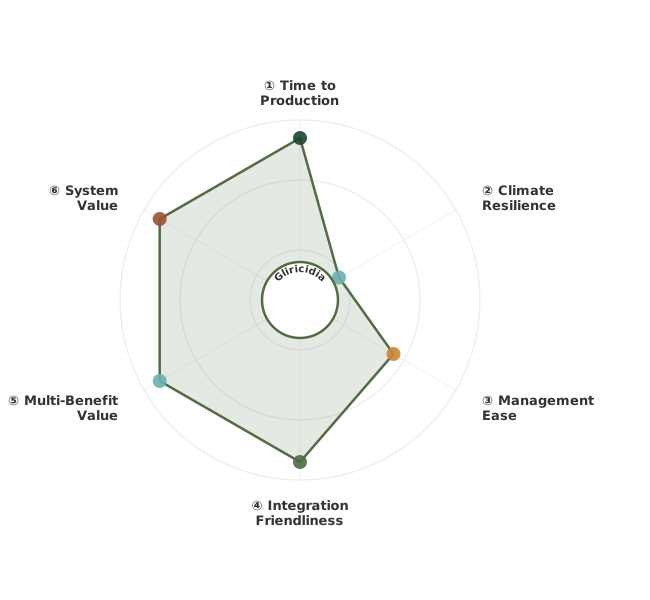
Regenerative Trait Ratings
How These Traits Are Calculated
Trait dimensions are ordered clockwise starting from the top of the chart (12 o'clock position):
1. Time to Production
Years from planting to first harvestable yields
WHAT: Measures the waiting period from tree establishment to first meaningful production. Fast-producing trees yield within 2-5 years; slow producers require 8-15+ years before significant harvests.
WHY: Time to production determines cash flow timing and financial feasibility for farm businesses. Long wait times create significant opportunity costs—land and labor tied up for years without income. Fast producers allow quicker experimentation and cash flow recovery, reducing risk for new tree crop farmers.
HOW: Ratings based on years to first harvest documented in economics data. Exceptional (3.0): Production within 2-4 years (elderberry, mulberry, some nut bushes). Typical (2.0): 5-8 years (many fruit trees). Limited (1.0): 10-15+ years (hardwood timber, some nut trees like pecan, walnut).
2. Climate Resilience
Weighted: hardiness zones (50%) + drought tolerance (30%) + adaptability (20%)
WHAT: Combines temperature tolerance (hardiness zone range), water stress resilience (drought tolerance), and overall climate flexibility. Multi-decade tree investments require reliable climate matching to prevent total loss.
WHY: Wrong climate choices mean complete failure for permanent plantings. A tree that dies in year 5 from unexpected cold or prolonged drought represents catastrophic loss of 5 years' investment. Climate resilience determines geographic range and weather variability tolerance—critical as climate patterns become less predictable.
HOW: Weighted formula prioritizes hardiness zone range (50% weight) for core temperature tolerance, drought tolerance (30% weight) for water stress, and overall adaptability (20% weight) for general climate flexibility. Exceptional (3.0): Wide hardiness range (8+ zones) with strong drought tolerance. Typical (2.0): Moderate range and tolerance. Limited (1.0): Narrow climate requirements.
3. Management Ease
Weighted: establishment (40%) + low maintenance (30%) + pest resistance (30%)
WHAT: Combines establishment difficulty, ongoing maintenance requirements, and disease/pest pressure into overall management workload. Low-maintenance trees fit easily into busy farm operations without specialized expertise or intensive inputs.
WHY: Labor is the limiting factor for most diversified farms. High-maintenance trees requiring pruning expertise, disease management, and intensive pest control compete for limited time with other farm enterprises. Easy-care trees deliver production with minimal intervention, making them viable for time-constrained farmers.
HOW: Weighted formula balances establishment ease (40% weight) for startup success, inverted maintenance intensity (30% weight) for ongoing care, and inverted pest/disease pressure (30% weight) for health management. Exceptional (3.0): Easy to establish, self-sufficient growth, naturally pest-resistant. Typical (2.0): Moderate care needs. Limited (1.0): Difficult establishment, intensive maintenance, or heavy pest pressure.
4. Integration Friendliness
Compatibility with silvopasture, alley cropping, and multi-species systems
WHAT: Measures how well the tree integrates with other farm enterprises—grazing livestock, annual crops, or other perennials. Integration-friendly trees tolerate livestock browsing, don't heavily shade out crops, and coexist with diverse plantings.
WHY: Integrated tree systems (silvopasture, alley cropping, food forests) provide higher total returns per acre than monoculture plantings. Trees that work well with livestock provide shade + forage + production simultaneously. Integration flexibility allows farmers to stack enterprises and adapt to market opportunities.
HOW: Ratings based on the integration_friendliness trait documenting compatibility with grazing, cropping, and multi-species systems. Exceptional (3.0): Tolerates livestock browsing, provides livestock benefits (shade, browse), compatible with understory crops. Typical (2.0): Some integration possible with management. Limited (1.0): Requires isolation, incompatible with livestock or cropping.
5. Multi-Benefit Value
Stacked benefits beyond primary product—shade, wildlife, nitrogen, erosion control
WHAT: Measures the diversity of ecosystem services provided beyond the main harvest product. Multi-benefit trees deliver shade, windbreak, wildlife habitat, nitrogen fixation, erosion control, pollinator support, and aesthetic value simultaneously.
WHY: Single-purpose trees are economically fragile—market price swings or production failures eliminate all value. Multi-benefit trees provide resilience through diverse value streams. A nitrogen-fixing tree that produces nuts, provides shade for livestock, supports wildlife, and controls erosion delivers 4-5x the system value of a production-only tree.
HOW: Ratings based on the multi_benefit_value trait documenting service diversity. Exceptional (3.0): 4+ significant services stacked (nitrogen-fixing legume trees providing nuts + shade + wildlife + windbreak). Typical (2.0): 2-3 moderate services. Limited (1.0): Single-purpose production trees with minimal additional benefits.
6. System Value
Total ecosystem and economic value across short, medium, and long timeframes
WHAT: Synthesizes the total regenerative value delivered across multiple decades, including immediate ecosystem services (years 1-5), medium-term production value (years 5-15), and long-term system transformation (years 15-50). Captures the compounding benefits of permanent plantings.
WHY: Trees are multi-decade investments requiring patient capital. System value measures whether the total package—early ecosystem services, eventual production, and long-term legacy benefits—justifies the wait time and land commitment. High system value trees pay back investment through diverse, stacking, compounding benefits.
HOW: Scored via LLM synthesis of economics timelines, ecosystem service diversity, and long-term soil/water/carbon impacts. Exceptional (3.0): Strong early services + valuable production + transformative long-term impacts. Typical (2.0): Moderate benefits across timeframes. Limited (1.0): Long wait with limited service stacking or weak economic returns.
Ratings are based on documented performance in regenerative systems, not conventional high-input scenarios. All traits assume integrated management practices focused on soil health and ecosystem services.
1
Climate Suitability Assessment
Will this plant thrive in your climate?
Climate Suitability Assessment
Will this plant thrive in your climate?
Köppen Zone: Af (Tropical Rainforest), Am (Tropical Monsoon), Aw (Tropical Savanna), Cfa (Humid Subtropical), Cwa (Monsoon-Influenced Humid Subtropical)
USDA Zone: 9a, 10a, 11a, 12a
Australian Zone: Zone 5, tropical, subtropical
Gliricidia performs optimally in tropical and subtropical climates, including Köppen zones Aw, As, and Am, and Australian zones Zone 5, subtropical, and tropical, as well as USDA Zones 8b through 13a. These regions provide consistently warm temperatures (ideally above 70°F/21°C) and adequate moisture, either through high annual rainfall or reliable wet seasons, allowing for continuous growth and nitrogen fixation. Establishment is rapid and successful, with minimal risk of frost damage ensuring perennial survival and multi-year productivity. Its ability to fix atmospheric nitrogen is maximized, contributing significantly to soil fertility and reducing the need for synthetic fertilizers. In these ideal conditions, Gliricidia provides abundant biomass for fodder, mulch, or green manure, supporting diverse regenerative agriculture practices like silvopasture and food forests with high reliability and minimal management inputs beyond basic pruning and occasional watering during extreme dry spells. Its resilience and productivity make it a cornerstone species for enhancing soil health and agricultural sustainability in these warm, humid to semi-humid environments.
Köppen Zone: BSh (Hot Semi-Arid (Steppe)), Cfb (Oceanic (Maritime Temperate)), Csa (Hot-Summer Mediterranean), Csb (Warm-Summer Mediterranean), Cwb (Subtropical Highland)
USDA Zone: 8a
Australian Zone: Zone 3, Zone 4, grassland, temperate
EU Climate Region: atlantic, mediterranean
Gliricidia can be adequately suited in climates with distinct seasons and moderate temperature ranges, including Köppen zones Cfa and Cwa, Australian zones Zone 3, Zone 4, grassland, and temperate, and EU climate regions Atlantic and Mediterranean, along with USDA Zones 7a and 7b. These zones offer a sufficient growing season but present challenges such as cooler winters that may limit perennial survival, or dry summers requiring supplemental irrigation. Establishment is generally good but may require careful timing and water management. Nitrogen fixation and biomass production will be good but potentially lower than in ideal tropical conditions due to temperature fluctuations or water stress. While not as consistently productive or resilient as in tropical zones, Gliricidia can still provide valuable ecosystem services, including nitrogen fixation and biomass generation, making it a viable, though not optimal, choice for regenerative systems. Success hinges on selecting appropriate varieties, implementing effective water management strategies, and potentially managing it as a semi-perennial or annual in cooler parts of these zones.
Köppen Zone: ET (Tundra), BSk (Cold Semi-Arid (Steppe)), BWh (Hot Desert), BWk (Cold Desert), Dfa (Hot-Summer Continental), Dfb (Warm-Summer Continental), Dfc (Subarctic), Dwa (Monsoon-Influenced Hot-Summer Continental)
USDA Zone: 2a, 3a, 3b, 4a, 5a, 5b, 6a, 7a
Australian Zone: arid
Gliricidia is not recommended in climates that are too cold, too dry, or experience extreme temperature fluctuations, specifically Köppen zones Cwb, BSh, and BWh, Australian arid zones, and USDA Zones 3a-6b (implicitly, as not listed but understood to be too cold). In hot semi-arid and desert regions (BSh, BWh, arid), extreme heat and severe water scarcity prevent reliable establishment and growth, drastically reducing nitrogen fixation to negligible levels and making it economically unviable without intensive, costly irrigation. In cooler subtropical highland climates (Cwb), dry summers and cooler temperatures limit its potential, and it may not be reliably perennial. In these zones, alternative nitrogen-fixing species that are more drought-tolerant, heat-resilient, or cold-hardy are significantly better suited. These alternatives can fulfill the nitrogen-fixing role more reliably and economically, ensuring the success of regenerative agriculture practices without the high input costs and low probability of success associated with Gliricidia in these marginal environments.
Note: Zones listed above represent climates where this plant can produce reliably with reasonable management. Climate zones not mentioned would require intensive climate modification (greenhouses, extensive infrastructure) and are not economically viable for regenerative agriculture purposes.
2
Soil Suitability Assessment
Which soil types work best for this plant?
Soil Suitability Assessment
Which soil types work best for this plant?
Loam Soil
This plant thrives in these soil types without requiring amendments or remediation. Natural soil conditions support optimal growth and productivity.
Acidic Soil, Alkaline Soil, Clay Soil, Rich Soil, Rocky Soil, Sandy Soil
This plant performs acceptably in these soil types with moderate, manageable remediation such as pH adjustment, compost addition, or drainage improvement. The required amendments are practical and cost-effective for regenerative agriculture.
Desert Soil, Saline Soil, Wet Soil
Growing this plant in these soil types would require impractical remediation such as complete soil replacement, extensive amendments, or cost-prohibitive infrastructure. These conditions are not economically viable for regenerative agriculture.
Note: Soil suitability assessments focus on remediation requirements. "Ideally Suited" means the plant generally thrives without the need for substantial amendments, "Adequate" means manageable remediation (lime, compost, mulch), and "Not Recommended" means impractical soil changes would be required. Climate factors like rainfall and temperature also influence success.
3
Seasonal Considerations
Planting timing, growth duration, and harvest windows
Seasonal Considerations
Planting timing, growth duration, and harvest windows
Establishing gliricidia begins with selecting nursery stock. Containerized seedlings are ideal for planting at the start of the rainy season, ensuring active growth. Bare-root stock should be planted during the plant's dormant period, typically in late fall or early winter, allowing roots to establish before the emergence of new growth in spring. Expect a few years for trees to become fully established, usually 2-3 years, with the first significant harvest possible around year three. Gliricidia reaches full production within 5-7 years and can remain productive for decades, often exceeding 20 years.
Seasonal management focuses on harnessing its growth cycles. Pruning is best done in the late fall or early winter, after leaf drop and before the onset of active spring growth, to shape the tree and stimulate vegetative growth for fodder or green manure. The primary harvest season for leaves and wood often coincides with periods of active growth through spring and summer. While gliricidia is semi-deciduous in cooler climates, it generally does not experience a deep winter dormancy in warmer zones, maintaining some foliage and potential for light harvesting if temperatures remain above 50°F (10°C). Bloom timing is typically after rainfall, often in spring or summer, signaling a period of vigorous growth.
4
System Role & Multi-Benefit Value
Functional roles, integration strategies, and stacked benefits
System Role & Multi-Benefit Value
Functional roles, integration strategies, and stacked benefits
Functional Role
Total System Value
Gliricidia sepium offers significant multi-benefit stacking potential in regenerative agriculture. Beyond its direct value as a nitrogen-fixing agent, reducing external fertilizer inputs, it provides substantial biomass for mulch, improving soil organic matter and suppressing weeds. In alley cropping systems, it enhances the productivity of intercropped plants like cocoa and cauliflower (Excerpts 3 & 4). Its rapid growth provides early-stage shade and windbreak functions. As a nitrogen fixer, it directly supports soil health and fertility, a key ecosystem service. The woody biomass can also contribute to carbon sequestration within the soil and biomass. Risk diversification is achieved through its multiple functions; even if direct harvest isn't the primary goal, its role in soil improvement and nutrient cycling bolsters overall farm resilience. Its integration into systems like food forests or mulch banks diversifies farm output and resource generation.
Integration Characteristics
Multi-Benefit Value: Ideally Suited - An aggressive nitrogen fixer that enriches soil, provides fodder, biomass, and shade, showcasing exceptional multi-use potential for system enhancement.
Integration Friendliness: Ideally Suited - An excellent nitrogen fixer and provider of fodder and green manure, it integrates seamlessly with intercropping strategies and animal integration for enhanced system synergy.
5
Management & Care Requirements
Integration guidance, maintenance needs, and care practices
Management & Care Requirements
Integration guidance, maintenance needs, and care practices
How to Integrate This Plant
Gliricidia sepium, a fast-growing leguminous tree, is a cornerstone for regenerative systems, primarily functioning as a nitrogen fixer and biomass producer. It excels in alley cropping systems, where it's planted in rows with crops grown in the alleys between, providing shade, mulch, and nitrogen enrichment to the intercropped species like cauliflower (Excerpt 4). It can also be integrated into food forests and as a component of mulch banks for on-farm nutrient cycling (Excerpt 2). Its nitrogen-fixing capability reduces the need for synthetic fertilizers, enhancing soil fertility. Gliricidia can also serve as a living fence or provide shade for seedlings (Excerpt 3). Its value begins in Year 1 with rapid biomass production for mulch and nitrogen contribution, with significant soil improvement and shade benefits becoming more pronounced by Year 5. By Year 20, it contributes substantially to a stable, high-functioning agroforestry ecosystem.
Integration Practices & Management
Gliricidia sepium is integrated into regenerative agriculture systems primarily as a nitrogen-fixing component, enhancing soil fertility and providing shade. In agroforestry projects, it is planted alongside fruit trees and cash crops like cassava and pineapple, serving as a native, nitrogen-fixing tree. Farmers utilize Gliricidia in 'mulch banks' alongside other leguminous trees, periodically cutting it at chest height to produce wood chips for on-farm use, which helps reduce invasive weeds. In Indonesia, Gliricidia was used as a shade tree for young cocoa seedlings, with experiments evaluating its impact alongside various soil amendments and fertilizers. Sri Lankan studies explored the carbon sequestration potential of mixed cropping systems involving Gliricidia and coconut. In Brazil, it was incorporated into agroforestry systems with organic residues in alleys to improve organic carbon content. While the provided sources highlight Gliricidia's role in agroforestry, shade provision, and soil improvement through nitrogen fixation and organic matter, they do not detail specific establishment methods, integration with grazing, termination strategies, or detailed management considerations like fertility needs or competition management. The focus is on its presence within established or experimental mixed cropping and agroforestry systems.
Management Profile
Maintenance Intensity: Ideally Suited - Its intrinsic nitrogen-fixing, rapid growth, and drought tolerance contribute to excellent soil improvement and fodder provision with minimal reliance on external inputs or intensive management.
Pest Disease Pressure: Adequate - While susceptible to some pests and fungal diseases, Gliricidia generally remains resilient and manageable within a biodiverse agroforestry system, often benefiting from integrated pest management approaches.
Time To Production: Ideally Suited - This rapid-growing nitrogen-fixing tree contributes significantly to soil fertility and provides valuable biomass and fodder within 1-2 years, demonstrating exceptional early utility.
Sources behind this view
-
Gliricidia Agroforestry Technology Adoption Potential in Selected Dryland Areas of Dodoma Region, Tanzania (opens in new window)
This study found: Gliricidia agroforestry shows high adoption potential (67.6% in 12 years) in Tanzania, but initial costs are a key barrier. Improving input affordability and farmer awareness of long-term benefits are
6
Economics & Value Streams
Direct harvest, system benefits, ecosystem services, and risk diversification
Economics & Value Streams
Direct harvest, system benefits, ecosystem services, and risk diversification
Comprehensive economic analysis including direct harvest value, system enhancement contributions, ecosystem services, value timeline, and risk diversification strategies.
Per-Tree Production Economics
| Metric | Value |
|---|---|
| Establishment Cost | $5-10 |
| Years to First Harvest | 2-3 years |
| Annual Maintenance | $2-4 |
| Yield | 10-20 lbs/year 4-9 kg/year |
| Market Price | $0-0/lb $0-1/kg |
| Productive Lifespan | 15-25 years |
| Net Annual Return* | $-4 to $-2/year (negative) |
Values shown per mature tree, not per acre. In regenerative systems, trees are integrated at low densities across diverse landscapes. Establishment costs spread over the lifespan of the tree. Early years have costs but no revenue.
* Net Annual Return = (Yield × Market Price) − (Amortized Establishment Cost + Annual Maintenance). This return is realized only at/after first harvest; early years have costs but no revenue. Range shows worst case to best case scenarios.
System Enhancement Value
Beyond harvest: nitrogen fixation replacing fertilizer costs
Nitrogen Fixation Value
50-150 lbs N/acre/year = $48-135/acre fertilizer replacement (variable by stand density and conditions)
As a legume, Gliricidia sepium is a primary nitrogen fixer, significantly enhancing soil fertility within integrated farming systems. It contributes to the nitrogen cycle by converting atmospheric nitrogen into a form usable by other plants, thereby reducing or eliminating the need for synthetic nitrogen fertilizers. This is a cornerstone of regenerative agriculture, improving soil biology and structure over time. Excerpts and specifically mention Gliricidia as a nitrogen-fixing tree (NFTS) integral to systems like SALT and agroforestry. Regular pruning, as described in, allows for the direct incorporation of nitrogen-rich biomass into the soil as organic fertilizer, further boosting fertility and soil cover.
Additional Soil Building Benefits
Beyond shade and nitrogen fixation, Gliricidia sepium offers numerous other system benefits. It acts as a 'mother of cacao' and contributes to food forests, providing biomass for mulch production and soil improvement, as detailed in excerpt. Its leaf drop adds organic matter, and it supports pollinators. The rapid growth and resilience, even when cut back, make it an excellent source for alley cropping systems and mulch banks, reducing reliance on external inputs and improving on-farm resource cycling. Its drought-hardiness enhances farm resilience in challenging climates.
Erosion Control
Protects 3-5 acres per tree row, 5-15% crop yield improvement (variable by wind intensity and system design)
Gliricidia sepium contributes significantly to windbreak and erosion control functions within integrated farm systems. When planted in hedgerows or as part of a food forest, it can intercept wind, reducing its velocity and protecting crops and soil from wind damage. This is particularly important in sloped agricultural land technology (SALT) systems, as described in excerpt, where contour hedgerows of NFTS like Gliricidia are used to build green terraces and anchor soil. The biomass from pruning also helps to stabilize the soil surface. Excerpt also notes its utility as a windbreak, especially when planted close together in optimal locations. The protection offered extends to reducing soil moisture evaporation and preventing wind erosion.
Ecosystem Service Contributions
Environmental contributions: carbon, pollinators, wildlife, and water
- Carbon Sequestration: Gliricidia sepium, as a fast-growing leguminous tree, has good potential for carbon sequestration through biomass accumulation in both above-ground and below-ground tissues, and through soil organic matter enhancement.
- Pollinator Support: High, as leguminous trees often provide flowers that support a range of pollinators.
- Wildlife Habitat: Provides browse and potential nesting sites, especially within diverse food forest and silvopasture systems.
- Water Quality: Not applicable
Value Timeline: N Fixation & Production
When you'll see results: nitrogen fixation begins immediately, harvest at maturity
Years 1-2
Initial erosion control, some shade development, early nitrogen fixation, establishment of windbreak function.
Years 3-5
Established nitrogen contribution, significant shade for livestock, increased biomass for mulch, first harvests of intercropped annuals/short-term perennials.
Years 10-20
Mature shade canopy, substantial biomass production for mulch/biochar, consistent nitrogen input, significant contribution to soil health and structure.
20+ Years
Long-term soil fertility enhancement, mature ecosystem services (carbon sequestration, habitat), potential for timber/firewood if managed for that purpose.
Farm Risk Reduction
How this reduces farm risk: fertilizer cost hedge and rotation benefits
- Multiple Revenue Streams: Livestock shade value, fertilizer replacement, biomass for mulch/compost, potential for intercropped produce (e.g., cassava, pineapple), potential timber/firewood.
- Temporal Income Spread: Ongoing ecosystem services (shade, N-fixation, erosion control) combined with periodic biomass harvest and potential annual/perennial crop yields.
- Market Risk Hedge: Reduces reliance on purchased fertilizers and animal cooling, enhances drought resilience, diversifies on-farm production beyond monocultures, creating multiple revenue streams and buffering against market volatility for single commodities.
7
Regenerative Suitability Details
Comprehensive trait ratings for system integration assessment
Regenerative Suitability Details
Comprehensive trait ratings for system integration assessment
Comparative ratings for this plant across key regenerative agriculture traits.
| Trait | Suitability | Explanation |
|---|---|---|
| Drought Tolerance | Ideally Suited | Possesses exceptional moisture retention capabilities, thriving in arid and semi-arid landscapes by effectively utilizing available water through its deep root system, making it ideal for dryland agroforestry. |
| Establishment Ease | Ideally Suited | Rapidly establishes and enhances soil fertility through nitrogen fixation, readily growing from cuttings or seed in tropical/subtropical zones with excellent early vigor. |
| Time To Production | Ideally Suited | This rapid-growing nitrogen-fixing tree contributes significantly to soil fertility and provides valuable biomass and fodder within 1-2 years, demonstrating exceptional early utility. |
| Multi Benefit Value | Ideally Suited | An aggressive nitrogen fixer that enriches soil, provides fodder, biomass, and shade, showcasing exceptional multi-use potential for system enhancement. |
| Climate Adaptability | Not Recommended | Thrives in consistently warm tropical to subtropical climates (zones 10-11+), sensitive to frost, requiring careful consideration of its temperature needs for successful integration. |
| Hardiness Zone Range | Not Recommended | As a tropical legume (zones 10-11) highly sensitive to frost, its application in temperate agroforestry is limited, necessitating climate-appropriate placement. |
| Maintenance Intensity | Ideally Suited | Its intrinsic nitrogen-fixing, rapid growth, and drought tolerance contribute to excellent soil improvement and fodder provision with minimal reliance on external inputs or intensive management. |
| Pest Disease Pressure | Adequate | While susceptible to some pests and fungal diseases, Gliricidia generally remains resilient and manageable within a biodiverse agroforestry system, often benefiting from integrated pest management approaches. |
| Integration Friendliness | Ideally Suited | An excellent nitrogen fixer and provider of fodder and green manure, it integrates seamlessly with intercropping strategies and animal integration for enhanced system synergy. |
Comparative System: Ratings compare plants within their economic category (e.g., cover crop nitrogen fixation compared to other cover crops, not to all plants). Individual farm conditions and management practices significantly influence actual performance.
8
Know the Debate
Gliricidia sepium, a nitrogen-fixing tree, is a cornerstone of regenerative agriculture, offering substantial benefits across tropical and subtropi...
Know the Debate
Gliricidia sepium, a nitrogen-fixing tree, is a cornerstone of regenerative agriculture, offering substantial benefits across tropical and subtropi...
Gliricidia sepium, a nitrogen-fixing tree, is a cornerstone of regenerative agriculture, offering substantial benefits across tropical and subtropical regions. Its effectiveness hinges on climate, soil conditions, and management practices. In humid areas with active soil biology and consistent pruning, it can fix over 100 lbs of nitrogen per acre annually and establish quickly. However, in semi-arid climates or when planted from seed, growers should anticipate longer establishment periods and potentially lower nitrogen contributions. Initial investment in protection and water during establishment are key, with returns manifesting over 3-7 years as trees mature and integrate into the wider farming system.
How much nitrogen can Gliricidia fix?
High fixation (50-150 lbs N/acre)
Studies suggest Gliricidia can fix up to 150 lbs of nitrogen per acre annually, significantly reducing synthetic fertilizer needs by 40-60%. This makes substantial nitrogen available to companion crops and enriches soil fertility.
Sources behind this view
-
Comparative analysis of effects of climate-smart agriculture practices and conventional agriculture on selected soil physicochemical properties in Nyimba district, Zambia (opens in new window)
This study found: In Nyimba district, Zambia, a study compared different farming methods over five years to see how they affected soil health. Practices like planting Gliricidia trees in rows (alley cropping), using conservation tillage basins, and deep ripping significantly improved soil quality compared to conventional farming. These climate-smart methods led to better soil structure (less compaction, more air pockets), improved soil pH, increased nutrient holding capacity, and higher levels of essential nutrients like phosphorus and nitrogen. While magnesium levels didn't change much, the study concludes that these climate-smart approaches can help farmers restore depleted soils and boost crop yields in the long run.
-
Application of Gliricidia sepium Tree Leaves and Nitrogen Fertilizer to Improve Tomato Production and Soil Properties (opens in new window)
This study found: A study in Bangladesh found that using Gliricidia tree leaves as a green manure, combined with nitrogen fertilizer, significantly boosted tomato yields and improved soil health. Applying 15 tons per hectare of Gliricidia leaves along with the full recommended dose of nitrogen fertilizer resulted in over 41% more tomatoes compared to no treatment. The Gliricidia leaves helped break down faster, releasing nutrients into the soil. The soil also showed improvements in pH and its ability to hold nutrients (CEC), indicating better fertility. This research suggests that farmers can grow high-quality tomatoes by combining Gliricidia leaves with the right amount of nitrogen fertilizer.
-
Regenerative agriculture enhances water retention, nutrient density, and resilience, while also providing social and economic benefits by empowering local communities and small farmers.
Variable or moderate fixation (<100 lbs N/acre)
Field reports indicate nitrogen contributions vary significantly. In some climates or soil conditions, actual observed fixation may be lower than theoretical maximums, requiring supplemental fertility. Actual impact is context-dependent.
Sources behind this view
-
Regenerative citrus groves use diverse, knee-high cover crops (legumes, grasses, brassicas) to build soil health, fix nitrogen, and support a vibrant ecosystem, contrasting with conventional groves' bare, compacted soil.

-
Regenerative agriculture (no-till, cover crops, diverse rotations, integrated livestock) increases profitability, reduces pest issues, restores soil health (earthworms, fungi), and produces more nutrient-dense food.

-
Gliricidia Agroforestry Technology Adoption Potential in Selected Dryland Areas of Dodoma Region, Tanzania (opens in new window)
This study found: In dryland areas of Tanzania, a study looked at how likely farmers are to adopt Gliricidia agroforestry, a system that combines growing Gliricidia trees with crops. Researchers found that up to 67.6% of farmers might adopt this practice within 12 years. The biggest factor influencing whether farmers will adopt is the initial cost of setting up the system, for both the trees and any mineral fertilizers used. While Gliricidia agroforestry requires significant investment upfront, it offers long-term benefits like improved soil health and reduced soil erosion. To encourage adoption, the study suggests making inputs more affordable and educating farmers about the lasting environmental advantages of planting Gliricidia trees.
Making Sense of the Differences
The observed range in Gliricidia's nitrogen fixation (50-150 lbs N/acre) is driven by climate (rainfall, temperature), soil biology, and management practices like pruning frequency. Humid, biologically active soils and consistent pruning maximize fixation. Drier conditions or less frequent use may result in moderate contributions. Farmers should monitor soil tests and crop response to gauge actual nitrogen availability in their specific context.
How long does it take for Gliricidia to become productive?
Productive within 2-7 years
Significant biomass and nitrogen fixation become evident by year 2-3, with full system benefits, including substantial shade and soil carbon contributions, typically achieved within 3-7 years as trees mature.
Sources behind this view
-
Comparative analysis of effects of climate-smart agriculture practices and conventional agriculture on selected soil physicochemical properties in Nyimba district, Zambia (opens in new window)
This study found: In Nyimba district, Zambia, a study compared different farming methods over five years to see how they affected soil health. Practices like planting Gliricidia trees in rows (alley cropping), using conservation tillage basins, and deep ripping significantly improved soil quality compared to conventional farming. These climate-smart methods led to better soil structure (less compaction, more air pockets), improved soil pH, increased nutrient holding capacity, and higher levels of essential nutrients like phosphorus and nitrogen. While magnesium levels didn't change much, the study concludes that these climate-smart approaches can help farmers restore depleted soils and boost crop yields in the long run.
-
Regenerative agriculture uses cover crops, perennials, and natural grazing patterns to rebuild soil, sequester carbon, stop erosion, and protect water quality, with potential to reverse global warming.
Variable timeline to full impact
Field experiences show establishment can be more variable, with 1-3 years for initial growth and up to 5-7 years for trees to reach full height and provide significant system benefits.
Sources behind this view
-
Regenerative citrus groves use diverse, knee-high cover crops (legumes, grasses, brassicas) to build soil health, fix nitrogen, and support a vibrant ecosystem, contrasting with conventional groves' bare, compacted soil.
-
Regenerative agriculture focuses on improving soil health, sequestering carbon, and increasing farmer profitability. For fruit and vegetable growers, focusing on plant health can accelerate soil regeneration significantly faster than traditional methods.
Making Sense of the Differences
The timeline for Gliricidia sepium to reach full productivity varies from 3-7 years, influenced by planting method, climate, and initial soil conditions. Cuttings in ideal moist conditions establish faster, yielding noticeable benefits within 2-3 years. Growing from seed in drier regions or waiting for maximum shade and carbon sequestration can extend this to 5-7 years. Consistent management is crucial for realizing benefits within this timeframe.
9
Learn More
Why farmers use this plant and additional resources
Learn More
Why farmers use this plant and additional resources
Why Regenerative Farmers Use This Plant
Gliricidia sepium, commonly known as the quick-stick, madrecacao, or "mother of trees," is a remarkably versatile and cornerstone perennial for regenerative agriculture, offering profound, multi-functional benefits that extend over decades. As a legume, it actively fixes atmospheric nitrogen, contributing significantly to soil fertility. Mature trees can fix an estimated 50-150 lbs of nitrogen per acre annually (56-168 kg/ha), reducing the reliance on synthetic nitrogen inputs by an estimated 40-60% and directly enriching the soil for neighboring crops. Its deep root system, often reaching 6-30+ feet (1.8-9+ m) into the soil profile, accesses nutrients from lower soil horizons, improves soil structure, enhances water infiltration and aeration, and scavenges nutrients from lower soil horizons, making them available to companion crops or livestock. At maturity, established Gliricidia trees are potent carbon sequesterers, with estimates ranging from 2-5 tons of CO2e per acre per year (4.5-11.2 tons CO2e/ha/year), contributing to climate change mitigation and building long-term soil organic matter.
Beyond its direct soil-enriching capabilities, Gliricidia sepium provides invaluable ecosystem services when integrated into multi-story and agroforestry systems. Its dense canopy offers crucial shade regulation for sensitive understory crops like coffee, cacao, and vanilla, protecting them from harsh sunlight and reducing water stress, thereby creating a more stable microclimate. This shade can also help suppress weed growth beneath its canopy. Furthermore, Gliricidia acts as an effective windbreak, protecting crops and livestock from damaging winds and reducing soil erosion. Its flowers provide a vital nectar and pollen source for pollinators and beneficial insects, supporting biodiversity within the agricultural landscape. The multi-decade economic returns from Gliricidia are substantial, not only from its role in enhancing the productivity of intercropped cash crops but also through its value as a sustainable source of fuelwood, construction material, or charcoal, and high-protein animal fodder. Crude protein content in its leaves often ranges from 15-25%, supporting sustainable animal agriculture.
The integration of Gliricidia sepium into diverse farming systems yields significant quantitative ecosystem benefits. Its nitrogen-fixing capacity directly contributes to increased yields of companion crops, with studies showing yield improvements of 10-25% in intercropped systems. The substantial biomass generated from annual pruning, typically 1-3 tons per acre (2.2-6.7 tons/ha) of dry matter, significantly contributes to soil organic matter accumulation, leading to measurable increases in soil carbon by year 5-7. This improved soil structure enhances water infiltration rates by up to 20-50% in treated or degraded areas. The continuous supply of organic matter and nitrogen from Gliricidia also supports a more robust soil microbial community, leading to improved nutrient cycling and plant health. The shade provided by its canopy can reduce soil temperatures by 5-10°C (9-18°F), conserving soil moisture and creating a more favorable environment for certain crops and soil organisms.
Gliricidia sepium has demonstrated remarkable success and adaptability across diverse regenerative farming landscapes and continents. In Southeast Asia, it is widely used as a hedgerow species in contour farming to prevent soil erosion and provide nitrogen for rice and vegetable paddies, often planted at spacings of 1-2 ft (0.3-0.6 m) within the hedgerow. Brazilian coffee and cocoa plantations often integrate Gliricidia as shade trees and a source of green manure, improving soil fertility and protecting valuable perennial crops, typically spaced 20-25 ft (6-7.5 m) apart. In East African agroforestry systems, it is planted as a boundary tree and intercropped with maize and beans, significantly boosting yields through its nitrogen-fixing contributions and providing fodder for livestock, with trees planted at 10-15 ft (3-4.5 m) spacing. West African farmers utilize it extensively in alley cropping systems to maintain soil fertility in yam and cassava production, while also using its biomass for fuel. In Mexican coffee agroforestry systems, it is planted at 20-30 ft (6-9 m) spacing as a shade tree, with loppings used as mulch around coffee plants, reducing fertilizer needs by over 50%. In Indian agricultural landscapes, it is commonly used in hedgerows along field borders, providing fuelwood and enriching adjacent crop fields with nitrogen. Australian farmers in subtropical regions are exploring its use in silvopasture systems for livestock fodder and soil improvement, with trees planted in rows 30-40 ft (9-12 m) apart to allow for grazing and pasture growth. In the Philippines, it is commonly used in contour planting as hedgerows to prevent soil erosion on sloping lands and as a source of green manure for rice and vegetable fields. In Central and South America, it is commonly integrated into coffee and cacao plantations as a shade tree and nitrogen supplier, with trees planted in rows or scattered throughout the plantation, pruned annually to manage shade levels and provide biomass. In Australia, it can be grown in tropical and subtropical regions as a fodder tree and for soil improvement in livestock systems.
10
How to Integrate This Plant
Practical guidance for regenerative systems
How to Integrate This Plant
Practical guidance for regenerative systems
Establishing Gliricidia sepium can be achieved through several methods, including direct seeding, planting cuttings, or transplanting seedlings. For direct seeding, rates typically range from 5-10 lbs/acre (5.6-11.2 kg/ha) for broadcast sowing, or 2-5 lbs/acre (2.2-5.6 kg/ha) if drilled in rows. Planting depth should be shallow, around 0.5-1 inch (1.3-2.5 cm), ensuring good seed-to-soil contact. Cuttings, typically 1-2 feet (0.3-0.6 m) long and 0.5-1 inch (1.3-2.5 cm) in diameter, are widely used and can be planted directly into the ground at a depth of 6-12 inches (15-30 cm) with at least one-third to one-half of the cutting buried, or at least two nodes buried. For seedlings, spacing can vary widely depending on the intended use, from 6-12 ft (1.8-3.6 m) for hedgerows to 20-40 ft (6-12 m) for scattered trees or alley cropping. In the Northern Hemisphere, planting is best done at the beginning of the rainy season, typically March-May, while in the Southern Hemisphere, this would be September-November. Adequate moisture is critical during the initial establishment phase, with approximately 1-2 inches (2.5-5 cm) of water per week recommended until plants are well-rooted.
Management practices for Gliricidia sepium focus on harnessing its biomass production and nitrogen-fixing capabilities. Pruning is a key management tool; trees can be pruned as early as 6-12 months after establishment, with subsequent prunings occurring 2-4 times per year depending on growth rate and climate. For fodder production, trees can be pruned every 6-8 weeks, yielding significant biomass. Pruned material can be used as mulch, animal fodder, or compost. While Gliricidia is drought-tolerant once established, supplemental irrigation during prolonged dry spells, especially in the first 1-2 years, can significantly improve growth rates. Fertility management should prioritize biological approaches. Incorporating pruned biomass as mulch, integrating animal manure, and utilizing nitrogen-fixing companion crops are the primary strategies. Synthetic fertilizers are generally not required for Gliricidia itself and should only be considered as a transitional input while building robust biological fertility in the wider farming system. Gliricidia typically reaches a height of 15-30 ft (4.5-9 m) at maturity, though it can grow taller under ideal conditions. Pest and disease management should focus on promoting beneficial insect populations and maintaining tree health through proper pruning and nutrient management.
The establishment and system design for Gliricidia sepium are crucial for maximizing its long-term benefits. Trees typically establish within 1-3 years, with significant biomass production and nitrogen fixation becoming evident by year 2-3. Full production, including substantial contributions to intercropped systems and fodder availability, is usually achieved within 3-7 years. Rootstock or grafting considerations are generally not applicable for Gliricidia; it is typically propagated vegetatively from cuttings or grown from seed. Canopy management involves strategic pruning to control height, encourage branching, and optimize light penetration for understory crops. Pruning schedules should be adapted to the specific intercropping system, aiming to provide sufficient shade without overly suppressing the growth of companion plants. In alley cropping or silvopasture systems, rows of Gliricidia are typically spaced 30-40 ft (9-12 m) apart to allow for equipment access and grazing, while also providing ample space for intercropping or pasture development. Understory crops can be planted beneath the canopy from year 2-3 onwards, benefiting from the shade and improved soil fertility. Measurable soil carbon increases can often be observed by year 5-7 as organic matter accumulates from pruned biomass and improved soil structure. Long-term infrastructure considerations include protection from browsing animals during establishment, especially in silvopasture settings, using fencing or tree guards, and potentially establishing efficient irrigation systems for the initial establishment years in drier regions. Planting nitrogen-fixing ground cover beneath the canopy at year 2-3, such as certain legumes, can further enhance soil fertility and provide additional forage.