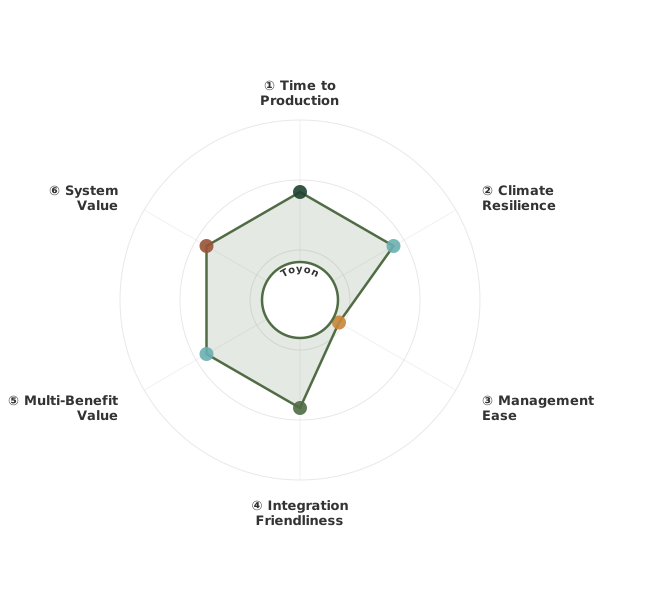
Heteromeles arbutifolia, commonly known as Toyon, serves a vital role in regenerative agriculture, primarily as a component of native hedgerows and food/shelter systems for wildlife. While not a nitrogen fixer or cover crop, its significance lies in supporting biodiversity and ecological resilience. As highlighted in the knowledge base, Toyon is a crucial shrub for providing essential food and shelter for native pollinators, birds, and mammals, particularly during winter months. It acts as an early nectar and pollen source for bees and hummingbirds, and its fruits are a food source for birds and mammals. This makes it an excellent choice for integrating into polyculture systems, hedgerows, and food forest designs aimed at enhancing habitat and supporting beneficial insect populations. Its drought tolerance, as noted in the context of hedgerow species, also aligns with regenerative principles of water conservation and reduced input systems. The knowledge base emphasizes its utility in creating functional landscapes that attract beneficial insects and pollinators, contributing to natural pest control and ecosystem health. Farmer experience insights from the knowledge base focus on its effectiveness in providing year-round resources for wildlife and pollinators within a regenerative landscape design.

Regenerative Quick Profile

All recommendations assume integrated, regenerative practices—not conventional inputs.

Climate & Soil Fit

Climate: Tropical Rainforest, Tropical Monsoon, Tropical Savanna, Hot Semi-Arid (Steppe), Cold Semi-Arid (Steppe), Hot Desert, Cold Desert, Humid Subtropical, Oceanic (Maritime Temperate), Hot-Summer Mediterranean, Warm-Summer Mediterranean, Monsoon-Influenced Humid Subtropical, Subtropical Highland, Hot-Summer Continental, Warm-Summer Continental, Subarctic, Monsoon-Influenced Hot-Summer Continental, Tundra

Zones: USDA 8-10, Australian Zones 10-14, EU Mediterranean, Atlantic, Oceanic

Optimal Soil: Loam Soil

System Role & Functions

Primary: Pollinator Support

Secondary: Food Forest, Cash Crop With Services

Key Benefits: Drought tolerant, Low maintenance, Pest resistant

Management Level

Experience: Beginner-Friendly

Maintenance: Very low maintenance - This drought-tolerant native plant exhibits excellent pest and disease resistance, thriving with minimal need for fertility management or water management.

Time to Production: Moderate (2-5 years) - This shrub/small tree can contribute to the ecosystem with berries within 3-5 years, aligning with typical perennial timelines for ecosystem services.

Value Streams

  • Fruit/nut harvest
  • Diversifies farm income
  • Enhances biodiversity
1

Climate Suitability Assessment

Will this plant thrive in your climate?

IDEALLY SUITED

Köppen Zone: Cfa (Humid Subtropical), Csa (Hot-Summer Mediterranean), Csb (Warm-Summer Mediterranean)
USDA Zone: 7a, 8a, 9a, 10a
Australian Zone: subtropical

Toyon demonstrates exceptional suitability in climates characterized by warm to hot summers and mild, dry winters, with minimal frost risk. This includes Köppen Csa, USDA zones 8a through 10b, and Australian subtropical regions. These zones provide the long, warm growing seasons essential for robust vegetative growth, abundant flowering, and prolific berry production, maximizing its value for pollinator support and food forest systems. The inherent drought tolerance of Toyon is fully expressed in these regions, reducing the need for extensive irrigation, though supplemental watering may still be beneficial during extended dry spells for optimal yield. Establishment is highly successful, and the plant requires minimal management beyond occasional pruning. Its ability to thrive in these conditions ensures reliable fruit set for wildlife and beneficial insects, and its evergreen nature provides year-round structure and habitat. These zones represent the plant's native or near-native ecological niche, leading to high establishment rates and long-term productivity.

ADEQUATE

Köppen Zone: Aw (Tropical Savanna), BSh (Hot Semi-Arid (Steppe)), Cfb (Oceanic (Maritime Temperate)), Cwa (Monsoon-Influenced Humid Subtropical), Cwb (Subtropical Highland)
USDA Zone: 6a, 11a, 12a
Australian Zone: temperate
EU Climate Region: atlantic

Toyon performs adequately in climates with moderate temperatures and reliable moisture, but with some limitations compared to its ideal range. This includes Köppen Csb, Cfa, and Cfb zones, USDA zones 7a and 7b, Australian temperate regions, and the EU Atlantic climate. While Toyon can establish and grow in these areas, its full potential for fruit production might be somewhat constrained by cooler summers or higher humidity. In Cfa and Atlantic zones, increased pest and disease pressure may require more vigilant management. In Csb and temperate zones, while drought tolerance is present, extended dry periods might necessitate supplemental irrigation to ensure consistent fruiting. The longer growing seasons in these zones are generally sufficient, but the absence of prolonged heat can slightly reduce the intensity of flowering and berry ripening. Despite these considerations, Toyon remains a viable option for pollinator support and food forest applications, offering a good balance of performance and manageability.

NOT RECOMMENDED

Köppen Zone: Af (Tropical Rainforest), Am (Tropical Monsoon), ET (Tundra), BSk (Cold Semi-Arid (Steppe)), BWh (Hot Desert), BWk (Cold Desert), Dfa (Hot-Summer Continental), Dfb (Warm-Summer Continental), Dfc (Subarctic), Dwa (Monsoon-Influenced Hot-Summer Continental)
USDA Zone: 2a, 3a, 3b, 4a, 5a, 5b

Toyon is not recommended for USDA zones 6a and 6b due to the significant risk of winter damage and reduced productivity. These zones experience winter lows of -10 to 0°F (-23 to -18°C), which are too severe for Toyon's long-term survival and consistent fruiting as a perennial. While it might survive as a shrub, significant dieback and inconsistent berry production make it impractical for its intended functions of pollinator support and food forest integration. Establishment success is likely to be lower, and the plant will require more intensive management and protection to survive, let alone thrive. Alternative plants such as Serviceberry, Elderberry, and Hawthorn are better suited to these colder climates, offering similar ecological benefits with greater resilience and reliability. These alternatives are generally more cold-hardy and can withstand the temperature extremes of USDA zones 6a and 6b, ensuring more consistent performance and a higher return on investment for regenerative agriculture practices.

Better alternatives for these "not recommended" zones: Serviceberry (Amelanchier spp.) (Native to North America, offers edible berries and good pollinator support, with better cold hardiness.), Elderberry (Sambucus spp.) (Hardy shrub with edible berries, attracts pollinators, and is more cold-tolerant.), Hawthorn (Crataegus spp.) (Thorny shrub/small tree with edible haws, excellent for wildlife and pollinators, generally more cold-hardy.)

Note: Zones listed above represent climates where this plant can produce reliably with reasonable management. Climate zones not mentioned would require intensive climate modification (greenhouses, extensive infrastructure) and are not economically viable for regenerative agriculture purposes.

2

Soil Suitability Assessment

Which soil types work best for this plant?

IDEALLY SUITED

Loam Soil

This plant thrives in these soil types without requiring amendments or remediation. Natural soil conditions support optimal growth and productivity.

ADEQUATE

Clay Soil, Rich Soil, Rocky Soil, Sandy Soil

This plant performs acceptably in these soil types with moderate, manageable remediation such as pH adjustment, compost addition, or drainage improvement. The required amendments are practical and cost-effective for regenerative agriculture.

NOT RECOMMENDED

Acidic Soil, Alkaline Soil, Desert Soil, Saline Soil, Wet Soil

Growing this plant in these soil types would require impractical remediation such as complete soil replacement, extensive amendments, or cost-prohibitive infrastructure. These conditions are not economically viable for regenerative agriculture.

Note: Soil suitability assessments focus on remediation requirements. "Ideally Suited" means the plant generally thrives without the need for substantial amendments, "Adequate" means manageable remediation (lime, compost, mulch), and "Not Recommended" means impractical soil changes would be required. Climate factors like rainfall and temperature also influence success.

3

Seasonal Considerations

Planting timing, growth duration, and harvest windows

Establishing toyon requires careful timing to capitalize on its perennial lifecycle. For nursery trees, aim for planting during the dormant season, typically in late fall or early spring before active growth begins, to minimize transplant shock. Bare-root stock is best planted during this dormant window, while containerized trees offer more flexibility and can be planted as long as the ground isn't frozen.

Expect toyon to take several years to establish. While it can survive for decades, initial establishment can take 2-3 years before significant fruit production begins. You might see a small harvest within 3-5 years, with full production typically achieved by year 5-7. Throughout its productive lifespan, which can span many decades, seasonal management is key. Pruning is best performed during the dormant season, in late fall or winter, to shape the plant and encourage vigorous growth in the spring. Toyon blooms in early summer, with its characteristic bright red berries developing through late summer and fall, ripening for harvest in late fall and early winter, often just before the first expected frost. The plant enters winter dormancy after its berries have been dispersed or harvested.

4

System Role & Multi-Benefit Value

Functional roles, integration strategies, and stacked benefits

Functional Role

Total System Value

Toyon offers significant whole-farm resilience through its multi-functional contributions. While not typically a direct harvest crop, its primary value lies in ecosystem services and system enhancement. As an early nectar and pollen provider, it directly supports pollinator populations, which are critical for the success of many agricultural crops. The berries offer vital winter sustenance for birds and mammals, bolstering wildlife populations and contributing to a balanced farm ecosystem. In systems like hedgerows or food forests, toyon can contribute to soil health and water retention through its root system, and its dense structure can offer minor windbreak effects and habitat. This plant's contribution to farm resilience is through improving ecological processes, supporting beneficial organisms, and providing habitat, thereby diversifying the farm's ecological functions beyond direct production and reducing reliance on external inputs.

Integration Characteristics

Multi-Benefit Value: Adequate - Provides berries for wildlife and attracts pollinators, enhancing biodiversity. Its contributions to soil health are supported through leaf litter and root activity.

Integration Friendliness: Adequate - Provides edible berries and attractive foliage, serving as habitat and supporting biodiversity. It integrates well into perennial systems, contributing to ecosystem function.

5

Management & Care Requirements

Integration guidance, maintenance needs, and care practices

How to Integrate This Plant

Toyon (Heteromeles arbutifolia) is a valuable non-tree plant for regenerative systems, primarily functioning as pollinator support. It can be integrated into hedgerows, food forests, and mixed shrub plantings. Its early nectar and pollen sources are crucial for native bees and other beneficial insects, establishing a foundation for pest control and pollination services from Year 1. As it matures, its bright red berries provide vital winter food for birds and small mammals, enhancing biodiversity and ecological balance. Compatible practices include alley cropping and silvopasture where it can be incorporated into buffer zones or understory plantings, contributing to a more resilient and diverse farm ecosystem. The timeline to contribution starts immediately with floral resources, with fruit production becoming significant by Year 3-5. Its multi-benefit stacking includes supporting beneficial insect populations, providing wildlife habitat and food, and contributing to landscape complexity.

Integration Practices & Management

While the provided sources do not detail specific regenerative agriculture integration methods for *Heteromeles arbutifolia* (Toyon), they highlight its ecological value, suggesting potential applications. Source identifies Toyon as a crucial native California shrub providing food and shelter for wildlife, particularly as an early nectar and pollen source and a provider of fruits for birds and mammals. Regenerative farmers could integrate Toyon into hedgerows or buffer strips, as indicated by the general discussion of native hedgerow plants in Source. Its role as a pollinator attractant and wildlife support system aligns with regenerative goals of enhancing biodiversity and ecosystem services. Establishment in such systems would likely involve planting nursery-grown stock or direct seeding, timed to coincide with optimal moisture availability, potentially alongside other native species to foster a diverse plant community. Its integration with grazing, termination strategies, or cash crops is not described in the provided text. Management would likely focus on establishing the plant and managing competition from more aggressive species during its early growth stages, leveraging its natural resilience and drought tolerance once established. Its contribution to soil health and carbon sequestration would be indirect, through supporting a more robust on-farm ecosystem.

Management Profile

Maintenance Intensity: Ideally Suited - This drought-tolerant native plant exhibits excellent pest and disease resistance, thriving with minimal need for fertility management or water management.

Pest Disease Pressure: Ideally Suited - Toyon exhibits excellent resistance to pests and diseases, thriving in its native climate with minimal intervention, demonstrating natural resilience.

Time To Production: Adequate - This shrub/small tree can contribute to the ecosystem with berries within 3-5 years, aligning with typical perennial timelines for ecosystem services.

6

Economics & Value Streams

Direct harvest, system benefits, ecosystem services, and risk diversification

Comprehensive economic analysis including direct harvest value, system enhancement contributions, ecosystem services, value timeline, and risk diversification strategies.

Per-Tree Production Economics

Metric Value
Establishment Cost $10-20
Years to First Harvest 3-5 years
Annual Maintenance $3-5
Yield 10-20 lbs/year 4-9 kg/year
Market Price $0-1/lb $1-3/kg
Productive Lifespan 20-30 years
Net Annual Return* $-6 to $16/year

Values shown per mature tree, not per acre. In regenerative systems, trees are integrated at low densities across diverse landscapes. Establishment costs spread over the lifespan of the tree. Early years have costs but no revenue.

* Net Annual Return = (Yield × Market Price) − (Amortized Establishment Cost + Annual Maintenance). This return is realized only at/after first harvest; early years have costs but no revenue. Range shows worst case to best case scenarios.

System Enhancement Value

Beyond harvest: pollination services for your crops and ecosystem

Pollination Service Provision

Toyon's primary system contribution beyond windbreak functionality is its significant role in pollinator support and broader ecosystem health. As highlighted in, toyon produces berries that ripen in fall and winter, providing crucial food sources for over 20 bird species and some mammals, as noted in. This extended fruiting period is vital for wildlife sustenance during less abundant seasons. Furthermore, its summer flowers attract beneficial insects, including bees and butterflies, contributing to the pollination of other crops within an integrated farm system. This plant also serves as a valuable component within food forests [secondary function], offering aesthetic appeal and historical uses for food (after preparation) as described in. Its drought resistance and tolerance to sun or part shade make it a low-maintenance addition that also aids in erosion control due to its deep root system.

Nitrogen Fixation (if legume)

Erosion Control (if applicable)

e.g., protects 3-5 acres per tree row, 5-15% crop yield improvement (variable based on wind intensity, density of planting, and crop type)

Toyon (Heteromeles arbutifolia) can function effectively as a component in living windbreaks, particularly in agricultural systems seeking to mitigate wind damage and reduce erosion. As mentioned in, strategic placement at a right angle to prevailing winds, using staggered planting and multiple rows, can temper wind intensity. The article also highlights toyon as a suitable plant for windbreaks due to its multi-stemmed growth habit and drought tolerance, which are crucial for long-term windbreak establishment and resilience. By reducing wind speed, toyon windbreaks can protect sensitive crops, improve microclimates for livestock (though not explicitly stated for toyon, this is a general windbreak benefit), and prevent soil displacement. Its dense foliage, especially when mature, contributes to its effectiveness in dissipating wind energy, thereby safeguarding agricultural land and potentially increasing crop yields in sheltered areas, as suggested by the general principles of windbreak efficacy.

Ecosystem Service Contributions

Environmental contributions: carbon, pollinators, wildlife, and water

  • Carbon Sequestration: As a large, woody shrub that can reach tree size, toyon has a moderate potential for carbon sequestration through biomass accumulation in its stems, branches, and root system. Its evergreen nature suggests year-round carbon uptake.
  • Pollinator Support: High - Toyon's summer flowers provide nectar and pollen for bees and butterflies, and its late-season berries offer critical sustenance for birds and mammals, supporting a diverse and resilient farm ecosystem.
  • Wildlife Habitat: Significant - Provides essential food sources (berries) for over 20 bird species and some mammals, particularly during fall and winter. Its dense structure can also offer nesting and shelter opportunities.
  • Water Quality: Not applicable

Value Timeline: Bloom & Establishment

When you'll see results: annuals bloom year 1, perennials mature 2-3 years

Years 1-2

Initial establishment of windbreak structure, minimal erosion control, some early pollinator and wildlife attraction as flowers and berries begin to develop.

Years 3-5

Established windbreak providing noticeable wind reduction, increased soil stabilization, consistent pollinator support during bloom, and a reliable food source for wildlife as berry production increases.

Years 10-20

Mature windbreak offering significant protection to surrounding agricultural areas, substantial contribution to local biodiversity through abundant fruit and flower resources, and full realization of its ecosystem service potential.

20+ Years

Long-term, resilient windbreak and habitat, continued robust support for pollinators and wildlife, and a stable component of the farm's ecological infrastructure.

Farm Risk Reduction

How pollinator support reduces crop failure risk

  • Multiple Revenue Streams: Indirect income through enhanced crop yields due to wind protection, ecosystem services (pollination, pest control via beneficial insects), potential for niche food product development (e.g., jellies, jams after proper preparation), and aesthetic/agritourism value.
  • Temporal Income Spread: Ongoing provision of ecosystem services (pollinator support, wildlife habitat, windbreak) throughout the year, with peak value for wildlife from fall through winter berries, and for pollinators during summer blooms. Potential for intermittent harvest of berries for value-added products.
  • Market Risk Hedge: Reduces reliance on single crops by enhancing the productivity and resilience of primary agricultural enterprises through wind protection and pollination services. Drought tolerance offers stability in water-scarce environments. Diversifies on-farm ecological functions, contributing to overall farm resilience against climate variability and pest outbreaks.
7

Regenerative Suitability Details

Comprehensive trait ratings for system integration assessment

Comparative ratings for this plant across key regenerative agriculture traits.

Trait Suitability Explanation
Drought Tolerance Ideally Suited Excels in moisture retention, native to dry chaparral ecosystems. Its deep root system supports thriving with mindful water management once established.
Establishment Ease Adequate Establishes reliably from seed or cuttings within its native California climate. It tolerates dry conditions, contributing to soil moisture retention once established.
Time To Production Adequate This shrub/small tree can contribute to the ecosystem with berries within 3-5 years, aligning with typical perennial timelines for ecosystem services.
Multi Benefit Value Adequate Provides berries for wildlife and attracts pollinators, enhancing biodiversity. Its contributions to soil health are supported through leaf litter and root activity.
Climate Adaptability Adequate Native to California (zones 8-10), it thrives with heat and benefits from moisture retention once established. It prefers temperate climates with mindful water management.
Hardiness Zone Range Adequate Native to California (zones 7-10), it tolerates moderate cold and heat, adapting well to western temperate climates with appropriate moisture retention.
Maintenance Intensity Ideally Suited This drought-tolerant native plant exhibits excellent pest and disease resistance, thriving with minimal need for fertility management or water management.
Pest Disease Pressure Ideally Suited Toyon exhibits excellent resistance to pests and diseases, thriving in its native climate with minimal intervention, demonstrating natural resilience.
Integration Friendliness Adequate Provides edible berries and attractive foliage, serving as habitat and supporting biodiversity. It integrates well into perennial systems, contributing to ecosystem function.

Comparative System: Ratings compare plants within their economic category (e.g., cover crop nitrogen fixation compared to other cover crops, not to all plants). Individual farm conditions and management practices significantly influence actual performance.

8

Learn More

Why farmers use this plant and additional resources

Why Regenerative Farmers Use This Plant

Heteromeles arbutifolia, commonly known as Toyon or California Holly, is a foundational perennial evergreen shrub or small tree highly valued for its resilience, ecological contributions, and multi-decade asset value within regenerative agriculture systems. It is a keystone species in its native California ecosystems.

Ecological Contributions:

  • Carbon Sequestration: Mature plants contribute an estimated 2-5 tons CO2e/acre/year, with perennial nature ensuring long-term carbon sequestration.
  • Soil Health & Water Management: Its deep root system, reaching 6-15+ feet (1.8-4.5+ m), enhances soil structure, improves water infiltration rates by up to 20-30% in degraded soils, and scavenges nutrients from deeper soil profiles. Leaf litter acts as a natural mulch, suppressing weeds, conserving soil moisture, and gradually increasing soil organic matter over time, leading to measurable soil carbon increases by year 5-7.
  • Habitat & Biodiversity: It provides crucial habitat and food sources for a wide array of wildlife, including birds and beneficial insects. Its flowers offer a valuable nectar and pollen source for pollinators during late summer and fall, a critical period when other floral resources are scarce. Its berries are a critical food source for numerous bird species during the winter months, supporting avian populations and contributing to natural pest control by attracting insectivorous birds.
  • Microclimate Regulation: Dense foliage provides excellent shade regulation, creating cooler microclimates beneficial for understory crops and livestock, and helps to buffer extreme temperature fluctuations.
  • Windbreak Services: Acts as a windbreak, protecting more delicate crops and livestock from harsh weather and reducing soil erosion.

Economic & Asset Value:

  • Long Lifespan: With a lifespan often exceeding 50 years, Heteromeles arbutifolia accumulates significant asset value through its ecological services and potential for landscape integration.
  • Resilience & Low Input: Its ability to thrive in marginal and degraded soils, combined with its drought tolerance once established, makes it a resilient and low-input choice for land restoration and diverse cropping systems.

Integration in Farming Systems:

  • Agroforestry & Multi-Story Farming: Excels in multi-story farming systems, acting as a foundational element in agroforestry designs, silvopasture, or alley cropping.
  • Living Mulch & Hedgerows: Can be strategically placed to create living mulches, hedgerows, or silvopasture elements.
  • Land Restoration: An ideal candidate for land restoration projects and for incorporating into diverse cropping systems.

Regional Success:

  • California: Integral to drought-tolerant landscaping and habitat restoration projects. In the Central Valley, it's incorporated into vineyard or orchard edges as a windbreak and pollinator habitat, and into riparian restoration projects and farm borders.
  • Australia: In Mediterranean regions, it can be integrated into vineyard or orchard systems as a living mulch or windbreak, and in mixed shrub plantings for erosion control on grazing lands.
  • South Africa: In similar climates, it can be integrated into coastal shrublands or used in buffer zones around agricultural fields.
  • Southern Europe: Can be integrated into olive groves or vineyards as a hardy understory plant or border species.
  • Southwestern United States: Used in drought-tolerant landscaping and native plant restoration projects.
9

How to Integrate This Plant

Practical guidance for regenerative systems

Establishing Heteromeles arbutifolia can be achieved through seed, cuttings, or nursery-grown transplants.

Propagation & Planting:

  • Seed: Germination can be slow and erratic, requiring stratification (cold, moist treatment) for 3-6 months. For direct seeding, a rate of approximately 0.5-1 lb per acre (0.56-1.12 kg/ha) is recommended, sown at a depth of 0.25-0.5 inches (0.6-1.3 cm).
  • Cuttings/Transplants: Nursery-grown transplants are often preferred for quicker establishment. Spacing typically ranges from 8-20 feet (2.4-6 m) apart, depending on the desired density for windbreaks, hedgerows, or specimen trees.
  • Planting Depth: For bare-root stock, ensure the root collar is at soil level. Container-grown plants should be planted at the same depth they were in their pot.
  • Optimal Planting Time: During the cooler, wetter months of fall or early spring, typically September-November in the Northern Hemisphere and March-May in the Southern Hemisphere, to allow roots to establish before summer heat.

Establishment & Maintenance:

  • Watering: Critical during the first 1-3 years of establishment, requiring approximately 1 inch (2.5 cm) of water per week, preferably delivered via drip irrigation to conserve water and ensure deep root penetration. Once established, it is remarkably drought-tolerant.
  • Fertility Management: Prioritize biological approaches; compost application at planting and annual mulching with organic matter will provide sufficient nutrients. Utilizing the residue from nitrogen-fixing cover crops planted in adjacent areas is also beneficial.
  • Pruning: Generally minimal, focused on removing dead or crossing branches to maintain plant health and structure. Typically done in late winter or early spring before new growth begins.
  • Growth Habit: Slow-growing, reaching a mature height of 5-30 feet (1.5-9 m) and a spread of 5-10 feet (1.5-3 m) over several years. Full canopy development can take 3-15 years.

Agroforestry Integration:

  • System Design: As a perennial tree/shrub, careful system design is crucial. Establishment typically takes 1-3 years, with significant growth and canopy development occurring over 3-15 years.
  • Spacing: In alley cropping or silvopasture designs, rows can be planted 15-30 ft (4.5-9 m) apart to allow for passage of livestock or equipment and to accommodate interplanted crops or forage.
  • Companion Planting: Companion planting with nitrogen-fixing ground covers, such as clover or vetch, can be initiated in year 2-3 beneath the developing canopy to enhance soil fertility and provide forage.
  • Infrastructure: Long-term infrastructure considerations include initial deer or browse protection for young plants, potentially a simple irrigation system for the first year, and potentially staking for young trees if strong winds are a concern.

Pest & Disease Management:

  • Natural Methods: Relies on promoting plant vigor and biodiversity. Beneficial insects are naturally attracted to the plant's flowers. Its general hardiness makes it resistant to many common issues. Chemical interventions are rarely necessary.