
Physic Nut
Existing data suggests its potential. One study highlights the use of Jatropha curcas compost, combined with poultry manure and sawdust, for bioremediating toxic metals in soil, indicating a role in soil health and detoxification. Another trial explored the impact of organic amendments like bokashi and vermicompost on Jatropha productivity, suggesting its integration into systems utilizing these soil-building techniques. Furthermore, Jatropha curcas plantations are noted for their significant carbon sequestration potential, particularly in harsh, marginal environments with minimal irrigation, contributing to climate change mitigation. This plant's adaptability to challenging conditions and potential for soil improvement make it a candidate for polyculture systems, though specific uses like nitrogen fixation or pollinator support are not detailed in these excerpts. Further research is needed to fully understand its regenerative applications. While coverage in our knowledge base is limited, the above represents documented uses in regenerative systems.
For a full botanical description see: Plants For A Future(opens in new window) (external link)
Regenerative Quick Profile
All recommendations assume integrated, regenerative practices—not conventional inputs.
Climate & Soil Fit
Climate: Tropical Rainforest, Tropical Monsoon, Tropical Savanna, Hot Semi-Arid (Steppe), Cold Semi-Arid (Steppe), Hot Desert, Cold Desert, Humid Subtropical, Oceanic (Maritime Temperate), Hot-Summer Mediterranean, Warm-Summer Mediterranean, Monsoon-Influenced Humid Subtropical, Subtropical Highland, Hot-Summer Continental, Warm-Summer Continental, Subarctic, Monsoon-Influenced Hot-Summer Continental, Tundra
Zones: USDA 9-11, Australian Zones 11-14, EU Mediterranean, Subtropical
Optimal Soil: Sandy Soil
System Role & Functions
Primary: Soil Remediation
Secondary: Cash Crop With Services, Specialty
Key Benefits: Drought tolerant, Low maintenance
Management Level
Experience: Beginner-Friendly
Maintenance: Very low maintenance - Requires minimal intervention due to its natural resilience and ability to thrive in diverse soil conditions, benefiting from ongoing soil fertility management and effective moisture retention.
Time to Production: Moderate (2-5 years) - Begins yielding beneficial seeds for valuable outputs within 2-3 years, offering a timely return on investment within the regenerative system.
Value Streams
- Fruit/nut harvest
- Diversifies farm income
- Enhances biodiversity
Know the Debate
- Carbon sequestration varies widely by climate and soil conditions.
- Yields of companion crops impacted by Jatropha maturity.
- Thrives in marginal soils, but improves with amendments.
- -
- -
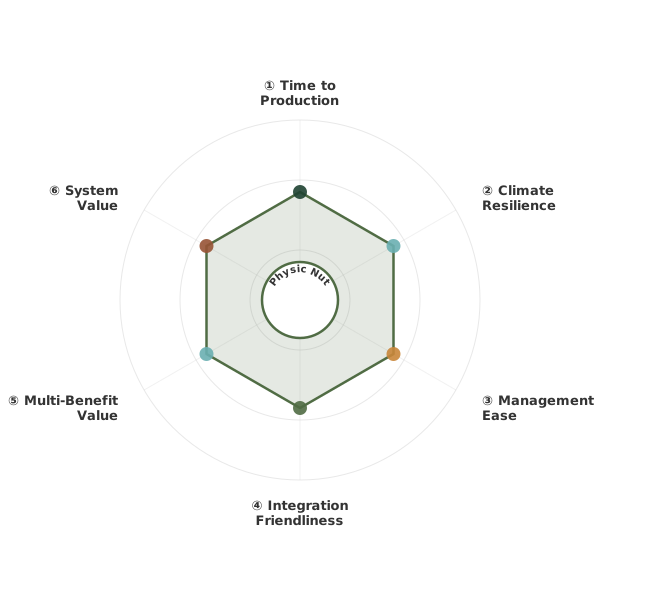
How These Traits Are Calculated
Trait dimensions are ordered clockwise starting from the top of the chart (12 o'clock position):
1. Time to Production
Years from planting to first harvestable yields
WHAT: Measures the waiting period from tree establishment to first meaningful production. Fast-producing trees yield within 2-5 years; slow producers require 8-15+ years before significant harvests.
WHY: Time to production determines cash flow timing and financial feasibility for farm businesses. Long wait times create significant opportunity costs—land and labor tied up for years without income. Fast producers allow quicker experimentation and cash flow recovery, reducing risk for new tree crop farmers.
HOW: Ratings based on years to first harvest documented in economics data. Exceptional (3.0): Production within 2-4 years (elderberry, mulberry, some nut bushes). Typical (2.0): 5-8 years (many fruit trees). Limited (1.0): 10-15+ years (hardwood timber, some nut trees like pecan, walnut).
2. Climate Resilience
Weighted: hardiness zones (50%) + drought tolerance (30%) + adaptability (20%)
WHAT: Combines temperature tolerance (hardiness zone range), water stress resilience (drought tolerance), and overall climate flexibility. Multi-decade tree investments require reliable climate matching to prevent total loss.
WHY: Wrong climate choices mean complete failure for permanent plantings. A tree that dies in year 5 from unexpected cold or prolonged drought represents catastrophic loss of 5 years' investment. Climate resilience determines geographic range and weather variability tolerance—critical as climate patterns become less predictable.
HOW: Weighted formula prioritizes hardiness zone range (50% weight) for core temperature tolerance, drought tolerance (30% weight) for water stress, and overall adaptability (20% weight) for general climate flexibility. Exceptional (3.0): Wide hardiness range (8+ zones) with strong drought tolerance. Typical (2.0): Moderate range and tolerance. Limited (1.0): Narrow climate requirements.
3. Management Ease
Weighted: establishment (40%) + low maintenance (30%) + pest resistance (30%)
WHAT: Combines establishment difficulty, ongoing maintenance requirements, and disease/pest pressure into overall management workload. Low-maintenance trees fit easily into busy farm operations without specialized expertise or intensive inputs.
WHY: Labor is the limiting factor for most diversified farms. High-maintenance trees requiring pruning expertise, disease management, and intensive pest control compete for limited time with other farm enterprises. Easy-care trees deliver production with minimal intervention, making them viable for time-constrained farmers.
HOW: Weighted formula balances establishment ease (40% weight) for startup success, inverted maintenance intensity (30% weight) for ongoing care, and inverted pest/disease pressure (30% weight) for health management. Exceptional (3.0): Easy to establish, self-sufficient growth, naturally pest-resistant. Typical (2.0): Moderate care needs. Limited (1.0): Difficult establishment, intensive maintenance, or heavy pest pressure.
4. Integration Friendliness
Compatibility with silvopasture, alley cropping, and multi-species systems
WHAT: Measures how well the tree integrates with other farm enterprises—grazing livestock, annual crops, or other perennials. Integration-friendly trees tolerate livestock browsing, don't heavily shade out crops, and coexist with diverse plantings.
WHY: Integrated tree systems (silvopasture, alley cropping, food forests) provide higher total returns per acre than monoculture plantings. Trees that work well with livestock provide shade + forage + production simultaneously. Integration flexibility allows farmers to stack enterprises and adapt to market opportunities.
HOW: Ratings based on the integration_friendliness trait documenting compatibility with grazing, cropping, and multi-species systems. Exceptional (3.0): Tolerates livestock browsing, provides livestock benefits (shade, browse), compatible with understory crops. Typical (2.0): Some integration possible with management. Limited (1.0): Requires isolation, incompatible with livestock or cropping.
5. Multi-Benefit Value
Stacked benefits beyond primary product—shade, wildlife, nitrogen, erosion control
WHAT: Measures the diversity of ecosystem services provided beyond the main harvest product. Multi-benefit trees deliver shade, windbreak, wildlife habitat, nitrogen fixation, erosion control, pollinator support, and aesthetic value simultaneously.
WHY: Single-purpose trees are economically fragile—market price swings or production failures eliminate all value. Multi-benefit trees provide resilience through diverse value streams. A nitrogen-fixing tree that produces nuts, provides shade for livestock, supports wildlife, and controls erosion delivers 4-5x the system value of a production-only tree.
HOW: Ratings based on the multi_benefit_value trait documenting service diversity. Exceptional (3.0): 4+ significant services stacked (nitrogen-fixing legume trees providing nuts + shade + wildlife + windbreak). Typical (2.0): 2-3 moderate services. Limited (1.0): Single-purpose production trees with minimal additional benefits.
6. System Value
Total ecosystem and economic value across short, medium, and long timeframes
WHAT: Synthesizes the total regenerative value delivered across multiple decades, including immediate ecosystem services (years 1-5), medium-term production value (years 5-15), and long-term system transformation (years 15-50). Captures the compounding benefits of permanent plantings.
WHY: Trees are multi-decade investments requiring patient capital. System value measures whether the total package—early ecosystem services, eventual production, and long-term legacy benefits—justifies the wait time and land commitment. High system value trees pay back investment through diverse, stacking, compounding benefits.
HOW: Scored via LLM synthesis of economics timelines, ecosystem service diversity, and long-term soil/water/carbon impacts. Exceptional (3.0): Strong early services + valuable production + transformative long-term impacts. Typical (2.0): Moderate benefits across timeframes. Limited (1.0): Long wait with limited service stacking or weak economic returns.
Ratings are based on documented performance in regenerative systems, not conventional high-input scenarios. All traits assume integrated management practices focused on soil health and ecosystem services.
6
Economics & Value Streams
Direct harvest, system benefits, ecosystem services, and risk diversification
Economics & Value Streams
Direct harvest, system benefits, ecosystem services, and risk diversification
Comprehensive economic analysis including direct harvest value, system enhancement contributions, ecosystem services, value timeline, and risk diversification strategies.
Per-Tree Production Economics
| Metric | Value |
|---|---|
| Establishment Cost | $5-10 |
| Years to First Harvest | 2-3 years |
| Annual Maintenance | $2-4 |
| Yield | 10-20 lbs/year 4-9 kg/year |
| Market Price | $0-0/lb $0-1/kg |
| Productive Lifespan | 10-15 years |
| Net Annual Return* | $-5 to $-2/year (negative) |
Values shown per mature tree, not per acre. In regenerative systems, trees are integrated at low densities across diverse landscapes. Establishment costs spread over the lifespan of the tree. Early years have costs but no revenue.
* Net Annual Return = (Yield × Market Price) − (Amortized Establishment Cost + Annual Maintenance). This return is realized only at/after first harvest; early years have costs but no revenue. Range shows worst case to best case scenarios.
System Enhancement Value
Beyond harvest: soil healing, contamination removal, and land restoration
Soil Remediation & Building
Physic nut (Jatropha curcas) exhibits significant potential for soil remediation, particularly in the context of potentially toxic metal (PTM) removal from dumpsite soils. Studies indicate substantial removal efficiencies for metals such as Cd, Cu, Mn, Cr, Fe, and Pb when compost derived from Jatropha is used to treat polluted soils. This suggests a direct application in land rehabilitation and improving soil quality for agricultural use. Furthermore, Jatropha has demonstrated potential for soil organic carbon (SOC) sequestration, especially in longer-term living fence systems, contributing to soil fertility improvement over time. Its mention as a local fencing plant also implies a role in defining boundaries and potentially deterring livestock from sensitive areas without the need for conventional fencing materials. The plant's mention in traditional medicinal practices also points to potential secondary uses and cultural value within farming communities.
Erosion Control
Variable, dependent on planting density and row configuration. Potential for enhanced microclimate stability and reduced evaporation on protected areas.
Physic nut (Jatropha curcas) can contribute to windbreak establishment, acting as a local fencing plant and a component in integrated systems. While not explicitly a nitrogen-fixer, its role as a pioneer species suggests potential for biomass production and soil improvement, as seen in studies involving dynamic accumulators. In the context of windbreaks, Jatropha can help mitigate wind's drying effects and reduce evaporation, thereby protecting adjacent crops or pastures. Its dense growth habit, as implied by its use as a fencing plant, can create a physical barrier against wind, similar to other fast-growing species mentioned for windbreak purposes in forest garden establishment. The effectiveness would depend on planting density and management, but its mention in a windbreak context highlights its potential to enhance microclimate stability within a farm system.
Ecosystem Service Contributions
Environmental contributions: carbon, pollinators, wildlife, and water
- Carbon Sequestration: Jatropha curcas has demonstrated potential for carbon sequestration, with a 20-year chronosequence of living fences showing a significant increase in soil organic carbon (SOC). This suggests it can contribute to long-term soil fertility improvement and climate change mitigation.
- Pollinator Support: Low. While some flowering plants can attract pollinators, Jatropha curcas is not primarily known for significant pollinator support in the context of agricultural systems.
- Wildlife Habitat: Low. Jatropha curcas is not extensively documented as a primary source of mast, nesting sites, or significant browse for a wide range of wildlife. Its dense growth as a fence plant might offer some limited shelter.
- Water Quality: Not applicable
Value Timeline: Soil Healing Process
When you'll see results: remediation timeline varies by contamination type
Years 1-2
Initial soil improvement through biomass contribution and potential for early ground cover. Establishment as a barrier plant (fencing).
Years 3-5
Continued soil organic carbon sequestration. Increased effectiveness as a windbreak and erosion control. Potential for early harvests of secondary products.
Years 10-20
Established SOC sequestration and soil fertility enhancement. Mature windbreak and microclimate regulation benefits. Potential for significant yields of cash crops or oil production.
20+ Years
Sustained soil remediation and carbon sequestration benefits. Long-term soil health improvement. Mature agroforestry system integration.
Farm Risk Reduction
How this reduces farm risk: future land value and production potential
- Multiple Revenue Streams: Cash crop (oil, biodiesel feedstock), soil remediation services, fencing material, potential medicinal uses.
- Temporal Income Spread: Ongoing soil and environmental services (remediation, carbon sequestration, windbreak) coupled with periodic harvests of cash crops.
- Market Risk Hedge: Provides alternative revenue streams beyond traditional agriculture, contributes to soil resilience, and has potential for drought tolerance (though not explicitly detailed in excerpts), reducing reliance on single markets or climate-sensitive crops.
Sources behind this view
 Research
-
Carbon farming in hot, dry coastal areas: an option for climate change mitigation (opens in new window)
This study found: Jatropha curcas plantations in hot, dry coastal areas can capture 17-25 t CO2/ha/yr for 20 years, offering a cost-competitive climate mitigation option and potential regional climate benefits.
8
Know the Debate
Jatropha curcas is a highly resilient plant suited for marginal or degraded lands, offering significant carbon sequestration potential and soil reh...
Know the Debate
Jatropha curcas is a highly resilient plant suited for marginal or degraded lands, offering significant carbon sequestration potential and soil reh...
Jatropha curcas is a highly resilient plant suited for marginal or degraded lands, offering significant carbon sequestration potential and soil rehabilitation benefits. While adaptable to arid and semi-arid climates, its optimal performance and integration into mixed farming systems depend on several factors. Entry costs are relatively low, primarily involving seeds or cuttings and potentially minimal irrigation during establishment, with minimal ongoing fertility needs beyond organic matter incorporation. Full production and ecological benefits are typically realized within 3-7 years.
How much carbon do Jatropha plantations sequester?
High potential in dry/marginal areas
Estimates suggest Jatropha plantations, especially in hot, dry coastal or arid regions, can sequester significant amounts of carbon annually, potentially leading to a net negative carbon footprint compared to fossil fuels.
Sources behind this view
Sources behind this view
Research
-
Carbon farming in hot, dry coastal areas: an option for climate change mitigation (opens in new window)
This study found: Planting Jatropha curcas (physic nut) in hot, dry coastal regions could be a way to capture significant amounts of carbon dioxide from the air – about 17 to 25 tons per acre each year for 20 years. This plant thrives in tough conditions with little water, even on land not suitable for traditional crops. If desalinated seawater is used for watering and adding nutrients, the cost of capturing carbon is competitive with other technologies. Large plantations could even help cool the local climate and increase rainfall. The captured carbon is stored in the plant's woody material, and this process could continue for several decades.
-
Carbon Emission Inventory of a Commercial-Scale Jatropha (Jatropha curcas L.) Biodiesel Processing Plant (opens in new window)
This study found: A study looked at the environmental impact of making biodiesel from Jatropha plants, a common biofuel source. They found that when you consider the entire life of the fuel, from growing the Jatropha to using the biodiesel, it actually helps reduce greenhouse gases. This is because the Jatropha plants absorb carbon dioxide as they grow. Even without this absorption, Jatropha biodiesel is cleaner than regular diesel. The research suggests that using Jatropha biodiesel in the Philippines could significantly cut emissions, especially if more of it is blended into the fuel supply.
Variable and context-dependent sequestration
Actual carbon sequestration rates can vary significantly based on the specific environment; on low-rainfall or degraded lands, yields may be lower, while well-managed carbon projects show higher potential.
Sources behind this view
Sources behind this view
 Videos & Podcasts
-
In arid, low-rainfall regions, environmental planting carbon projects have low yields; human-induced regeneration may be more suitable. Groia can analyze these areas, but ground truthing is recommended for market access.

Making Sense of the Differences
Carbon sequestration potential for Jatropha varies greatly with climate, soil type, plantation age, and management practices. Semi-arid regions or degraded lands with adequate rainfall for establishment may see higher sequestration rates as the plant rehabilitates the soil. In contrast, less optimal conditions or younger plantations may show slower accrual. Farmers should focus on site suitability and long-term soil health indicators to gauge actual carbon sequestration over time.
How do Jatropha systems affect companion crop yields?
Negative impact from mature Jatropha
In some agroforestry systems, older Jatropha trees negatively impact companion crops like millet, likely due to increased competition for resources as the Jatropha canopy matures.
Sources behind this view
Sources behind this view
Research
-
EFFECT OF A JATROPHA CURCAS-BASED AGROFORESTRY SYSTEM ON PERFORMANCE OF ASSOCIATED CROPS IN SEMI-ARID ZONE, SENEGAL (opens in new window)
This study found: A three-year study in Senegal looked at how planting Jatropha curcas (a plant used for biofuel) alongside food crops like millet and groundnuts affected their growth and harvest. Researchers found that while the Jatropha plants slightly reduced their own growth in the first few months when mixed with other crops, the food crops were not significantly affected by young Jatropha trees (1-2 years old). However, by the third year, older Jatropha trees did have a noticeable negative impact on the growth and yield of the intercropped millet.
Potential for neutral or beneficial integration
Early Jatropha stages or carefully designed alley cropping with nitrogen-fixers may have minimal impact or even offer benefits like weed control and soil improvement for companion crops.
Sources behind this view
Sources behind this view
Videos & Podcasts
-
Compares key nitrogen-fixing trees (Black Locust, Honeyloust, Alder, Mosquite, Tagasaste) by climate suitability, nitrogen contribution (lbs/acre/yr), forage value (% protein/sugar), and extra benefits like shade and wood, guiding species selection for silvopasture.
Research
-
Efficiency of an agrosystem designed for family farming in the pre-Amazon region (opens in new window)
This study found: In the humid tropics, a study explored a farming system that combines trees planted in alleys with cover crops grown during the off-season, all under no-till. This system was compared to traditional slash-and-burn methods and conventional tillage. The research found that using annual cover crops like showy rattlebox (<jats:italic>Crotalaria spectabilis</jats:italic>) and sunn hemp (<jats:italic>Crotalaria juncea</jats:italic>) helped manage weeds, replacing aggressive types with less competitive ones. Specifically, showy rattlebox seemed effective at reducing weed numbers. The study also indicated that using these cover crops alongside leguminous trees resulted in better corn yields than using the trees alone, and importantly, without needing extra nitrogen fertilizer. The no-till approach also appeared to preserve soil organic matter better than conventional tillage.
Making Sense of the Differences
The impact of Jatropha on companion crops depends heavily on Jatropha's maturity, spacing, and the companion crop's light and resource needs. Younger Jatropha may have minimal impact, but as trees mature and increase canopy density, they can compete for light, water, and nutrients, particularly affecting shade-intolerant crops like millet in humid tropical systems. Careful species selection, wider Jatropha spacing, and appropriate companion crops are key to avoiding negative yield impacts.
What soil conditions are best for Jatropha growth?
Adaptable to marginal soils
Jatropha curcas demonstrates exceptional resilience, thriving in poor, rocky, or degraded soils with minimal inputs, making it ideal for marginal land rehabilitation.
Sources behind this view
Sources behind this view
Videos & Podcasts
-
For arid Texas landscapes, consider Jujube (medicinal, edible, naturalizes), Catclaw Acacia & Royal Sweetwood (nitrogen-fixing companions), and experimental Almond varieties, all adapted to rocky soils.
-
Goji berries, prickly pear, acacia, and experimental Little Walnut are suitable for rocky, desert-adapted Texas plateau soils. Companion planting with nitrogen-fixers and ground covers supports ecosystem resilience.
-
On rocky Texas hillsides, planting bioregional species like drought-tolerant prickly pear, freeze-susceptible but soil-adapted olive, and nitrogen-fixing ratama supports water conservation, windbreaks, and soil stabilization.
Optimized by organic amendments and drainage
While adaptable to infertile conditions, Jatropha's yield and productivity are significantly enhanced by well-drained soils and the application of organic fertilizers like bokashi and vermicompost.
Sources behind this view
Sources behind this view
Research
-
Jatropha (Jatropha curcas) based intercropping systems: An alternate land use for rehabilitation of degraded sodic lands (opens in new window)
This study found: A field study was conducted to evaluate the performance of jatropha based intercropping model as an alternate land use for rehabilitation of degraded sodic lands. Cultivation of Jatropha curcas L. as monocropping has not been proven economically viable because of its late fruiting and poor yield. A small and resource poor farmer having sodic soils can't wait for at least five years to get income. Therefore, the present study was conducted to replace monoculture of jatropha with intercrops in between jatropha plantation in sodic soils to optimize land use efficiency. Study revealed that the plantation of jatropha at 3 m apart and inter- cultivation of sweet basil - matricaria cropping sequence for four years was highly economical than the planting at 3×2m spacing and other tested crop rotations. Soil physicochemical and biological properties in sweet basil - matricaria with jatropha L. as main crop were better than rest of the cropping sequences evaluated. Soil microbial biomass carbon (MBC) was also higher with sweet basil-matricaria cropping sequence followed by sorghum wheat and maize-linseed. The study shows that inter cultivation of Jatropha in sodic soils encouraged biological activities in the rhizosphere. Inter-cultivation of medicinal and aromatic crops under Jatropha plantations for four years was found to be an alternate land use sequence to obtain higher income than the sole plantation of Jatropha in sodic soils. Soil health improvement due to intercropping can provide a better environment for cultivation of highly remunerative crops in future.
-
EFFECT OF PRUNING AND ORGANIC FERTILIZATION OVER PRODUCTIVE PARAMETERS OF FOUR MEXICAN PROVENANCES OF Jatropha curcas L. (opens in new window)
This study found: A study in southeastern Mexico looked at how different farming practices affected the seed production of four varieties of Jatropha curcas (physic nut), a plant often used for biofuel. Over one growing season, researchers compared the effects of two organic fertilizers (bokashi and vermicompost), pruning, and no treatment. They found that both bokashi and vermicompost significantly boosted seed yield, with the Actopan variety producing the most seeds. While pruning helped more fruits set, it delayed the harvest by two months, ultimately lowering the total seed yield compared to the fertilized plants. The findings suggest that Jatropha plants in this region benefit from organic fertilizers, but pruning might reduce overall seed production by shortening the harvest window.
-
Land Evaluation for Alternate Land Use Planning of Soils in Tatrakallu Village of Anantapuramu District, Andhra Pradesh (opens in new window)
This study found: A study in Tatrakallu village, Andhra Pradesh, India, assessed soils to determine their suitability for different crops. They found that some soils are only marginally suitable for common crops like groundnuts, pigeonpeas, chickpeas, and castor due to issues with fertility, wetness, and salt content. The research suggests several practices to improve soil health and productivity, including leaving crop residues on the field, reusing nutrients, reducing tillage, rotating crops, planting cover crops, and growing multiple crops together. These methods can help conserve soil and water, build organic matter, and make fertilizers more effective. The study highlights that farmers often grow crops on land not best suited for them, and adopting these recommended practices can lead to better yields and healthier, more productive soils.
Making Sense of the Differences
Jatropha curcas demonstrates remarkable adaptability to marginal soils, which is a key regenerative trait. While it can survive in poor conditions, optimal growth and seed yield are enhanced by well-drained soils and organic amendments that improve moisture retention and nutrient availability. The plant's ability to tolerate sodic or infertile conditions makes it suitable for rehabilitation projects, but for maximized agricultural or biofuel output, attention to soil amelioration is beneficial.
9
Learn More
Why farmers use this plant and additional resources
Learn More
Why farmers use this plant and additional resources
Why Regenerative Farmers Use This Plant
Jatropha curcas offers significant regenerative value as a perennial tree species, contributing to long-term soil health and ecosystem resilience. Once established, mature trees can sequester an estimated 2-5 tons of CO2e per acre per year, actively mitigating climate change. Its deep root system, reaching depths of 6-25+ feet (1.8-7.5+ m), effectively binds soil, preventing erosion and improving water infiltration, especially in semi-arid or degraded landscapes. The plant's ability to thrive on marginal lands, requiring minimal inputs once established, makes it an ideal candidate for restoring degraded soils and increasing biodiversity. Furthermore, its multi-decade economic returns, stemming from its seed oil and potential biomass production, contribute to asset value accumulation for farmers and rural communities.
Integrating Jatropha curcas into farm systems provides a wealth of ecological services. As a component of agroforestry systems, it offers critical canopy services, including shade regulation for sensitive understory crops or livestock, and acts as an effective windbreak, protecting fields from damaging winds and reducing soil desiccation. The dense foliage creates a microclimate that can support a greater diversity of beneficial insects and pollinators. Its presence can also contribute to a more stable and diverse farm ecosystem, reducing reliance on external inputs and enhancing overall farm resilience against environmental stressors. Jatropha curcas can be integrated into silvopasture designs, providing shade and browse for livestock, or used in alley cropping systems to create buffer zones and enhance landscape connectivity.
The quantitative ecosystem benefits of Jatropha curcas are substantial. While not a nitrogen fixer, its extensive root system significantly improves soil structure, leading to enhanced water holding capacity and infiltration rates, which can reduce runoff by up to 30% in degraded areas. The leaf litter contributes organic matter to the soil, gradually increasing soil organic carbon levels over time, with measurable soil carbon increases typically observed by year 5-7 of establishment. Its presence can also support populations of beneficial insects that prey on common agricultural pests, contributing to natural pest control. The plant's resilience and low resource demand mean it can thrive in areas where other crops struggle, bringing ecological function back to marginal lands.
Regional success stories highlight Jatropha curcas' adaptability. In India, it has been widely planted in wasteland reclamation projects and as a component of mixed agroforestry systems to provide income and ecological benefits. In parts of Africa, it is utilized in community-based reforestation efforts and as a source of oil for local energy needs. Brazilian farmers have explored its integration into diversified farming systems to improve soil health and provide a secondary income stream, including in degraded pastures to rehabilitate soils and diversify income through biodiesel production. In Australia, it can be established with autumn rains, acting as a windbreak and providing oilseed for local use. In Mexico, it is found in arid and semi-arid regions, often as part of traditional agroforestry systems, contributing to landscape restoration and providing a valuable resource. In Spain, it is suitable for hot-summer Mediterranean climates, offering drought resilience.
Sources behind this view
Research
-
Jatropha curcas: an overview (opens in new window)
This study found: Jatropha curcas L. belongs to family Euphorbiaceae, Jatropha curcas is a valuable multi-purpose crop, historically it was used as medicine for wounds and leaves used as drinks against malaria, jatroph
-
EFFECT OF A JATROPHA CURCAS-BASED AGROFORESTRY SYSTEM ON PERFORMANCE OF ASSOCIATED CROPS IN SEMI-ARID ZONE, SENEGAL (opens in new window)
This study found: In Senegal, Jatropha curcas agroforestry systems showed minimal impact on millet and groundnut yields in early years, but older Jatropha trees negatively affected millet growth and yield by year three
-
Potential of Soil Amendments and Jatropha Curcas Plant in the Remediation of Heavy Metals Contaminated Agricultural Land (opens in new window)
This study found: Abstract Textile wastewater contaminated by heavy metal has been polluted to the agricultural land in Rancaekek, Bandung. To overcome the heavy metal contamination, phytoremediation tec