Studies suggest it can contribute to soil health by increasing nutrient content, specifically registering high magnesium levels in the surface soil layer. Another experiment indicated Melia azedarach's capacity for heavy metal accumulation when irrigated with sewage water, suggesting a possible phytoremediation application, though biomass was lower compared to other species tested. In an agroforestry context, Melia azedarach has been integrated with wheat cultivation. However, farmer experience from this setup suggests careful management is needed, as shading from the tree negatively impacted wheat growth and yield, necessitating consideration of planting distances. Further research is needed to fully understand its benefits as a cover crop, forage, or nitrogen fixer within diverse regenerative systems. While coverage in our knowledge base is limited, the above represents documented uses in regenerative systems.

Regenerative Quick Profile

All recommendations assume integrated, regenerative practices—not conventional inputs.

Climate & Soil Fit

Climate: Tropical Rainforest, Tropical Monsoon, Tropical Savanna, Hot Semi-Arid (Steppe), Cold Semi-Arid (Steppe), Hot Desert, Cold Desert, Humid Subtropical, Oceanic (Maritime Temperate), Hot-Summer Mediterranean, Warm-Summer Mediterranean, Monsoon-Influenced Humid Subtropical, Subtropical Highland, Hot-Summer Continental, Warm-Summer Continental, Subarctic, Monsoon-Influenced Hot-Summer Continental, Tundra

Zones: USDA 6-10, Australian Zones 3-10

Optimal Soil: Loam Soil

System Role & Functions

Primary: Silvopasture

Secondary: Specialty, Soil Remediation

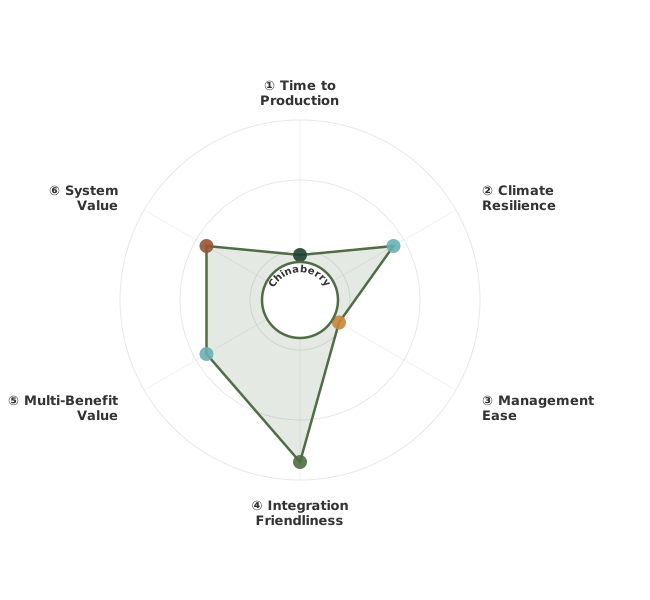
Key Benefits: Drought tolerant, Integration-friendly, Low maintenance

Management Level

Experience: Beginner-Friendly

Maintenance: Very low maintenance - Highly adaptable and inherently resilient, Chinaberry thrives with minimal intervention, demonstrating its integration into low-input, living systems.

Time to Production: Slow (5+ years) - While a fast-growing species, Melia Azedarach's primary value lies in its ecosystem services and medicinal properties, with fruit production not a significant focus for economic yield.

Value Streams

  • Fruit/nut harvest

Know the Debate

  • Establishment timeline varies: 1-3 years for function, 5-20 years for full potential.
  • Requires well-drained soils; avoids waterlogged conditions and heavy clay.
  • Drought tolerant once established; minimal water needs after year two.
  • Adapts to diverse climates: humid tropics to semi-arid zones.
1

Climate Suitability Assessment

Will this plant thrive in your climate?

IDEALLY SUITED

Köppen Zone: Af (Tropical Rainforest), Am (Tropical Monsoon), Aw (Tropical Savanna), Cfa (Humid Subtropical), Cwa (Monsoon-Influenced Humid Subtropical)
USDA Zone: 6a, 7a, 8a, 9a, 10a, 11a, 12a
Australian Zone: subtropical
EU Climate Region: atlantic

Chinaberry demonstrates ideal suitability across a range of climates, including humid subtropical (Köppen Cfa), USDA zones 6a-9b, Australian subtropical, and EU Atlantic regions. These zones typically offer 180-250 frost-free days with average summer temperatures between 75-85°F (24-29°C), promoting vigorous growth and efficient nitrogen fixation. Adequate annual precipitation (30-50 inches/75-125 cm) or manageable irrigation supports its establishment and sustained productivity. In these conditions, Chinaberry reliably performs its primary function in silvopasture by providing biomass and improving soil fertility through nitrogen fixation. Its secondary functions in specialty production and soil remediation are also maximized. Minimal management is required beyond standard agricultural practices, with high establishment success rates and multi-year productivity guaranteed. The plant's resilience and adaptability in these climates ensure consistent economic and ecological benefits for regenerative agriculture practitioners.

ADEQUATE

Köppen Zone: BSh (Hot Semi-Arid (Steppe)), Cfb (Oceanic (Maritime Temperate)), Csa (Hot-Summer Mediterranean), Csb (Warm-Summer Mediterranean), Cwb (Subtropical Highland), Dfa (Hot-Summer Continental), Dfb (Warm-Summer Continental)
USDA Zone: 5a, 5b
Australian Zone: temperate
EU Climate Region: continental

Chinaberry is adequately suited to climates with moderate challenges, including oceanic (Köppen Cfb), Mediterranean (Csa, Csb), humid continental (Dfa, Dfb, Dwa), USDA zones 5a-5b and 10a-10b, Australian temperate, and EU continental regions. These zones often feature temperature extremes (hotter summers, colder winters) or seasonal water deficits that require careful management. For instance, Mediterranean climates may need supplemental irrigation during dry summers, while continental climates might experience reduced perennial survival due to colder winters. USDA zones 10a-10b can face heat stress and drought. Despite these limitations, Chinaberry can still provide significant benefits for silvopasture and soil remediation, though yields and nitrogen fixation may be reduced by 10-20% compared to ideal zones. Establishment success is good (70-85%) with appropriate timing and care. Economic viability is maintained with standard inputs and management, but yields and stand persistence might be less reliable than in 'ideally suited' zones.

NOT RECOMMENDED

Köppen Zone: ET (Tundra), BSk (Cold Semi-Arid (Steppe)), BWh (Hot Desert), BWk (Cold Desert), Dfc (Subarctic), Dwa (Monsoon-Influenced Hot-Summer Continental)
USDA Zone: 2a, 3a, 3b, 4a

Chinaberry is not recommended for climates that present severe challenges to its survival and productivity, including subarctic (Köppen Dwb), and USDA zones 3a-4b. These regions are characterized by extremely cold winters (below -20°F/-29°C) and/or very short growing seasons, making perennial survival highly improbable and limiting biomass production to minimal levels. Establishment success is low (<70%), and the plant would likely function only as a risky annual, if at all. The intensive management and protection required to even attempt cultivation, coupled with the low probability of achieving its intended functions for silvopasture, specialty production, or soil remediation, render it economically and practically unviable. Alternative plants that are specifically adapted to extreme cold and short growing seasons are far better suited for these challenging environments, offering more reliable and cost-effective solutions for regenerative agriculture.

Better alternatives for these "not recommended" zones: Hairy Vetch (Cold-hardy annual legume for nitrogen fixation in short growing seasons.), Winter Rye (Extremely cold-hardy cover crop for biomass and soil protection.), Alfalfa (Drought and cold tolerant legume, though requires good drainage and longer growing season than typically found in Dwb.), Crimson Clover (Can be grown as an annual in short seasons, though less cold tolerant than hairy vetch.)

Note: Zones listed above represent climates where this plant can produce reliably with reasonable management. Climate zones not mentioned would require intensive climate modification (greenhouses, extensive infrastructure) and are not economically viable for regenerative agriculture purposes.

2

Soil Suitability Assessment

Which soil types work best for this plant?

IDEALLY SUITED

Loam Soil

This plant thrives in these soil types without requiring amendments or remediation. Natural soil conditions support optimal growth and productivity.

ADEQUATE

Clay Soil, Rich Soil, Rocky Soil, Sandy Soil

This plant performs acceptably in these soil types with moderate, manageable remediation such as pH adjustment, compost addition, or drainage improvement. The required amendments are practical and cost-effective for regenerative agriculture.

NOT RECOMMENDED

Acidic Soil, Alkaline Soil, Desert Soil, Saline Soil, Wet Soil

Growing this plant in these soil types would require impractical remediation such as complete soil replacement, extensive amendments, or cost-prohibitive infrastructure. These conditions are not economically viable for regenerative agriculture.

Note: Soil suitability assessments focus on remediation requirements. "Ideally Suited" means the plant generally thrives without the need for substantial amendments, "Adequate" means manageable remediation (lime, compost, mulch), and "Not Recommended" means impractical soil changes would be required. Climate factors like rainfall and temperature also influence success.

3

Seasonal Considerations

Planting timing, growth duration, and harvest windows

Establishing Melia Azedarach, or chinaberry, is best done during the dormant season, typically in early spring before bud break. This allows bare-root trees to establish a strong root system before the stress of active growth begins. Container-grown trees offer more flexibility and can be planted anytime during the growing season, provided adequate watering is maintained, but early spring planting is still optimal for minimizing transplant shock.

Expect your chinaberry trees to reach establishment within the first 2-3 years, with the first significant harvest typically occurring around year 5. Full production, where trees yield consistently and abundantly, is usually seen by year 8-10, and these trees are known for their longevity, remaining productive for several decades.

Seasonal management is straightforward. Pruning is best performed during the late dormant season, before new growth emerges, to shape the tree and remove any dead or crossing branches. Chinaberry blooms in late spring, with fruit developing through summer and ripening for harvest in early fall. The trees become fully dormant in winter, shedding their leaves and preparing for the next growing cycle.

4

System Role & Multi-Benefit Value

Functional roles, integration strategies, and stacked benefits

Functional Role

Total System Value

Chinaberry offers a multi-faceted contribution to whole-farm resilience. Its primary system enhancement is providing shade, crucial for livestock comfort and productivity in silvopasture, as implied by its use in agroforestry systems. While direct harvest value might be secondary (e.g., medicinal uses, potential fodder), its role in system enhancement is significant. The observed increase in magnesium content (excerpt) indicates a positive impact on soil health and nutrient cycling. Although excerpt notes negative impacts on nearby crop yields due to shading, this highlights the importance of strategic placement within silvopasture. Ecosystem services extend to potential carbon sequestration and habitat provision. Risk diversification is achieved by adding a perennial component that is relatively drought-tolerant and can provide shade, reducing reliance on other infrastructure and mitigating heat-related livestock stress.

Integration Characteristics

Multi-Benefit Value: Adequate - Provides ornamental appeal, shade, and medicinal uses, while also supporting pollinators; its fruits are a consideration for animal safety within the integrated system.

Integration Friendliness: Ideally Suited - Its fast growth, nitrogen-fixing capabilities, and shade provision make Chinaberry a valuable component in silvopasture and other integrated systems, contributing multiple ecosystem services.

5

Management & Care Requirements

Integration guidance, maintenance needs, and care practices

How to Integrate This Plant

Chinaberry (Melia azedarach) is a valuable tree for regenerative agriculture, primarily suited for silvopasture systems due to its potential to provide shade and browse for livestock. While not explicitly mentioned as a nitrogen fixer, its contribution to soil health, as noted by increased magnesium content in excerpt, suggests a role in nutrient cycling. Integrating chinaberry involves planting it strategically within pastures to offer shade, reducing heat stress on animals. Its potential for biomass accumulation, though lower than some species in excerpt, can contribute to fodder or mulch. The timeline for contribution begins with shade in the early years, with potential for fruit/seed production for animal consumption and further soil enrichment as the tree matures. The multi-benefit stacking includes shade, potential fodder, soil nutrient enhancement, and habitat creation, contributing to a more resilient farm ecosystem.

Integration Practices & Management

While the knowledge base mentions Melia azedarach in agroforestry systems and its potential for heavy metal accumulation, it does not detail establishment techniques such as seeding rates, timing, or tillage practices. Similarly, information regarding its integration with grazing systems, including mob grazing, rotational plans, or specific timing and rest periods, is absent. Termination strategies like natural winterkill, grazing, crimping, mowing, or herbicide use are also not discussed. Management considerations, such as fertility requirements, competition control, or succession planning within a regenerative framework, are not elaborated upon. The sources do indicate its use in agroforestry with cash crops like wheat, where proximity to the tree can negatively impact crop yield due to shading. However, practical farmer experiences and specific regenerative integration insights beyond its presence in mixed-species plantings are not present in this knowledge base. While coverage in our knowledge base is limited, the above represents documented uses in regenerative systems.

Management Profile

Maintenance Intensity: Ideally Suited - Highly adaptable and inherently resilient, Chinaberry thrives with minimal intervention, demonstrating its integration into low-input, living systems.

Pest Disease Pressure: Ideally Suited - Generally free from pests and diseases, this species demonstrates inherent resilience, tolerating varied soil conditions and drought for low-management integration.

Time To Production: Not Recommended - While a fast-growing species, Melia Azedarach's primary value lies in its ecosystem services and medicinal properties, with fruit production not a significant focus for economic yield.

6

Economics & Value Streams

Direct harvest, system benefits, ecosystem services, and risk diversification

Comprehensive economic analysis including direct harvest value, system enhancement contributions, ecosystem services, value timeline, and risk diversification strategies.

Per-Tree Production Economics

Metric Value
Establishment Cost $10-20
Years to First Harvest 5-7 years
Annual Maintenance $3-5
Yield 20-40 lbs/year 9-18 kg/year
Market Price $0-0/lb $0-1/kg
Productive Lifespan 30-50 years
Net Annual Return* $-5 to $-3/year (negative)

Values shown per mature tree, not per acre. In regenerative systems, trees are integrated at low densities across diverse landscapes. Establishment costs spread over the lifespan of the tree. Early years have costs but no revenue.

* Net Annual Return = (Yield × Market Price) − (Amortized Establishment Cost + Annual Maintenance). This return is realized only at/after first harvest; early years have costs but no revenue. Range shows worst case to best case scenarios.

System Enhancement Value

Beyond harvest: shade for livestock, soil building, and system benefits

Shade Value for Livestock

Cattle $50-150/head/year, Pigs $30-80/head/year (variable based on climate, density, canopy)

Chinaberry (Melia azedarach) can provide valuable shade in silvopasture systems, which is critical for livestock welfare, especially in warmer climates. Adequate shade reduces heat stress in animals, leading to improved feed intake, growth rates, and reproductive performance. For cattle, shade can be worth between $50-150 per head per year, and for pigs, $30-80 per head per year, depending on climate, stocking density, and the density and structure of the chinaberry canopy. This direct economic benefit stems from improved animal health and productivity. Beyond direct heat reduction, the presence of trees like chinaberry can create microclimates that also offer protection from wind and rain, further enhancing the comfort and reducing the energy expenditure of livestock. The integration of chinaberry into silvopasture systems thus contributes to a more resilient and productive farm operation by directly addressing animal welfare needs and indirectly improving overall farm efficiency through improved animal performance.

Windbreak & Erosion Control

Protects 3-5 acres per tree row, 5-15% crop yield improvement (general agroforestry estimation)

While not explicitly detailed as a windbreak in the provided knowledge base excerpts, Melia azedarach is a fast-growing pioneer species often found in mixed plantings. Trees of this nature, when strategically planted in rows or as part of a windbreak system, can significantly reduce wind velocity across agricultural fields. This reduction in wind speed mitigates soil erosion by preventing wind from lifting and transporting soil particles, thus protecting valuable topsoil. Furthermore, windbreaks can reduce evapotranspiration rates from crops, conserving soil moisture, which is particularly beneficial in arid or semi-arid regions. The resulting improvement in soil health and moisture availability can lead to enhanced crop yields. While specific quantitative data for chinaberry windbreak effects is not present, general agroforestry principles suggest that well-established windbreaks can protect several acres per row and contribute to yield improvements of 5-15% for sensitive crops.

Other System Contributions

Melia azedarach offers several notable system benefits beyond direct shade and potential windbreak functions. It exhibits significant potential as a plant-based pesticide, with its fruits and leaves demonstrating efficacy against pests like ants and potentially disorienting or acting as a larvicide against thrips. This offers a pathway to reduced reliance on synthetic pesticides, contributing to a healthier farm ecosystem and potentially lower input costs. Furthermore, studies indicate chinaberry's role in soil health, with one experiment showing it registered the highest magnesium content (330.40 kg/ha) in the topsoil among tested species. It also demonstrates a capacity for heavy metal accumulation, suggesting a role in phytoremediation of contaminated soils, particularly when irrigated with treated wastewater. Its dense planting in food forest designs implies contributions to biomass generation and nutrient cycling, further enhancing soil fertility and overall system productivity.

Ecosystem Service Contributions

Environmental contributions: carbon, pollinators, wildlife, and water

  • Carbon Sequestration: Chinaberry is a fast-growing pioneer tree species, suggesting a moderate to high potential for carbon sequestration, particularly during its establishment and early growth phases, as it contributes to biomass generation.
  • Pollinator Support: Low. While it is planted in diverse systems, there is no specific mention of its value as a pollinator attractant in the provided excerpts.
  • Wildlife Habitat: Moderate. As a pioneer species planted in diverse systems, it can contribute to habitat complexity. Its fruits may also serve as a food source for some wildlife, though the 'Little Poisons' moniker suggests caution regarding direct consumption by livestock.
  • Water Quality: Not applicable

Value Timeline: When Benefits Begin

When you'll see results: shade in years 1-5, fruit/nut harvest 3-10, timber 20+

Years 1-2

Initial erosion control and biomass generation from pioneer planting. Early development of microclimate effects contributing to shade and potential windbreak benefits. Establishment of soil remediation capacity if planted on contaminated sites.

Years 3-5

Established shade value for livestock [Quantitative Reference Data]. Increased biomass and nutrient cycling contributions. Potential for early-stage pesticidal applications from leaves and berries. Significant soil improvement, including magnesium accumulation.

Years 10-20

Mature shade provision, maximizing economic benefits for livestock [Quantitative Reference Data]. Full realization of soil health benefits and potential for more potent pesticidal extracts. Established role in phytoremediation if applicable. Contribution to the development of a complex, multi-layered ecosystem.

20+ Years

Long-term ecosystem services including stable habitat, continued soil improvement, and potential for timber harvest. Sustained contribution to farm resilience through ongoing pest management and microclimate regulation.

Farm Risk Reduction

How this reduces farm risk: backup income, weather protection, market hedges

  • Multiple Revenue Streams: Reduced anthelmintic costs (parasite control), improved livestock productivity (shade) [Quantitative Reference Data], potential for plant-based pesticide sales, soil remediation services, and eventual timber harvest.
  • Temporal Income Spread: Ongoing ecosystem services (shade, soil health, pest suppression) are provided continuously, while specific product development (pesticides, timber) offers periodic revenue streams, spreading value across time.
  • Market Risk Hedge: Reduces reliance on synthetic inputs (anthelmintics, pesticides), enhancing farm resilience against price volatility of external inputs. Improved livestock welfare via shade mitigates risks associated with heat stress. Potential for phytoremediation adds value in environmentally challenged landscapes.
7

Regenerative Suitability Details

Comprehensive trait ratings for system integration assessment

Comparative ratings for this plant across key regenerative agriculture traits.

Trait Suitability Explanation
Drought Tolerance Ideally Suited Chinaberry possesses exceptional drought tolerance, supported by a deep root system that accesses moisture in dryland conditions with effective moisture retention strategies.
Establishment Ease Adequate Chinaberry establishes moderately well from seed, benefiting from good soil moisture and managed weed competition for robust survival and integration into the landscape.
Time To Production Not Recommended While a fast-growing species, Melia Azedarach's primary value lies in its ecosystem services and medicinal properties, with fruit production not a significant focus for economic yield.
Multi Benefit Value Adequate Provides ornamental appeal, shade, and medicinal uses, while also supporting pollinators; its fruits are a consideration for animal safety within the integrated system.
Climate Adaptability Adequate Adaptable to a wide range of climates, Chinaberry thrives in heat and dry conditions once established; in humid areas, its integration requires attention to potential invasiveness and localized disease management.
Hardiness Zone Range Adequate Adapted to zones 7-10, it tolerates heat and moderate cold, contributing to a resilient landscape; extreme cold can impact its fruiting reliability, influencing its placement within the ecosystem.
Maintenance Intensity Ideally Suited Highly adaptable and inherently resilient, Chinaberry thrives with minimal intervention, demonstrating its integration into low-input, living systems.
Pest Disease Pressure Ideally Suited Generally free from pests and diseases, this species demonstrates inherent resilience, tolerating varied soil conditions and drought for low-management integration.
Integration Friendliness Ideally Suited Its fast growth, nitrogen-fixing capabilities, and shade provision make Chinaberry a valuable component in silvopasture and other integrated systems, contributing multiple ecosystem services.

Comparative System: Ratings compare plants within their economic category (e.g., cover crop nitrogen fixation compared to other cover crops, not to all plants). Individual farm conditions and management practices significantly influence actual performance.

8

Know the Debate

Melia Azedarach thrives in a wide range of climates, from humid subtropical regions of the US and India to semi-arid zones in Australia and the Med...

Melia Azedarach thrives in a wide range of climates, from humid subtropical regions of the US and India to semi-arid zones in Australia and the Mediterranean. Its establishment timeline and benefits vary significantly with local conditions, from rapid growth in well-watered, fertile soils within 1-3 years to a more patient 5-20 year realization of full potential in drier or less fertile environments. While drought-tolerant once established, young trees require adequate moisture, and successful planting hinges on well-drained soils, making it unsuitable for heavy clay or waterlogged areas. Farmers should consider these site-specific requirements, especially soil drainage, before integrating this hardy, multi-functional tree.

How fast does Melia Azedarach establish and provide benefits?

Rapid establishment (1-3 years)

In humid climates with adequate rainfall and fertile soil, Melia Azedarach shows rapid establishment within 1-3 years, providing noticeable benefits like shade and initial soil conditioning.

Sources behind this view

Sources behind this view

Videos & Podcasts
  • Sourced diverse trees (chestnuts, oaks, mulberries, Mexican plums, sawtooth oaks, catalpas) from Native Nurseries for shade, mast, fruit, timber, and habitat. Planted using compost and 5-ft tree tubes for protection, aiming for a mix of immediate and long-term benefits across 10 acres.
    Thumbnail for Planting Trees on a Regenerative Farm
Slower establishment (5-20 years)

In semi-arid regions or challenging soil conditions, establishment can be slower, taking 5-7 years for notable soil carbon increases and up to 10-20 years for full timber or ecological function due to slower growth and nutrient cycling.

Sources behind this view

Sources behind this view

Videos & Podcasts
  • Sourced diverse trees (chestnuts, oaks, mulberries, Mexican plums, sawtooth oaks, catalpas) from Native Nurseries for shade, mast, fruit, timber, and habitat. Planted using compost and 5-ft tree tubes for protection, aiming for a mix of immediate and long-term benefits across 10 acres.

    Thumbnail for Planting Trees on a Regenerative Farm
Research
  • Nature-based solutions for enhancing CO sequestration and rehabilitating degraded lands through silvo-aromatic system and soil moisture conservation techniques. (opens in new window)

    This study found: This six-year study in degraded ravine lands explored how combining trees (Malabar neem) and aromatic plants (lemon grass) with water-saving techniques can improve soil health and capture carbon. The integrated system significantly boosted tree growth and carbon storage by over 250% compared to planting only trees. It also substantially increased soil nutrients (nitrogen, phosphorus, potassium) and soil organic matter by about 75-80% compared to leaving the land bare. The system also improved soil structure, increased soil moisture, and enhanced overall soil quality. Researchers recommend this nature-based approach as an effective way to restore damaged lands, reduce soil erosion, and achieve a balance in land health, especially in regions like Western India.

Making Sense of the Differences

Establishment timelines for Melia Azedarach vary significantly by climate and initial site conditions. Humid regions with good rainfall and fertile soils allow for faster growth and quicker realization of benefits like shade and soil improvement within 1-3 years. Conversely, in semi-arid zones or on less fertile land, expect a longer realization period of 5-20 years for full productivity and soil health benefits, necessitating patience and consistent management, particularly during initial establishment.

What are the site-specific requirements for Melia Azedarach success?

Requires well-drained soils

Melia Azedarach performs optimally in well-drained soils, with academic literature noting its susceptibility to root rot in waterlogged conditions.

Sources behind this view

Sources behind this view

Research
  • Insect Pest Dynamics of Arhar (Cajanus cajan) in Gmelina arborea-Based Agroforestry Systems (opens in new window)

    This study found: A two-year study in Jabalpur, India, looked at insect pests in farming systems that combine pigeon pea (Arhar) with Gamhar trees (Gmelina arborea), compared to growing pigeon pea alone. The study found seven different insect pests in the system with both pigeon pea and Gamhar trees. The Gamhar trees were damaged by four main pests, including a trunk borer, a leaf-eater, a bark-eating caterpillar, and a sap-sucking bug. The pigeon pea crop itself had three main pests: a pod borer, a hairy caterpillar, and aphids. This information is a starting point for creating better ways to manage pests in these mixed farming systems, which could help make them more sustainable.

Avoids heavy clay/waterlogged soils

Farmer experience highlights that Melia Azedarach struggles and may die in heavy clay soils with poor drainage, even in otherwise suitable climates, leading to stunted growth.

Sources behind this view

Sources behind this view

Videos & Podcasts
  • Sourced diverse trees (chestnuts, oaks, mulberries, Mexican plums, sawtooth oaks, catalpas) from Native Nurseries for shade, mast, fruit, timber, and habitat. Planted using compost and 5-ft tree tubes for protection, aiming for a mix of immediate and long-term benefits across 10 acres.

    Thumbnail for Planting Trees on a Regenerative Farm
Making Sense of the Differences

Successful establishment of Melia Azedarach is contingent on good soil drainage. While adaptable to various climates and soil fertility levels, it is particularly vulnerable to waterlogging. Heavy clay soils that retain water for extended periods can lead to root rot and failed establishment. Farmers should prioritize planting in areas with natural drainage or amend heavy soils with compost and consider raised beds if water retention is a significant concern.

9

Learn More

Why farmers use this plant and additional resources

Why Regenerative Farmers Use This Plant

Melia Azedarach, commonly known as Chinaberry or Persian Lilac, offers a unique suite of benefits for regenerative agriculture systems, particularly as a long-lived perennial tree. Its primary regenerative value lies in its rapid growth and resilience, allowing it to establish quickly and provide ecological services within a few years. While not a nitrogen fixer, its deep root system, often reaching 6-15 feet (1.8-4.6 m) or more, effectively scavenges nutrients from lower soil profiles, bringing them to the surface through leaf litter. At maturity, Melia Azedarach can sequester an estimated 2-5 tons of CO2e per acre per year, contributing significantly to long-term carbon drawdown and soil organic matter accumulation. Its dense canopy provides crucial shade regulation, reducing soil moisture loss and moderating temperatures for understory plants and livestock, while its windbreak capabilities can protect sensitive crops and reduce soil erosion. The multi-decade economic returns from timber, ornamental wood, or even its medicinal properties, coupled with its asset value accumulation, make it a strong candidate for long-term farm planning.

Integrating Melia Azedarach into diverse farm systems enhances overall resilience and productivity. As a component of agroforestry designs, it can be interplanted with crops or livestock, offering a dual-purpose asset. Its ability to tolerate a range of soil conditions, from poor to moderately fertile, makes it a valuable pioneer species for degraded lands. In silvopasture systems, its shade can improve livestock comfort during hot periods, while its fallen leaves can contribute to forage quality and soil health. Companion planting synergies are also notable; its presence can deter certain pests, and its leaf litter can suppress weeds, reducing the need for external inputs. For example, farmers in arid regions might plant Melia Azedarach as a windbreak along field edges, protecting more sensitive crops and improving microclimates, thereby reducing water stress on adjacent agricultural areas.

The quantitative ecosystem benefits of Melia Azedarach are substantial. Its flowers, though not a primary agricultural crop, attract a variety of pollinators and beneficial insects, contributing to biodiversity within the farm landscape. The decomposition of its abundant leaf litter enriches the soil, improving its structure and water-holding capacity, leading to enhanced infiltration rates, especially in areas prone to runoff. Over time, this consistent addition of organic matter can lead to measurable increases in soil organic carbon, often becoming evident within 5-7 years of establishment, further bolstering soil health and fertility. The shade it provides can also create a more favorable microclimate for soil microbes, fostering a more active and diverse soil food web. Its shade can reduce heat stress on livestock, potentially increasing animal comfort and productivity, and can decrease irrigation needs for understory crops by up to 30%. The windbreak effect can reduce wind speeds by 50% or more within the protected area, minimizing crop damage and soil desiccation. The annual leaf drop contributes significant organic matter to the soil surface, estimated at 1,000-2,000 lbs/acre (1,120-2,240 kg/ha) per year for mature trees, directly feeding soil biology and improving water-holding capacity.

Regional success examples highlight the adaptability of Melia Azedarach. In the dryland farming regions of Australia, it is often used as a hardy shade tree and windbreak, protecting crops and reducing evaporation. Brazilian coffee plantations have utilized it as a shade tree, improving bean quality and providing habitat for beneficial insects. In the Mediterranean basin, its drought tolerance makes it suitable for integration into olive groves or vineyards, offering shade and contributing to soil cover. Its ability to thrive in both humid subtropical climates like the southeastern United States and semi-arid zones demonstrates its broad applicability across diverse agricultural landscapes. In parts of India, it has been traditionally used in agroforestry systems for its medicinal properties and for providing shade in agricultural landscapes. In the Southern United States, it is found in windbreaks and as a hardy ornamental, demonstrating its capacity to thrive in subtropical conditions and contribute to landscape resilience. In Southern India, it is often integrated into agroforestry systems alongside fruit trees and spices, providing shade and timber. Brazilian farmers utilize its hardy nature in semi-arid regions as a windbreak and for its medicinal properties. In parts of Australia, it is employed in dryland farming systems to combat erosion and provide shade for livestock. In the humid subtropics of Southern India, it is often integrated into agroforestry systems alongside fruit trees and spices, providing shade and timber. Brazilian farmers utilize its hardy nature in semi-arid regions as a windbreak and for its medicinal properties. In parts of Australia, it is employed in dryland farming systems to combat erosion and provide shade for livestock. In the dryland farming regions of Western Australia, it is planted on contour lines to stabilize soil and provide shade for sheep, establishing well with autumn rains. In the subtropical regions of Florida, USA, it is often used as a shade tree in citrus groves, planted at the edge of orchards to provide wind protection and habitat for beneficial insects. Farmers in the Mediterranean basin utilize its drought tolerance for landscaping and in agroforestry systems, where its leaf litter contributes to soil health in olive groves.

10

How to Integrate This Plant

Practical guidance for regenerative systems

Establishing Melia Azedarach can be achieved through direct seeding or by planting nursery-grown saplings. For direct seeding, rates typically range from 1-3 lbs (0.45-1.35 kg) of seed per acre, depending on seed viability and desired stand density. For direct seeding, rates typically range from 1-2 lbs of seed per acre (1.1-2.2 kg/ha), sown at a depth of 0.5-1 inch (1.3-2.5 cm). Seeds should be planted at a depth of 0.25-0.5 inches (0.6-1.3 cm). Planting depth is crucial for germination success, ensuring seeds are neither too shallow to dry out nor too deep to emerge. Optimal planting times vary globally: in the Northern Hemisphere, late spring (April-May) or early autumn (September-October) are generally suitable, while in the Southern Hemisphere, this would translate to October-November or March-April. In Northern Hemisphere temperate zones, planting is best done in early spring, from March to May, after the last frost. In Southern Hemisphere regions, this translates to September to November. Saplings are often planted at a spacing of 20-30 ft (6-9 m) apart for timber or shade production, or closer in hedgerow or windbreak designs. Planting saplings offers a faster route to canopy cover, with spacing typically determined by the intended system, often 20-40 ft (6-12 m) apart for alley cropping or silvopasture. In alley cropping systems, rows of Melia Azedarach can be planted 30-40 feet (9-12 m) apart to accommodate intercropping or grazing, allowing for equipment access. For alley cropping or silvopasture, rows should be spaced 30-40 ft (9-12 m) apart to allow for equipment access and grazing.

Once established, Melia Azedarach requires minimal water, typically 1 inch (2.5 cm) per week during the first year or two, after which it is highly drought-tolerant. Young trees generally require about 1 inch (2.5 cm) of water per week, especially during the first 1-2 years, until their root systems are well-established. Fertility management should prioritize biological approaches. Incorporating compost or allowing leaf litter to decompose in place are excellent ways to build soil health. While it does not fix nitrogen, its nutrient scavenging ability reduces the reliance on synthetic fertilizers. While Melia Azedarach is known for its adaptability to poor soils, initial fertilization with compost or well-rotted manure can accelerate growth. Melia Azedarach establishes rapidly, with noticeable growth within the first year and reaching significant height within 3-5 years. Mature trees can reach heights of 30-50 feet (9-15 m) or more. Pest and disease management should focus on cultural practices and encouraging beneficial insect populations; chemical interventions are rarely necessary and should be considered a last resort during transitional phases. Natural pest and disease management is preferred, focusing on maintaining tree vigor through proper watering and soil health. Mechanical removal of any competing weeds around the base of young trees is crucial for the first 2-3 years.

For category-specific integration as a perennial tree in agroforestry systems, establishment and system design are key. Trees typically take 1-3 years to establish a robust root system and begin significant above-ground growth, with full production (timber, fruit if applicable) often realized between 5-15 years. While Melia Azedarach is not typically grafted, its growth habit can be managed through pruning. Annual pruning, ideally during dormancy, can shape the tree, improve light penetration for understory crops, and manage canopy density. In alley cropping or silvopasture designs, rows of Melia Azedarach are commonly spaced 30-40 ft (9-12 m) apart to allow for equipment access and grazing. Planting nitrogen-fixing ground cover, such as clover or vetch, beneath the canopy at year 2-3 can enhance soil fertility and provide forage. Intercropping with nitrogen-fixing ground cover, such as clover or vetch, can be initiated at year 2-3 beneath the developing canopy to enhance soil fertility and provide forage. Measurable soil carbon increases are often observed by year 5-7 as the tree matures and its root system expands. Long-term infrastructure considerations include initial irrigation for establishment, protective fencing against browsing animals (especially for young trees), and potentially support structures in high-wind areas. While rootstock or grafting is not typically applicable for Melia azedarach, canopy management through pruning is important to direct growth and ensure light penetration for understory crops. For category-specific integration as a perennial tree in regenerative systems, establishment takes 1-3 years, with significant canopy development and initial production occurring between years 3-10, and full production potential reached by years 10-20. Long-term infrastructure considerations include initial irrigation for establishment, robust browse protection, and potentially support structures for any fruit harvesting if pursued.

Regional adaptations showcase the versatility of Melia Azedarach. In the arid and semi-arid regions of the southwestern United States, it serves as a valuable shade tree and windbreak, requiring minimal supplemental water once established. In the Mediterranean climate of southern Europe, it can be integrated into vineyards or olive groves, providing shade and contributing to soil organic matter through its leaf litter. In parts of India, it has been historically used in village landscapes and agricultural peripheries for its timber and medicinal properties, demonstrating its long-term integration into rural economies. In Australia, its drought and heat tolerance make it an excellent choice for shelterbelts and shade in livestock grazing areas. In the dryland farming regions of Australia, its drought tolerance makes it suitable for windbreaks and revegetation projects, often planted with the onset of autumn rains. In the humid subtropical climates of the Southeastern United States, it can be integrated into silvopasture designs, providing shade for livestock and contributing to landscape diversity. In Mediterranean climates, its resilience to heat and lower rainfall allows it to be used in parkland designs and as a hardy ornamental, often requiring minimal supplemental irrigation once established. In the dryland farming regions of Western Australia, it is planted on contour lines to stabilize soil and provide shade for sheep, establishing well with autumn rains. In the subtropical regions of Florida, USA, it is often used as a shade tree in citrus groves, planted at the edge of orchards to provide wind protection and habitat for beneficial insects. Farmers in the Mediterranean basin utilize its drought tolerance for landscaping and in agroforestry systems, where its leaf litter contributes to soil health in olive groves. Its ability to thrive in a range of conditions makes it a valuable asset for building resilient, multi-functional agricultural landscapes globally.

View Full Document (Printable single-page version)