
Red Mulberry
While native, its hybridization with introduced Morus alba has created valuable traits, such as the 'ever-bearing' phenomenon, yielding fruit for extended periods. This extended fruiting is beneficial for both human consumption and, importantly for regenerative agriculture, animal fodder. The genetics from Morus alba introductions are noted for higher protein, minerality, and digestibility, enhancing palatability and nutritional value for livestock. Although not explicitly detailed as a cover crop or nitrogen fixer in these excerpts, the observed hybridization and enhanced fodder qualities suggest potential integration into agroforestry systems and polycultures. The rougher leaf texture of Morus rubra, due to idioblasts, is contrasted with the smoother, glossier leaves of Morus alba, with the latter being considered easier for fodder. Further research into Morus rubra's specific roles in soil building, carbon sequestration, and pollinator support within integrated systems like rotational grazing or no-till practices would be beneficial. While coverage in our knowledge base is limited, the above represents documented uses in regenerative systems.
For a full botanical description see: Plants For A Future(opens in new window) (external link)
Regenerative Quick Profile
All recommendations assume integrated, regenerative practices—not conventional inputs.
Climate & Soil Fit
Climate: Tropical Rainforest, Tropical Monsoon, Tropical Savanna, Hot Semi-Arid (Steppe), Cold Semi-Arid (Steppe), Hot Desert, Cold Desert, Humid Subtropical, Oceanic (Maritime Temperate), Hot-Summer Mediterranean, Warm-Summer Mediterranean, Monsoon-Influenced Humid Subtropical, Subtropical Highland, Hot-Summer Continental, Warm-Summer Continental, Subarctic, Monsoon-Influenced Hot-Summer Continental, Tundra
Zones: USDA 4-9, Australian Zones 3-7
Optimal Soil: Loam Soil
System Role & Functions
Primary: Silvopasture
Secondary: Food Forest, Specialty
Key Benefits: Multi-benefit value, Drought tolerant, Integration-friendly
Management Level
Experience: Beginner-Friendly
Maintenance: Moderate maintenance - This native tree integrates seamlessly into the system, benefiting from pruning for structural integrity and occasional pest observation as part of holistic ecosystem management.
Time to Production: Moderate (2-5 years) - Red mulberries begin yielding fruit within 3-5 years, with substantial harvests becoming consistent by year 5-7, contributing to the farm ecosystem's productivity.
Value Streams
- Fruit/nut harvest
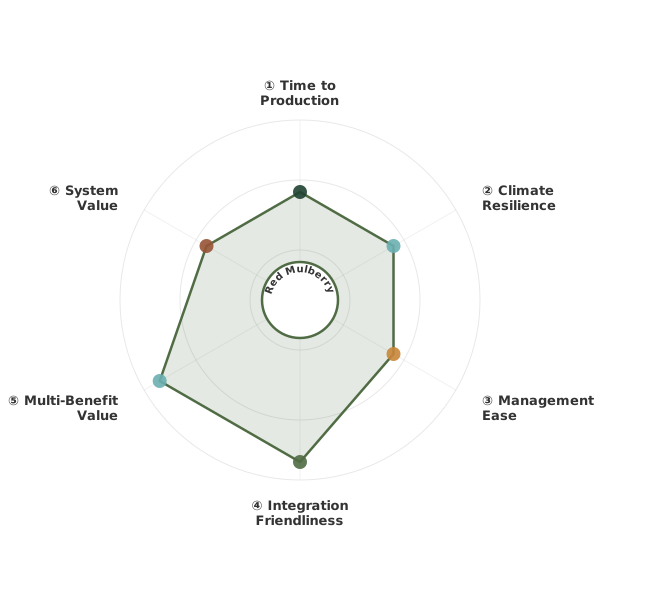
How These Traits Are Calculated
Trait dimensions are ordered clockwise starting from the top of the chart (12 o'clock position):
1. Time to Production
Years from planting to first harvestable yields
WHAT: Measures the waiting period from tree establishment to first meaningful production. Fast-producing trees yield within 2-5 years; slow producers require 8-15+ years before significant harvests.
WHY: Time to production determines cash flow timing and financial feasibility for farm businesses. Long wait times create significant opportunity costs—land and labor tied up for years without income. Fast producers allow quicker experimentation and cash flow recovery, reducing risk for new tree crop farmers.
HOW: Ratings based on years to first harvest documented in economics data. Exceptional (3.0): Production within 2-4 years (elderberry, mulberry, some nut bushes). Typical (2.0): 5-8 years (many fruit trees). Limited (1.0): 10-15+ years (hardwood timber, some nut trees like pecan, walnut).
2. Climate Resilience
Weighted: hardiness zones (50%) + drought tolerance (30%) + adaptability (20%)
WHAT: Combines temperature tolerance (hardiness zone range), water stress resilience (drought tolerance), and overall climate flexibility. Multi-decade tree investments require reliable climate matching to prevent total loss.
WHY: Wrong climate choices mean complete failure for permanent plantings. A tree that dies in year 5 from unexpected cold or prolonged drought represents catastrophic loss of 5 years' investment. Climate resilience determines geographic range and weather variability tolerance—critical as climate patterns become less predictable.
HOW: Weighted formula prioritizes hardiness zone range (50% weight) for core temperature tolerance, drought tolerance (30% weight) for water stress, and overall adaptability (20% weight) for general climate flexibility. Exceptional (3.0): Wide hardiness range (8+ zones) with strong drought tolerance. Typical (2.0): Moderate range and tolerance. Limited (1.0): Narrow climate requirements.
3. Management Ease
Weighted: establishment (40%) + low maintenance (30%) + pest resistance (30%)
WHAT: Combines establishment difficulty, ongoing maintenance requirements, and disease/pest pressure into overall management workload. Low-maintenance trees fit easily into busy farm operations without specialized expertise or intensive inputs.
WHY: Labor is the limiting factor for most diversified farms. High-maintenance trees requiring pruning expertise, disease management, and intensive pest control compete for limited time with other farm enterprises. Easy-care trees deliver production with minimal intervention, making them viable for time-constrained farmers.
HOW: Weighted formula balances establishment ease (40% weight) for startup success, inverted maintenance intensity (30% weight) for ongoing care, and inverted pest/disease pressure (30% weight) for health management. Exceptional (3.0): Easy to establish, self-sufficient growth, naturally pest-resistant. Typical (2.0): Moderate care needs. Limited (1.0): Difficult establishment, intensive maintenance, or heavy pest pressure.
4. Integration Friendliness
Compatibility with silvopasture, alley cropping, and multi-species systems
WHAT: Measures how well the tree integrates with other farm enterprises—grazing livestock, annual crops, or other perennials. Integration-friendly trees tolerate livestock browsing, don't heavily shade out crops, and coexist with diverse plantings.
WHY: Integrated tree systems (silvopasture, alley cropping, food forests) provide higher total returns per acre than monoculture plantings. Trees that work well with livestock provide shade + forage + production simultaneously. Integration flexibility allows farmers to stack enterprises and adapt to market opportunities.
HOW: Ratings based on the integration_friendliness trait documenting compatibility with grazing, cropping, and multi-species systems. Exceptional (3.0): Tolerates livestock browsing, provides livestock benefits (shade, browse), compatible with understory crops. Typical (2.0): Some integration possible with management. Limited (1.0): Requires isolation, incompatible with livestock or cropping.
5. Multi-Benefit Value
Stacked benefits beyond primary product—shade, wildlife, nitrogen, erosion control
WHAT: Measures the diversity of ecosystem services provided beyond the main harvest product. Multi-benefit trees deliver shade, windbreak, wildlife habitat, nitrogen fixation, erosion control, pollinator support, and aesthetic value simultaneously.
WHY: Single-purpose trees are economically fragile—market price swings or production failures eliminate all value. Multi-benefit trees provide resilience through diverse value streams. A nitrogen-fixing tree that produces nuts, provides shade for livestock, supports wildlife, and controls erosion delivers 4-5x the system value of a production-only tree.
HOW: Ratings based on the multi_benefit_value trait documenting service diversity. Exceptional (3.0): 4+ significant services stacked (nitrogen-fixing legume trees providing nuts + shade + wildlife + windbreak). Typical (2.0): 2-3 moderate services. Limited (1.0): Single-purpose production trees with minimal additional benefits.
6. System Value
Total ecosystem and economic value across short, medium, and long timeframes
WHAT: Synthesizes the total regenerative value delivered across multiple decades, including immediate ecosystem services (years 1-5), medium-term production value (years 5-15), and long-term system transformation (years 15-50). Captures the compounding benefits of permanent plantings.
WHY: Trees are multi-decade investments requiring patient capital. System value measures whether the total package—early ecosystem services, eventual production, and long-term legacy benefits—justifies the wait time and land commitment. High system value trees pay back investment through diverse, stacking, compounding benefits.
HOW: Scored via LLM synthesis of economics timelines, ecosystem service diversity, and long-term soil/water/carbon impacts. Exceptional (3.0): Strong early services + valuable production + transformative long-term impacts. Typical (2.0): Moderate benefits across timeframes. Limited (1.0): Long wait with limited service stacking or weak economic returns.
Ratings are based on documented performance in regenerative systems, not conventional high-input scenarios. All traits assume integrated management practices focused on soil health and ecosystem services.
4
System Role & Multi-Benefit Value
Functional roles, integration strategies, and stacked benefits
System Role & Multi-Benefit Value
Functional roles, integration strategies, and stacked benefits
Functional Role
Total System Value
Red mulberry offers significant multi-benefit stacking in regenerative farm systems. Its primary value lies in silvopasture applications, providing shade and nutritious browse for livestock, thereby enhancing animal welfare and reducing feed costs. Hybridization with Morus alba introduces 'ever-bearing' characteristics, extending fruit availability for up to 90 days, a valuable resource for both human consumption and animal fodder with potentially improved nutritional profiles. Beyond direct harvest, red mulberry enhances system resilience by providing essential shade, moderating microclimates, and potentially contributing to soil health through leaf litter. As a tree species, it supports ecosystem services by offering habitat and food for wildlife, attracting pollinators, and aiding in carbon sequestration. Its integration diversifies farm income streams and reduces reliance on monocultures, contributing to overall farm resilience against environmental and market fluctuations. The plant's ability to thrive in various conditions, especially when hybridized, makes it a robust component of a diversified agricultural landscape.
Integration Characteristics
Multi-Benefit Value: Ideally Suited - Native mulberry provides abundant food for wildlife and humans, supports pollinator populations, and yields valuable timber, while its deep roots enhance soil structure and fertility.
Integration Friendliness: Ideally Suited - Mirroring M. nigra, red mulberry offers plentiful fruit and nutritious leaves for fodder, making it an excellent component for silvopasture and complex agroforestry designs.
Sources behind this view
 Research
-
Role of Sericulture in Agroforestry Systems for Improving Soil Health, Biodiversity and Resource Efficiency (opens in new window)
Integrating silk farming with trees and crops (agroforestry) improves soil health, biodiversity, and resource efficiency by utilizing mulberry biomass and farm by-products for nutrient cycling and car
5
Management & Care Requirements
Integration guidance, maintenance needs, and care practices
Management & Care Requirements
Integration guidance, maintenance needs, and care practices
How to Integrate This Plant
Red mulberry (Morus rubra) is a valuable native tree for regenerative systems, primarily serving silvopasture applications due to its fodder potential. Its integration involves planting in pastures or alleys to provide shade and browse for livestock, enhancing animal well-being and reducing reliance on external feed. While native red mulberry is less aggressive than introduced Asian varieties, its hybridization with Morus alba can lead to 'ever-bearing' traits, extending fruit availability for both humans and animals for up to 90 days. This trait, coupled with potentially higher protein and digestibility from hybrid genetics, makes it a dual-purpose crop. Compatible practices include silvopasture, alley cropping, and food forests. Early contributions (Year 1-2) are minimal, focusing on establishment. By Year 3-5, it begins contributing shade and early browse. Long-term (Year 10-20+), it provides substantial shade, browse, and fruit, enhancing soil health and biodiversity. Its value extends beyond direct harvest through shade provision, potential nitrogen fixation (though not explicitly stated, common in Morus species), erosion control on slopes, and pollinator support.
Integration Practices & Management
Direct information regarding specific regenerative agriculture integration practices such as establishment methods, integration with grazing, termination strategies, or management considerations for *Morus rubra* within cash crop systems is notably absent from this knowledge base. The sources do not detail seeding rates, timing, companion planting, tillage approaches, or specific grazing management techniques like mob grazing, rotational systems, or rest periods in relation to *Morus rubra*. Similarly, termination methods and fertility needs are not discussed. While the enhanced palatability and digestibility of hybrid mulberries for animal fodder are mentioned, the practical application of these characteristics in regenerative farming systems, including relay cropping, intercropping, or rotation sequences, is not elaborated upon. Consequently, the knowledge base offers limited insight into how regenerative farmers practically integrate *Morus rubra* into their operations, beyond acknowledging the value of its fruit and its genetic contributions to hybrid varieties. While coverage in our knowledge base is limited, the above represents documented uses in regenerative systems.
Management Profile
Maintenance Intensity: Adequate - This native tree integrates seamlessly into the system, benefiting from pruning for structural integrity and occasional pest observation as part of holistic ecosystem management.
Pest Disease Pressure: Adequate - Generally resilient, red mulberries may occasionally show susceptibility to fungal leaf spots or insect activity, addressed through fostering a balanced ecosystem and promoting plant vigor.
Time To Production: Adequate - Red mulberries begin yielding fruit within 3-5 years, with substantial harvests becoming consistent by year 5-7, contributing to the farm ecosystem's productivity.
Sources behind this view
Research
-
Role of Sericulture in Agroforestry Systems for Improving Soil Health, Biodiversity and Resource Efficiency (opens in new window)
Integrating silk farming with trees and crops (agroforestry) improves soil health, biodiversity, and resource efficiency by utilizing mulberry biomass and farm by-products for nutrient cycling and car
-
Strategic intercropping with mulberry (Morus alba L.) predictably modulates rhizosphere microbiome assembly and enriches pathways for secondary metabolite production. (opens in new window)
Intercropping mulberry with legumes, fungi, or medicinal plants altered root zone bacteria, boosted nitrogen cycling, and increased the production of valuable plant compounds, suggesting strategic par
8
Learn More
Why farmers use this plant and additional resources
Learn More
Why farmers use this plant and additional resources
Why Regenerative Farmers Use This Plant
Morus rubra is a cornerstone perennial for regenerative agricultural systems, offering multi-decade economic returns and significant ecological benefits. This native North American tree begins to produce fruit within 3-7 years of planting, with full commercial yields typically achieved by year 7-15. At maturity, established Red Mulberry trees can sequester an estimated 2-5 tons of CO2e per acre annually, contributing substantially to climate change mitigation. Its broad canopy provides crucial shade regulation, reducing heat stress on livestock and understory crops, and acts as an effective windbreak, protecting fields and farmsteads from harsh winds. The accumulation of biomass from pruning and leaf litter also contributes to long-term soil organic matter development, enhancing soil health and water retention.
Beyond fruit production, Red Mulberry plays a vital role in creating resilient farm ecosystems. Its deep root system, reaching 6-15+ feet (1.8-4.5+ m) or more, effectively scavenges nutrients from deeper soil profiles, making them available to shallower-rooted companion plants or preventing nutrient leaching. The tree's presence supports a diverse array of beneficial insects and pollinators, with its flowers attracting bees and its fruit serving as a food source for numerous bird species and small mammals, thereby enhancing on-farm biodiversity. In silvopasture systems, the shade provided by mature trees creates cooler grazing areas for livestock, improving animal welfare and pasture quality during hot months.
The ecological services provided by Morus rubra extend to significant soil health improvements. As the tree matures, its extensive root network stabilizes soil, preventing erosion, particularly on slopes. The decomposition of its organic matter, including fallen leaves and pruned branches, continuously enriches the soil, leading to measurable increases in soil organic matter by year 5-7, which in turn improves water infiltration and retention. This enhanced soil structure and fertility reduce the reliance on external inputs, contributing to a more self-sufficient and economically viable farming operation over the long term. The long lifespan of the tree (often exceeding 50 years) means that its benefits in terms of carbon sequestration, soil improvement, and habitat provision are sustained for multiple generations of farm management.
Red Mulberry has demonstrated success in various regenerative farming contexts. In the humid subtropical climates of the southeastern United States (USDA Zone 7-8), it is integrated into permaculture designs and agroforestry systems, offering shade and food for both humans and wildlife. In the Midwestern United States, it is integrated into hedgerows and windbreaks for conservation and provides supplemental fruit for local markets, and is explored for use in silvopasture systems. In temperate European climates, such as France and the UK, it can be integrated into mixed orchards or hedgerows, providing fruit and habitat. In Australia, it can be incorporated into dryland farming systems, where its deep roots help it access moisture, or in more temperate regions as part of a diversified orchard. In South America, particularly in regions with suitable climates like southern Brazil or Argentina, it can be used in silvopasture systems to provide shade and supplemental food for livestock. Its adaptability to various soil types and its resilience make it a suitable choice for farmers seeking to diversify income streams and build ecological resilience across diverse landscapes, from small homesteads to larger commercial operations.
Sources behind this view
 Community
-
Detailed case study on using fruitless Morus alba mulberry for high-protein sheep forage in Mediterranean Zone 9, highlighting pollarding, drought tolerance, and rapid regrowth. Contrasts with Morus n
Read more (opens in new window) permies.com
Research
-
Role of Sericulture in Agroforestry Systems for Improving Soil Health, Biodiversity and Resource Efficiency (opens in new window)
Integrating silk farming with trees and crops (agroforestry) improves soil health, biodiversity, and resource efficiency by utilizing mulberry biomass and farm by-products for nutrient cycling and car