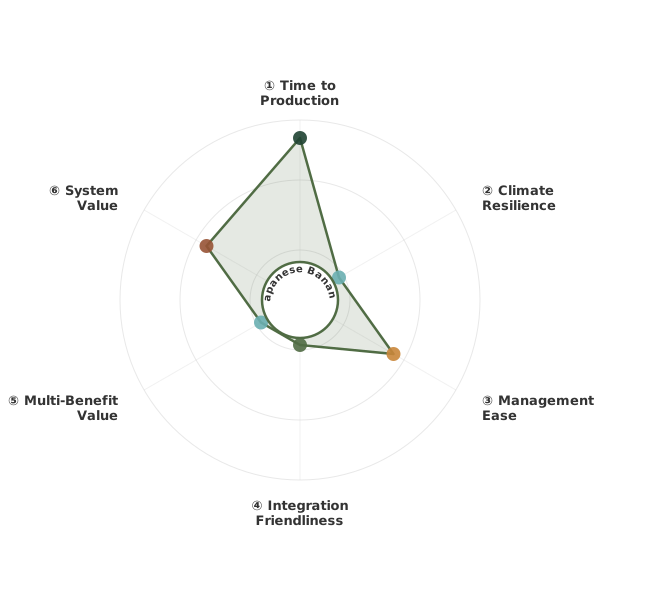
Insights suggest potential applications. The primary use indicated is as a fast-growing component within polyculture systems, contributing to a tropical aesthetic and potentially offering shade or windbreaks. Its rapid growth and need for regular fertilization point to a role in nutrient cycling, although direct evidence as a cover crop or nitrogen fixer is not present in these excerpts. Regenerative benefits could include soil building through biomass production, contributing to carbon sequestration. Integration might be envisioned alongside other perennial crops in agroforestry settings, though specific practices like rotational grazing or no-till are not mentioned. Farmer experience highlighted is the need for protection from wind damage and specific overwintering techniques, suggesting careful site selection and management are key for successful cultivation in less tropical climates. While coverage in our knowledge base is limited, the above represents documented uses in regenerative systems.

Regenerative Quick Profile

All recommendations assume integrated, regenerative practices—not conventional inputs.

Climate & Soil Fit

Climate: Tropical Rainforest, Tropical Monsoon, Tropical Savanna, Hot Semi-Arid (Steppe), Cold Semi-Arid (Steppe), Hot Desert, Cold Desert, Humid Subtropical, Oceanic (Maritime Temperate), Hot-Summer Mediterranean, Warm-Summer Mediterranean, Monsoon-Influenced Humid Subtropical, Subtropical Highland, Hot-Summer Continental, Warm-Summer Continental, Subarctic, Monsoon-Influenced Hot-Summer Continental, Tundra

Zones: USDA 8-11, Australian Zones 3-14, EU Atlantic, Mediterranean, Subtropical

Optimal Soil: Loam Soil

System Role & Functions

Primary: Cash Crop With Services

Secondary: Windbreak, Food Forest

Key Benefits: Fast production

Management Level

Experience: Advanced

Maintenance: High maintenance - Requires consistent moisture and warmth, with healthy soil biology and ample mulch minimizing the need for external interventions and supporting winter survival.

Time to Production: Fast (1-2 years) - While not primarily for edible fruits, ornamental bananas like Musa basjoo contribute rapid biomass and visual impact within 1-2 years, integrating quickly into the landscape.

Value Streams

  • Fruit/nut harvest
1

Climate Suitability Assessment

Will this plant thrive in your climate?

IDEALLY SUITED

Köppen Zone: Af (Tropical Rainforest), Am (Tropical Monsoon), Aw (Tropical Savanna), Cfa (Humid Subtropical), Cwa (Monsoon-Influenced Humid Subtropical)
USDA Zone: 9a, 10a, 11a, 12a
Australian Zone: tropical, subtropical

Japanese bananas (Musa basjoo) perform exceptionally well in climates characterized by consistently warm temperatures (ideally 75-85°F/24-29°C) and abundant moisture. These conditions are met in tropical rainforest (Af), tropical monsoon (Am), tropical savanna (Aw), and humid subtropical (Cfa) Köppen zones, as well as USDA zones 8b through 13, Australian subtropical and tropical zones, and parts of the grassland zone. These regions provide long, frost-free growing seasons with sufficient rainfall (40-60 inches/1000-1500 mm annually) or manageable dry periods where irrigation is feasible. The warm temperatures promote rapid pseudostem development, leading to reliable fruiting and high yields. Minimal management is required beyond basic fertilization and protection from extreme cold snaps in the cooler end of these zones. Their suitability as a cash crop, windbreak, and component of food forests is maximized in these environments, offering consistent productivity and resilience.

ADEQUATE

Köppen Zone: BSh (Hot Semi-Arid (Steppe)), Cfb (Oceanic (Maritime Temperate)), Csa (Hot-Summer Mediterranean), Csb (Warm-Summer Mediterranean), Cwb (Subtropical Highland)
USDA Zone: 8a
Australian Zone: grassland, temperate
EU Climate Region: atlantic

Japanese bananas can be grown successfully in climates with adequate growing seasons and manageable temperature ranges, though yields and reliability may be reduced compared to ideal zones. This includes temperate oceanic (Cfb) Köppen zones, USDA zones 7a and 7b, Australian grassland and temperate zones, and European Atlantic regions. These areas typically offer 120-180 frost-free days, but may experience cooler summers or occasional frosts. Supplemental irrigation is often necessary during dry periods, and winter protection (e.g., mulching) is recommended to ensure perennial survival, especially in the cooler end of these zones. While fruiting may be less consistent or abundant than in tropical climates, these regions can still support Japanese bananas for cash cropping, windbreaks, and food forests with appropriate management practices and variety selection. Establishment success is good with proper timing and care.

NOT RECOMMENDED

Köppen Zone: ET (Tundra), BSk (Cold Semi-Arid (Steppe)), BWh (Hot Desert), BWk (Cold Desert), Dfa (Hot-Summer Continental), Dfb (Warm-Summer Continental), Dfc (Subarctic), Dwa (Monsoon-Influenced Hot-Summer Continental)
USDA Zone: 2a, 3a, 3b, 4a, 5a, 5b, 6a, 7a
Australian Zone: arid
EU Climate Region: mediterranean

Japanese bananas are not recommended for climates with extreme temperature fluctuations, prolonged drought, or insufficient growing seasons, making cultivation economically and practically questionable. This includes hot semi-arid (BSh) and hot desert (BWh) Köppen zones, Mediterranean climates (Csa, Csb, EU Mediterranean) with their dry summers, and cold USDA zones 6a and 6b with severe winter lows. Arid Australian zones also fall into this category. In hot, dry regions, the lack of consistent moisture and extreme heat would necessitate extensive, costly irrigation and still result in poor survival and yield. In cold zones, winter kill is highly probable, requiring annual replanting or intensive protection, making perennial production unreliable. Establishment success is low (<70%), and management costs are prohibitively high for minimal returns. Alternative plants better suited to these challenging environments are essential for regenerative agriculture practices.

Better alternatives for these "not recommended" zones: Fig (Ficus carica) (Drought-tolerant fruit crop well-adapted to Mediterranean climates, providing valuable food and shade.), Pomegranate (Punica granatum) (Highly drought-tolerant and heat-resistant, thrives in arid and semi-arid conditions, offering nutritious fruit.), Olive (Olea europaea) (Iconic Mediterranean crop, extremely drought-tolerant and adapted to hot, dry summers, providing oil and fruit.), Hardy Kiwi (Actinidia arguta) (Cold-hardy vine that produces small, sweet fruits and can tolerate zone 6 winters.), Pawpaw (Asimina triloba) (Native North American fruit tree that thrives in zone 6 and produces unique tropical-tasting fruit.), Prickly Pear Cactus (Opuntia spp.) (Extremely drought and heat tolerant, provides edible fruit (tunas) and pads (nopales).), Mesquite (Prosopis spp.) (Drought-tolerant tree providing edible pods and valuable biomass, adapted to arid conditions.)

Note: Zones listed above represent climates where this plant can produce reliably with reasonable management. Climate zones not mentioned would require intensive climate modification (greenhouses, extensive infrastructure) and are not economically viable for regenerative agriculture purposes.

2

Soil Suitability Assessment

Which soil types work best for this plant?

IDEALLY SUITED

Loam Soil

This plant thrives in these soil types without requiring amendments or remediation. Natural soil conditions support optimal growth and productivity.

ADEQUATE

Clay Soil, Rich Soil, Sandy Soil

This plant performs acceptably in these soil types with moderate, manageable remediation such as pH adjustment, compost addition, or drainage improvement. The required amendments are practical and cost-effective for regenerative agriculture.

NOT RECOMMENDED

Acidic Soil, Alkaline Soil, Desert Soil, Rocky Soil, Saline Soil, Wet Soil

Growing this plant in these soil types would require impractical remediation such as complete soil replacement, extensive amendments, or cost-prohibitive infrastructure. These conditions are not economically viable for regenerative agriculture.

Note: Soil suitability assessments focus on remediation requirements. "Ideally Suited" means the plant generally thrives without the need for substantial amendments, "Adequate" means manageable remediation (lime, compost, mulch), and "Not Recommended" means impractical soil changes would be required. Climate factors like rainfall and temperature also influence success.

3

Seasonal Considerations

Planting timing, growth duration, and harvest windows

Establishing your Musa basjoo is best undertaken in spring, after the last expected frost has passed, allowing the soil to warm sufficiently. Both bare-root and container-grown plants will establish well during this active growing period. Expect the first few years to focus on vegetative establishment, building a robust pseudostem and root system. You'll typically see the first significant harvestable fruit within three to five years, with full production achieved by year five or six. These hardy bananas are truly long-lived, capable of decades of productive fruiting and suckering.

As autumn approaches and temperatures begin to cool, prepare for winter. While Musa basjoo is hardy, protecting the pseudostem from severe frost damage is crucial for its perennial survival and subsequent year's fruiting. Pruning dead or damaged material is best done in late winter or early spring, just before new growth emerges. The primary bloom and fruiting cycle occurs during the warmer, longer days of summer, with harvests typically ripening in late summer and early fall, before the first expected frost signals the end of the active season.

4

System Role & Multi-Benefit Value

Functional roles, integration strategies, and stacked benefits

Functional Role

Total System Value

Musa basjoo offers several layers of system value beyond its direct harvest potential as a cash crop. Its rapid growth and large foliage contribute significantly to biomass production, which can be utilized for mulching, thereby enhancing soil moisture retention and suppressing weeds. This makes it valuable for building soil organic matter in food forests and alley cropping systems. While not providing nitrogen fixation, its substantial organic input supports soil microbial communities and nutrient cycling. In a broader context, its tropical aesthetic and rapid growth can provide temporary shade, which might be beneficial in specific microclimates within a farm system. Its dense growth habit can also offer some level of wind protection in its immediate vicinity. By increasing on-farm biomass and contributing to soil health, Musa basjoo enhances overall farm resilience and reduces reliance on external inputs, contributing to a more diversified and robust agricultural ecosystem. Its value is primarily in system enhancement and soil building.

Integration Characteristics

Multi-Benefit Value: Not Recommended - Primarily valued for fiber and ornamental appeal, this plant contributes significant biomass that enhances soil organic matter and supports beneficial soil life.

Integration Friendliness: Not Recommended - This herbaceous plant integrates well as a biomass producer and ornamental feature, its moisture needs met through effective water management and mulching.

5

Management & Care Requirements

Integration guidance, maintenance needs, and care practices

How to Integrate This Plant

Japanese banana (Musa basjoo) can be integrated into regenerative systems primarily as a fast-growing, biomass-producing understory or border plant. Its large leaves and rapid growth can offer temporary shade and significant organic matter for mulching or composting, contributing to soil health and moisture retention. While not a nitrogen fixer, its substantial biomass can be incorporated into alley cropping systems or used in food forests to suppress weeds and build soil organic matter. It thrives in moist, well-drained soil and full sun to light shade, making it suitable for riparian buffer zones or as a component in perennial polycultures. Its aesthetic appeal can also enhance the visual appeal of farm edges or living mulches. Integrating Musa basjoo requires attention to its water needs and potential overwintering requirements in cooler climates, but its quick establishment offers early contributions to system biomass and soil cover.

Integration Practices & Management

The provided knowledge base offers limited insight into the specific regenerative agriculture integration practices for Musa basjoo. Source focuses on horticultural aspects, detailing its need for full sun to light shade, moist, well-drained soil, and regular fertilization for optimal growth and a tropical aesthetic. It also advises on wind protection and overwintering by digging up the plant. While this source highlights its rapid growth and fertility requirements, it does not address establishment methods like seeding rates, timing, or tillage practices. Similarly, information regarding integration with grazing systems, termination strategies, management of competition, or its use in cash crop rotations within a regenerative framework is absent from the knowledge base. Source mentions Musa basjoo in the context of an ethnobotanical study of ritual plants, providing geographical and soil data but no details on agricultural integration methods. Therefore, based on the available text, practical farmer experiences and specific regenerative management strategies for Musa basjoo in agricultural systems cannot be determined.

Management Profile

Maintenance Intensity: Not Recommended - Requires consistent moisture and warmth, with healthy soil biology and ample mulch minimizing the need for external interventions and supporting winter survival.

Pest Disease Pressure: Adequate - While generally robust, maintaining healthy soil and good air circulation through strategic planting can reduce susceptibility to common fungal issues.

Time To Production: Ideally Suited - While not primarily for edible fruits, ornamental bananas like Musa basjoo contribute rapid biomass and visual impact within 1-2 years, integrating quickly into the landscape.

6

Economics & Value Streams

Direct harvest, system benefits, ecosystem services, and risk diversification

Comprehensive economic analysis including direct harvest value, system enhancement contributions, ecosystem services, value timeline, and risk diversification strategies.

Per-Tree Production Economics

Metric Value
Establishment Cost $10-20
Years to First Harvest 1-2 years
Annual Maintenance $5-10
Yield 30-60 lbs/year 13-27 kg/year
Market Price $0-1/lb $1-2/kg
Productive Lifespan 3-5 years
Net Annual Return* $-16 to $53/year

Values shown per mature tree, not per acre. In regenerative systems, trees are integrated at low densities across diverse landscapes. Establishment costs spread over the lifespan of the tree. Early years have costs but no revenue.

* Net Annual Return = (Yield × Market Price) − (Amortized Establishment Cost + Annual Maintenance). This return is realized only at/after first harvest; early years have costs but no revenue. Range shows worst case to best case scenarios.

System Enhancement Value

Beyond harvest: ecosystem services from regenerative cash crop practices

Ecological Service Contributions

Musa Basjoo contributes to integrated farm systems beyond its windbreak function. Its nutrient-hungry nature, as noted in its potential use around compost digesters and the recommendation for ample nitrogen, makes it an excellent candidate for nutrient cycling. It can be strategically planted to utilize composted organic matter, effectively sequestering nutrients and reducing reliance on synthetic fertilizers. While not explicitly mentioned as a primary pollinator attractant, its large stature and potential for flowering (even if not for fruit in temperate zones) can offer some habitat and nectar sources. Its presence can also contribute to biodiversity by providing habitat structure and potential food sources for certain wildlife, particularly in food forest designs. The plant's resilience and rapid growth in optimal conditions also make it a valuable component for establishing quick vegetative cover and enhancing the overall ecological function of the farm landscape.

Erosion Control (if applicable)

Protects 3-5 acres per tree row, 5-15% crop yield improvement (variable)

Musa Basjoo, as a large perennial grass, possesses a dense growth habit and significant height, making it effective as a windbreak. Its extensive root system, capable of resprouting after frost damage, contributes to soil stability and erosion control, particularly in windy environments like Oklahoma. By strategically planting rows of Japanese bananas, a farm can significantly reduce wind velocity across agricultural lands. This protection is vital for sensitive crops, reducing physical damage, preventing soil desiccation, and minimizing nutrient loss from wind erosion. The quantitative impact of windbreaks is substantial, influencing microclimates and protecting valuable agricultural areas from the detrimental effects of strong winds. This can lead to improved growing conditions and a more stable agricultural system.

Ecosystem Service Contributions

Environmental contributions: carbon, pollinators, wildlife, and water

  • Carbon Sequestration: Musa Basjoo, being a large perennial grass with rapid growth potential, can sequester significant amounts of carbon in its biomass and root systems, especially in temperate climates where it thrives. Its perennial nature allows for continuous carbon uptake over many years.
  • Pollinator Support: Medium. While not a primary nectar source, its large flowers can provide incidental support to pollinators, and its structure offers some habitat.
  • Wildlife Habitat: Provides structural habitat and potential browse for some wildlife due to its large foliage and pseudostems. Its use in food forests suggests integration into broader wildlife support systems.
  • Water Quality: Not applicable

Value Timeline: Production & Services

When you'll see results: varies by crop (annual harvest vs. perennial establishment)

Years 1-2

Establishment of windbreak effect, initial soil stabilization, and contribution to compost digestion systems.

Years 3-5

Maturity of windbreak function providing significant protection; potential for edible fruit production in warmer zones or with protection; established nutrient cycling around compost digesters.

Years 10-20

Full realization of windbreak benefits; established food forest integration; potential for significant biomass accumulation and carbon sequestration.

20+ Years

Long-term, stable windbreak and ecosystem service provision; mature food forest contributions; ongoing resilience and biomass generation.

Farm Risk Reduction

How this reduces farm risk: backup income, weather protection, market hedges

  • Multiple Revenue Streams: Cash crop (fruit, though often limited in temperate zones), ornamental value, biomass for composting/mulch, ecosystem services (windbreak, soil health).
  • Temporal Income Spread: Ongoing ecosystem services (windbreak, soil health) from year 1, with potential for periodic harvest of fruit from year 3 onwards. Biomass contribution is continuous.
  • Market Risk Hedge: Reduces reliance on single crops by providing multiple benefits. Windbreak function protects other high-value crops, enhancing their yield stability. Its resilience in challenging climates offers a consistent element in a diverse farming system.
7

Regenerative Suitability Details

Comprehensive trait ratings for system integration assessment

Comparative ratings for this plant across key regenerative agriculture traits.

Trait Suitability Explanation
Drought Tolerance Not Recommended Japanese bananas thrive with ambient moisture, benefiting from soil moisture retention through abundant mulch and vigilant water management.
Establishment Ease Not Recommended This tropical plant establishes best in warm soils and consistent moisture, supported by robust soil fertility management and protection from cold snaps.
Time To Production Ideally Suited While not primarily for edible fruits, ornamental bananas like Musa basjoo contribute rapid biomass and visual impact within 1-2 years, integrating quickly into the landscape.
Multi Benefit Value Not Recommended Primarily valued for fiber and ornamental appeal, this plant contributes significant biomass that enhances soil organic matter and supports beneficial soil life.
Climate Adaptability Not Recommended Japanese bananas demonstrate resilience in zone 7 with protective mulching, but flourish most vibrantly in subtropical climates where consistent warmth supports their growth cycle.
Hardiness Zone Range Not Recommended A cold-hardy banana, it persists as a perennial in zones 6-10, with above-ground dieback in winter managed by generous organic mulching for root protection.
Maintenance Intensity Not Recommended Requires consistent moisture and warmth, with healthy soil biology and ample mulch minimizing the need for external interventions and supporting winter survival.
Pest Disease Pressure Adequate While generally robust, maintaining healthy soil and good air circulation through strategic planting can reduce susceptibility to common fungal issues.
Integration Friendliness Not Recommended This herbaceous plant integrates well as a biomass producer and ornamental feature, its moisture needs met through effective water management and mulching.

Comparative System: Ratings compare plants within their economic category (e.g., cover crop nitrogen fixation compared to other cover crops, not to all plants). Individual farm conditions and management practices significantly influence actual performance.

8

Learn More

Why farmers use this plant and additional resources

Why Regenerative Farmers Use This Plant

Musa basjoo, commonly known as the Japanese banana or fiber banana, is a robust perennial that offers significant regenerative value in suitable climates, particularly for its rapid biomass production and potential for multi-story agroforestry systems. While not producing edible fruit in most temperate zones, its large, fast-growing pseudostems and leaves contribute substantially to soil organic matter when managed appropriately. Mature plants can sequester an estimated 2-5 tons of CO2e per acre per year through vigorous photosynthetic activity and extensive root systems, which also play a crucial role in soil stabilization and water infiltration. The sheer volume of organic material generated annually provides a consistent resource for composting and mulching, directly feeding soil biology and improving soil structure over the long term.

Integrating Musa basjoo into regenerative systems provides numerous ecological services beyond carbon sequestration. Its dense foliage offers shade regulation, creating microclimates that can benefit sensitive understory crops or livestock during hot periods. As a windbreak, it can protect more delicate plants and reduce soil erosion. The plant's rapid growth and substantial leaf litter contribute to excellent weed suppression, reducing the need for mechanical or chemical interventions. Furthermore, its extensive root system, reaching depths of 6-10 feet (1.8-3 meters), significantly improves soil structure, enhances water infiltration, and helps prevent erosion. The presence of Musa basjoo can also attract beneficial insects and pollinators, contributing to the overall biodiversity of the farm. In multi-story cropping systems, it can provide vertical structure and shade for lower-growing plants, creating diverse habitat and resource niches.

The long-term economic potential of Musa basjoo lies in its consistent biomass production and its role as a foundational species in perennial systems. While direct cash cropping of fruit is limited to tropical regions, the plant's value as a source of fiber for textiles, paper, or bioplastics is gaining traction. In agroforestry designs, it can be interplanted with longer-term fruit trees or timber species, providing early-stage ground cover and organic matter input while the slower-growing trees mature. This multi-decade asset accumulation, coupled with its environmental benefits, makes Musa basjoo a strategic choice for building resilient and productive agricultural landscapes. The continuous shedding of its large leaves and pseudostems contributes a significant amount of organic matter to the soil surface, which decomposes to enrich soil structure, water-holding capacity, and nutrient availability. This consistent input of biomass fuels soil microbial communities, enhancing nutrient cycling and reducing reliance on external fertility inputs. While Musa basjoo itself does not fix atmospheric nitrogen, its substantial biomass production can effectively scavenge nutrients from deeper soil profiles, making them available to the surface ecosystem as the plant material decomposes.

9

How to Integrate This Plant

Practical guidance for regenerative systems

Musa basjoo is typically propagated vegetatively through rhizome division or suckers, ensuring genetic uniformity and faster establishment. For new plantings, select healthy rhizomes or suckers and plant them in well-draining soil at a depth of 2-6 inches (5-15 cm), ensuring the top of the rhizome is just covered with soil. Spacing between plants should be generous, ranging from 8-15 feet (2.4-4.5 meters) apart, to allow for the plant's mature size and facilitate air circulation. In alley cropping or silvopasture designs, rows can be spaced 10-20 feet (3-6 meters) apart to allow for equipment access and the cultivation of understory crops or grazing. Planting is best undertaken in early spring, after the last frost, allowing the plant to establish a robust root system before the onset of summer heat. In regions with mild winters, planting can also occur in early autumn.

Water is crucial during the establishment phase, requiring approximately 1-2 inches (2.5-5 cm) of water per week, especially during dry spells. Mature plants are more drought-tolerant but benefit from consistent moisture. Fertility is best managed through organic inputs, such as incorporating compost, aged manure, and utilizing the plant's own chopped-and-dropped foliage as mulch back into the soil or using rotational grazing residue if integrated into silvopasture. While Musa basjoo does not fix nitrogen, its high demand for nutrients can be met by nutrient-rich compost or by intercropping with nitrogen-fixing legumes in the early years. Planting nitrogen-fixing ground cover, such as white clover or vetch, beneath the canopy from year 2-3 can enhance soil fertility and provide forage.

Plants can reach a height of 15-25 feet (4.5-7.5 meters) or more at maturity within 1-3 years, with full canopy development and maximum biomass production occurring by year 3-5. While it doesn't require traditional pruning for fruit production, removing old pseudostems after they have fruited (or after the growing season in non-fruiting climates) recycles nutrients and encourages new growth. Long-term infrastructure considerations include ensuring adequate irrigation for establishment and potential browse protection for young plants, as deer and other animals can find them palatable. Measurable soil carbon increases can be observed by year 5-7 as the extensive root system and organic matter inputs accumulate.

Regional adaptations for Musa basjoo are primarily dictated by its frost sensitivity. In the warmer regions of the Southern United States (e.g., Florida, coastal California, USDA Zones 8-10), it thrives outdoors year-round. In the UK, it can be grown in sheltered coastal areas or in conservatories, requiring winter protection or being treated as an annual in colder inland zones. Australian farmers in subtropical and tropical regions (e.g., Queensland, Northern New South Wales, Australian Zones 11-13) can establish it as a permanent feature in homestead gardens or as part of larger agroforestry blocks. In Brazil, it is often integrated into coffee or cacao plantations as an understory species, providing shade and biomass. In Mediterranean climates like Southern Spain (Köppen Csa), it can be used in more sheltered locations or with supplemental irrigation to provide biomass and erosion control. In coastal Australia (Australian Zones 2-3), it can be used in riparian zones to stabilize banks and filter runoff.