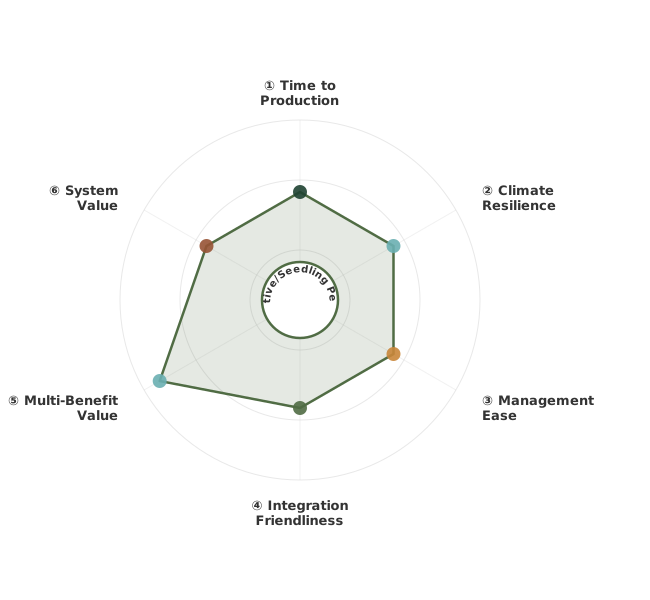
Regenerative Quick Profile

All recommendations assume integrated, regenerative practices—not conventional inputs.

Climate & Soil Fit

Climate: Tropical Savanna, Hot Semi-Arid (Steppe), Cold Semi-Arid (Steppe), Cold Desert, Humid Subtropical, Oceanic (Maritime Temperate), Hot-Summer Mediterranean, Warm-Summer Mediterranean, Monsoon-Influenced Humid Subtropical, Subtropical Highland, Hot-Summer Continental, Warm-Summer Continental, Subarctic, Monsoon-Influenced Hot-Summer Continental

Zones: USDA 6-8, Australian Zones 3-11, EU Atlantic, Continental, Oceanic

Optimal Soil: Loam Soil

System Role & Functions

Primary: Food Forest

Secondary: Silvopasture, Specialty

Key Benefits: Multi-benefit value

Management Level

Experience: Intermediate

Maintenance: High maintenance - The "Centuries of zero-input production" and integration into managed native groves with understory grazing indicate significantly reduced maintenance requirements compared to typical pecan cultivation.

Time to Production: Moderate (2-5 years) - While seedling pecans produce nuts over many years, their selection has historically favored those with faster or more reliable time to production in natural systems.

Value Streams

  • Fruit/nut harvest
1

Climate Suitability Assessment

Will this plant thrive in your climate?

IDEALLY SUITED

Köppen Zone: Cfa (Humid Subtropical), Cwa (Monsoon-Influenced Humid Subtropical), Dfa (Hot-Summer Continental)
USDA Zone: 6a, 7a, 8a, 9a
Australian Zone: temperate

Native/Seedling Pecans thrive in climates with long, warm growing seasons (200+ frost-free days) and ample rainfall (40-60 inches/1000-1500 mm), conditions met in Köppen Cfa and Cwa zones, and USDA zones 6b through 8b. These regions offer mild winters with minimal hard freezes, allowing for good dormancy and spring growth, and summer temperatures that remain within the optimal range for pecan development and nut maturation. The risk of extreme frost is low, promoting consistent tree health and reliable, high yields of quality nuts. Establishment success is very high (>85%) with minimal protection required. These zones provide the necessary heat units and moisture throughout the growing season, supporting vigorous tree growth and maximizing nut production potential, making them prime locations for pecan cultivation with minimal management inputs beyond standard orchard practices.

ADEQUATE

Köppen Zone: BSk (Cold Semi-Arid (Steppe)), Cfb (Oceanic (Maritime Temperate)), Csa (Hot-Summer Mediterranean), Csb (Warm-Summer Mediterranean), Cwb (Subtropical Highland), Dfb (Warm-Summer Continental), Dwa (Monsoon-Influenced Hot-Summer Continental)
USDA Zone: 5a, 5b, 10a
Australian Zone: subtropical
EU Climate Region: atlantic, continental

Pecans can be adequately grown in climates with growing seasons of 150-200 frost-free days and moderate summer temperatures, as found in Köppen Cfb, Dfa, Dfb, and Dwa zones, and USDA zones 5b through 6a, 9a, and 9b, as well as Australian temperate and subtropical regions, and EU Atlantic and Continental regions. These zones may present challenges such as cooler summers slowing nut maturation (Cfb), risk of early/late frosts (Dfa, Dfb, Dwa), or insufficient winter chilling hours and higher disease pressure due to humidity and heat (9a, 9b, subtropical). Establishment success is good (70-85%) but requires careful timing and variety selection for cold hardiness or heat tolerance. Supplemental irrigation may be necessary in drier periods, and some level of pest and disease management is standard. Yields are generally moderate, and economic viability is good with appropriate management strategies and variety choices.

NOT RECOMMENDED

Köppen Zone: Af (Tropical Rainforest), Am (Tropical Monsoon), Aw (Tropical Savanna), ET (Tundra), BSh (Hot Semi-Arid (Steppe)), BWh (Hot Desert), BWk (Cold Desert), Dfc (Subarctic)
USDA Zone: 2a, 3a, 3b, 4a, 11a, 12a

Native/Seedling Pecans are not recommended in Köppen zones with extreme cold or heat/dryness, and USDA zones 3a through 5a, 10a, and 10b. These zones present significant challenges to pecan survival and productivity. In very cold zones (USDA 3a-5a), extreme winter lows (-40 to -15°F) and short growing seasons (90-160 days) lead to high risk of winter kill and unreliable nut maturation, making establishment success below 70% and economic viability questionable. In very warm, low-chilling zones (USDA 10a-10b), the lack of sufficient winter chilling hours prevents proper dormancy and flowering, resulting in very low or no nut production. High temperatures and humidity in these zones also increase disease susceptibility. Establishment success is risky (<70%), requiring intensive management and protection, making them economically unviable for pecan cultivation. Alternative nut-bearing species better adapted to these specific extreme conditions are recommended.

Better alternatives for these "not recommended" zones: Hardy Walnut (e.g., Juglans mandshurica) (More cold-tolerant nut tree adapted to short growing seasons.), American Hazelnut (Corylus americana) (Native, cold-hardy shrub producing edible nuts.), Macadamia Nut (Macadamia integrifolia) (Well-suited to warm climates with mild winters and high humidity.), Avocado (Persea americana) (Thrives in warm climates with sufficient water and protection from frost.)

Note: Zones listed above represent climates where this plant can produce reliably with reasonable management. Climate zones not mentioned would require intensive climate modification (greenhouses, extensive infrastructure) and are not economically viable for regenerative agriculture purposes.

2

Soil Suitability Assessment

Which soil types work best for this plant?

IDEALLY SUITED

Loam Soil

This plant thrives in these soil types without requiring amendments or remediation. Natural soil conditions support optimal growth and productivity.

ADEQUATE

Acidic Soil, Alkaline Soil, Clay Soil, Desert Soil, Rich Soil, Rocky Soil, Sandy Soil

This plant performs acceptably in these soil types with moderate, manageable remediation such as pH adjustment, compost addition, or drainage improvement. The required amendments are practical and cost-effective for regenerative agriculture.

NOT RECOMMENDED

Saline Soil, Wet Soil

Growing this plant in these soil types would require impractical remediation such as complete soil replacement, extensive amendments, or cost-prohibitive infrastructure. These conditions are not economically viable for regenerative agriculture.

Note: Soil suitability assessments focus on remediation requirements. "Ideally Suited" means the plant generally thrives without the need for substantial amendments, "Adequate" means manageable remediation (lime, compost, mulch), and "Not Recommended" means impractical soil changes would be required. Climate factors like rainfall and temperature also influence success.

3

Seasonal Considerations

Planting timing, growth duration, and harvest windows

Establishing pecan trees is a long-term investment, with the journey from seedling to substantial harvest spanning many years. Nursery trees, whether bare-root or container-grown, are best planted during the dormant season, typically in early spring as the soil becomes workable, or in late fall after leaf drop but before the ground freezes. This allows roots to establish before the stress of active growth. Expect several years for trees to become truly established, usually around 3-5 years. The first noticeable nut production might occur between 5-8 years, with full, commercial-level production taking closer to 10-15 years. Fortunately, pecan trees are long-lived, offering bountiful harvests for many decades.

Seasonal management focuses on supporting this extended growth cycle. Winter dormancy is the prime time for structural pruning, performed when trees are completely without leaves to minimize stress and disease transmission. As spring arrives and temperatures consistently rise above freezing, trees will begin their bloom cycle, crucial for pollination. Summer growth is dedicated to developing foliage and maturing the current year's nut crop. Fall, after the nuts have matured and dropped, signifies the end of the active production season and the lead-up to winter dormancy.

4

System Role & Multi-Benefit Value

Functional roles, integration strategies, and stacked benefits

Functional Role

Integration Characteristics

Multi-Benefit Value: Ideally Suited - This tree contributes valuable nuts and timber, while its deep roots actively enhance soil structure and nutrient cycling, providing crucial food and habitat for diverse wildlife.

Integration Friendliness: Adequate - Pecans are excellent nut producers and can offer shade, with their perennial nature contributing to long-term soil health and system stability.

5

Economics & Value Streams

Direct harvest, system benefits, ecosystem services, and risk diversification

Comprehensive economic analysis including direct harvest value, system enhancement contributions, ecosystem services, value timeline, and risk diversification strategies.

Per-Tree Production Economics

Metric Value
Establishment Cost $25-50
Years to First Harvest 7-10 years
Annual Maintenance $10-20
Yield 40-80 lbs/year 18-36 kg/year
Market Price $2-5/lb $5-11/kg
Productive Lifespan 50-100 years
Net Annual Return* $59-$389/year

Values shown per mature tree, not per acre. In regenerative systems, trees are integrated at low densities across diverse landscapes. Establishment costs spread over the lifespan of the tree. Early years have costs but no revenue.

* Net Annual Return = (Yield × Market Price) − (Amortized Establishment Cost + Annual Maintenance). This return is realized only at/after first harvest; early years have costs but no revenue. Range shows worst case to best case scenarios.

System Enhancement Value

Beyond harvest: how understory complements overstory in polyculture

Food Forest System Contributions

Pecan trees offer a multifaceted value beyond direct nut production and shade. The knowledge base highlights their ectomycorrhizal relationship with pecan truffles (*Tuber lyonii*), a valuable culinary fungi. This symbiotic relationship enhances soil health and creates an additional high-value product. Furthermore, mature pecan orchards significantly contribute to soil health by increasing soil organic carbon (SOC) and nutrient availability, particularly in younger orchards (20 years) where SOC can increase by 99%-190%. This sequestration enhances soil structure, water retention, and microbial activity, benefiting the entire farm ecosystem. Pecan trees can also support biodiversity by providing habitat and food sources for wildlife, although specific details are not elaborated in the excerpts. Their drought tolerance, as noted in, makes them a resilient component in drier agricultural systems, reducing reliance on irrigation once established.

Nitrogen Fixation (if legume)

Groundcover & Erosion Control

Variable based on planting density and prevailing winds; potential for protecting 3-5 acres per tree row and 5-15% crop yield improvement in adjacent areas.

While not explicitly detailed as a windbreak in the provided excerpts, the substantial mature size of pecan trees (70-100 feet tall and 40-75 feet wide) suggests a significant capacity for wind reduction when planted in rows or blocks. In agricultural landscapes, large trees can effectively buffer wind speeds, thereby reducing soil erosion, preventing wind damage to crops, and creating more favorable microclimates for adjacent sensitive plants. The dense canopy and extensive root system of mature pecans would contribute to soil stability. The effectiveness as a windbreak would depend on the planting design, tree spacing, and prevailing wind patterns. Establishing such a windbreak would require significant time as per the tree's growth rate, but once mature, it could offer substantial protection to surrounding agricultural areas, potentially enhancing crop yields by mitigating wind-related stresses.

Ecosystem Service Contributions

Environmental contributions: carbon, pollinators, wildlife, and water

  • Carbon Sequestration: Mature pecan trees are significant carbon sinks due to their large biomass and long lifespan. Studies indicate substantial increases in soil organic carbon (SOC) in pecan orchards, with potential for enhanced carbon storage in both above-ground biomass and soil profiles. This makes them valuable assets for carbon sequestration in agroforestry systems.
  • Pollinator Support: Medium. Pecans are wind-pollinated, but their flowers can still provide some pollen and nectar resources for generalist pollinators, contributing to overall pollinator diversity and forage availability within the farm landscape.
  • Wildlife Habitat: Pecan trees provide habitat for various wildlife, with their nuts serving as a valuable food source (mast). Mature trees offer nesting sites and shelter. The understory in silvopasture systems can also support a range of species.
  • Water Quality: Not applicable

Value Timeline: Understory Development

When you'll see results: groundcover/herbs year 1, shrubs 2-3, full layer integration 5-10

Years 1-2

Establishment of root systems and initial contributions to soil stabilization, potentially minor shade beginning to develop, minimal to no truffle presence.

Years 3-5

First potential nut harvest (though yields will be low and inconsistent), established shade benefits for livestock, early stages of truffle development may begin.

Years 10-20

Significant nut production (potential for alternate bearing), substantial shade provision for silvopasture, notable soil organic carbon sequestration, truffle production becomes more consistent and valuable.

20+ Years

Full mature tree production of nuts, maximum shade and windbreak benefits, sustained high levels of carbon sequestration, established and potentially high-value truffle production, potential for timber value if trees are managed for that purpose.

Farm Risk Reduction

How multi-layer systems diversify production and income

  • Multiple Revenue Streams: Direct nut sales, pecan truffle sales, shade value for livestock (reduced heat stress, improved productivity), potential carbon credits, potential timber value (long-term).
  • Temporal Income Spread: Annual nut harvest provides recurring income, while truffle production offers a more periodic high-value product. Ecosystem services like shade and carbon sequestration provide continuous, ongoing benefits. Long-term potential for timber adds another temporal dimension.
  • Market Risk Hedge: Drought tolerance and resilience () reduce risk associated with water scarcity. Diversified income streams from nuts, truffles, and livestock shade buffer against market volatility in any single commodity. Reduced reliance on synthetic fertilizers due to soil health improvements offers economic and environmental resilience.
6

Regenerative Suitability Details

Comprehensive trait ratings for system integration assessment

Comparative ratings for this plant across key regenerative agriculture traits.

Trait Suitability Explanation
Drought Tolerance Adequate Once established, pecans utilize deep root systems for resilience, with soil moisture management through mulching and cover cropping enhancing nut yield and quality.
Establishment Ease Adequate Native/seedling pecans, often found in wild settings, demonstrate greater resilience and ease of establishment without intensive human intervention compared to cultivated varieties.
Time To Production Adequate While seedling pecans produce nuts over many years, their selection has historically favored those with faster or more reliable time to production in natural systems.
Multi Benefit Value Ideally Suited This tree contributes valuable nuts and timber, while its deep roots actively enhance soil structure and nutrient cycling, providing crucial food and habitat for diverse wildlife.
Climate Adaptability Adequate Thriving in warmer climates with extended growing seasons, pecans benefit from microclimate considerations and consistent soil moisture for optimal development.
Hardiness Zone Range Adequate Adapted to zones 6-9, pecans perform reliably in regions with hot summers and distinct winters, with cultivar choice optimizing their integration into local agroecosystems.
Maintenance Intensity Not Recommended The "Centuries of zero-input production" and integration into managed native groves with understory grazing indicate significantly reduced maintenance requirements compared to typical pecan cultivation.
Pest Disease Pressure Adequate A robust, biodiverse ecosystem and healthy soil biology help mitigate pest and disease challenges, supporting the tree's natural defenses for successful nut production.
Integration Friendliness Adequate Pecans are excellent nut producers and can offer shade, with their perennial nature contributing to long-term soil health and system stability.

Comparative System: Ratings compare plants within their economic category (e.g., cover crop nitrogen fixation compared to other cover crops, not to all plants). Individual farm conditions and management practices significantly influence actual performance.

7

Learn More

Why farmers use this plant and additional resources

Why Regenerative Farmers Use This Plant

Native pecan groves, particularly along river bottoms in regions like Oklahoma, Texas, and Louisiana, have demonstrated centuries of productive resilience with minimal external inputs. These trees are a cornerstone of regenerative agroforestry systems, offering exceptional long-term economic and ecological benefits. While native varieties often produce smaller nuts, they are prized for their intensely rich and complex flavors.

Mature pecan trees are significant carbon sinks, sequestering an estimated 2-5 tons of CO2e per acre annually, contributing substantially to climate change mitigation. Their extensive root systems, reaching depths of 6-15+ feet (1.8-4.5+ m) or more, enhance soil structure, improve water infiltration, reduce erosion, and scavenge nutrients from deeper soil profiles, reducing the need for external inputs. The leaf litter contributes organic matter to the soil surface, fostering a healthy soil food web and enhancing nutrient cycling.

Their substantial canopy provides valuable ecosystem services, including shade regulation for understory crops or livestock, creating cooler microclimates that can reduce heat stress and water evaporation. Furthermore, their windbreak value can protect sensitive crops and soil from harsh winds, contributing to a more stable farm environment. Mature trees can host thousands of beneficial insects, acting as natural pest control agents for surrounding agricultural areas. The shade cast by pecan canopies can reduce the need for irrigation for shade-tolerant understory crops or pastures.

Integrating pecan trees into farming systems offers a pathway to enhanced biodiversity and ecological stability. As a perennial component, they contribute to soil organic matter accumulation and improved water infiltration over time, reducing erosion and enhancing drought resilience. Their deep root systems can scavenge nutrients from lower soil profiles, making them available to shallower-rooted companion plants or cover crops. The long lifespan of pecan trees, often exceeding a century, means they represent a substantial and accumulating asset value, offering multi-decade economic returns through nut production and potential timber harvesting. This long-term perspective makes pecan orchards a sound investment for building generational wealth and farm resilience.

The long-term economic and ecological benefits of pecan cultivation are substantial. Trees typically begin producing nuts within 5-10 years of planting, with full commercial yields reached between 10-20 years, often exceeding 1,000-3,000 lbs per acre (1,120-3,360 kg/ha) in well-managed orchards. This sustained production provides a stable income stream for decades. Beyond nut production, the wood itself is valuable for timber, and the trees can be integrated into silvopasture systems, providing shade and browse for livestock while simultaneously producing nuts, creating a multi-layered income and ecological benefit. In silvopasture settings, the shade provided by pecan trees can reduce heat stress on livestock, leading to improved animal health and productivity, and can also create cooler, more humid microclimates that benefit certain forage species.

Regional success stories highlight the adaptability and value of pecans. In the southern United States, they are a cornerstone of agroforestry, often interplanted with other crops or used in silvopasture systems. In parts of Australia, where water can be a limiting factor, grafted varieties are increasingly being explored for their drought tolerance and potential in dryland farming systems. Similarly, in Argentina and Brazil, established pecan orchards contribute to the diverse agricultural landscape, demonstrating their viability in temperate zones with sufficient summer heat and winter chill. In regions with colder winters but sufficient summer heat for nut development, such as parts of the Midwestern United States, selecting cold-hardy cultivars and ensuring good drainage is crucial.

8

How to Integrate This Plant

Practical guidance for regenerative systems

Establishing pecan trees requires careful planning and a commitment to long-term growth, typically involving planting grafted saplings or seedlings. For commercial orchards or agroforestry integration, planting grafted saplings is recommended for predictable nut quality and faster production. Planting is best done during the dormant season, typically in late fall or early spring.

Spacing is critical for mature tree development and airflow. For commercial orchards, rows are commonly spaced 30-40 ft (9-12 m) apart to allow for equipment access and light penetration, and trees within rows are spaced 20-30 ft (6-9 m) apart, depending on the cultivar and management goals. In silvopasture designs, wider spacing of 40-60 ft (12-18 m) or even 50-80 ft (15-24 m) is recommended to accommodate grazing animals, equipment access for hay harvest during the pre-production period, and to ensure sufficient light reaches the pasture grasses.

Planting depth for grafted trees involves ensuring the graft union remains well above the soil line, typically with the root flare at or slightly above ground level. For native or seedling trees, planting depth should be similar to the nursery container depth. Establishment requires consistent moisture, with approximately 1 inch (2.5 cm) of water per week during the first 1-3 years, often necessitating irrigation in drier climates.

Management practices focus on fostering healthy, productive trees over their long lifespan. Pruning is essential, especially in the early years, to establish a strong central leader and well-spaced scaffold branches, typically performed during the dormant season. Canopy management continues throughout the tree's life to ensure adequate light penetration for nut development and to facilitate harvesting. Annual pruning into maturity continues to maintain canopy health, improve light penetration for understory components, and manage tree size.

Fertility should be guided by soil testing, prioritizing biological approaches such as incorporating cover crop residue, compost, and manure. While pecans are not nitrogen fixers, their nutrient needs can be met through biological means. Integrating animal manure from rotational grazing and utilizing nitrogen-fixing understory plants like clover or vetch can significantly reduce or eliminate the need for synthetic fertilizers. The accumulation of biomass and organic matter from fallen leaves and dropped nuts contributes steadily to soil organic matter over decades, creating a self-perpetuating fertility cycle.

Pest and disease management should emphasize biological controls and cultural practices, such as maintaining tree vigor, ensuring good air circulation through pruning, and encouraging beneficial insect populations. Chemical interventions should be considered only as a last resort during transitional phases.

Integrating pecan trees into a multi-story system requires thoughtful design. For alley cropping, rows of pecans can be planted with sufficient spacing to allow for intercropping with annual crops or grazing in the alleys during the establishment phase. By year 2-3, planting nitrogen-fixing ground covers like clover or vetch beneath the canopy can provide forage and build soil fertility.

Measurable soil carbon increases are anticipated by year 5-7 as the trees establish their root systems and contribute to soil organic matter. Long-term infrastructure considerations include establishing a reliable irrigation system for the critical establishment years and implementing robust deer and browse protection measures (e.g., tree guards). Support structures for young grafts may also be necessary.

Pecan trees typically reach their first significant nut production between 5-10 years after planting, with full commercial yields realized by 10-20 years, and can continue producing for over 100 years.