Insights into its regenerative agriculture applications emerge. Primarily, its fruit waste shows significant value-adding potential, as demonstrated by the extraction and encapsulation of beneficial compounds from peels. This waste stream could be integrated into animal feed systems, with studies showing *Passiflora edulis* peel replacing corn in pig diets, leading to improved carcass quality and reduced drip loss. Furthermore, *Passiflora edulis* is implicated in biological control strategies, with its cultivation potentially supporting the suppression of pathogens like *Fusarium solani*, which cause disease in passion fruit crops. This suggests a role in integrated pest management within organic farming systems. While not explicitly detailed as a cover crop, forage, or nitrogen fixer in these excerpts, its utilization in waste valorization and disease management points to its integration potential within broader regenerative farming practices, contributing to nutrient cycling and reduced waste. While coverage in our knowledge base is limited, the above represents documented uses in regenerative systems.

Regenerative Quick Profile

All recommendations assume integrated, regenerative practices—not conventional inputs.

Climate & Soil Fit

Climate: Tropical Rainforest, Tropical Monsoon, Tropical Savanna, Hot Semi-Arid (Steppe), Humid Subtropical, Oceanic (Maritime Temperate), Hot-Summer Mediterranean, Warm-Summer Mediterranean, Monsoon-Influenced Humid Subtropical, Subtropical Highland

Zones: USDA 9-11, Australian Zones 11-14, EU Mediterranean, Subtropical

Optimal Soil: Loam Soil

System Role & Functions

Primary: Cash Crop With Services

Secondary: Specialty, Forage Integration

Key Benefits: Fast production

Management Level

Experience: Advanced

Maintenance: High maintenance - This vigorous vine benefits from consistent soil moisture through mulching and proactive pest and disease management, which are integral components of its system integration.

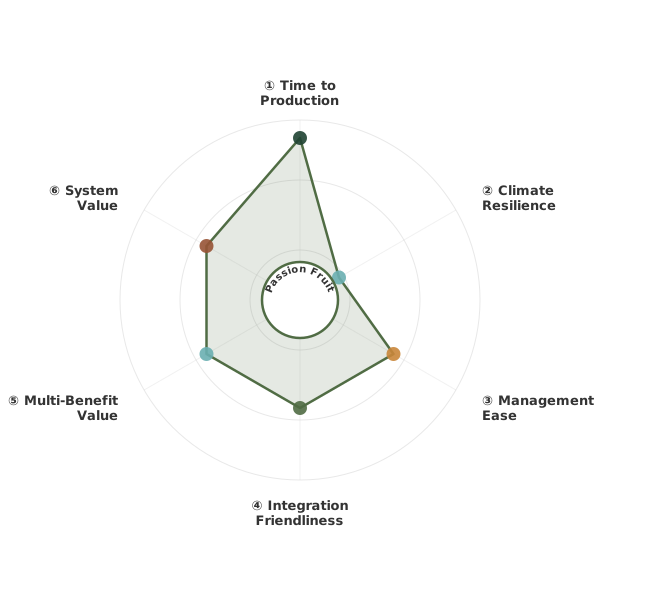
Time to Production: Fast (1-2 years) - This vigorous vine produces fruit within 1-2 years, reaching significant yields by year 2-3, offering a swift return within a healthy agroecosystem.

Value Streams

  • Fruit/nut harvest
  • Livestock forage value
1

Climate Suitability Assessment

Will this plant thrive in your climate?

IDEALLY SUITED

Köppen Zone: Af (Tropical Rainforest), Am (Tropical Monsoon), Aw (Tropical Savanna), Cfa (Humid Subtropical), Cwa (Monsoon-Influenced Humid Subtropical)
USDA Zone: 9a, 10a, 11a, 12a
Australian Zone: tropical, subtropical

Passion fruit thrives in consistently warm, frost-free environments with ample moisture, conditions met in Köppen zones Cfa, Aw, and Am, and USDA zones 9 through 13, and Australian tropical and subtropical zones. These regions provide the necessary long growing seasons and optimal temperatures (70-85°F / 21-29°C) for vigorous vine growth, prolific flowering, and continuous fruit production. High humidity and consistent rainfall (or readily available irrigation) are critical for preventing water stress, which can negatively impact fruit set and quality. In these ideal climates, passion fruit can be grown as a perennial, yielding multiple harvests annually. Minimal management is required beyond trellising and occasional pruning, making it a highly productive and economically viable cash crop. The absence of frost risk ensures year-round growth and eliminates the need for costly protective measures, allowing for maximum yield potential and consistent market supply.

ADEQUATE

Köppen Zone: BSh (Hot Semi-Arid (Steppe)), Cfb (Oceanic (Maritime Temperate)), Csa (Hot-Summer Mediterranean), Csb (Warm-Summer Mediterranean), Cwb (Subtropical Highland)
USDA Zone: 8a
Australian Zone: grassland, temperate
EU Climate Region: atlantic

Passion fruit can be grown in regions with adequate suitability, including Köppen Cwa, USDA zones 8a and 8b, Australian grassland and temperate zones, and the EU Atlantic climate region. These areas offer warm summers conducive to fruiting but may experience mild frosts or dry periods that necessitate careful management. In Cwa zones, dry winters require supplemental irrigation to prevent stress. USDA zones 8a/8b and Australian temperate/grassland zones may face occasional frost damage, requiring site selection in warmer microclimates or minimal winter protection. The EU Atlantic climate provides moderate temperatures but can have cooler summers and periods of drought, also necessitating irrigation and potentially impacting fruit set. While yields may be slightly lower and perennial survival less guaranteed than in ideal zones, with proper irrigation, variety selection (if cold-hardy cultivars are available), and careful site management, passion fruit can still be economically viable, though with increased input costs and slightly reduced reliability.

NOT RECOMMENDED

Köppen Zone: ET (Tundra), BSk (Cold Semi-Arid (Steppe)), BWh (Hot Desert), BWk (Cold Desert), Dfa (Hot-Summer Continental), Dfb (Warm-Summer Continental), Dfc (Subarctic), Dwa (Monsoon-Influenced Hot-Summer Continental)
USDA Zone: 2a, 3a, 3b, 4a, 5a, 5b, 6a, 7a
Australian Zone: arid
EU Climate Region: mediterranean

Passion fruit is not recommended for cultivation in Köppen zones Csa, BSh, and BWh, USDA zones 7a and 7b, Australian arid zones, and EU Mediterranean climate regions. These zones present significant challenges due to extreme heat, severe drought, or insufficient winter cold for perennial survival. Mediterranean climates (Csa, EU Mediterranean) experience hot, dry summers that cause severe stress, reducing fruit set and yield, requiring extensive irrigation for marginal returns. Semi-arid (BSh) and desert (BWh) zones are entirely unsuitable due to extreme aridity and heat, making even irrigated cultivation impractical and economically unfeasible. Cold zones (USDA 7a/7b) experience winter temperatures too low for perennial survival, rendering it an unreliable annual crop at best. Australian arid zones face similar extreme heat and drought issues. In these regions, the high costs of intensive irrigation, protection, or replanting, coupled with low and inconsistent yields, make passion fruit a poor economic choice compared to more adapted species.

Better alternatives for these "not recommended" zones: Fig (highly drought-tolerant and thrives in hot, dry summers), Pomegranate (adapted to arid conditions and tolerates high temperatures), Olive (classic Mediterranean crop with excellent drought and heat tolerance), Prickly Pear Cactus (extremely drought and heat tolerant, produces edible fruit)

Note: Zones listed above represent climates where this plant can produce reliably with reasonable management. Climate zones not mentioned would require intensive climate modification (greenhouses, extensive infrastructure) and are not economically viable for regenerative agriculture purposes.

2

Soil Suitability Assessment

Which soil types work best for this plant?

IDEALLY SUITED

Loam Soil

This plant thrives in these soil types without requiring amendments or remediation. Natural soil conditions support optimal growth and productivity.

ADEQUATE

Clay Soil, Rich Soil, Rocky Soil, Sandy Soil

This plant performs acceptably in these soil types with moderate, manageable remediation such as pH adjustment, compost addition, or drainage improvement. The required amendments are practical and cost-effective for regenerative agriculture.

NOT RECOMMENDED

Acidic Soil, Alkaline Soil, Desert Soil, Saline Soil, Wet Soil

Growing this plant in these soil types would require impractical remediation such as complete soil replacement, extensive amendments, or cost-prohibitive infrastructure. These conditions are not economically viable for regenerative agriculture.

Note: Soil suitability assessments focus on remediation requirements. "Ideally Suited" means the plant generally thrives without the need for substantial amendments, "Adequate" means manageable remediation (lime, compost, mulch), and "Not Recommended" means impractical soil changes would be required. Climate factors like rainfall and temperature also influence success.

3

Seasonal Considerations

Planting timing, growth duration, and harvest windows

Establishing your passion fruit vines offers a multi-year journey to abundant harvests. Begin nursery plantings of containerized seedlings in early spring, after the last expected frost, allowing them to transition into active growth. Bare-root transplants are best suited for late fall or early spring dormancy periods. Expect your vines to take about one to two years to fully establish before yielding their first significant harvest. By year three or four, your passion fruit plants will reach full production, capable of a productive lifespan spanning well over a decade, often two.

Throughout the year, focus on strategic management. The ideal time for pruning is during the dormant season, typically in late winter or very early spring before new growth begins. This encourages vigorous fruiting wood. Bloom typically occurs in late spring through summer, with harvests following soon after, extending through warm weather into autumn. While passion fruit is perennial, it benefits from protection in colder climates, often showing reduced vigor or even leaf drop during winter dormancy, but will rebound with warmer temperatures.

4

System Role & Multi-Benefit Value

Functional roles, integration strategies, and stacked benefits

Functional Role

Total System Value

Passion fruit offers significant multi-benefit stacking potential in a regenerative farm. Its primary value is as a cash crop, providing direct market income. Systemically, its vining habit can be trained over structures in silvopasture or alley cropping, offering partial shade and habitat for beneficial insects. The plant's biomass contributes to soil organic matter when pruned or as waste. Excerpts highlight its peel waste as a valuable feed additive for pigs, improving carcass quality and reducing reliance on conventional feedstuffs like corn. This utilization of waste streams exemplifies circular economy principles. Furthermore, passion fruit can attract pollinators, enhancing biodiversity within the farm ecosystem. By diversifying income streams and providing ecological services, passion fruit enhances overall farm resilience against market fluctuations and environmental stressors.

Integration Characteristics

Multi-Benefit Value: Adequate - A vigorous vine that yields edible fruit, attracts beneficial pollinators, and contributes to soil health through biomass, enhancing overall farm biodiversity.

Integration Friendliness: Adequate - This vigorous fruiting vine integrates well with existing structures and can contribute to ground cover, while its potential for animal integration is limited.

5

Management & Care Requirements

Integration guidance, maintenance needs, and care practices

How to Integrate This Plant

Passion fruit (Passiflora edulis) integrates well into regenerative systems primarily as a cash crop with ecological services. Its vining nature allows for vertical growth, making it suitable for alley cropping or food forests where it can utilize support structures. It can also be incorporated into silvopasture systems, providing shade and forage for animals. The plant's root system can aid in erosion control on slopes. While not explicitly mentioned for nitrogen fixation or windbreaks, its dense foliage can offer some microclimate modification. Contribution begins with establishment (Year 1-2) for ground cover and potential early fruit. By Year 3-5, significant fruit production commences, providing harvest value. Beyond direct harvest, passion fruit contributes to biodiversity by supporting pollinators and can utilize waste streams (peels) for animal feed or compost, enhancing nutrient cycling and reducing waste.

Integration Practices & Management

The provided knowledge base offers limited insight into the specific regenerative agriculture integration methods for Passiflora edulis. While sources highlight its potential for bioactivity and value-adding from waste products, and its susceptibility to pathogens managed by biological control, they do not detail practical farmer experiences regarding establishment, grazing integration, or termination strategies. Information on seeding rates, timing, companion planting, tillage practices, mob grazing, rotational systems, fertility needs, competition management, succession planning, or integration with cash crops like relay cropping, intercropping, or rotation sequences is absent. The sources focus on the plant's inherent properties and biological interactions rather than its cultivation within regenerative systems. Therefore, a detailed explanation of how regenerative farmers integrate Passiflora edulis based on this knowledge base cannot be provided.

Management Profile

Maintenance Intensity: Not Recommended - This vigorous vine benefits from consistent soil moisture through mulching and proactive pest and disease management, which are integral components of its system integration.

Pest Disease Pressure: Not Recommended - To mitigate fungal diseases and insect pests, focus on building soil health and plant resilience through compost and cover cropping, fostering a balanced ecosystem.

Time To Production: Ideally Suited - This vigorous vine produces fruit within 1-2 years, reaching significant yields by year 2-3, offering a swift return within a healthy agroecosystem.

6

Economics & Value Streams

Direct harvest, system benefits, ecosystem services, and risk diversification

Comprehensive economic analysis including direct harvest value, system enhancement contributions, ecosystem services, value timeline, and risk diversification strategies.

Per-Tree Production Economics

Metric Value
Establishment Cost $10-20
Years to First Harvest 1-2 years
Annual Maintenance $5-10
Yield 20-40 lbs/year 9-18 kg/year
Market Price $1-3/lb $3-6/kg
Productive Lifespan 5-10 years
Net Annual Return* $6-$114/year

Values shown per mature tree, not per acre. In regenerative systems, trees are integrated at low densities across diverse landscapes. Establishment costs spread over the lifespan of the tree. Early years have costs but no revenue.

* Net Annual Return = (Yield × Market Price) − (Amortized Establishment Cost + Annual Maintenance). This return is realized only at/after first harvest; early years have costs but no revenue. Range shows worst case to best case scenarios.

System Enhancement Value

Beyond harvest: ecosystem services from regenerative cash crop practices

Ecological Service Contributions

Passion fruit (Passiflora edulis) offers significant value through its utilization of agricultural byproducts and its potential for creating functional food ingredients. As highlighted in, passion fruit peels, often a waste product from organic farms, are rich in polyphenols and can be processed into valuable powders with high antioxidant properties. This transforms waste into a resource for functional food formulations. Furthermore, the plant's primary function as a cash crop [KB1] with services, combined with its secondary role in forage integration [KB1], suggests its capacity to support diverse farm ecosystems. While not a legume, its dense vine growth can provide ground cover, potentially aiding in weed suppression and soil moisture retention, especially when managed with mulch as advised in. The fruit itself, when ripe, falls naturally, indicating a harvesting cue that aligns with natural cycles. Its potential for value-adding, beyond fresh fruit sales, through peel utilization, contributes to a circular economy within the farm system.

Erosion Control (if applicable)

Variable, depends heavily on integration structure and density. Likely minor windbreak effect compared to dedicated trees or shrubs.

While passion fruit vines (Passiflora edulis) are not typically grown as primary windbreaks due to their vining nature and reliance on support structures, their dense foliage and extensive root systems, when grown on trellises or pergolas, can offer some localized wind buffering. In integrated systems, particularly those involving silvopasture or agroforestry, passion fruit could be integrated into these structures to provide additional canopy cover, contributing to microclimate regulation. This can offer some protection to more sensitive understory plants or young trees from harsh winds, reducing physical damage and desiccation. The effect is more about supplementing existing windbreaks rather than replacing them. The shallow root system, as mentioned in, requires careful management to avoid disturbance, which might limit its effectiveness in severe erosion-prone areas without complementary measures. However, the overall vegetative biomass can contribute to reducing wind speed at ground level in targeted areas.

Ecosystem Service Contributions

Environmental contributions: carbon, pollinators, wildlife, and water

  • Carbon Sequestration: Passion fruit vines, with their relatively rapid growth and extensive foliage, contribute to carbon sequestration during their active growing season. The biomass produced by the vines, including leaves and stems, stores carbon. When integrated into agroforestry or silvopasture systems, the perennial nature of the plant and its contribution to overall vegetation cover can enhance long-term carbon storage in the soil and plant tissues.
  • Pollinator Support: High: Passion fruit flowers are known to attract a variety of pollinators, including bees and other insects, which are crucial for the plant's own fruit production and for supporting broader agricultural and wild plant pollination within the farm ecosystem.
  • Wildlife Habitat: Provides foraging opportunities for pollinators. The dense vine structure can offer some limited nesting or shelter for small insects and birds in established systems, though it is not a primary wildlife habitat provider compared to trees or shrubs.
  • Water Quality: Not applicable

Value Timeline: Production & Services

When you'll see results: varies by crop (annual harvest vs. perennial establishment)

Years 1-2

Establishment of vine growth, initial biomass production, potential for early weed suppression, and early pollinator attraction. Some localized wind buffering may begin to develop on support structures.

Years 3-5

First significant fruit harvests, establishing the primary cash crop value. Mature vine structure begins to offer more substantial pollinator support and potential for utilizing peel waste for value-added products. Continued development of biomass for carbon sequestration and potential minor windbreak effects.

Years 10-20

Full production of fruit, maximizing cash crop revenue. Established vine systems contribute significantly to pollinator support and offer a consistent source of agricultural byproducts (peels) for value-added processing. The perennial nature contributes to ongoing carbon sequestration and soil health benefits where integrated.

20+ Years

Long-term contribution to farm ecosystem through sustained fruit production, ongoing pollinator support, and continued carbon sequestration. The perennial nature ensures sustained ecosystem services, with potential for management adjustments to optimize value streams.

Farm Risk Reduction

How this reduces farm risk: backup income, weather protection, market hedges

  • Multiple Revenue Streams: Direct fruit sales, value-added products from fruit (juices, liqueurs), value-added products from peel waste (antioxidant powders, functional ingredients).
  • Temporal Income Spread: Annual harvest of fruit, with potential for year-round processing of byproducts. Ongoing ecosystem services (pollinator support, carbon sequestration) provide continuous, non-market-dependent value.
  • Market Risk Hedge: Diversifies farm revenue beyond a single commodity. The potential to process byproducts reduces reliance on fresh market price fluctuations for the primary fruit. Its integration with other farm components (e.g., forage, other crops) can create a more resilient overall farm system.
7

Regenerative Suitability Details

Comprehensive trait ratings for system integration assessment

Comparative ratings for this plant across key regenerative agriculture traits.

Trait Suitability Explanation
Drought Tolerance Adequate Passion fruit exhibits moderate drought tolerance, thriving with careful water management and mulching to ensure consistent flowering and fruit set.
Establishment Ease Adequate Passion fruit establishes readily from seed or cuttings, benefiting from rich soil and early vigor in warm conditions, with support structures enhancing its growth.
Time To Production Ideally Suited This vigorous vine produces fruit within 1-2 years, reaching significant yields by year 2-3, offering a swift return within a healthy agroecosystem.
Multi Benefit Value Adequate A vigorous vine that yields edible fruit, attracts beneficial pollinators, and contributes to soil health through biomass, enhancing overall farm biodiversity.
Climate Adaptability Not Recommended Thriving in tropical to subtropical climates (zones 9-11), passion fruit requires warmth and protection from frost, indicating its suitability for integrated systems within these specific microclimates.
Hardiness Zone Range Not Recommended Adapted to tropical and subtropical regions (zones 9-11), its sensitivity to frost necessitates its integration into warmer, protected cultivation areas.
Maintenance Intensity Not Recommended This vigorous vine benefits from consistent soil moisture through mulching and proactive pest and disease management, which are integral components of its system integration.
Pest Disease Pressure Not Recommended To mitigate fungal diseases and insect pests, focus on building soil health and plant resilience through compost and cover cropping, fostering a balanced ecosystem.
Integration Friendliness Adequate This vigorous fruiting vine integrates well with existing structures and can contribute to ground cover, while its potential for animal integration is limited.

Comparative System: Ratings compare plants within their economic category (e.g., cover crop nitrogen fixation compared to other cover crops, not to all plants). Individual farm conditions and management practices significantly influence actual performance.

8

Learn More

Why farmers use this plant and additional resources

Why Regenerative Farmers Use This Plant

Passiflora edulis, commonly known as passion fruit, offers significant long-term value in regenerative agriculture systems, particularly in subtropical and tropical agroforestry landscapes. While not a nitrogen fixer, its perennial nature contributes to long-term soil health and carbon sequestration. Mature plants can sequester an estimated 1-5 tons of CO2e per acre annually, with significant contributions from root biomass and organic matter accumulation over their lifespan of 10-20 years. The dense canopy of passion fruit vines provides valuable shade regulation, creating cooler microclimates beneficial for understory crops and livestock, and acts as an effective windbreak, protecting more sensitive plants and soil. With proper management, passion fruit can yield valuable fruit for 5-10 years post-establishment, providing consistent economic returns and contributing to asset value accumulation on the farm.

Integrating passion fruit into multi-story farming systems enhances biodiversity and ecosystem services. Its vigorous vine growth can be trained over trellises or integrated into existing tree canopies, creating a living mulch effect that suppresses weeds and reduces soil erosion. The flowers are highly attractive to a wide array of pollinators, including bees, butterflies, and hummingbirds, supporting broader farm ecosystem health. Companion planting with drought-tolerant ground covers or nitrogen-fixing shrubs in the establishment phase can further bolster soil fertility and water retention, creating a more resilient and self-sustaining agricultural landscape. Its ability to thrive in diverse soil types, provided drainage is adequate, makes it adaptable to various regenerative farming contexts.

The quantitative ecosystem benefits of passion fruit extend to improved soil structure and water infiltration. The extensive root system, which can penetrate 3-10 feet (0.9-3 meters) into the soil profile, helps to break up compacted layers and enhance aeration. As vines mature and shed leaves, they contribute significant organic matter to the soil surface, feeding soil microbes and improving water-holding capacity. This contributes to a measurable increase in soil organic matter, potentially by 0.5-1.5% over 5-10 years in well-managed systems. The shade provided by the canopy also reduces soil moisture evaporation, lessening irrigation needs and improving water use efficiency across the entire system. Research indicates that well-managed passion fruit can support an increased diversity of insect life, with studies showing hundreds of pollinator visits per hour during peak bloom. Improved soil structure from its deep root system leads to enhanced water infiltration rates, reducing runoff and the risk of soil erosion by an estimated 20-30% in areas where it is established as a ground cover or on slopes.

Passion fruit has demonstrated success in various regional farming systems. In Brazilian coffee plantations, it is often intercropped with coffee bushes, providing shade and a supplementary income stream while improving the microclimate for the coffee crop. In Australian sub-tropical regions, it is cultivated in orchards and integrated into mixed cropping systems for its fruit production and as a component of farm biodiversity. In parts of Southeast Asia, it is grown on trellises alongside staple crops, offering a valuable cash crop and contributing to a more diversified farm economy. In the humid subtropics of Florida, USA, it is often grown on trellises in home gardens and small commercial operations. In the Mediterranean climate of southern Spain, careful water management and protection from occasional frost are key. In the highlands of Kenya, it is a significant cash crop. In Queensland, Australia, its cultivation is widespread in subtropical areas, often on well-drained soils, and it is sometimes intercropped with other fruit crops or used as a productive groundcover on slopes. Its adaptability allows it to be a valuable component in smallholder farms and larger commercial operations alike, contributing to food security and economic resilience.

9

How to Integrate This Plant

Practical guidance for regenerative systems

Establishing passion fruit typically involves planting grafted seedlings or rooted cuttings, as direct seeding can be slow and variable. Seedlings are planted at a spacing of 8-15 feet (2.4-4.5 m) apart, depending on the vigor of the chosen variety and the desired density of the planting. This translates to approximately 200-480 plants per acre. Planting depth should ensure the graft union, if present, remains well above the soil line to prevent rot. The optimal planting time is at the beginning of the rainy season, typically March-May in the Northern Hemisphere and September-November in the Southern Hemisphere, to provide adequate moisture for establishment. Initial watering is crucial, with 1-2 inches (2.5-5 cm) of water applied weekly during the first year, especially in drier periods.

Management practices focus on providing support for the vigorous vine growth and ensuring adequate light penetration for fruit development. Passion fruit vines require a strong trellis system, typically 6-8 feet (1.8-2.4 m) high, constructed from posts and wires. Pruning is essential, usually performed annually after harvest, to remove old wood, improve air circulation, and encourage new fruiting growth. This pruning schedule helps maintain plant health and can influence light penetration for any understory crops. While passion fruit is relatively drought-tolerant once established, consistent moisture, particularly during flowering and fruit set, leads to optimal yields. Fertility is best managed through the incorporation of compost, well-rotted manure, and the residue of cover crops, reducing reliance on synthetic fertilizers.

For category-specific integration as a perennial agroforestry species, establishment typically takes 1-2 years before significant production begins, with full production realized between years 3-5. Rootstock considerations are important for disease resistance and vigor. Canopy management involves training the main vines onto the trellis and subsequent pruning to manage density and light penetration, aiming for 50-70% light reaching the base of the plants. Intercropping understory design can involve planting nitrogen-fixing ground covers like white clover or a low-growing herbaceous perennial such as mint in year 2-3, provided they do not compete excessively for water and nutrients. In alley cropping or silvopasture designs, rows of passion fruit can be established at least 20-30 feet (6-9 m) away from the tree trunks to allow for tree growth and access, or trained on trellises or fences along the edges of alleys, with row spacing for trees or pasture of 20-30 feet (6-9 m) to allow for grazing or equipment access. Carbon sequestration becomes measurable in soil organic matter increases by year 5-7 as root systems develop and organic debris accumulates. Long-term infrastructure includes robust trellising, a reliable irrigation system for establishment and dry periods, and initial protection from browsing animals like deer or rabbits.

Regional adaptations are key to successful passion fruit cultivation. In humid subtropical regions like Florida (USA) or Queensland (Australia), careful site selection to avoid frost pockets and ensure good air circulation is paramount. In drier semi-arid regions, such as parts of Brazil's Cerrado, irrigation is critical, and selecting drought-tolerant varieties or rootstocks is advisable. In Mediterranean climates, planting on south-facing slopes or against walls can maximize sun exposure and provide frost protection. In tropical highland areas, such as parts of Colombia, cooler temperatures may slow growth but can lead to higher quality fruit, with careful attention to disease management in humid conditions. In parts of India, it's integrated into spice gardens and mixed farming systems for its fruit and its role in soil stabilization on slopes. In regions with mild winters, such as parts of California (USA), careful site selection to avoid frost is paramount, and it can be integrated into hedgerows or as a component of diversified perennial systems.