While knowledge base coverage for *Pinus palustris* in regenerative agriculture is limited, insights suggest its value primarily lies in its role within forest ecosystems that can be managed regeneratively. Its thick, fire-resistant bark is a key adaptation for ecosystems frequently managed with prescribed burns, a practice shown to increase soil water infiltration and alter soil chemical properties positively in *Pinus* dominated forests. The tree supports ectomycorrhizal fungal mycelia (EFM) dynamics, crucial for nutrient cycling and soil health. While not explicitly a cover crop or forage, its resin, historically used for naval stores, hints at potential for diverse forest-based economies. The open canopy structure could allow for understory growth, potentially integrating into agroforestry or silvopasture systems. Further research is needed to fully understand its direct applications as a primary regenerative agriculture component, but its established role in fire-adapted ecosystems and soil fungal networks offers a foundation for its inclusion in regenerative land management.

Regenerative Quick Profile

All recommendations assume integrated, regenerative practices—not conventional inputs.

Climate & Soil Fit

Climate: Tropical Rainforest, Tropical Monsoon, Tropical Savanna, Hot Semi-Arid (Steppe), Cold Semi-Arid (Steppe), Hot Desert, Cold Desert, Humid Subtropical, Oceanic (Maritime Temperate), Hot-Summer Mediterranean, Warm-Summer Mediterranean, Monsoon-Influenced Humid Subtropical, Subtropical Highland, Hot-Summer Continental, Warm-Summer Continental, Subarctic, Monsoon-Influenced Hot-Summer Continental, Tundra

Zones: USDA 7-10, Australian Zones 3-11, EU Atlantic, Oceanic

Optimal Soil: Sandy Soil

System Role & Functions

Primary: Silvopasture

Secondary: Specialty, Timber With Food

Key Benefits: Low maintenance, Pest resistant

Management Level

Experience: Advanced

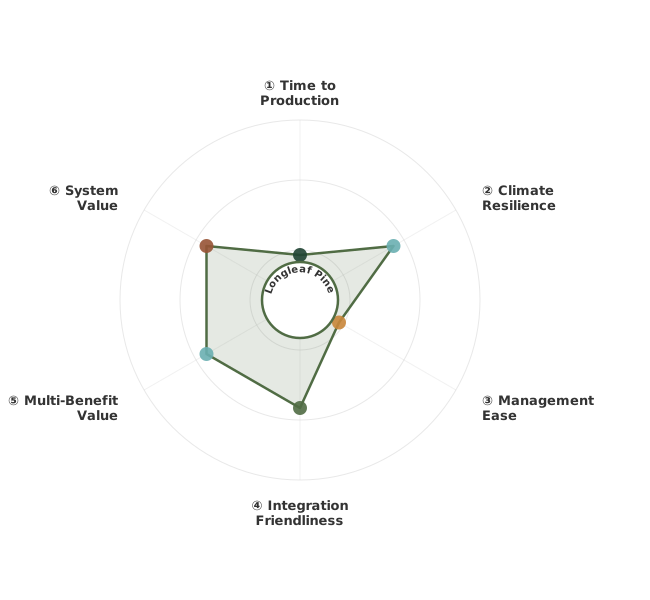
Maintenance: Very low maintenance - Longleaf pine is a low-intervention species, naturally adapted to fire and sandy soils; its resilience is supported by healthy soil biology and effective mulch layers for moisture retention.

Time to Production: Slow (5+ years) - As a long-term timber investment, longleaf pine's slow growth aligns with regenerative cycles, emphasizing ecosystem health over rapid yields, with minimal reliance on external inputs for timber production.

Value Streams

  • Fruit/nut harvest
1

Climate Suitability Assessment

Will this plant thrive in your climate?

IDEALLY SUITED

Köppen Zone: Cfa (Humid Subtropical)
USDA Zone: 6a, 7a, 8a, 9a, 10a
Australian Zone: subtropical

Longleaf Pine demonstrates ideal suitability in climates characterized by hot, humid summers and mild winters, with ample rainfall distributed throughout the year. These conditions, met by Köppen Cfa zones and USDA zones 7a through 9b, as well as Australian subtropical regions, provide the long growing seasons and warm temperatures (optimal 70-85°F/21-29°C) necessary for robust establishment and sustained growth. Natural precipitation levels (40-60 inches/100-150 cm annually) are typically sufficient, minimizing the need for extensive irrigation. Establishment success rates are high (>85%) with minimal protection required, leading to reliable multi-year productivity for silvopasture and timber. The species thrives in these environments, reaching maturity and providing ecosystem services effectively, with minimal management inputs beyond standard silvopasture practices. These zones align closely with Longleaf Pine's native range, ensuring its ecological and economic potential is fully realized.

ADEQUATE

Köppen Zone: Aw (Tropical Savanna), Cfb (Oceanic (Maritime Temperate)), Cwa (Monsoon-Influenced Humid Subtropical), Dfa (Hot-Summer Continental), Dfb (Warm-Summer Continental)
USDA Zone: 5a, 5b, 11a
Australian Zone: temperate
EU Climate Region: atlantic

Longleaf Pine is adequately suited to climates with moderate temperatures and consistent rainfall, though some management considerations are necessary for optimal performance. Köppen Cfb zones, USDA zones 6a, 6b, 10a, 10b, Australian temperate regions, and EU Atlantic climate regions fall into this category. These areas offer sufficient growing seasons (180-240 days) and temperatures that, while sometimes cooler or hotter than ideal, are manageable. Precipitation is generally adequate but may require supplemental irrigation during drier periods, particularly in USDA 10a/10b and some temperate Australian zones. Establishment success is good (70-85%) with proper timing and site preparation. While not as consistently productive as in 'ideally suited' zones, Longleaf Pine can still perform well in these regions for silvopasture and timber, with standard management practices ensuring economic viability. Potential challenges include slightly reduced growth rates or increased susceptibility to stress during extreme temperature fluctuations.

NOT RECOMMENDED

Köppen Zone: Af (Tropical Rainforest), Am (Tropical Monsoon), ET (Tundra), BSh (Hot Semi-Arid (Steppe)), BSk (Cold Semi-Arid (Steppe)), BWh (Hot Desert), BWk (Cold Desert), Csa (Hot-Summer Mediterranean), Csb (Warm-Summer Mediterranean), Cwb (Subtropical Highland), Dfc (Subarctic), Dwa (Monsoon-Influenced Hot-Summer Continental)
USDA Zone: 2a, 3a, 3b, 4a, 12a

Longleaf Pine is not recommended for climates with prolonged periods of extreme cold or extreme heat and drought, making cultivation technically possible but practically and economically questionable. Zones with consistently low winter temperatures (e.g., USDA zones below 6a, Köppen D climates) pose a significant risk of winter kill, especially for young trees, leading to unreliable establishment and productivity. Conversely, regions with very hot, arid summers (e.g., Köppen BSh, BWh) would require extensive and costly irrigation infrastructure to meet the species' water needs, and prolonged heat stress would severely limit growth and nitrogen fixation in associated forage species. Establishment success rates would likely fall below 70% in these challenging environments, demanding high management inputs and increasing the risk of failure. Therefore, alternative species better adapted to extreme cold or heat/drought conditions are strongly advised for these zones to ensure successful regenerative agriculture outcomes.

Better alternatives for these "not recommended" zones: Eastern Redcedar (Juniperus virginiana) (Highly drought tolerant and cold hardy, native to a wide range of North American climates.), Bald Cypress (Taxodium distichum) (Tolerant of both wet and dry conditions, and a wide range of temperatures, native to southeastern US.), Loblolly Pine (Pinus taeda) (More adaptable to a wider range of soil and moisture conditions than Longleaf Pine within its native range, though still prefers moist soils.), Slash Pine (Pinus elliottii) (Similar to Longleaf Pine but can tolerate wetter sites and slightly cooler conditions.)

Note: Zones listed above represent climates where this plant can produce reliably with reasonable management. Climate zones not mentioned would require intensive climate modification (greenhouses, extensive infrastructure) and are not economically viable for regenerative agriculture purposes.

2

Soil Suitability Assessment

Which soil types work best for this plant?

IDEALLY SUITED

Sandy Soil

This plant thrives in these soil types without requiring amendments or remediation. Natural soil conditions support optimal growth and productivity.

ADEQUATE

Acidic Soil, Loam Soil, Rocky Soil

This plant performs acceptably in these soil types with moderate, manageable remediation such as pH adjustment, compost addition, or drainage improvement. The required amendments are practical and cost-effective for regenerative agriculture.

NOT RECOMMENDED

Alkaline Soil, Clay Soil, Desert Soil, Rich Soil, Saline Soil, Wet Soil

Growing this plant in these soil types would require impractical remediation such as complete soil replacement, extensive amendments, or cost-prohibitive infrastructure. These conditions are not economically viable for regenerative agriculture.

Note: Soil suitability assessments focus on remediation requirements. "Ideally Suited" means the plant generally thrives without the need for substantial amendments, "Adequate" means manageable remediation (lime, compost, mulch), and "Not Recommended" means impractical soil changes would be required. Climate factors like rainfall and temperature also influence success.

3

Seasonal Considerations

Planting timing, growth duration, and harvest windows

Establishing longleaf pine requires careful timing to ensure robust growth. For nursery transplants, bare-root stock is best planted during the dormant season, typically in late fall or very early spring before new growth begins. Containerized seedlings offer more flexibility and can be planted after the last expected frost in spring, or even into early fall, provided adequate moisture is available.

Your longleaf pines will require several years to achieve full establishment, often taking three to five years before they show vigorous growth. While timber harvest might occur after several decades, consider that initial cone production and seed dispersal can begin within 15 to 20 years, and the trees will remain productive for well over a century.

Throughout the year, management practices are seasonally dictated. Any pruning to shape the tree or manage lower branches should be performed during the dormant season, typically in late fall or winter when the tree is not actively growing. While longleaf pine is primarily managed for timber, its natural bloom cycle occurs in early spring, leading to cone development through summer and seed dispersal in late fall. Throughout winter, the trees will enter a deep dormancy, conserving energy for the coming growing season.

4

System Role & Multi-Benefit Value

Functional roles, integration strategies, and stacked benefits

Functional Role

Total System Value

Longleaf pine offers substantial whole-farm resilience through a combination of direct harvest potential, system enhancement, and crucial ecosystem services. While direct harvest of timber or historically important naval stores (resin for turpentine and tar, Excerpt 1) provides economic value, its primary contribution to regenerative systems is through enhancing the farm environment. As a component of silvopasture, it provides shade and shelter, improving livestock well-being and pasture productivity. Its deep root system and association with mycorrhizal fungi (Excerpt 2) contribute to soil health, carbon sequestration, and improved water infiltration (Excerpt 3), especially when managed with prescribed fire. The fire-resistant nature of the bark allows it to thrive under frequent prescribed burning regimes, a key regenerative practice (Excerpt 5). This diversification of land use and ecological function reduces reliance on single income streams and builds a more robust, adaptable farming system.

Integration Characteristics

Multi-Benefit Value: Adequate - This species is a cornerstone for biodiversity, providing habitat and sustenance through its cones and seeds, while its deep roots anchor soil and contribute to overall landscape resilience.

Integration Friendliness: Adequate - Valuable for timber and ecological services within its native context, longleaf pine's integration into diverse systems is enhanced by practices that support its specific soil and fire regime needs.

5

Management & Care Requirements

Integration guidance, maintenance needs, and care practices

How to Integrate This Plant

Longleaf pine (Pinus palustris) can be integrated into regenerative farm systems primarily through silvopasture. Its thick, fire-resistant bark and open canopy make it well-suited for grazing environments where it can provide shade and shelter for livestock. While not a nitrogen-fixer, its role in enhancing soil health through mycorrhizal associations (Excerpt 2) and improved water infiltration after prescribed burns (Excerpt 3) is significant. The tree's long lifespan means it contributes to system stability over decades. Early contributions (Year 1-2) are minimal beyond initial establishment. By Year 5-10, it begins to offer notable shade and habitat. By Year 20+, it provides substantial ecological benefits and potential for resin-based product harvesting. Its value lies in its contribution to a resilient, multi-functional landscape, enhancing overall farm ecosystem services rather than providing immediate, high-frequency inputs.

Integration Practices & Management

The provided knowledge base offers limited direct insights into the specific regenerative agriculture integration methods for *Pinus palustris*. The sources primarily focus on ecological characteristics and research studies rather than practical farm-level applications. For instance, while the importance of *Pinus palustris* resin for historical 'Naval Stores' is noted, this doesn't detail current regenerative practices. Research discusses ectomycorrhizal fungal dynamics under manipulated carbon flow in pine plantations and the effects of prescribed burning on soil properties in *Pinus palustris* dominated forests, indicating fire management as a consideration. The species' fire-resistant bark and open canopy structure are also described. However, information regarding establishment methods, integration with grazing systems, termination strategies, fertility needs, competition management, succession planning, or integration with cash crops within a regenerative farming context is not present in these sources. Therefore, practical farmer experiences and specific regenerative management techniques for *Pinus palustris* are not covered by this knowledge base.

Management Profile

Maintenance Intensity: Ideally Suited - Longleaf pine is a low-intervention species, naturally adapted to fire and sandy soils; its resilience is supported by healthy soil biology and effective mulch layers for moisture retention.

Pest Disease Pressure: Ideally Suited - Thriving in its native, fire-adapted sandy ecosystems, longleaf pine demonstrates exceptional resistance to common pathogens, supported by a robust and naturally balanced soil microbiome.

Time To Production: Not Recommended - As a long-term timber investment, longleaf pine's slow growth aligns with regenerative cycles, emphasizing ecosystem health over rapid yields, with minimal reliance on external inputs for timber production.

6

Economics & Value Streams

Direct harvest, system benefits, ecosystem services, and risk diversification

Comprehensive economic analysis including direct harvest value, system enhancement contributions, ecosystem services, value timeline, and risk diversification strategies.

Per-Tree Production Economics

Metric Value
Establishment Cost $5-15
Years to First Harvest 10-15 years
Annual Maintenance $2-4
Yield 20-40 lbs/year 9-18 kg/year
Market Price $0-0/lb $0-0/kg
Productive Lifespan 40-60 years
Net Annual Return* $-4 to $-2/year (negative)

Values shown per mature tree, not per acre. In regenerative systems, trees are integrated at low densities across diverse landscapes. Establishment costs spread over the lifespan of the tree. Early years have costs but no revenue.

* Net Annual Return = (Yield × Market Price) − (Amortized Establishment Cost + Annual Maintenance). This return is realized only at/after first harvest; early years have costs but no revenue. Range shows worst case to best case scenarios.

System Enhancement Value

Beyond harvest: shade for livestock, soil building, and system benefits

Shade Value for Livestock

Cattle $50-150/head/year, Pigs $30-80/head/year. Shade value varies by climate, livestock density, and canopy characteristics.

Longleaf pine (Pinus palustris) offers significant shade potential in silvopasture systems due to its open canopy structure and mature height, which can reach 80-120 feet, sometimes up to 150 feet. This provides crucial thermal regulation for livestock, reducing heat stress and improving animal welfare, which can translate to better weight gain and reduced susceptibility to heat-related illnesses. The fire-resistant, thick bark also contributes to its suitability in managed landscapes where fire might be a consideration. The value of this shade is highly dependent on livestock density, the specific climate of the region, and the density and age of the pine stand. In hotter climates, the benefits of shade are amplified, potentially leading to substantial improvements in animal productivity and reduced water needs for cooling.

Nitrogen Fixation (if legume)

Windbreak & Erosion Control

Variable; established windbreaks of large conifers can protect 3-5 acres per tree row and improve crop yields by 5-15%.

While not explicitly detailed in the provided excerpts, longleaf pine's substantial mature size and dense foliage, particularly when planted in rows, can offer considerable windbreak benefits. Its thick, fire-resistant bark suggests resilience in various environmental conditions. Established stands can significantly reduce wind velocity across agricultural fields, thereby mitigating soil erosion, reducing desiccation of crops and livestock, and potentially improving the microclimate for sensitive plants. This protection can lead to more stable soil moisture levels and reduced physical damage to crops from wind, contributing to more consistent yields over time. The ecological role of longleaf pine in historical fire-maintained open forests implies a capacity to thrive in open landscapes, which can be leveraged for windbreak establishment.

Other System Contributions

Longleaf pine offers a suite of ecosystem services beyond direct timber value. Historically, its resin was crucial for 'Naval Stores' like turpentine and tar, used by indigenous peoples and early colonists. This resin production also deters predators, indirectly supporting biodiversity, such as by protecting nesting sites for the Red-cockaded Woodpecker. The tree's open canopy and long needles create unique habitat structures. Furthermore, studies on ectomycorrhizal fungal mycelia (EFM) dynamics suggest EFM are dynamic and play a potentially underestimated role in carbon and nitrogen cycling within longleaf pine ecosystems. Prescribed burning, a historical management practice for longleaf pine, significantly increases soil water infiltration and improves soil physical properties like water-stable aggregates, enhancing overall soil health and watershed function. Converting degraded lands to longleaf pine has also been shown to reduce dissolved organic carbon transport.

Ecosystem Service Contributions

Environmental contributions: carbon, pollinators, wildlife, and water

  • Carbon Sequestration: Longleaf pine is a long-lived species (250-400 years) that grows to significant heights (80-120+ feet), indicating substantial potential for carbon sequestration in its biomass and in forest soils over long timescales.
  • Pollinator Support: Low; while pines produce pollen, they are wind-pollinated and not typically considered a primary resource for most insect pollinators.
  • Wildlife Habitat: High; provides nesting habitat (e.g., for Red-cockaded Woodpecker) due to its unique bark and open forest structure, and its large cones offer a food source. Its role in historical fire-maintained ecosystems supports a diverse understory.
  • Water Quality: Not applicable

Value Timeline: When Benefits Begin

When you'll see results: shade in years 1-5, fruit/nut harvest 3-10, timber 20+

Years 1-2

Erosion control, initial microclimate modification, establishment of soil health benefits through root development. Potential for early resin collection if managed for that purpose (though yields would be low).

Years 3-5

Increased shade provision for livestock, enhanced soil water infiltration and aggregation due to root activity and potential understory management (e.g., prescribed burns). Establishment of habitat structure for some wildlife.

Years 10-20

Significant shade provision, substantial contribution to carbon sequestration, development of mature habitat for specialized wildlife. Potential for early, small-scale timber or specialty product harvesting (e.g., boughs, cones).

20+ Years

Mature timber resource, continued and maximized carbon sequestration, sustained provision of shade and habitat. Potential for significant Naval Stores revenue if managed for resin production. Fully developed ecosystem services.

Farm Risk Reduction

How this reduces farm risk: backup income, weather protection, market hedges

  • Multiple Revenue Streams: Timber, specialty products (resin, boughs, cones), livestock shade, ecosystem services (carbon sequestration, habitat support).
  • Temporal Income Spread: Provides immediate benefits like shade and soil improvement, with long-term returns from timber and sustained ecosystem services. Value is generated annually through services and periodically through harvests.
  • Market Risk Hedge: Reduces reliance on single commodity markets by offering diverse revenue streams. Its long lifespan and resilience to fire can provide stability in unpredictable environmental or market conditions. Ecosystem services provide inherent value regardless of market fluctuations.
7

Regenerative Suitability Details

Comprehensive trait ratings for system integration assessment

Comparative ratings for this plant across key regenerative agriculture traits.

Trait Suitability Explanation
Drought Tolerance Adequate Once established, longleaf pine exhibits excellent drought tolerance due to its deep taproot, though adequate moisture during establishment and via mulch layers enhances resilience.
Establishment Ease Not Recommended Its extended grass stage, while initially slow, allows for deep root development, and strategic cover cropping can mitigate weed competition and build soil health.
Time To Production Not Recommended As a long-term timber investment, longleaf pine's slow growth aligns with regenerative cycles, emphasizing ecosystem health over rapid yields, with minimal reliance on external inputs for timber production.
Multi Benefit Value Adequate This species is a cornerstone for biodiversity, providing habitat and sustenance through its cones and seeds, while its deep roots anchor soil and contribute to overall landscape resilience.
Climate Adaptability Adequate Adapted to the southeastern US coastal plain (USDA 7-10), longleaf pine thrives in fire-maintained, sandy ecosystems, benefiting from natural soil fertility and moisture retention strategies.
Hardiness Zone Range Adequate Native to zones 7-10 in the southeastern US, it flourishes in its specific sandy soil niche, requiring mindful moisture management and protection from extreme cold during vulnerable stages.
Maintenance Intensity Ideally Suited Longleaf pine is a low-intervention species, naturally adapted to fire and sandy soils; its resilience is supported by healthy soil biology and effective mulch layers for moisture retention.
Pest Disease Pressure Ideally Suited Thriving in its native, fire-adapted sandy ecosystems, longleaf pine demonstrates exceptional resistance to common pathogens, supported by a robust and naturally balanced soil microbiome.
Integration Friendliness Adequate Valuable for timber and ecological services within its native context, longleaf pine's integration into diverse systems is enhanced by practices that support its specific soil and fire regime needs.

Comparative System: Ratings compare plants within their economic category (e.g., cover crop nitrogen fixation compared to other cover crops, not to all plants). Individual farm conditions and management practices significantly influence actual performance.

8

Learn More

Why farmers use this plant and additional resources

Why Regenerative Farmers Use This Plant

Longleaf pine (Pinus palustris) stands as a cornerstone species for regenerative agriculture in its native southeastern United States, offering a profound blend of ecological resilience and long-term economic value, particularly within silvopasture systems. Its remarkable adaptation to fire-maintained ecosystems and sandy soils makes it an exceptionally stable component for land stewards. The species is a significant carbon sequesterer, with mature stands estimated to capture 2-5 tons of CO2e per acre per year. The long-lived nature of longleaf pine, with individuals exceeding 300 years, represents a profound accumulation of ecological and economic capital, providing a stable, multi-generational asset for farms and ranches.

Its distinctive grass stage seedling, which can persist for 2-15 years, prioritizes extensive root development, leading to a robust taproot system that can reach depths of 15-20 feet (4.5-6 meters) or more. This deep root system not only makes it remarkably drought-tolerant once established but also contributes significantly to soil health by improving aeration, water infiltration, and reducing erosion, particularly on sandy soils prone to erosion. The annual shedding of its long needles (8-18 inches or 20-45 cm) creates a rich organic layer that fuels soil microbial communities and enhances nutrient cycling, contributing to soil organic carbon sequestration and building soil fertility over time.

Integrating longleaf pine into silvopasture systems creates a dynamic, multi-layered landscape that supports both timber production and livestock grazing. The wide spacing required for optimal light penetration for forage—often 15-20 feet (4.5-6 meters) between trees—allows for robust understory growth, supporting stocking rates of 0.5-1 Animal Unit per acre depending on forage quality and rainfall. This dual-purpose approach provides immediate income from livestock, diversifying revenue streams while the timber investment matures over decades. The species' evergreen nature ensures year-round cover and habitat for wildlife, contributing to biodiversity and providing shade that moderates microclimates, benefiting both livestock and understory vegetation during hot summer months. Furthermore, its natural fire adaptation aligns perfectly with regenerative fire management practices, which can be used to reduce fuel loads, control competing vegetation, and stimulate forage production.

The ecosystem services provided by longleaf pine are substantial and contribute directly to land health and resilience. Its deep root system significantly improves soil aeration and water infiltration, while the habitat it provides supports a wide array of wildlife, from ground-nesting birds to various insect species, including pollinators and beneficial predators, enhancing the overall ecological functionality of the farm. In regions like the coastal plains of the southeastern United States, longleaf pine forests are critical for watershed health, improving water quality and retention. The timber itself represents a significant, long-term asset, with sawtimber potentially yielding $1,000-$5,000+ per acre over a 40-60 year rotation, while intermediate thinnings can provide income starting around 15-20 years.

Longleaf pine has a proven track record in regenerative systems across its native range. In the southeastern USA, farmers and ranchers have successfully integrated it into silvopasture designs, creating resilient landscapes that provide timber, forage, and habitat. For instance, in Georgia and South Carolina, well-managed longleaf pine stands support cattle grazing, with the managed fire regimes promoting a healthy understory of native grasses and legumes. These systems demonstrate the species' capacity to thrive in challenging environments, turning formerly marginal lands into productive and ecologically sound agricultural enterprises. Regions experiencing increased drought frequency or unpredictable rainfall patterns can benefit from the inherent drought tolerance and water-conserving properties of well-established longleaf pine stands.

9

How to Integrate This Plant

Practical guidance for regenerative systems

Integrating longleaf pine (Pinus palustris) into a regenerative agricultural system, especially silvopasture, requires careful planning focused on its unique life cycle and environmental needs. Establishment typically begins with site selection on well-drained, sandy soils within USDA Hardiness Zones 7-10, avoiding sites prone to waterlogging. Site preparation may involve mechanical clearing to control competing hardwoods or targeted prescribed burning to prepare a receptive seedbed and reduce competition. Planting is best done using bare-root seedlings or containerized stock, ensuring good soil-to-root contact.

Planting and Establishment:

  • Seedling Depth: Plant seedlings to ensure good soil-to-root contact, typically at a depth of 0.5-1 inch (1.3-2.5 cm) for containerized stock, or 1-2 inches (2.5-5 cm) deeper than they grew in the nursery for bare-root seedlings, with the root collar at or slightly below the soil surface. Avoid burying the terminal bud.
  • Planting Season: Planting is typically done during the dormant season, from late fall through early spring (November to March), to allow roots to establish before the heat of summer and to benefit from winter moisture. Specific timing depends on local climate and soil moisture conditions.
  • Grass Stage Protection: The critical grass stage requires protection from overgrazing; therefore, fencing or temporary exclusion may be necessary during the first few years. Livestock can be introduced once seedlings are well-established and hardened off, typically after 3-5 years, with careful rotational grazing management to prevent browsing damage to young pines.

Spacing and Management for Silvopasture:

  • Tree Spacing: For silvopasture applications, wider spacing is paramount to balance timber production with forage availability and livestock movement. Recommended spacings range from 10x10 feet (3x3 meters) to 20x20 feet (6x6 meters) or even wider. Spacings of 15x15 feet (4.5x4.5 meters) to 20x20 feet (6x6 meters), or alleys of 30-40 feet (9-12 meters) between rows if planted in a structured manner, are often cited as optimal for light penetration to the understory.
  • Forage Management: This spacing facilitates the growth of native grasses and legumes, supporting livestock. The goal is to create a multi-story system where the trees provide long-term assets and ecosystem services, while the understory supports immediate agricultural production.
  • Prescribed Burning: Managed prescribed burning, conducted every 1-5 years depending on fuel loads and desired outcomes, is a vital tool for maintaining the health of the longleaf pine ecosystem and stimulating understory forage production, while also reducing fuel loads and controlling competing vegetation.
  • Brush Control: Brush control, especially of competing hardwoods, may be necessary in the early years.
  • Rotational Grazing: Rotational grazing is essential to prevent overgrazing of young pine seedlings and to distribute animal impact evenly, ensuring that livestock do not damage the developing trees.
  • Fertilization: The fertilization hierarchy prioritizes biological sources; the decomposition of pine needles and the integration of livestock manure provide significant nutrients, reducing the need for synthetic inputs.

Timelines and Yields:

  • Grass Stage: The grass stage can last from 2 to 15 years, with seedlings prioritizing root development and resilience during this period.
  • Rapid Growth: Seedlings begin rapid vertical growth thereafter.
  • Timber Production: Full timber production is realized over 40-60 years.
  • Intermediate Thinnings: Intermediate thinnings can commence around 15-20 years post-planting, providing early revenue.
  • Soil Improvement: Measurable improvements in soil organic matter and water infiltration can be observed by year 5-7 as the root systems develop and needle litter accumulates.

Regional Adaptations and Considerations:

  • Southeastern USA: In the coastal plains of Georgia and South Carolina, farmers often plant longleaf pine at 12x12 foot (3.6x3.6 meter) spacings and manage the understory with rotational grazing and prescribed fire, creating productive cattle pastures. In Florida's pine flatwoods, silvopasture systems have been managed for decades. Land stewards in Alabama and Mississippi leverage its resilience for agroforestry projects, recognizing its ability to thrive on marginal sandy soils.
  • Drier Regions: In drier regions within its range, careful grazing management is essential to conserve soil moisture for both the trees and the forage species.
  • Pest and Disease Management: Careful monitoring for pests like the southern pine beetle and diseases such as brown-spot needle blight is essential, with management focusing on maintaining tree vigor and utilizing integrated pest management strategies.
  • Infrastructure: Long-term infrastructure considerations include robust fencing to protect young seedlings from browsing livestock and potentially supplemental watering for the critical establishment period, especially during prolonged dry spells in the first few years.
View Full Document (Printable single-page version)