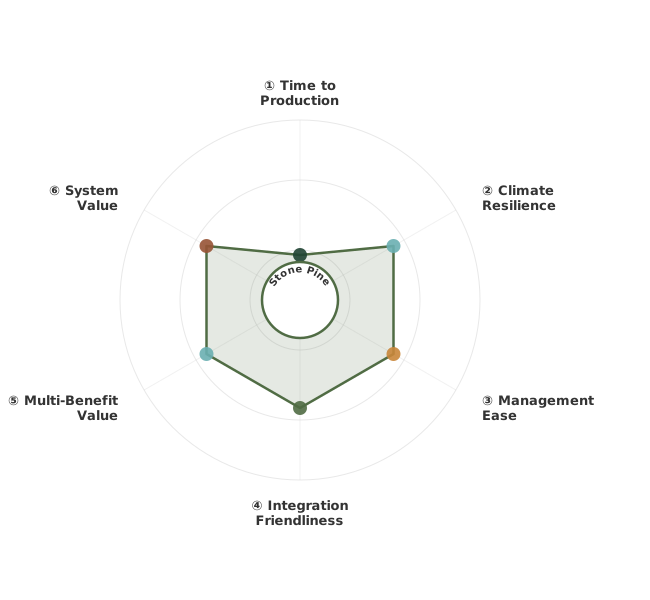
While the provided knowledge base offers limited direct insights into *Pinus pinea*'s specific roles in regenerative agriculture, its mention within a project detailing the restoration of Montado ecosystems in Portugal (a traditional agro-silvo-pastoral system) suggests its potential as a component of integrated land management. Montado systems, often involving cork production and livestock, face challenges like soil imbalance and tree death due to poor management and climate change. *Pinus pinea*, as a tree species within such systems, could contribute to soil building and carbon sequestration. The knowledge base also touches on seed treatment for disease prevention (*Fusarium circinatum*), indicating a consideration for plant health in nursery settings, which is foundational for establishing resilient agricultural systems. Further research would be needed to fully understand its primary uses, regenerative benefits like nitrogen fixation or pollinator support, and specific integration with practices like rotational grazing or no-till within a broader regenerative context.

Regenerative Quick Profile

All recommendations assume integrated, regenerative practices—not conventional inputs.

Climate & Soil Fit

Climate: Tropical Rainforest, Tropical Monsoon, Tropical Savanna, Hot Semi-Arid (Steppe), Cold Semi-Arid (Steppe), Hot Desert, Cold Desert, Humid Subtropical, Oceanic (Maritime Temperate), Hot-Summer Mediterranean, Warm-Summer Mediterranean, Monsoon-Influenced Humid Subtropical, Subtropical Highland, Hot-Summer Continental, Warm-Summer Continental, Subarctic, Monsoon-Influenced Hot-Summer Continental, Tundra

Zones: USDA 8-10, Australian Zones 10-14, EU Mediterranean, Oceanic, Subtropical

Optimal Soil: Sandy Soil

System Role & Functions

Primary: Silvopasture

Secondary: Specialty, Timber With Food

Key Benefits: Drought tolerant, Pest resistant

Management Level

Experience: Beginner-Friendly

Maintenance: Moderate maintenance - Stone pine thrives with minimal intervention, its natural resilience reducing the need for external inputs; system integration through compost and mulch supports its inherent vigor.

Time to Production: Slow (5+ years) - Stone pine contributes to long-term system productivity, with edible pine nuts becoming available after 8-12 years, representing a patient investment in perennial food systems.

Value Streams

  • Fruit/nut harvest
1

Climate Suitability Assessment

Will this plant thrive in your climate?

IDEALLY SUITED

Köppen Zone: Csa (Hot-Summer Mediterranean), Csb (Warm-Summer Mediterranean)
USDA Zone: 6a, 7a, 8a, 9a
Australian Zone: temperate

Stone Pine performs exceptionally well in climates characterized by warm, dry summers and mild, wet winters, mirroring its Mediterranean origins. These conditions are met in Köppen Csb zones, USDA zones 8a through 10b, and Australian temperate regions. In these areas, the species experiences optimal growth rates, leading to high-quality timber and reliable pine nut production. The extended growing seasons and absence of severe frost allow for robust establishment and long-term tree health with minimal intervention. Precipitation patterns, with a distinct dry period, align perfectly with its drought tolerance once established, reducing disease pressure. Silvopasture applications benefit from the tree's resilience and potential for multiple yields (timber, nuts, shade, forage for livestock). Establishment success is very high, and minimal management is required beyond standard silvicultural practices for timber or nut harvesting. Multi-year productivity is virtually guaranteed, making it a highly reliable choice for regenerative agriculture in these zones.

ADEQUATE

Köppen Zone: Aw (Tropical Savanna), BSh (Hot Semi-Arid (Steppe)), BSk (Cold Semi-Arid (Steppe)), Cfa (Humid Subtropical), Cwa (Monsoon-Influenced Humid Subtropical), Cwb (Subtropical Highland), Dfa (Hot-Summer Continental), Dfb (Warm-Summer Continental)
USDA Zone: 5a, 5b, 10a
Australian Zone: subtropical
EU Climate Region: atlantic

Stone Pine can be successfully cultivated in climates that offer adequate growing conditions but may present some challenges, requiring careful management. This includes Köppen Csa, Cfa, and Cfb zones, USDA zones 7a and 7b, Australian subtropical regions, and EU Atlantic climate regions. In these areas, the primary concerns are increased humidity and rainfall during summer, which can elevate the risk of fungal diseases, and potentially more extreme temperature fluctuations or shorter growing seasons compared to ideal zones. While the species can tolerate these conditions, success hinges on meticulous site selection to ensure excellent drainage, good air circulation, and sufficient sunlight. Supplemental irrigation might be necessary during establishment or prolonged dry spells, and disease monitoring and management become more critical. Timber quality and pine nut yields may be slightly reduced compared to ideal zones, and stand persistence could be shorter without diligent care. Nevertheless, with appropriate practices, Stone Pine can still provide valuable contributions to silvopasture systems in these regions.

NOT RECOMMENDED

Köppen Zone: Af (Tropical Rainforest), Am (Tropical Monsoon), ET (Tundra), BWh (Hot Desert), BWk (Cold Desert), Cfb (Oceanic (Maritime Temperate)), Dfc (Subarctic), Dwa (Monsoon-Influenced Hot-Summer Continental)
USDA Zone: 2a, 3a, 3b, 4a, 11a, 12a

Stone Pine is not recommended for cultivation in USDA zones 6a and 6b due to the significant risk of winter damage and mortality from extreme cold. Winter lows in these zones (-10 to 0°F / -23 to -18°C) are too severe for the species to reliably establish and thrive as a timber-producing tree, compromising its growth habit and long-term survival. While technically possible to grow with intensive protection, such as greenhouses or extensive mulching and windbreaks, the economic and practical viability is extremely low. Establishment success rates are significantly reduced (<70%), and the required management inputs (protection, replacement planting) would be prohibitively high, making it an ill-advised choice for regenerative agriculture. The potential yields of timber or pine nuts would be unreliable and unlikely to justify the investment. Alternative cold-hardy species better suited to these challenging winter conditions are recommended for silvopasture and timber production.

Better alternatives for these "not recommended" zones: Eastern Redcedar (Juniperus virginiana) (highly cold-hardy conifer, tolerates a wide range of conditions, provides habitat and wood), Black Walnut (Juglans nigra) (valuable timber species with good cold tolerance, can be managed for silvopasture), Persimmon (Diospyros virginiana) (fruit-bearing tree with good cold hardiness, adaptable to silvopasture), Hairy Vetch (cold-hardy annual legume for nitrogen fixation in cold zones)

Note: Zones listed above represent climates where this plant can produce reliably with reasonable management. Climate zones not mentioned would require intensive climate modification (greenhouses, extensive infrastructure) and are not economically viable for regenerative agriculture purposes.

2

Soil Suitability Assessment

Which soil types work best for this plant?

IDEALLY SUITED

Sandy Soil

This plant thrives in these soil types without requiring amendments or remediation. Natural soil conditions support optimal growth and productivity.

ADEQUATE

Acidic Soil, Alkaline Soil, Clay Soil, Desert Soil, Loam Soil, Rich Soil, Rocky Soil

This plant performs acceptably in these soil types with moderate, manageable remediation such as pH adjustment, compost addition, or drainage improvement. The required amendments are practical and cost-effective for regenerative agriculture.

NOT RECOMMENDED

Saline Soil, Wet Soil

Growing this plant in these soil types would require impractical remediation such as complete soil replacement, extensive amendments, or cost-prohibitive infrastructure. These conditions are not economically viable for regenerative agriculture.

Note: Soil suitability assessments focus on remediation requirements. "Ideally Suited" means the plant generally thrives without the need for substantial amendments, "Adequate" means manageable remediation (lime, compost, mulch), and "Not Recommended" means impractical soil changes would be required. Climate factors like rainfall and temperature also influence success.

3

Seasonal Considerations

Planting timing, growth duration, and harvest windows

Establishing stone pines requires careful timing to harness their multi-year journey. For nursery planting, aim for the dormant season, typically late fall or very early spring before bud break, especially for bare-root stock. Container-grown trees offer more flexibility, but planting after the last expected frost in spring allows them to establish roots during active growth without the stress of extreme heat.

Expect a significant establishment period of several years before trees are well-rooted and resilient. While you might see a very small yield in their fifth to seventh year, true commercial harvests begin around year ten, with full production unfolding over the subsequent decade. Stone pines are long-lived, offering productive yields for many decades.

Seasonal management focuses on harnessing natural cycles. Pruning is best performed during the dormant season, typically in late fall or winter, to minimize sap loss and disease risk. Bloom occurs in early spring, leading to cone development that matures over two to three years. Harvest typically happens in late summer and fall, after cones have dried sufficiently to release their seeds. Throughout the year, particularly during the cold of winter, the trees will enter a period of dormancy, conserving energy for the coming growth cycle.

4

System Role & Multi-Benefit Value

Functional roles, integration strategies, and stacked benefits

Functional Role

Total System Value

Stone pine offers significant multi-benefit stacking potential within regenerative agricultural systems. Its direct harvest value, though not detailed in the excerpts, typically includes pine nuts and timber. More importantly, within a silvopasture context, it provides critical shade and shelter for livestock, enhancing animal welfare and pasture management. This structural role contributes to system enhancement by creating microclimates that can support understory vegetation and soil health, while also offering windbreak benefits and erosion control on sloped terrain, as implied by its use in Montado restoration. Ecosystem services include carbon sequestration, habitat provision for wildlife, and potential support for beneficial insects. Risk diversification is achieved through the addition of a long-lived perennial crop that is resilient to certain environmental stresses and provides a harvest stream independent of annual crops or livestock cycles, thereby increasing overall farm resilience.

Integration Characteristics

Multi-Benefit Value: Adequate - Valued for its edible pine nuts, this species provides a significant food source for both ecological communities and human diets, while also offering habitat.

Integration Friendliness: Adequate - Stone pine offers valuable edible nuts and timber, and its integration into diverse agroforestry systems is enhanced by understanding its growth habit and maximizing its contributions to soil health and biodiversity.

5

Management & Care Requirements

Integration guidance, maintenance needs, and care practices

How to Integrate This Plant

Stone pine (Pinus pinea) can be integrated into regenerative systems primarily through silvopasture, as highlighted by its presence in Montado ecosystems. Its role extends beyond timber or nut production to providing essential structural elements for the farm. In silvopasture, it offers crucial shade and shelter for livestock, mitigating heat stress and improving animal distribution across pastures, which can indirectly support mob grazing strategies by creating focal points for rest and forage. While not a nitrogen fixer, its canopy can improve microclimates, potentially enhancing soil health beneath its canopy and reducing erosion on slopes. Its value is long-term; expect shade and structural benefits within 5-10 years, with mature trees providing significant ecological services for decades. The primary system value is habitat creation and microclimate regulation, supporting biodiversity and improving the resilience of the overall farming landscape.

Integration Practices & Management

Source briefly mentions its use in nurseries, detailing seed disinfection protocols including a 70% ethanol soak for 5 minutes as a method to prevent pine pitch canker (*Fusarium circinatum*). This suggests a focus on controlled propagation rather than direct field integration. Source discusses the restoration of Montado ecosystems in Portugal, a system that traditionally includes *Pinus pinea*, but the focus is on the Keyline technique and general ecosystem restoration rather than specific *Pinus pinea* integration practices by regenerative farmers. Therefore, the knowledge base does not provide details on establishment methods, integration with grazing, termination strategies, specific management considerations, or integration with cash crops for *Pinus pinea* within a regenerative farming context. The available information primarily concerns disease prevention during propagation and the ecological context of traditional agro-silvo-pastoral systems. While coverage in our knowledge base is limited, the above represents documented uses in regenerative systems.

Management Profile

Maintenance Intensity: Adequate - Stone pine thrives with minimal intervention, its natural resilience reducing the need for external inputs; system integration through compost and mulch supports its inherent vigor.

Pest Disease Pressure: Ideally Suited - Demonstrating robust natural defenses, stone pine flourishes with minimal intervention, its inherent resilience contributing to a healthy ecosystem with limited pest and disease challenges.

Time To Production: Not Recommended - Stone pine contributes to long-term system productivity, with edible pine nuts becoming available after 8-12 years, representing a patient investment in perennial food systems.

6

Economics & Value Streams

Direct harvest, system benefits, ecosystem services, and risk diversification

Comprehensive economic analysis including direct harvest value, system enhancement contributions, ecosystem services, value timeline, and risk diversification strategies.

Per-Tree Production Economics

Metric Value
Establishment Cost $15-25
Years to First Harvest 7-10 years
Annual Maintenance $5-10
Yield 10-20 lbs/year 4-9 kg/year
Market Price $2-5/lb $5-11/kg
Productive Lifespan 40-60 years
Net Annual Return* $9-$94/year

Values shown per mature tree, not per acre. In regenerative systems, trees are integrated at low densities across diverse landscapes. Establishment costs spread over the lifespan of the tree. Early years have costs but no revenue.

* Net Annual Return = (Yield × Market Price) − (Amortized Establishment Cost + Annual Maintenance). This return is realized only at/after first harvest; early years have costs but no revenue. Range shows worst case to best case scenarios.

System Enhancement Value

Beyond harvest: shade for livestock, soil building, and system benefits

Shade Value for Livestock

Cattle $50-150/head/year, Pigs $30-80/head/year (variable based on climate, livestock density, and canopy characteristics)

Stone pines (Pinus pinea) integrated into silvopasture systems offer significant shade value for livestock, particularly in Mediterranean climates where heat stress can impact animal welfare and productivity. The open canopy structure of mature stone pines provides dappled shade, creating cooler microclimates within pastures. This reduces the need for artificial shade structures and can lead to improved feed intake, reduced water consumption, and less stress-related illness in cattle and pigs. The quantification of this value is highly dependent on factors such as stocking density, the intensity of solar radiation, prevailing temperatures, and the specific grazing management practices employed. While direct economic returns are variable, the provision of natural shade contributes to enhanced animal well-being, which translates into better growth rates and reproductive performance, indirectly boosting farm profitability.

Windbreak & Erosion Control

Protects 3-5 acres per tree row, 5-15% crop yield improvement (variable based on design and context)

While not explicitly detailed in the provided excerpts for stone pines, the integration of trees like Pinus pinea into agroforestry systems, such as the Montado described in, inherently contributes to windbreak and erosion control. The presence of trees, especially when planted in strategic rows or as part of a mixed stand, can significantly reduce wind velocity across agricultural lands. This protection is crucial for preventing soil erosion caused by wind, particularly in exposed areas. Furthermore, reduced wind speeds can mitigate damage to crops and reduce evapotranspiration rates from the soil surface and from livestock. The effectiveness of a windbreak is influenced by tree height, density, width, and the overall planting design. In a silvopasture context, the windbreak effect can create more comfortable conditions for grazing animals, reducing energy expenditure needed to stay warm and protected from drafts, thus indirectly improving their productivity.

Other System Contributions

Stone pines offer a range of other system benefits beyond direct shade and windbreak effects. As demonstrated in the Montado restoration project, the planting of Pinus pinea contributes to the overall ecological restoration and resilience of degraded ecosystems. Their root systems help stabilize soil, preventing erosion and improving soil structure, which is vital for water infiltration and retention. The trees also enhance biodiversity by providing habitat and food sources for various wildlife species. Furthermore, the inclusion of stone pines in diverse plantings, as suggested in for food forests, can contribute to improved nutrient cycling as organic matter from fallen needles and branches decomposes. Their role in agro-ecological approaches like Keyline highlights their capacity to improve water management within the landscape, sequestering carbon and contributing to climate adaptation.

Ecosystem Service Contributions

Environmental contributions: carbon, pollinators, wildlife, and water

  • Carbon Sequestration: Stone pines are long-lived conifers with significant potential for carbon sequestration in their biomass and soil, especially when established in agroforestry systems or for timber production, contributing to long-term carbon storage.
  • Pollinator Support: Low. Pine trees primarily rely on wind pollination for reproduction and do not typically offer significant nectar or pollen resources for most insect pollinators.
  • Wildlife Habitat: Provides habitat, nesting sites, and food (pine nuts) for various bird and small mammal species. Mature trees offer shelter and roosting opportunities.
  • Water Quality: Not applicable

Value Timeline: When Benefits Begin

When you'll see results: shade in years 1-5, fruit/nut harvest 3-10, timber 20+

Years 1-2

Initial establishment of soil stabilization and microclimate modification (slight shade). Potential for early erosion control benefits. Minimal direct economic return, focus on ecological establishment.

Years 3-5

Established shade provision begins to offer noticeable benefits for livestock comfort. Increased contribution to soil health and water infiltration. Potential for early secondary product harvesting (e.g., pine needles for mulch).

Years 10-20

Mature trees provide significant shade, contributing substantially to livestock welfare and productivity. Timber production potential starts to become a consideration. Ecosystem services like carbon sequestration and biodiversity support are well-established.

20+ Years

Full timber production potential realized with mature trees. Continued provision of significant ecosystem services, including carbon sequestration, habitat, and soil improvement. The system becomes a resilient, multi-functional landscape component.

Farm Risk Reduction

How this reduces farm risk: backup income, weather protection, market hedges

  • Multiple Revenue Streams: Silvopasture (shade value for livestock), specialty food products (pine nuts), timber harvest, ecosystem services (carbon sequestration, biodiversity enhancement).
  • Temporal Income Spread: Ongoing ecosystem services and shade value, with periodic income from pine nut harvests and eventual timber sales, providing a spread of value over time.
  • Market Risk Hedge: Diversifies farm revenue beyond traditional agriculture, reducing reliance on single commodities. Drought tolerance of stone pines offers resilience in changing climates. Timber potential provides a long-term asset against market fluctuations.
7

Regenerative Suitability Details

Comprehensive trait ratings for system integration assessment

Comparative ratings for this plant across key regenerative agriculture traits.

Trait Suitability Explanation
Drought Tolerance Ideally Suited Stone pine leverages its deep root system for exceptional moisture retention, thriving in dryland environments and contributing to consistent nut yields through natural resilience.
Establishment Ease Adequate This species readily integrates into diverse soil types, including those with low fertility, establishing reliably with foundational soil preparation and mulching.
Time To Production Not Recommended Stone pine contributes to long-term system productivity, with edible pine nuts becoming available after 8-12 years, representing a patient investment in perennial food systems.
Multi Benefit Value Adequate Valued for its edible pine nuts, this species provides a significant food source for both ecological communities and human diets, while also offering habitat.
Climate Adaptability Adequate Well-suited to warmer climates (USDA 8-10) with a focus on moisture retention, stone pine thrives where heat and aridity are prevalent but requires protection from extreme frost and waterlogged conditions.
Hardiness Zone Range Adequate Native to Mediterranean climates (zones 8-10), stone pine excels in heat-tolerant landscapes, contributing to perennial food production and requiring careful consideration of its specific climatic needs.
Maintenance Intensity Adequate Stone pine thrives with minimal intervention, its natural resilience reducing the need for external inputs; system integration through compost and mulch supports its inherent vigor.
Pest Disease Pressure Ideally Suited Demonstrating robust natural defenses, stone pine flourishes with minimal intervention, its inherent resilience contributing to a healthy ecosystem with limited pest and disease challenges.
Integration Friendliness Adequate Stone pine offers valuable edible nuts and timber, and its integration into diverse agroforestry systems is enhanced by understanding its growth habit and maximizing its contributions to soil health and biodiversity.

Comparative System: Ratings compare plants within their economic category (e.g., cover crop nitrogen fixation compared to other cover crops, not to all plants). Individual farm conditions and management practices significantly influence actual performance.

8

Learn More

Why farmers use this plant and additional resources

Why Regenerative Farmers Use This Plant

Pinus pinea, the Stone Pine, is a cornerstone species for regenerative agriculture in suitable climates, offering multi-decade economic returns and significant ecological benefits. This long-lived conifer begins producing its edible pine nuts, a valuable cash crop, typically between 5-10 years after planting, with full commercial yields achieved by 15-25 years. At maturity, Pinus pinea is a substantial carbon sink, sequestering an estimated 2-5 tons of CO2e per acre per year, contributing directly to climate change mitigation and soil carbon enhancement. Its distinctive umbrella-shaped canopy provides crucial shade regulation for understory crops and livestock, moderates microclimates, reduces soil temperature fluctuations, and decreases water evaporation from the soil surface. It offers substantial windbreak value, protecting fields and farmsteads from harsh winds. The accumulation of organic matter from shed needles enriches the soil over time, building long-term soil health and fertility.

Integrating Pinus pinea into agroforestry systems offers a diverse range of benefits beyond direct nut production. As a perennial component, it builds significant asset value over decades, providing a stable, long-term income stream. Its deep root system helps to stabilize soil, prevent erosion, and improve water infiltration, particularly on sloped landscapes, and is highly effective at accessing and cycling nutrients from deeper soil profiles. The canopy structure creates a unique microhabitat that can support beneficial insect populations and pollinators, contributing to natural pest control and biodiversity, and provides consistent habitat and food sources throughout the year. Furthermore, the shade provided by mature trees can be leveraged for growing shade-tolerant crops or for creating cooler, more comfortable environments for livestock during hot summer months, reducing heat stress and potentially increasing productivity.

The ecosystem services provided by established Pinus pinea are substantial and contribute to a resilient farm landscape. The dense needle litter decomposes slowly, contributing to soil organic matter accumulation and improving soil structure over time, with measurable soil carbon increases often evident by year 5-7 of establishment. The trees act as natural filters, potentially improving air and water quality. Their presence can also enhance the habitat for native wildlife, supporting biodiversity within and around the agricultural system. The long-term economic viability and ecological contributions make Pinus pinea a strategic choice for farmers focused on building enduring, regenerative landscapes.

Regional success with Pinus pinea is well-documented. In the Mediterranean basin, it has been cultivated for centuries in mixed farming systems and on marginal lands for nut production and erosion control, often integrated with olive groves and vineyards. In parts of California, USA, it is integrated into silvopasture systems where the shade benefits livestock and the nuts provide an additional income stream, and farmers are experimenting with interplanting in vineyards or orchards. Australian farmers in Mediterranean-influenced regions are exploring its use for windbreaks and as a component in diversified farm enterprises, often on well-drained, sandy soils. In South America, particularly Chile and Argentina, it is used in forestry plantations for timber and nuts, with understory management often involving native grasses. Its adaptability to well-drained soils and sunny conditions makes it a versatile choice for enhancing the ecological and economic resilience of agricultural landscapes across these varied regions.

9

How to Integrate This Plant

Practical guidance for regenerative systems

Establishing Pinus pinea typically involves planting nursery-grown seedlings or saplings, as direct seeding can be less predictable due to germination requirements and potential predation. For establishing windbreaks or wild stands, direct seeding can be used in late autumn or early spring. Seedlings are generally planted at a depth that matches their root ball size, ensuring the top of the root ball is level with the soil surface, or the root collar is at or slightly above soil level. Planting depth for a 1-2 year old seedling is typically around 6-12 inches (15-30 cm) deep.

Spacing is critical for long-term development and production. For nut orchards, trees are typically planted 25-40 ft (7.5-12 m) apart to allow for canopy spread and access for harvesting. In alley cropping or silvopasture designs, rows of Pinus pinea are often spaced 30-40 ft (9-12 m) apart to allow for equipment access and the cultivation of intercrops or grazing of livestock between the rows. Individual trees within rows are typically planted 20-30 ft (6-9 m) apart. For windbreaks or mixed plantings, spacing can be closer, around 10-15 ft (3-4.5 m). For timber or nut production, densities of 50-100 trees per acre (125-250 trees/ha) can be used.

The optimal planting time is during the dormant season, usually late autumn or early spring, to allow roots to establish before summer heat or winter freezes. For the Northern Hemisphere, this means planting between October and March, and for the Southern Hemisphere, between April and September. Establishment success is enhanced by protecting young trees from browsing animals, especially deer, using guards or fencing, and ensuring adequate moisture during the first 1-3 years.

Management of Pinus pinea in regenerative systems prioritizes long-term health and productivity. While mature trees are drought-tolerant, young trees require consistent moisture, aiming for approximately 1-2 inches (2.5-5 cm) of water per week during establishment, especially during dry periods. Fertility management should lead with biological approaches. Incorporating compost or well-rotted manure around the root zone during planting can provide a beneficial nutrient boost. Utilizing the natural decomposition of needle litter, and potentially intercropping with nitrogen-fixing ground covers like clover or vetch during the early establishment phase (years 2-3) can significantly reduce the need for external inputs and further enhance soil fertility.

Pruning is essential for canopy management, typically involving the removal of lower branches to facilitate harvesting and improve light penetration to the understory, and shaping to encourage the characteristic umbrella form. This pruning is usually done annually or biennially, focusing on maintaining a healthy structure and maximizing nut production. Selective pruning can be implemented after 5-7 years to manage light penetration for intercropped species, aiming for 40-60% light transmission to the understory.

Pinus pinea requires careful system design for long-term success. Trees typically take 1-3 years to establish a robust root system and begin significant growth, with first nut production appearing between years 5-10 and full production by years 15-25 (or 20-30 years for full commercial yields). While not grafted, selecting proven seed sources is important. Measurable soil carbon increases are expected by year 5-7 as the trees mature and contribute organic matter. Long-term infrastructure considerations include initial irrigation for establishment, robust deer and browse protection, and potentially support structures for young trees if needed.