Its primary role appears to be as a component in agroforestry designs, particularly in silvopasture systems where it can provide shade and edible resources. While not a nitrogen fixer, its deep root system contributes to soil building and carbon sequestration, enhancing soil structure and water infiltration. The large seeds (pine nuts) offer a valuable food source for wildlife and potentially humans, supporting biodiversity within the farm ecosystem. Integration with practices like rotational grazing is suggested, where the trees can offer refuge and forage diversity for livestock. Direct farmer experiences in the knowledge base are scarce, but the plant's hardiness and drought tolerance suggest potential for resilient systems. Further research is needed to fully understand its applications as a cover crop, forage enhancer, or polyculture layer in more diverse regenerative contexts. While coverage in our knowledge base is limited, the above represents documented uses in regenerative systems.

Regenerative Quick Profile

All recommendations assume integrated, regenerative practices—not conventional inputs.

Climate & Soil Fit

Climate: Tropical Rainforest, Tropical Monsoon, Tropical Savanna, Hot Semi-Arid (Steppe), Cold Semi-Arid (Steppe), Hot Desert, Cold Desert, Humid Subtropical, Oceanic (Maritime Temperate), Hot-Summer Mediterranean, Warm-Summer Mediterranean, Monsoon-Influenced Humid Subtropical, Subtropical Highland, Hot-Summer Continental, Warm-Summer Continental, Subarctic, Monsoon-Influenced Hot-Summer Continental, Tundra

Zones: USDA 7-9, Australian Zones 3-5, EU Mediterranean, Atlantic, Oceanic

Optimal Soil: Sandy Soil

System Role & Functions

Primary: Silvopasture

Secondary: Food Forest, Specialty

Key Benefits: Drought tolerant, Low maintenance, Pest resistant

Management Level

Experience: Advanced

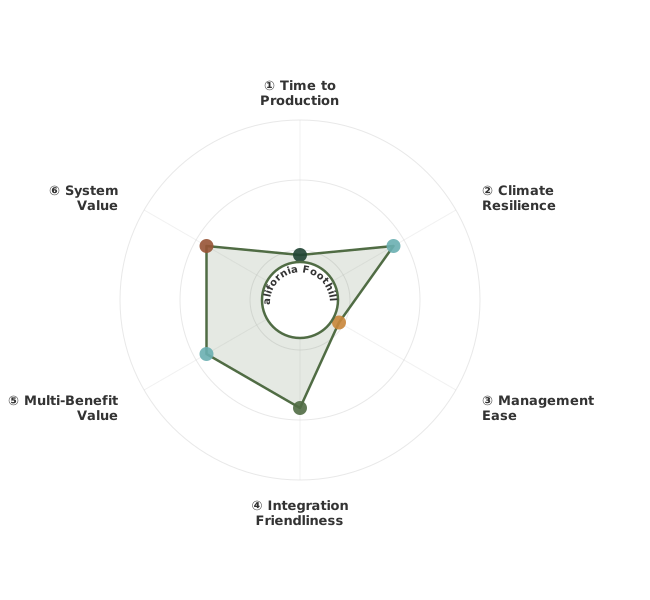
Maintenance: Very low maintenance - Once established, gray pine is largely self-sufficient, requiring minimal intervention due to its natural adaptation to nutrient-poor soils and efficient water management.

Time to Production: Slow (5+ years) - Gray pine offers valuable edible nuts, with substantial yields developing over time as the plant matures and integrates into the living soil system.

Value Streams

  • Fruit/nut harvest
1

Climate Suitability Assessment

Will this plant thrive in your climate?

IDEALLY SUITED

Köppen Zone: Cfa (Humid Subtropical), Csa (Hot-Summer Mediterranean), Csb (Warm-Summer Mediterranean)
USDA Zone: 7a, 8a, 9a

California Foothills Pine thrives in climates with hot, dry summers and mild, wet winters, characterized by 120-180 frost-free days and temperatures that support its growth without excessive heat stress or prolonged dampness. These conditions are met in Köppen Csb zones and regional zones like USDA 8a-9b, and Australian temperate zones with Mediterranean-like summers. In these areas, establishment is highly successful, with minimal need for supplemental irrigation once established, and the species exhibits robust growth and resilience. The dry summer period is crucial for preventing fungal diseases and root rot, to which this pine is susceptible. Silvopasture applications benefit from the species' adaptation to poor soils and its ability to withstand drought, contributing to a stable and productive agroforestry system with low input requirements. Its natural range in California foothills provides a strong indicator of optimal growing conditions, emphasizing the need for distinct dry periods and moderate winter temperatures.

ADEQUATE

Köppen Zone: BSk (Cold Semi-Arid (Steppe)), Cfb (Oceanic (Maritime Temperate)), Cwa (Monsoon-Influenced Humid Subtropical), Cwb (Subtropical Highland), Dfa (Hot-Summer Continental), Dfb (Warm-Summer Continental)
USDA Zone: 5b, 6a, 10a
Australian Zone: temperate

California Foothills Pine can perform adequately in climates that offer a balance between sufficient warmth and moisture, but with some limitations that require careful management. These include Köppen Csb zones with slightly cooler summers, USDA 7a-7b and 10a-10b, and Australian temperate zones that may experience more rainfall or less pronounced dry periods. In these regions, establishment success is good (70-85%) but may require supplemental watering during establishment and potentially during extended dry spells. Summer heat, while not extreme, can still cause some stress, and the risk of fungal diseases increases if dry periods are not distinct enough. Productivity may be slightly reduced compared to ideal zones, and stand persistence might be shorter without diligent management. For silvopasture, these zones are viable but necessitate a more proactive approach to water management and disease monitoring to ensure long-term success and economic returns.

NOT RECOMMENDED

Köppen Zone: Af (Tropical Rainforest), Am (Tropical Monsoon), Aw (Tropical Savanna), ET (Tundra), BSh (Hot Semi-Arid (Steppe)), BWh (Hot Desert), BWk (Cold Desert), Dfc (Subarctic), Dwa (Monsoon-Influenced Hot-Summer Continental)
USDA Zone: 2a, 3a, 3b, 4a, 5a, 11a, 12a
Australian Zone: subtropical
EU Climate Region: atlantic

California Foothills Pine is not recommended for climates that deviate significantly from its native Mediterranean foothills habitat, specifically Köppen Csa, Cfa, and Cfb zones, USDA 6a-6b, Australian subtropical zones, and EU Atlantic regions. These zones present conditions that are either too humid, too cool, or too prone to extreme temperatures for the species' optimal survival and growth. High humidity and summer rainfall in Cfa, Australian subtropical, and EU Atlantic zones significantly increase the risk of fungal diseases and root rot, leading to poor establishment and high mortality rates. In contrast, the colder winters of USDA 6a-6b and the cooler summers of Cfb zones limit growth, increase susceptibility to frost damage, and reduce overall resilience. While technically possible to establish in some of these zones with intensive intervention (e.g., specialized soil amendments, extensive irrigation, disease control), the economic viability and long-term success are highly questionable, making alternative species a far more practical choice for regenerative agriculture.

Better alternatives for these "not recommended" zones: Coulter Pine (Pinus coulteri) (Native to similar California coastal ranges, adapted to dry summers and poor soils.), Gray Pine (Pinus ponderosa var. benthamiana) (A variety of Ponderosa Pine that is well-adapted to drier, warmer foothills and can tolerate a wider range of conditions.), Blue Oak (Quercus douglasii) (A native oak species that thrives in Csa climates and is excellent for silvopasture.), Loblolly Pine (Pinus taeda) (Native to Cfa climates, widely used in silvopasture and forestry.), Douglas Fir (Pseudotsuga menziesii) (Well-adapted to Atlantic and Cfb climates and suitable for silvopasture.)

Note: Zones listed above represent climates where this plant can produce reliably with reasonable management. Climate zones not mentioned would require intensive climate modification (greenhouses, extensive infrastructure) and are not economically viable for regenerative agriculture purposes.

2

Soil Suitability Assessment

Which soil types work best for this plant?

IDEALLY SUITED

Sandy Soil

This plant thrives in these soil types without requiring amendments or remediation. Natural soil conditions support optimal growth and productivity.

ADEQUATE

Clay Soil, Desert Soil, Loam Soil, Rocky Soil

This plant performs acceptably in these soil types with moderate, manageable remediation such as pH adjustment, compost addition, or drainage improvement. The required amendments are practical and cost-effective for regenerative agriculture.

NOT RECOMMENDED

Acidic Soil, Alkaline Soil, Rich Soil, Saline Soil, Wet Soil

Growing this plant in these soil types would require impractical remediation such as complete soil replacement, extensive amendments, or cost-prohibitive infrastructure. These conditions are not economically viable for regenerative agriculture.

Note: Soil suitability assessments focus on remediation requirements. "Ideally Suited" means the plant generally thrives without the need for substantial amendments, "Adequate" means manageable remediation (lime, compost, mulch), and "Not Recommended" means impractical soil changes would be required. Climate factors like rainfall and temperature also influence success.

3

Seasonal Considerations

Planting timing, growth duration, and harvest windows

Establishing Pinus sabiniana is a multi-year commitment, with timing crucial for success. For nursery stock, bare-root seedlings are best planted during the dormant season, typically in late fall or very early spring, before new growth begins. Container-grown trees offer more flexibility and can be planted anytime the soil is workable, though avoiding extreme heat or drought is wise.

Expect several years before your gray pine is truly established, usually around 3-5 years, during which consistent watering and weed control are vital. While edible cones may appear as early as year 5 or 6, full production, yielding substantial harvests, typically takes 8-10 years. These trees are long-lived, potentially productive for many decades.

Seasonal management focuses on the tree’s natural rhythms. Pruning is best done during the dormant season to minimize stress and sap loss. The cones, the primary harvest, mature and are typically ready in late summer or early fall. While the tree enters a period of winter dormancy to conserve resources, it remains evergreen, so monitor for any signs of stress. Understanding this multi-year cycle allows for strategic planning and ensures a thriving, productive grove.

4

System Role & Multi-Benefit Value

Functional roles, integration strategies, and stacked benefits

Functional Role

Total System Value

Pinus sabiniana offers substantial multi-benefit stacking in regenerative agricultural systems. While direct harvest value is limited to its unique edible nuts (pine nuts) and potential for firewood, its true value lies in ecosystem services and system enhancement. As a silvopasture component, it provides crucial shade and shelter for livestock, reducing heat stress and improving animal welfare, particularly for browsing animals like goats. Its deep root system stabilizes soil on slopes, mitigating erosion, and its drought tolerance makes it resilient in arid foothill environments. The tree contributes to carbon sequestration through biomass accumulation. Its presence supports biodiversity by providing habitat for wildlife and potential forage for pollinators. Risk diversification is achieved through its long lifespan, drought resilience, and multiple non-timber uses, creating a more robust and adaptable farm ecosystem less reliant on monocultures or annual inputs.

Integration Characteristics

Multi-Benefit Value: Adequate - Beyond its edible nuts for diverse consumers, gray pine's deep roots improve soil structure and moisture retention, contributing to a resilient ecosystem.

Integration Friendliness: Adequate - Gray pine offers valuable nut production and thrives in dry conditions, presenting opportunities for integration through thoughtful landscape design and companion planting.

5

Management & Care Requirements

Integration guidance, maintenance needs, and care practices

How to Integrate This Plant

California foothills pine (Pinus sabiniana) is an excellent candidate for silvopasture systems in its native range, providing significant shade and browse for livestock, particularly goats and sheep, which can tolerate its foliage. Its primary role is as a nurse tree and a component of food forests, offering a long-term legacy tree for agroforestry. Integration can begin immediately with establishment, with initial shade and browse benefits appearing within 3-5 years, and substantial canopy cover by year 10. It is well-suited for alley cropping, where it can be planted in wider alleys with annual crops or forage between rows. Its deep taproot aids in erosion control on slopes. Complementary practices include integrating drought-tolerant understory plants and supporting native pollinator species that utilize its cones and early flowers. The multi-benefit stacking comes from its drought tolerance, soil improvement through leaf litter, and habitat creation for wildlife, enhancing overall farm resilience.

Integration Practices & Management

Information on the specific integration methods of *Pinus sabiniana* within regenerative agriculture systems is notably limited in the provided knowledge base. While the sources mention the plant, they do not detail practical applications such as establishment techniques like seeding rates, timing, or companion planting strategies. Similarly, the knowledge base does not offer insights into how *Pinus sabiniana* might be integrated with grazing systems, including mob or rotational grazing, or the associated timing and rest periods. Termination strategies, fertility requirements, competition management, succession planning, or its role in cash crop sequences like relay or intercropping are also not discussed. Therefore, based on the available information, it is not possible to provide a detailed explanation of how regenerative farmers practically integrate *Pinus sabiniana* into their operations, nor are there farmer experiences or insights specific to its regenerative use within this knowledge base.

Management Profile

Maintenance Intensity: Ideally Suited - Once established, gray pine is largely self-sufficient, requiring minimal intervention due to its natural adaptation to nutrient-poor soils and efficient water management.

Pest Disease Pressure: Ideally Suited - Gray pine's resilience to drought and its adaptation to challenging soil conditions contribute to its inherent resistance against common pests and diseases.

Time To Production: Not Recommended - Gray pine offers valuable edible nuts, with substantial yields developing over time as the plant matures and integrates into the living soil system.

6

Economics & Value Streams

Direct harvest, system benefits, ecosystem services, and risk diversification

Comprehensive economic analysis including direct harvest value, system enhancement contributions, ecosystem services, value timeline, and risk diversification strategies.

Per-Tree Production Economics

Metric Value
Establishment Cost $10-20
Years to First Harvest 7-10 years
Annual Maintenance $3-5
Yield 5-15 lbs/year 2-6 kg/year
Market Price $2-4/lb $4-8/kg
Productive Lifespan 30-50 years
Net Annual Return* $4-$56/year

Values shown per mature tree, not per acre. In regenerative systems, trees are integrated at low densities across diverse landscapes. Establishment costs spread over the lifespan of the tree. Early years have costs but no revenue.

* Net Annual Return = (Yield × Market Price) − (Amortized Establishment Cost + Annual Maintenance). This return is realized only at/after first harvest; early years have costs but no revenue. Range shows worst case to best case scenarios.

System Enhancement Value

Beyond harvest: shade for livestock, soil building, and system benefits

Shade Value for Livestock

$50-150/head/year for cattle, $30-80/head/year for pigs (variable based on climate, density, canopy)

Pinus sabiniana, or California foothill pine, provides significant shade in silvopasture systems, particularly valuable in the Mediterranean climate of its native range. Its open canopy structure, adapted to deflect heat and conserve water, offers a cooler microclimate for livestock. This shade reduces heat stress in cattle and pigs, leading to improved animal welfare, increased feed efficiency, and potentially higher weight gains. The value of this shade is directly tied to the livestock's comfort and productivity, with denser canopies offering more pronounced benefits. The tree's resilience in low rainfall and poor soils means it can provide this crucial shade even in challenging environments where other trees might struggle, contributing to the overall sustainability of grazing operations. The provided quantitative data suggests a substantial economic benefit derived from this shade provision.

Windbreak & Erosion Control

Variable, potential for erosion control and moderate windbreak effects depending on planting density and configuration.

While not explicitly mentioned in the provided excerpts as a primary function, the mature, upright growth habit of Pinus sabiniana suggests potential for windbreak and erosion control, especially in its native foothills environment. Its ability to thrive in harsh conditions, including low rainfall and poor soils, makes it a candidate for stabilizing slopes and preventing soil loss in degraded areas. The dense needle foliage and resinous trunk coatings, while contributing to flammability, also indicate a substantial biomass that, when established, could intercept wind. In silvopasture or food forest contexts, strategically planted rows of these pines could offer protection to understory vegetation and livestock from prevailing winds, thereby reducing wind-induced desiccation and soil erosion. This protective function is particularly relevant in the dry, windy conditions characteristic of California's foothills.

Other System Contributions

Beyond its direct utility, Pinus sabiniana offers substantial 'other system benefits' rooted in its ecological significance and historical use by indigenous peoples. Its calorie-dense pine nuts represent a valuable food source, providing protein and calories that can be integrated into farm diets or sold as a specialty product. The historical use of every part of the tree, from firewood and tinder to medicinal resin and basketry materials, highlights its potential for diverse, low-impact resource utilization within an integrated farm system. Furthermore, its resilience in harsh conditions makes it an excellent candidate for ecological restoration and enhancing biodiversity, providing habitat and resources for local wildlife. Its adaptation to poor soils also suggests a role in soil improvement and nutrient cycling over the long term, contributing to a more robust and self-sustaining farm ecosystem.

Ecosystem Service Contributions

Environmental contributions: carbon, pollinators, wildlife, and water

  • Carbon Sequestration: Pinus sabiniana, as a coniferous tree, has a significant capacity for carbon sequestration through biomass accumulation in its woody tissues and needles. Its ability to thrive in challenging environments suggests it can establish and grow where other species might not, contributing to carbon storage in potentially degraded landscapes.
  • Pollinator Support: Low. While pine trees do produce pollen, they are wind-pollinated and typically not a primary attractant for most beneficial insects commonly associated with agricultural pollination.
  • Wildlife Habitat: High. The tree provides mast (pine nuts) for various wildlife and humans, and its structure offers nesting sites and shelter. Its resilience in dry conditions also makes it a critical resource in arid and semi-arid ecosystems.
  • Water Quality: Not applicable

Value Timeline: When Benefits Begin

When you'll see results: shade in years 1-5, fruit/nut harvest 3-10, timber 20+

Years 1-2

Initial erosion control and soil stabilization, minor shade provision, potential for early pine nut production in favorable conditions.

Years 3-5

Established shade for livestock, increasing pine nut yield, contribution to microclimate modification, potential for deadfall firewood.

Years 10-20

Significant pine nut production, mature shade canopy, notable contributions to wildlife habitat and biodiversity, potential for resin harvesting, established windbreak/erosion control effects.

20+ Years

Full ecological and economic potential realized, including substantial ecosystem services, continued high-yield pine nut production, and potential for sustainable timber harvesting if managed for that purpose.

Farm Risk Reduction

How this reduces farm risk: backup income, weather protection, market hedges

  • Multiple Revenue Streams: Pine nuts (direct food product, specialty market), silvopasture shade benefits (improved livestock productivity), potential firewood and craft materials, ecological restoration services.
  • Temporal Income Spread: Value is spread across ongoing ecosystem services (shade, habitat) and periodic harvests (pine nuts, firewood), with potential for long-term timber value.
  • Market Risk Hedge: Drought tolerance and resilience in poor soils reduce reliance on more water-intensive or soil-specific crops. Diversifies income away from solely livestock or annual crops. Pine nuts offer a niche market that can be less volatile than commodity markets.
7

Regenerative Suitability Details

Comprehensive trait ratings for system integration assessment

Comparative ratings for this plant across key regenerative agriculture traits.

Trait Suitability Explanation
Drought Tolerance Ideally Suited Gray pine thrives in arid landscapes through its robust root system, effectively managing soil moisture and enhancing water infiltration in its native dryland environments.
Establishment Ease Not Recommended This species benefits from careful site preparation and nurturing during its initial growth phase, allowing it to establish a strong foundation and outcompete surrounding vegetation.
Time To Production Not Recommended Gray pine offers valuable edible nuts, with substantial yields developing over time as the plant matures and integrates into the living soil system.
Multi Benefit Value Adequate Beyond its edible nuts for diverse consumers, gray pine's deep roots improve soil structure and moisture retention, contributing to a resilient ecosystem.
Climate Adaptability Adequate Adapted to warm, dry climates, gray pine thrives on well-drained soils, demonstrating resilience in environments with limited water availability.
Hardiness Zone Range Adequate As a California native, gray pine flourishes in USDA zones 7-9, demonstrating excellent adaptation to seasonal warmth and dryness while requiring protection from extreme cold.
Maintenance Intensity Ideally Suited Once established, gray pine is largely self-sufficient, requiring minimal intervention due to its natural adaptation to nutrient-poor soils and efficient water management.
Pest Disease Pressure Ideally Suited Gray pine's resilience to drought and its adaptation to challenging soil conditions contribute to its inherent resistance against common pests and diseases.
Integration Friendliness Adequate Gray pine offers valuable nut production and thrives in dry conditions, presenting opportunities for integration through thoughtful landscape design and companion planting.

Comparative System: Ratings compare plants within their economic category (e.g., cover crop nitrogen fixation compared to other cover crops, not to all plants). Individual farm conditions and management practices significantly influence actual performance.

8

Learn More

Why farmers use this plant and additional resources

Why Regenerative Farmers Use This Plant

Pinus sabiniana, commonly known as the California Foothills Pine or Ghost Pine, offers significant long-term ecological and economic benefits within regenerative agricultural systems. As a perennial tree, its primary value lies in its deep taproot system, which can reach depths of 15-30 feet (4.5-9 meters) or more. This deep rooting effectively breaks up compacted soils, improves water infiltration, and accesses moisture and nutrients unavailable to shallower-rooted crops, contributing to soil health and resilience, especially in arid and Mediterranean-climate agricultural systems. At maturity, Pinus sabiniana is estimated to sequester 2-5 tons of CO2e per acre per year, playing a crucial role in climate change mitigation. Its substantial biomass production over its multi-decade lifespan contributes to long-term carbon storage in both the tree itself and the surrounding soil. The accumulation of organic matter from fallen needles and branches enriches the soil, creating a more fertile environment for understory vegetation and improving soil structure.

Beyond carbon sequestration, Pinus sabiniana provides vital ecosystem services through its canopy. The open, irregular canopy offers partial shade, creating microclimates that can benefit specific understory plants and animals, particularly in warmer regions. This shade regulation can reduce heat stress on livestock and reduce water evaporation from the soil surface. As a windbreak, mature stands can significantly reduce wind speeds, protecting crops, soil, and livestock from damaging winds. The tree's cones and seeds also serve as a valuable food source for wildlife, supporting biodiversity within the agricultural landscape, and the large pine nuts can be harvested for human consumption, offering a unique non-timber forest product. Over decades, Pinus sabiniana represents a growing asset, providing timber, firewood, and potential for other non-timber forest products, contributing to multi-decade economic returns and the accumulation of valuable natural capital on the farm.

Integrating Pinus sabiniana into agroforestry systems, such as silvopasture or alley cropping, leverages its long-term growth habit. While it does not fix nitrogen, its robust structure and deep root system contribute to soil stability and nutrient cycling. Its presence can create habitat for beneficial insects and pollinators, and its fallen foliage contributes organic matter to the soil surface. In regions with suitable climates, it can be integrated into systems where its shade is beneficial, such as for grazing animals or for shade-tolerant crops. Its adaptability to dry conditions once established makes it a resilient choice for landscapes facing increasing water scarcity. The tree's ability to thrive on poor soils makes it an excellent candidate for marginal lands, improving their ecological function without demanding high inputs.

Pinus sabiniana has a long history of use by indigenous peoples for its edible seeds (pine nuts) and wood. Regenerative farmers can draw inspiration from these traditional uses and integrate the tree into modern farming systems. For example, it can be planted as part of a mixed-species windbreak alongside other native trees and shrubs, enhancing biodiversity and providing multiple layers of ecological benefit. In areas with historical pine woodlands, re-establishing Pinus sabiniana can help restore native ecosystems and provide a resilient, long-term component of the farm landscape. Its slow growth and long lifespan make it an ideal candidate for intergenerational farm planning, building enduring ecological and economic value.

Quantitatively, the ecosystem services provided by Pinus sabiniana are substantial. Its deep root system enhances water infiltration, reducing surface runoff and improving groundwater recharge, particularly crucial in arid and semi-arid regions. The decomposition of its needles contributes significantly to soil organic matter over time, improving soil structure, water-holding capacity, and nutrient availability. While not a nitrogen fixer, its ability to scavenge nutrients from deeper soil layers makes them available to the wider ecosystem through litterfall. The open canopy can also create favorable conditions for beneficial insect populations by providing habitat and reducing extreme temperature fluctuations.

Sources behind this view

Community
  • California native peoples highly valued the gray pine (Pinus sabiniana) for its nutritious pine nuts, which were prepared in various ways. All parts of the tree, from firewood to medicinal resin, were

9

How to Integrate This Plant

Practical guidance for regenerative systems

Establishing Pinus sabiniana typically involves direct seeding or planting nursery-grown seedlings. For direct seeding, rates can range from 0.5 to 2 lbs of seed per acre (0.56 to 2.24 kg/ha), depending on seed viability and desired stand density. Seeds should be planted at a depth of 0.5 to 1 inch (1.3 to 2.5 cm) into well-drained soil. For direct seeding, rates of approximately 0.5-1 lb of seed per acre (0.56-1.12 kg/ha) are recommended, sown at a depth of 0.25-0.5 inches (0.6-1.3 cm) in some contexts. Planting is best undertaken in the autumn or early spring, coinciding with natural moisture availability. Nursery seedlings, often grown in containers or as bare-root stock, are planted at a spacing of 20-40 feet (6-12 meters) apart, depending on the intended use and the desired density of the stand. This wider spacing allows for individual tree development and facilitates management of the understory. For windbreaks or hedgerows, rows can be planted 10-15 ft (3-4.5 m) apart with trees spaced 5-8 ft (1.5-2.5 m) within the row.

Management during the establishment phase is critical for long-term success. Young trees require consistent moisture, with approximately 1 inch (2.5 cm) of water per week during the first 1-2 years, especially in drier climates, which can be supplemented with irrigation if rainfall is insufficient. While Pinus sabiniana is adapted to nutrient-poor soils and does not require nitrogen fixation, incorporating compost or well-rotted manure at planting can boost early growth, or allowing natural leaf litter to accumulate will enhance soil health and provide slow-release nutrients. Weed control around young seedlings is important to reduce competition for water and nutrients. Pruning is generally minimal but can be employed to shape the tree, encourage a dominant leader, remove deadwood, or manage canopy density for light penetration to the understory if intercropping is planned.

Trees typically establish within 1-3 years and begin to show noticeable growth, with significant canopy development occurring over 5-15 years. Seedlings may take 1-3 years to establish a robust root system, with noticeable above-ground growth becoming more apparent in years 3-5. Mature height can range from 40 to 100 feet (12 to 30 meters), with a similar spread of 20-40 feet (6-12 meters), depending on site conditions and genetics. For perennial tree integration, establishment and system design are paramount. Pinus sabiniana typically requires 1-3 years to establish a robust root system and can take 10-20 years to reach significant timber or nut production, with full maturity and maximum ecosystem service provision occurring over 30-50 years.

For category-specific integration as a perennial agroforestry species, Pinus sabiniana is well-suited for silvopasture or windbreak systems. In silvopasture designs, trees are typically planted in rows spaced 30-40 feet (9-12 meters) apart to allow for grazing animals and equipment access. The establishment period for full canopy development and significant shade provision can take 10-20 years. During these initial years, nitrogen-fixing ground covers like clovers or vetch can be planted beneath the canopy in years 2-3 to build soil fertility and provide forage for livestock. Measurable soil carbon increases are expected to become more significant by year 5-7 as the tree matures and contributes more organic matter, with significant soil carbon increases observed by year 7-10. Long-term infrastructure considerations include initial irrigation for establishment, protective fencing against browsing animals (especially deer, rabbits) using guards or fencing, and potentially support structures if trees are trained for specific purposes. Establishing a drought-tolerant, nitrogen-fixing ground cover like a native perennial legume in the understory by year 2-3 can enhance soil fertility and biodiversity. Canopy management through selective pruning can be implemented after 5-7 years to promote desired growth forms and ensure adequate light penetration for understory components. Pest and disease management should prioritize cultural practices, such as ensuring good air circulation and avoiding water stress, which can make trees more susceptible.

Regional adaptations for Pinus sabiniana are tied to its Mediterranean and dry continental climate preferences. In the Mediterranean regions of Europe and North Africa, it can be integrated into existing olive groves or vineyards as a windbreak or for timber production, planted after the main harvest in autumn. In California's Central Valley, it can be used in alley cropping systems with drought-tolerant crops, with rows spaced to allow for machinery. In Australia, it can be incorporated into dryland farming systems as part of multi-species shelterbelts to protect crops and pastures from wind erosion, established with autumn rains. In South Africa's Western Cape, it can be planted on slopes to prevent erosion and provide habitat, benefiting from the region's winter rainfall. In Chile's central valley, it can be incorporated into silvopasture systems to provide shade and browse for livestock while producing timber. Its tolerance to heat and drought makes it a candidate for arid regions globally, where it can contribute to land rehabilitation and provide habitat in savanna-like systems.

View Full Document (Printable single-page version)