Eastern White Pine
Eastern white pine (Pinus strobus) is noted for its potential in regenerative systems, particularly within agroforestry contexts. While not a nitrogen fixer, its significant stature and layered branching (as described in excerpt 4) suggest a role in creating multi-story forest gardens or windbreaks. Studies indicate white pine seedling establishment can be negatively impacted by nitrogen fertilization, potentially due to increased soil pathogen activity (excerpt 1), implying a need for careful management in low-input systems. Its use as artificial cover objects (ACOs) for monitoring wildlife, such as red-backed salamanders, demonstrates its capacity to support biodiversity and habitat (excerpt 3). The knowledge base does not explicitly detail its use as a cover crop or forage. While the provided excerpts focus on ecological interactions and mapping applications (excerpt 2), they highlight white pine's presence in native forest ecosystems, suggesting its potential role in enhancing soil structure and carbon sequestration within established regenerative landscapes. Further research is needed to fully define its primary uses and benefits within specific regenerative agriculture practices.
For a full botanical description see: Wikipedia↗(opens in new window) (external link)
Regenerative Quick Profile
All recommendations assume integrated, regenerative practices—not conventional inputs.
Climate & Soil Fit
Climate: Tropical Rainforest, Tropical Monsoon, Tropical Savanna, Hot Semi-Arid (Steppe), Cold Semi-Arid (Steppe), Hot Desert, Cold Desert, Humid Subtropical, Oceanic (Maritime Temperate), Hot-Summer Mediterranean, Warm-Summer Mediterranean, Monsoon-Influenced Humid Subtropical, Subtropical Highland, Hot-Summer Continental, Warm-Summer Continental, Subarctic, Monsoon-Influenced Hot-Summer Continental, Tundra
Zones: USDA 4-8, Australian Zones 3-5
Optimal Soil: Loam Soil
System Role & Functions
Primary: Windbreak
Secondary: Food Forest, Specialty
Management Level
Experience: Intermediate
Maintenance: Moderate maintenance - Maintaining a healthy Eastern white pine involves fostering a resilient ecosystem through mulch, cover cropping, and vigilant observation for natural pest deterrence.
Time to Production: Slow (5+ years) - As a long-term timber species, Eastern white pine contributes to soil building and ecosystem services rather than rapid edible crop production.
Value Streams
- Fruit/nut harvest
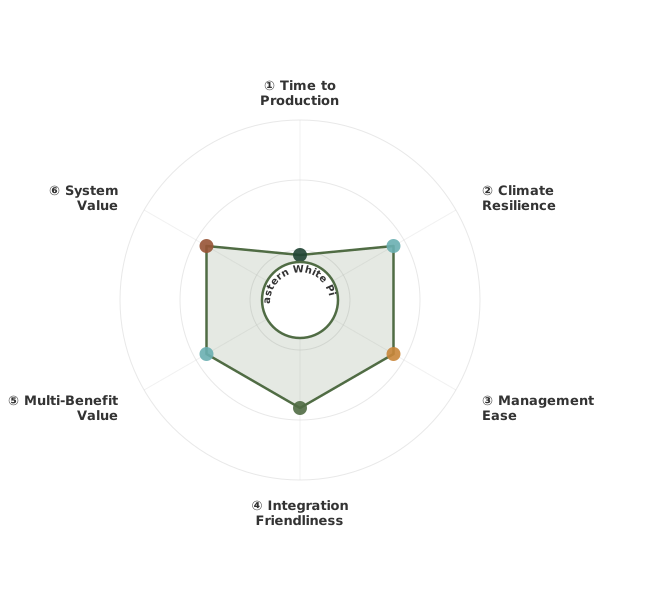
Regenerative Trait Ratings
How These Traits Are Calculated
Trait dimensions are ordered clockwise starting from the top of the chart (12 o'clock position):
1. Time to Production
Years from planting to first harvestable yields
WHAT: Measures the waiting period from tree establishment to first meaningful production. Fast-producing trees yield within 2-5 years; slow producers require 8-15+ years before significant harvests.
WHY: Time to production determines cash flow timing and financial feasibility for farm businesses. Long wait times create significant opportunity costs—land and labor tied up for years without income. Fast producers allow quicker experimentation and cash flow recovery, reducing risk for new tree crop farmers.
HOW: Ratings based on years to first harvest documented in economics data. Exceptional (3.0): Production within 2-4 years (elderberry, mulberry, some nut bushes). Typical (2.0): 5-8 years (many fruit trees). Limited (1.0): 10-15+ years (hardwood timber, some nut trees like pecan, walnut).
2. Climate Resilience
Weighted: hardiness zones (50%) + drought tolerance (30%) + adaptability (20%)
WHAT: Combines temperature tolerance (hardiness zone range), water stress resilience (drought tolerance), and overall climate flexibility. Multi-decade tree investments require reliable climate matching to prevent total loss.
WHY: Wrong climate choices mean complete failure for permanent plantings. A tree that dies in year 5 from unexpected cold or prolonged drought represents catastrophic loss of 5 years' investment. Climate resilience determines geographic range and weather variability tolerance—critical as climate patterns become less predictable.
HOW: Weighted formula prioritizes hardiness zone range (50% weight) for core temperature tolerance, drought tolerance (30% weight) for water stress, and overall adaptability (20% weight) for general climate flexibility. Exceptional (3.0): Wide hardiness range (8+ zones) with strong drought tolerance. Typical (2.0): Moderate range and tolerance. Limited (1.0): Narrow climate requirements.
3. Management Ease
Weighted: establishment (40%) + low maintenance (30%) + pest resistance (30%)
WHAT: Combines establishment difficulty, ongoing maintenance requirements, and disease/pest pressure into overall management workload. Low-maintenance trees fit easily into busy farm operations without specialized expertise or intensive inputs.
WHY: Labor is the limiting factor for most diversified farms. High-maintenance trees requiring pruning expertise, disease management, and intensive pest control compete for limited time with other farm enterprises. Easy-care trees deliver production with minimal intervention, making them viable for time-constrained farmers.
HOW: Weighted formula balances establishment ease (40% weight) for startup success, inverted maintenance intensity (30% weight) for ongoing care, and inverted pest/disease pressure (30% weight) for health management. Exceptional (3.0): Easy to establish, self-sufficient growth, naturally pest-resistant. Typical (2.0): Moderate care needs. Limited (1.0): Difficult establishment, intensive maintenance, or heavy pest pressure.
4. Integration Friendliness
Compatibility with silvopasture, alley cropping, and multi-species systems
WHAT: Measures how well the tree integrates with other farm enterprises—grazing livestock, annual crops, or other perennials. Integration-friendly trees tolerate livestock browsing, don't heavily shade out crops, and coexist with diverse plantings.
WHY: Integrated tree systems (silvopasture, alley cropping, food forests) provide higher total returns per acre than monoculture plantings. Trees that work well with livestock provide shade + forage + production simultaneously. Integration flexibility allows farmers to stack enterprises and adapt to market opportunities.
HOW: Ratings based on the integration_friendliness trait documenting compatibility with grazing, cropping, and multi-species systems. Exceptional (3.0): Tolerates livestock browsing, provides livestock benefits (shade, browse), compatible with understory crops. Typical (2.0): Some integration possible with management. Limited (1.0): Requires isolation, incompatible with livestock or cropping.
5. Multi-Benefit Value
Stacked benefits beyond primary product—shade, wildlife, nitrogen, erosion control
WHAT: Measures the diversity of ecosystem services provided beyond the main harvest product. Multi-benefit trees deliver shade, windbreak, wildlife habitat, nitrogen fixation, erosion control, pollinator support, and aesthetic value simultaneously.
WHY: Single-purpose trees are economically fragile—market price swings or production failures eliminate all value. Multi-benefit trees provide resilience through diverse value streams. A nitrogen-fixing tree that produces nuts, provides shade for livestock, supports wildlife, and controls erosion delivers 4-5x the system value of a production-only tree.
HOW: Ratings based on the multi_benefit_value trait documenting service diversity. Exceptional (3.0): 4+ significant services stacked (nitrogen-fixing legume trees providing nuts + shade + wildlife + windbreak). Typical (2.0): 2-3 moderate services. Limited (1.0): Single-purpose production trees with minimal additional benefits.
6. System Value
Total ecosystem and economic value across short, medium, and long timeframes
WHAT: Synthesizes the total regenerative value delivered across multiple decades, including immediate ecosystem services (years 1-5), medium-term production value (years 5-15), and long-term system transformation (years 15-50). Captures the compounding benefits of permanent plantings.
WHY: Trees are multi-decade investments requiring patient capital. System value measures whether the total package—early ecosystem services, eventual production, and long-term legacy benefits—justifies the wait time and land commitment. High system value trees pay back investment through diverse, stacking, compounding benefits.
HOW: Scored via LLM synthesis of economics timelines, ecosystem service diversity, and long-term soil/water/carbon impacts. Exceptional (3.0): Strong early services + valuable production + transformative long-term impacts. Typical (2.0): Moderate benefits across timeframes. Limited (1.0): Long wait with limited service stacking or weak economic returns.
Ratings are based on documented performance in regenerative systems, not conventional high-input scenarios. All traits assume integrated management practices focused on soil health and ecosystem services.
1
Climate Suitability Assessment
Will this plant thrive in your climate?
Climate Suitability Assessment
Will this plant thrive in your climate?
Köppen Zone: Cfa (Humid Subtropical), Cfb (Oceanic (Maritime Temperate)), Dfa (Hot-Summer Continental), Dfb (Warm-Summer Continental)
USDA Zone: 5a, 5b, 6a, 7a
Australian Zone: temperate
EU Climate Region: atlantic
Eastern White Pine performs optimally in regions with consistent moisture and moderate temperatures, characterized by growing seasons of 150-200 frost-free days and average summer temperatures between 60-75°F (15-24°C). These conditions are met in Köppen zones Cfa, Cfb, and Dfb, as well as USDA zones 5b through 8b, the Australian temperate zone, and the EU Atlantic climate region. In these areas, the species exhibits vigorous growth, rapid establishment (over 85% success rate), and develops dense foliage crucial for effective windbreaks. Winter hardiness is excellent, withstanding temperatures down to -20°F (-29°C) without significant damage. Minimal management is required, primarily focused on initial establishment and ensuring adequate moisture during prolonged dry spells, which are rare in these regions. Multi-year productivity in terms of windbreak density and resilience is highly reliable, making it an excellent choice for regenerative agriculture applications where wind protection is paramount.
Köppen Zone: BSk (Cold Semi-Arid (Steppe)), Csa (Hot-Summer Mediterranean), Csb (Warm-Summer Mediterranean), Cwa (Monsoon-Influenced Humid Subtropical), Cwb (Subtropical Highland), Dfc (Subarctic), Dwa (Monsoon-Influenced Hot-Summer Continental)
USDA Zone: 4a, 8a
Australian Zone: subtropical
Eastern White Pine can perform adequately in regions with slightly more challenging conditions, including USDA zones 3a, 3b, 4a, 4b, 5a, and 9a, 9b, as well as the Australian subtropical zone and Köppen Dfc. These areas typically have shorter growing seasons (120-150 days) or experience more extreme temperature fluctuations, such as colder winters or hotter summers. While establishment success is still good (70-85%), growth may be slower, and windbreak density might be less pronounced compared to ideal zones. Supplemental irrigation may be necessary in warmer, drier regions (USDA 9a/9b, Australian subtropical) to mitigate summer heat stress and ensure consistent growth. In colder zones (USDA 3a-5a, Dfc), while the species can survive, there's a higher risk of occasional winter damage or slower development. Standard management practices, including careful site selection and timely planting, are important for success.
Köppen Zone: Af (Tropical Rainforest), Am (Tropical Monsoon), Aw (Tropical Savanna), ET (Tundra), BSh (Hot Semi-Arid (Steppe)), BWh (Hot Desert), BWk (Cold Desert)
USDA Zone: 2a, 3a, 3b, 9a, 10a, 11a, 12a
Eastern White Pine is not recommended for cultivation in regions with extreme winter cold (USDA zones 1a, 1b, 2a, 2b) or prolonged, intense summer heat and drought (USDA zones 10a, 10b, and parts of the Australian subtropical zone). In the coldest zones, winter temperatures far below the species' tolerance (-30°F and lower) lead to virtually guaranteed winter kill and failed establishment, making it impossible to form a functional windbreak. In hot, dry regions, the species struggles with heat stress and water scarcity, resulting in poor growth, increased susceptibility to pests and diseases, and a high risk of mortality. Establishment success drops significantly below 70%, and the economic viability of attempting to grow it is questionable. Intensive management, such as extensive irrigation and protective measures, would be required, making it impractical and costly. Alternative species better adapted to these extreme conditions are strongly advised.
Note: Zones listed above represent climates where this plant can produce reliably with reasonable management. Climate zones not mentioned would require intensive climate modification (greenhouses, extensive infrastructure) and are not economically viable for regenerative agriculture purposes.
2
Soil Suitability Assessment
Which soil types work best for this plant?
Soil Suitability Assessment
Which soil types work best for this plant?
Loam Soil
This plant thrives in these soil types without requiring amendments or remediation. Natural soil conditions support optimal growth and productivity.
Acidic Soil, Clay Soil, Rich Soil, Rocky Soil, Sandy Soil
This plant performs acceptably in these soil types with moderate, manageable remediation such as pH adjustment, compost addition, or drainage improvement. The required amendments are practical and cost-effective for regenerative agriculture.
Alkaline Soil, Desert Soil, Saline Soil, Wet Soil
Growing this plant in these soil types would require impractical remediation such as complete soil replacement, extensive amendments, or cost-prohibitive infrastructure. These conditions are not economically viable for regenerative agriculture.
Note: Soil suitability assessments focus on remediation requirements. "Ideally Suited" means the plant generally thrives without the need for substantial amendments, "Adequate" means manageable remediation (lime, compost, mulch), and "Not Recommended" means impractical soil changes would be required. Climate factors like rainfall and temperature also influence success.
3
Seasonal Considerations
Planting timing, growth duration, and harvest windows
Seasonal Considerations
Planting timing, growth duration, and harvest windows
Establishing Eastern white pine requires careful timing to set it up for decades of productivity. For nursery stock, the ideal planting season is in early spring, after the ground has thawed and before active bud break, particularly for bare-root transplants. Container-grown trees offer more flexibility, with planting possible throughout the growing season, though early spring or early fall, before the ground freezes, minimizes transplant shock.
Expect your white pines to take a few years to truly establish their root systems, typically 2-4 years before they show vigorous top growth. While not typically harvested for timber in a short timeframe, for specific agroforestry products like pine needles for crafts or mulch, you might see usable volumes emerge after 5-7 years. Full timber production, of course, is a multi-decade endeavor, with trees reaching maturity and their full productive lifespan measured in many decades.
Throughout the year, management is key. Winter dormancy is the prime time for pruning, ideally during the coldest, driest part of winter to minimize sap loss and disease. The bloom period occurs in spring, a brief window before the needles fully emerge. Summer is for growth and observation, while late fall, before the first hard freeze, is a crucial period for trees to harden off and prepare for winter.
4
System Role & Multi-Benefit Value
Functional roles, integration strategies, and stacked benefits
System Role & Multi-Benefit Value
Functional roles, integration strategies, and stacked benefits
Functional Role
Total System Value
Eastern white pine offers significant system value in regenerative agriculture, primarily as a robust windbreak, as indicated by its growth habit in excerpt. This function directly enhances farm resilience by protecting crops from wind damage, reducing soil erosion, and creating more favorable microclimates for livestock and other plants. While direct harvest value is not detailed in the excerpts, its potential for timber in the long term is substantial. System enhancement comes from its significant windbreak capabilities and shade provision, particularly beneficial in silvopasture or alley cropping systems. Ecosystem services include carbon sequestration, as a large tree, and providing habitat for wildlife. The risk diversification comes from its longevity and multiple functions, creating a more stable and productive farm ecosystem less susceptible to extreme weather events. Its role in stabilizing soil, though not explicitly stated, is a common benefit of large trees.
Integration Characteristics
Multi-Benefit Value: Adequate - Valuable for timber and habitat, its system contribution is enhanced by promoting biodiversity and soil health rather than direct nutrient cycling or pollinator support.
Integration Friendliness: Adequate - A valuable timber species, its integration is enhanced by its role in shade, habitat, and long-term soil building, with ecosystem health being key to managing potential vulnerabilities.
5
Management & Care Requirements
Integration guidance, maintenance needs, and care practices
Management & Care Requirements
Integration guidance, maintenance needs, and care practices
How to Integrate This Plant
Eastern white pine (Pinus strobus) is a valuable tree for regenerative agriculture, primarily serving as a windbreak due to its large size and layered branching structure, as described in excerpt. It can also contribute to habitat and potentially soil health, though excerpt suggests nitrogen addition may negatively impact seedling establishment. To integrate it, consider planting in hedgerows or as part of a windbreak system to protect crops and livestock. While not a direct nitrogen fixer, its extensive root system can aid in soil stabilization. Its large stature makes it suitable for alley cropping systems where it can provide shade as it matures. It can also be incorporated into food forests. Timeline to contribution: Year 1-2: Minimal, establishing roots and structure. Year 3-5: Begins providing noticeable windbreak effects and initial shade. Year 10-20: Becomes a significant windbreak, providing substantial shade and habitat. Multi-benefit stacking: Beyond its windbreak function, it offers habitat for wildlife, carbon sequestration, and can be integrated into longer-term agroforestry systems for timber or other non-timber forest products, enhancing farm resilience.
Integration Practices & Management
While mentioning its native range in northeastern North America and its characteristics as a large, tall tree, the texts do not detail specific regenerative agriculture practices such as establishment methods, integration with grazing, termination strategies, or direct integration with cash crops. Source notes that *Pinus strobus* seedling establishment was negatively impacted by nitrogen fertilization, suggesting a need for careful management of fertility and potentially avoiding high-nitrogen inputs during early growth. The study also observed consistent dual mycorrhizal associations (AM and EM) across treatments, indicating the plant's capacity to form beneficial relationships with soil fungi. Source discusses the use of hierarchical Bayesian models to map Eastern White Pine forests, highlighting its ecological significance in regional land cover, but not its agricultural application. Without further information on its use in cropping systems, grazing management, or specific planting techniques within a regenerative context, a comprehensive explanation of its integration is not possible from this knowledge base. While coverage in our knowledge base is limited, the above represents documented uses in regenerative systems.
Management Profile
Maintenance Intensity: Adequate - Maintaining a healthy Eastern white pine involves fostering a resilient ecosystem through mulch, cover cropping, and vigilant observation for natural pest deterrence.
Pest Disease Pressure: Not Recommended - Susceptibility to certain issues can be mitigated by promoting a diverse, healthy ecosystem that supports natural resistance and resilience.
Time To Production: Not Recommended - As a long-term timber species, Eastern white pine contributes to soil building and ecosystem services rather than rapid edible crop production.
6
Economics & Value Streams
Direct harvest, system benefits, ecosystem services, and risk diversification
Economics & Value Streams
Direct harvest, system benefits, ecosystem services, and risk diversification
Comprehensive economic analysis including direct harvest value, system enhancement contributions, ecosystem services, value timeline, and risk diversification strategies.
Per-Tree Production Economics
| Metric | Value |
|---|---|
| Establishment Cost | $10-20 |
| Years to First Harvest | 15-20 years |
| Annual Maintenance | $3-5 |
| Yield | 20-40 lbs/year 9-18 kg/year |
| Market Price | $0-0/lb $0-0/kg |
| Productive Lifespan | 50-75 years |
| Net Annual Return* | $-5 to $-3/year (negative) |
Values shown per mature tree, not per acre. In regenerative systems, trees are integrated at low densities across diverse landscapes. Establishment costs spread over the lifespan of the tree. Early years have costs but no revenue.
* Net Annual Return = (Yield × Market Price) − (Amortized Establishment Cost + Annual Maintenance). This return is realized only at/after first harvest; early years have costs but no revenue. Range shows worst case to best case scenarios.
System Enhancement Value
Beyond harvest: wind protection and erosion control from grasses/shrubs
Windbreak & Erosion Control Value
Protects 2-14 acres per 100ft row, 5-15% crop yield improvement (variable)
Eastern white pine (Pinus strobus) serves as a highly effective windbreak, offering significant protection to agricultural systems. As a tall, evergreen conifer, it creates a dense barrier against prevailing winds, which is crucial for mitigating soil erosion and protecting vulnerable crops. The quantitative reference data suggests a windbreak protection zone extending 10-15 times the height of the trees, potentially covering 200-600 feet downwind. This translates to protecting substantial acreage per row of trees, estimated at 2-14 acres per 100 feet of row length. The efficacy of the windbreak is variable, influenced by factors such as the intensity of wind exposure, the specific types of crops being protected, and the overall design and density of the pine planting. Beyond direct crop protection, reduced wind speed can lead to decreased evapotranspiration rates in adjacent fields, conserving soil moisture and potentially improving crop resilience during dry periods. This windbreak function is a direct application of its primary role and a key contributor to overall farm system stability and productivity.
Additional System Contributions
Beyond its primary windbreak function, eastern white pine contributes to the farm ecosystem in several valuable ways. As a component of a food forest or integrated system, it provides habitat and food sources for a variety of wildlife, including birds and small mammals, supporting biodiversity. Its needles, when decomposing, contribute organic matter to the soil, enhancing soil health and structure over time. While not a nitrogen-fixer, its deep root system can help to improve soil aeration and water infiltration, and its fallen needles can act as a mulch, suppressing weeds and retaining soil moisture. The mature trees can also offer aesthetic value and a sense of place. Furthermore, as indicated by the knowledge base, *Pinus strobus* can exhibit significant 'lag times' in its expansion, a characteristic that necessitates careful management but also implies a long-term, stable presence once established. This longevity means it provides enduring ecosystem services, contributing to the resilience of the farm system for decades.
Ecosystem Service Contributions
Environmental contributions: carbon, pollinators, wildlife, and water
- Carbon Sequestration: Eastern white pine is a conifer with a relatively fast growth rate, especially in its early to mid-life stages. As a mature tree, it has a significant capacity for carbon sequestration, storing carbon in its woody biomass (trunk, branches, roots) and contributing to soil carbon over its lifespan. Its evergreen nature ensures year-round carbon uptake.
- Pollinator Support: Low. While pine trees do produce pollen, it is wind-pollinated and generally not a primary food source for most managed or wild pollinators. Its contribution to pollinator support is minimal compared to flowering plants.
- Wildlife Habitat: Eastern white pine provides valuable habitat for various wildlife. Its dense foliage offers shelter and nesting sites for birds and small mammals. The cones produce seeds that can be a food source for squirrels and some bird species. Mature trees can also offer protection from predators and harsh weather.
- Water Quality: Not applicable
Value Timeline: Protection Development
When you'll see results: faster than trees, protection begins 1-3 years
Years 1-2
Initial windbreak establishment begins, offering rudimentary protection against wind and beginning to stabilize soil. Minimal aesthetic value. Early stages of habitat provision for insects and small ground-dwelling wildlife.
Years 3-5
Windbreak effectiveness increases significantly as trees grow taller, providing more substantial protection to adjacent areas. Some early stages of organic matter contribution to soil from needle drop. Increased habitat value for birds and small mammals.
Years 10-20
Mature windbreak providing substantial protection to 2-14 acres per 100ft row. Significant contribution to soil organic matter. Established habitat for a wider range of wildlife, including nesting sites. Potential for early specialty product harvesting (e.g., boughs, small timber).
20+ Years
Full windbreak potential realized, offering maximum protection and microclimate modification. Significant carbon sequestration. Long-term, stable habitat. Potential for substantial timber harvest revenue, diversifying income streams. Enduring aesthetic and ecological value.
Farm Risk Reduction
How this reduces farm risk: crop protection and erosion reduction
- Multiple Revenue Streams: Windbreak protection (indirect yield improvement), Specialty products (e.g., boughs, wreaths), Timber harvest (long-term), Wildlife habitat enhancement (potential for eco-tourism or hunting leases), Soil health improvement (reduced erosion, increased water infiltration).
- Temporal Income Spread: Value is spread across multiple timescales: immediate benefits from windbreak protection, ongoing ecosystem services (habitat, carbon sequestration), intermediate income from specialty products, and long-term income from timber harvest.
- Market Risk Hedge: Reduces risk by providing essential environmental services that stabilize crop yields and reduce the impact of extreme weather. Diversifies income through specialty products and eventual timber, lessening reliance on single commodity markets. Its evergreen nature provides year-round benefits, unlike annual crops.
7
Regenerative Suitability Details
Comprehensive trait ratings for system integration assessment
Regenerative Suitability Details
Comprehensive trait ratings for system integration assessment
Comparative ratings for this plant across key regenerative agriculture traits.
| Trait | Suitability | Explanation |
|---|---|---|
| Drought Tolerance | Adequate | Eastern white pine thrives with consistent moisture, supported by healthy soil ecosystems that enhance moisture retention through mulch and cover cropping. |
| Establishment Ease | Adequate | This species establishes well in well-drained soils, with early vigor supported by a nutrient-rich soil foundation and consistent moisture management. |
| Time To Production | Not Recommended | As a long-term timber species, Eastern white pine contributes to soil building and ecosystem services rather than rapid edible crop production. |
| Multi Benefit Value | Adequate | Valuable for timber and habitat, its system contribution is enhanced by promoting biodiversity and soil health rather than direct nutrient cycling or pollinator support. |
| Climate Adaptability | Adequate | Hardy in eastern North America, its resilience is supported by healthy soil and mindful water management, though susceptible to air quality challenges. |
| Hardiness Zone Range | Adequate | Adapted to zones 3-8, its success in warmer, humid climates depends on careful site selection to foster a robust ecosystem and minimize pest and disease susceptibility. |
| Maintenance Intensity | Adequate | Maintaining a healthy Eastern white pine involves fostering a resilient ecosystem through mulch, cover cropping, and vigilant observation for natural pest deterrence. |
| Pest Disease Pressure | Not Recommended | Susceptibility to certain issues can be mitigated by promoting a diverse, healthy ecosystem that supports natural resistance and resilience. |
| Integration Friendliness | Adequate | A valuable timber species, its integration is enhanced by its role in shade, habitat, and long-term soil building, with ecosystem health being key to managing potential vulnerabilities. |
Comparative System: Ratings compare plants within their economic category (e.g., cover crop nitrogen fixation compared to other cover crops, not to all plants). Individual farm conditions and management practices significantly influence actual performance.
8
Learn More
Why farmers use this plant and additional resources
Learn More
Why farmers use this plant and additional resources
Why Regenerative Farmers Use This Plant
Eastern White Pine (Pinus strobus) is a cornerstone species for regenerative agriculture, offering a robust evergreen windbreak that enhances farm resilience and productivity over decades. Its rapid growth rate, with seedlings often reaching 1-2 feet (0.3-0.6 m) in their first year, allows for the swift establishment of a protective barrier. This majestic conifer can reach impressive mature heights of 150-200 feet (45-60 m), developing a structure that effectively attenuates wind speeds by 30-60% for a distance of 10-20 times its mature height. This wind reduction creates crucial microclimates, shielding crops, livestock, and farm buildings from damaging gusts, which can lead to energy savings of 10-30% for heated structures and improved crop yields by 5-15% due to reduced desiccation and physical damage.
As a long-lived species capable of surviving for several hundred years, Eastern White Pine represents a durable, multi-generational asset that provides consistent, year-round protection, enhancing farm resilience against extreme weather events. It is a significant carbon sink, sequestering an estimated 2-5 tons of CO2e per acre per year at maturity through biomass accumulation and soil organic matter, contributing directly to climate change mitigation.
Beyond its primary windbreak function, Eastern White Pine offers substantial ecological benefits that enhance overall farm health and biodiversity. The dense evergreen canopy provides critical habitat and overwintering sites for a variety of beneficial insects, birds, and small mammals, contributing to natural pest control and pollination services. Its evergreen needles, which decompose over time, contribute valuable organic matter to the soil, improving soil structure, water infiltration, and nutrient cycling in adjacent areas. Furthermore, by reducing wind-driven evaporation, Eastern White Pine conserves soil moisture, lessening irrigation needs and improving water-use efficiency across the farm landscape. This species is also remarkably adaptable to various soil types, from sandy and rocky sites to loamy soils, as long as they are well-drained, making it a versatile choice for diverse agricultural terrains.
The economic advantages of integrating Eastern White Pine extend beyond immediate windbreak benefits. While initial establishment costs for seedlings can range from $0.50 to $3.00 per tree, with additional site preparation and potential fencing adding $500 to $2,000 per acre, the long-term returns are substantial. For landowners with a multi-decade perspective, mature trees can yield 50-200 board feet of high-quality lumber per tree, historically valued at $0.50 to $2.00 per board foot, depending on grade and regional demand. This timber potential, realized after 30-50 years, provides a significant asset accumulation strategy. However, the immediate benefits of reduced crop losses, improved livestock comfort, and energy savings offer a more rapid return on investment, making Eastern White Pine a strategic choice for enhancing both the ecological and economic sustainability of regenerative farms.
9
How to Integrate This Plant
Practical guidance for regenerative systems
How to Integrate This Plant
Practical guidance for regenerative systems
Establishing an Eastern White Pine windbreak involves careful planning for optimal growth and function. Seedlings are typically planted in well-drained soils, with a preference for full sun but tolerance for partial shade, especially in juvenile stages. The ideal planting density for effective windbreaks is 8-12 feet (2.4-3.7 m) apart in a single or double row, depending on the desired density and speed of establishment. For faster establishment, planting seedlings is recommended.
Planting is best done in early spring (March-May in the Northern Hemisphere) or fall (September-November) when temperatures are moderate, allowing roots to establish before extreme weather. Initial establishment requires consistent moisture, approximately 1 inch (2.5 cm) of water per week during the first 1-3 growing seasons, especially in drier regions. While Eastern White Pine is adaptable to various soil types, avoiding waterlogged conditions is paramount. Site preparation may involve clearing competing vegetation. Long-term infrastructure like deer or browse protection may be necessary during the establishment phase until trees reach a sufficient height.
Management practices for Eastern White Pine windbreaks focus on fostering healthy growth and maximizing their functional benefits. While the species is generally hardy and exhibits good drought tolerance once established, monitoring for potential threats like white pine blister rust and white pine weevil is important, especially in monocultures. Planting a diverse mix of native understory plants and shrubs within or alongside the windbreak can help mitigate pest issues and enhance biodiversity. Fallen needles should be allowed to accumulate around the base of the trees, contributing to soil organic matter and moisture retention. For timber production, occasional pruning to maintain a strong central leader can be beneficial.
As a perennial tree species, Eastern White Pine is integrated into farm systems for long-term benefits rather than annual harvest. Trees typically establish within 1-3 years, with noticeable windbreak effectiveness appearing within 5-10 years. Full maturity and timber value are achieved over 30-50 years. For agroforestry applications, such as alley cropping or silvopasture, rows can be spaced 30-40 feet (9-12 m) apart to allow for grazing, equipment access, and light penetration for understory crops or forage. Intercropping with nitrogen-fixing ground covers, like clover or vetch, can be initiated in year 2-3 beneath the developing canopy to build soil fertility and provide forage. Measurable soil carbon increases can be expected by year 5-7 as the root system develops and organic matter accumulates.
Eastern White Pine has demonstrated success across various regenerative farming systems globally. In the northeastern United States and southeastern Canada, it is commonly planted in single or double rows perpendicular to prevailing winds, benefiting from the region's ample rainfall to protect vegetable fields and orchards. In the UK, similar windbreak designs are implemented, often with a mix of native deciduous and evergreen species to enhance biodiversity, with spring planting being most common. Australian farmers in cooler, temperate zones (Australian zones 2-4) can establish windbreaks with autumn plantings, leveraging winter moisture for establishment and providing shelter for livestock and crops. In the corn and soybean belts of the US Midwest, it can be planted on the north and west sides of fields to protect against prevailing winds and reduce soil erosion. In parts of South America, such as southern Brazil or Chile, it can be integrated into agroforestry systems, planted in rows with appropriate spacing to allow for intercropping or grazing, with spring planting being ideal.