Regenerative Quick Profile

All recommendations assume integrated, regenerative practices—not conventional inputs.

Climate & Soil Fit

Climate: Tropical Rainforest, Tropical Monsoon, Tropical Savanna, Hot Semi-Arid (Steppe), Cold Semi-Arid (Steppe), Hot Desert, Cold Desert, Humid Subtropical, Oceanic (Maritime Temperate), Hot-Summer Mediterranean, Warm-Summer Mediterranean, Monsoon-Influenced Humid Subtropical, Subtropical Highland, Hot-Summer Continental, Warm-Summer Continental, Subarctic, Monsoon-Influenced Hot-Summer Continental, Tundra

Zones: USDA 7-10, Australian Zones 3-7

Optimal Soil: Loam Soil

System Role & Functions

Primary: Cash Crop With Services

Secondary: Cover Crop System, Pollinator Support

Management Level

Experience: Advanced

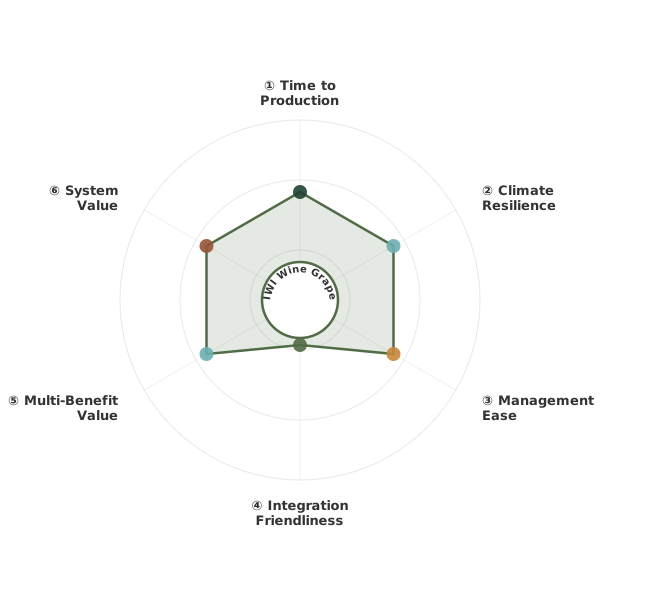
Maintenance: High maintenance - Due to inherent disease resistance, PIWI Wine Grapes require less intensive pruning and spraying, lowering overall maintenance needs and aligning with regenerative practices.

Time to Production: Moderate (2-5 years) - With a moderate establishment period, significant harvest typically begins in 3-5 years, reflecting its perennial nature and gradual production ramp-up within a regenerative system.

Value Streams

  • Fruit/nut harvest
  • Pollinator habitat and support

Know the Debate

  • Disease resistance vs. wine quality a key debate
  • Reduced chemical inputs are a regenerative benefit
  • Flavor complexity and aging potential are key concerns
  • Market appeal varies by region and consumer preference
1

Climate Suitability Assessment

Will this plant thrive in your climate?

IDEALLY SUITED

Köppen Zone: Cfa (Humid Subtropical), Csa (Hot-Summer Mediterranean), Csb (Warm-Summer Mediterranean), Dfa (Hot-Summer Continental), Dfb (Warm-Summer Continental)
USDA Zone: 5b, 6a, 7a, 8a
Australian Zone: temperate
EU Climate Region: atlantic

These regions, encompassing Köppen Cfb, Csb, and USDA zones 7a-8b, Australian temperate, and EU Atlantic climates, provide optimal conditions for PIWI wine grapes. They offer a long growing season with moderate temperatures (ideally 60-75°F during ripening) and sufficient, well-distributed rainfall (25-40 inches annually) that minimizes drought stress while keeping disease pressure manageable. The absence of extreme temperature fluctuations, particularly severe frosts or excessive summer heat (above 90°F), allows for consistent and even ripening of a wide range of grape varieties, including many Vitis vinifera cultivars. This leads to high yields of quality grapes with excellent sugar development and balanced acidity, minimizing the need for intensive irrigation or disease control measures. Establishment success is very high, and multi-year productivity is reliable, making these zones the most economically viable and least management-intensive for PIWI wine grapes.

ADEQUATE

Köppen Zone: BSh (Hot Semi-Arid (Steppe)), BSk (Cold Semi-Arid (Steppe)), BWk (Cold Desert), Cfb (Oceanic (Maritime Temperate)), Cwa (Monsoon-Influenced Humid Subtropical), Cwb (Subtropical Highland)
USDA Zone: 5a, 9a, 10a
Australian Zone: subtropical
EU Climate Region: continental

Regions classified as adequate, including Köppen Cfa, Csa, Dfa, Dfb, Dwa, USDA zones 5b-6b, 9a-9b, Australian subtropical, and EU continental climates, present conditions where PIWI wine grapes can be grown successfully but require careful management. These zones often feature longer growing seasons but may have challenges such as higher humidity (increasing disease risk), periods of drought requiring irrigation (20-30 inches annually), or temperature extremes (hot summers or cold winters) that necessitate specific variety selection for cold hardiness or heat tolerance. For instance, Mediterranean climates (Csa) need irrigation during dry summers, while continental climates (Dfa, Dfb) require attention to frost risk and winter survival. Subtropical zones (Australian) face significant disease pressure from heat and humidity. While yields and quality may be slightly lower or more variable than in 'ideally suited' zones, economic viability is achievable with appropriate cultivar choices, vineyard site selection, and diligent vineyard management practices, including disease and water management.

NOT RECOMMENDED

Köppen Zone: Af (Tropical Rainforest), Am (Tropical Monsoon), Aw (Tropical Savanna), ET (Tundra), BWh (Hot Desert), Dfc (Subarctic), Dwa (Monsoon-Influenced Hot-Summer Continental)
USDA Zone: 2a, 3a, 3b, 4a, 11a, 12a

These zones, including Köppen Dwb, USDA 3a-5a, 10a-10b, and Australian subtropical (in parts), are deemed not recommended for PIWI wine grapes due to significant climatic limitations that make reliable and economically viable cultivation exceptionally challenging. In extremely cold regions (Köppen Dwb, USDA 3a-5a), the primary issues are the very short growing seasons and severe winter temperatures (below -15°F), leading to high risk of winter kill and insufficient time for grape ripening, even for the hardiest hybrids. Conversely, in very hot and humid regions (USDA 10a-10b, parts of Australian subtropical), extreme summer heat (consistently above 90°F) and high humidity promote rampant disease and hinder proper ripening, leading to uneven fruit development and poor wine quality. While technically possible to grow some varieties with extensive protective measures (greenhouses, heavy irrigation, specialized varieties), the high input costs, low yields, and unreliable productivity render these zones economically unfeasible for PIWI wine grape production, necessitating the consideration of alternative, better-suited crops like hardy berries or tropical fruits.

Note: Zones listed above represent climates where this plant can produce reliably with reasonable management. Climate zones not mentioned would require intensive climate modification (greenhouses, extensive infrastructure) and are not economically viable for regenerative agriculture purposes.

2

Soil Suitability Assessment

Which soil types work best for this plant?

IDEALLY SUITED

Loam Soil

This plant thrives in these soil types without requiring amendments or remediation. Natural soil conditions support optimal growth and productivity.

ADEQUATE

Acidic Soil, Alkaline Soil, Clay Soil, Desert Soil, Rich Soil, Rocky Soil, Sandy Soil

This plant performs acceptably in these soil types with moderate, manageable remediation such as pH adjustment, compost addition, or drainage improvement. The required amendments are practical and cost-effective for regenerative agriculture.

NOT RECOMMENDED

Saline Soil, Wet Soil

Growing this plant in these soil types would require impractical remediation such as complete soil replacement, extensive amendments, or cost-prohibitive infrastructure. These conditions are not economically viable for regenerative agriculture.

Note: Soil suitability assessments focus on remediation requirements. "Ideally Suited" means the plant generally thrives without the need for substantial amendments, "Adequate" means manageable remediation (lime, compost, mulch), and "Not Recommended" means impractical soil changes would be required. Climate factors like rainfall and temperature also influence success.

3

Seasonal Considerations

Planting timing, growth duration, and harvest windows

Establishing your grapevines is a multi-year commitment, so timing is crucial. For best results with bare-root plants, aim for planting during the dormant season, typically in early spring, as soon as the soil can be worked and after the last expected frost. Container-grown vines offer more flexibility and can be planted throughout the active growing season, though early spring is still ideal to allow for thorough establishment.

Expect your vines to take a few years to truly establish. You might see a small harvest in the third or fourth year, with full production typically achieved by year five. With proper care, your vineyard can remain highly productive for several decades.

Throughout the year, manage your vines proactively. The most critical management task, pruning, is best done during the dormant season, after the harshest winter cold has passed but before bud break. Summer is a period of active growth, requiring attention to canopy management. Harvest will occur in late summer or early fall, depending on your specific climate and grape variety. As temperatures cool in late fall, your vines will naturally enter winter dormancy, preparing them for the cycle to begin anew.

4

System Role & Multi-Benefit Value

Functional roles, integration strategies, and stacked benefits

Functional Role

Integration Characteristics

Multi-Benefit Value: Adequate - The primary value is its significant food product (grapes), with secondary contributions to ground cover and potential for supporting beneficial insects through diverse plantings and floral resources. Its ecological breadth can be enhanced through polyculture integration.

Integration Friendliness: Not Recommended - While primarily a food crop, its integration potential is enhanced by companion planting, strategic placement within diverse agroforestry systems, and practices that build soil health, allowing it to coexist beneficially with animals and other crops.

5

Economics & Value Streams

Direct harvest, system benefits, ecosystem services, and risk diversification

Comprehensive economic analysis including direct harvest value, system enhancement contributions, ecosystem services, value timeline, and risk diversification strategies.

Per-Tree Production Economics

Metric Value
Establishment Cost $10-20
Years to First Harvest 3-4 years
Annual Maintenance $5-10
Yield 15-30 lbs/year 6-13 kg/year
Market Price $0-1/lb $1-3/kg
Productive Lifespan 20-30 years
Net Annual Return* $-11 to $24/year

Values shown per mature tree, not per acre. In regenerative systems, trees are integrated at low densities across diverse landscapes. Establishment costs spread over the lifespan of the tree. Early years have costs but no revenue.

* Net Annual Return = (Yield × Market Price) − (Amortized Establishment Cost + Annual Maintenance). This return is realized only at/after first harvest; early years have costs but no revenue. Range shows worst case to best case scenarios.

System Enhancement Value

Beyond harvest: ecosystem services from regenerative cash crop practices

Ecological Service Contributions

Grapevines, particularly disease-resistant varieties as highlighted in and, contribute significantly to integrated farm systems by enhancing biological resilience and reducing reliance on external inputs. The development of disease-resistant hybrids, for instance, directly supports reduced pesticide use, aligning with regenerative principles. Furthermore, vineyards can integrate cover crop systems, as mentioned in the plant's secondary functions, which improve soil health, water retention, and nutrient cycling. These cover crops, often chosen for their beneficial properties, can also provide habitat and forage for beneficial insects and pollinators, directly supporting the 'Pollinator Support' secondary function. The research in on rhizosphere metabolite dynamics in continuous cropping of *Vitis vinifera* indicates the complex microbial communities associated with grapevines, suggesting their role in nutrient cycling and soil health maintenance. By optimizing these microbial interactions through careful management, vineyards can enhance soil fertility and reduce the need for synthetic fertilizers. The emphasis on soil biology as the 'ceiling of terroir' in underscores the potential for grapevines to be part of a system that actively builds soil organic matter and improves soil structure over time. The integration of native plants within or around vineyards, as suggested in, can further bolster biodiversity and ecosystem services.

Ecosystem Service Contributions

Environmental contributions: carbon, pollinators, wildlife, and water

  • Carbon Sequestration: Grapevines, as perennial woody plants, have the potential for moderate carbon sequestration in their biomass (trunk, canes, roots) and in the soil through improved soil organic matter from cover cropping and root exudates. The rate is variable depending on age, density, and management practices.
  • Pollinator Support: High. Grapevines themselves are not primary pollinator attractors, but their integration into systems with cover crops and surrounding native habitats, as suggested in, provides crucial forage and nesting sites for a diverse range of pollinators. This aligns with the plant's 'Pollinator Support' secondary function.
  • Wildlife Habitat: Moderate. Mature vineyards can offer some habitat, particularly with the inclusion of cover crops and surrounding native vegetation. The dense canopy can provide nesting sites for some birds, and fallen fruit or leaves offer food sources for small mammals and insects. The emphasis on restoring native habitat around vineyards significantly enhances this value.
  • Water Quality: Not applicable

Value Timeline: Production & Services

When you'll see results: varies by crop (annual harvest vs. perennial establishment)

Years 1-2

Establishment of root systems and initial soil health improvements from accompanying cover crops. Early stages of supporting beneficial insect populations and a foundation for future resilience. Reduced erosion potential if cover crops are established.

Years 3-5

First significant yields from the cash crop. Established cover crop systems contributing more substantially to soil organic matter and nutrient cycling. Increased pollinator support from a more mature vineyard ecosystem and surrounding habitats. Potential for early stages of mechanical pruning adaptation.

Years 10-20

Full production of the cash crop. Disease-resistant varieties are demonstrating their value in reducing input needs. Established soil biology supporting consistent yields and fruit quality. Significant contributions to pollinator populations and broader farm biodiversity. Potential for cost savings through mechanical pruning.

20+ Years

Mature, resilient vineyard system. Long-term benefits of soil health improvements and carbon sequestration. Continued provision of ecosystem services like pollinator support and biodiversity enhancement. Potential for adaptation to changing climate conditions due to breeding efforts.

Farm Risk Reduction

How this reduces farm risk: backup income, weather protection, market hedges

  • Multiple Revenue Streams: Direct cash crop revenue (wine grapes), potential for secondary products (e.g., grape juice, raisins if applicable), enhanced farm resilience through improved soil health and reduced pest/disease pressure, and increased biodiversity value.
  • Temporal Income Spread: Value is spread across the annual harvest of the cash crop, ongoing ecosystem services (pollinator support, soil health), and long-term resilience building. The perennial nature of grapevines ensures continuous ecosystem benefits beyond the annual harvest cycle.
  • Market Risk Hedge: Diversification through disease-resistant varieties and hybrid cultivation reduces reliance on specific chemical inputs and mitigates risks associated with pest outbreaks and climate change. The integration with cover crops and native habitats builds farm resilience against extreme weather events and market volatility by fostering a more robust and self-sustaining agroecosystem. Adaptability to mechanical pruning addresses labor shortages and cost fluctuations.
6

Regenerative Suitability Details

Comprehensive trait ratings for system integration assessment

Comparative ratings for this plant across key regenerative agriculture traits.

Trait Suitability Explanation
Drought Tolerance Adequate European Grapevine exhibits moderate drought tolerance, benefiting from soil moisture retention strategies like mulching and cover cropping to support optimal yields and fruit quality. Extended dry periods can still impact fruit development and quantity, necessitating mindful water management.
Establishment Ease Adequate Establishes well from cuttings in healthy, biologically active soils with good moisture retention. While sensitive to extreme soil conditions, regenerative practices promoting soil health ensure reliable establishment and robust early plant vigor.
Time To Production Adequate With a moderate establishment period, significant harvest typically begins in 3-5 years, reflecting its perennial nature and gradual production ramp-up within a regenerative system.
Multi Benefit Value Adequate The primary value is its significant food product (grapes), with secondary contributions to ground cover and potential for supporting beneficial insects through diverse plantings and floral resources. Its ecological breadth can be enhanced through polyculture integration.
Climate Adaptability Adequate Thrives globally in zones 7-10 with adequate warmth and consistent soil moisture, but benefits from careful cultivar selection and site preparation to mitigate frost damage and disease susceptibility, aligning with regional ecological strengths.
Hardiness Zone Range Adequate Widely cultivated in zones 7-10, it requires thoughtful cultivar selection and soil health management to perform optimally in cooler regions, protecting against severe winter cold through mulching and resilient soil structures.
Maintenance Intensity Not Recommended Due to inherent disease resistance, PIWI Wine Grapes require less intensive pruning and spraying, lowering overall maintenance needs and aligning with regenerative practices.
Pest Disease Pressure Not Recommended PIWI Wine Grapes are specifically bred for enhanced disease resistance, significantly reducing the need for pest and disease management inputs compared to traditional Vitis vinifera.
Integration Friendliness Not Recommended While primarily a food crop, its integration potential is enhanced by companion planting, strategic placement within diverse agroforestry systems, and practices that build soil health, allowing it to coexist beneficially with animals and other crops.

Comparative System: Ratings compare plants within their economic category (e.g., cover crop nitrogen fixation compared to other cover crops, not to all plants). Individual farm conditions and management practices significantly influence actual performance.

7

Know the Debate

PIWI grapes offer compelling advantages in regenerative farming: their inherent disease resistance drastically cuts chemical spray needs and suppor...

PIWI grapes offer compelling advantages in regenerative farming: their inherent disease resistance drastically cuts chemical spray needs and supports a more balanced farm ecosystem. However, integrating these varieties into wine production raises questions about their impact on wine quality and market viability. The effectiveness of PIWI grapes hinges on balancing ecological benefits with the pursuit of nuanced flavors and aging potential, leading to varied outcomes based on regional climate, specific varietal characteristics, and the winemaker's expertise.

Do PIWI grapes offer superior disease resistance without sacrificing wine quality?

High disease resistance, lower input needs

PIWI grape varieties are bred for robust resistance to common fungal diseases, significantly reducing or eliminating the need for chemical sprays. This aligns with regenerative principles, protecting soil biology and farm worker health while lowering input costs.

Compromised complexity and aging potential

While disease resistance is high, many PIWI wines are perceived to lack the depth, aromatic complexity, and long-term aging potential of traditional Vitis vinifera varieties, potentially limiting market appeal in premium wine segments.

Making Sense of the Differences

The debate over PIWI grapes highlights a classic regenerative trade-off: ecological resilience versus sensory profiles. In regions with high disease pressure and where input reduction is critical, PIWI varieties offer a clear advantage, enabling sustainable viticulture. However, for wineries targeting consumers who prioritize nuanced flavors and aging characteristics, careful varietal selection and winemaking techniques are crucial to mitigate perceived quality differences. Market success often depends on educating consumers about the unique attributes and benefits of PIWI wines.

8

Learn More

Why farmers use this plant and additional resources

Why Regenerative Farmers Use This Plant

As a perennial tree species, this plant offers significant long-term regenerative value and economic potential, contributing to ecosystem resilience and farm profitability over decades. At maturity, it is estimated to sequester 2-5 tons of CO2e per acre per year, actively drawing down atmospheric carbon and building soil organic matter. Its robust root system, extending 6-15+ feet (1.8-4.5+ m) deep, enhances soil structure, improves water infiltration, and scavenges nutrients from deeper soil profiles, reducing reliance on external inputs. Over a lifespan of 50-100+ years, this tree represents a valuable, accumulating asset for the farm, providing consistent ecological services and economic returns that compound annually.

Integrating this tree into farming systems unlocks a cascade of synergistic benefits. Its canopy provides valuable ecosystem services, including shade regulation for understory crops or livestock, creating cooler microclimates beneficial during hot periods. It acts as an effective windbreak, protecting fields and structures from strong winds, reducing soil erosion, and protecting adjacent fields. This microclimate modification can extend growing seasons for sensitive crops and reduce water evaporation. The mature canopy also creates a more stable microclimate that can buffer against extreme weather events.

Furthermore, the presence of these trees supports a more complex and resilient agroecosystem by providing habitat and food sources for beneficial insects and pollinators, contributing to natural pest control and pollination services across the farm. Studies indicate that mature trees can support thousands of beneficial insect visits per acre annually. These trees also unlock a cascade of benefits, fostering biodiversity and enhancing overall farm productivity.

The quantitative ecosystem benefits extend beyond carbon sequestration and are substantial, accruing over time. Its extensive root network dramatically improves soil organic matter content, with measurable soil carbon increases typically observed by year 5-7 of establishment as the root system develops and organic matter accumulates. This enhanced soil structure leads to significantly better water infiltration and retention, with studies indicating well-established trees can improve water infiltration rates by 2-5 times higher than bare soil, leading to water infiltration rates that can be up to 30% higher, significantly reducing runoff and erosion, especially during heavy rainfall events. Over time, the decomposition of leaf litter and woody debris contributes 0.5-1.5 tons of organic matter per acre per year, steadily increasing soil health and fertility. This biological fertility build-up reduces the need for synthetic fertilizers, with regenerative practices often reducing synthetic NPK applications by 40-60% within 5-10 years of establishment. The physical presence of the tree also creates habitat for a variety of wildlife and beneficial organisms, supporting a more balanced and self-regulating farm ecosystem. These cumulative ecological improvements contribute to a more robust and resilient agricultural system that requires fewer external interventions.

Regional success stories highlight the adaptability and value of this perennial tree across diverse farming systems.

  • In the temperate regions of the United States, it is successfully incorporated into apple orchards and mixed hardwood forests for timber and nut production, and in the corn-soy belt, it can be integrated into alley cropping systems with annual crops planted in 30-40 ft (9-12 m) alleys between rows of trees.
  • Brazilian coffee plantations utilize similar species as shade trees, improving coffee quality and providing habitat for biodiversity, often integrated into agroforestry systems.
  • In European agroforestry systems, particularly in France and Germany, these trees are integrated into silvopasture and alley cropping designs for fruit, timber, and ecological benefits. Within European viticulture, particularly in France, similar resilient species are being embraced for their disease resistance and contribution to AOC wines. In the United Kingdom's temperate climate, they can be incorporated into silvopasture designs, providing shade and shelter for livestock while enhancing landscape biodiversity.
  • Australian farmers are increasingly exploring their use in windbreaks and for soil improvement in dryland farming systems. In drier regions, they might be utilized as windbreaks and for soil stabilization, planting them on contour lines and allowing natural rainfall to support their establishment, supplementing with irrigation only in critical dry spells. In cooler, wetter regions, they are adopted in mixed farming systems to provide shelterbelts and improve farm biodiversity.
  • In North American orchards and hedgerows, these trees contribute to biodiversity corridors and provide valuable timber or fruit products, showcasing their versatility in mixed farming operations.
  • In South Africa's Western Cape, it can be a valuable addition to fruit-growing regions, contributing to biodiversity and soil improvement.
  • In the Mediterranean climate of Southern Europe, it can be incorporated into olive groves or vineyards, providing shade and contributing to soil health in drier conditions.
  • In the Pacific Northwest of the United States, it can be integrated into Douglas fir or cedar forestry systems, benefiting from the region's ample rainfall and temperate climate.
9

How to Integrate This Plant

Practical guidance for regenerative systems

Establishment of this perennial tree typically involves planting saplings, grafted trees, or containerized seedlings, rather than direct seeding, to ensure genetic quality and faster initial growth. For direct seeding, rates typically range from 50-100 lbs/acre (56-112 kg/ha), planted at a depth of 0.5-1 inch (1.3-2.5 cm), depending on soil type and moisture. Saplings are usually planted at a depth that matches their nursery container or root ball, ensuring the root flare is at or slightly above soil level. For bare-root saplings, the root collar should be at or slightly above soil level.

Spacing is critical for long-term system design. For alley cropping or silvopasture, rows are commonly spaced 30-40 ft (9-12 m) apart to allow for equipment access and light penetration to the understory. For denser plantings, such as in a hedgerow or windbreak, spacing can be reduced to 15-20 ft (4.5-6 m) between trees within the row.

The optimal planting window is typically early spring (March-April in the Northern Hemisphere, September-October in the Southern Hemisphere), coinciding with the onset of favorable growing conditions and ample moisture for root establishment, before extreme weather conditions.

Management practices during the establishment phase focus on ensuring tree survival and vigorous growth. Adequate moisture is crucial, with 1-2 inches (2.5-5 cm) of water per week recommended during the first 1-3 years, especially during dry periods. Fertility should prioritize biological approaches; incorporating compost, mulching with organic matter, and utilizing nitrogen-fixing companion plants like clover or vetch in the understory during year 2-3 are excellent strategies. While synthetic fertilizers can be used as a transitional input to kick-start growth, the goal is to foster a self-sustaining system. Supplemental organic fertilizers can be used transitionally to accelerate growth.

Pest and disease management should focus on cultural practices and biological controls, such as maintaining healthy soil, promoting biodiversity, and selecting resistant varieties. Maintaining plant health through proper nutrition and watering, and encouraging beneficial insect populations are key. Chemical interventions should be considered only as a last resort during transitional phases.

For perennial trees and agroforestry species, establishment and system design are paramount. Trees typically require 1-3 years to establish a strong root system and canopy before significant above-ground growth occurs, with full production potential reached between 3-15 years, depending on the specific cultivar, rootstock (if applicable), and management. Rootstock considerations are vital if grafting is involved, influencing disease resistance, vigor, and ultimate size.

Canopy management through annual pruning is essential to maintain light penetration for interplanted crops or understory vegetation, aiming for 50-60% light transmission to the ground. Pruning often involves a central leader system for fruit or timber production.

Measurable soil carbon increases can often be observed by year 5-7 as the root system develops and organic matter accumulates. Long-term infrastructure considerations include initial irrigation systems for establishment, robust deer and browse protection (fencing or guards), and potential support structures for young trees, especially if the species is grown for fruit or timber production.