
American Plum
Prunus Americana, or American plum, has moderate context within our regenerative agriculture knowledge base. While specific primary uses like cover cropping or nitrogen fixation are not detailed, its role in supporting broader ecological functions is implied. The knowledge base highlights the importance of managing insect pests in fruit orchards, suggesting that native fruit-bearing trees like Prunus Americana can be part of integrated pest management (IPM) strategies. By providing habitat and food sources, they can support beneficial insects and contribute to pollinator support, a key regenerative benefit. Although not explicitly mentioned in conjunction with practices like rotational grazing or no-till, its inclusion in an orchard setting aligns with agroforestry principles, where diverse plantings create resilient ecosystems. Farmer experiences from the provided excerpts focus on pest management, particularly concerning invasive species like the spotted lanternfly and Callery pear, rather than direct cultivation of Prunus Americana itself. This suggests that its regenerative value may lie more in its contribution to a biodiverse orchard system that naturally deters pests, rather than as a standalone regenerative component.
For a full botanical description see: Wikipedia(opens in new window) (external link)
Regenerative Quick Profile
All recommendations assume integrated, regenerative practices—not conventional inputs.
Climate & Soil Fit
Climate: Tropical Rainforest, Tropical Monsoon, Tropical Savanna, Hot Semi-Arid (Steppe), Cold Semi-Arid (Steppe), Hot Desert, Cold Desert, Humid Subtropical, Oceanic (Maritime Temperate), Hot-Summer Mediterranean, Warm-Summer Mediterranean, Monsoon-Influenced Humid Subtropical, Subtropical Highland, Hot-Summer Continental, Warm-Summer Continental, Subarctic, Monsoon-Influenced Hot-Summer Continental, Tundra
Zones: USDA 4-8, Australian Zones 3-5
Optimal Soil: Loam Soil
System Role & Functions
Primary: Food Forest
Secondary: Pollinator Support, Specialty
Key Benefits: Drought tolerant, Integration-friendly, Wide zone range
Management Level
Experience: Beginner-Friendly
Maintenance: Very low maintenance - This native plum thrives with minimal intervention, self-seeds, and benefits from ecosystem integration, requiring infrequent attention once established.
Time to Production: Moderate (2-5 years) - American plum offers moderate yields within 3-5 years, reliably contributing to food forests and agroforestry systems as it establishes a healthy soil microbiome.
Value Streams
- Fruit/nut harvest
- Pollinator habitat and support
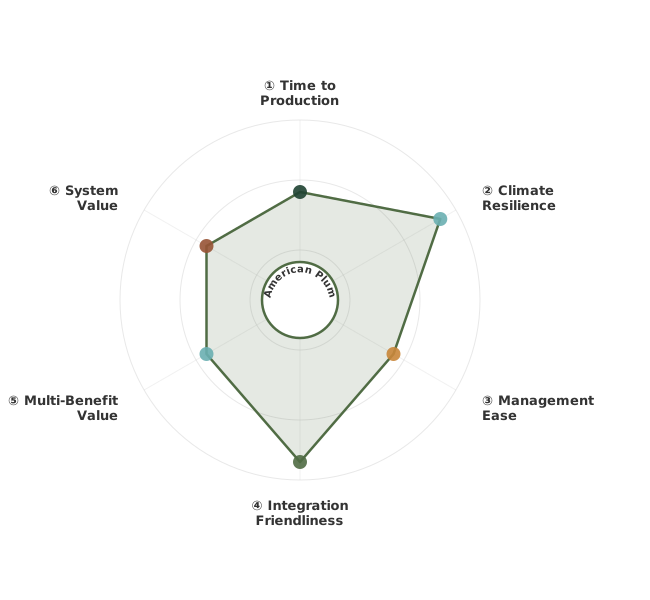
How These Traits Are Calculated
Trait dimensions are ordered clockwise starting from the top of the chart (12 o'clock position):
1. Time to Production
Years from planting to first harvestable yields
WHAT: Measures the waiting period from tree establishment to first meaningful production. Fast-producing trees yield within 2-5 years; slow producers require 8-15+ years before significant harvests.
WHY: Time to production determines cash flow timing and financial feasibility for farm businesses. Long wait times create significant opportunity costs—land and labor tied up for years without income. Fast producers allow quicker experimentation and cash flow recovery, reducing risk for new tree crop farmers.
HOW: Ratings based on years to first harvest documented in economics data. Exceptional (3.0): Production within 2-4 years (elderberry, mulberry, some nut bushes). Typical (2.0): 5-8 years (many fruit trees). Limited (1.0): 10-15+ years (hardwood timber, some nut trees like pecan, walnut).
2. Climate Resilience
Weighted: hardiness zones (50%) + drought tolerance (30%) + adaptability (20%)
WHAT: Combines temperature tolerance (hardiness zone range), water stress resilience (drought tolerance), and overall climate flexibility. Multi-decade tree investments require reliable climate matching to prevent total loss.
WHY: Wrong climate choices mean complete failure for permanent plantings. A tree that dies in year 5 from unexpected cold or prolonged drought represents catastrophic loss of 5 years' investment. Climate resilience determines geographic range and weather variability tolerance—critical as climate patterns become less predictable.
HOW: Weighted formula prioritizes hardiness zone range (50% weight) for core temperature tolerance, drought tolerance (30% weight) for water stress, and overall adaptability (20% weight) for general climate flexibility. Exceptional (3.0): Wide hardiness range (8+ zones) with strong drought tolerance. Typical (2.0): Moderate range and tolerance. Limited (1.0): Narrow climate requirements.
3. Management Ease
Weighted: establishment (40%) + low maintenance (30%) + pest resistance (30%)
WHAT: Combines establishment difficulty, ongoing maintenance requirements, and disease/pest pressure into overall management workload. Low-maintenance trees fit easily into busy farm operations without specialized expertise or intensive inputs.
WHY: Labor is the limiting factor for most diversified farms. High-maintenance trees requiring pruning expertise, disease management, and intensive pest control compete for limited time with other farm enterprises. Easy-care trees deliver production with minimal intervention, making them viable for time-constrained farmers.
HOW: Weighted formula balances establishment ease (40% weight) for startup success, inverted maintenance intensity (30% weight) for ongoing care, and inverted pest/disease pressure (30% weight) for health management. Exceptional (3.0): Easy to establish, self-sufficient growth, naturally pest-resistant. Typical (2.0): Moderate care needs. Limited (1.0): Difficult establishment, intensive maintenance, or heavy pest pressure.
4. Integration Friendliness
Compatibility with silvopasture, alley cropping, and multi-species systems
WHAT: Measures how well the tree integrates with other farm enterprises—grazing livestock, annual crops, or other perennials. Integration-friendly trees tolerate livestock browsing, don't heavily shade out crops, and coexist with diverse plantings.
WHY: Integrated tree systems (silvopasture, alley cropping, food forests) provide higher total returns per acre than monoculture plantings. Trees that work well with livestock provide shade + forage + production simultaneously. Integration flexibility allows farmers to stack enterprises and adapt to market opportunities.
HOW: Ratings based on the integration_friendliness trait documenting compatibility with grazing, cropping, and multi-species systems. Exceptional (3.0): Tolerates livestock browsing, provides livestock benefits (shade, browse), compatible with understory crops. Typical (2.0): Some integration possible with management. Limited (1.0): Requires isolation, incompatible with livestock or cropping.
5. Multi-Benefit Value
Stacked benefits beyond primary product—shade, wildlife, nitrogen, erosion control
WHAT: Measures the diversity of ecosystem services provided beyond the main harvest product. Multi-benefit trees deliver shade, windbreak, wildlife habitat, nitrogen fixation, erosion control, pollinator support, and aesthetic value simultaneously.
WHY: Single-purpose trees are economically fragile—market price swings or production failures eliminate all value. Multi-benefit trees provide resilience through diverse value streams. A nitrogen-fixing tree that produces nuts, provides shade for livestock, supports wildlife, and controls erosion delivers 4-5x the system value of a production-only tree.
HOW: Ratings based on the multi_benefit_value trait documenting service diversity. Exceptional (3.0): 4+ significant services stacked (nitrogen-fixing legume trees providing nuts + shade + wildlife + windbreak). Typical (2.0): 2-3 moderate services. Limited (1.0): Single-purpose production trees with minimal additional benefits.
6. System Value
Total ecosystem and economic value across short, medium, and long timeframes
WHAT: Synthesizes the total regenerative value delivered across multiple decades, including immediate ecosystem services (years 1-5), medium-term production value (years 5-15), and long-term system transformation (years 15-50). Captures the compounding benefits of permanent plantings.
WHY: Trees are multi-decade investments requiring patient capital. System value measures whether the total package—early ecosystem services, eventual production, and long-term legacy benefits—justifies the wait time and land commitment. High system value trees pay back investment through diverse, stacking, compounding benefits.
HOW: Scored via LLM synthesis of economics timelines, ecosystem service diversity, and long-term soil/water/carbon impacts. Exceptional (3.0): Strong early services + valuable production + transformative long-term impacts. Typical (2.0): Moderate benefits across timeframes. Limited (1.0): Long wait with limited service stacking or weak economic returns.
Ratings are based on documented performance in regenerative systems, not conventional high-input scenarios. All traits assume integrated management practices focused on soil health and ecosystem services.
6
Economics & Value Streams
Direct harvest, system benefits, ecosystem services, and risk diversification
Economics & Value Streams
Direct harvest, system benefits, ecosystem services, and risk diversification
Comprehensive economic analysis including direct harvest value, system enhancement contributions, ecosystem services, value timeline, and risk diversification strategies.
Per-Tree Production Economics
| Metric | Value |
|---|---|
| Establishment Cost | $10-20 |
| Years to First Harvest | 3-4 years |
| Annual Maintenance | $4-8 |
| Yield | 30-60 lbs/year 13-27 kg/year |
| Market Price | $1-2/lb $2-4/kg |
| Productive Lifespan | 15-25 years |
| Net Annual Return* | $20-$115/year |
Values shown per mature tree, not per acre. In regenerative systems, trees are integrated at low densities across diverse landscapes. Establishment costs spread over the lifespan of the tree. Early years have costs but no revenue.
* Net Annual Return = (Yield × Market Price) − (Amortized Establishment Cost + Annual Maintenance). This return is realized only at/after first harvest; early years have costs but no revenue. Range shows worst case to best case scenarios.
System Enhancement Value
Beyond harvest: how understory complements overstory in polyculture
Food Forest System Contributions
American plum significantly contributes to pollinator support and wildlife habitat. The flowers provide an early nectar and pollen source, crucial for supporting diverse insect populations, especially bees, as highlighted by its inclusion in 'food forest' systems designed for biodiversity. Its dense growth habit and fruit production offer valuable resources for various wildlife. Excerpt mentions seed dispersal by animals like deer, bears, birds, and squirrels, indicating its role as a food source. The ability to propagate easily from runners or suckers allows for rapid establishment of these beneficial habitats. Furthermore, its use as rootstock for other plum varieties signifies its foundational role in diversifying fruit production and potentially enhancing disease resistance in cultivated plum systems. This dual function as a wild species and a grafting base underscores its multifaceted contribution to farm ecosystem health.
Groundcover & Erosion Control
Variable, dependent on planting density and configuration.
While not explicitly detailed as a windbreak in the provided excerpts, American plum (Prunus americana) is noted for its hardiness and ability to thrive in diverse conditions, including poor soil and with minimal water, suggesting resilience that could contribute to soil stabilization. Its growth habit, often forming dense bushes from runners, can create localized barriers. In integrated systems, these dense thickets could offer protection against wind erosion, particularly when planted in hedgerows as suggested in excerpt. The root system, stimulated by natural dispersal and propagation methods, can help bind soil. The overall hardiness implies a robust plant capable of withstanding environmental stresses, which is a foundational element for effective erosion control and soil health maintenance within a farm landscape. This makes it a candidate for agroforestry designs aiming to reduce soil loss and improve microclimates.
Ecosystem Service Contributions
Environmental contributions: carbon, pollinators, wildlife, and water
- Carbon Sequestration: Moderate carbon sequestration potential due to its woody perennial nature and potential for dense growth. As a fruit tree, it contributes to biomass accumulation in both above and below-ground structures.
- Pollinator Support: High. American plum flowers are a valuable early-season nectar and pollen source for a wide range of pollinators. Its inclusion in food forests directly supports these ecological functions.
- Wildlife Habitat: High. Provides food (fruit) and habitat (dense thickets) for birds, small mammals, and potentially larger wildlife, as evidenced by animal seed dispersal. Its role in food forests enhances overall biodiversity.
- Water Quality: Not applicable
Value Timeline: Understory Development
When you'll see results: groundcover/herbs year 1, shrubs 2-3, full layer integration 5-10
Years 1-2
Establishment of root systems from suckers/runners, potential for initial erosion control, and early pollinator support from flowering.
Years 3-5
Increased density of growth, more substantial pollinator support, establishment of wildlife habitat, and potential for first fruit production (as noted for trees propagated from suckers).
Years 10-20
Mature habitat provision, significant contribution to local biodiversity, consistent fruit production for wildlife and potential specialty markets, and robust soil health benefits from established root systems.
20+ Years
Long-term ecosystem services including sustained wildlife support, continued soil health benefits, and potential for use as durable rootstock for successive generations of cultivated plums.
Farm Risk Reduction
How multi-layer systems diversify production and income
- Multiple Revenue Streams: Specialty fruit sales, value-added products (jams, jellies), rootstock provision for other fruit growers, enhanced ecosystem services (pollinator support, wildlife habitat) contributing to farm resilience and potential ecotourism benefits.
- Temporal Income Spread: Ongoing ecosystem services (pollinator support, habitat) throughout the year, with seasonal fruit harvest. Value as rootstock is realized over time with successful grafting. Its hardiness and drought tolerance also provide a buffer against climate-related production risks.
- Market Risk Hedge: Reduces reliance on single high-value crops by offering a diverse product stream (specialty fruit) and by bolstering the success of other cultivated fruit crops through its role as rootstock. Its inherent hardiness and drought tolerance provide a hedge against environmental variability, ensuring some level of ecological and productive contribution even in challenging conditions.
Sources behind this view
 Community
-
Details the propagation and ecological benefits of wild plums for reforestation, emphasizing their drought tolerance, ease of seed dispersal via animal digestion, and contribution to food forests and
Read more (opens in new window) permies.com -
Plum trees offer consistent fruit production and culinary versatility, acting as natural pest traps. Varieties like Santa Rosa and Damsons are praised for flavor and suitability for jams, pies, and sp
Read more (opens in new window) permies.com