Existing data points to its potential utility within regenerative agriculture systems, particularly in orchard settings. Studies indicate that integrating nature-based solutions in peach cultivation can lead to significant carbon sequestration, with observed increases in soil carbon stock and reductions in greenhouse gas emissions. Practices such as compost application have been shown to enhance soil fertility by increasing total nitrogen, potentially mineralizable nitrogen, and microbial activity over time. Furthermore, experiments with biochar and beneficial microorganisms suggest positive impacts on soil health and nutrient content in peach trees. While not explicitly a nitrogen fixer, the health benefits derived from improved soil microbiology and organic matter through practices like irrigation and compost application are crucial for regenerative soil building. Prunus persica's role in broader regenerative systems like agroforestry or as a polyculture layer is not detailed in these excerpts, but its contribution to soil health and carbon sequestration within orchard management is a promising area for regenerative integration. While coverage in our knowledge base is limited, the above represents documented uses in regenerative systems.

Regenerative Quick Profile

All recommendations assume integrated, regenerative practices—not conventional inputs.

Climate & Soil Fit

Climate: Tropical Rainforest, Tropical Monsoon, Tropical Savanna, Hot Semi-Arid (Steppe), Cold Semi-Arid (Steppe), Hot Desert, Cold Desert, Humid Subtropical, Oceanic (Maritime Temperate), Hot-Summer Mediterranean, Warm-Summer Mediterranean, Monsoon-Influenced Humid Subtropical, Subtropical Highland, Hot-Summer Continental, Warm-Summer Continental, Subarctic, Monsoon-Influenced Hot-Summer Continental, Tundra

Zones: USDA 5-9, Australian Zones 3-11

Optimal Soil: Loam Soil

System Role & Functions

Primary: Food Forest

Secondary: Cash Crop With Services, Specialty

Management Level

Experience: Advanced

Maintenance: High maintenance - Maintaining peach health involves integrating practices like pruning and proactive disease management, focusing on building ecosystem resilience rather than external inputs.

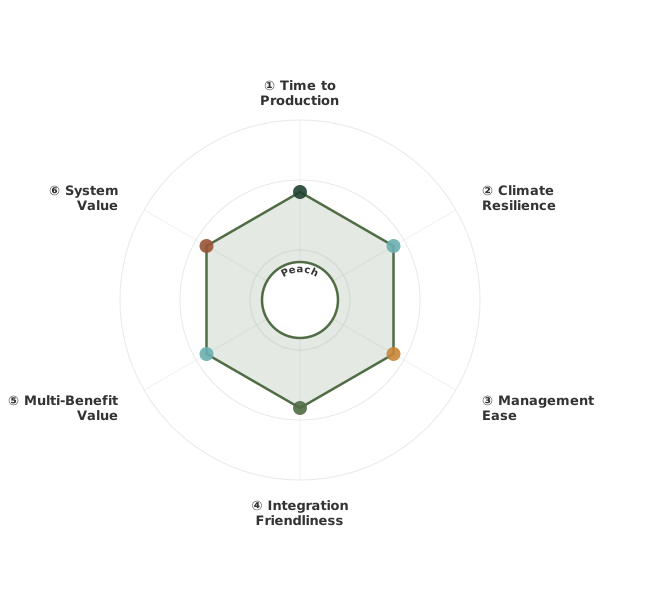
Time to Production: Moderate (2-5 years) - Peaches offer relatively quick fruiting, often within 3-5 years, contributing to the orchard ecosystem's productivity once established.

Value Streams

  • Fruit/nut harvest
  • Diversifies farm income
  • Enhances biodiversity
1

Climate Suitability Assessment

Will this plant thrive in your climate?

IDEALLY SUITED

Köppen Zone: Cfa (Humid Subtropical), Csa (Hot-Summer Mediterranean)
USDA Zone: 6a, 7a, 8a, 9a
Australian Zone: temperate

Peaches perform exceptionally well in climates that provide adequate winter chill hours (typically 600-1000 hours below 45°F/7°C) and hot, dry summers with minimal disease pressure. These conditions are met in Köppen Csa and Csb zones, and regional zones like USDA 7a-8b, Australian temperate, and parts of USDA 8a-8b. The distinct seasons allow for proper dormancy, bud break, and flowering, followed by a long, warm growing period essential for fruit development and sugar accumulation. Low humidity in these zones significantly reduces the risk of fungal diseases such as brown rot and leaf spot, minimizing the need for intensive chemical treatments. Fruit quality, including size, color, and flavor, is maximized under these ideal conditions, leading to high yields and economic viability for food forest and cash crop applications. Minimal supplemental irrigation is usually required, and trees exhibit good longevity and productivity.

ADEQUATE

Köppen Zone: Cfb (Oceanic (Maritime Temperate)), Csb (Warm-Summer Mediterranean), Cwa (Monsoon-Influenced Humid Subtropical), Dfa (Hot-Summer Continental), Dfb (Warm-Summer Continental)
USDA Zone: 5a, 5b, 10a
Australian Zone: subtropical
EU Climate Region: atlantic

Peaches can be grown adequately in climates that offer a balance of sufficient winter chill and a reasonably long growing season, though with some management considerations. This includes Köppen Cfa and Cfb zones, USDA 5b-6b, 9a-9b, Australian subtropical, and EU Atlantic regions. Challenges in these zones often involve insufficient winter chill for some varieties, leading to erratic fruiting, or higher humidity and rainfall that increase disease susceptibility, requiring careful variety selection and diligent pest/disease management. In warmer zones (USDA 9a-9b), low-chill varieties are essential, and supplemental irrigation is often necessary to manage water stress during hot, dry summers. While yields and fruit quality may not reach the peak of 'ideally suited' zones, consistent production is achievable with appropriate horticultural practices, making them viable for food forest and cash crop systems with moderate input levels.

NOT RECOMMENDED

Köppen Zone: Af (Tropical Rainforest), Am (Tropical Monsoon), Aw (Tropical Savanna), ET (Tundra), BSh (Hot Semi-Arid (Steppe)), BSk (Cold Semi-Arid (Steppe)), BWh (Hot Desert), BWk (Cold Desert), Cwb (Subtropical Highland), Dfc (Subarctic), Dwa (Monsoon-Influenced Hot-Summer Continental)
USDA Zone: 2a, 3a, 3b, 4a, 11a, 12a
EU Climate Region: continental

Peaches are not recommended for cultivation in Köppen Dfa and Dfb zones, USDA 3a-5a, Australian cool temperate (if too cold), and EU continental regions due to extreme climatic limitations that make reliable and economically viable production highly improbable. These zones experience winters that are too cold, leading to significant winter kill of trees and buds, and/or growing seasons that are too short for fruit to mature properly. Conversely, in very warm zones like USDA 10a-10b, the lack of sufficient winter chill prevents adequate flowering and fruit set for most varieties. High humidity in some of these zones also exacerbates disease issues. While technically possible with extreme measures like greenhouses or specialized, often less productive, varieties, the high costs associated with protection, irrigation, and intensive management, coupled with low and inconsistent yields, render peaches an impractical choice for regenerative agriculture in these areas. Alternative fruit crops better adapted to the specific climatic challenges of these zones are strongly advised.

Better alternatives for these "not recommended" zones: Plum (European) (more cold-hardy and disease-tolerant than peaches), Cherry (Sour) (highly cold-hardy and tolerates humid summers better), Apple (wide range of cold-hardy varieties and better disease resistance), Citrus (low-chill varieties) (adapted to warmer climates and require less winter chill)

Note: Zones listed above represent climates where this plant can produce reliably with reasonable management. Climate zones not mentioned would require intensive climate modification (greenhouses, extensive infrastructure) and are not economically viable for regenerative agriculture purposes.

2

Soil Suitability Assessment

Which soil types work best for this plant?

IDEALLY SUITED

Loam Soil

This plant thrives in these soil types without requiring amendments or remediation. Natural soil conditions support optimal growth and productivity.

ADEQUATE

Clay Soil, Rich Soil, Rocky Soil, Sandy Soil

This plant performs acceptably in these soil types with moderate, manageable remediation such as pH adjustment, compost addition, or drainage improvement. The required amendments are practical and cost-effective for regenerative agriculture.

NOT RECOMMENDED

Acidic Soil, Alkaline Soil, Desert Soil, Saline Soil, Wet Soil

Growing this plant in these soil types would require impractical remediation such as complete soil replacement, extensive amendments, or cost-prohibitive infrastructure. These conditions are not economically viable for regenerative agriculture.

Note: Soil suitability assessments focus on remediation requirements. "Ideally Suited" means the plant generally thrives without the need for substantial amendments, "Adequate" means manageable remediation (lime, compost, mulch), and "Not Recommended" means impractical soil changes would be required. Climate factors like rainfall and temperature also influence success.

3

Seasonal Considerations

Planting timing, growth duration, and harvest windows

Establishing peach and nectarine trees is a multi-year commitment, beginning with planting nursery stock. For bare-root trees, the ideal time is during late winter or early spring, while the plant is in dormancy and before bud break. Container-grown trees offer more flexibility, allowing planting throughout the growing season, though early spring, after the last expected frost, is generally best to minimize transplant shock.

Years one through three are critical for establishment, focusing on root development and tree structure. You can expect your first small harvest by the third or fourth year, with trees reaching full production around their fifth to seventh year. Well-managed peach and nectarine trees can remain productive for over a decade, sometimes even two.

Seasonal management is key. Pruning is best performed during the dormant season, typically in late winter or early spring, to shape the tree and remove dead or diseased wood. Bloom occurs in early spring, followed by fruit development through summer. Harvest typically happens in mid to late summer, depending on the variety and your climate. As temperatures cool in the fall, trees will prepare for winter dormancy, a crucial period for their rest and the initiation of next year's flower buds.

4

System Role & Multi-Benefit Value

Functional roles, integration strategies, and stacked benefits

Functional Role

Total System Value

The peach tree (Prunus persica) offers significant value in regenerative systems, primarily through its direct fruit harvest. Beyond this, it contributes to the farm ecosystem by providing canopy cover, which can offer shade to understory plants and animals, and create habitat for beneficial insects and wildlife. Studies indicate potential for carbon sequestration and reduced greenhouse gas emissions when Nature-Based Solutions are applied in peach cultivation, highlighting ecosystem service benefits. Furthermore, integrating peaches into a diversified farm plan, such as a food forest, enhances resilience by diversifying income streams and reducing reliance on monoculture systems. The application of practices like compost and biochar in peach orchards can improve soil health and fertility, further stacking benefits within the wider farm system.

Integration Characteristics

Multi-Benefit Value: Adequate - A valuable fruit crop that offers moderate pollinator support; its primary ecosystem service lies in fruit provision, with leaf litter contributing to soil organic matter.

Integration Friendliness: Adequate - While offering excellent fruit, peaches integrate best into diverse perennial systems by focusing on soil health and supporting beneficial interactions, rather than monocultural approaches.

5

Management & Care Requirements

Integration guidance, maintenance needs, and care practices

How to Integrate This Plant

Peaches (Prunus persica) can be integrated into regenerative systems primarily as a component of food forests and potentially as part of agroforestry designs. Their role is mainly focused on direct food production. While not explicitly mentioned for nitrogen fixation or windbreaks, their canopy can offer some shade and habitat. Compatible practices include food forests and potentially alley cropping if managed appropriately. The timeline to significant contribution begins with establishment, with fruit production typically starting around Year 3-5. Beyond direct harvest, peaches contribute to system enhancement by providing shade and habitat, and their cultivation can support ecosystem services like carbon sequestration, as suggested by studies on Nature-Based Solutions. They also contribute to risk diversification by adding another harvestable crop to the farm.

Integration Practices & Management

The provided knowledge base offers limited direct insights into the specific regenerative agriculture practices for establishing and integrating Prunus persica (peach trees). While sources,, and discuss peach orchards in the context of regenerative practices like reduced herbicide use, Nature-Based Solutions (NBSs) for carbon sequestration, and the application of biochar and beneficial microorganisms, they do not detail the establishment methods, integration with grazing, or termination strategies as typically applied in annual cropping systems. Source mentions herbicide weed control in a peach orchard, implying a contrast with full regenerative approaches that aim to minimize or eliminate herbicides. The other sources focus on the outcomes of regenerative inputs (NBSs, biochar) rather than the on-farm integration processes. Therefore, specific details on seeding rates, timing, companion planting, no-till establishment, mob or rotational grazing, rest periods, crimping, mowing, or integration with cash crops for peach trees are not covered. Management considerations such as fertility needs and competition management are implicitly addressed through the discussed inputs, but explicit farmer experiences regarding these aspects are absent from this specific collection of texts.

Management Profile

Maintenance Intensity: Not Recommended - Maintaining peach health involves integrating practices like pruning and proactive disease management, focusing on building ecosystem resilience rather than external inputs.

Pest Disease Pressure: Not Recommended - Peaches are susceptible to various biotic challenges, necessitating a focus on building soil health and beneficial insect populations to support natural pest and disease regulation.

Time To Production: Adequate - Peaches offer relatively quick fruiting, often within 3-5 years, contributing to the orchard ecosystem's productivity once established.

6

Economics & Value Streams

Direct harvest, system benefits, ecosystem services, and risk diversification

Comprehensive economic analysis including direct harvest value, system enhancement contributions, ecosystem services, value timeline, and risk diversification strategies.

Per-Tree Production Economics

Metric Value
Establishment Cost $15-30
Years to First Harvest 3-4 years
Annual Maintenance $5-10
Yield 50-100 lbs/year 22-45 kg/year
Market Price $0-1/lb $1-2/kg
Productive Lifespan 15-25 years
Net Annual Return* $-12 to $94/year

Values shown per mature tree, not per acre. In regenerative systems, trees are integrated at low densities across diverse landscapes. Establishment costs spread over the lifespan of the tree. Early years have costs but no revenue.

* Net Annual Return = (Yield × Market Price) − (Amortized Establishment Cost + Annual Maintenance). This return is realized only at/after first harvest; early years have costs but no revenue. Range shows worst case to best case scenarios.

System Enhancement Value

Beyond harvest: how understory complements overstory in polyculture

Food Forest System Contributions

Peach trees, while not nitrogen fixers, significantly contribute to soil health and microbial activity when integrated with organic matter amendments. Studies highlight that incorporating fresh yardwaste chips into planting holes can enhance soil microbial activity, which in turn can help inhibit soil pathogens like *Armillaria mellea*. This is crucial for long-term tree health and reduced reliance on chemical controls. Furthermore, the use of organic fertilizers and compost, as indicated in research on nectarine orchards (a variety of *Prunus persica*), leads to increased soil organic matter, total nitrogen, and microbial nitrogen. This improved soil fertility can benefit surrounding plants in an integrated system. While not explicitly stated as a primary function in the provided excerpts, the presence of peach trees can also offer habitat and food sources for beneficial insects and potentially pollinators, indirectly supporting other crops within a farm ecosystem. The goal is to foster a robust soil food web that supports the entire system.

Ecosystem Service Contributions

Environmental contributions: carbon, pollinators, wildlife, and water

  • Carbon Sequestration: Peach trees, through their woody biomass and root systems, contribute to carbon sequestration in agricultural landscapes. Studies on Nature-Based Solutions in peach orchards indicate a potential for carbon stock increases, with one assessment showing -179.2 kg CO₂ eq per hectare. Long-term compost application also leads to soil organic carbon buildup.
  • Pollinator Support: Medium. Peach trees produce flowers that attract pollinators, though their primary role in this regard is not as pronounced as some other fruit trees or dedicated pollinator-attracting plants. Their contribution is more significant within a diverse food forest setting where they add to the overall floral resources.
  • Wildlife Habitat: Brief description of wildlife value (mast, nesting, browse, etc.). Peach trees offer some value as wildlife habitat through their fruit, which can attract birds and small mammals. The trees themselves provide nesting sites for some bird species. However, their primary value is not as a significant mast producer or browse for larger wildlife compared to other species.
  • Water Quality: Not applicable

Value Timeline: Understory Development

When you'll see results: groundcover/herbs year 1, shrubs 2-3, full layer integration 5-10

Years 1-2

Initial establishment of the tree, contributing to soil health through organic matter incorporation (if applied) and establishing root systems. Potential for early erosion control around the planting site.

Years 3-5

Beginning of fruit production (cash crop), providing an initial income stream. Established root systems contribute more significantly to soil structure and water infiltration. Increased biomass contributes to ongoing carbon sequestration.

Years 10-20

Full production of fruit, maximizing cash crop revenue. Mature trees offer more substantial contributions to soil organic matter and carbon sequestration. Potential for increased biodiversity support as the food forest ecosystem matures around them.

20+ Years

Continued full production of fruit. Long-term benefits of established soil health and carbon sequestration. Potential for the tree to become a sustained provider of ecosystem services as part of a mature food forest system.

Farm Risk Reduction

How multi-layer systems diversify production and income

  • Multiple Revenue Streams: Direct fruit sales (cash crop), potential for value-added products (jams, preserves), and the ongoing provision of ecosystem services (soil health, carbon sequestration) that reduce the need for costly inputs.
  • Temporal Income Spread: Value is spread across an annual harvest cycle for fruit, with ongoing, cumulative benefits from ecosystem services that accrue over the lifespan of the tree. This provides both short-term income and long-term system resilience.
  • Market Risk Hedge: Diversifies farm revenue beyond a single commodity. The 'Specialty' aspect can target niche markets, offering a degree of insulation from broad market fluctuations. Enhanced soil health through integration reduces reliance on external inputs like fertilizers and pesticides, mitigating input cost volatility and environmental risks.
7

Regenerative Suitability Details

Comprehensive trait ratings for system integration assessment

Comparative ratings for this plant across key regenerative agriculture traits.

Trait Suitability Explanation
Drought Tolerance Adequate Peaches thrive with consistent soil moisture, achieved through effective water management strategies like mulching and cover cropping to enhance moisture retention.
Establishment Ease Not Recommended Selecting well-drained sites and protecting against late frosts are key for peach establishment; seedling vigor is moderate, and grafting integrates well into the system for reliable fruiting.
Time To Production Adequate Peaches offer relatively quick fruiting, often within 3-5 years, contributing to the orchard ecosystem's productivity once established.
Multi Benefit Value Adequate A valuable fruit crop that offers moderate pollinator support; its primary ecosystem service lies in fruit provision, with leaf litter contributing to soil organic matter.
Climate Adaptability Not Recommended Thriving typically in zones 5-9, peaches require careful site selection to mitigate late frost and bacterial spot, with good drainage being paramount for system health.
Hardiness Zone Range Adequate Adapted to zones 5-9, careful cultivar selection and site management are crucial for consistent yields, minimizing frost damage and disease through integrated practices.
Maintenance Intensity Not Recommended Maintaining peach health involves integrating practices like pruning and proactive disease management, focusing on building ecosystem resilience rather than external inputs.
Pest Disease Pressure Not Recommended Peaches are susceptible to various biotic challenges, necessitating a focus on building soil health and beneficial insect populations to support natural pest and disease regulation.
Integration Friendliness Adequate While offering excellent fruit, peaches integrate best into diverse perennial systems by focusing on soil health and supporting beneficial interactions, rather than monocultural approaches.

Comparative System: Ratings compare plants within their economic category (e.g., cover crop nitrogen fixation compared to other cover crops, not to all plants). Individual farm conditions and management practices significantly influence actual performance.

8

Learn More

Why farmers use this plant and additional resources

Why Regenerative Farmers Use This Plant

Prunus persica, the common peach, offers significant regenerative value in diversified agricultural systems, extending beyond its direct fruit production. As a perennial tree, it contributes to long-term soil health and ecosystem stability. Mature peach trees can sequester an estimated 2-5 tons of CO2e per acre per year, actively mitigating climate change through biomass accumulation and improved soil organic matter. Their deep root systems, reaching 6-15+ feet (1.8-4.5+ m) into the soil profile, enhance soil structure, improve water infiltration, and scavenge nutrients from deeper soil layers, reducing the reliance on external inputs. The economic returns from peach orchards can span multiple decades, accumulating asset value and providing a stable income stream, especially when integrated into diversified agroforestry designs.

Beyond carbon sequestration and soil building, peach trees provide crucial canopy services that enhance microclimates. Their dappled shade regulates ground temperature, reducing heat stress on understory plants and soil, which is particularly beneficial in warmer climates. This shade also helps to conserve soil moisture. In hedgerow or windbreak plantings, peach trees can significantly reduce wind speed, protecting crops and soil from wind erosion and minimizing desiccation. The flowering period of peach trees also offers a valuable early-season nectar and pollen source for pollinators, supporting biodiversity within and around the agricultural landscape.

The integration of peach trees into multi-story cropping systems can foster synergistic relationships. While not nitrogen fixers, their deep root systems effectively scavenge nutrients, preventing leaching and making them available to shallower-rooted companion plants or cover crops. The biomass from pruning and leaf litter contributes significantly to soil organic matter, improving soil fertility and water-holding capacity over time. The enhanced soil structure from their root activity leads to improved water infiltration, reducing runoff and erosion. The presence of peach trees also creates habitat for beneficial insects and birds, contributing to a more balanced and resilient farm ecosystem.

Peach trees have demonstrated success in various regenerative farming contexts globally. In the Mediterranean climates of Southern Europe, peach orchards have been a staple for centuries, often integrated with olive and almond trees. In the southeastern United States (USDA Zones 7-8), peach varieties are specifically bred for local conditions, thriving in humid subtropical climates and forming key components of diversified fruit farms, often interplanted with berries or used in hedgerows. In Australia, while requiring careful water management, peaches are grown in temperate regions (Zones 2-3), contributing to the nation's fruit basket and providing habitat for native wildlife. In South Africa, peach orchards are part of diversified fruit production systems, where cover cropping beneath the trees is standard practice to build soil health and manage water. In parts of North America, particularly in the Pacific Northwest and the Mid-Atlantic, peach trees are grown in orchards that incorporate pollinator habitats and beneficial insectary plantings to support a healthy agroecosystem. In South America, such as Argentina and Chile, peaches are a key crop in regions with suitable chilling hours, often grown in systems that prioritize water conservation and soil health. In cooler continental climates (USDA Zones 5-6), selecting late-blooming varieties and providing windbreaks can mitigate the risk of spring frost damage. In regions with less winter chill, such as parts of Brazil or India, low-chill varieties are specifically cultivated, and careful attention to disease management in humid conditions is necessary.

9

How to Integrate This Plant

Practical guidance for regenerative systems

Establishing peach trees requires careful planning and execution to ensure long-term success. Propagation is typically done through grafting, where a desirable peach cultivar (the scion) is joined to a hardy rootstock chosen for its adaptability to soil type, disease resistance, and vigor. Seedling trees are generally not recommended for commercial production due to variability. Planting is best done during the dormant season, typically late fall or early spring, depending on the climate. For bare-root trees, planting is best done in late winter or early spring before bud break, while containerized trees can be planted throughout the growing season, though spring and fall are ideal. Optimal planting depth is crucial; the graft union, if present, should be positioned 2-4 inches (5-10 cm) above the soil line to prevent scion rooting and ensure the rootstock functions correctly. For bare-root trees, dig a hole wide enough to accommodate the root system without bending or circling, and deep enough so the graft union remains 2-3 inches (5-7.5 cm) above the soil line. For container-grown trees, plant at the same depth as they were in the pot.

Spacing for commercial orchards typically ranges from 15-20 feet (4.5-6 m) between trees and 20-25 feet (6-7.5 m) between rows, allowing for adequate light penetration and air circulation, crucial for disease prevention and fruit quality. For dwarf or semi-dwarf rootstocks, spacing can be reduced to 10-12 feet (3-3.6 m) between trees. In alley cropping or silvopasture designs, rows of peach trees are typically spaced 25-40 feet (7.6-12 m) apart to accommodate equipment, grazing animals, or hay production between the tree lines. Initial watering is critical, and trees should be mulched to retain soil moisture and regulate soil temperature.

Ongoing management is crucial for maximizing yield and tree health. Young trees require consistent moisture, with approximately 1-2 inches (2.5-5 cm) of water per week during the growing season, especially in the first 1-3 years. Water requirements are highest during fruit development, typically needing around 1-1.5 inches (2.5-3.8 cm) of water per week, either from rainfall or irrigation, especially during establishment years. As trees mature, their water needs may change, but consistent moisture is key for fruit development.

Fertility management should prioritize biological approaches. Incorporating compost annually, utilizing cover crop residue from nitrogen-fixing companions planted in the inter-rows, and potentially integrating manure from rotational grazing can significantly reduce the reliance on synthetic fertilizers. While peach trees are heavy feeders and do not fix nitrogen, they benefit from balanced nutrition and the organic matter provided by cover crops.

Pruning is a critical annual practice, typically performed during the dormant season, to shape the tree, remove dead or diseased wood, improve light penetration, and encourage new fruiting wood. This can include thinning cuts to open the canopy and heading cuts to promote branching. Peach trees mature to a height of 10-20 feet (3-6 m), depending on rootstock and pruning. For category-specific integration as a perennial tree in regenerative systems, establishment and system design are paramount. Peach trees typically take 1-3 years to establish a robust root system and begin significant canopy development. Full production, yielding substantial fruit, can take 3-7 years depending on variety, rootstock, and management. Full commercial yields are generally achieved by years 5-10, with trees reaching a mature height of 15-25 feet (4.5-7.6 m) depending on the rootstock and pruning. Canopy management through annual pruning is essential not only for fruit production but also for light penetration, allowing for the cultivation of beneficial understory plants. Starting in year 2-3, planting nitrogen-fixing ground covers like white clover, hairy vetch, crimson clover, or annual ryegrass beneath the canopy can enhance soil fertility and provide forage if in a silvopasture.

Pest and disease management should begin with cultural practices, including selecting disease-resistant varieties, maintaining tree vigor, ensuring good air circulation through pruning, and ensuring timely removal of infected plant material. Biological controls, such as encouraging predatory insects, are a key component of a regenerative pest management strategy. Chemical interventions are considered only as a last resort during transition phases.

Measurable soil carbon increases can be observed by year 5-7 as the trees mature and root systems expand. Long-term infrastructure considerations include establishing a robust irrigation system for the establishment years, installing robust deer and browse protection, and potentially using support structures for young trees.