
Black Cherry
Its value in regenerative agriculture is notable, primarily as a crucial food source for wildlife. The fruit and the nut within its pit offer a complete meal rich in fat and protein, supporting a diverse range of animals including birds, mammals, and bears. This makes it an excellent component for wildlife habitat integration within regenerative systems. Although not explicitly detailed as a cover crop or nitrogen fixer in these excerpts, its role in supporting biodiversity is a key regenerative benefit. The potential for plant-soil feedbacks (PSFs) in seedling establishment is a research area, suggesting its contribution to soil health. Black cherry bark also has traditional medicinal uses, though caution is advised regarding its toxicity to animals if branches with leaves are ingested. Its adaptability and wildlife support highlight its potential integration into agroforestry and habitat restoration projects within regenerative farming landscapes. While coverage in our knowledge base is limited, the above represents documented uses in regenerative systems.
For a full botanical description see: Plants For A Future(opens in new window) (external link)
Regenerative Quick Profile
All recommendations assume integrated, regenerative practices—not conventional inputs.
Climate & Soil Fit
Climate: Tropical Rainforest, Tropical Monsoon, Tropical Savanna, Hot Semi-Arid (Steppe), Cold Semi-Arid (Steppe), Hot Desert, Cold Desert, Humid Subtropical, Oceanic (Maritime Temperate), Hot-Summer Mediterranean, Warm-Summer Mediterranean, Monsoon-Influenced Humid Subtropical, Subtropical Highland, Hot-Summer Continental, Warm-Summer Continental, Subarctic, Monsoon-Influenced Hot-Summer Continental, Tundra
Zones: USDA 3-9, Australian Zones 1-14
Optimal Soil: Loam Soil
System Role & Functions
Primary: Food Forest
Secondary: Specialty, Riparian
Key Benefits: Multi-benefit value, Climate adaptable, Drought tolerant
Management Level
Experience: Beginner-Friendly
Maintenance: Very low maintenance - As a hardy native tree with inherent disease resistance, Black cherry thrives in diverse conditions with minimal intervention, often self-seeding and integrating seamlessly into the ecosystem.
Time to Production: Slow (5+ years) - While Black cherry offers long-term timber and wildlife benefits, its fruit production requires patience, with significant yields typically developing over 5-10 years.
Value Streams
- Fruit/nut harvest
Know the Debate
- Establishment varies by 2-10 years; timber takes 20-30+ years.
- Adaptable to cold climates; sensitive to extreme heat, frost, wind.
- Soil needs well-drained, adaptable to shade; pH sensitive near certain plants.
- Benefits biodiversity, soil health, and offers timber/fruit long-term.
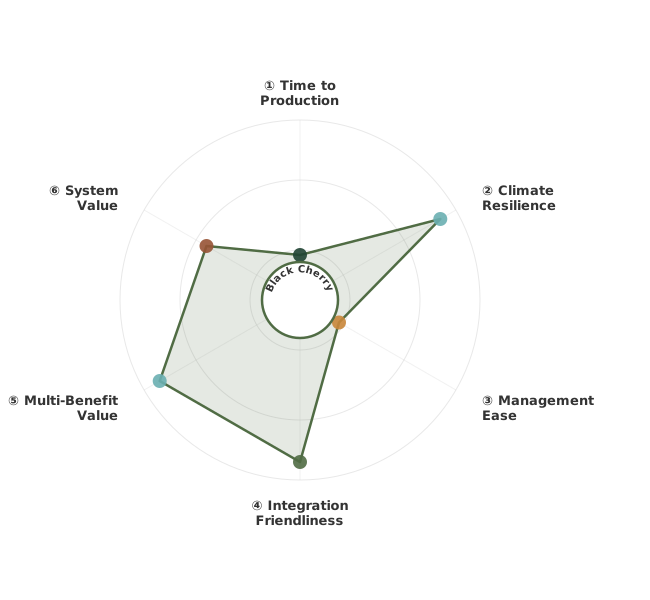
How These Traits Are Calculated
Trait dimensions are ordered clockwise starting from the top of the chart (12 o'clock position):
1. Time to Production
Years from planting to first harvestable yields
WHAT: Measures the waiting period from tree establishment to first meaningful production. Fast-producing trees yield within 2-5 years; slow producers require 8-15+ years before significant harvests.
WHY: Time to production determines cash flow timing and financial feasibility for farm businesses. Long wait times create significant opportunity costs—land and labor tied up for years without income. Fast producers allow quicker experimentation and cash flow recovery, reducing risk for new tree crop farmers.
HOW: Ratings based on years to first harvest documented in economics data. Exceptional (3.0): Production within 2-4 years (elderberry, mulberry, some nut bushes). Typical (2.0): 5-8 years (many fruit trees). Limited (1.0): 10-15+ years (hardwood timber, some nut trees like pecan, walnut).
2. Climate Resilience
Weighted: hardiness zones (50%) + drought tolerance (30%) + adaptability (20%)
WHAT: Combines temperature tolerance (hardiness zone range), water stress resilience (drought tolerance), and overall climate flexibility. Multi-decade tree investments require reliable climate matching to prevent total loss.
WHY: Wrong climate choices mean complete failure for permanent plantings. A tree that dies in year 5 from unexpected cold or prolonged drought represents catastrophic loss of 5 years' investment. Climate resilience determines geographic range and weather variability tolerance—critical as climate patterns become less predictable.
HOW: Weighted formula prioritizes hardiness zone range (50% weight) for core temperature tolerance, drought tolerance (30% weight) for water stress, and overall adaptability (20% weight) for general climate flexibility. Exceptional (3.0): Wide hardiness range (8+ zones) with strong drought tolerance. Typical (2.0): Moderate range and tolerance. Limited (1.0): Narrow climate requirements.
3. Management Ease
Weighted: establishment (40%) + low maintenance (30%) + pest resistance (30%)
WHAT: Combines establishment difficulty, ongoing maintenance requirements, and disease/pest pressure into overall management workload. Low-maintenance trees fit easily into busy farm operations without specialized expertise or intensive inputs.
WHY: Labor is the limiting factor for most diversified farms. High-maintenance trees requiring pruning expertise, disease management, and intensive pest control compete for limited time with other farm enterprises. Easy-care trees deliver production with minimal intervention, making them viable for time-constrained farmers.
HOW: Weighted formula balances establishment ease (40% weight) for startup success, inverted maintenance intensity (30% weight) for ongoing care, and inverted pest/disease pressure (30% weight) for health management. Exceptional (3.0): Easy to establish, self-sufficient growth, naturally pest-resistant. Typical (2.0): Moderate care needs. Limited (1.0): Difficult establishment, intensive maintenance, or heavy pest pressure.
4. Integration Friendliness
Compatibility with silvopasture, alley cropping, and multi-species systems
WHAT: Measures how well the tree integrates with other farm enterprises—grazing livestock, annual crops, or other perennials. Integration-friendly trees tolerate livestock browsing, don't heavily shade out crops, and coexist with diverse plantings.
WHY: Integrated tree systems (silvopasture, alley cropping, food forests) provide higher total returns per acre than monoculture plantings. Trees that work well with livestock provide shade + forage + production simultaneously. Integration flexibility allows farmers to stack enterprises and adapt to market opportunities.
HOW: Ratings based on the integration_friendliness trait documenting compatibility with grazing, cropping, and multi-species systems. Exceptional (3.0): Tolerates livestock browsing, provides livestock benefits (shade, browse), compatible with understory crops. Typical (2.0): Some integration possible with management. Limited (1.0): Requires isolation, incompatible with livestock or cropping.
5. Multi-Benefit Value
Stacked benefits beyond primary product—shade, wildlife, nitrogen, erosion control
WHAT: Measures the diversity of ecosystem services provided beyond the main harvest product. Multi-benefit trees deliver shade, windbreak, wildlife habitat, nitrogen fixation, erosion control, pollinator support, and aesthetic value simultaneously.
WHY: Single-purpose trees are economically fragile—market price swings or production failures eliminate all value. Multi-benefit trees provide resilience through diverse value streams. A nitrogen-fixing tree that produces nuts, provides shade for livestock, supports wildlife, and controls erosion delivers 4-5x the system value of a production-only tree.
HOW: Ratings based on the multi_benefit_value trait documenting service diversity. Exceptional (3.0): 4+ significant services stacked (nitrogen-fixing legume trees providing nuts + shade + wildlife + windbreak). Typical (2.0): 2-3 moderate services. Limited (1.0): Single-purpose production trees with minimal additional benefits.
6. System Value
Total ecosystem and economic value across short, medium, and long timeframes
WHAT: Synthesizes the total regenerative value delivered across multiple decades, including immediate ecosystem services (years 1-5), medium-term production value (years 5-15), and long-term system transformation (years 15-50). Captures the compounding benefits of permanent plantings.
WHY: Trees are multi-decade investments requiring patient capital. System value measures whether the total package—early ecosystem services, eventual production, and long-term legacy benefits—justifies the wait time and land commitment. High system value trees pay back investment through diverse, stacking, compounding benefits.
HOW: Scored via LLM synthesis of economics timelines, ecosystem service diversity, and long-term soil/water/carbon impacts. Exceptional (3.0): Strong early services + valuable production + transformative long-term impacts. Typical (2.0): Moderate benefits across timeframes. Limited (1.0): Long wait with limited service stacking or weak economic returns.
Ratings are based on documented performance in regenerative systems, not conventional high-input scenarios. All traits assume integrated management practices focused on soil health and ecosystem services.
5
Management & Care Requirements
Integration guidance, maintenance needs, and care practices
Management & Care Requirements
Integration guidance, maintenance needs, and care practices
How to Integrate This Plant
Black cherry (Prunus serotina) is a valuable addition to regenerative farm systems, primarily functioning within food forests due to its wildlife value and potential for timber. Its fruit, while not commercially sweet, provides a complete nutritional meal for a wide array of wildlife, including birds, mammals, and bears, making it a critical food source. Integrate black cherry into food forest designs, where its mature form can also provide shade and habitat. Consider its potential for timber production in longer-term planning. Compatible practices include food forests and potentially agroforestry systems where its wildlife support can benefit adjacent areas. Year 1-2: Establishment and early growth. Year 5-10: Significant wildlife support and potential for early timber thinning. Year 20+: Mature tree providing substantial wildlife benefits, habitat, and timber resources. The total system value is enhanced by its role as a crucial wildlife habitat, providing food and shelter, thereby supporting biodiversity and ecological balance within the farm.
Integration Practices & Management
The provided knowledge base offers limited direct information on how regenerative farmers integrate *Prunus serotina* (black cherry) into their systems. The sources primarily highlight its ecological value as a wildlife food source, noting the nutritional completeness of its fruit and pit for various animals, including birds, mammals, and deer. Black cherry bark is also mentioned for its medicinal properties for humans, with a caveat regarding its toxicity to animals if branches and leaves are consumed. While the sources emphasize the plant's natural adaptability and extensive native range, they do not detail specific regenerative agriculture practices such as establishment methods (seeding rates, timing, tillage), integration with grazing systems (mob grazing, rotational timing, rest periods), termination strategies, fertility requirements, competition management, or its role in cash crop rotations (relay cropping, intercropping). Consequently, practical farmer experiences and insights regarding its integration into regenerative farming practices are not available within this knowledge base.
Management Profile
Maintenance Intensity: Ideally Suited - As a hardy native tree with inherent disease resistance, Black cherry thrives in diverse conditions with minimal intervention, often self-seeding and integrating seamlessly into the ecosystem.
Pest Disease Pressure: Ideally Suited - Black cherry demonstrates high resistance to pests and diseases, thriving robustly in various conditions with minimal care and supporting overall ecosystem health.
Time To Production: Not Recommended - While Black cherry offers long-term timber and wildlife benefits, its fruit production requires patience, with significant yields typically developing over 5-10 years.
Sources behind this view
 Videos & Podcasts
-
Black cherry trees are valuable native species providing nutrient-rich fruit for wildlife and high-priced timber. Seeds can be used for propagation, and fruit for fruit leather. Highly adaptable and b

8
Know the Debate
Black Cherry (*Prunus serotina*) is a resilient, long-lived perennial well-suited for temperate agroforestry. Its success hinges on understanding i...
Know the Debate
Black Cherry (*Prunus serotina*) is a resilient, long-lived perennial well-suited for temperate agroforestry. Its success hinges on understanding i...
Black Cherry (*Prunus serotina*) is a resilient, long-lived perennial well-suited for temperate agroforestry. Its success hinges on understanding its climate and soil needs, which vary across regions. While hardy in cold climates and adaptable to shade, it requires protection from extreme heat, frost, and wind, especially during establishment. Soil pH can also be a factor, with certain conditions like those found near oak or blueberry plantings needing careful consideration to avoid inhibiting growth.
How quickly does Black Cherry establish and produce?
Slow & Steady (Timber Focus)
For timber production or substantial carbon sequestration, plan for 5-7 years for robust growth and 20-30+ years for harvest. Fruit production from wild-types can start between years 5-10.
Sources behind this view
Sources behind this view
Videos & Podcasts
-
Introduces four promising Midwest agroforestry crops: Elderberry (adaptable, dual harvest, 2-3 years to production), Black Currant (disease-resistant varieties, shade tolerant, 3-5 years to production), Hazelnut (drought-tolerant hybrid, 3-8 years to production), and Chinese Chestnut (climate-adapted, specific soil needs, 12-15 years to full production).
-
Black currants are a cold-hardy, shade-tolerant perennial superfood suitable for Midwest agroforestry. They offer pollinator habitat, grow in various soils, and resist deer. Disease-resistant cultivars are now available, with varieties like Whistler, Tacos, Blackam, and Cheekomas showing promise.

 Research
-
Targeted forcing improves quality, nutritional and health value of sweet cherry fruit (opens in new window)
This study found: A new method of covering cherry trees in spring, designed to 'force' flowering and ripening, has been shown to improve fruit quality. Over three years, this covering technology resulted in larger and heavier cherries by 6-14%. The covered cherries also showed less water stress and had significantly higher levels of antioxidants and beneficial plant compounds (phenolics), increasing by an average of 14%. This means farmers can produce earlier, higher-quality cherries with improved nutritional and health benefits for consumers.
Moderate establishment & varied yields
Black Cherry begins sequestering carbon at planting, with visible soil carbon increases typically evident by year 5-7. Early fruit production or noticeable growth can be seen within 5-10 years, depending on variety and conditions.
Sources behind this view
Sources behind this view
Videos & Podcasts
-
Observations on plum, Asian pear, and black cherry trees highlight high productivity and challenges like branch breakage from heavy fruit loads. Overgrafting is used for modification. Fruit growth is water-dependent, potentially causing breakage. Unpruned trees remain dwarf, with natural development sometimes leading to broken branches.

-
Food forest features fruit trees (peach, plum, pear, pomegranate, apple, lowquat) selected for Texas chilling hours and cross-pollination; citrus (Satsuma) is also being trialed with winter protection.
Research
-
Assessing temperature-based adaptation limits to climate change of temperate perennial fruit crops. (opens in new window)
This study found: A global study looked at how changing temperatures due to climate change will affect where five key fruit crops – apples, cherries, almonds, olives, and grapes – can be grown. These perennial trees need specific winter cold periods to produce fruit. The research used climate models to predict future growing areas. By the end of the century, under a high-emission scenario, growing areas in the Southern Hemisphere could shrink by over 40%, while areas in the Northern Hemisphere might expand significantly. A lower-emission scenario shows smaller but still notable shifts. Essentially, suitable growing regions are moving towards the poles. For the Southern Hemisphere, there's less room to move to higher latitudes. Farmers and breeders can adapt by selecting or developing varieties that need less winter chill, choosing appropriate cultivars, and using techniques like shade netting, sprinklers for cooling, and precise irrigation to manage heat stress.
Making Sense of the Differences
The timeline for Black Cherry establishment and productivity varies significantly based on climate, management, chosen variety, and intended use. In temperate conditions suitable for fruit production, initial yields might appear in 5-10 years. For timber production or substantial carbon sequestration, plan on 2-7 years for robust growth and 20-30+ years for harvest. Factors like winter chilling, soil moisture, pest/disease pressure, and protection from browse significantly influence the speed of development.
What are Black Cherry's climate and soil needs?
Cold-hardy & Shade-tolerant
Black Cherry is adaptable to cold climates (USDA Zones 1-8 or 3-4 for specific varieties), tolerates partial shade, and can grow in various soil types. It is noted for resilience against deer and disease, making it suitable for Midwest agroforestry.
Sources behind this view
Sources behind this view
Videos & Podcasts
-
Black currants are a cold-hardy, shade-tolerant perennial superfood suitable for Midwest agroforestry. They offer pollinator habitat, grow in various soils, and resist deer. Disease-resistant cultivars are now available, with varieties like Whistler, Tacos, Blackam, and Cheekomas showing promise.
-
Siberian Sea peaches (zone 3-4) are hardy, disease-resistant, and compact. Edible Acres offers them at lower prices than conventional nurseries due to integrated, low-input production.

-
Recommends shade-tolerant berry shrubs for the orchard shrub layer, including gooseberries, black currants, red currants, haskap, aronia, blueberries, Saskatoon berries, and raspberries, noting their varying shade tolerance and productivity.

Sensitive to Extremes & Specific pH
Growing Black Cherry at the limits of its range can lead to issues like frost damage to blooms, sunburn, heat stress causing fruit drop, and wind damage. It performs poorly in very wet conditions and may struggle in soils with extreme pH, particularly those found near oak or blueberry plantings.
Sources behind this view
Sources behind this view
Videos & Podcasts
-
Black currants are sensitive to frost (early blooms), sunburn (especially south), high heat (fruit drop), and wind. Powdery mildew is a major disease; manage with resistant varieties, horticultural oils, or sulfur. Shade netting can help but increases disease risk.
-
Fruit trees may not produce fruit due to insufficient winter chilling hours (warm winters) or flower bud freeze (cold winters), especially when grown at the warmest or coldest limits of their natural range.

-
Discusses edible shrubs for windbreaks: sea buckthorn (tart, vitamin C), aronia (high antioxidants, bitter), Nanking cherry (delicious, self-fertile), and western saskatoon cherry (larger, less bitter fruit, heat/drought tolerant but short-lived). Notes challenges with oaks and blueberries due to soil pH.
Making Sense of the Differences
Black Cherry thrives in temperate climates, tolerating cold winters (USDA Zones 1-8) and partial shade. However, extreme heat, frost (especially affecting blooms and fruit), strong winds, and very wet conditions can hinder growth. It prefers well-drained soils and can be sensitive to pH extremes, performing poorly in areas with oak or blueberry soils. Careful variety selection and site assessment are crucial for successful establishment.
9
Learn More
Why farmers use this plant and additional resources
Learn More
Why farmers use this plant and additional resources
Why Regenerative Farmers Use This Plant
Black Cherry (Prunus serotina) is a valuable perennial tree for regenerative agriculture systems, offering a multi-decade return on investment and significant ecological services. As a long-lived species, it begins to sequester carbon at planting and continues throughout its lifespan. Mature trees can sequester an estimated 2-5 tons of CO2e per acre per year, actively mitigating climate change and contributing to soil organic matter accumulation. Its substantial root system, which can reach depths of 6-20 feet (1.8-6 m) or more, enhances soil structure, improves water infiltration, and scavenges nutrients from deeper soil profiles, making them available to shallower-rooted plants or preventing leaching.
Integrating Black Cherry into farm landscapes offers a suite of ecosystem benefits that bolster agricultural resilience. Its presence contributes to biodiversity by providing habitat and food sources for a variety of wildlife, including birds and beneficial insects. The leaf litter it produces decomposes to enrich soil organic matter, supporting a healthy soil food web. In silvopasture systems, its mature canopy can provide essential shade for livestock during hot summer months, reducing heat stress and improving animal welfare, while its deep roots help stabilize soil and prevent erosion on sloped terrain. Furthermore, its role as a nurse tree or component in windbreaks can protect more sensitive crops from harsh weather, leading to more stable yields and reduced crop loss over time.
The quantitative ecosystem benefits of Prunus serotina are substantial. While not a nitrogen fixer, its contribution to soil health through organic matter deposition is significant, with mature trees contributing to a measurable increase in soil organic matter over time, typically becoming evident by year 5-7 of establishment. Its deep root system actively scavenges nutrients from lower soil profiles, making them available at the surface as leaf litter decomposes. The structural complexity of its canopy supports a greater abundance and diversity of beneficial insects, which can aid in natural pest control for surrounding agricultural areas. The improved water infiltration facilitated by its root system also reduces surface runoff, minimizing soil erosion and enhancing water availability within the agroecosystem. The improved soil structure from its deep root system can lead to a 20-40% increase in water infiltration rates, reducing runoff and erosion. Over decades, the accumulation of organic matter from leaf fall and root turnover can increase soil organic carbon by 0.5-1.5% annually in its vicinity. Its flowers are a vital nectar and pollen source for numerous native bee species and other pollinators, supporting broader ecosystem health and potentially improving yields of adjacent pollinator-dependent crops.
Economically, Black Cherry offers multi-decade returns through its valuable timber and, in some regions, its fruit production, accumulating significant asset value on the farm. Timber harvest potential often occurs after 20-30 years, with full maturity reached in 50-80 years.
Black Cherry has demonstrated success in various regional farming systems. In the northeastern United States, it is often incorporated into mixed hardwood stands for timber production and as a component of hedgerows and windbreaks on diversified farms. In the UK, it can be found in agroforestry plots and as part of riparian buffer zones, contributing to landscape connectivity and biodiversity. In parts of Australia, where temperate species are suited, it can be integrated into shelterbelt designs to protect crops and livestock from wind and sun, particularly in regions with adequate rainfall. In the Midwestern United States, it is often incorporated into silvopasture designs for livestock operations, providing shade and browse. European farmers utilize it in hedgerows and windbreaks to protect arable fields and integrate timber production. Australian farmers might incorporate it into shelterbelts on grazing properties, offering protection from sun and wind while contributing to biodiversity. In regions with similar climates in South America, such as southern Brazil or parts of Argentina, it can be integrated into farm forestry initiatives or agroforestry designs for timber and ecological benefits. In Brazil, similar native cherry species are integrated into coffee agroforestry systems to provide shade and improve microclimate conditions for coffee plants.
Sources behind this view
Videos & Podcasts
-
Black cherry trees are valuable native species providing nutrient-rich fruit for wildlife and high-priced timber. Seeds can be used for propagation, and fruit for fruit leather. Highly adaptable and b