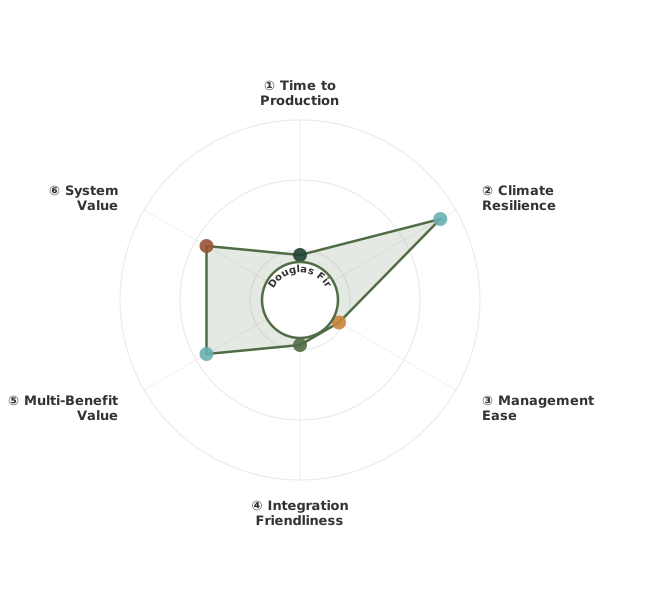
Notably, Douglas fir demonstrates a symbiotic relationship with nitrogen-fixing bacteria and can be supported by mycorrhizal fungi, creating conditions beneficial for its growth and potentially increasing soil nitrogen. This suggests a role in soil building and carbon sequestration, especially within diverse forest ecosystems. Studies on its impact in plantations, considering organic matter removal and vegetation control, highlight the importance of management practices for soil productivity. Furthermore, research into establishing Douglas fir in new environments, like Italy, emphasizes the need for locally adapted planting material to ensure successful integration. While not explicitly detailed as a cover crop or forage, its role in polyculture systems, potentially alongside species like paper birch, is suggested by its ability to thrive in nitrogen-rich, pathogen-suppressed soil environments. More research is needed to fully understand its direct applications and benefits within various regenerative practices. While coverage in our knowledge base is limited, the above represents documented uses in regenerative systems.

Regenerative Quick Profile

All recommendations assume integrated, regenerative practices—not conventional inputs.

Climate & Soil Fit

Climate: Tropical Rainforest, Tropical Monsoon, Tropical Savanna, Hot Semi-Arid (Steppe), Cold Semi-Arid (Steppe), Hot Desert, Cold Desert, Humid Subtropical, Oceanic (Maritime Temperate), Hot-Summer Mediterranean, Warm-Summer Mediterranean, Monsoon-Influenced Humid Subtropical, Subtropical Highland, Hot-Summer Continental, Warm-Summer Continental, Subarctic, Monsoon-Influenced Hot-Summer Continental, Tundra

Zones: USDA 4-8, Australian Zones 3-5

Optimal Soil: Sandy Soil

System Role & Functions

Primary: Food Forest

Secondary: Soil Building, Windbreak

Key Benefits: Climate adaptable, Wide zone range, Low maintenance

Management Level

Experience: Advanced

Maintenance: Very low maintenance - Once integrated into a healthy ecosystem, Douglas fir requires minimal intervention, benefiting from natural fertility management cycles and its inherent resistance to stressors.

Time to Production: Slow (5+ years) - As a long-term timber species, Douglas fir cycles are measured in decades, contributing to ecosystem structure and carbon sequestration rather than rapid fruit production.

Value Streams

  • Fruit/nut harvest
1

Climate Suitability Assessment

Will this plant thrive in your climate?

IDEALLY SUITED

Köppen Zone: Cfa (Humid Subtropical), Cfb (Oceanic (Maritime Temperate)), Csb (Warm-Summer Mediterranean), Dfb (Warm-Summer Continental)
USDA Zone: 7a, 8a, 9a
Australian Zone: temperate
EU Climate Region: atlantic

Douglas Fir thrives in climates with mild winters, consistent rainfall, and a long growing season, conditions met by Köppen Cfb, Dfb, and regional zones like USDA 5b-8a, Australian temperate, and EU Atlantic. These environments provide sufficient winter chill for dormancy and ample moisture and moderate temperatures (60-75°F/15-24°C) during the growing season for vigorous development. Establishment success is very high (>85%), and the species exhibits rapid growth, making it an excellent choice for windbreaks. Its long-term potential in food forests is significant, though edible yields from associated understory plants will develop over time as the canopy matures. Minimal management is required, and the species is highly resilient, contributing to soil building through its extensive root system and needle litter. These zones typically receive 30-60 inches (75-150 cm) of annual precipitation, well within Douglas Fir's needs, and winter lows generally range from 10°F to 50°F (-12°C to 10°C), allowing for necessary dormancy without excessive frost damage.

ADEQUATE

Köppen Zone: BSk (Cold Semi-Arid (Steppe)), Csa (Hot-Summer Mediterranean), Cwa (Monsoon-Influenced Humid Subtropical), Cwb (Subtropical Highland), Dfa (Hot-Summer Continental), Dfc (Subarctic)
USDA Zone: 5a, 5b, 6a, 10a, 11a
Australian Zone: subtropical
EU Climate Region: continental

Douglas Fir can perform adequately in climates with moderate temperature fluctuations and variable moisture, such as Köppen Cfa, Cfc, and regional zones like USDA 4b-5a, 8b-9a, Australian subtropical, and EU continental. These zones may experience some challenges, including occasional summer heat stress (above 85°F/29°C), slightly shorter growing seasons, or periods of lower rainfall (20-40 inches/50-100 cm) requiring supplemental irrigation. Winter lows can range from 0°F to 60°F (-18°C to 15°C), meaning some risk of frost damage or insufficient chill may exist. Establishment success is good (70-85%) with careful site selection and management. While it can function as a windbreak, growth rates will be moderate, and its integration into a food forest will be a long-term strategy, with less immediate benefit from understory species. Management may involve occasional watering during dry spells and monitoring for pests and diseases that can be exacerbated by suboptimal conditions.

NOT RECOMMENDED

Köppen Zone: Af (Tropical Rainforest), Am (Tropical Monsoon), Aw (Tropical Savanna), ET (Tundra), BSh (Hot Semi-Arid (Steppe)), BWh (Hot Desert), BWk (Cold Desert), Dwa (Monsoon-Influenced Hot-Summer Continental)
USDA Zone: 2a, 3a, 3b, 4a, 12a

Douglas Fir is not recommended in climates with extreme temperature variations, insufficient growing seasons, or prolonged heat, as found in Köppen Dfa, Dwd, Dsd, and regional zones like USDA 1a-4a, 9b-10b, and parts of EU Boreal. In very cold zones (below -10°F/-23°C), extreme winter temperatures cause consistent mortality and prevent establishment, rendering it useless as a windbreak or for food forest integration. In hot, dry climates (above 85°F/29°C for extended periods), it suffers from heat stress, reduced growth, and increased susceptibility to pests and diseases, with water requirements far exceeding natural rainfall, necessitating intensive irrigation. Establishment success drops below 70%, and the risk of mortality is high, making it economically and practically unviable. Alternative species adapted to these specific harsh conditions are essential for successful regenerative agriculture practices.

Better alternatives for these "not recommended" zones: Eastern White Pine (Pinus strobus) (more tolerant of heat and humidity, faster growing in Dfa zones), Bald Cypress (Taxodium distichum) (tolerant of wet conditions and moderate heat, provides good windbreak in Dfa zones), Hybrid Poplar (Populus spp.) (very fast-growing for windbreaks, tolerates a range of conditions in Dfa zones), Siberian Larch (Larix sibirica) (deciduous conifer adapted to extreme cold and short growing seasons in Dwd/Dsd/USDA 1-3), White Spruce (Picea glauca) (native to cold climates, provides windbreak function in USDA 2-4), Monterey Pine (Pinus radiata) (adapted to warmer coastal climates, faster growing in USDA 9-10), Coast Redwood (Sequoia sempervirens) (prefers mild, moist climates and can tolerate some heat in USDA 9-10)

Note: Zones listed above represent climates where this plant can produce reliably with reasonable management. Climate zones not mentioned would require intensive climate modification (greenhouses, extensive infrastructure) and are not economically viable for regenerative agriculture purposes.

2

Soil Suitability Assessment

Which soil types work best for this plant?

IDEALLY SUITED

Sandy Soil

This plant thrives in these soil types without requiring amendments or remediation. Natural soil conditions support optimal growth and productivity.

ADEQUATE

Acidic Soil, Clay Soil, Loam Soil, Rich Soil, Rocky Soil

This plant performs acceptably in these soil types with moderate, manageable remediation such as pH adjustment, compost addition, or drainage improvement. The required amendments are practical and cost-effective for regenerative agriculture.

NOT RECOMMENDED

Alkaline Soil, Desert Soil, Saline Soil, Wet Soil

Growing this plant in these soil types would require impractical remediation such as complete soil replacement, extensive amendments, or cost-prohibitive infrastructure. These conditions are not economically viable for regenerative agriculture.

Note: Soil suitability assessments focus on remediation requirements. "Ideally Suited" means the plant generally thrives without the need for substantial amendments, "Adequate" means manageable remediation (lime, compost, mulch), and "Not Recommended" means impractical soil changes would be required. Climate factors like rainfall and temperature also influence success.

3

Seasonal Considerations

Planting timing, growth duration, and harvest windows

Establishing Douglas fir requires careful attention to timing. For nursery stock, the ideal planting window is during the dormant season, typically in late fall after leaf drop or early spring before bud break. This minimizes transplant shock for both bare-root and containerized trees. True establishment takes several years, with trees often considered established and beginning to show significant growth spurt within three to five years. Commercial harvest for Christmas trees can begin around year seven to ten, with full production capacity reached by year twelve to fifteen. The productive lifespan of these trees extends for decades, often exceeding fifty years.

Throughout their lifecycle, seasonal management is key. Pruning for shape and health should occur during the dormant season, well before the active spring growth begins. While not typically harvested for fruit or nuts, the aesthetic "harvest" for Christmas trees occurs in late fall or early winter, before the harshest weather sets in. Bloom, if it occurs, is a spring event, largely unnoticed as the focus is on vegetative growth. Winter dormancy is a critical period for the tree to rest and prepare for the coming growing season, and management practices should respect this natural cycle.

4

System Role & Multi-Benefit Value

Functional roles, integration strategies, and stacked benefits

Functional Role

Total System Value

Douglas fir offers substantial long-term value in regenerative systems, primarily as a structural component and for timber. Its direct harvest value is realized through timber sales, which can provide significant income over decades. System enhancement includes providing crucial shade in food forests, acting as a robust windbreak to protect crops and livestock, and contributing to soil stability and carbon sequestration with its extensive root system. Ecosystem services are notable, particularly carbon storage in its biomass and soil, and the habitat it provides for a diverse range of wildlife and beneficial insects. Its long lifespan and slow growth contribute to risk diversification by offering a valuable, long-term asset that is less susceptible to short-term market fluctuations or climate events compared to annual crops. The integration of Douglas fir into a farm system builds resilience through its multiple, overlapping benefits over an extended timeframe.

Integration Characteristics

Multi-Benefit Value: Adequate - This species offers substantial timber resources and vital wildlife habitat, functioning as a cornerstone in diverse ecological systems.

Integration Friendliness: Not Recommended - Douglas fir integrates well into long-term silvicultural systems and habitat corridors, contributing significantly to ecosystem complexity and resilience over time.

5

Management & Care Requirements

Integration guidance, maintenance needs, and care practices

How to Integrate This Plant

Douglas fir can be integrated into regenerative farm systems primarily as a long-term structural element within food forests and for timber production. Its roles include providing significant shade as it matures, acting as a windbreak, and contributing to soil health through its deep root system, which aids in erosion control and carbon sequestration. While not directly mentioned for nitrogen fixation or pollinator support, its presence creates habitat and can support understory plants that do. Compatible practices include food forests and potentially agroforestry systems where its timber value is also leveraged. Early contributions (Year 1-2) are minimal beyond initial establishment and potential minor ground cover. By Year 5-10, it begins to offer substantial shade and windbreak effects. By Year 20-30, its mature size provides significant ecosystem services and timber value. The multi-benefit stacking comes from its long-term structural role, carbon sequestration, potential timber harvest, and the habitat it creates for wildlife and beneficial insects, diversifying farm outputs and resilience.

Integration Practices & Management

The provided knowledge base offers limited direct insight into how regenerative farmers specifically integrate Pseudotsuga menziesii (Douglas fir) into their systems. The sources primarily focus on the species' evolutionary history, botanical characteristics, genetic varieties, and its use in forestry research and conservation efforts, particularly in Europe for germplasm conservation and in North America for productivity studies. There is no information within these texts regarding establishment methods such as seeding rates, timing, companion planting, or tillage practices relevant to regenerative agriculture. Similarly, the knowledge base does not detail integration with grazing systems, including mob grazing, rotational systems, grazing timing, or necessary rest periods. Termination strategies like natural winterkill, grazing down, crimping, mowing, or herbicide use are also not discussed. Furthermore, management considerations like fertility needs, competition management, succession planning, or integration with cash crops through relay cropping, intercropping, or rotation sequences are absent. The focus remains on silvicultural and conservation aspects rather than direct integration into regenerative farming practices.

Management Profile

Maintenance Intensity: Ideally Suited - Once integrated into a healthy ecosystem, Douglas fir requires minimal intervention, benefiting from natural fertility management cycles and its inherent resistance to stressors.

Pest Disease Pressure: Ideally Suited - Douglas fir possesses strong natural resistance to pests and diseases, thriving within a balanced system that supports its overall health and vitality.

Time To Production: Not Recommended - As a long-term timber species, Douglas fir cycles are measured in decades, contributing to ecosystem structure and carbon sequestration rather than rapid fruit production.

Sources behind this view

Community
  • Permaculture practitioners advise strategic Douglas Fir removal to increase sunlight and diversity, using livestock (pigs, goats) for soil disturbance to create polyculture meadows and food forests in

6

Economics & Value Streams

Direct harvest, system benefits, ecosystem services, and risk diversification

Comprehensive economic analysis including direct harvest value, system enhancement contributions, ecosystem services, value timeline, and risk diversification strategies.

Per-Tree Production Economics

Metric Value
Establishment Cost $10-25
Years to First Harvest 15-20 years
Annual Maintenance $3-6
Yield 30-60 lbs/year 13-27 kg/year
Market Price $0-0/lb $0-0/kg
Productive Lifespan 50-75 years
Net Annual Return* $-6 to $-3/year (negative)

Values shown per mature tree, not per acre. In regenerative systems, trees are integrated at low densities across diverse landscapes. Establishment costs spread over the lifespan of the tree. Early years have costs but no revenue.

* Net Annual Return = (Yield × Market Price) − (Amortized Establishment Cost + Annual Maintenance). This return is realized only at/after first harvest; early years have costs but no revenue. Range shows worst case to best case scenarios.

System Enhancement Value

Beyond harvest: how understory complements overstory in polyculture

Food Forest System Contributions

Beyond windbreak functions, Douglas fir contributes to the ecosystem by creating microhabitats for various organisms. Its thick, furrowed bark, especially on older trees, provides a substrate for lichens and mosses, as outlined in the knowledge base. These epiphytes, in turn, support a micro-ecosystem that can benefit beneficial insects and other small fauna. Furthermore, Douglas fir forests are known to host specialized species like the Northern Spotted Owl and Douglas squirrel, though few species are wholly reliant. The cones themselves are a food source, and the presence of older trees can support unique fungal communities, such as True lasia strobiformis exclusively growing on old cones. The immense size and longevity of Douglas fir also contribute to long-term soil building through litter decomposition and root mass, enhancing soil structure and water retention over decades.

Groundcover & Erosion Control

Protects 2-14 acres per 100ft row, potential 5-15% crop yield improvement in protected zones. Value varies significantly based on wind exposure, crop type, and windbreak design.

Douglas fir, particularly the coastal variety (Pseudotsuga menziesii var. menziesii) known for its immense height, provides significant windbreak benefits. Its dense foliage and robust structure can effectively reduce wind speed across agricultural fields, mitigating soil erosion and protecting sensitive crops from wind damage. The quantitative reference data suggests that windbreak protection can extend 10-15 times the height of the trees downwind, potentially safeguarding between 2 to 14 acres per 100-foot row of trees, depending on specific site conditions. This protection can lead to improved microclimates for adjacent agricultural areas, fostering more stable growing conditions and potentially increasing crop yields by 5-15% in protected zones. The effectiveness is contingent on factors like wind exposure, the types of crops being protected, and the specific design and density of the Douglas fir windbreak planting.

Ecosystem Service Contributions

Environmental contributions: carbon, pollinators, wildlife, and water

  • Carbon Sequestration: Douglas fir is a highly effective carbon sequesterer due to its rapid growth and massive potential size, particularly the coastal variety. Large, old-growth Douglas fir trees can store significant amounts of carbon in their biomass and in the forest soil over long periods.
  • Pollinator Support: Low. Douglas fir is wind-pollinated and does not produce significant nectar or pollen resources for most bees and other pollinators.
  • Wildlife Habitat: High. Douglas fir forests, especially old-growth stands, provide crucial habitat, nesting sites, and food sources (cones, seeds) for a variety of wildlife, including birds like the Northern Spotted Owl and mammals such as the Douglas squirrel. Its structure also supports diverse understory growth.
  • Water Quality: Not applicable

Value Timeline: Understory Development

When you'll see results: groundcover/herbs year 1, shrubs 2-3, full layer integration 5-10

Years 1-2

Initial erosion control and microclimate modification begin as young trees establish. Limited windbreak effect, but planting itself starts the process of soil stabilization.

Years 3-5

Windbreak effectiveness starts to become noticeable, offering moderate protection to adjacent areas. Early stages of habitat development for some insects and small fauna. Soil building through litter accumulation begins.

Years 10-20

Significant windbreak protection is established, providing substantial benefits to agricultural productivity and reducing erosion. Mature habitat for various wildlife species. Measurable carbon sequestration in biomass. Potential for early thinning harvests for products.

20+ Years

Full development of mature forest ecosystem services. Maximum windbreak efficiency. Substantial carbon storage. Long-term timber production potential. Established, complex wildlife habitat. Continued soil improvement and hydrological regulation.

Farm Risk Reduction

How multi-layer systems diversify production and income

  • Multiple Revenue Streams: Timber (long-term), biomass for biofuels or wood products (from thinning), potential for non-timber forest products (e.g., specialty wood, lichen products), ecosystem services (windbreak value, carbon credits).
  • Temporal Income Spread: Value is highly temporally spread, ranging from immediate erosion control and early windbreak effects to the eventual, substantial income from mature timber harvests over decades. Ongoing ecosystem services provide continuous, albeit less direct, value.
  • Market Risk Hedge: Douglas fir reduces farm risk by providing a stable, long-term asset that is relatively resilient once established. Its windbreak function protects annual crops from weather-related losses, diversifying revenue streams beyond direct crop sales. The long-term timber potential offers a hedge against market volatility in other agricultural commodities.
7

Regenerative Suitability Details

Comprehensive trait ratings for system integration assessment

Comparative ratings for this plant across key regenerative agriculture traits.

Trait Suitability Explanation
Drought Tolerance Adequate Douglas fir demonstrates moderate moisture retention capabilities once established, thriving with attentive water management to ensure optimal soil health, especially during establishment phases.
Establishment Ease Not Recommended Successful establishment involves mindful soil preparation and consistent moisture retention for germination, with early seedling vigor benefiting from mulching and cover cropping to suppress weed competition.
Time To Production Not Recommended As a long-term timber species, Douglas fir cycles are measured in decades, contributing to ecosystem structure and carbon sequestration rather than rapid fruit production.
Multi Benefit Value Adequate This species offers substantial timber resources and vital wildlife habitat, functioning as a cornerstone in diverse ecological systems.
Climate Adaptability Ideally Suited Douglas fir exhibits broad climate adaptability across zones 4-8, thriving within varied temperature and moisture regimes due to its inherent resilience and good disease resistance.
Hardiness Zone Range Ideally Suited Adaptable across zones 4-8, Douglas fir demonstrates exceptional resilience to diverse climates and soil conditions, reflecting its extensive native range.
Maintenance Intensity Ideally Suited Once integrated into a healthy ecosystem, Douglas fir requires minimal intervention, benefiting from natural fertility management cycles and its inherent resistance to stressors.
Pest Disease Pressure Ideally Suited Douglas fir possesses strong natural resistance to pests and diseases, thriving within a balanced system that supports its overall health and vitality.
Integration Friendliness Not Recommended Douglas fir integrates well into long-term silvicultural systems and habitat corridors, contributing significantly to ecosystem complexity and resilience over time.

Comparative System: Ratings compare plants within their economic category (e.g., cover crop nitrogen fixation compared to other cover crops, not to all plants). Individual farm conditions and management practices significantly influence actual performance.

8

Learn More

Why farmers use this plant and additional resources

Why Regenerative Farmers Use This Plant

Douglas fir is a cornerstone species for long-term regenerative forestry and agroforestry systems, offering substantial ecological and economic benefits over multi-decade timelines. As a mature tree, it is a formidable carbon sink, estimated to sequester 2-5 tons of CO2e per acre per year, contributing significantly to climate change mitigation efforts. Its dense canopy provides critical ecosystem services, including shade regulation for understory crops and livestock, effective windbreak protection for fields and buildings, and the creation of diverse microclimates that support biodiversity. The economic returns from mature Douglas fir timber are substantial, and the trees themselves represent a significant, accumulating asset value on the landscape, providing a stable income stream for generations, often exceeding 50-100 years.

Beyond its direct timber value, Douglas fir integrates seamlessly into multi-story farming systems. Its robust root structure, which can extend 6-30+ feet (1.8-9+ m) deep at maturity, enhances soil health by improving water infiltration and aeration, reducing erosion, and scavenging nutrients from deeper soil profiles. This deep rooting also contributes to the long-term stability of the landscape. While not a nitrogen fixer, its presence can create conditions favorable for nitrogen-fixing understory plants when managed appropriately. The long-term benefits include improved soil organic matter, reduced erosion, and the potential for the trees to act as nurse crops for other valuable species, creating complex and resilient farm ecosystems. In silvopasture designs, the mature canopy offers valuable shade and shelter for livestock, reducing heat stress and improving animal welfare, while lower branches can be managed to allow for grazing access or forage production beneath.

The ecosystem services provided by Douglas fir extend to habitat creation and water management. Mature stands can support a rich diversity of beneficial insects and pollinators. The deep root systems significantly improve water infiltration, reducing surface runoff and enhancing groundwater recharge, which is crucial in regions prone to drought or heavy rainfall. This improved water management, coupled with the shade and windbreak effects, creates a more stable and resilient agricultural environment, buffering against extreme weather events. The aesthetic and ecological value of established Douglas fir stands also contributes to landscape resilience and biodiversity.

The establishment of Douglas Fir as part of a regenerative system is a long-term investment. While it takes 1-3 years for saplings to establish a strong root system and 15-30 years to reach significant timber harvest size, early ecological benefits begin much sooner. Within 3-5 years, saplings start providing noticeable windbreak effects and shade. By year 10-15, they contribute substantially to soil organic matter through litterfall and root exudates, with measurable soil carbon increases becoming evident by year 5-7 as root systems develop and organic matter accumulates. The species' resilience and adaptability to various soil types (provided drainage is adequate) make it a reliable component for building long-term ecological and economic capital.

Douglas fir has a proven track record in various regional agricultural landscapes. In the Pacific Northwest of North America, it forms the backbone of sustainable timber operations and is increasingly integrated into silvopasture systems and riparian buffer zones. In the UK and parts of Europe, it is used in windbreaks for arable fields and in afforestation projects, sometimes in mixed-species woodlands. In New Zealand, it is a key species in plantation forestry and is used in shelterbelts and for erosion control on steeper slopes. In Australia, it can be incorporated into mixed-species plantations for wind erosion control and timber production on suitable sites. In parts of Chile, it is used in windbreaks for vineyards.

9

How to Integrate This Plant

Practical guidance for regenerative systems

Establishing Douglas fir typically involves planting nursery-grown seedlings or containerized stock, as direct seeding can be less reliable due to seed predation and germination requirements. Seedlings are usually planted at a density of 400-600 trees per acre (990-1480 trees/ha) for timber production, with spacing of 8-12 feet (2.4-3.6 m) between rows and 6-10 feet (1.8-3 m) within rows to allow for equipment access and tree development. For alley cropping or silvopasture, rows are commonly spaced 30-50 feet (9-15 m) apart. For windbreaks, single or double rows are planted with spacing of 6-10 feet (1.8-3 m) between trees. Planting depth is critical; seedlings should be planted at the same depth they were in the nursery container, ensuring the root collar is at soil level or slightly above. The optimal planting time is generally in the spring, from March to May in the Northern Hemisphere, or September to November in the Southern Hemisphere, coinciding with periods of active root growth and adequate soil moisture for establishment.

During the establishment phase, which typically takes 1-3 years for trees to become well-rooted and start vigorous growth, consistent moisture is crucial. Aim for approximately 1-2 inches (2.5-5 cm) of water per week, either from rainfall or supplemental irrigation, especially during dry spells and in the first year. Fertility management should prioritize biological approaches, such as incorporating compost or well-rotted manure at planting, utilizing cover crop residue from interplanted species, and leveraging natural nutrient cycling. While Douglas fir is not a nitrogen-fixing species, planting nitrogen-fixing ground cover, such as clover or vetch, at year 2-3 can significantly improve soil fertility and provide forage. Weeding around young trees is essential to reduce competition for water and nutrients. Pruning is generally minimal in the early years, focusing on removing any damaged or crossing branches, with more significant structural pruning for timber quality occurring as the tree matures to promote clear bole development and control light penetration for any interplanted species. Mature trees can reach heights of 50-200+ feet (15-60+ m) over several decades to over 100 years.

For agroforestry integration, establishment and system design are paramount. Within 2-3 years of planting, consider establishing a nitrogen-fixing ground cover beneath the canopy in the alleys to improve soil fertility and provide forage if livestock are present. Measurable soil carbon increases are expected by year 5-7 as the trees mature and litterfall increases. Long-term infrastructure considerations include initial irrigation for the critical establishment years, robust deer and browse protection (e.g., tree shelters or fencing), and potentially support structures for early growth or specialized pruning regimes. Pest and disease management should focus on cultural practices, such as maintaining tree vigor through proper spacing and site selection, and encouraging beneficial insect populations through habitat diversity, rather than chemical interventions.