Existing research highlights its potential benefits within regenerative agriculture systems, particularly concerning soil health. Studies indicate that *Quercus acutissima* forests contribute to increased soil organic carbon (SOC) and labile carbon fractions, with these levels rising with stand age. This suggests a role in soil building and carbon sequestration. Furthermore, the presence of *Quercus acutissima* has been linked to elevated activity of carbon and nitrogen cycle enzymes in soils undergoing restoration, implying a positive impact on microbial life and nutrient cycling. Research also shows that *Quercus acutissima* plantations influence soil microbial respiration. While not explicitly detailed as a cover crop or nitrogen fixer in these excerpts, its contribution to soil carbon and nutrient cycling indicates its value in polyculture or agroforestry systems aimed at improving soil structure and fertility. Further research is needed to fully understand its integration into diverse regenerative practices. While coverage in our knowledge base is limited, the above represents documented uses in regenerative systems.

Regenerative Quick Profile

All recommendations assume integrated, regenerative practices—not conventional inputs.

Climate & Soil Fit

Climate: Tropical Rainforest, Tropical Monsoon, Tropical Savanna, Hot Semi-Arid (Steppe), Cold Semi-Arid (Steppe), Hot Desert, Cold Desert, Humid Subtropical, Oceanic (Maritime Temperate), Hot-Summer Mediterranean, Warm-Summer Mediterranean, Monsoon-Influenced Humid Subtropical, Subtropical Highland, Hot-Summer Continental, Warm-Summer Continental, Subarctic, Monsoon-Influenced Hot-Summer Continental, Tundra

Zones: USDA 5-9, Australian Zones 3-7

Optimal Soil: Loam Soil

System Role & Functions

Primary: Food Forest

Secondary: Silvopasture, Specialty

Key Benefits: Multi-benefit value, Drought tolerant, Integration-friendly

Management Level

Experience: Beginner-Friendly

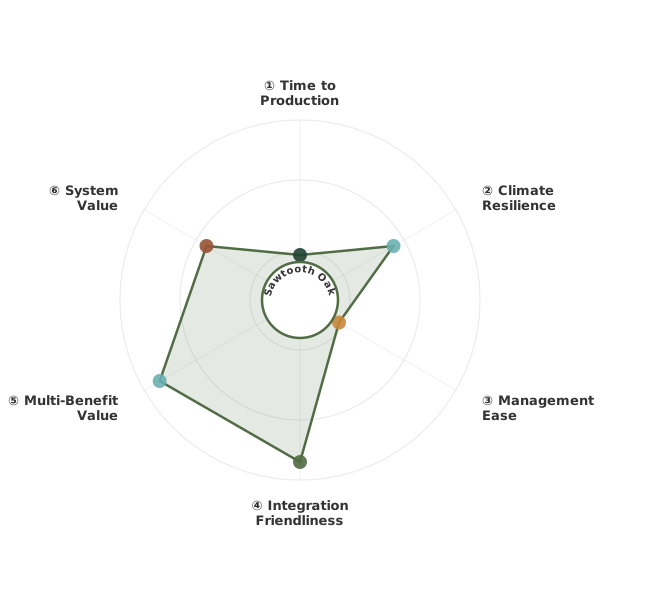
Maintenance: Very low maintenance - As a hardy, adaptable tree with excellent water management capabilities, Sawtooth oak requires minimal intervention once established, naturally resisting pests and diseases.

Time to Production: Slow (5+ years) - Sawtooth oak yields acorns for wildlife and timber, with initial production around 5-10 years, contributing to long-term ecosystem services rather than rapid fruit return.

Value Streams

  • Fruit/nut harvest
1

Climate Suitability Assessment

Will this plant thrive in your climate?

IDEALLY SUITED

Köppen Zone: Cfa (Humid Subtropical), Dfa (Hot-Summer Continental), Dfb (Warm-Summer Continental)
USDA Zone: 5b, 6a, 7a, 8a, 9a
Australian Zone: subtropical

Sawtooth Oak thrives in regions with long, warm growing seasons and adequate moisture, characterized by 200-270 frost-free days and average annual rainfall of 40-60 inches (100-150 cm). These conditions are met in Köppen Cfa zones, USDA zones 6b through 9b, Australian subtropical regions, and parts of the EU Atlantic and Continental regions that mimic these parameters. Temperatures during the growing season typically range from 60-85°F (15-29°C), promoting vigorous growth and abundant acorn production. Mild winters ensure excellent survival rates for established trees, with minimal risk of frost damage. The species establishes readily in these environments, requiring little to no supplemental irrigation for optimal performance. Its suitability for food forests and silvopasture is high due to reliable yields of nutritious acorns, supporting diverse agricultural systems with minimal management inputs. These zones represent the pinnacle of Sawtooth Oak's performance, offering consistent, high-quality yields year after year.

ADEQUATE

Köppen Zone: Aw (Tropical Savanna), BSh (Hot Semi-Arid (Steppe)), BSk (Cold Semi-Arid (Steppe)), Cfb (Oceanic (Maritime Temperate)), Csa (Hot-Summer Mediterranean), Csb (Warm-Summer Mediterranean), Cwa (Monsoon-Influenced Humid Subtropical), Cwb (Subtropical Highland)
USDA Zone: 5a, 10a
Australian Zone: temperate
EU Climate Region: atlantic, continental

Sawtooth Oak performs adequately in regions with moderate growing seasons and temperature ranges, typically experiencing 140-200 frost-free days annually. This includes Köppen Cfb, Dfa, and Dfb zones, USDA zones 5b through 6a, Australian temperate regions, and EU Atlantic and Continental climates that align with these parameters. While these zones support establishment and acorn production, yields can be more variable compared to 'ideally suited' areas. Challenges may include cooler summers impacting acorn maturation, or hotter summers with insufficient rainfall requiring supplemental irrigation to maintain tree vigor and yield. Winter survival is generally good for established trees, but young saplings might benefit from protection in colder extremes. The species can be successfully integrated into food forests and silvopasture systems, but requires careful site selection and potentially more management, such as irrigation, to ensure consistent productivity and economic viability. These zones offer a good balance of suitability and practicality, with reliable, albeit not maximal, performance.

NOT RECOMMENDED

Köppen Zone: Af (Tropical Rainforest), Am (Tropical Monsoon), ET (Tundra), BWh (Hot Desert), BWk (Cold Desert), Dfc (Subarctic), Dwa (Monsoon-Influenced Hot-Summer Continental)
USDA Zone: 2a, 3a, 3b, 4a, 11a, 12a

Sawtooth Oak is not recommended for cultivation in zones characterized by extreme temperature fluctuations, severe summer droughts, or insufficient growing seasons, making its economic and practical viability questionable. This includes Köppen Csa and Dsa zones, USDA zones 3a through 5a, and specific EU regions with similar arid or extremely cold conditions. In hot, dry climates (Csa, Dsa), prolonged summer droughts severely limit acorn production and tree vigor, requiring intensive and often impractical irrigation infrastructure. Establishment is risky due to rapid soil drying and high temperatures. In very cold climates (USDA 3a-5a), extreme winter lows (-40 to -15°F) lead to high winter kill rates, especially for young trees, and the short growing seasons are insufficient for reliable acorn development. The cost and effort required for establishment and maintenance in these marginal zones outweigh the potential benefits, necessitating the selection of more climate-appropriate alternative species better adapted to the specific environmental challenges.

Better alternatives for these "not recommended" zones: Serviceberry (Amelanchier spp.) (cold-hardy native shrub/small tree with edible berries for cold zones), Elderberry (Sambucus spp.) (cold-hardy shrub with edible berries, tolerates a range of conditions), Hazelnut (Corylus spp.) (cold-hardy shrub producing edible nuts for cold zones), Carob Tree (Ceratonia siliqua) (highly drought-tolerant legume adapted to Mediterranean climates, produces edible pods), Pistachio (Pistacia vera) (drought-tolerant nut tree that thrives in hot, dry conditions with low water needs)

Note: Zones listed above represent climates where this plant can produce reliably with reasonable management. Climate zones not mentioned would require intensive climate modification (greenhouses, extensive infrastructure) and are not economically viable for regenerative agriculture purposes.

2

Soil Suitability Assessment

Which soil types work best for this plant?

IDEALLY SUITED

Loam Soil

This plant thrives in these soil types without requiring amendments or remediation. Natural soil conditions support optimal growth and productivity.

ADEQUATE

Clay Soil, Rich Soil, Rocky Soil, Sandy Soil

This plant performs acceptably in these soil types with moderate, manageable remediation such as pH adjustment, compost addition, or drainage improvement. The required amendments are practical and cost-effective for regenerative agriculture.

NOT RECOMMENDED

Acidic Soil, Alkaline Soil, Desert Soil, Saline Soil, Wet Soil

Growing this plant in these soil types would require impractical remediation such as complete soil replacement, extensive amendments, or cost-prohibitive infrastructure. These conditions are not economically viable for regenerative agriculture.

Note: Soil suitability assessments focus on remediation requirements. "Ideally Suited" means the plant generally thrives without the need for substantial amendments, "Adequate" means manageable remediation (lime, compost, mulch), and "Not Recommended" means impractical soil changes would be required. Climate factors like rainfall and temperature also influence success.

3

Seasonal Considerations

Planting timing, growth duration, and harvest windows

Establishing sawtooth oak requires careful timing to ensure successful establishment. For nursery stock, the ideal planting window is during the dormant season, either in late fall after leaf drop or very early spring before bud break. This allows roots to establish before the stress of active growth. Bare-root trees benefit most from this dormant planting, while containerized trees offer more flexibility and can sometimes be planted into early summer, provided consistent moisture is maintained.

Sawtooth oak is a long-term investment. Expect a few years for trees to become well-established, typically 3-5 years, before they begin to yield acorns. First significant harvests can usually be anticipated around year 7-10, with full production capacity reached after 15-20 years. These trees are known for their longevity, offering valuable acorn production for decades.

Seasonal management focuses on supporting this multi-year development. Pruning is best performed during the dormant season, in late winter or very early spring, to shape young trees and remove any dead or damaged wood. While acorns mature in autumn, some may persist on the tree into winter. The trees themselves enter a deep winter dormancy, shedding their leaves and conserving energy for the next spring's growth spurt. Bloom typically occurs in spring, leading to acorn development throughout the summer.

4

System Role & Multi-Benefit Value

Functional roles, integration strategies, and stacked benefits

Functional Role

Total System Value

Sawtooth oak offers a multi-layered approach to farm resilience. Directly, its acorns provide a valuable, calorie-dense food source for livestock such as pigs and cattle, and for wildlife, reducing feed costs and diversifying farm outputs. Systematically, its deep root system enhances soil structure, improves water infiltration, and sequesters significant amounts of carbon, as evidenced by increasing soil organic carbon with stand age in chronosequence studies. This contributes to long-term soil health and climate change mitigation. While not explicitly mentioned for windbreak or nitrogen fixation, its mature canopy can offer shade in silvopasture settings. Ecosystem services include habitat provision for wildlife and support for soil microbial communities, which are crucial for nutrient cycling. By integrating sawtooth oak, farmers diversify their productive base, enhance soil fertility, and build a more robust and resilient farming ecosystem.

Integration Characteristics

Multi-Benefit Value: Ideally Suited - Provides excellent wildlife and livestock forage (acorns), valuable timber, and habitat, while its deep roots improve soil structure and prevent erosion.

Integration Friendliness: Ideally Suited - Sawtooth oak is exceptional for producing acorns for wildlife and livestock, alongside timber, its vigorous growth and multi-use potential foster strong integration within regenerative systems.

5

Management & Care Requirements

Integration guidance, maintenance needs, and care practices

How to Integrate This Plant

Sawtooth oak (Quercus acutissima) is a valuable addition to regenerative systems, primarily functioning as a long-term food source and soil enhancer. Its primary role in a food forest or silvopasture system is to provide acorns, a nutritious food source for livestock and wildlife, while its robust root system contributes to soil structure and carbon sequestration. The excerpts highlight its positive impact on soil organic carbon (SOC) and labile fractions, which increase with stand age, indicating long-term soil health benefits. It can also contribute to shade and windbreak functions in larger systems. Compatible practices include silvopasture and food forests. Year 1-2: establishment and minimal contribution. Year 5-10: beginning acorn production and noticeable soil improvement. Year 20+: significant acorn yields, mature canopy for shade, and substantial soil carbon contribution. The total system value extends beyond direct harvest to include soil health improvement, carbon sequestration, and potential habitat for wildlife.

Integration Practices & Management

The provided knowledge base offers limited direct insight into the specific methods regenerative farmers use to integrate Quercus acutissima into their systems. The sources primarily focus on ecological impacts rather than agricultural practices. For instance, studies examine Quercus acutissima forests in the context of vegetation restoration and chronosequences, noting increased soil microbial activity and carbon cycling enzymes, as well as soil organic carbon and labile fractions that increase with stand age. Research also investigates the metabolic response of soil microbes in Quercus acutissima plantations to carbon addition. While these studies highlight the ecological benefits and soil health contributions of Quercus acutissima, they do not detail establishment techniques like seeding rates or tillage practices, nor do they describe integration with livestock grazing, termination strategies, or specific management considerations for crop integration. Consequently, practical farmer experiences and detailed operational insights regarding the agricultural application of Quercus acutissima within regenerative frameworks are not present in this material.

Management Profile

Maintenance Intensity: Ideally Suited - As a hardy, adaptable tree with excellent water management capabilities, Sawtooth oak requires minimal intervention once established, naturally resisting pests and diseases.

Pest Disease Pressure: Ideally Suited - Sawtooth oak exhibits strong natural resistance to pests and diseases, thriving without external inputs and contributing to a resilient farm ecosystem.

Time To Production: Not Recommended - Sawtooth oak yields acorns for wildlife and timber, with initial production around 5-10 years, contributing to long-term ecosystem services rather than rapid fruit return.

6

Economics & Value Streams

Direct harvest, system benefits, ecosystem services, and risk diversification

Comprehensive economic analysis including direct harvest value, system enhancement contributions, ecosystem services, value timeline, and risk diversification strategies.

Per-Tree Production Economics

Metric Value
Establishment Cost $10-20
Years to First Harvest 10-15 years
Annual Maintenance $3-5
Yield 20-40 lbs/year 9-18 kg/year
Market Price $0-0/lb $0-1/kg
Productive Lifespan 75-100 years
Net Annual Return* $-5 to $-3/year (negative)

Values shown per mature tree, not per acre. In regenerative systems, trees are integrated at low densities across diverse landscapes. Establishment costs spread over the lifespan of the tree. Early years have costs but no revenue.

* Net Annual Return = (Yield × Market Price) − (Amortized Establishment Cost + Annual Maintenance). This return is realized only at/after first harvest; early years have costs but no revenue. Range shows worst case to best case scenarios.

System Enhancement Value

Beyond harvest: how understory complements overstory in polyculture

Food Forest System Contributions

Sawtooth oak offers a range of other system benefits crucial for regenerative agriculture. Research indicates that Quercus acutissima forests contribute to increased soil organic carbon (SOC) and labile fractions like particulate organic carbon (POC) and light fraction organic carbon (LFOC), acting as carbon sinks. This enhances soil fertility and structure. Furthermore, these forests can influence soil microbial communities, promoting enzymes involved in nutrient cycling and increasing carbon utilization efficiency. The presence of mycelial networks, particularly from Boletaceae fungi, is beneficial for rapid taproot development in young oaks, indicating a symbiotic relationship that supports plant establishment and health. While not explicitly detailed, oaks are known to provide mast (acorns) for wildlife and can support a diverse range of beneficial insects and pollinators, contributing to overall farm biodiversity.

Nitrogen Fixation (if legume)

Groundcover & Erosion Control

Variable, potentially protecting adjacent areas and contributing to yield stability

While not a primary function highlighted in the provided excerpts, mature sawtooth oak stands can contribute to windbreak and erosion control. Their dense foliage and robust root systems, particularly the tap root mentioned in reference, can help stabilize soil and reduce wind velocity. This protective effect can shield adjacent crops or pastures from harsh winds, minimizing physical damage and soil erosion. The extent of this benefit would depend on the planting configuration and density of the sawtooth oaks. In agricultural landscapes prone to wind erosion, strategically placed sawtooth oak rows could enhance soil health and protect valuable topsoil, thereby indirectly contributing to increased yields in protected areas. The long-term development of dense stands would maximize these protective services.

Ecosystem Service Contributions

Environmental contributions: carbon, pollinators, wildlife, and water

  • Carbon Sequestration: Sawtooth oak forests are indicated to act as carbon sinks, with soil organic carbon storage increasing with stand age. The increase in POC, LFOC, and SOC suggests significant potential for long-term carbon sequestration in the soil profile.
  • Pollinator Support: Medium. Oaks are generally considered beneficial for pollinators, providing pollen and nectar resources during their flowering period. Specific data for Quercus acutissima is not detailed in the excerpts, but its contribution to general forest ecosystem health implies pollinator support.
  • Wildlife Habitat: High. Sawtooth oak produces acorns, a valuable mast food source for a wide variety of wildlife, including deer, squirrels, and birds. Mature trees also offer nesting sites and shelter.
  • Water Quality: Not applicable

Value Timeline: Understory Development

When you'll see results: groundcover/herbs year 1, shrubs 2-3, full layer integration 5-10

Years 1-2

Initial soil stabilization and potential for early erosion control. Establishment of symbiotic fungal relationships (e.g., Boletaceae) supporting taproot growth. Minimal shade. Begins contributing to soil organic matter accumulation.

Years 3-5

Developing canopy providing some shade, especially in denser plantings. Continued soil organic carbon accumulation. Increased contribution to wildlife habitat through mast production. Potential for early stages of windbreak effect.

Years 10-20

Established canopy providing significant shade, with quantifiable economic value in silvopasture. Substantial soil carbon sequestration. Mature wildlife habitat and mast production. Effective windbreak and erosion control benefits become more pronounced.

20+ Years

Mature forest ecosystem services fully realized. Maximized shade value for livestock. Significant long-term carbon sequestration. High value for wildlife habitat and biodiversity. Potential for timber harvesting as a long-term economic return, alongside ongoing ecological benefits.

Farm Risk Reduction

How multi-layer systems diversify production and income

  • Multiple Revenue Streams: Silvopasture shade value (improved livestock productivity), wildlife habitat value (hunting leases, ecotourism), potential future timber harvest, soil health enhancement (reduced input needs), ecological services (carbon sequestration).
  • Temporal Income Spread: Value is spread across multiple timescales: immediate benefits from shade and soil improvement, medium-term benefits from wildlife and windbreaks, and long-term benefits from mature timber and sustained ecological services.
  • Market Risk Hedge: Reduces reliance on single income sources by diversifying revenue streams. Enhances resilience to climate variability (heat stress reduction). Improves soil health, potentially reducing reliance on external inputs like fertilizers. Provides ecological services that can be valued in emerging carbon markets.
7

Regenerative Suitability Details

Comprehensive trait ratings for system integration assessment

Comparative ratings for this plant across key regenerative agriculture traits.

Trait Suitability Explanation
Drought Tolerance Ideally Suited Sawtooth oak thrives in dry conditions and poor soils due to its deep taproot system, enhancing soil structure and moisture retention.
Establishment Ease Adequate Sawtooth oak establishes readily from acorns with minimal soil disturbance, exhibiting early vigor that helps shade out competing vegetation.
Time To Production Not Recommended Sawtooth oak yields acorns for wildlife and timber, with initial production around 5-10 years, contributing to long-term ecosystem services rather than rapid fruit return.
Multi Benefit Value Ideally Suited Provides excellent wildlife and livestock forage (acorns), valuable timber, and habitat, while its deep roots improve soil structure and prevent erosion.
Climate Adaptability Adequate Adaptable to zones 5-9, tolerating moderate heat and cold, and performs well in well-drained soils, demonstrating resilience through effective water management.
Hardiness Zone Range Adequate Adapted to zones 5-9, this tree reliably contributes to ecosystem fertility through acorn production and timber, thriving within its established cultivation range.
Maintenance Intensity Ideally Suited As a hardy, adaptable tree with excellent water management capabilities, Sawtooth oak requires minimal intervention once established, naturally resisting pests and diseases.
Pest Disease Pressure Ideally Suited Sawtooth oak exhibits strong natural resistance to pests and diseases, thriving without external inputs and contributing to a resilient farm ecosystem.
Integration Friendliness Ideally Suited Sawtooth oak is exceptional for producing acorns for wildlife and livestock, alongside timber, its vigorous growth and multi-use potential foster strong integration within regenerative systems.

Comparative System: Ratings compare plants within their economic category (e.g., cover crop nitrogen fixation compared to other cover crops, not to all plants). Individual farm conditions and management practices significantly influence actual performance.

8

Learn More

Why farmers use this plant and additional resources

Why Regenerative Farmers Use This Plant

Quercus acutissima, commonly known as the Sawtooth Oak, is a valuable perennial tree species for regenerative agriculture, offering multifaceted ecological and economic benefits over its long lifespan. At maturity, Sawtooth Oak is estimated to sequester 2-5 tons of CO2e per acre annually, contributing significantly to climate change mitigation efforts. Its robust root system, typically reaching depths of 6-20 feet (1.8-6+ m), enhances soil structure, improves water infiltration, and prevents erosion, especially on sloped terrain. The dense canopy provides crucial shade regulation, reducing heat stress for livestock and understory crops, and acts as an effective windbreak, protecting fields and farmsteads. Beyond its environmental services, Sawtooth Oak is a prolific producer of acorns, a highly nutritious food source for wildlife and a potential income stream through hunting leases or direct sales. The long-term asset value of a mature Sawtooth Oak grove, coupled with its multi-decade production cycle, makes it a cornerstone for building resilient and diversified farm economies.

Integrating Sawtooth Oak into farm systems offers substantial advantages for ecosystem health and productivity. As a component of agroforestry systems, it can be incorporated into silvopasture designs, providing shade and forage for grazing animals while simultaneously improving soil fertility through leaf litter decomposition. In alley cropping systems, rows of Sawtooth Oak can be planted with sufficient spacing to allow for the cultivation of annual crops or the passage of machinery between the tree lines. Its ability to thrive in a variety of soil conditions, often requiring minimal synthetic inputs once established, aligns perfectly with regenerative principles. Furthermore, the acorns serve as a vital food source for game birds and mammals, supporting biodiversity and enhancing opportunities for ecotourism or hunting enterprises. The long-term nature of tree establishment means that investments in Sawtooth Oak provide compounding returns in terms of ecological services and economic potential over many years.

The ecosystem services provided by Sawtooth Oak extend to enhanced biodiversity and improved soil health. Mature trees can support a diverse array of beneficial insects and pollinators, attracted to the tree's flowers and the microhabitats it creates. The substantial biomass produced by the canopy and root system contributes significantly to soil organic matter over time, fostering a healthier soil food web and increasing water-holding capacity. This improved soil structure leads to better water infiltration, reducing runoff and the risk of soil erosion. The shade provided by the canopy can also create cooler, moister microclimates, benefiting sensitive understory plants and beneficial soil organisms. These cumulative effects create a more resilient and self-sustaining agricultural landscape.

Sawtooth Oak has demonstrated success across varied agricultural landscapes. In the United States, it is widely planted in the Midwest and Southeast for wildlife habitat and silvopasture. Brazilian farmers have integrated it into coffee plantations as a shade tree and for its acorn production, which benefits local wildlife. In Australia, its adaptability to drier temperate conditions makes it suitable for windbreaks and agroforestry systems in regions with moderate rainfall. European farmers are increasingly exploring its use in silvopasture and for its long-term timber and acorn value, particularly in regions with similar climate profiles to its native range. In Canada, it is utilized in temperate zones for windbreaks and wildlife habitat.

9

How to Integrate This Plant

Practical guidance for regenerative systems

Establishing Sawtooth Oak typically involves planting seedlings or acorns. For direct seeding with acorns, stratification is often required, and planting should occur in late autumn or early spring. Seedlings are best planted in early spring as soon as the ground can be worked. Optimal planting depth for acorns is 1-2 inches (2.5-5 cm), while seedlings should be planted at the same depth they were in the nursery container, ensuring the root flare is at soil level. Spacing will vary greatly depending on the intended use, ranging from 15-20 feet (4.5-6 m) for individual shade trees or wildlife plantings to 30-50 feet (9-15 m) or more in alley cropping or silvopasture systems to allow for equipment access and animal movement. For dense plantings for wildlife or future thinning, seeding rates for acorns can be around 5-10 lbs/acre (5.6-11.2 kg/ha).

Once established, Sawtooth Oak is relatively drought-tolerant but benefits from supplemental watering (approximately 1 inch or 2.5 cm per week) during its first 1-3 years to ensure vigorous growth. Fertility management should prioritize biological approaches. Incorporating compost, mulching with organic matter, and allowing leaf litter to decompose naturally will provide essential nutrients. As the trees mature, their extensive root systems will scavenge nutrients efficiently from deeper soil profiles. Sawtooth Oak typically reaches a height of 30-60 feet (9-18 m) at maturity, with a broad, spreading canopy. Pest and disease management should focus on cultural practices and maintaining tree vigor; resistant varieties can be selected where available, and promoting biodiversity in the surrounding landscape can attract beneficial insects that help control pests.

Integrating Sawtooth Oak into a silvopasture design requires careful consideration of row spacing, typically 30-50 ft (9-15 m) apart, to allow grazing animals ample room and facilitate equipment access for hay harvest during the 3-5 year pre-production period. Trees reach first acorn production at year 3-6, with significant yields by year 10-20. During the establishment phase, planting a nitrogen-fixing ground cover like clover or vetch beneath the canopy at year 2-3 can provide livestock forage while building soil fertility for the developing root system. Measurable soil carbon increases can be expected by year 5-7 as the trees mature and leaf litter accumulates. Long-term infrastructure considerations include irrigation for the initial establishment years, deer or browse protection (e.g., tree tubes or fencing), and potentially support structures if grafted varieties are used or in very windy locations.

Sawtooth Oak can be adapted to various regional agricultural systems. In the Midwestern United States, it can be incorporated into conservation plantings or as part of windbreaks on row-cropped fields, planted in early spring. In the southeastern United States, it is often used in silvopasture systems, with seedlings planted in late winter or early spring, spaced 30-40 ft (9-12 m) apart in pastures. Australian farmers in temperate zones can establish Sawtooth Oak with autumn rains, integrating it into mixed farming systems for shade and wildlife habitat, often planted in wider spacings of 40-50 ft (12-15 m) in drier regions. In South Africa, it can be planted in early spring in regions with sufficient rainfall or irrigation to support its establishment, contributing to biodiversity and providing a food source for wildlife. In European temperate climates, it can be integrated into mixed woodlands and hedgerows, often interplanted with other hardy species. In Canada, planting is typically done in early spring in suitable temperate regions.