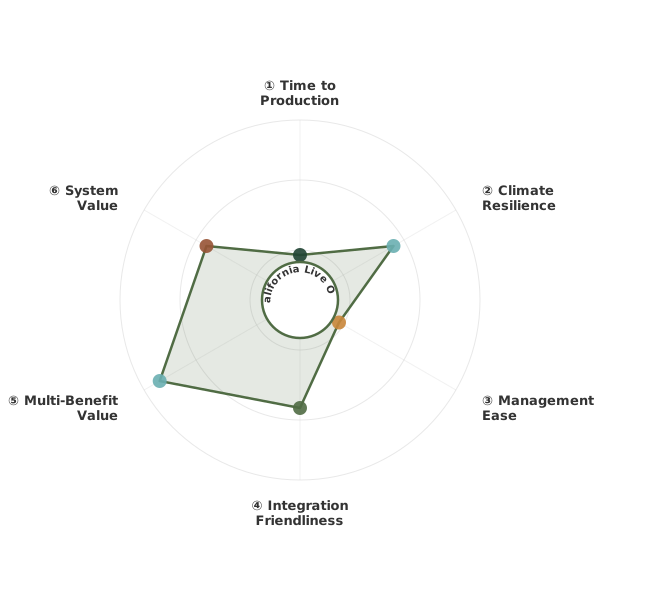
While the provided excerpts do not detail specific uses of Quercus agrifolia within regenerative agriculture systems, they highlight its historical significance and resilience. The mention of Quercus virginiana as rootstock for new growth after historical harvesting suggests a capacity for regeneration and persistence, a key trait in regenerative systems. Related species' suitability for different climates implies potential for diverse agroforestry applications. The limited context prevents a detailed analysis of its role as a cover crop, forage, or nitrogen fixer, nor does it offer insights into integration with practices like rotational grazing or no-till. Consequently, specific regenerative benefits such as soil building or carbon sequestration directly attributable to Quercus agrifolia from this knowledge base are not discernible. Farmer experiences and practical insights regarding its regenerative use are also absent from these excerpts.

Regenerative Quick Profile

All recommendations assume integrated, regenerative practices—not conventional inputs.

Climate & Soil Fit

Climate: Tropical Rainforest, Tropical Monsoon, Tropical Savanna, Hot Semi-Arid (Steppe), Cold Semi-Arid (Steppe), Hot Desert, Cold Desert, Humid Subtropical, Oceanic (Maritime Temperate), Hot-Summer Mediterranean, Warm-Summer Mediterranean, Monsoon-Influenced Humid Subtropical, Subtropical Highland, Hot-Summer Continental, Warm-Summer Continental, Subarctic, Monsoon-Influenced Hot-Summer Continental, Tundra

Zones: USDA 8-10, Australian Zones 4-13, EU Atlantic, Mediterranean

Optimal Soil: Loam Soil

System Role & Functions

Primary: Silvopasture

Secondary: Food Forest, Windbreak

Key Benefits: Multi-benefit value, Drought tolerant, Low maintenance

Management Level

Experience: Advanced

Maintenance: Very low maintenance - California native, thrives with minimal inputs once established, relying on natural soil fertility and water management. Drought tolerant and generally pest-free, requiring very infrequent intervention.

Time to Production: Slow (5+ years) - Slow growth and long establishment for acorns, requiring patience and a focus on building soil fertility to support robust perennial production within a decade.

Value Streams

  • Fruit/nut harvest
1

Climate Suitability Assessment

Will this plant thrive in your climate?

IDEALLY SUITED

Köppen Zone: Cfa (Humid Subtropical), Csa (Hot-Summer Mediterranean), Csb (Warm-Summer Mediterranean)
USDA Zone: 7a, 8a, 9a, 10a, 11a
Australian Zone: temperate

California Live Oak thrives in climates characterized by mild, wet winters and warm, dry summers, with average annual rainfall between 20-35 inches (50-90 cm). These conditions are met in Köppen Csb zones and regional zones like USDA 7b-10b, Australian Temperate, and parts of EU Atlantic where dry summers are pronounced. Establishment success is very high (>85%) with minimal need for supplemental irrigation once established, as the species is highly drought-tolerant. Its deep root system allows it to access moisture effectively, making it resilient to extended dry periods. The mild winters prevent severe frost damage, and the warm summers promote vigorous growth, acorn production, and overall health, supporting its primary function in silvopasture and secondary roles in food forests and windbreaks. Minimal management is required beyond initial establishment, ensuring high long-term productivity and economic viability.

ADEQUATE

Köppen Zone: Aw (Tropical Savanna), BSh (Hot Semi-Arid (Steppe)), Cfb (Oceanic (Maritime Temperate)), Cwa (Monsoon-Influenced Humid Subtropical), Cwb (Subtropical Highland)
USDA Zone: 5a, 5b, 6a, 12a
Australian Zone: subtropical
EU Climate Region: atlantic

California Live Oak can perform adequately in climates with mild winters and moderate rainfall, but may require additional management compared to its ideal range. This includes Köppen Cfa and Cfb zones, USDA 7a, Australian Subtropical, and EU Atlantic regions. These areas often have higher humidity, more summer rainfall, or less pronounced dry seasons, which can increase susceptibility to fungal diseases and potentially slow growth. Establishment success is good (70-85%) but may necessitate careful site selection to ensure good drainage and avoid frost pockets in cooler areas. Supplemental irrigation might be beneficial during establishment or prolonged dry spells, and occasional disease monitoring and management could be required. Despite these considerations, the plant can still establish and provide benefits for silvopasture, food forests, and windbreaks, though yields and longevity might be slightly reduced.

NOT RECOMMENDED

Köppen Zone: Af (Tropical Rainforest), Am (Tropical Monsoon), ET (Tundra), BSk (Cold Semi-Arid (Steppe)), BWh (Hot Desert), BWk (Cold Desert), Dfa (Hot-Summer Continental), Dfb (Warm-Summer Continental), Dfc (Subarctic), Dwa (Monsoon-Influenced Hot-Summer Continental)
USDA Zone: 2a, 3a, 3b, 4a

California Live Oak is not recommended for climates with severe winter cold, such as USDA zones 6a and 6b, where winter lows can drop below 0°F (-18°C). These temperatures pose a significant risk of frost damage or outright mortality to young trees, severely hindering establishment and long-term survival, making its use in silvopasture, food forests, or windbreaks impractical and economically unviable. While technically possible to grow as an annual in extremely protected microclimates, its perennial nature and functional roles are compromised. Establishment success rates are low (<70%) due to winter kill. Alternative, more cold-hardy species are better suited to these challenging environments, offering similar ecological benefits with greater reliability and lower risk of failure. These alternatives are often native to colder regions and possess inherent adaptations to survive extreme winter conditions.

Better alternatives for these "not recommended" zones: Eastern Redcedar (Juniperus virginiana) (highly cold-hardy evergreen, provides browse and shelter, adapted to a wide range of conditions), Hawthorn (Crataegus spp.) (thorny, provides browse and fruit, many species are cold-hardy and drought-tolerant once established), Osage Orange (Maclura pomifera) (very hardy, thorny, provides browse and windbreak, tolerates poor soils)

Note: Zones listed above represent climates where this plant can produce reliably with reasonable management. Climate zones not mentioned would require intensive climate modification (greenhouses, extensive infrastructure) and are not economically viable for regenerative agriculture purposes.

2

Soil Suitability Assessment

Which soil types work best for this plant?

IDEALLY SUITED

Loam Soil

This plant thrives in these soil types without requiring amendments or remediation. Natural soil conditions support optimal growth and productivity.

ADEQUATE

Clay Soil, Rich Soil, Rocky Soil, Sandy Soil

This plant performs acceptably in these soil types with moderate, manageable remediation such as pH adjustment, compost addition, or drainage improvement. The required amendments are practical and cost-effective for regenerative agriculture.

NOT RECOMMENDED

Acidic Soil, Alkaline Soil, Desert Soil, Saline Soil, Wet Soil

Growing this plant in these soil types would require impractical remediation such as complete soil replacement, extensive amendments, or cost-prohibitive infrastructure. These conditions are not economically viable for regenerative agriculture.

Note: Soil suitability assessments focus on remediation requirements. "Ideally Suited" means the plant generally thrives without the need for substantial amendments, "Adequate" means manageable remediation (lime, compost, mulch), and "Not Recommended" means impractical soil changes would be required. Climate factors like rainfall and temperature also influence success.

3

Seasonal Considerations

Planting timing, growth duration, and harvest windows

Establishing California live oaks requires careful timing to leverage their natural cycles. For nursery stock, the ideal planting window is during the dormant season, typically in late fall after leaf drop or very early spring before bud break. This allows roots to establish before the stress of active growth. Bare-root stock is exclusively planted during this dormant period, while container-grown trees offer more flexibility, though still benefit from cooler, moister conditions of the dormant season for initial establishment.

Expect several years before your oaks reach full establishment, often requiring up to five years for robust root systems. True production, whether for acorns or other agroforestry outputs, typically begins after a decade, with trees reaching full productivity over subsequent years. These magnificent trees are long-lived, offering decades of productive life.

Throughout the year, management aligns with seasonal rhythms. Pruning is best undertaken during the dormant season, after leaf senescence in late fall and before the rush of spring growth. Acorn production, a key harvest for many, occurs in late summer to early fall. Bloom timing is generally in spring, followed by acorn development through summer. Winter dormancy is a critical period of rest and resource allocation for the tree, making it essential to avoid root disturbance during this time.

4

System Role & Multi-Benefit Value

Functional roles, integration strategies, and stacked benefits

Functional Role

Total System Value

The total system value of California live oak in regenerative agriculture is substantial, extending far beyond direct harvest. Its primary role in silvopasture provides critical shade and shelter for livestock, enhancing animal health and productivity, thereby contributing to direct harvest value indirectly. System enhancement comes from its physical presence, offering windbreaks and preventing soil erosion, particularly on sloped terrain. Ecosystem services are significant, with mature oaks supporting a vast array of wildlife and pollinators, acting as carbon sinks, and improving water cycles through enhanced infiltration. The acorns provide a valuable food source for wildlife, contributing to biodiversity. Risk diversification is achieved through the tree's longevity and resilience, offering a stable, long-term asset that buffers against market fluctuations and environmental changes. This multi-layered contribution makes Q. agrifolia a cornerstone for building resilient, biodiverse farm ecosystems.

Integration Characteristics

Multi-Benefit Value: Ideally Suited - Provides significant wildlife habitat and food (acorns), excellent erosion control through deep root systems that improve soil structure, and supports diverse insect life, enhancing ecosystem services.

Integration Friendliness: Adequate - Provides acorns for wildlife and potential fodder, shade, and erosion control, enhancing ecosystem services. Integration with livestock requires careful management due to tannins, but can be a beneficial component of a diverse system.

5

Management & Care Requirements

Integration guidance, maintenance needs, and care practices

How to Integrate This Plant

California live oak (Quercus agrifolia) is a keystone species for regenerative agriculture in its native range, primarily serving as a foundational element in silvopasture systems. Its robust structure offers essential shade and shelter for livestock, mitigating heat stress and improving animal welfare, which can lead to better weight gain and reduced mortality. As a long-lived tree, it provides persistent ecosystem services including erosion control on slopes and habitat for beneficial wildlife and pollinators. While not a nitrogen fixer, its deep root system accesses water and nutrients, improving soil structure and water infiltration. Integrating Q. agrifolia into silvopasture allows for the stacking of benefits: livestock forage beneath the canopy, potential acorn production for wildlife or specialized animal feed, and long-term timber value. Early establishment is key, with significant contributions to shade and habitat becoming apparent within 5-10 years, and substantial ecosystem services by year 20.

Integration Practices & Management

The provided knowledge base does not contain specific details regarding the integration of Quercus agrifolia into regenerative agriculture systems. The mentions of Quercus agrifolia are limited and do not elaborate on its establishment methods, integration with grazing, termination strategies, management considerations, or integration with cash crops within a regenerative farming context. Therefore, based solely on the given sources, it is not possible to provide a focused explanation of how regenerative farmers integrate this plant. The knowledge base primarily discusses Quercus virginiana in the context of historical shipbuilding and its recovery, with a brief mention of related species not being suited for colder climates like Oregon, which is where Quercus agrifolia is native.

Management Profile

Maintenance Intensity: Ideally Suited - California native, thrives with minimal inputs once established, relying on natural soil fertility and water management. Drought tolerant and generally pest-free, requiring very infrequent intervention.

Pest Disease Pressure: Ideally Suited - California native oak with excellent drought tolerance and inherent resistance to common oak diseases, supported by a healthy ecosystem and minimal intervention for vigorous growth and acorn production.

Time To Production: Not Recommended - Slow growth and long establishment for acorns, requiring patience and a focus on building soil fertility to support robust perennial production within a decade.

6

Economics & Value Streams

Direct harvest, system benefits, ecosystem services, and risk diversification

Comprehensive economic analysis including direct harvest value, system enhancement contributions, ecosystem services, value timeline, and risk diversification strategies.

Per-Tree Production Economics

Metric Value
Establishment Cost $15-25
Years to First Harvest 10-15 years
Annual Maintenance $4-8
Yield 20-40 lbs/year 9-18 kg/year
Market Price $0-0/lb $0-1/kg
Productive Lifespan 75-100 years
Net Annual Return* $-8 to $-4/year (negative)

Values shown per mature tree, not per acre. In regenerative systems, trees are integrated at low densities across diverse landscapes. Establishment costs spread over the lifespan of the tree. Early years have costs but no revenue.

* Net Annual Return = (Yield × Market Price) − (Amortized Establishment Cost + Annual Maintenance). This return is realized only at/after first harvest; early years have costs but no revenue. Range shows worst case to best case scenarios.

System Enhancement Value

Beyond harvest: shade for livestock, soil building, and system benefits

Shade Value for Livestock

$50-150/head/year for cattle, $30-80/head/year for pigs (variable by climate, density, canopy)

As a large, established tree, the California Live Oak (*Quercus agrifolia*) provides significant shade, a critical component in silvopasture systems. This shade offers substantial relief to livestock from solar radiation, particularly during hot summer months, reducing heat stress. Reduced heat stress leads to improved animal well-being, increased feed intake, and better weight gain or milk production. The presence of mature oaks, as suggested by the knowledge base's mention of a less than 100-year-old specimen exhibiting 'impressive grandeur,' indicates their capacity for long-term shade provision. In areas experiencing increasing climate stressors like warming temperatures, as noted in research on oak restoration, shade becomes even more vital for maintaining livestock productivity and health, directly contributing to the economic viability of the pasture component.

Nitrogen Fixation (if legume)

Windbreak & Erosion Control

Protects 200-600 ft downwind (2-14 acres per 100ft row), value varies by exposure, crop types, and design

While not explicitly detailed as a primary function in the provided excerpts, the 'classic Live Oak architecture' and its mention as a potential windbreak in the prompt's framing suggest its utility in this role. Large trees like the California Live Oak, when strategically planted, can significantly disrupt wind patterns. This protection is invaluable for agricultural systems, reducing wind erosion of topsoil, which is a persistent threat to soil health and productivity. Furthermore, windbreaks shield crops and livestock from harsh winds, minimizing desiccation and physical damage. The knowledge base notes that related species are found in Southern Oregon and Northern California, indicating adaptation to varied climates where wind protection could be beneficial. The extended root systems of mature oaks also contribute to soil stabilization, further enhancing erosion control.

Other System Contributions

Beyond direct shade and windbreak functions, California Live Oaks offer numerous ecological and economic benefits within an integrated farm system. Their role as a 'Food Forest' component implies potential for producing acorns, a traditional food source for wildlife and historically for humans, and potentially other edible understory plants that can thrive in their dappled shade. The knowledge base mentions their reliance on ectomycorrhizal fungi, highlighting their role in supporting complex soil food webs and improving soil health. They also provide crucial habitat and food sources for a wide array of wildlife, including birds and insects, contributing to biodiversity. Research on pocket gopher damage indicates that oaks are a vital part of the ecosystem, and their regeneration is important for maintaining ecological balance. Their deep root systems can also improve soil structure and water infiltration.

Ecosystem Service Contributions

Environmental contributions: carbon, pollinators, wildlife, and water

  • Carbon Sequestration: California Live Oaks are long-lived, large-statured trees with extensive woody biomass, indicating significant potential for long-term carbon sequestration in both their above-ground and below-ground tissues. Their slow growth rate contributes to stable, long-term carbon storage.
  • Pollinator Support: High. Oaks produce catkins that are a valuable early spring pollen source for native bees and other pollinators, and their flowers can also attract them.
  • Wildlife Habitat: High. Oaks are keystone species providing mast (acorns) for a wide range of wildlife, nesting sites for birds, and habitat for numerous insects, which in turn support other wildlife.
  • Water Quality: Applicable. Oaks, particularly when part of riparian systems as mentioned in research, contribute to water filtration through their root systems and by stabilizing soil, reducing sediment runoff into waterways.

Value Timeline: When Benefits Begin

When you'll see results: shade in years 1-5, fruit/nut harvest 3-10, timber 20+

Years 1-2

Initial erosion control from root establishment, early shade provision in open areas, potential for early understory growth in food forest layer.

Years 3-5

Established shade for livestock, noticeable windbreak effect in planted rows, development of food forest understory, increasing habitat provision.

Years 10-20

Significant shade canopy for silvopasture, substantial windbreak protection, mature food forest productivity, increased biodiversity support, robust carbon sequestration.

20+ Years

Full ecosystem services, potential for timber harvest (though not a primary focus here), long-term habitat provision, highly stable carbon sinks, established ecological resilience.

Farm Risk Reduction

How this reduces farm risk: backup income, weather protection, market hedges

  • Multiple Revenue Streams: Silvopasture shade benefits (increased livestock productivity), potential food forest products (acorns, understory crops), windbreak protection (crop yield, reduced erosion), timber value (long-term), ecological services (biodiversity, carbon sequestration).
  • Temporal Income Spread: Ongoing provision of shade and windbreak services, periodic harvests from food forest components, long-term value accumulation from timber and carbon sequestration.
  • Market Risk Hedge: Reduces reliance on single crops or livestock by providing multiple value streams. Drought tolerance inherent in Live Oaks can buffer against climate-related losses in other farm enterprises. Provides stable, long-term ecological benefits that enhance overall farm resilience.
7

Regenerative Suitability Details

Comprehensive trait ratings for system integration assessment

Comparative ratings for this plant across key regenerative agriculture traits.

Trait Suitability Explanation
Drought Tolerance Ideally Suited California native with deep roots that enhance soil structure and moisture retention, thriving in dry Mediterranean climates with minimal supplemental water management once established.
Establishment Ease Not Recommended Slow germination and establishment from seed, benefiting from soil health and careful moisture management, often requiring transplanting for reliable integration into a regenerative system.
Time To Production Not Recommended Slow growth and long establishment for acorns, requiring patience and a focus on building soil fertility to support robust perennial production within a decade.
Multi Benefit Value Ideally Suited Provides significant wildlife habitat and food (acorns), excellent erosion control through deep root systems that improve soil structure, and supports diverse insect life, enhancing ecosystem services.
Climate Adaptability Adequate Thrives in coastal California (zones 8-10), tolerating moderate heat and drought once established through its inherent resilience and deep root systems. Less cold-hardy than inland oaks, limiting broader zone performance.
Hardiness Zone Range Not Recommended Primarily a Pacific Northwest native, thriving in zones 8-10 with its deep root systems supporting moisture retention. Shows limited cold tolerance and heat stress beyond its natural range.
Maintenance Intensity Ideally Suited California native, thrives with minimal inputs once established, relying on natural soil fertility and water management. Drought tolerant and generally pest-free, requiring very infrequent intervention.
Pest Disease Pressure Ideally Suited California native oak with excellent drought tolerance and inherent resistance to common oak diseases, supported by a healthy ecosystem and minimal intervention for vigorous growth and acorn production.
Integration Friendliness Adequate Provides acorns for wildlife and potential fodder, shade, and erosion control, enhancing ecosystem services. Integration with livestock requires careful management due to tannins, but can be a beneficial component of a diverse system.

Comparative System: Ratings compare plants within their economic category (e.g., cover crop nitrogen fixation compared to other cover crops, not to all plants). Individual farm conditions and management practices significantly influence actual performance.

8

Learn More

Why farmers use this plant and additional resources

Why Regenerative Farmers Use This Plant

Quercus agrifolia, commonly known as the Coast Live Oak, is a cornerstone species for regenerative agriculture systems in its native Mediterranean-influenced climates, offering profound ecological and economic benefits over its long lifespan. As a mature tree, it is a significant carbon sink, estimated to sequester 2-5 tons of CO2e per acre annually through its extensive biomass and deep root systems, which can reach depths of 15-30+ feet (4.5-9+ meters). This sequestration contributes directly to soil organic matter enhancement and long-term soil health.

Beyond carbon sequestration, its dense canopy provides invaluable microclimate regulation, offering shade that reduces heat stress for livestock and understory crops, thereby lowering irrigation needs and improving animal welfare. The robust structure of mature oaks, often reaching heights of 40-70 feet (12-21 meters) with a similar spread, also serves as an effective windbreak, protecting more sensitive crops and reducing soil erosion. Economically, Quercus agrifolia represents a multi-decade asset, providing sustainable timber, acorns for wildlife or potential human consumption after processing, and supporting a rich biodiversity that can enhance farm resilience.

Integrating Quercus agrifolia into farm landscapes offers a suite of ecosystem services that bolster regenerative practices. As a long-lived perennial, it requires minimal annual input once established, contrasting sharply with annual cropping systems. Its presence can support a diverse array of beneficial insects and pollinators, attracted to its flowers and the habitat it provides, contributing to natural pest control for surrounding agricultural areas. The leaf litter from its canopy enriches the soil with organic matter and nutrients, acting as a natural mulch that suppresses weeds and conserves soil moisture. In silvopasture systems, the shade and forage diversity it promotes can increase livestock carrying capacity, with estimates suggesting an increase of 0.2-0.5 Animal Units per acre in well-managed systems. Furthermore, its deep root structure improves soil structure and water infiltration, mitigating runoff and erosion, especially on sloped terrain common in its native range.

The ecosystem services provided by Quercus agrifolia are substantial and long-lasting. Its presence can significantly improve soil organic matter content, with measurable increases in soil carbon occurring within 5-10 years of establishment. The dense canopy and root systems enhance water infiltration rates, reducing runoff and improving the resilience of the landscape to drought and heavy rainfall events. As a host plant for numerous insect species, it supports populations of beneficial insects that can aid in pest control for nearby agricultural crops. Its role in the landscape is critical for maintaining healthy soil biology, water cycles, and overall ecosystem function.

The long-term economic and ecological returns from Quercus agrifolia are substantial, though they manifest over decades rather than seasons. While it takes approximately 1-3 years for a sapling to establish a robust root system and begin significant above-ground growth, and 20-50 years to reach full maturity and maximum ecological impact, the investment is enduring. Unlike annual crops that require yearly replanting and significant inputs, a mature oak grove represents a stable, appreciating asset. Its contribution to biodiversity, soil health, and climate regulation provides a foundation for a more resilient and self-sustaining farming operation.

Quercus agrifolia has a proven track record of success in various regenerative systems across its native range and similar climates. In California's Central Valley, farmers have integrated oaks into hedgerows and riparian buffers, enhancing biodiversity and providing shade for livestock. In Mediterranean regions like Italy and Spain, similar native oak species are vital components of dehesa and montado agroforestry systems, providing acorns for livestock and supporting a mosaic of pasture and woodland. Australian farmers in similar Mediterranean climates have explored planting native Eucalyptus and Acacia species, drawing parallels to the multi-functional benefits provided by Quercus agrifolia, such as windbreaks, habitat, and soil improvement. In California's coastal agricultural valleys, it can be planted as part of hedgerows or windbreaks for vineyards and orchards. Ranchers find that maintaining oak woodlands increases livestock comfort and productivity during hot summer months. Efforts are underway to re-establish oak savannas and woodlands on former rangelands, demonstrating the species' adaptability and its role in restoring degraded landscapes to more ecologically functional states.

9

How to Integrate This Plant

Practical guidance for regenerative systems

Establishing Quercus agrifolia typically involves planting nursery-grown saplings or acorns.

Planting Acorns: Acorns should be collected from healthy, mature trees in the fall and planted immediately or after a period of stratification. Direct sowing in the fall is recommended, planting them at a depth of 1-2 inches (2.5-5 cm) in well-drained soil. Spacing for individual trees can range from 15-30 feet (4.5-9 m) apart, depending on the desired density of the woodland or silvopasture system. Planting multiple acorns per desired tree location is common to increase germination success.

Planting Saplings: Saplings are best planted during the dormant season, from late autumn through early spring (October to March in the Northern Hemisphere, April to September in the Southern Hemisphere), when temperatures are cool and moisture is available. Planting depth for saplings is critical; ensure the root ball is planted at the same level it was in the nursery container, typically 12-24 inches (30-60 cm) deep and wide, backfilling with native soil. Saplings are typically 1-3 years old when planted and provide a head start in establishment.

Spacing: Spacing for individual trees should allow for mature canopy spread, typically 40-70 feet (12-21 meters) apart. For intercropping, alley cropping, or silvopasture designs, trees can be planted in rows or scattered throughout pastures with spacing of 30-40 feet (9-12 meters) to facilitate intercropping, grazing access, equipment access for hay harvest or grazing management, and livestock movement.

Establishment & Management: During the first 3-5 years, saplings will require supplemental irrigation, especially during dry summer months, aiming for approximately 1 inch (2.5 cm) of water per week, gradually reducing as the root system develops. Once established, mature oaks are highly drought-tolerant.

Fertility management should prioritize biological approaches; incorporate compost around the base of young trees and allow leaf litter to accumulate. Avoid synthetic fertilizers, as they can disrupt the tree's natural nutrient cycling and mycorrhizal associations. The incorporation of cover crop residue, compost application, and the natural deposition of leaf litter and acorns are key to supporting soil health. In the understory, nitrogen-fixing ground covers like clover or vetch can be integrated during the establishment phase (year 2-3) to enhance soil fertility and provide forage for livestock.

Pruning is generally minimal, focusing on removing dead, diseased, or crossing branches to maintain tree health and structure, and shaping young trees to encourage a strong central leader if desired. Mature trees require little to no intervention.

Pest and disease management should rely on promoting a healthy ecosystem; encourage beneficial insects and maintain tree vigor through proper watering and soil health. Focus on cultural practices and encouraging beneficial insect populations, with chemical interventions used only as a last resort during the transition phase.

Protection: Protection from browsing animals, such as deer and rabbits, is crucial during the first 3-5 years of establishment, often requiring tree guards or fencing. Temporary fencing to protect young trees may be necessary during the initial establishment phase (1-3 years).

Timeline for Full Impact: Trees typically reach reproductive maturity (acorn production) between 20-50 years, with full canopy development and ecological services realized over 50-100 years. Measurable soil carbon increases can be observed by year 5-7 as the tree matures and adds biomass.

Regional Adaptations: In the Mediterranean climate of Southern Europe and California, planting is best done in the autumn (October-November) to take advantage of winter rains for establishment. In more arid inland areas, careful consideration for supplemental irrigation during establishment and grazing management to protect young trees is important. Efforts to restore oak woodlands on marginal rangelands often involve direct seeding or planting saplings, with management focused on fire prevention and invasive species control. In regions with hotter, drier summers but sufficient winter rainfall, like parts of Chile or South Africa, planting during the cooler, wetter months is crucial for establishment.