Its potential is evident. As a foundational tree species in its native range, it naturally contributes to ecosystem stability. In regenerative systems, oak species like Quercus garryana are valuable components of agroforestry and silvopasture systems. Their acorns can serve as a critical forage source for livestock, particularly during fall and winter, integrating well with rotational grazing practices. Oaks contribute to soil building through leaf litter decomposition and carbon sequestration over their long lifespans. Furthermore, as a keystone species, they support biodiversity, providing habitat and food for numerous wildlife and pollinator species, indirectly benefiting farm ecosystems. While direct mentions of Quercus garryana as a cover crop or nitrogen fixer are absent in our current data, its role as a perennial, biomass-producing component in diversified farming landscapes aligns with regenerative principles of soil health, biodiversity, and long-term productivity. While coverage in our knowledge base is limited, the above represents documented uses in regenerative systems.

Regenerative Quick Profile

All recommendations assume integrated, regenerative practices—not conventional inputs.

Climate & Soil Fit

Climate: Tropical Rainforest, Tropical Monsoon, Tropical Savanna, Hot Semi-Arid (Steppe), Cold Semi-Arid (Steppe), Hot Desert, Cold Desert, Humid Subtropical, Oceanic (Maritime Temperate), Hot-Summer Mediterranean, Warm-Summer Mediterranean, Monsoon-Influenced Humid Subtropical, Subtropical Highland, Hot-Summer Continental, Warm-Summer Continental, Subarctic, Monsoon-Influenced Hot-Summer Continental, Tundra

Zones: USDA 7-9, Australian Zones 3-5

Optimal Soil: Loam Soil

System Role & Functions

Primary: Silvopasture

Secondary: Food Forest, Specialty

Key Benefits: Multi-benefit value, Drought tolerant, Low maintenance

Management Level

Experience: Advanced

Maintenance: Very low maintenance - Once established, this long-lived, drought-tolerant native becomes largely self-sufficient, requiring minimal intervention beyond supporting its initial growth and soil health.

Time to Production: Slow (5+ years) - As a slow-growing species, Garry oak represents a long-term investment in ecosystem function, with significant acorn yields for wildlife or foraging becoming available after 10-15 years of supportive growth.

Value Streams

  • Fruit/nut harvest

Know the Debate

  • Benefits appear across timelines: immediate shade to long-term timber and soil health.
  • Establishes best in sun, well-drained, drier soils; avoids waterlogged areas.
  • Livestock exclusion vital for first 3-5 years; yields increase post-establishment.
  • Carbon sequestration potential is high but long-term a key factor.
1

Climate Suitability Assessment

Will this plant thrive in your climate?

IDEALLY SUITED

Köppen Zone: Cfa (Humid Subtropical), Cfb (Oceanic (Maritime Temperate)), Csb (Warm-Summer Mediterranean), Dfb (Warm-Summer Continental)
USDA Zone: 6a, 7a, 8a, 9a
Australian Zone: temperate
EU Climate Region: atlantic

Oregon White Oak performs optimally in climates with mild, wet winters and dry to moderately moist summers, characterized by 150-250 frost-free days and average summer temperatures between 65-80°F (18-27°C). These conditions are met in Köppen Csb and Cfb zones, USDA zones 6b through 8b, Australian temperate zones, and EU Atlantic regions. Establishment is highly successful with minimal intervention, as natural rainfall patterns support seedling growth. Mature trees exhibit excellent drought tolerance once established, and the long growing season allows for vigorous development, making them ideal for silvopasture and food forest applications. Minimal disease or pest pressure is expected, and multi-year productivity is reliable. The species thrives in these environments, requiring little to no supplemental irrigation and demonstrating high resilience and longevity, contributing significantly to regenerative agriculture goals through shade, forage, and habitat provision.

ADEQUATE

Köppen Zone: BSk (Cold Semi-Arid (Steppe)), Csa (Hot-Summer Mediterranean), Cwa (Monsoon-Influenced Humid Subtropical), Cwb (Subtropical Highland), Dfa (Hot-Summer Continental)
USDA Zone: 5a, 5b, 10a
Australian Zone: subtropical

Oregon White Oak can perform adequately in climates with a longer growing season but potentially more extreme summer temperatures or reduced rainfall, found in Köppen Csa and Cfa zones, USDA zones 5b-6a and 9a-10b, Australian subtropical zones, and EU Mediterranean regions. These zones offer sufficient frost-free days (120-200), but summer heat and drought may stress young trees, necessitating supplemental irrigation during establishment and dry periods. Yields in silvopasture systems may be reduced by 10-20% compared to ideal zones due to these environmental pressures. While mature trees are more resilient, careful site selection and water management are crucial for consistent productivity and long-term health. Establishment success rates are good (70-85%) with proper timing and care, but require more attention than in ideal climates. Economic viability is maintained, but input costs for water management may increase.

NOT RECOMMENDED

Köppen Zone: Af (Tropical Rainforest), Am (Tropical Monsoon), Aw (Tropical Savanna), ET (Tundra), BSh (Hot Semi-Arid (Steppe)), BWh (Hot Desert), BWk (Cold Desert), Dfc (Subarctic), Dwa (Monsoon-Influenced Hot-Summer Continental)
USDA Zone: 2a, 3a, 3b, 4a, 11a, 12a
EU Climate Region: continental

Oregon White Oak is not recommended for climates with extreme winter cold or prolonged, intense summer heat and drought, as found in Köppen Dsb and Dfa zones, USDA zones 3b-5a, and EU continental regions. These zones present significant challenges to the species' survival and productivity. In cold continental climates (Dfa, USDA 3b-5a, EU continental), winter temperatures frequently drop below -20°F (-29°C), causing severe winter kill and making perennial establishment unreliable, with success rates below 70%. The short growing season further limits development. In warmer, drier continental climates (Dsb, USDA 5a), while summers are warmer, the combination of cold winters and dry summers stresses the trees. Establishment requires intensive protection and supplemental watering, increasing management costs substantially. Alternative species better adapted to these harsh conditions are essential for successful regenerative agriculture practices in these regions.

Better alternatives for these "not recommended" zones: Bur Oak (Quercus macrocarpa) (very cold-hardy and drought-tolerant oak species, suitable for continental climates), Northern Red Oak (Quercus rubra) (more cold-hardy oak species, adapted to continental climates), Quaking Aspen (Populus tremuloides) (highly cold-hardy, adapted to continental climates, provides shade and forage), Balsam Poplar (Populus balsamifera) (very cold-hardy, fast-growing, tolerates a range of soil conditions)

Note: Zones listed above represent climates where this plant can produce reliably with reasonable management. Climate zones not mentioned would require intensive climate modification (greenhouses, extensive infrastructure) and are not economically viable for regenerative agriculture purposes.

2

Soil Suitability Assessment

Which soil types work best for this plant?

IDEALLY SUITED

Loam Soil

This plant thrives in these soil types without requiring amendments or remediation. Natural soil conditions support optimal growth and productivity.

ADEQUATE

Clay Soil, Rich Soil, Rocky Soil, Sandy Soil

This plant performs acceptably in these soil types with moderate, manageable remediation such as pH adjustment, compost addition, or drainage improvement. The required amendments are practical and cost-effective for regenerative agriculture.

NOT RECOMMENDED

Acidic Soil, Alkaline Soil, Desert Soil, Saline Soil, Wet Soil

Growing this plant in these soil types would require impractical remediation such as complete soil replacement, extensive amendments, or cost-prohibitive infrastructure. These conditions are not economically viable for regenerative agriculture.

Note: Soil suitability assessments focus on remediation requirements. "Ideally Suited" means the plant generally thrives without the need for substantial amendments, "Adequate" means manageable remediation (lime, compost, mulch), and "Not Recommended" means impractical soil changes would be required. Climate factors like rainfall and temperature also influence success.

3

Seasonal Considerations

Planting timing, growth duration, and harvest windows

Establishing Oregon white oak requires patience, as this majestic tree enters its long productive life. For nursery stock, bare-root transplants are best planted during the dormant season, typically in late fall or very early spring, before bud break. Container-grown trees offer more flexibility, allowing planting throughout the active growing season, though watering is critical during establishment.

Expect several years before your oaks are truly established, typically around 3-5 years, during which focused irrigation and weed control are paramount. First acorn production might be observed after 10-15 years, with trees reaching full production in their 20s and continuing to yield for many decades, even centuries.

Seasonal management aligns with the oak's natural rhythm. Pruning is best undertaken during the dormant season, after leaves have fallen in autumn and before sap begins to rise in early spring. This minimizes stress and disease risk. While acorns mature throughout late summer and into fall, harvest typically occurs after they have dropped from the trees in autumn. Observe your trees' winter dormancy; this period is crucial for their long-term health and future productivity.

4

System Role & Multi-Benefit Value

Functional roles, integration strategies, and stacked benefits

Functional Role

Total System Value

The Oregon White Oak offers substantial system value beyond its primary role in silvopasture. Acorns represent a direct harvest opportunity, providing a nutrient-rich, albeit seasonal, feed for livestock, reducing reliance on external feed inputs. As a mature tree, it provides critical shade, enhancing animal comfort and productivity, and contributing to a more resilient farm system. Its deep root system improves soil health and water management, while its presence supports biodiversity by offering habitat and food for wildlife. The oak's role in carbon sequestration further adds to its ecological benefit. By integrating Quercus garryana, farms diversify their income streams (timber, potential nut harvest) and enhance ecosystem services, building overall farm resilience against environmental and market fluctuations.

Integration Characteristics

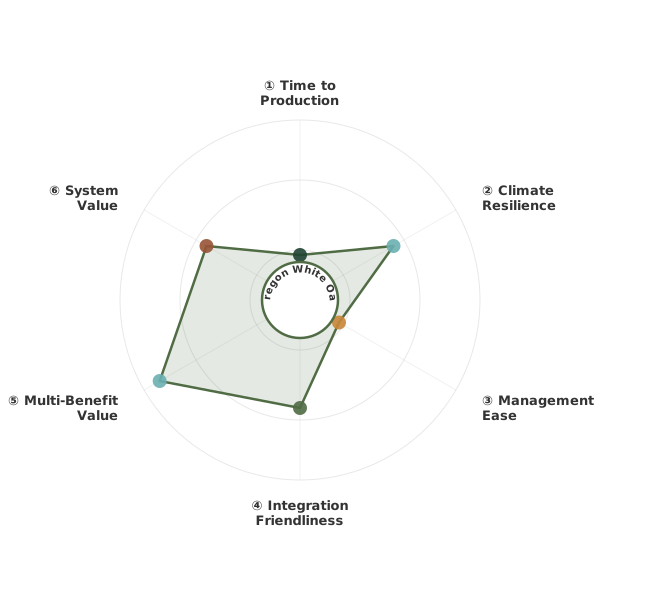
Multi-Benefit Value: Ideally Suited - Its deep roots build soil structure and enhance fertility, while providing vital acorns and habitat, making it an exceptional contributor to a biodiverse and resilient landscape.

Integration Friendliness: Adequate - Garry oak provides abundant acorns for wildlife and potential livestock feed, along with shade and habitat, integrating seamlessly with managed grazing systems that enhance soil fertility.

5

Management & Care Requirements

Integration guidance, maintenance needs, and care practices

How to Integrate This Plant

Oregon White Oak (Quercus garryana) is ideal for silvopasture systems due to its valued acorns, which can provide a high-energy feed source for livestock, particularly pigs and sheep, during fall. Its significant stature also offers crucial shade for animals, mitigating heat stress and improving welfare and productivity. Integrating these trees into pastures, especially in silvopasture or alley cropping designs, enhances landscape complexity and provides habitat. While direct harvest of acorns begins as the tree matures, early contributions include shade and aesthetic value. Over decades, the trees establish robust root systems, aiding soil structure and water infiltration. Their integration supports a multi-functional farmscape, offering ecological services alongside agricultural outputs.

Integration Practices & Management

The provided knowledge base offers limited specific details on how regenerative farmers integrate Quercus garryana (Oregon White Oak) into their systems. While the sources establish Quercus garryana as a native tree species of the Pacific West Coast, they do not elaborate on its establishment methods, such as seeding rates, timing, or companion planting strategies. Similarly, information regarding its integration with grazing practices, including mob or rotational grazing, timing, and rest periods, is absent. Termination strategies like natural winterkill, grazing, crimping, mowing, or herbicide use are also not discussed. Management considerations like fertility needs, competition control, and succession planning are not detailed within the given text. Furthermore, the knowledge base does not explain how Quercus garryana might be integrated with cash crops through relay cropping, intercropping, or rotation sequences. The available information focuses primarily on the botanical characteristics and geographic range of Quercus garryana, rather than its practical application in regenerative agriculture frameworks.

Management Profile

Maintenance Intensity: Ideally Suited - Once established, this long-lived, drought-tolerant native becomes largely self-sufficient, requiring minimal intervention beyond supporting its initial growth and soil health.

Pest Disease Pressure: Adequate - A resilient Pacific Northwest native, Garry oak generally exhibits good resistance to pests and diseases, with ongoing monitoring integrated into overall ecosystem health checks.

Time To Production: Not Recommended - As a slow-growing species, Garry oak represents a long-term investment in ecosystem function, with significant acorn yields for wildlife or foraging becoming available after 10-15 years of supportive growth.

6

Economics & Value Streams

Direct harvest, system benefits, ecosystem services, and risk diversification

Comprehensive economic analysis including direct harvest value, system enhancement contributions, ecosystem services, value timeline, and risk diversification strategies.

Per-Tree Production Economics

Metric Value
Establishment Cost $15-25
Years to First Harvest 10-15 years
Annual Maintenance $4-8
Yield 20-40 lbs/year 9-18 kg/year
Market Price $0-0/lb $0-1/kg
Productive Lifespan 75-100 years
Net Annual Return* $-8 to $-4/year (negative)

Values shown per mature tree, not per acre. In regenerative systems, trees are integrated at low densities across diverse landscapes. Establishment costs spread over the lifespan of the tree. Early years have costs but no revenue.

* Net Annual Return = (Yield × Market Price) − (Amortized Establishment Cost + Annual Maintenance). This return is realized only at/after first harvest; early years have costs but no revenue. Range shows worst case to best case scenarios.

System Enhancement Value

Beyond harvest: shade for livestock, soil building, and system benefits

Shade Value for Livestock

Cattle $50-150/head/year, Pigs $30-80/head/year. Shade value varies by climate, livestock density, and canopy characteristics.

Oregon white oak (Quercus garryana) can provide significant shade in silvopasture systems, enhancing livestock well-being and productivity. As a mature tree, it offers substantial canopy cover, reducing heat stress for animals, which can lead to improved weight gain, milk production, and overall health. The value of this shade is highly dependent on the specific climate, the density of the livestock grazing, and the characteristics of the oak's canopy, such as its spread and leaf density. While direct quantitative data for Quercus garryana is not provided, the general range for cattle indicates a substantial economic benefit. This shade also contributes to a more comfortable environment for beneficial insects and can influence soil moisture dynamics beneath its canopy.

Nitrogen Fixation (if legume)

Windbreak & Erosion Control

Variable, potential to protect 3-5 acres per tree row, 5-15% crop yield improvement (dependent on planting density and width of break).

While not explicitly detailed as a windbreak in the provided excerpts, mature Oregon white oak trees, with their robust structure and potential for longevity (up to 300 years per mention), can function as natural windbreaks. Their established root systems and dense canopies can mitigate wind speed, thereby reducing soil erosion and protecting adjacent crops or pastures. This protection is particularly valuable in agricultural landscapes exposed to prevailing winds. The effectiveness as a windbreak would depend on planting density and arrangement, but the inherent resilience and size of the species suggest a significant potential for wind attenuation. Further research would be needed to quantify the specific acreage protected and yield improvements.

Other System Contributions

Oregon white oak is a keystone species for wildlife, providing crucial food and habitat. Its acorns are a vital food source for numerous wildlife species and were historically important for Native Americans. The tree's structure offers nesting sites and browse for various animals. Beyond direct wildlife support, its deep taproot system suggests significant soil improvement capabilities, aiding in water infiltration and soil structure. The species' drought resistance also positions it as a valuable component for climate-resilient farming systems. While not riparian, its presence can contribute to overall landscape health and biodiversity, indirectly supporting beneficial insects and soil microbial communities.

Ecosystem Service Contributions

Environmental contributions: carbon, pollinators, wildlife, and water

  • Carbon Sequestration: Oregon white oak is a long-lived hardwood species with a substantial biomass potential, indicating significant carbon storage capacity in both its woody tissues and soil over its lifespan of up to 300 years.
  • Pollinator Support: Medium. Oaks generally provide pollen and nectar resources, especially during their flowering period, supporting a range of native pollinators.
  • Wildlife Habitat: High. Acorns are a critical food source (mast), and the mature tree provides nesting, roosting, and browse habitat for diverse wildlife.
  • Water Quality: Not applicable

Value Timeline: When Benefits Begin

When you'll see results: shade in years 1-5, fruit/nut harvest 3-10, timber 20+

Years 1-2

Initial establishment, potential for minor browsing deterrence if planted in strategic locations. Focus on seedling protection from herbivores.

Years 3-5

Beginning of shade provision for livestock if integrated into silvopasture. Acorn production may begin, contributing to wildlife food sources. Erosion control benefits from established root systems.

Years 10-20

Significant shade provision for livestock, contributing to animal welfare and productivity. Mature canopy offers substantial wildlife habitat. Potential for early timber value if managed for that purpose, and significant carbon sequestration.

20+ Years

Full mature tree benefits, including maximum shade, extensive wildlife support, and significant carbon sequestration. Potential for high-value timber harvest. Long-term soil improvement and landscape stabilization.

Farm Risk Reduction

How this reduces farm risk: backup income, weather protection, market hedges

  • Multiple Revenue Streams: Silvopasture shade value (livestock productivity), wildlife habitat enhancement (potential for ecotourism/hunting leases), long-term timber value, potential for specialty food products (acorns), ecosystem services (carbon sequestration, soil health).
  • Temporal Income Spread: Provides ongoing ecosystem services (shade, habitat, carbon sequestration) from early establishment, with periodic benefits from acorn production and eventual timber harvest occurring over decades.
  • Market Risk Hedge: Drought tolerance offers resilience against climate variability. Diversifies farm income beyond traditional crops, reducing reliance on single-market fluctuations. Provides ecological services that can reduce input costs (e.g., shade reducing heat stress).
7

Regenerative Suitability Details

Comprehensive trait ratings for system integration assessment

Comparative ratings for this plant across key regenerative agriculture traits.

Trait Suitability Explanation
Drought Tolerance Ideally Suited Garry oak's deep taproot excels at accessing soil moisture in dry landscapes, contributing to its resilience with supportive mulch and judicious water management.
Establishment Ease Not Recommended While slow to germinate, Garry oak establishment is enhanced by healthy soil rich in organic matter and careful moisture retention, often benefiting from being transplanted into a well-prepared site.
Time To Production Not Recommended As a slow-growing species, Garry oak represents a long-term investment in ecosystem function, with significant acorn yields for wildlife or foraging becoming available after 10-15 years of supportive growth.
Multi Benefit Value Ideally Suited Its deep roots build soil structure and enhance fertility, while providing vital acorns and habitat, making it an exceptional contributor to a biodiverse and resilient landscape.
Climate Adaptability Adequate Adapted to dry summers and moderate winters across its native range, Garry oak thrives in well-drained soils and benefits from integrated fertility management and moisture retention strategies.
Hardiness Zone Range Not Recommended Primarily found in zones 7-9, Garry oak prefers specific rainfall patterns and benefits from landscape designs that avoid extreme cold and heat, integrating with local microclimates.
Maintenance Intensity Ideally Suited Once established, this long-lived, drought-tolerant native becomes largely self-sufficient, requiring minimal intervention beyond supporting its initial growth and soil health.
Pest Disease Pressure Adequate A resilient Pacific Northwest native, Garry oak generally exhibits good resistance to pests and diseases, with ongoing monitoring integrated into overall ecosystem health checks.
Integration Friendliness Adequate Garry oak provides abundant acorns for wildlife and potential livestock feed, along with shade and habitat, integrating seamlessly with managed grazing systems that enhance soil fertility.

Comparative System: Ratings compare plants within their economic category (e.g., cover crop nitrogen fixation compared to other cover crops, not to all plants). Individual farm conditions and management practices significantly influence actual performance.

8

Know the Debate

Quercus garryana, or Oregon White Oak, is a cornerstone species for regenerative agriculture in its native Pacific Northwest and similar temperate ...

Quercus garryana, or Oregon White Oak, is a cornerstone species for regenerative agriculture in its native Pacific Northwest and similar temperate regions. While its significant benefits in soil health, carbon sequestration, and biodiversity support are recognized across its range, the timeline for realizing these benefits and the establishment requirements vary. Its capacity to thrive in challenging, drier sites, compared to other oak species or forest trees, makes it adaptable but requires specific management for successful integration. Key context factors that influence outcomes include climate suitable for Zones 7-9, the need for well-drained soils, and the critical 3-5 year establishment period where livestock must be excluded. The long-term nature of timber revenue suggests a patient, legacy-building approach to its integration.

When do oak trees yield significant benefits?

Long-term ecological and timber benefits

Academic research highlights Garry Oak's deep roots for soil health and water infiltration, with significant carbon sequestration (2-5 tons CO2e/acre/yr) and watershed protection over decades to centuries. Timber value, though distant, represents a long-term asset.

Sources behind this view

Sources behind this view

Research
  • Carbon Sequestration, Biomass and Soil Carbon Pool Estimation in Oak- Dominated Forests of Hindu-Kush Ranges of Pakistan (opens in new window)

    This study found: Researchers studied oak forests in the Hindu Kush mountains of Pakistan to understand how much carbon is stored in the trees and soil. They found that certain oak species, like Quercus semecarpifolia and Quercus baloot, store significant amounts of carbon. The soil in these forests also holds a substantial amount of organic carbon, with one area showing nearly 120 tons of carbon per hectare. The study highlights that these oak forests are important for capturing carbon from the atmosphere, which helps combat climate change. The findings suggest that protecting and managing these forests sustainably is crucial for maintaining their carbon storage capacity.

  • Growth of three oak species during establishment of an agroforestry practice for watershed protection (opens in new window)

    This study found: A five-year study in Missouri looked at how well three types of oak trees grew when planted alongside crops like corn and soybeans as part of a farming system designed to protect water quality. Pin oak grew the fastest overall, while swamp white oak and bur oak grew similarly for the first four years, with bur oak slowing down in the fifth year. Researchers observed that pin oak's roots stayed closer to the surface, helping to stabilize the buffer strips without taking too many resources from the crops. Swamp white oak's shallower roots might be good at soaking up excess nutrients that could otherwise pollute water. Based on how well they grew and where their roots went, pin oak and swamp white oak seem like better choices for this type of tree-and-crop farming in the Midwest compared to bur oak.

  • Effect of silvopastoral systems with integrated forest species from the Peruvian tropics on the soil chemical properties (opens in new window)

    This study found: In a tropical region of Peru, researchers compared different types of silvopastoral systems (combining trees and livestock) to see how they affected soil health. They looked at systems with trees like Bolaina, Teak, Quinilla, and Pucaquiro, as well as a natural forest, and measured soil properties at different depths. The study found that soils under the Quinilla tree system were more alkaline (higher pH) and had higher levels of key nutrients like potassium and calcium compared to some other systems. Soil organic matter and nitrogen were generally richer in the top 10 cm of soil. Specifically, the Quinilla system showed a strong positive interaction with soil organic matter and nitrogen. The findings suggest that planting Quinilla (<jats:italic>Manilkara bidentata</jats:italic>) and Pucaquiro (<jats:italic>Sickingia tinctoria</jats:italic>) trees in these combined systems can improve soil nutrient availability, similar to what's seen in natural forests, though the age of the system might also play a role.

Near-term silvopasture and ecosystem services

Field practitioners note immediate benefits such as livestock shade and improved pasture carrying capacity (10-25%) within 3-5 years post-establishment. Species like Chinese Chestnut integrated into silvopasture can offer forage within 3-8 years, while mature trees provide critical shade and economic value through timber harvest over many decades.

Sources behind this view

Sources behind this view

Videos & Podcasts
Making Sense of the Differences

The timeline for Quercus garryana benefits spans immediate pasture improvements and livestock comfort to long-term soil carbon sequestration and timber value. While academic studies highlight the enduring ecological and carbon benefits, field experience emphasizes tangible near-term advantages in silvopasture systems, such as shade and forage, typically within 3-5 years. Success across these timelines depends on species selection, establishment care, and consistent management, particularly for livestock interaction and eventual timber harvesting.

What are the site and establishment needs for Quercus garryana?

Specific site requirements and protection

Academic research emphasizes Garry Oak's adaptation to transitional, non-forest habitats with shallow, dry, or nutrient-poor soils, thriving in full sun and excelling in well-drained, non-waterlogged areas. Field experience stresses the absolute necessity of excluding livestock for 3-5 years until trees reach 4-5 feet, employing tree shelters or fencing to prevent browsing damage and managing weed competition through mulching for successful seedling survival.

Sources behind this view

Sources behind this view

Videos & Podcasts
Research
  • The Effect of Soil Moisture Content on the Growth and Photosynthetic Rate of &amp;lt;i&amp;gt;Quercus acutissima&amp;lt;/i&amp;gt; Seedlings (opens in new window)

    This study found: This study looked at how different amounts of water in the soil affect the growth of Chinese cork oak (Quercus acutissima) seedlings, a common tree for restoration in North China. In a controlled greenhouse setting, researchers found that less water significantly stunted seedling growth, reducing their height, thickness, width, and overall weight. To cope with dry conditions, the seedlings shifted their resources to grow more roots, helping them find more water. They also closed their leaf pores (stomata) to reduce water loss, which unfortunately slowed down their ability to make food through photosynthesis and build up organic matter. The study suggests that the leaves' structure remained similar, balancing the need for sunlight with the need to conserve water.

Making Sense of the Differences

Successful Quercus garryana establishment demands specific site conditions and diligent protection during early growth. The species prefers open, sunny locations with excellent drainage and thinner, drier soils, explicitly avoiding waterlogged areas. Crucially, livestock must be excluded for the first 3-5 years through fencing or tree shelters to allow seedlings to reach a growth height where they can withstand browsing. Managing competing weeds with mulch or mowing is also vital for seedling survival and early growth, ensuring the young oaks receive adequate resources to develop their extensive root systems.

9

Learn More

Why farmers use this plant and additional resources

Why Regenerative Farmers Use This Plant

Quercus garryana, commonly known as Garry Oak or Oregon White Oak, is a cornerstone species for regenerative agriculture in its native Pacific Northwest and similar temperate regions, offering profound ecological and long-term economic benefits. This slow-growing hardwood is exceptionally resilient, capable of establishing in challenging sites with shallow, dry, or nutrient-poor soils where many other trees struggle. Its deep taproot system, which can extend over 15 feet (4.5 m) deep at maturity, is a powerful tool for soil health, breaking up compaction, improving water infiltration, and enhancing landscape stability. Mature Garry Oaks can sequester between 2-5 tons of CO2e per acre per year, contributing significantly to climate change mitigation and building long-term soil organic matter through annual leaf litter.

Integrating Garry Oak into silvopasture and agroforestry systems offers a strategic approach to diversified income and enhanced farm resilience. While direct timber revenue is a long-term prospect, typically requiring 50-100+ years for high-value lumber used in furniture and specialty items, the immediate benefits include improved pasture productivity and ecosystem services. The substantial canopy of a mature tree, spreading 30-50 feet (9-15 m), provides critical shade for livestock and understory vegetation, moderating microclimates and reducing heat stress. This can lead to a tangible 5-10% increase in livestock weight gain or milk production during hot periods. Properly managed silvopasture systems incorporating Garry Oak can support increased livestock carrying capacities by 10-25% due to improved forage quality and reduced heat stress.

The acorns produced by Garry Oak are a vital food source for wildlife, enhancing biodiversity and supporting beneficial insect populations that contribute to natural pest control within the agricultural landscape. Furthermore, the tree’s extensive root system actively scavenges nutrients from deeper soil profiles and contributes significant organic matter to the surface as leaves decompose, slowly building soil fertility and structure over decades. The environmental services provided by Garry Oak are substantial and enduring. Its deep root architecture significantly improves water retention in the soil, making more moisture available during dry summer periods and reducing surface runoff, thereby contributing to a more resilient farm water cycle. As a keystone species adapted to Mediterranean-like climates, its presence enhances the overall resilience of the agricultural landscape to drought and other environmental stresses. The long lifespan of Garry Oak, often exceeding 200-300 years, ensures continuous ecological benefits for generations, making it a valuable component of a legacy farm. Establishing Garry Oak is an investment in future asset appreciation and ecological stability, aligning perfectly with the principles of patient, regenerative land stewardship.

10

How to Integrate This Plant

Practical guidance for regenerative systems

Integrating Quercus garryana into a farming system requires a long-term perspective, focusing on careful site selection, robust establishment techniques, and adaptive management. Prioritize open areas within USDA Hardiness Zones 7-9 that receive full sun, as this species thrives with ample light for optimal growth and acorn production. Ensure the chosen site has excellent drainage, as Garry Oak is intolerant of waterlogged conditions. While adaptable to various soil types, it particularly excels in thinner, rockier, and drier sites. Assess existing pasture conditions and weed pressure, as initial pasture health will influence early seedling survival and the carrying capacity for livestock during the establishment phase.

For establishment, source high-quality seedlings from reputable nurseries, ideally from local ecotypes to ensure genetic suitability. Planting containerized seedlings or bare-root stock is common. For direct seeding, rates typically range from 50-100 lbs/acre (56-112 kg/ha), depending on seed viability and desired stand density, planted at a depth of 0.5-1 inch (1.3-2.5 cm) to ensure good soil contact and moisture availability. Alternatively, planting individual acorns at a depth of 1-2 inches (2.5-5 cm) in well-drained soil is recommended.

Plant seedlings in early spring as soon as the ground can be worked, typically March or April in the Northern Hemisphere, or September/October in the Southern Hemisphere. Planting depth should ensure the root collar is at soil level, typically 1-2 inches (2.5-5 cm) for bare-root seedlings. Spacing will depend on the intended system; for silvopasture, consider rows 30-40 feet (9-12 m) apart to allow for equipment access and grazing alleys. Denser stands for timber production might be planted at 15-20 feet (4.5-6 m) centers.

Young trees require robust protection from livestock browsing and herbivores. Implement strict rotational grazing, excluding livestock from young oak areas for the first 3-5 years, or until trees reach a height of 4-5 feet (1.2-1.5 m) and have developed a more substantial root system. Physical protection such as tree shelters, cages, or temporary fencing, costing approximately $50-$200 per acre, is highly recommended for individual seedlings. Competition from aggressive weeds and grasses can also hinder seedling growth, making mulching or careful mowing around the base of young trees essential for the first few years to conserve moisture and nutrients.

As trees mature, strategic management is key to realizing their full potential. After the initial establishment and protection period (typically 3-5 years), livestock can be carefully reintroduced using rotational grazing. This management approach ensures adequate forage for animals while preventing overgrazing of tree bark or lower branches, and the manure deposited by grazing animals contributes valuable nutrients and organic matter to the soil. Over time, typically 20-50 years after planting, strategic thinning may be necessary to promote the growth of the most vigorous, well-formed trees and improve timber quality. This requires expertise in silviculture and an understanding of future market demands. Proactively research and establish relationships with potential buyers for high-value Garry Oak timber well in advance of harvest, as access to specialty markets is crucial for premium prices. Regularly monitor tree health, growth rates, and pasture condition, adapting management practices based on observations, weather patterns, and livestock performance. Planting nitrogen-fixing ground cover, such as clover or vetch, beneath the canopy at year 2-3 can provide forage for livestock and enhance soil fertility.

Garry Oak can be successfully integrated into various regenerative systems across different regions. In the Willamette Valley of Oregon, USA, farmers are re-establishing Garry Oak in silvopasture systems, using rotational grazing to manage pasture and protect young trees, with initial planting densities of 50-100 trees per acre. In parts of British Columbia, Canada, where Garry Oak is also native, similar silvopasture designs are being implemented, emphasizing the importance of fencing for the first five years to ensure seedling survival. In Australia, where analogous dry woodland ecosystems exist, the principles of planting drought-tolerant hardwood species like Garry Oak in silvopasture can be adapted, with careful consideration for local rainfall patterns and soil types, often requiring irrigation during establishment. In drier, Mediterranean-climate regions of South Africa, it can be incorporated into dryland farming systems, paired with drought-tolerant forage species, and managed with rotational grazing once established. For farmers in transitional zones, such as parts of the UK or Europe, careful selection of local ecotypes and ensuring good drainage are key to successful establishment, potentially integrating it into hedgerows or mixed woodland systems for biodiversity and long-term timber value. These systems aim to build long-term soil carbon sequestration, evidenced by measurable soil carbon increases by year 5-7, and establish a valuable timber asset over decades.

View Full Document (Printable single-page version)