
Black Locust
Black locust (Robinia pseudoacacia) offers significant utility within regenerative agriculture systems, primarily as a nitrogen fixer and soil builder. Its ability to enhance soil organic carbon (SOC) is evidenced in studies involving vegetation restoration on degraded lands, where it contributed to increased SOC, plant residue carbon, and microbial necromass carbon. Furthermore, black locust has demonstrated potential in phytoremediation, improving soil health by increasing organic carbon and nutrient availability in contaminated soils when inoculated with specific microbes. The species is also noted for its role in short-rotation coppice systems, contributing to increased SOC post-reversion to annual crops. In silvopasture, its durable wood is valuable for fencing, and the tree's bark hardens within 4-6 years, offering protection against animal browsing, a crucial factor in managing livestock within tree systems. While not explicitly detailed as a primary forage, its nitrogen-fixing capability enriches pasture systems. Integration into agroforestry and silvopasture is supported by its suitability for timber and fence posts, with improved genetics offering straighter growth for commercial use. Its contribution to soil organic matter accumulation makes it a valuable component for carbon sequestration and overall soil health regeneration.
For a full botanical description see: Plants For A Future(opens in new window) (external link)
Regenerative Quick Profile
All recommendations assume integrated, regenerative practices—not conventional inputs.
Climate & Soil Fit
Climate: Tropical Rainforest, Tropical Monsoon, Tropical Savanna, Hot Semi-Arid (Steppe), Cold Semi-Arid (Steppe), Hot Desert, Cold Desert, Humid Subtropical, Oceanic (Maritime Temperate), Hot-Summer Mediterranean, Warm-Summer Mediterranean, Monsoon-Influenced Humid Subtropical, Subtropical Highland, Hot-Summer Continental, Warm-Summer Continental, Subarctic, Monsoon-Influenced Hot-Summer Continental, Tundra
Zones: USDA 3-9, Australian Zones 3-9
Optimal Soil: Loam Soil
System Role & Functions
Primary: Nitrogen Fixer
Secondary: Silvopasture, Timber With Food
Key Benefits: Multi-benefit value, Climate adaptable, Drought tolerant
Management Level
Experience: Beginner-Friendly
Maintenance: Moderate maintenance - This fast-growing, nitrogen-fixing tree's natural tendency to spread can be managed through strategic pruning to guide its form and integrate it within the farm system.
Time to Production: Moderate (2-5 years) - This species grows at a moderate pace, offering timber and biomass. Initial harvests for wood products can occur within 3-5 years, reaching full potential in 5-7 years.
Value Streams
- Fruit/nut harvest
- Nitrogen fixation
Know the Debate
- Benefits range 5-15 years for timber/posts; soil gains take decades
- Active management needed to control invasive spread potential
- Nitrogen fixation and soil carbon benefits are well-documented
- Rot-resistant wood offers durable, sustainable income
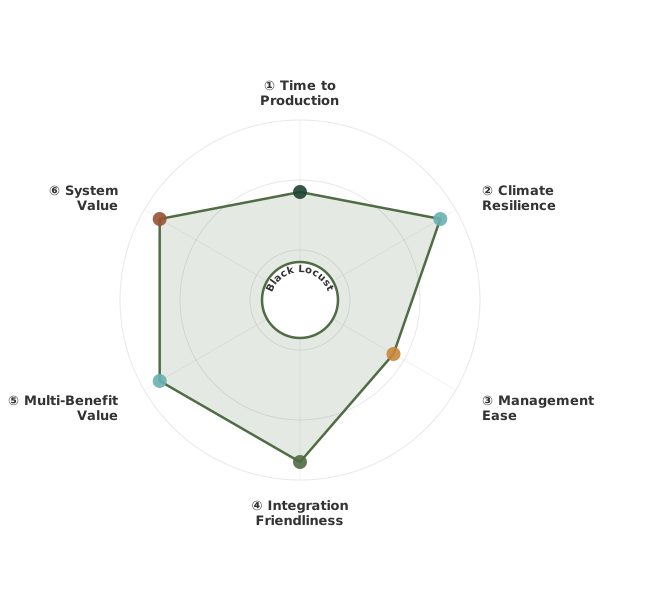
How These Traits Are Calculated
Trait dimensions are ordered clockwise starting from the top of the chart (12 o'clock position):
1. Time to Production
Years from planting to first harvestable yields
WHAT: Measures the waiting period from tree establishment to first meaningful production. Fast-producing trees yield within 2-5 years; slow producers require 8-15+ years before significant harvests.
WHY: Time to production determines cash flow timing and financial feasibility for farm businesses. Long wait times create significant opportunity costs—land and labor tied up for years without income. Fast producers allow quicker experimentation and cash flow recovery, reducing risk for new tree crop farmers.
HOW: Ratings based on years to first harvest documented in economics data. Exceptional (3.0): Production within 2-4 years (elderberry, mulberry, some nut bushes). Typical (2.0): 5-8 years (many fruit trees). Limited (1.0): 10-15+ years (hardwood timber, some nut trees like pecan, walnut).
2. Climate Resilience
Weighted: hardiness zones (50%) + drought tolerance (30%) + adaptability (20%)
WHAT: Combines temperature tolerance (hardiness zone range), water stress resilience (drought tolerance), and overall climate flexibility. Multi-decade tree investments require reliable climate matching to prevent total loss.
WHY: Wrong climate choices mean complete failure for permanent plantings. A tree that dies in year 5 from unexpected cold or prolonged drought represents catastrophic loss of 5 years' investment. Climate resilience determines geographic range and weather variability tolerance—critical as climate patterns become less predictable.
HOW: Weighted formula prioritizes hardiness zone range (50% weight) for core temperature tolerance, drought tolerance (30% weight) for water stress, and overall adaptability (20% weight) for general climate flexibility. Exceptional (3.0): Wide hardiness range (8+ zones) with strong drought tolerance. Typical (2.0): Moderate range and tolerance. Limited (1.0): Narrow climate requirements.
3. Management Ease
Weighted: establishment (40%) + low maintenance (30%) + pest resistance (30%)
WHAT: Combines establishment difficulty, ongoing maintenance requirements, and disease/pest pressure into overall management workload. Low-maintenance trees fit easily into busy farm operations without specialized expertise or intensive inputs.
WHY: Labor is the limiting factor for most diversified farms. High-maintenance trees requiring pruning expertise, disease management, and intensive pest control compete for limited time with other farm enterprises. Easy-care trees deliver production with minimal intervention, making them viable for time-constrained farmers.
HOW: Weighted formula balances establishment ease (40% weight) for startup success, inverted maintenance intensity (30% weight) for ongoing care, and inverted pest/disease pressure (30% weight) for health management. Exceptional (3.0): Easy to establish, self-sufficient growth, naturally pest-resistant. Typical (2.0): Moderate care needs. Limited (1.0): Difficult establishment, intensive maintenance, or heavy pest pressure.
4. Integration Friendliness
Compatibility with silvopasture, alley cropping, and multi-species systems
WHAT: Measures how well the tree integrates with other farm enterprises—grazing livestock, annual crops, or other perennials. Integration-friendly trees tolerate livestock browsing, don't heavily shade out crops, and coexist with diverse plantings.
WHY: Integrated tree systems (silvopasture, alley cropping, food forests) provide higher total returns per acre than monoculture plantings. Trees that work well with livestock provide shade + forage + production simultaneously. Integration flexibility allows farmers to stack enterprises and adapt to market opportunities.
HOW: Ratings based on the integration_friendliness trait documenting compatibility with grazing, cropping, and multi-species systems. Exceptional (3.0): Tolerates livestock browsing, provides livestock benefits (shade, browse), compatible with understory crops. Typical (2.0): Some integration possible with management. Limited (1.0): Requires isolation, incompatible with livestock or cropping.
5. Multi-Benefit Value
Stacked benefits beyond primary product—shade, wildlife, nitrogen, erosion control
WHAT: Measures the diversity of ecosystem services provided beyond the main harvest product. Multi-benefit trees deliver shade, windbreak, wildlife habitat, nitrogen fixation, erosion control, pollinator support, and aesthetic value simultaneously.
WHY: Single-purpose trees are economically fragile—market price swings or production failures eliminate all value. Multi-benefit trees provide resilience through diverse value streams. A nitrogen-fixing tree that produces nuts, provides shade for livestock, supports wildlife, and controls erosion delivers 4-5x the system value of a production-only tree.
HOW: Ratings based on the multi_benefit_value trait documenting service diversity. Exceptional (3.0): 4+ significant services stacked (nitrogen-fixing legume trees providing nuts + shade + wildlife + windbreak). Typical (2.0): 2-3 moderate services. Limited (1.0): Single-purpose production trees with minimal additional benefits.
6. System Value
Total ecosystem and economic value across short, medium, and long timeframes
WHAT: Synthesizes the total regenerative value delivered across multiple decades, including immediate ecosystem services (years 1-5), medium-term production value (years 5-15), and long-term system transformation (years 15-50). Captures the compounding benefits of permanent plantings.
WHY: Trees are multi-decade investments requiring patient capital. System value measures whether the total package—early ecosystem services, eventual production, and long-term legacy benefits—justifies the wait time and land commitment. High system value trees pay back investment through diverse, stacking, compounding benefits.
HOW: Scored via LLM synthesis of economics timelines, ecosystem service diversity, and long-term soil/water/carbon impacts. Exceptional (3.0): Strong early services + valuable production + transformative long-term impacts. Typical (2.0): Moderate benefits across timeframes. Limited (1.0): Long wait with limited service stacking or weak economic returns.
Ratings are based on documented performance in regenerative systems, not conventional high-input scenarios. All traits assume integrated management practices focused on soil health and ecosystem services.
4
System Role & Multi-Benefit Value
Functional roles, integration strategies, and stacked benefits
System Role & Multi-Benefit Value
Functional roles, integration strategies, and stacked benefits
Functional Role
Total System Value
Black locust offers significant multi-benefit stacking potential in regenerative agriculture. Its direct harvest value includes durable timber for fence posts and construction, with harvestable diameters achievable within 6-10 years. As a primary nitrogen fixer, it enhances soil fertility, reducing the need for synthetic fertilizers and improving pasture or crop yields, a key system enhancement. Studies also show its contribution to soil organic carbon (SOC) sequestration, particularly when managed as a biomass crop. The rapid hardening of its bark (4-6 years) provides crucial protection for animals in silvopasture systems, preventing damage. Beyond these direct benefits, its presence supports wildlife and can contribute to biodiversity. This diverse utility across harvest, soil health, infrastructure, and ecosystem services diversifies farm income streams and builds resilience against market fluctuations and environmental changes.
Integration Characteristics
Multi-Benefit Value: Ideally Suited - An exceptional nitrogen fixer, it yields valuable timber and supports pollinators, while its rapid growth and soil-enhancing properties are outstanding.
Integration Friendliness: Ideally Suited - As a nitrogen fixer, it provides abundant forage for pollinators and livestock through its flowers and leaves, and its rapid growth is beneficial for windbreaks and soil building within diverse farm ecosystems.
Sources behind this view
 Videos & Podcasts
-
Black locust is a nitrogen-fixing, fast-growing tree with edible flowers, rot-resistant wood, and ability to grow in any soil. It spreads via rhizomes, creates light shade for understory growth, and i
-
Integrate black locust into silvopasture for high crude protein forage (22-28%), nitrogen fixation (100-200 lbs/acre/yr), deep mineral cycling, and durable structural material, producing protein, fert
-
Black locust, despite being spiny, is an excellent nitrogen fixer for dry, poor soils, capable of restoring fertility and producing rot-resistant wood. It propagates easily from seed and acts as a goo

-
Black locust trees are excellent firewood (burns hot, lasts long), durable fence posts, and nitrogen fixers that benefit soil. They coppice well and their root shoots suggest easy propagation.

 Community
-
Black Locust (*Robinia pseudoacacia*) offers rapid growth, nitrogen fixation, and valuable wood for fence posts and firewood. It provides shade in silvopasture, nutritious forage for livestock, and su
Read more (opens in new window) smallfarms.cornell.edu -
Black Locust is valuable for hot-burning firewood, rot-resistant construction, nitrogen fixation, and nutritious fodder for sheep/goats. It grows fast but is highly invasive, requiring intensive manag
Read more (opens in new window) permies.com -
Black locust offers fast growth, nitrogen fixation, firewood, and fence posts, but its slow decomposition and aggressive suckering can be drawbacks. Its utility depends on specific needs, with red ald
Read more (opens in new window) permies.com -
Cultivating Black Locust (Robinia pseudoacacia) as a profitable timber cash crop in the Northeast is discussed, emphasizing its decay-resistant lumber, nitrogen-fixing ability, and bee-friendly flower
Read more (opens in new window) smallfarms.cornell.edu
 Research
-
Carbon sequestration and soil nitrogen enrichment in Robinia pseudoacacia L. post-mining restoration plantations (opens in new window)
This study found: Black locust trees planted on former coal mine sites in Greece effectively stored carbon and increased soil nitrogen over 24 years, with benefits expected to grow as trees mature.
-
The Role of Trees and Pastures in Organic Agriculture (opens in new window)
This study found: Organic pasture systems with trees can reduce soil erosion and carbon loss, increase soil organic matter by 60% compared to tilled fields, and improve milk fat profiles. Black locust trees offer susta
-
The development of soil organic carbon under young black locust (Robinia pseudoacacia L.) trees at a post-mining landscape in eastern Germany (opens in new window)
This study found: Black locust trees in alley cropping systems boosted soil organic matter and carbon stabilization by 47% on reclaimed mine sites in Germany over six years.
-
Some Soil Factors Associated with Site Quality for Planted Black Locust and Black Walnut (opens in new window)
This study found: A 1945 study correlated soil properties with the success of planted black locust and black walnut trees in prairie soils, aiming to simplify site evaluation for better planting outcomes.
5
Management & Care Requirements
Integration guidance, maintenance needs, and care practices
Management & Care Requirements
Integration guidance, maintenance needs, and care practices
How to Integrate This Plant
Black locust (Robinia pseudoacacia) is a valuable nitrogen-fixing tree for regenerative systems, particularly suited for silvopasture and alley cropping due to its rapid growth and durable wood. Its primary role is soil improvement via nitrogen fixation, enhancing fertility for companion crops or forage. It also provides durable timber for fencing or construction, contributing to farm infrastructure. Harvest for fence posts can begin around 6-10 years (5-6 inch diameter), with timber harvesting at 11-12 inches diameter. The bark hardens within 4-6 years, offering protection against animal browse in silvopasture. Black locust can also improve soil organic carbon, as indicated by studies showing increased SOC when used as a biomass crop. Its integration enhances soil health, provides valuable biomass, and establishes long-term infrastructure, contributing to a resilient and productive farm ecosystem.
Integration Practices & Management
Robinia pseudoacacia, or black locust, is integrated into regenerative agriculture primarily for its rapid growth and durable wood, lending itself to silvopasture and timber production. While specific establishment methods like seeding rates, timing, or companion planting are not detailed in the provided sources, the plant's natural hardiness is implied. For silvopasture, management focuses on protecting young trees from animal damage. Black locust bark hardens sufficiently within 4-6 years, allowing it to withstand grazing pressure, a key factor in its integration with livestock systems. This browser adaptation is crucial, as other species may require initial fencing. The knowledge base does not detail specific grazing strategies such as mob grazing or rotational systems, nor does it cover termination strategies like crimping or herbicide use. However, natural processes like winterkill or grazing down may be implied as part of its management cycle. Management considerations highlight its role in soil improvement, with studies showing its positive influence on soil microbial communities and organic carbon in certain contexts. It also plays a role in nitrogen cycling within forest ecosystems. While its use in direct cash crop integration like relay or intercropping isn't specified, its inclusion in multispecies trials for biomass production suggests potential rotational benefits. Practical farmer insights focus on its utility for fence posts and timber, with harvest potentially starting around 6-10 years for posts and longer for timber.
Management Profile
Maintenance Intensity: Adequate - This fast-growing, nitrogen-fixing tree's natural tendency to spread can be managed through strategic pruning to guide its form and integrate it within the farm system.
Pest Disease Pressure: Adequate - Generally resistant to pests and diseases, black locust may occasionally be impacted by borers or fungal issues, requiring minimal, system-integrated vigilance.
Time To Production: Adequate - This species grows at a moderate pace, offering timber and biomass. Initial harvests for wood products can occur within 3-5 years, reaching full potential in 5-7 years.
Sources behind this view
Videos & Podcasts
-
Black locust trees are established from hot-water-treated seeds, grown as seedlings for one year in a weed-free setting, and then planted in various soils. They spread via suckers, contained by shade

-
Black locust is a nitrogen-fixing, fast-growing tree with edible flowers, rot-resistant wood, and ability to grow in any soil. It spreads via rhizomes, creates light shade for understory growth, and i
-
Integrate black locust into silvopasture for high crude protein forage (22-28%), nitrogen fixation (100-200 lbs/acre/yr), deep mineral cycling, and durable structural material, producing protein, fert
-
Black locust, valued for rot-resistant timber and fence posts, thrives with improved Hungarian genetics. Harvest for posts is 6-10 years (5-6" diameter), for timber <20 years (11-12" diameter) to avoi

Community
-
Black Locust (*Robinia pseudoacacia*) offers rapid growth, nitrogen fixation, and valuable wood for fence posts and firewood. It provides shade in silvopasture, nutritious forage for livestock, and su
Read more (opens in new window) smallfarms.cornell.edu -
Black Locust is valuable for hot-burning firewood, rot-resistant construction, nitrogen fixation, and nutritious fodder for sheep/goats. It grows fast but is highly invasive, requiring intensive manag
Read more (opens in new window) permies.com -
Black Locust is valuable for nitrogen fixation and fence posts on depleted soils. It's not typically invasive in old-growth forests but spreads via suckers and seeds. Livestock can safely graze it in
Read more (opens in new window) permies.com -
Cultivating Black Locust (Robinia pseudoacacia) as a profitable timber cash crop in the Northeast is discussed, emphasizing its decay-resistant lumber, nitrogen-fixing ability, and bee-friendly flower
Read more (opens in new window) smallfarms.cornell.edu
Research
-
Carbon sequestration and soil nitrogen enrichment in Robinia pseudoacacia L. post-mining restoration plantations (opens in new window)
This study found: Black locust trees planted on former coal mine sites in Greece effectively stored carbon and increased soil nitrogen over 24 years, with benefits expected to grow as trees mature.
-
Effects of Different Ages of Robinia pseudoacacia Plantations on Soil Physiochemical Properties and Microbial Communities (opens in new window)
This study found: Black locust plantations on the Loess Plateau showed changes in soil nitrogen, carbon, and microbial balance over time. Older plantations (over 25 years) may have reduced soil fertility and ecosystem
-
Some Soil Factors Associated with Site Quality for Planted Black Locust and Black Walnut (opens in new window)
This study found: A 1945 study correlated soil properties with the success of planted black locust and black walnut trees in prairie soils, aiming to simplify site evaluation for better planting outcomes.
6
Economics & Value Streams
Direct harvest, system benefits, ecosystem services, and risk diversification
Economics & Value Streams
Direct harvest, system benefits, ecosystem services, and risk diversification
Comprehensive economic analysis including direct harvest value, system enhancement contributions, ecosystem services, value timeline, and risk diversification strategies.
Per-Tree Production Economics
| Metric | Value |
|---|---|
| Establishment Cost | $5-15 |
| Years to First Harvest | 5-8 years |
| Annual Maintenance | $2-5 |
| Yield | 30-60 lbs/year 13-27 kg/year |
| Market Price | $0-0/lb $0-1/kg |
| Productive Lifespan | 30-50 years |
| Net Annual Return* | $-5 to $-2/year (negative) |
Values shown per mature tree, not per acre. In regenerative systems, trees are integrated at low densities across diverse landscapes. Establishment costs spread over the lifespan of the tree. Early years have costs but no revenue.
* Net Annual Return = (Yield × Market Price) − (Amortized Establishment Cost + Annual Maintenance). This return is realized only at/after first harvest; early years have costs but no revenue. Range shows worst case to best case scenarios.
System Enhancement Value
Beyond harvest: nitrogen fixation replacing fertilizer costs
Nitrogen Fixation Value
100-200 lbs N/acre/year = $48-135/acre fertilizer replacement (variable by specific conditions and fertilizer prices)
As a potent nitrogen fixer, black locust significantly enriches the soil, a crucial benefit in integrated farm systems. Its ability to convert atmospheric nitrogen into plant-available forms reduces the reliance on synthetic fertilizers, lowering input costs and environmental impact. This contribution is vital for alley cropping and maintaining soil fertility in mixed agricultural landscapes. The quantitative data suggests a substantial nitrogen input, ranging from 100-200 lbs N/acre/year. This translates to a significant monetary value when considering fertilizer replacement costs, potentially saving farmers between $48 and $135 per acre annually, depending on the prevailing fertilizer prices. Furthermore, its nitrogen-fixing properties contribute to healthier plant growth for adjacent crops and perennial forages, enhancing overall system productivity and resilience.
Additional Soil Building Benefits
Black locust offers several other significant system benefits. Its rot-resistant wood is highly valuable for durable timber products like fence posts, with harvestable posts potentially available within 6-10 years. The tree's aggressive root suckering, while a management challenge, can be leveraged by using livestock like goats to graze shoots, exhausting the trees and simultaneously fertilizing the soil due to nitrogen fixation. Beef cattle also readily consume its leaves, adding to its fodder value. The thorns, though a nuisance, can provide a degree of protection against certain wildlife. Its seed pods attract wildlife like turkeys. The bark hardens within 4-6 years, preventing animal damage and facilitating integration into grazed areas.
Erosion Control
Variable, but potential for soil stabilization and microclimate modification.
While not explicitly detailed as a windbreak in the provided excerpts, the dense growth potential and root suckering of black locust suggest it could provide windbreak benefits. Planted in rows with appropriate spacing (10-12 feet in rows, 20-foot spacing between rows for silvopasture), it can create physical barriers that reduce wind velocity. This protection can mitigate soil erosion, reduce wind damage to crops and other farm structures, and create more favorable microclimates for livestock and understory vegetation. The light-penetrating canopy would still allow for some light penetration, potentially allowing for understory forage growth even within a windbreak context. The aggressive root system also contributes to soil stabilization, further enhancing its erosion control potential.
Ecosystem Service Contributions
Environmental contributions: carbon, pollinators, wildlife, and water
- Carbon Sequestration: Black locust is a fast-growing tree species with significant potential for carbon sequestration, both above and below ground, through biomass accumulation and root development.
- Pollinator Support: Medium. Black locust flowers are known to be a nectar source, supporting pollinators.
- Wildlife Habitat: High. Provides browse (leaves for cattle and sheep), browse control for managed suckering (goats), seed pods for wildlife (turkeys), and potential nesting sites.
- Water Quality: Not applicable
Value Timeline: N Fixation & Production
When you'll see results: nitrogen fixation begins immediately, harvest at maturity
Years 1-2
Initial nitrogen fixation begins, contributing to soil fertility. Erosion control benefits from root establishment. Early shade development in silvopasture systems.
Years 3-5
Bark hardens, allowing for potential integration of livestock without significant damage. First fence post harvests may be possible. Continued nitrogen contribution and shade development.
Years 10-20
Mature timber can be harvested (11-12 inch diameter recommended before significant locust borer issues). Full nitrogen fixation potential realized. Optimal shade for silvopasture. Potential for significant firewood production.
20+ Years
Sustained timber production potential if managed. Long-term soil improvement from nitrogen fixation. Mature ecosystem services, including wildlife habitat and potential for continued biomass production.
Farm Risk Reduction
How this reduces farm risk: fertilizer cost hedge and rotation benefits
- Multiple Revenue Streams: Fence posts, timber, firewood, fodder (livestock feed), nitrogen fixation (fertilizer replacement value), potential for biomass for bioenergy.
- Temporal Income Spread: Value is spread across multiple time horizons: immediate benefits from nitrogen fixation and early shade; intermediate harvests of fence posts; long-term harvests of timber; ongoing ecosystem services.
- Market Risk Hedge: Reduces reliance on purchased fertilizers (nitrogen fixation). Provides alternative, durable wood products (fence posts, timber) that can buffer against volatile lumber markets. Offers a protein-rich fodder source, reducing feed costs and dependency on external feed suppliers, especially during drought.
Sources behind this view
Videos & Podcasts
-
Integrate black locust into silvopasture for high crude protein forage (22-28%), nitrogen fixation (100-200 lbs/acre/yr), deep mineral cycling, and durable structural material, producing protein, fert
-
Black locust is a fast-growing, nitrogen-fixing tree valuable for rot-resistant posts (harvestable in 5-10 years), firewood, and as a bee plant. Its rapid growth and multiple uses make it a key specie
-
Black locust trees are excellent firewood (burns hot, lasts long), durable fence posts, and nitrogen fixers that benefit soil. They coppice well and their root shoots suggest easy propagation.
-
Black locust spreads via rhizomes, fixes nitrogen, and grows rapidly in any soil. Its light shade benefits understory plants, its wood is rot-resistant, and its flowers are edible and attract pollinat
Community
-
Black Locust offers strong economic potential through high-demand polewood and lumber, fetching premium prices due to its rot resistance. It's integrated into silvopasture for fodder and posts, with m
Read more (opens in new window) smallfarms.cornell.edu -
Black Locust (*Robinia pseudoacacia*) offers rapid growth, nitrogen fixation, and valuable wood for fence posts and firewood. It provides shade in silvopasture, nutritious forage for livestock, and su
Read more (opens in new window) smallfarms.cornell.edu -
Black Locust is valuable for hot-burning firewood, rot-resistant construction, nitrogen fixation, and nutritious fodder for sheep/goats. It grows fast but is highly invasive, requiring intensive manag
Read more (opens in new window) permies.com -
Guidance on using Black and Honey Locusts for wood products (tool handles, fencing) via coppicing/pollarding. Discusses thorn management, nitrogen fixation, pollinator benefits, and Mimosa as an alter
Read more (opens in new window) permies.com
Research
-
Carbon sequestration and soil nitrogen enrichment in Robinia pseudoacacia L. post-mining restoration plantations (opens in new window)
This study found: Black locust trees planted on former coal mine sites in Greece effectively stored carbon and increased soil nitrogen over 24 years, with benefits expected to grow as trees mature.
-
The Role of Trees and Pastures in Organic Agriculture (opens in new window)
This study found: Organic pasture systems with trees can reduce soil erosion and carbon loss, increase soil organic matter by 60% compared to tilled fields, and improve milk fat profiles. Black locust trees offer susta
7
Regenerative Suitability Details
Comprehensive trait ratings for system integration assessment
Regenerative Suitability Details
Comprehensive trait ratings for system integration assessment
Comparative ratings for this plant across key regenerative agriculture traits.
| Trait | Suitability | Explanation |
|---|---|---|
| Drought Tolerance | Ideally Suited | Black locust excels in dryland systems due to its deep root structure and inherent nitrogen-fixing ability, contributing to soil fertility. |
| Establishment Ease | Ideally Suited | Establishes readily from seed or cuttings, even in low-fertility soils, with vigorous early growth that naturally suppresses weeds, minimizing soil disturbance. |
| Time To Production | Adequate | This species grows at a moderate pace, offering timber and biomass. Initial harvests for wood products can occur within 3-5 years, reaching full potential in 5-7 years. |
| Multi Benefit Value | Ideally Suited | An exceptional nitrogen fixer, it yields valuable timber and supports pollinators, while its rapid growth and soil-enhancing properties are outstanding. |
| Climate Adaptability | Ideally Suited | Highly adaptable across diverse North American climates (zones 3-9), it thrives in heat, drought, and low-fertility soils, demonstrating resilience and fast growth. |
| Hardiness Zone Range | Ideally Suited | Remarkably adaptable across North America, zones 4-9, it withstands a broad spectrum of conditions, including heat and drought, with proven resilience. |
| Maintenance Intensity | Adequate | This fast-growing, nitrogen-fixing tree's natural tendency to spread can be managed through strategic pruning to guide its form and integrate it within the farm system. |
| Pest Disease Pressure | Adequate | Generally resistant to pests and diseases, black locust may occasionally be impacted by borers or fungal issues, requiring minimal, system-integrated vigilance. |
| Integration Friendliness | Ideally Suited | As a nitrogen fixer, it provides abundant forage for pollinators and livestock through its flowers and leaves, and its rapid growth is beneficial for windbreaks and soil building within diverse farm ecosystems. |
Comparative System: Ratings compare plants within their economic category (e.g., cover crop nitrogen fixation compared to other cover crops, not to all plants). Individual farm conditions and management practices significantly influence actual performance.
Sources behind this view
Videos & Podcasts
-
Black locust is a nitrogen-fixing, fast-growing tree with edible flowers, rot-resistant wood, and ability to grow in any soil. It spreads via rhizomes, creates light shade for understory growth, and i
-
Black locust, despite being spiny, is an excellent nitrogen fixer for dry, poor soils, capable of restoring fertility and producing rot-resistant wood. It propagates easily from seed and acts as a goo
-
Integrate black locust into silvopasture for high crude protein forage (22-28%), nitrogen fixation (100-200 lbs/acre/yr), deep mineral cycling, and durable structural material, producing protein, fert
-
Black locust is a highly effective nitrogen-fixing and soil-improving tree, known for its fragrant, edible flowers and rapid seed propagation. However, its thorns present a management challenge. Russi

Community
-
Black Locust (*Robinia pseudoacacia*) offers rapid growth, nitrogen fixation, and valuable wood for fence posts and firewood. It provides shade in silvopasture, nutritious forage for livestock, and su
Read more (opens in new window) smallfarms.cornell.edu -
Black Locust is valuable for hot-burning firewood, rot-resistant construction, nitrogen fixation, and nutritious fodder for sheep/goats. It grows fast but is highly invasive, requiring intensive manag
Read more (opens in new window) permies.com -
Black locust offers fast growth, nitrogen fixation, firewood, and fence posts, but its slow decomposition and aggressive suckering can be drawbacks. Its utility depends on specific needs, with red ald
Read more (opens in new window) permies.com -
Cultivating Black Locust (Robinia pseudoacacia) as a profitable timber cash crop in the Northeast is discussed, emphasizing its decay-resistant lumber, nitrogen-fixing ability, and bee-friendly flower
Read more (opens in new window) smallfarms.cornell.edu
Research
-
Some Soil Factors Associated with Site Quality for Planted Black Locust and Black Walnut (opens in new window)
This study found: A 1945 study correlated soil properties with the success of planted black locust and black walnut trees in prairie soils, aiming to simplify site evaluation for better planting outcomes.
-
Carbon sequestration and soil nitrogen enrichment in Robinia pseudoacacia L. post-mining restoration plantations (opens in new window)
This study found: Black locust trees planted on former coal mine sites in Greece effectively stored carbon and increased soil nitrogen over 24 years, with benefits expected to grow as trees mature.
8
Know the Debate
Black Locust offers rapid growth, nitrogen fixation, and valuable timber, making it a key regenerator for many systems. However, its speed and spre...
Know the Debate
Black Locust offers rapid growth, nitrogen fixation, and valuable timber, making it a key regenerator for many systems. However, its speed and spre...
Black Locust offers rapid growth, nitrogen fixation, and valuable timber, making it a key regenerator for many systems. However, its speed and spread require careful management. In humid temperate climates with sufficient moisture and reasonable soil fertility, expect noticeable nitrogen and soil organic matter improvements supporting understory growth within 5-10 years. In marginal or degraded conditions, deep soil carbon benefits may take 20-30+ years to fully manifest. Initial costs involve seedlings/seed ($50-$200/acre) and labor for planting and protection. Mature trees can be harvested for fence posts in 5-10 years or timber in 15-25 years. Managing its vigorous spread, especially root suckering, requires active intervention to prevent unwanted dominance.
How quickly do black locust tree benefits appear?
Long-term soil regeneration (20-30+ years)
Academic studies on degraded lands and older plantations show significant soil organic matter and nitrogen increases, with carbon sequestration benefits continuing to accumulate over decades.
Sources behind this view
Sources behind this view
Research
-
Soil organic carbon dynamics of black locust plantations in the middle Loess Plateau area of China (opens in new window)
This study found: A long-term study in China's Loess Plateau found that planting Black Locust trees (Robinia pseudoacacia) on former farmland significantly increased soil organic matter over 30 years. While soil carbon initially dipped slightly in the first few years after planting, it steadily increased thereafter, with accumulation rates of up to 6.22% per year in the topsoil. The study suggests that the amount of fallen leaves and branches from the trees, along with weather patterns like temperature and rainfall, were the main reasons for this carbon buildup. The findings indicate that planting trees can be an effective way to store carbon in the soil, especially if soil disturbance is minimized during the initial planting phase. The success of this strategy also depends on matching tree species and planting methods to local climate and site conditions.
-
Carbon sequestration and soil nitrogen enrichment in Robinia pseudoacacia L. post-mining restoration plantations (opens in new window)
This study found: Planting black locust trees (*Robinia pseudoacacia*) on land previously disturbed by coal mining in Greece significantly helped to store carbon and enrich the soil with nitrogen. In plantations ranging from 4 to 24 years old, the trees built up a substantial amount of carbon, with over half stored in the tree parts above ground and about a quarter in the soil as organic matter. Leaf litter and fine roots contributed to building soil carbon, which is expected to continue increasing as the trees mature. The study also found that the soil's nitrogen content and the trees' ability to recycle nitrogen improved with age. This indicates that black locust is effective in restoring degraded mining sites by increasing both carbon and nitrogen levels in the ecosystem.
-
Effect of Time since Afforestation on Soil Organic Carbon Stock and Turnover Rate (opens in new window)
This study found: A study in northwestern China looked at how planting black locust trees (Robinia pseudoacacia) affected soil carbon over time. They found that while soil carbon content itself didn't change much in the top foot across different tree ages (5, 20, 40, and 56 years), deeper soil layers held significantly more carbon in the older, 40 and 56-year-old forests compared to the young, 5-year-old ones. The speed at which soil carbon broke down slowed down for the first 40 years of the forest's life, then sped up again between 40 and 56 years. Soil nitrogen and the balance of carbon to phosphorus in the soil increased with tree age, and soil structure (porosity) was important for how quickly carbon cycled. The research suggests that while planting trees improves soil for storing carbon, it takes a long time to see substantial accumulation in this specific area.
Medium-term farm benefits (5-15 years)
Field practitioners report tangible results for fence posts, firewood, and forage enrichment within 5-15 years due to rapid wood growth and nitrogen fixation.
Sources behind this view
Sources behind this view
Videos & Podcasts
-
Black locust is a fast-growing, nitrogen-fixing tree valuable for rot-resistant posts (harvestable in 5-10 years), firewood, and as a bee plant. Its rapid growth and multiple uses make it a key species for silvopasture and farm-based income.
-
Integrate black locust into silvopasture for high crude protein forage (22-28%), nitrogen fixation (100-200 lbs/acre/yr), deep mineral cycling, and durable structural material, producing protein, fertility, and timber simultaneously.
-
Black locust, valued for rot-resistant timber and fence posts, thrives with improved Hungarian genetics. Harvest for posts is 6-10 years (5-6" diameter), for timber <20 years (11-12" diameter) to avoid locust borers. Spacing is 10-12' in-row, 20' between rows for silvopasture.
-
Black locust and persimmon trees are valuable for silvopasture, providing nitrogen fixation, browse for cattle, and carbohydrate-rich fruit. Management involves cutting locust for regrowth and planting persimmons as overstory, with resources like Dave Jacke's YouTube series recommended.
Making Sense of the Differences
The timeline for Black Locust benefits varies based on the objective. Deep soil carbon sequestration and the full ecological restoration of degraded lands may take 20-30+ years, as shown in long-term academic studies. However, farmers seeking tangible on-farm returns like rot-resistant fence posts, firewood, or nitrogen enrichment for adjacent agriculture can typically see significant results within 5-15 years, due to the tree's rapid growth and biological functions.
How to manage Black Locust's potential for invasive spread?
Active management for containment (5-15 years)
Field practitioners manage Black Locust's vigorous spread using methods like dense planting followed by thinning, winter cutting for controlled regrowth, or containment through shade and mowing to prevent unwanted dominance.
Sources behind this view
Sources behind this view
Videos & Podcasts
-
Black locust trees are established from hot-water-treated seeds, grown as seedlings for one year in a weed-free setting, and then planted in various soils. They spread via suckers, contained by shade or mowing, and cutting them in winter encourages vigorous growth for posts and firewood.
-
Plant black locust densely (1m apart) and thin over time for faster, taller growth. These resilient trees provide consistent fodder during drought/flood, making them ideal for revitalizing marginal land for mid-summer grazing.
-
Black locust is a fast-growing, nitrogen-fixing tree valuable for rot-resistant posts (harvestable in 5-10 years), firewood, and as a bee plant. Its rapid growth and multiple uses make it a key species for silvopasture and farm-based income.
-
Black locust spreads via rhizomes, fixes nitrogen, and grows rapidly in any soil. Its light shade benefits understory plants, its wood is rot-resistant, and its flowers are edible and attract pollinators. It regenerates vigorously from stumps.
Potential negative ecological impacts (over decades)
Academic research suggests older plantations may negatively impact soil fertility and ecosystem stability, indicating a need for long-term monitoring and potentially management to mitigate downsides.
Sources behind this view
Sources behind this view
Research
-
Effects of Different Ages of Robinia pseudoacacia Plantations on Soil Physiochemical Properties and Microbial Communities (opens in new window)
This study found: A study on the Loess Plateau examined how black locust (Robinia pseudoacacia) tree plantations of different ages (10, 15, 25, and 40 years old) affected soil health and the tiny organisms living in it. The research found that soil nitrogen and organic carbon levels changed significantly over the first 25 years of planting. Soil moisture initially increased but then dropped in older plantations. By analyzing specific compounds produced by soil microbes (PLFA), researchers observed shifts in the balance between different types of bacteria and fungi. The ratio of fungi to bacteria generally decreased over time, and a measure of the soil's microbial health (G+/G− ratio) peaked around 25 years. The study suggests that while black locust plantations can help restore land, the long-term impact of pure stands might lead to lower soil fertility and ecosystem stability, especially in older plantations, as indicated by these microbial shifts.
Making Sense of the Differences
Black Locust's aggressive growth, particularly its rhizomatous spread, requires proactive management to prevent it from becoming invasive. Strategies involve controlling its expansion through methods like dense planting and selective thinning, or utilizing winter cuts to manage regrowth vigor. While academic studies highlight potential late-stage ecological destabilization in older plantations, on-farm management prioritizes containing suckering and directing growth for specific uses like fence posts or firewood, ensuring its benefits are harnessed without ecological detriment.
9
Learn More
Why farmers use this plant and additional resources
Learn More
Why farmers use this plant and additional resources
Why Regenerative Farmers Use This Plant
Black Locust is a remarkable nitrogen-fixing tree with exceptional utility in regenerative agriculture systems, offering rapid growth and significant ecological benefits. It can sequester an estimated 2-5 tons of CO2e per acre per year at maturity, contributing substantially to climate change mitigation and carbon drawdown. Its deep taproot system, often reaching 15-30+ feet (4.5-9+ m), effectively scavenges nutrients from lower soil profiles and improves soil structure, enhancing water infiltration and reducing erosion. Black Locust is also valued for its durable hardwood, which is resistant to rot and decay, providing a valuable, long-lasting resource for fence posts, lumber, and biomass.
Beyond its direct economic output and carbon sequestration, Black Locust provides critical ecosystem services. As a legume, it fixes atmospheric nitrogen, enriching the soil and reducing the need for synthetic nitrogen inputs by an estimated 40-80% over time for adjacent crops. Its dense canopy offers valuable shade regulation, creating microclimates beneficial for understory crops or livestock, and its windbreak capabilities can protect fields and farmsteads, reducing wind erosion. The flowers are a significant nectar source for pollinators, supporting biodiversity within and around agricultural landscapes. Its rapid establishment and ability to thrive on marginal lands make it an excellent choice for land reclamation and ecological restoration projects. The leaf litter contributes organic matter to the soil surface, further enhancing soil fertility and water-holding capacity. By improving soil structure through its extensive root system, Black Locust increases water infiltration rates, reducing runoff and the risk of soil erosion, especially on sloped land, leading to increased resilience of the entire farm ecosystem to extreme weather events.
Black Locust is one of the fastest-growing hardwood trees in North America, reaching reproductive maturity in as little as 5-10 years and full production potential within 15-25 years. Its wood is often harvested for fence posts or biomass after 10-20 years, allowing for continuous resource utilization and multi-decade economic returns.
Black Locust has demonstrated success across diverse agricultural landscapes. In the Midwestern United States, it is utilized in alley cropping systems to provide shade and nitrogen for understory crops while producing fence posts, and in hedgerows bordering corn and soybean fields. In parts of Australia, it has been planted for erosion control on degraded lands and as a windbreak in dryland farming systems. European farmers have integrated it into agroforestry systems for fuelwood production and soil improvement in vineyard settings, and in hedgerows in countries like France and Germany. In South America, its use is growing in Brazil for reforestation projects and as a component in integrated crop-livestock systems, and in coffee plantations as a shade tree and nitrogen fixer.
Sources behind this view
Videos & Podcasts
-
Black locust is a nitrogen-fixing, fast-growing tree with edible flowers, rot-resistant wood, and ability to grow in any soil. It spreads via rhizomes, creates light shade for understory growth, and i
-
Black locust trees are established from hot-water-treated seeds, grown as seedlings for one year in a weed-free setting, and then planted in various soils. They spread via suckers, contained by shade
-
Black locust is a fast-growing, nitrogen-fixing tree valuable for rot-resistant posts (harvestable in 5-10 years), firewood, and as a bee plant. Its rapid growth and multiple uses make it a key specie
-
Black locust, despite being spiny, is an excellent nitrogen fixer for dry, poor soils, capable of restoring fertility and producing rot-resistant wood. It propagates easily from seed and acts as a goo
Community
-
Black Locust (*Robinia pseudoacacia*) offers rapid growth, nitrogen fixation, and valuable wood for fence posts and firewood. It provides shade in silvopasture, nutritious forage for livestock, and su
Read more (opens in new window) smallfarms.cornell.edu -
Black Locust is valuable for hot-burning firewood, rot-resistant construction, nitrogen fixation, and nutritious fodder for sheep/goats. It grows fast but is highly invasive, requiring intensive manag
Read more (opens in new window) permies.com -
Cultivating Black Locust (Robinia pseudoacacia) as a profitable timber cash crop in the Northeast is discussed, emphasizing its decay-resistant lumber, nitrogen-fixing ability, and bee-friendly flower
Read more (opens in new window) smallfarms.cornell.edu -
Black locust is a versatile tree for farmers: its nitrogen-fixing leaves feed cattle and goats, its wood makes excellent firewood and rot-resistant fence posts, and management techniques like pollardi
Read more (opens in new window) permies.com
Research
-
Carbon sequestration and soil nitrogen enrichment in Robinia pseudoacacia L. post-mining restoration plantations (opens in new window)
This study found: Black locust trees planted on former coal mine sites in Greece effectively stored carbon and increased soil nitrogen over 24 years, with benefits expected to grow as trees mature.
-
The development of soil organic carbon under young black locust (Robinia pseudoacacia L.) trees at a post-mining landscape in eastern Germany (opens in new window)
This study found: Black locust trees in alley cropping systems boosted soil organic matter and carbon stabilization by 47% on reclaimed mine sites in Germany over six years.
-
The Role of Trees and Pastures in Organic Agriculture (opens in new window)
This study found: Organic pasture systems with trees can reduce soil erosion and carbon loss, increase soil organic matter by 60% compared to tilled fields, and improve milk fat profiles. Black locust trees offer susta
-
Some Soil Factors Associated with Site Quality for Planted Black Locust and Black Walnut (opens in new window)
This study found: A 1945 study correlated soil properties with the success of planted black locust and black walnut trees in prairie soils, aiming to simplify site evaluation for better planting outcomes.