The provided excerpts highlight several key applications and benefits. Shrub willow has demonstrated potential as a buffer strip, significantly reducing nitrous oxide emissions from adjacent potato cropping systems. It also plays a role in phytomanagement, aiding in the remediation of copper-contaminated soils by reducing contaminant availability and improving soil health indicators like microbial biomass and glucose mineralization. Field trials show that Salix viminalis can thrive with amendments like sewage sludge, leading to increased dry matter yield, soil organic carbon, and improved soil structure, including water-stable aggregates. Furthermore, its use in tree plantations and as a windbreak in agroforestry systems is noted, contributing to structural diversity and potentially providing shelter for other crops and trees. Although not explicitly stated as a nitrogen fixer in these excerpts, its integration into diverse cropping systems and its biomass potential suggest its utility in building soil organic matter and carbon sequestration. While coverage in our knowledge base is limited, the above represents documented uses in regenerative systems.

Regenerative Quick Profile

All recommendations assume integrated, regenerative practices—not conventional inputs.

Climate & Soil Fit

Climate: Tropical Rainforest, Tropical Monsoon, Tropical Savanna, Hot Semi-Arid (Steppe), Cold Semi-Arid (Steppe), Hot Desert, Cold Desert, Humid Subtropical, Oceanic (Maritime Temperate), Hot-Summer Mediterranean, Warm-Summer Mediterranean, Monsoon-Influenced Humid Subtropical, Subtropical Highland, Hot-Summer Continental, Warm-Summer Continental, Subarctic, Monsoon-Influenced Hot-Summer Continental, Monsoon-Influenced Warm-Summer Continental, Monsoon-Influenced Subarctic, Monsoon-Influenced Extreme Subarctic, Tundra

Zones: USDA 3-8, Australian Zones 3-6

System Role & Functions

Primary: Soil Remediation

Secondary: Windbreak, Cash Crop With Services

Key Benefits: Fast production, Multi-benefit value, Climate adaptable

Management Level

Experience: Beginner-Friendly

Maintenance: High maintenance - Coppicing for biomass production encourages rapid growth, necessitating regular pruning as part of its integration into the landscape's ongoing regeneration cycle.

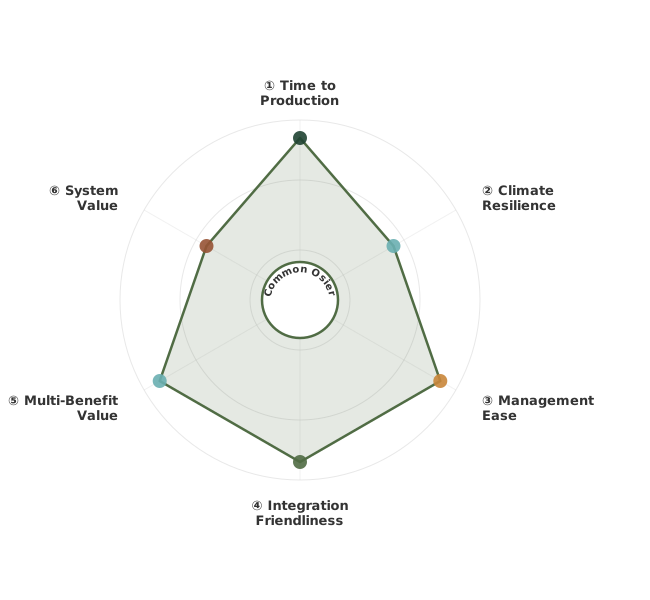
Time to Production: Fast (1-2 years) - Osier willow offers rapid biomass and basketry material generation, with initial harvests of cuttings achievable within 1-2 years, providing swift ecosystem and economic returns.

Value Streams

  • Fruit/nut harvest
  • Diversifies farm income
  • Enhances biodiversity
1

Climate Suitability Assessment

Will this plant thrive in your climate?

IDEALLY SUITED

Köppen Zone: Cfa (Humid Subtropical), Cfb (Oceanic (Maritime Temperate)), Dfa (Hot-Summer Continental), Dfb (Warm-Summer Continental)
USDA Zone: 5a, 5b, 6a, 6b, 7a, 7b
Australian Zone: Zone 1, Zone 2, subtropical
EU Climate Region: atlantic

Common Osier performs optimally in climates with long, warm growing seasons and sufficient moisture, conditions met in Köppen zones Cfa, Cfb, and regional zones like USDA 5b-10b, Australian Zones 1, 2, and subtropical, and EU Atlantic. These regions provide 180-250+ frost-free days and average annual precipitation of 30-60 inches (75-150 cm), allowing for rapid establishment and robust vegetative growth. Temperatures typically range from 60-85°F (15-29°C) during the growing season, which is ideal for its soil remediation and windbreak functions. Minimal management is required, with establishment success rates exceeding 85%. Its perennial nature ensures multi-year productivity, contributing significantly to soil stabilization, erosion control, and wind reduction. The plant's vigorous growth habit and adaptability to various soil types (though preferring moist conditions) make it a highly reliable choice for regenerative agriculture practices in these favorable climates.

ADEQUATE

Köppen Zone: BSk (Cold Semi-Arid (Steppe)), Csa (Hot-Summer Mediterranean), Csb (Warm-Summer Mediterranean), Cwa (Monsoon-Influenced Humid Subtropical), Cwb (Subtropical Highland), Dfc (Subarctic)
USDA Zone: 4a, 4b, 8a, 8b
Australian Zone: Zone 3, temperate
EU Climate Region: continental

Common Osier is adequately suited to climates with moderate growing seasons and some winter cold, found in Köppen zones Dfa, Dfb, Dwa, and regional zones like USDA 4a-5a, Australian Zone 3, temperate, and EU continental. These areas typically have 120-180 frost-free days and 20-40 inches (50-100 cm) of annual rainfall, which can support its growth but may require attention to water availability during dry spells. Winter temperatures can range from -15°F to 10°F (-26°C to -12°C), posing a moderate risk of winter dieback or reduced perennial vigor, potentially shortening its lifespan and effectiveness. Establishment success is good (70-85%) with proper timing and site selection. While it can fulfill its soil remediation and windbreak functions, its performance may be less consistent or vigorous compared to ideally suited zones, requiring standard management practices and potentially supplemental irrigation during establishment or dry periods.

NOT RECOMMENDED

Köppen Zone: Af (Tropical Rainforest), Am (Tropical Monsoon), Aw (Tropical Savanna), ET (Tundra), BSh (Hot Semi-Arid (Steppe)), BWh (Hot Desert), BWk (Cold Desert), Dwa (Monsoon-Influenced Hot-Summer Continental), Dwb (Monsoon-Influenced Warm-Summer Continental), Dwc (Monsoon-Influenced Subarctic), Dwd (Monsoon-Influenced Extreme Subarctic)
USDA Zone: 2a, 3a, 3b, 9a, 9b, 10a, 10b, 11a, 11b, 12a, 12b, 13a, 13b

Common Osier is not recommended for climates with extreme cold, very short growing seasons, or permafrost, as seen in Köppen zones Dfd, Dwd, H, and regional zones USDA 1-3b, and parts of Dwc. These zones experience winter temperatures far below its survival threshold (below -20°F/-29°C), with growing seasons often less than 90 days and insufficient warmth for proper establishment and root development. Permafrost in some regions further inhibits root penetration and water availability. Establishment success is low (<60%), and winter kill is highly probable, rendering its soil remediation and windbreak functions ineffective or entirely unachievable. The plant would likely survive only as a stunted annual at best, making it economically and practically unviable for its intended purposes. Alternative, more cold-hardy and adapted species are necessary for these challenging environments.

Better alternatives for these "not recommended" zones: Arctic Willow (Salix arctica) (native to arctic regions, adapted to permafrost and cold), Dwarf Birch (Betula nana) (low-growing shrub tolerant of cold and boggy conditions), Siberian Larch (Larix sibirica) (deciduous conifer adapted to extreme cold and short growing seasons), Hairy Vetch (cold-hardy annual legume for nitrogen fixation)

Note: Zones listed above represent climates where this plant can produce reliably with reasonable management. Climate zones not mentioned would require intensive climate modification (greenhouses, extensive infrastructure) and are not economically viable for regenerative agriculture purposes.

2

Soil Suitability Assessment

Which soil types work best for this plant?

ADEQUATE

Acidic Soil, Alkaline Soil, Clay Soil, Loam Soil, Rich Soil, Sandy Soil, Wet Soil

This plant performs acceptably in these soil types with moderate, manageable remediation such as pH adjustment, compost addition, or drainage improvement. The required amendments are practical and cost-effective for regenerative agriculture.

NOT RECOMMENDED

Desert Soil, Rocky Soil, Saline Soil

Growing this plant in these soil types would require impractical remediation such as complete soil replacement, extensive amendments, or cost-prohibitive infrastructure. These conditions are not economically viable for regenerative agriculture.

Note: Soil suitability assessments focus on remediation requirements. "Ideally Suited" means the plant generally thrives without the need for substantial amendments, "Adequate" means manageable remediation (lime, compost, mulch), and "Not Recommended" means impractical soil changes would be required. Climate factors like rainfall and temperature also influence success.

3

Seasonal Considerations

Planting timing, growth duration, and harvest windows

Establishing osier willow (Salix viminalis) is best done during the dormant season, typically in early spring before bud break, especially when working with bare-root cuttings. Containerized plants offer more flexibility, allowing planting anytime soil is workable, though early spring remains ideal to capitalize on the growing season. Full establishment can take two to three years, with the first significant harvest achievable by the third or fourth year. Expect to reach full production within five to seven years, with trees remaining highly productive for several decades.

Throughout the year, management is dictated by the plant’s lifecycle. The dormant season, after leaf drop and before new growth begins, is the prime time for pruning to shape the plant and encourage vigorous new shoots for harvest. Harvest itself is usually conducted during winter dormancy to ensure ease of cutting and optimal material. While osier willow doesn't produce showy flowers, its leaves emerge in spring and remain through summer and fall before senescing. The plant enters a deep winter dormancy, a crucial period for its perennial regeneration.

4

System Role & Multi-Benefit Value

Functional roles, integration strategies, and stacked benefits

Functional Role

Total System Value

Common osier offers significant whole-farm resilience through multiple benefit stacking. Its direct harvest value can be realized through biomass for bioenergy or biochar, contributing to on-farm energy independence and soil amendment. System enhancement is provided by its role as a windbreak, protecting crops and livestock from harsh weather, and its dense root system aids in erosion control and soil stabilization. Ecosystem services include potential carbon sequestration in biomass and soil, and phytoremediation of contaminated soils, as demonstrated in studies. By improving soil structure and nutrient cycling, it indirectly supports biodiversity and water quality. Risk diversification is achieved by adding a biomass crop that can be harvested in different ways, reducing reliance on single-commodity income streams and enhancing the farm's ability to adapt to environmental changes and market fluctuations.

Integration Characteristics

Multi-Benefit Value: Ideally Suited - Highly productive for biomass through coppicing, it excels at soil stabilization and provides valuable support for pollinators, showcasing exceptional multi-ecosystem services.

Integration Friendliness: Ideally Suited - Its rapid growth makes it ideal for biomass, fodder, and erosion control, and it integrates seamlessly into silvopasture systems by offering browse and habitat.

5

Management & Care Requirements

Integration guidance, maintenance needs, and care practices

How to Integrate This Plant

Common osier (Salix viminalis) can be integrated into regenerative systems primarily for its soil remediation capabilities and as a biomass producer. Its dense root system is excellent for erosion control and stabilizing soil, particularly in areas prone to degradation or contamination, as suggested by its use in phytomanagement of heavy metal-contaminated soils. It can also serve as a windbreak, as noted in excerpt, protecting crops and livestock. While not explicitly mentioned as a nitrogen fixer, its rapid growth and biomass production make it suitable for bioenergy or biochar production, contributing to a circular economy on the farm. It can be incorporated into alley cropping systems, hedgerows, or buffer strips alongside agricultural fields to capture nutrients and reduce runoff. Its primary value lies in its ability to improve soil health and structure, making it a key component for restoring degraded land and enhancing overall farm resilience.

Integration Practices & Management

The provided knowledge base offers limited insight into the specific regenerative agriculture integration methods for *Salix viminalis*. Sources mention its use in a tree plantation alongside other species for studying root-derived carbon, and in a phytomanagement study for a copper-contaminated soil, where it was grown in a mixed stand with other woody plants to improve soil health and reduce metal availability. Field trials explored its growth with sewage sludge and mineral fertilization on acidic soil, demonstrating significant increases in dry matter yield and improvements in soil organic carbon, total nitrogen, and microbial biomass. One account describes its establishment as a biomass willow windbreak, planted from cuttings, which provided effective wind protection and was left standing due to its growth. The knowledge base does not detail establishment methods like seeding rates, timing, companion planting, or tillage practices. Similarly, information on integration with grazing systems, termination strategies, fertility needs, competition management, or specific rotation sequences with cash crops is absent. The provided texts focus on the plant's ecological benefits and growth responses under specific conditions rather than detailing practical, on-farm regenerative integration techniques.

Management Profile

Maintenance Intensity: Not Recommended - Coppicing for biomass production encourages rapid growth, necessitating regular pruning as part of its integration into the landscape's ongoing regeneration cycle.

Pest Disease Pressure: Adequate - While susceptible to rust and aphids, its rapid growth resilience allows for proactive monitoring and management as part of the integrated pest and disease strategy.

Time To Production: Ideally Suited - Osier willow offers rapid biomass and basketry material generation, with initial harvests of cuttings achievable within 1-2 years, providing swift ecosystem and economic returns.

6

Economics & Value Streams

Direct harvest, system benefits, ecosystem services, and risk diversification

Comprehensive economic analysis including direct harvest value, system enhancement contributions, ecosystem services, value timeline, and risk diversification strategies.

Per-Tree Production Economics

Metric Value
Establishment Cost $5-10
Years to First Harvest 2-3 years
Annual Maintenance $2-4
Yield 30-60 lbs/year 13-27 kg/year
Market Price $0-0/lb $0-0/kg
Productive Lifespan 15-25 years
Net Annual Return* $-4 to $-2/year (negative)

Values shown per mature tree, not per acre. In regenerative systems, trees are integrated at low densities across diverse landscapes. Establishment costs spread over the lifespan of the tree. Early years have costs but no revenue.

* Net Annual Return = (Yield × Market Price) − (Amortized Establishment Cost + Annual Maintenance). This return is realized only at/after first harvest; early years have costs but no revenue. Range shows worst case to best case scenarios.

System Enhancement Value

Beyond harvest: soil healing, contamination removal, and land restoration

Soil Remediation & Building

Common osier plays a critical role in soil remediation and enhancement. Studies indicate its ability to improve soil structure, as evidenced by increased water-stable aggregates and reduced bulk density when amended with sewage sludge. Furthermore, it actively contributes to soil organic carbon and total nitrogen levels. Phytomanagement studies highlight its capacity to reduce heavy metal availability, such as copper, in contaminated soils. This process is facilitated by increased soil microbial biomass and activity, leading to improved glucose mineralization and a shift towards less GHG-intensive microbial communities. Its root system can also incorporate root-derived carbon into soil microarthropods, influencing soil food webs and nutrient cycling. The plant's tolerance for waterlogged conditions also makes it valuable for managing drainage and potentially preventing erosion in such areas, while simultaneously offering benefits like heavy metal extraction, fodder, mulch, and fuel production. This multi-functional capability positions it as a key component in building resilient and regenerative farming systems.

Erosion Control

Protects 0.5-5.5 acres per 100ft row; 5-15% crop yield improvement (variable based on exposure and crop type)

Common osier (Salix viminalis), particularly when established as part of a living fence or hedge, offers significant windbreak benefits. As a fast-growing species, it can quickly establish a barrier that reduces wind velocity across agricultural fields. This protection is crucial for mitigating soil erosion, preventing wind damage to crops, and creating more favorable microclimates for sensitive plants and livestock. The quantitative benefits of windbreaks are substantial, with protection extending downwind for 8-12 times the height of the barrier. This can translate to safeguarding 0.5 to 5.5 acres per 100 feet of row, depending on wind exposure and the specific design of the windbreak. By reducing wind speed, common osier indirectly enhances crop yields, conserves soil moisture, and lowers heating costs for livestock shelters by reducing convective heat loss. Its dense growth habit makes it an effective physical barrier, contributing to overall farm resilience against wind-related stresses.

Ecosystem Service Contributions

Environmental contributions: carbon, pollinators, wildlife, and water

  • Carbon Sequestration: Common osier, as a fast-growing woody perennial, has a significant potential for carbon sequestration through biomass accumulation in its shoots and roots, and subsequent incorporation into soil organic matter.
  • Pollinator Support: Low: While willows produce catkins, they are primarily wind-pollinated and not a major nectar or pollen source for typical managed pollinators.
  • Wildlife Habitat: Provides browse for livestock (fodder), and its dense structure can offer nesting sites for birds and cover for small mammals. Its fruits, when interplanted with other species in living fences, can attract wildlife.
  • Water Quality: Applicable in riparian systems and waterlogged areas where its roots can help stabilize soil and potentially filter some nutrients and pollutants, contributing to improved water quality.

Value Timeline: Soil Healing Process

When you'll see results: remediation timeline varies by contamination type

Years 1-2

Establishment of windbreak effect, initial soil remediation (heavy metal reduction, improved soil structure), and early stages of carbon sequestration.

Years 3-5

Established windbreak protection with significant downwind benefits, observable improvements in soil organic matter and nutrient cycling, potential for initial fodder or mulch harvest, and continued soil remediation.

Years 10-20

Mature windbreak providing maximum protection, significant contribution to soil health and carbon sequestration, potential for biomass harvest for fuel or materials, and a well-established role in the farm's ecosystem services.

20+ Years

Long-term maintenance of ecosystem services, stable soil health benefits, and sustained potential for biomass utilization or continued role in windbreak and habitat provision.

Farm Risk Reduction

How this reduces farm risk: future land value and production potential

  • Multiple Revenue Streams: Fodder, mulch, biomass for fuel/materials, potential for niche products from biomass, environmental services (soil remediation, windbreak value).
  • Temporal Income Spread: Ongoing provision of ecosystem services (windbreak, soil health) with periodic harvest opportunities for biomass or fodder.
  • Market Risk Hedge: Reduces reliance on external inputs (fertilizers, pesticides due to soil health improvements), provides alternative revenue streams (biomass), and enhances resilience to environmental stressors like wind and waterlogging.
7

Regenerative Suitability Details

Comprehensive trait ratings for system integration assessment

Comparative ratings for this plant across key regenerative agriculture traits.

Trait Suitability Explanation
Drought Tolerance Not Recommended As a species that thrives in moist environments, its success is maximized through thoughtful water management and mulching to enhance moisture retention.
Establishment Ease Ideally Suited This vigorous, fast-growing species readily establishes from cuttings, demonstrating resilience across varied soil types and tolerating even waterlogged conditions.
Time To Production Ideally Suited Osier willow offers rapid biomass and basketry material generation, with initial harvests of cuttings achievable within 1-2 years, providing swift ecosystem and economic returns.
Multi Benefit Value Ideally Suited Highly productive for biomass through coppicing, it excels at soil stabilization and provides valuable support for pollinators, showcasing exceptional multi-ecosystem services.
Climate Adaptability Ideally Suited This hardy species (zones 3-7) flourishes in wetter climates and tolerates cold well, demonstrating excellent potential for soil health and biomass production due to its rapid growth.
Hardiness Zone Range Ideally Suited Adaptable to zones 3-9, osier willow thrives across a wide range of conditions, demonstrating robust resilience to both cold winters and warm summers.
Maintenance Intensity Not Recommended Coppicing for biomass production encourages rapid growth, necessitating regular pruning as part of its integration into the landscape's ongoing regeneration cycle.
Pest Disease Pressure Adequate While susceptible to rust and aphids, its rapid growth resilience allows for proactive monitoring and management as part of the integrated pest and disease strategy.
Integration Friendliness Ideally Suited Its rapid growth makes it ideal for biomass, fodder, and erosion control, and it integrates seamlessly into silvopasture systems by offering browse and habitat.

Comparative System: Ratings compare plants within their economic category (e.g., cover crop nitrogen fixation compared to other cover crops, not to all plants). Individual farm conditions and management practices significantly influence actual performance.

8

Learn More

Why farmers use this plant and additional resources

Why Regenerative Farmers Use This Plant

Salix viminalis, commonly known as osier willow, is a highly adaptable and vigorous shrub or small tree that offers substantial regenerative benefits within agricultural systems. Its rapid growth and extensive root system make it an excellent candidate for biomass production, windbreaks, and erosion control. At maturity, Salix viminalis can sequester an estimated 2-5 tons of CO2e per acre per year, contributing significantly to climate change mitigation. The dense foliage provides crucial habitat and food sources for beneficial insects and birds, enhancing on-farm biodiversity. Its ability to tolerate waterlogged soils also makes it ideal for phytoremediation and improving drainage in challenging areas.

Beyond its ecological contributions, Salix viminalis offers diverse economic opportunities and long-term asset value. It is a primary species for short-rotation coppicing (SRC) for bioenergy and bio-based materials, with harvest cycles typically ranging from 2-7 years. The wood is also valuable for basketry, fencing, and as a component in biocomposites. In silvopasture systems, it can provide shade and shelter for livestock, reducing heat stress and improving animal welfare. The establishment of willow plantations represents a multi-decade investment, with mature stands providing consistent biomass yields and contributing to the overall resilience and profitability of the farm enterprise.

The canopy services provided by Salix viminalis are multifaceted. As a windbreak, it can reduce wind speeds by up to 50% for a distance of 10-20 times its height, protecting crops, soil, and livestock from damaging winds. The shade regulation offered by dense willow plantings can create cooler microclimates, beneficial for certain understory crops or for livestock during hot summer months. Furthermore, its robust root system, which can extend 6-15+ feet (2-4.5+ m) deep, is exceptionally effective at stabilizing soil, preventing erosion on slopes and along waterways, and improving soil structure through the continuous addition of organic matter. The extensive root network actively improves soil structure, leading to enhanced water infiltration rates, reducing surface runoff and erosion by up to 70% in established systems.

The quantitative ecosystem services provided by Salix viminalis are significant. Its dense growth can support a rich understory of beneficial insects, including predatory beetles and parasitoid wasps, which help manage pest outbreaks in adjacent crops, and provide nesting sites for birds. The continuous cycle of growth and pruning, when managed regeneratively, contributes a consistent input of organic matter to the soil, enhancing soil organic matter content and improving soil structure over time. This organic matter decomposition also fuels soil microbial communities, leading to improved nutrient cycling and increased water-holding capacity, estimated to improve infiltration rates by up to 20% in established stands. Willow plantations can contribute to a measurable increase in soil organic matter within 5-7 years of establishment, acting as a powerful carbon sink and improving soil fertility over the long term.

9

How to Integrate This Plant

Practical guidance for regenerative systems

Establishing Salix viminalis is typically achieved through vegetative propagation using dormant cuttings or whips. Cuttings, typically 6-12 inches (15-30 cm) in length, are planted directly into the soil. The optimal planting depth is 4-8 inches (10-20 cm), ensuring good soil contact for root development, with approximately 6-8 inches (15-20 cm) of the cutting exposed above ground. Seeding is rarely used for commercial biomass production due to variability and slower establishment. Planting can occur in early spring as soon as the ground can be worked, or in late autumn/fall.

Spacing for biomass production typically ranges from 1-3 feet (0.3-0.9 m) between plants within rows, with row spacing of 3-7 feet (0.9-2.1 m) to allow for machinery access during harvest. For denser biomass production or hedgerows, spacing can be as close as 1-2 feet (0.3-0.6 m) within rows, with rows spaced 3-5 feet (0.9-1.5 m) apart. For alley cropping or silvopasture, wider row spacing of 15-40 feet (4.5-12 m) is recommended to accommodate livestock grazing or intercropping with annual crops, and to allow for equipment access and light penetration.

Management of Salix viminalis focuses on promoting vigorous growth and facilitating harvesting. During the first 1-2 years of establishment, adequate moisture is crucial, with supplemental irrigation of 1-2 inches (2.5-5 cm) per week recommended during dry periods. Once established, willows are remarkably drought-tolerant. Fertility management should prioritize biological approaches; incorporate compost, utilize cover crop residue from interplanted species, or integrate rotational grazing residue. While Salix viminalis is not a nitrogen fixer, it is an efficient scavenger of nutrients, particularly nitrogen, from the soil. Its growth timeline is rapid, with shoots reaching 5-10 feet (1.5-3 m) in height within the first growing season. Mature plants can reach heights of 15-30 feet (4.5-9 m) or more, depending on the variety and management. Pest and disease management should focus on cultural practices and encouraging beneficial insects; resistant varieties should be selected where possible.

Harvesting typically occurs every 1-5 years through coppicing (cutting the stems at or near ground level), with plants reaching full production potential within 3-5 years, yielding 5-15+ dry tons per acre (11-34+ metric tons/hectare) per harvest cycle depending on management and site conditions. Mature willow can produce 5-10 dry tons of biomass per acre per year (11-22 metric tons/ha/year) on a 2-5 year coppice rotation.

In agroforestry and silvopasture systems, Salix viminalis is integrated with careful consideration for alley width and understory management. Establishment takes 1-2 years for robust root development, with the first biomass harvest typically occurring in year 3-7. For alley cropping, rows of willow can be spaced 20-40 ft (6-12 m) apart to allow for the cultivation of annual crops or the grazing of livestock within the alleys. In the first 2-3 years post-establishment, nitrogen-fixing ground covers like clover or vetch can be planted beneath the canopy to enhance soil fertility and provide forage. Canopy management, through selective pruning or coppicing, can be timed to ensure adequate light penetration for understory components. Measurable soil carbon increases are typically observed by year 5-7 as the root systems develop and organic matter accumulates. Long-term infrastructure considerations include initial deer or browse protection, especially in silvopasture settings, and ensuring access for harvesting equipment.

Regional adaptations for Salix viminalis highlight its versatility. In the United States, it is planted in the Pacific Northwest for biomass production and in the Midwest as part of riparian buffer zones to improve water quality. Farmers in the Northeast and Midwest plant willow cuttings in early spring (March-April) for riparian buffer zones and biomass production, often after cereal rye termination. In Europe, farmers widely utilize it in short-rotation coppice systems for bioenergy, with harvests occurring every 2-5 years. In the United Kingdom, it is widely used in riparian buffer strips to filter agricultural runoff and stabilize stream banks, and established in late autumn or early spring for use in hedgerows and windbreaks within mixed arable and livestock systems. In Australia, its drought tolerance makes it a valuable species for shelterbelts in dryland farming regions and for phytoremediation along waterways. Establishment in cooler, wetter regions would occur during autumn rains (April-May) for erosion control along waterways. In New Zealand, it is used for erosion control on steep slopes and in wetland restoration projects, particularly in pastoral farming systems to manage water quality and provide shade. In North America, farmers are exploring its use in silvopasture designs to provide shade and browse for livestock, particularly in regions with hot summers, and it is increasingly employed in bioswales and constructed wetlands for stormwater management and nutrient capture on agricultural lands.