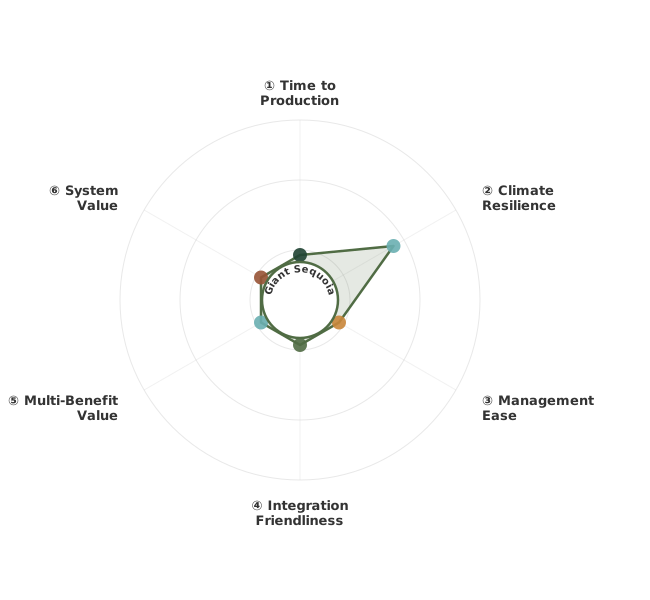
While direct mentions of *Sequoiadendron giganteum* within regenerative agriculture practices are limited in our knowledge base, available data suggests its potential role in soil health and ecosystem support. One study highlights the distinct bacterial and fungal microbiomes found in soil beneath giant sequoia, indicating a significant influence on soil microbial communities and potentially contributing to soil building and nutrient cycling. Although not explicitly a cover crop or nitrogen fixer, its presence as a long-lived tree species suggests contributions to carbon sequestration and creating habitat within diverse ecosystems. The knowledge base does not offer specific farmer experiences or details on integration with practices like rotational grazing or no-till. Further research would be beneficial to fully understand its primary uses and regenerative benefits in agricultural systems.

Regenerative Quick Profile

All recommendations assume integrated, regenerative practices—not conventional inputs.

Climate & Soil Fit

Climate: Tropical Rainforest, Tropical Monsoon, Tropical Savanna, Hot Semi-Arid (Steppe), Cold Semi-Arid (Steppe), Hot Desert, Cold Desert, Humid Subtropical, Oceanic (Maritime Temperate), Hot-Summer Mediterranean, Warm-Summer Mediterranean, Monsoon-Influenced Humid Subtropical, Subtropical Highland, Hot-Summer Continental, Warm-Summer Continental, Subarctic, Monsoon-Influenced Hot-Summer Continental, Tundra

Zones: USDA 6-8, Australian Zones 3-4, EU Oceanic, Atlantic

Optimal Soil: Loam Soil

System Role & Functions

Primary: Specialty

Secondary: Food Forest, Windbreak

Key Benefits: Drought tolerant, Low maintenance, Pest resistant

Management Level

Experience: Advanced

Maintenance: Very low maintenance - Once established, giant sequoias are exceptionally self-sufficient, relying on healthy soil ecosystems, natural rainfall, and their inherent resilience, requiring no supplemental fertility management or water management.

Time to Production: Slow (5+ years) - As exceptionally slow-growing trees, giant sequoias offer long-term ecological benefits and future timber potential, embodying a commitment to generational land stewardship rather than short-term yield.

Value Streams

  • Fruit/nut harvest
1

Climate Suitability Assessment

Will this plant thrive in your climate?

IDEALLY SUITED

Köppen Zone: Cfa (Humid Subtropical)
USDA Zone: 7a, 8a, 9a, 10a, 11a, 12a

Giant Sequoia performs optimally in climates with mild winters and long, warm growing seasons, characterized by USDA zones 7a through 9b, and Köppen Cfb and Dfb zones with sufficient summer warmth and moisture. These regions offer reliable establishment with minimal risk of winter damage, allowing for robust growth and development. The extended frost-free periods (typically 180-240 days) and moderate temperature ranges (summer highs generally 70-85°F, winter lows rarely below 10°F) align perfectly with the species' requirements. Adequate natural precipitation (30-50 inches annually) is often sufficient, though supplemental irrigation may be beneficial during extended dry spells, especially for young trees. These conditions support the development of the characteristic massive trunk and impressive height, making them prime locations for specialty cultivation and windbreak establishment. The success rate for establishing new trees is very high, often exceeding 90%, with minimal need for intensive management beyond initial watering. These zones are where Giant Sequoia is most likely to thrive and reach its full potential.

ADEQUATE

Köppen Zone: Cfb (Oceanic (Maritime Temperate)), Csa (Hot-Summer Mediterranean), Csb (Warm-Summer Mediterranean), Cwa (Monsoon-Influenced Humid Subtropical), Cwb (Subtropical Highland), Dfa (Hot-Summer Continental), Dfb (Warm-Summer Continental)
USDA Zone: 5b, 6a
Australian Zone: temperate
EU Climate Region: atlantic

Giant Sequoia can be adequately cultivated in climates with moderate winter cold and sufficient growing season length, including Köppen Cfb, Csb, and Dfb zones, and USDA zones 5b through 6b, 10a, 10b, and Australian temperate regions. These zones present some challenges, such as dry summers in Mediterranean-influenced areas (Csb, USDA 9a-10b) requiring supplemental irrigation, or colder winters (USDA 5b-6b) where young trees may benefit from protection. The growing season, while adequate (140-200 days), might be shorter or more variable than ideal, potentially slowing growth rates. Establishment success is good (70-85%) with proper site selection and management, particularly concerning water availability during establishment and heat stress in warmer zones. While Giant Sequoia may not reach the same colossal size as in its native habitat or truly ideal zones, it can still develop into a significant tree, serving effectively as a windbreak or for specialty purposes. Economic viability is reasonable with standard horticultural practices and moderate input costs for irrigation.

NOT RECOMMENDED

Köppen Zone: Af (Tropical Rainforest), Am (Tropical Monsoon), Aw (Tropical Savanna), ET (Tundra), BSh (Hot Semi-Arid (Steppe)), BSk (Cold Semi-Arid (Steppe)), BWh (Hot Desert), BWk (Cold Desert), Dfc (Subarctic), Dwa (Monsoon-Influenced Hot-Summer Continental)
USDA Zone: 2a, 3a, 3b, 4a, 5a

Giant Sequoia is not recommended for cultivation in climates with extreme winter cold, such as USDA zones 3a through 5a, or in regions with prolonged periods of intense heat and insufficient moisture that fall outside its natural tolerance. In very cold zones, winter temperatures dropping below -20°F (-29°C) cause severe frost damage and mortality, making establishment and long-term survival highly improbable. The short growing seasons in these areas further limit growth potential. In contrast, extremely hot and arid regions, while not explicitly detailed in the provided Köppen zones, would also be unsuitable due to the species' preference for cooler, moist environments and susceptibility to heat stress and drought. Establishment success in these unsuitable zones is low (<50%), requiring intensive and often economically unfeasible management, including extensive irrigation infrastructure and protection measures. For these challenging environments, alternative conifer species that are more cold-hardy or drought-tolerant are better suited for regenerative agriculture functions like windbreaks or specialty wood production.

Better alternatives for these "not recommended" zones: Eastern Redcedar (Juniperus virginiana) (highly cold-hardy conifer with windbreak potential, suitable for USDA zones 3-9), Douglas Fir (Pseudotsuga menziesii) (more cold-tolerant conifer with good growth potential, suitable for USDA zones 4-8), Western Redcedar (Thuja plicata) (tolerant of cooler, moist climates, suitable for USDA zones 5-9), Balsam Fir (Abies balsamea) (cold-tolerant conifer for windbreaks and specialty wood, suitable for USDA zones 3-6)

Note: Zones listed above represent climates where this plant can produce reliably with reasonable management. Climate zones not mentioned would require intensive climate modification (greenhouses, extensive infrastructure) and are not economically viable for regenerative agriculture purposes.

2

Soil Suitability Assessment

Which soil types work best for this plant?

IDEALLY SUITED

Loam Soil

This plant thrives in these soil types without requiring amendments or remediation. Natural soil conditions support optimal growth and productivity.

ADEQUATE

Clay Soil, Rich Soil, Rocky Soil, Sandy Soil

This plant performs acceptably in these soil types with moderate, manageable remediation such as pH adjustment, compost addition, or drainage improvement. The required amendments are practical and cost-effective for regenerative agriculture.

NOT RECOMMENDED

Acidic Soil, Alkaline Soil, Desert Soil, Saline Soil, Wet Soil

Growing this plant in these soil types would require impractical remediation such as complete soil replacement, extensive amendments, or cost-prohibitive infrastructure. These conditions are not economically viable for regenerative agriculture.

Note: Soil suitability assessments focus on remediation requirements. "Ideally Suited" means the plant generally thrives without the need for substantial amendments, "Adequate" means manageable remediation (lime, compost, mulch), and "Not Recommended" means impractical soil changes would be required. Climate factors like rainfall and temperature also influence success.

3

Seasonal Considerations

Planting timing, growth duration, and harvest windows

Establishing giant sequoia requires a long-term perspective, as these giants are a multi-decade investment. For nursery stock, aim for planting in early spring, just as the soil begins to warm and before new growth actively emerges. This is ideal for both bare-root and containerized trees, allowing roots to establish during the cool, moist spring rains.

Your trees will take several years to reach true establishment, typically 3-5 years post-planting. While the wood itself may be harvested for specific purposes, the concept of a "first harvest" in the traditional sense doesn't apply to this species for timber. Full production, in terms of reaching mature size and ecological function, is measured in decades, with these trees living for centuries.

Seasonal management focuses on supporting their slow, steady growth. Pruning, if necessary for shaping or removing damaged limbs, should be done during the dormant season, in late fall or winter, after leaf drop and before spring sap flow. Giant sequoias naturally enter a period of winter dormancy, shedding some foliage as a protective measure. Their bloom timing, if you are observing reproductive cycles, occurs in early spring. The primary focus for farmers is ensuring healthy establishment and allowing the natural, long life cycle of these magnificent trees to unfold.

4

System Role & Multi-Benefit Value

Functional roles, integration strategies, and stacked benefits

Functional Role

Total System Value

Giant sequoias offer substantial whole-farm resilience primarily through long-term ecosystem enhancement and services. While direct harvest is not a primary regenerative function, their immense longevity and size contribute significantly to carbon sequestration over centuries. Their canopy provides crucial shade in silvopasture or agroforestry settings, reducing livestock heat stress and potentially improving pasture productivity in arid or hot climates. The deep root systems enhance soil structure and water infiltration, contributing to erosion control. As a keystone species in their native range, they support a unique micro-ecosystem, offering habitat and resources for wildlife. Risk diversification is achieved through their permanence and ability to withstand environmental stresses, acting as a living legacy farm asset. Their contribution is a slow-burn, foundational element to a resilient and biodiverse agricultural landscape, becoming more impactful with age.

Integration Characteristics

Multi-Benefit Value: Not Recommended - While primarily recognized for its monumental presence and potential timber, the giant sequoia contributes to soil health and habitat over centuries, with slow establishment reflecting a long-term ecosystem contribution.

Integration Friendliness: Not Recommended - The giant sequoia's immense size and slow, deliberate growth lend themselves to integration as long-term landscape features, contributing to soil structure and habitat over vast timescales within a regenerative system.

5

Management & Care Requirements

Integration guidance, maintenance needs, and care practices

How to Integrate This Plant

Giant sequoias, while not typically part of annual cropping systems, can be integrated into long-term regenerative farm designs, particularly for shade and habitat. Their primary role in a regenerative context would be as a long-term structural element. In silvopasture systems, mature trees can provide shade and shelter for livestock, reducing heat stress and improving forage distribution. While not a nitrogen fixer, their significant biomass contributes to soil organic matter over decades. Their massive root systems can aid in erosion control on slopes. Compatibility with practices like 'food forest' designs is possible, though their slow growth and immense size necessitate careful planning. Contribution begins with establishing young trees, with significant shade and habitat benefits emerging within 20-30 years. The total system value lies in their contribution to biodiversity, soil health over the very long term, and providing microclimates, rather than direct harvest or rapid ecosystem service provision.

Integration Practices & Management

The provided knowledge base offers limited direct insight into how regenerative farmers practically integrate *Sequoiadendron giganteum* (Giant Sequoia) into their systems. The mentions primarily focus on ecological studies and tree identification, rather than agricultural application. Source details a study on the soil microbiome beneath Giant Sequoias in Yosemite National Park, highlighting differences in microbial communities, but does not describe farming practices. Source lists Giant Sequoia as a prominent conifer species found in California, useful for tree identification, again without reference to regenerative farming integration. Consequently, specific details regarding establishment methods, integration with grazing, termination strategies, management considerations like fertility and competition, or integration with cash crops are not present in this limited text. The knowledge base does not contain practical farmer experiences or specific insights into the use of Giant Sequoia within regenerative agriculture frameworks. Therefore, based on these sources, it is not possible to elaborate on the 'how' of their regenerative integration.

Management Profile

Maintenance Intensity: Ideally Suited - Once established, giant sequoias are exceptionally self-sufficient, relying on healthy soil ecosystems, natural rainfall, and their inherent resilience, requiring no supplemental fertility management or water management.

Pest Disease Pressure: Ideally Suited - Giant sequoias exhibit exceptional resistance to pests and diseases, a trait fostered by their robust natural defenses and healthy growth within supportive ecosystems, minimizing the need for any intervention.

Time To Production: Not Recommended - As exceptionally slow-growing trees, giant sequoias offer long-term ecological benefits and future timber potential, embodying a commitment to generational land stewardship rather than short-term yield.

6

Economics & Value Streams

Direct harvest, system benefits, ecosystem services, and risk diversification

Comprehensive economic analysis including direct harvest value, system enhancement contributions, ecosystem services, value timeline, and risk diversification strategies.

Per-Tree Production Economics

Metric Value
Establishment Cost $20-40
Years to First Harvest 20-30 years
Annual Maintenance $5-10
Yield 50-100 lbs/year 22-45 kg/year
Market Price $0-0/lb $0-0/kg
Productive Lifespan 100-200 years
Net Annual Return* $-10 to $-5/year (negative)

Values shown per mature tree, not per acre. In regenerative systems, trees are integrated at low densities across diverse landscapes. Establishment costs spread over the lifespan of the tree. Early years have costs but no revenue.

* Net Annual Return = (Yield × Market Price) − (Amortized Establishment Cost + Annual Maintenance). This return is realized only at/after first harvest; early years have costs but no revenue. Range shows worst case to best case scenarios.

System Enhancement Value

Beyond harvest: limited system integration for niche specialty products

System Contributions

Giant sequoias contribute significantly to soil health and nutrient cycling, as indicated by the research on their association with microbial communities (). Beneath giant sequoia individuals, greater bacterial/archaeal richness was observed, with a larger core community. Their influence extends to fungal communities, which were compositionally distinct and correlated with soil pH and moisture. This suggests that giant sequoias actively shape the soil microbiome, potentially enhancing decomposition, nutrient availability, and overall soil structure. In the context of a food forest, as proposed in and, their role as a pioneer species, contributing to initial biomass generation and nutrient cycling, is paramount. While not legumes, their long-term presence and influence on soil biology can foster a more resilient and fertile soil ecosystem, reducing the need for external amendments and supporting a diverse understory of herbaceous plants, shrubs, and fruit trees within the integrated system. Their massive biomass also represents significant long-term carbon storage.

Erosion Control (if applicable)

Protects 3-5 acres per tree row, 5-15% crop yield improvement (variable based on wind exposure and farm system)

Giant sequoias, due to their immense size and dense foliage when mature, can act as significant windbreaks. While not explicitly detailed in the provided excerpts for windbreak function, their inclusion in a diverse planting strategy (as seen in and) alongside other pioneer species suggests an intent to leverage their structural potential. Mature specimens can create substantial barriers, reducing wind speed over a considerable downwind area. This protection is crucial for mitigating soil erosion by limiting wind-driven displacement of topsoil, a benefit particularly relevant in agricultural landscapes susceptible to wind damage. Furthermore, by buffering fields from harsh winds, they can improve microclimates, leading to reduced desiccation of crops and potentially enhancing their growth and yield. The effectiveness will depend on planting density, row orientation, and the specific wind exposure of the farm, but the inherent stature of the species points to a high potential for wind reduction.

Ecosystem Service Contributions

Environmental contributions: carbon, pollinators, wildlife, and water

  • Carbon Sequestration: Giant sequoias are renowned for their massive biomass and longevity, making them exceptional carbon sinks. Their rapid growth in favorable conditions and immense mature size allow them to sequester and store vast quantities of atmospheric carbon dioxide in their wood, bark, and root systems over centuries.
  • Pollinator Support: Low. While they are trees and may produce some pollen, their primary ecological role and the knowledge base do not highlight them as significant providers of nectar or pollen for managed pollinators compared to other flowering species.
  • Wildlife Habitat: Potential for habitat creation and nesting sites for arboreal species due to their immense size and longevity once mature. Their dense foliage can offer shelter. However, specific food resources for wildlife are not detailed in the provided snippets.
  • Water Quality: Not applicable

Value Timeline: Specialty Product Development

When you'll see results: varies widely by specialty product type

Years 1-2

Initial contribution to biomass generation and nutrient cycling, as described in the food forest concept (,). Early stages of soil microbiome enhancement and potential for very localized microclimate modification. Establishment of windbreak function will be minimal.

Years 3-5

Increased contribution to biomass and nutrient cycling. More established soil health benefits. The beginnings of noticeable windbreak effects, particularly in dense plantings. Potential for very early, limited specialty product development if managed for specific purposes (though not detailed in excerpts).

Years 10-20

Significant windbreak protection becomes evident, shielding larger areas. Substantial contribution to soil structure and fertility. Mature canopy development begins to offer more pronounced microclimate regulation and potential for habitat. Continued high rates of carbon sequestration.

20+ Years

Maximized windbreak effectiveness. Mature ecosystem services, including robust soil health benefits, significant habitat potential, and exceptional carbon storage. Potential for specialty timber harvest (primary function for this species) if managed for that purpose, representing a high-value, long-term income stream.

Farm Risk Reduction

How this reduces farm risk: premium pricing but niche market dependency

  • Multiple Revenue Streams: Specialty products (e.g., unique wood, potentially cones or other biomass for niche markets), long-term timber harvest, ecosystem services (windbreak protection, soil health enhancement).
  • Temporal Income Spread: Value is heavily weighted towards the long term, with ongoing ecosystem services from establishment through maturity. Income from specialty products or timber is a distant but significant future event, while ecosystem services provide continuous, albeit often indirect, value.
  • Market Risk Hedge: Diversifies farm revenue beyond annual crops by introducing a long-term, high-value asset. Reduces reliance on short-term market fluctuations. Windbreak function directly protects other farm assets (crops, livestock, soil) from environmental risks like extreme weather, enhancing overall farm resilience.
7

Regenerative Suitability Details

Comprehensive trait ratings for system integration assessment

Comparative ratings for this plant across key regenerative agriculture traits.

Trait Suitability Explanation
Drought Tolerance Ideally Suited Giant sequoias possess extensive root systems and remarkable resilience, thriving in their native environments by efficiently managing soil moisture and minimizing water needs through natural processes.
Establishment Ease Not Recommended Establishing giant sequoias from seed requires patience and careful attention to create ideal soil conditions and provide protective mulching, mimicking natural forest regeneration.
Time To Production Not Recommended As exceptionally slow-growing trees, giant sequoias offer long-term ecological benefits and future timber potential, embodying a commitment to generational land stewardship rather than short-term yield.
Multi Benefit Value Not Recommended While primarily recognized for its monumental presence and potential timber, the giant sequoia contributes to soil health and habitat over centuries, with slow establishment reflecting a long-term ecosystem contribution.
Climate Adaptability Not Recommended Giant sequoias flourish in cool, moist climates with well-drained soils, thriving best where natural moisture retention and healthy soil ecosystems support their growth without external intervention.
Hardiness Zone Range Adequate This species thrives within temperate zones, demonstrating its ability to adapt to moderate cold and heat when supported by healthy soil biology and effective moisture management.
Maintenance Intensity Ideally Suited Once established, giant sequoias are exceptionally self-sufficient, relying on healthy soil ecosystems, natural rainfall, and their inherent resilience, requiring no supplemental fertility management or water management.
Pest Disease Pressure Ideally Suited Giant sequoias exhibit exceptional resistance to pests and diseases, a trait fostered by their robust natural defenses and healthy growth within supportive ecosystems, minimizing the need for any intervention.
Integration Friendliness Not Recommended The giant sequoia's immense size and slow, deliberate growth lend themselves to integration as long-term landscape features, contributing to soil structure and habitat over vast timescales within a regenerative system.

Comparative System: Ratings compare plants within their economic category (e.g., cover crop nitrogen fixation compared to other cover crops, not to all plants). Individual farm conditions and management practices significantly influence actual performance.

8

Learn More

Why farmers use this plant and additional resources

Why Regenerative Farmers Use This Plant

Sequoiadendron giganteum, the Giant Sequoia, offers profound long-term ecological and economic benefits within regenerative agriculture systems, primarily as a cornerstone for agroforestry and perennial landscape designs. While not a food crop in the traditional sense, its immense stature and longevity position it as a significant carbon sink and a provider of valuable ecosystem services. Mature trees can sequester an estimated 2-5 tons of CO2e per acre annually, contributing substantially to climate change mitigation efforts. Their massive root systems, extending 15-25 feet (4.5-7.6 m) or more, enhance soil structure, improve water infiltration, and prevent erosion, making them ideal for stabilizing slopes and degraded lands. The dense canopy provides critical shade regulation, reducing heat stress on livestock and understory vegetation, and acts as a formidable windbreak, protecting crops and farm infrastructure from damaging winds. Over multi-decade to century-long horizons, Giant Sequoias represent a significant accumulation of asset value, offering timber potential and a legacy for future generations.

Beyond direct carbon sequestration, the integration of Sequoiadendron giganteum into farm landscapes fosters a more resilient and biodiverse ecosystem. The presence of these majestic trees creates microclimates that can support a wider array of beneficial insects, pollinators, and soil microorganisms. Their extensive root networks improve soil aeration and water-holding capacity, reducing the reliance on irrigation and mitigating drought impacts. In silvopasture systems, the shade provided by mature trees can extend the grazing season by offering relief during hot summer months, while their structural presence can deter predators from livestock. The long-term stability and soil health improvements they facilitate reduce the need for external inputs, such as synthetic fertilizers and pesticides, aligning perfectly with regenerative principles of ecological enhancement.

The economic returns from Sequoiadendron giganteum are realized over very long timescales, distinguishing it from annual crops. While initial establishment requires investment in protection and care, trees can reach significant heights within 20-30 years, with full maturity and maximum timber value potentially taking centuries. This long-term perspective aligns with the goals of regenerative agriculture, which emphasizes building enduring natural capital. The accumulation of biomass and wood volume represents a substantial, growing asset that can provide future income streams through sustainable timber harvesting or by enhancing property value. Their role in creating stable, biodiverse farm ecosystems contributes indirectly to the overall productivity and profitability of the agricultural enterprise by reducing risks associated with climate variability and input costs.

Giant Sequoias have demonstrated remarkable success in various temperate regions when managed for long-term ecological benefit. In the Pacific Northwest of the USA (USDA Zones 7-9), where conditions are often ideal, these trees are frequently incorporated into conservation plantings and windbreaks on large agricultural estates. In parts of Europe, such as France and the UK (RHS Zones H4-H7), their establishment in parklands and arboretums showcases their adaptability to temperate oceanic and humid continental climates, providing models for their use in larger-scale agroforestry projects. In Australia's temperate zones (Zones 3-4), careful site selection is needed to ensure adequate moisture and protection from extreme heat, but they can serve as valuable shade trees in larger rural properties or as part of long-term conservation plantings. In Canada's cooler regions (Zones 3a-7b), establishment requires selecting hardy cultivars and providing initial protection from extreme cold and wind. In Mediterranean climates like parts of California (USA) or Southern Europe (Köppen Csa/Csb), establishment during the wetter winter months is ideal, with supplemental irrigation needed during the dry summer. In South America, regions with similar temperate oceanic or humid subtropical climates, such as parts of southern Brazil or Chile, can support its growth, though careful site selection is crucial to avoid extreme heat or drought. In New Zealand, they integrate well into shelterbelts and rural landscapes, thriving in the temperate oceanic climate.

9

How to Integrate This Plant

Practical guidance for regenerative systems

Establishing Sequoiadendron giganteum requires careful planning and a commitment to long-term stewardship. Planting is best achieved through nursery-grown saplings, typically 1-3 years old, to ensure a strong start.

Spacing:

  • For individual specimen planting, windbreaks, or small groves: 15-20 ft (4.5-6 m) apart.
  • For hedgerows: 10-15 ft (3-4.5 meters) apart.
  • For alley cropping or silvopasture systems: Rows spaced 30-40 ft (9-12 m) apart, with trees planted at intervals of 20-30 ft (6-9 m) within the row to allow for future canopy spread, equipment access, and livestock movement.

Planting:

  • Planting is typically done from bare-root stock or container-grown saplings.
  • The optimal planting depth for bare-root trees is to ensure the root flare is at soil level. Container-grown trees should be planted at the same depth they were in the pot.
  • For Mediterranean climates (Köppen Csa/Csb), establishment during the wetter winter months is ideal. In other temperate regions, early spring after the last frost or early fall to allow root establishment before winter are optimal.

Establishment Phase (Years 1-3):

  • This phase requires consistent watering, usually around 1-2 inches (2.5-5 cm) per week, especially during dry periods.
  • Mulching around the base of the tree helps retain soil moisture and suppress weeds.
  • Protection from browsing animals like deer through sturdy fencing or individual tree guards is essential during these early years, typically for the first 5-10 years.
  • Incorporating compost or well-rotted manure into the planting hole can provide initial nutrients.

Management:

  • Fertility: Prioritize biological approaches; incorporating compost, mulching with organic matter, and utilizing nitrogen-fixing cover crops in the surrounding areas can significantly support their development. Mature trees require minimal supplemental watering or fertilization.
  • Pruning: Generally minimal, focusing on removing dead, damaged, or crossing branches to maintain tree health and structure. The primary goal is to allow the tree to reach its natural, majestic form and maintain a strong central leader.
  • Understory Management: In the first 2-3 years, planting nitrogen-fixing ground covers like clover or vetch beneath the canopy can help build soil fertility and suppress weeds. As the trees mature and their canopy expands, they will naturally shade out many competing plants, simplifying understory management. In silvopasture designs, drought-tolerant, grazing-tolerant forage species can be used.

Long-Term Integration:

  • Giant Sequoias are perennials with a very long timeline to full production. Significant canopy development and carbon sequestration occur over 20-50 years, with full maturity taking centuries.
  • Measurable soil carbon increases can be observed by year 5-10 as root systems develop and organic matter accumulates.
  • Long-term infrastructure considerations include ensuring adequate space for root expansion and avoiding soil compaction around the root zone.
  • Canopy management, if considered for understory light penetration in silvopasture, would involve selective thinning over many years, aiming to maintain a healthy, open canopy that allows sufficient light for forage or other understory plants. In alley cropping or silvopasture, maintaining wide rows allows for grazing animals or hay production during the establishment phase.
View Full Document (Printable single-page version)