Sour/Tart Cherries
Regenerative Quick Profile
All recommendations assume integrated, regenerative practices—not conventional inputs.
Climate & Soil Fit
Climate: Tropical Rainforest, Tropical Monsoon, Tropical Savanna, Hot Semi-Arid (Steppe), Cold Semi-Arid (Steppe), Hot Desert, Cold Desert, Humid Subtropical, Oceanic (Maritime Temperate), Hot-Summer Mediterranean, Warm-Summer Mediterranean, Monsoon-Influenced Humid Subtropical, Subtropical Highland, Hot-Summer Continental, Warm-Summer Continental, Subarctic, Monsoon-Influenced Hot-Summer Continental, Tundra
Zones: USDA 4-8, Australian Zones 3-6
Optimal Soil: Loam Soil
System Role & Functions
Primary: Food Forest
Secondary: Pollinator Support, Cash Crop With Services
Key Benefits: Low maintenance, Pest resistant
Management Level
Experience: Advanced
Maintenance: Very low maintenance - Self-fertile and requiring lower spray inputs, this variety significantly reduces the need for intensive management, making it exceptionally easy to maintain in diverse growing systems.
Time to Production: Moderate (2-5 years) - Sour cherries typically begin fruit production within 3-5 years, establishing a productive cycle sooner than sweet cherries and contributing to system succession.
Value Streams
- Fruit/nut harvest
- Pollinator habitat and support
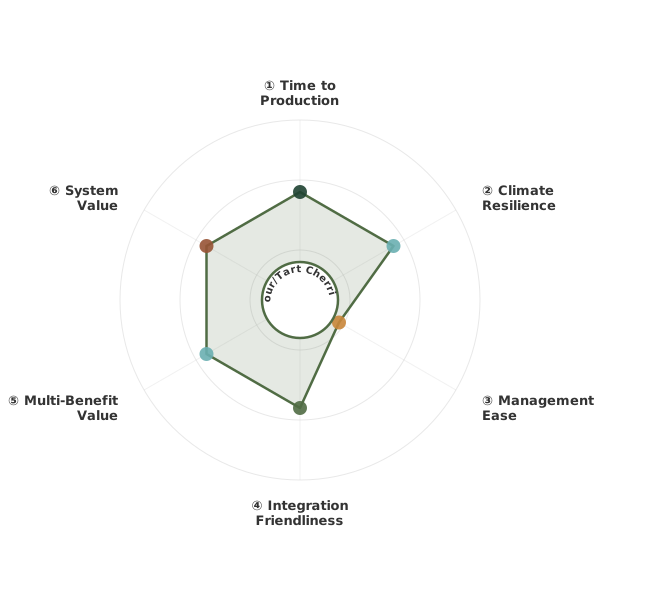
Regenerative Trait Ratings
How These Traits Are Calculated
Trait dimensions are ordered clockwise starting from the top of the chart (12 o'clock position):
1. Time to Production
Years from planting to first harvestable yields
WHAT: Measures the waiting period from tree establishment to first meaningful production. Fast-producing trees yield within 2-5 years; slow producers require 8-15+ years before significant harvests.
WHY: Time to production determines cash flow timing and financial feasibility for farm businesses. Long wait times create significant opportunity costs—land and labor tied up for years without income. Fast producers allow quicker experimentation and cash flow recovery, reducing risk for new tree crop farmers.
HOW: Ratings based on years to first harvest documented in economics data. Exceptional (3.0): Production within 2-4 years (elderberry, mulberry, some nut bushes). Typical (2.0): 5-8 years (many fruit trees). Limited (1.0): 10-15+ years (hardwood timber, some nut trees like pecan, walnut).
2. Climate Resilience
Weighted: hardiness zones (50%) + drought tolerance (30%) + adaptability (20%)
WHAT: Combines temperature tolerance (hardiness zone range), water stress resilience (drought tolerance), and overall climate flexibility. Multi-decade tree investments require reliable climate matching to prevent total loss.
WHY: Wrong climate choices mean complete failure for permanent plantings. A tree that dies in year 5 from unexpected cold or prolonged drought represents catastrophic loss of 5 years' investment. Climate resilience determines geographic range and weather variability tolerance—critical as climate patterns become less predictable.
HOW: Weighted formula prioritizes hardiness zone range (50% weight) for core temperature tolerance, drought tolerance (30% weight) for water stress, and overall adaptability (20% weight) for general climate flexibility. Exceptional (3.0): Wide hardiness range (8+ zones) with strong drought tolerance. Typical (2.0): Moderate range and tolerance. Limited (1.0): Narrow climate requirements.
3. Management Ease
Weighted: establishment (40%) + low maintenance (30%) + pest resistance (30%)
WHAT: Combines establishment difficulty, ongoing maintenance requirements, and disease/pest pressure into overall management workload. Low-maintenance trees fit easily into busy farm operations without specialized expertise or intensive inputs.
WHY: Labor is the limiting factor for most diversified farms. High-maintenance trees requiring pruning expertise, disease management, and intensive pest control compete for limited time with other farm enterprises. Easy-care trees deliver production with minimal intervention, making them viable for time-constrained farmers.
HOW: Weighted formula balances establishment ease (40% weight) for startup success, inverted maintenance intensity (30% weight) for ongoing care, and inverted pest/disease pressure (30% weight) for health management. Exceptional (3.0): Easy to establish, self-sufficient growth, naturally pest-resistant. Typical (2.0): Moderate care needs. Limited (1.0): Difficult establishment, intensive maintenance, or heavy pest pressure.
4. Integration Friendliness
Compatibility with silvopasture, alley cropping, and multi-species systems
WHAT: Measures how well the tree integrates with other farm enterprises—grazing livestock, annual crops, or other perennials. Integration-friendly trees tolerate livestock browsing, don't heavily shade out crops, and coexist with diverse plantings.
WHY: Integrated tree systems (silvopasture, alley cropping, food forests) provide higher total returns per acre than monoculture plantings. Trees that work well with livestock provide shade + forage + production simultaneously. Integration flexibility allows farmers to stack enterprises and adapt to market opportunities.
HOW: Ratings based on the integration_friendliness trait documenting compatibility with grazing, cropping, and multi-species systems. Exceptional (3.0): Tolerates livestock browsing, provides livestock benefits (shade, browse), compatible with understory crops. Typical (2.0): Some integration possible with management. Limited (1.0): Requires isolation, incompatible with livestock or cropping.
5. Multi-Benefit Value
Stacked benefits beyond primary product—shade, wildlife, nitrogen, erosion control
WHAT: Measures the diversity of ecosystem services provided beyond the main harvest product. Multi-benefit trees deliver shade, windbreak, wildlife habitat, nitrogen fixation, erosion control, pollinator support, and aesthetic value simultaneously.
WHY: Single-purpose trees are economically fragile—market price swings or production failures eliminate all value. Multi-benefit trees provide resilience through diverse value streams. A nitrogen-fixing tree that produces nuts, provides shade for livestock, supports wildlife, and controls erosion delivers 4-5x the system value of a production-only tree.
HOW: Ratings based on the multi_benefit_value trait documenting service diversity. Exceptional (3.0): 4+ significant services stacked (nitrogen-fixing legume trees providing nuts + shade + wildlife + windbreak). Typical (2.0): 2-3 moderate services. Limited (1.0): Single-purpose production trees with minimal additional benefits.
6. System Value
Total ecosystem and economic value across short, medium, and long timeframes
WHAT: Synthesizes the total regenerative value delivered across multiple decades, including immediate ecosystem services (years 1-5), medium-term production value (years 5-15), and long-term system transformation (years 15-50). Captures the compounding benefits of permanent plantings.
WHY: Trees are multi-decade investments requiring patient capital. System value measures whether the total package—early ecosystem services, eventual production, and long-term legacy benefits—justifies the wait time and land commitment. High system value trees pay back investment through diverse, stacking, compounding benefits.
HOW: Scored via LLM synthesis of economics timelines, ecosystem service diversity, and long-term soil/water/carbon impacts. Exceptional (3.0): Strong early services + valuable production + transformative long-term impacts. Typical (2.0): Moderate benefits across timeframes. Limited (1.0): Long wait with limited service stacking or weak economic returns.
Ratings are based on documented performance in regenerative systems, not conventional high-input scenarios. All traits assume integrated management practices focused on soil health and ecosystem services.
1
Climate Suitability Assessment
Will this plant thrive in your climate?
Climate Suitability Assessment
Will this plant thrive in your climate?
Köppen Zone: Dfa (Hot-Summer Continental), Dfb (Warm-Summer Continental)
USDA Zone: 4b, 5a, 5b, 6a
Australian Zone: temperate
EU Climate Region: atlantic, continental
Tart cherries perform optimally in climates that provide sufficient winter chilling hours (typically 800-1200 hours below 45°F/7°C) and a growing season with adequate heat accumulation for fruit ripening. These conditions are met in Köppen zones Cfa, Cfb, Dfb, and regional zones like USDA 4b-6b, Australian temperate, and EU Atlantic/Continental. These regions generally experience mild winters that allow for dormancy without excessive cold damage, followed by growing seasons with temperatures conducive to vegetative growth and fruit development (ideally 60-75°F/15-24°C during the day, cooler at night). Rainfall patterns in these zones are typically sufficient, though supplemental irrigation can enhance yield and quality, especially during dry spells. Establishment success is high (>85%) with minimal need for specialized protection. Multi-year productivity is reliable, with trees producing consistent yields of high-quality fruit, making them a prime candidate for food forests and cash crops in these suitable climates.
Köppen Zone: BSk (Cold Semi-Arid (Steppe)), Cfa (Humid Subtropical), Cfb (Oceanic (Maritime Temperate)), Dwa (Monsoon-Influenced Hot-Summer Continental)
USDA Zone: 3b, 4a, 6b, 7a
Australian Zone: subtropical
Tart cherries can be grown successfully in climates that are adequate but may require careful management and variety selection. These include Köppen zones Csa, Csb, Dfa, and regional zones like USDA 7a-8b, Australian subtropical, and EU Atlantic/Continental. The primary challenges in these zones are often marginal chilling hours, leading to potential issues with bud break and fruit set, or hotter, drier summers that increase water demands and disease pressure. While yields might be slightly lower or more variable than in ideal zones, they can still be economically viable. Establishment success is good (70-85%) with proper timing and site selection. Standard management practices, including appropriate irrigation, disease monitoring, and selection of hardier or lower-chill-requiring varieties, are necessary to ensure reliable production and economic feasibility. These zones represent a balance between potential and necessary intervention for successful tart cherry cultivation.
Köppen Zone: Af (Tropical Rainforest), Am (Tropical Monsoon), Aw (Tropical Savanna), ET (Tundra), BSh (Hot Semi-Arid (Steppe)), BWh (Hot Desert), BWk (Cold Desert), Csa (Hot-Summer Mediterranean), Csb (Warm-Summer Mediterranean), Cwa (Monsoon-Influenced Humid Subtropical), Cwb (Subtropical Highland), Dfc (Subarctic)
USDA Zone: 2a, 3a, 7b, 8a, 8b, 9a, 10a, 11a, 12a
Tart cherries are not recommended in Köppen zones Dfc, Dwc, and regional zones USDA 1a-5a, 9a-10b, and EU Boreal (implied by USDA 1-5). These zones present significant challenges that make cultivation economically unviable and practically difficult. In extremely cold zones (USDA 1a-5a, Köppen Dfc/Dwc), the primary issue is insufficient winter chilling hours and extreme winter cold, leading to high rates of winter kill and a growing season too short for fruit to ripen. In warmer zones (USDA 9a-10b), the lack of adequate chilling hours prevents proper dormancy and fruit set, while hot summers can stress the trees and negatively impact fruit quality. Establishment success is often below 70%, and intensive management, including specialized varieties and significant infrastructure (e.g., extensive irrigation in hot zones, frost protection in marginal cold zones), would be required, making them unsuitable for typical regenerative agriculture practices. Alternative cold-hardy berries or heat-tolerant fruits are better suited for these extreme climates.
Note: Zones listed above represent climates where this plant can produce reliably with reasonable management. Climate zones not mentioned would require intensive climate modification (greenhouses, extensive infrastructure) and are not economically viable for regenerative agriculture purposes.
2
Soil Suitability Assessment
Which soil types work best for this plant?
Soil Suitability Assessment
Which soil types work best for this plant?
Loam Soil
This plant thrives in these soil types without requiring amendments or remediation. Natural soil conditions support optimal growth and productivity.
Acidic Soil, Alkaline Soil, Clay Soil, Desert Soil, Rich Soil, Rocky Soil, Sandy Soil
This plant performs acceptably in these soil types with moderate, manageable remediation such as pH adjustment, compost addition, or drainage improvement. The required amendments are practical and cost-effective for regenerative agriculture.
Saline Soil, Wet Soil
Growing this plant in these soil types would require impractical remediation such as complete soil replacement, extensive amendments, or cost-prohibitive infrastructure. These conditions are not economically viable for regenerative agriculture.
Note: Soil suitability assessments focus on remediation requirements. "Ideally Suited" means the plant generally thrives without the need for substantial amendments, "Adequate" means manageable remediation (lime, compost, mulch), and "Not Recommended" means impractical soil changes would be required. Climate factors like rainfall and temperature also influence success.
3
Seasonal Considerations
Planting timing, growth duration, and harvest windows
Seasonal Considerations
Planting timing, growth duration, and harvest windows
Sour cherries are a rewarding perennial investment, but understanding their multi-year rhythm is key to success. For establishment, aim to plant bare-root nursery trees in early spring, just as the soil becomes workable and before active bud break. Container-grown trees offer more flexibility, allowing planting throughout the growing season, though fall planting is ideal for root establishment before winter.
Expect your young trees to take a few years to truly establish, typically 3-5 years before you see a significant first harvest. Full production, where yields are robust and consistent, usually arrives around 5-7 years after planting. With good care, these trees can remain productive for several decades.
Throughout the year, your management will align with their natural cycles. The best time for structural pruning is during late winter or early spring, while the trees are still in dormancy. This minimizes stress and sap loss. Bloom typically occurs in spring, followed by fruit development through summer. Harvest usually takes place in mid- to late summer, after the fruits have ripened. As fall arrives, the trees will begin to shed leaves, signaling their preparation for winter dormancy, a crucial period of rest before the cycle begins anew.
4
System Role & Multi-Benefit Value
Functional roles, integration strategies, and stacked benefits
System Role & Multi-Benefit Value
Functional roles, integration strategies, and stacked benefits
Functional Role
Integration Characteristics
Multi-Benefit Value: Adequate - A valuable food source for humans and wildlife, sour cherries also support pollinator activity and provide habitat, contributing to biodiversity within the agroecosystem.
Integration Friendliness: Adequate - Sour cherries provide consistent fruit yields and are amenable to integration with livestock like poultry, while also offering contributing ecosystem services as the system matures.
5
Economics & Value Streams
Direct harvest, system benefits, ecosystem services, and risk diversification
Economics & Value Streams
Direct harvest, system benefits, ecosystem services, and risk diversification
Comprehensive economic analysis including direct harvest value, system enhancement contributions, ecosystem services, value timeline, and risk diversification strategies.
Per-Tree Production Economics
| Metric | Value |
|---|---|
| Establishment Cost | $15-30 |
| Years to First Harvest | 3-5 years |
| Annual Maintenance | $5-10 |
| Yield | 40-80 lbs/year 18-36 kg/year |
| Market Price | $0-1/lb $1-3/kg |
| Productive Lifespan | 15-25 years |
| Net Annual Return* | $-12 to $74/year |
Values shown per mature tree, not per acre. In regenerative systems, trees are integrated at low densities across diverse landscapes. Establishment costs spread over the lifespan of the tree. Early years have costs but no revenue.
* Net Annual Return = (Yield × Market Price) − (Amortized Establishment Cost + Annual Maintenance). This return is realized only at/after first harvest; early years have costs but no revenue. Range shows worst case to best case scenarios.
System Enhancement Value
Beyond harvest: how understory complements overstory in polyculture
Food Forest System Contributions
Sour cherry trees, as part of an integrated farm system, offer significant pollinator support, a crucial ecosystem service. While one study indicated that herbaceous floral enhancements did not directly increase wild bee abundance on cherry flowers during bloom, it did highlight that enhancements attracted greater bee abundance and species richness, including more floral specialists. This suggests that the presence of diverse flowering plants, potentially including sour cherries themselves, can contribute to a more robust pollinator community. The pollen collected by crop pollinators in the study was primarily from spring-flowering woody plants, a category sour cherries fall into. Furthermore, in contexts where bird predation is a concern, as noted in discussions about *Prunus* species in Australia, sour cherry trees could potentially serve as a deterrent for larger birds like cockatoos when planted strategically, diverting them from more valuable crops. The selection of *Prunus* species for grafting purposes also implies an understanding of their structural benefits and potential to host beneficial organisms.
Ecosystem Service Contributions
Environmental contributions: carbon, pollinators, wildlife, and water
- Carbon Sequestration: Sour cherries are deciduous trees, contributing to carbon sequestration through biomass accumulation in their woody structure and root systems. Mature trees can store significant amounts of carbon over their lifespan. The rate of sequestration depends on tree age, health, and growth rate.
- Pollinator Support: High: Sour cherries bloom in spring, providing an early season nectar and pollen source for a variety of bees. While one study found limited direct impact of herbaceous enhancements on bee abundance on cherry flowers, the presence of woody spring bloomers like cherries supports overall pollinator populations, particularly those with shorter seasons.
- Wildlife Habitat: Sour cherry trees provide habitat and food sources for various wildlife. Their blossoms attract pollinators, and their fruit, though often tart, can be utilized by birds and small mammals. The structure of the tree offers nesting sites and shelter.
- Water Quality: Not applicable
Value Timeline: Understory Development
When you'll see results: groundcover/herbs year 1, shrubs 2-3, full layer integration 5-10
Years 1-2
Establishment of root systems, beginning to contribute to soil structure and potentially minor pollinator support during bloom. Early stages of shade provision if planted densely.
Years 3-5
Increasing contribution to pollinator support as trees mature. First potential, albeit likely small, harvests. Continued soil structure improvement and early canopy development.
Years 10-20
Full production of fruit. Significant contribution to pollinator populations. Mature canopy providing more substantial habitat and potential for microclimate regulation. Moderate carbon sequestration.
20+ Years
Continued robust fruit production. Mature trees offer substantial habitat and biodiversity support. Maximum carbon sequestration potential. Potential for use in agroforestry systems for timber or other long-term value if managed accordingly.
Farm Risk Reduction
How multi-layer systems diversify production and income
- Multiple Revenue Streams: Direct fruit sales (fresh or processed), value-added products (jams, pies, liqueurs), pollinator support services (indirect benefit to other crops), potential for ornamental value in food forest settings, potential for sale of grafted trees or propagation material.
- Temporal Income Spread: Value is spread across an annual harvest cycle, with ongoing ecosystem services (pollinator support, habitat) provided year-round. Long-term value is established as trees mature, offering consistent benefits over decades.
- Market Risk Hedge: Diversifies income beyond annual crops. Tart cherries can have a different market niche than sweet cherries, reducing direct competition. Their role in supporting pollinators indirectly hedges against pollination failures in other crops. As a perennial, they offer stability against annual crop price volatility.
6
Regenerative Suitability Details
Comprehensive trait ratings for system integration assessment
Regenerative Suitability Details
Comprehensive trait ratings for system integration assessment
Comparative ratings for this plant across key regenerative agriculture traits.
| Trait | Suitability | Explanation |
|---|---|---|
| Drought Tolerance | Adequate | Sour cherries are moderately resilient to dry periods, with optimal resilience and fruitfulness enhanced by effective water management and moisture retention strategies like mulching. |
| Establishment Ease | Not Recommended | Sour cherries can be established through diverse propagation methods, thriving in healthy soils with vigilant management of early competition, supported by soil-building practices. |
| Time To Production | Adequate | Sour cherries typically begin fruit production within 3-5 years, establishing a productive cycle sooner than sweet cherries and contributing to system succession. |
| Multi Benefit Value | Adequate | A valuable food source for humans and wildlife, sour cherries also support pollinator activity and provide habitat, contributing to biodiversity within the agroecosystem. |
| Climate Adaptability | Adequate | Adaptable to zones 4-8, sour cherries exhibit good cold tolerance and thrive with consistent soil moisture, managed through practices that promote water retention and minimize fungal issues in wetter periods. |
| Hardiness Zone Range | Adequate | Zones 4-8, sour cherries demonstrate robust cold tolerance and prefer moderate summers, ensuring reliable tart cherry production within their adapted ecological regions. |
| Maintenance Intensity | Ideally Suited | Self-fertile and requiring lower spray inputs, this variety significantly reduces the need for intensive management, making it exceptionally easy to maintain in diverse growing systems. |
| Pest Disease Pressure | Ideally Suited | With a lower spray requirement and inherent resilience, this variety exhibits exceptional resistance to common pests and diseases, simplifying disease management compared to typical cherry varieties. |
| Integration Friendliness | Adequate | Sour cherries provide consistent fruit yields and are amenable to integration with livestock like poultry, while also offering contributing ecosystem services as the system matures. |
Comparative System: Ratings compare plants within their economic category (e.g., cover crop nitrogen fixation compared to other cover crops, not to all plants). Individual farm conditions and management practices significantly influence actual performance.
7
Learn More
Why farmers use this plant and additional resources
Learn More
Why farmers use this plant and additional resources
Why Regenerative Farmers Use This Plant
Tart cherries (Prunus cerasus) offer a compelling suite of benefits for regenerative agricultural systems, primarily due to their resilience, unique market advantages, and significant contributions to soil health and ecosystem services. Unlike their sweet cherry counterparts, tart cherries are significantly less disease-prone and are self-fertile, simplifying orchard management and reducing the need for complex pollination strategies.
Economic and Market Advantages: At maturity, established tart cherry trees can sequester an estimated 2-5 tons of CO2e per acre per year, contributing meaningfully to carbon drawdown. Their robust root systems, typically extending 6-15+ feet (1.8-4.5+ m) deep, enhance soil structure, improve water infiltration, and scavenge nutrients from deeper soil profiles, reducing reliance on external inputs. The processing market readily accepts cosmetic imperfections, making them a forgiving crop for farmers focused on ecological health over pristine appearance. Furthermore, the booming global market for tart cherry juice, driven by its perceived health benefits, provides a stable and growing economic return over the multi-decade lifespan of an orchard, accumulating significant asset value over time. Mature trees can yield 5-7 tons per acre (11-16 metric tons/ha) annually.
Ecosystem Services and Soil Health: Integrating tart cherries into a diversified farm plan offers numerous ecosystem services. As a perennial tree, they contribute to long-term soil health and biodiversity. Their dense canopy provides valuable shade regulation, creating cooler microclimates that can benefit understory crops or livestock during hot periods, and can also act as a windbreak, protecting more sensitive plants or soil from wind erosion. The flowering period in spring provides an important early-season nectar and pollen source for pollinators, supporting broader farm ecosystem health. Their deep root systems improve soil aeration and water-holding capacity, making the land more resilient to drought and heavy rainfall events. Companion planting with nitrogen-fixing ground covers or strategically placed perennial forages can further enhance soil fertility and create synergistic relationships within the agroecosystem.
The quantitative ecosystem benefits of a mature tart cherry orchard are substantial. While specific data on pollinator visits per flower can vary, the blossoms are highly attractive to bees and other native pollinators, supporting increased pollination services across the farm. The presence of trees creates habitat for beneficial insects that prey on orchard pests, contributing to natural biological control. Over decades, the accumulation of organic matter from fallen leaves and root exudates significantly boosts soil organic matter content, leading to improved soil structure and water retention. This enhanced soil health translates to better water infiltration rates, reducing surface runoff and the risk of soil erosion, even in areas with intense rainfall. Measurable soil carbon increases can be expected by year 5-7 as the root systems develop and organic matter accumulates.
Regional Adaptations: Tart cherries have demonstrated success in various regional agricultural systems. In the Pacific Northwest of the United States (e.g., Portland, Oregon), they are a staple crop, often grown in orchards that integrate cover cropping for soil health and weed suppression. In the Great Lakes region of the USA, particularly Michigan, large-scale tart cherry orchards are a staple for the processing market. European growers, particularly in countries like Poland (e.g., Poznań) and Turkey (e.g., Bursa), have long cultivated tart cherries for their significant processing industry, often incorporating them into mixed orchards or hedgerows. In Australia, trials in cooler southern regions (e.g., Tasmania, Victoria, Melbourne) are exploring their potential for niche markets and agroforestry applications, showcasing their adaptability to different temperate zones. In Canada (e.g., Niagara-on-the-Lake), they are valued for both fresh and processed markets. Their adaptability also allows for successful cultivation in parts of New Zealand (e.g., Christchurch) and Russia (e.g., Moscow).
8
How to Integrate This Plant
Practical guidance for regenerative systems
How to Integrate This Plant
Practical guidance for regenerative systems
Establishing a tart cherry orchard involves careful planning and execution to ensure long-term success and integration into regenerative systems.
Planting and Establishment: Planting is typically done with grafted trees sourced from reputable nurseries. The optimal planting depth for grafted trees is to ensure the graft union remains at least 2-3 inches (5-7.5 cm) above the soil line, with the root flare at soil level. Spacing varies depending on the rootstock and desired orchard system, but common recommendations range from 15-20 feet (4.5-6 m) between trees in a row, with row spacing of 20-25 feet (6-7.5 m) to allow for equipment access, light penetration, and mature canopy spread. For alley cropping or silvopasture designs, row spacing might be wider, 25-35 ft (7.5-10.5 m), to accommodate grazing animals or equipment.
Planting is best undertaken during the dormant season, typically in late winter or early spring (March-April in the Northern Hemisphere, September-October in the Southern Hemisphere) when soil moisture is adequate. For young trees, initial watering is crucial, providing approximately 5-10 gallons (19-38 liters) per tree immediately after planting. Trees typically become well-established within 1-3 years.
Ongoing Management: Water needs are highest during establishment and fruit development, requiring approximately 1-1.5 inches (2.5-3.8 cm) of water per week, ideally delivered through drip irrigation to conserve water and minimize foliar disease.
Fertility management should prioritize biological approaches. This includes incorporating compost, utilizing cover crop residue, and managing animal manure if integrated into a silvopasture system. While synthetic fertilizers can be used as a transitional input to build biological fertility, the goal is to significantly reduce reliance on them. In year 2-3, planting a nitrogen-fixing ground cover, such as clover or vetch, beneath the canopy can significantly improve soil fertility and reduce weed pressure.
Canopy management through annual pruning is essential to maintain tree structure, promote fruit quality, and ensure light penetration for potential understory crops. Pruning typically occurs during the dormant season, often to a central leader or modified central leader system.
Productivity and Longevity: Tart cherry trees typically reach initial fruiting at 3-5 years after planting, with first significant fruit production often occurring between years 3-5. Full production is achieved by 7-10 years, with mature trees reaching heights of 12-25 feet (3.6-7.5 m), depending on rootstock and pruning practices. They can remain productive for 20-30+ years.
Pest and Disease Management: Pest and disease management should focus on cultural practices like maintaining good air circulation through pruning, choosing resistant varieties, and encouraging beneficial insect populations. Biological control agents and timely sanitation are the primary strategies, with chemical interventions considered only as a last resort.
Long-Term Infrastructure: Long-term infrastructure considerations include establishing a reliable irrigation system for the crucial establishment years, implementing robust deer and browse protection (e.g., fencing or tree guards), and potentially installing support structures for younger trees if needed, especially if dwarf rootstocks are used.