
Cacao
Theobroma cacao, or cacao, plays a role in regenerative agriculture primarily within agroforestry systems. Excerpts highlight its integration into syntropic orchards, intercropped with species like Erythrina sp. and Cajanus cajan, and alongside rubber and coffee trees. While not a nitrogen fixer itself, its inclusion in polycultures can contribute to soil health. Studies indicate cacao agroforestry systems can sequester significant amounts of carbon, with aboveground carbon stocks increasing with system age. One economic analysis in Peru demonstrates the profitability of carbon sequestration in fine-aroma cacao agroforestry. Practical insights from the knowledge base include the use of Gliricidia sepium for shade in young cacao plantations and experimentation with various soil amendments, including organic fertilizers, to improve seedling growth. Research also explores enhancing cacao's disease resistance, a crucial consideration for sustainable production within these diverse systems.
For a full botanical description see: Plants For A Future(opens in new window) (external link)
Regenerative Quick Profile
All recommendations assume integrated, regenerative practices—not conventional inputs.
Climate & Soil Fit
Climate: Tropical Rainforest, Tropical Monsoon, Tropical Savanna, Humid Subtropical, Oceanic (Maritime Temperate), Monsoon-Influenced Humid Subtropical, Subtropical Highland
Zones: USDA 10-12, Australian Zones 1-3, EU Mediterranean, Subtropical
Optimal Soil: Rich Soil
System Role & Functions
Primary: Food Forest
Secondary: Cash Crop With Services, Specialty
Management Level
Experience: Advanced
Maintenance: High maintenance - Maintaining cacao's health involves fostering a balanced ecosystem through consistent mulch, compost application, and healthy ground cover to support soil fertility, moisture retention, and natural pest regulation.
Time to Production: Moderate (2-5 years) - Cacao trees typically begin contributing to the system's productivity in 3-5 years, with robust yields by year 5-7, reflecting its role in a maturing agroforest.
Value Streams
- Fruit/nut harvest
- Diversifies farm income
- Enhances biodiversity
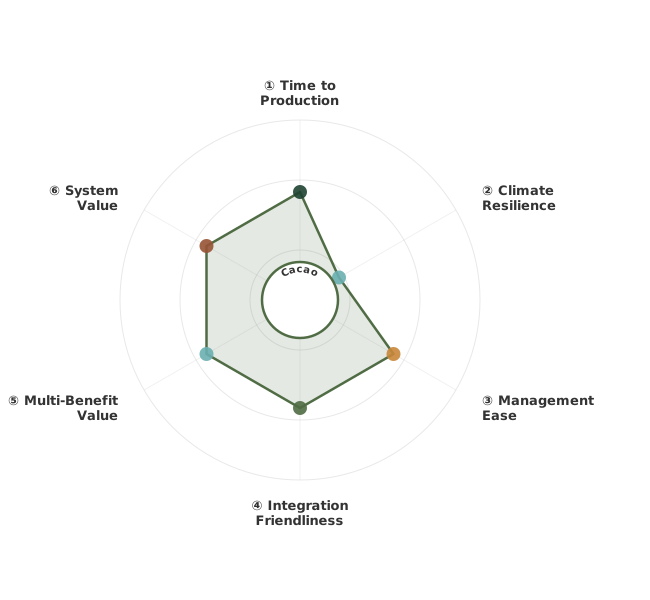
How These Traits Are Calculated
Trait dimensions are ordered clockwise starting from the top of the chart (12 o'clock position):
1. Time to Production
Years from planting to first harvestable yields
WHAT: Measures the waiting period from tree establishment to first meaningful production. Fast-producing trees yield within 2-5 years; slow producers require 8-15+ years before significant harvests.
WHY: Time to production determines cash flow timing and financial feasibility for farm businesses. Long wait times create significant opportunity costs—land and labor tied up for years without income. Fast producers allow quicker experimentation and cash flow recovery, reducing risk for new tree crop farmers.
HOW: Ratings based on years to first harvest documented in economics data. Exceptional (3.0): Production within 2-4 years (elderberry, mulberry, some nut bushes). Typical (2.0): 5-8 years (many fruit trees). Limited (1.0): 10-15+ years (hardwood timber, some nut trees like pecan, walnut).
2. Climate Resilience
Weighted: hardiness zones (50%) + drought tolerance (30%) + adaptability (20%)
WHAT: Combines temperature tolerance (hardiness zone range), water stress resilience (drought tolerance), and overall climate flexibility. Multi-decade tree investments require reliable climate matching to prevent total loss.
WHY: Wrong climate choices mean complete failure for permanent plantings. A tree that dies in year 5 from unexpected cold or prolonged drought represents catastrophic loss of 5 years' investment. Climate resilience determines geographic range and weather variability tolerance—critical as climate patterns become less predictable.
HOW: Weighted formula prioritizes hardiness zone range (50% weight) for core temperature tolerance, drought tolerance (30% weight) for water stress, and overall adaptability (20% weight) for general climate flexibility. Exceptional (3.0): Wide hardiness range (8+ zones) with strong drought tolerance. Typical (2.0): Moderate range and tolerance. Limited (1.0): Narrow climate requirements.
3. Management Ease
Weighted: establishment (40%) + low maintenance (30%) + pest resistance (30%)
WHAT: Combines establishment difficulty, ongoing maintenance requirements, and disease/pest pressure into overall management workload. Low-maintenance trees fit easily into busy farm operations without specialized expertise or intensive inputs.
WHY: Labor is the limiting factor for most diversified farms. High-maintenance trees requiring pruning expertise, disease management, and intensive pest control compete for limited time with other farm enterprises. Easy-care trees deliver production with minimal intervention, making them viable for time-constrained farmers.
HOW: Weighted formula balances establishment ease (40% weight) for startup success, inverted maintenance intensity (30% weight) for ongoing care, and inverted pest/disease pressure (30% weight) for health management. Exceptional (3.0): Easy to establish, self-sufficient growth, naturally pest-resistant. Typical (2.0): Moderate care needs. Limited (1.0): Difficult establishment, intensive maintenance, or heavy pest pressure.
4. Integration Friendliness
Compatibility with silvopasture, alley cropping, and multi-species systems
WHAT: Measures how well the tree integrates with other farm enterprises—grazing livestock, annual crops, or other perennials. Integration-friendly trees tolerate livestock browsing, don't heavily shade out crops, and coexist with diverse plantings.
WHY: Integrated tree systems (silvopasture, alley cropping, food forests) provide higher total returns per acre than monoculture plantings. Trees that work well with livestock provide shade + forage + production simultaneously. Integration flexibility allows farmers to stack enterprises and adapt to market opportunities.
HOW: Ratings based on the integration_friendliness trait documenting compatibility with grazing, cropping, and multi-species systems. Exceptional (3.0): Tolerates livestock browsing, provides livestock benefits (shade, browse), compatible with understory crops. Typical (2.0): Some integration possible with management. Limited (1.0): Requires isolation, incompatible with livestock or cropping.
5. Multi-Benefit Value
Stacked benefits beyond primary product—shade, wildlife, nitrogen, erosion control
WHAT: Measures the diversity of ecosystem services provided beyond the main harvest product. Multi-benefit trees deliver shade, windbreak, wildlife habitat, nitrogen fixation, erosion control, pollinator support, and aesthetic value simultaneously.
WHY: Single-purpose trees are economically fragile—market price swings or production failures eliminate all value. Multi-benefit trees provide resilience through diverse value streams. A nitrogen-fixing tree that produces nuts, provides shade for livestock, supports wildlife, and controls erosion delivers 4-5x the system value of a production-only tree.
HOW: Ratings based on the multi_benefit_value trait documenting service diversity. Exceptional (3.0): 4+ significant services stacked (nitrogen-fixing legume trees providing nuts + shade + wildlife + windbreak). Typical (2.0): 2-3 moderate services. Limited (1.0): Single-purpose production trees with minimal additional benefits.
6. System Value
Total ecosystem and economic value across short, medium, and long timeframes
WHAT: Synthesizes the total regenerative value delivered across multiple decades, including immediate ecosystem services (years 1-5), medium-term production value (years 5-15), and long-term system transformation (years 15-50). Captures the compounding benefits of permanent plantings.
WHY: Trees are multi-decade investments requiring patient capital. System value measures whether the total package—early ecosystem services, eventual production, and long-term legacy benefits—justifies the wait time and land commitment. High system value trees pay back investment through diverse, stacking, compounding benefits.
HOW: Scored via LLM synthesis of economics timelines, ecosystem service diversity, and long-term soil/water/carbon impacts. Exceptional (3.0): Strong early services + valuable production + transformative long-term impacts. Typical (2.0): Moderate benefits across timeframes. Limited (1.0): Long wait with limited service stacking or weak economic returns.
Ratings are based on documented performance in regenerative systems, not conventional high-input scenarios. All traits assume integrated management practices focused on soil health and ecosystem services.
4
System Role & Multi-Benefit Value
Functional roles, integration strategies, and stacked benefits
System Role & Multi-Benefit Value
Functional roles, integration strategies, and stacked benefits
Functional Role
Total System Value
Cacao (*Theobroma cacao*) offers substantial multi-benefit stacking in regenerative systems. Its direct harvest value, as fine-aroma cocoa, provides a key economic driver (Excerpt 5). Beyond this, cacao acts as a crucial canopy layer in food forests and agroforestry systems, providing shade for understory crops and enhancing biodiversity. Its integration with nitrogen-fixing species, as seen with Poro and Pigeon pea (Excerpt 3), contributes to soil fertility and reduces reliance on external inputs. Studies on carbon sequestration in cacao agroforestry systems (Excerpts 7 & 8) highlight its significant role in climate change mitigation, with aboveground carbon stocks increasing with the age of the system. Risk diversification is achieved through its perennial nature, stable yields in well-managed systems, and its role in creating a more resilient, biodiverse farm ecosystem that is less susceptible to pests and diseases compared to monocultures.
Integration Characteristics
Multi-Benefit Value: Adequate - Cocoa beans are the primary harvest, while the tree contributes significantly to the farm ecosystem by providing shade, fostering biodiversity, and enhancing soil structure.
Integration Friendliness: Adequate - Cacao integrates well into multi-layered agroforestry systems, contributing to canopy structure and providing habitat, but thrives best when its specific needs for shade and moisture are met within the larger farm ecology.
Sources behind this view
 Research
-
Productivity, Soil Health, and Tree Diversity in Dynamic Cacao Agroforestry Systems in Ecuador (opens in new window)
Ecuadorian cacao agroforestry systems with timber and fruit trees increased tree diversity without reducing cacao production or income, with potential for future productivity gains. Further soil healt
-
Agroforestry Systems of Cocoa (Theobroma cacao L.) in the Ecuadorian Amazon (opens in new window)
Ecuadorian study: Cocoa agroforestry systems increased yields by 22% and soil carbon storage compared to monoculture, while improving soil nutrients and earthworm activity.
-
First typology of cacao (Theobroma cacao L.) systems in Colombian Amazonia, based on tree species richness, canopy structure and light availability. (opens in new window)
Four types of cacao agroforests in Colombian Amazonia were identified, showing that these systems can support biodiversity conservation despite some reduction in tree species diversity. All types were
-
Multifunctional shade-tree management in tropical agroforestry landscapes - a review (opens in new window)
Shade trees in tropical coffee and cacao farms offer multiple benefits: boosting biodiversity, storing carbon, improving soil, and controlling pests. Sustainable management involves keeping diverse sh
5
Management & Care Requirements
Integration guidance, maintenance needs, and care practices
Management & Care Requirements
Integration guidance, maintenance needs, and care practices
How to Integrate This Plant
Cacao (*Theobroma cacao*) is a valuable component in regenerative systems, primarily functioning within food forests and agroforestry designs. Its primary role is providing a high-value harvest (cocoa beans), but it also contributes significantly to system complexity and resilience. In syntropic orchards (Excerpt 3), cacao is integrated with nitrogen-fixing plants like Poro (*Erythrina sp.*) and Pigeon pea (*Cajanus cajan*), and other fruit or nut trees like Sacha Inchi (*Plukenetia volubilis*). Cacao thrives in this multi-layered environment, benefiting from the diversity and nutrient cycling. Compatible practices include food forests, alley cropping, and potentially silvopasture if shade is managed. Early contributions focus on establishing shade and soil health, with significant yield contribution starting around Year 5. By Year 20, mature cacao trees enhance carbon sequestration and provide stable shade, contributing to overall farm biodiversity and mitigating risks.
Integration Practices & Management
Regenerative agriculture integrates *Theobroma cacao* (cacao) through diverse agroforestry systems and soil health management. Establishment often involves intercropping, as seen with *Camellia sinensis*, *Coffea liberica*, or rubber trees, enhancing soil organic carbon and total nitrogen. Syntropic systems utilize specific row layouts with cacao planted at defined intervals alongside nitrogen-fixing trees like *Erythrina sp.* and cover crops such as *Cajanus cajan* and *Canavalia sp.*. While specific seeding rates and timing are not detailed, companion planting is a key strategy. Management focuses on fertility needs, with studies evaluating various soil amendments including organic fertilizers and mineral-based options. Research also explores genetic pathways for improved cacao productivity and disease resistance, contributing to long-term system resilience. Economic analyses highlight the profitability of carbon sequestration in cacao agroforestry systems. The knowledge base does not provide information on integration with grazing or specific termination strategies, indicating these aspects are not covered in the provided sources.
Management Profile
Maintenance Intensity: Not Recommended - Maintaining cacao's health involves fostering a balanced ecosystem through consistent mulch, compost application, and healthy ground cover to support soil fertility, moisture retention, and natural pest regulation.
Pest Disease Pressure: Not Recommended - Susceptibility to pests and diseases is minimized through building a resilient, biodiverse system that encourages beneficial organisms and healthy plant vigor via optimal soil and water management.
Time To Production: Adequate - Cacao trees typically begin contributing to the system's productivity in 3-5 years, with robust yields by year 5-7, reflecting its role in a maturing agroforest.
Sources behind this view
 Videos & Podcasts
-
A 14-year ecological restoration project in Ecuador uses polycultures, biofertilizers, and diverse cacao genetics (National variety) to regenerate exhausted soils and preserve biocultural heritage, pr

-
The 'regenerative mind' requires daily discipline, akin to tending a garden. Cacao is presented as a medicinal crop for land and people, suitable for agroforestry, enabling businesses to be regenerati
Research
-
Productivity, Soil Health, and Tree Diversity in Dynamic Cacao Agroforestry Systems in Ecuador (opens in new window)
Ecuadorian cacao agroforestry systems with timber and fruit trees increased tree diversity without reducing cacao production or income, with potential for future productivity gains. Further soil healt
-
Effects of rehabilitation pruning and agroforestry on cacao tree development and yield in an older full-sun plantation (opens in new window)
In Malaysia, heavy pruning initially reduced cacao yield, but agroforestry with trees alongside cacao proved viable, offering timber income and reducing pod borer pests over five years.
-
Agroforestry Systems of Cocoa (Theobroma cacao L.) in the Ecuadorian Amazon (opens in new window)
Ecuadorian study: Cocoa agroforestry systems increased yields by 22% and soil carbon storage compared to monoculture, while improving soil nutrients and earthworm activity.
-
Competitive yields in organic and agroforestry cacao cropping systems: results from 15 years of a long-term systems comparison trial in Bolivia (opens in new window)
A 15-year trial in Bolivia showed that while cacao monocultures yield the most cacao beans, agroforestry systems produced up to 7x higher total farm yields and are adaptable, balancing environmental b
 From the Web
-
Implementation of a syntropic cacao orchard in Costa Rica involved phased planting, heavy pruning for light management, and pest control measures. Lessons learned include simplifying species diversity
-
Details the syntropic orchard design at Finca Luna Nueva, Costa Rica, including row layout (A-C-B-C), species placement (cacao, tithonia, turmeric, Musa), planting schedule, management practices like
6
Economics & Value Streams
Direct harvest, system benefits, ecosystem services, and risk diversification
Economics & Value Streams
Direct harvest, system benefits, ecosystem services, and risk diversification
Comprehensive economic analysis including direct harvest value, system enhancement contributions, ecosystem services, value timeline, and risk diversification strategies.
Per-Tree Production Economics
| Metric | Value |
|---|---|
| Establishment Cost | $15-25 |
| Years to First Harvest | 3-5 years |
| Annual Maintenance | $5-10 |
| Yield | 2-5 lbs/year 0-2 kg/year |
| Market Price | $2-5/lb $5-11/kg |
| Productive Lifespan | 15-25 years |
| Net Annual Return* | $-7 to $19/year |
Values shown per mature tree, not per acre. In regenerative systems, trees are integrated at low densities across diverse landscapes. Establishment costs spread over the lifespan of the tree. Early years have costs but no revenue.
* Net Annual Return = (Yield × Market Price) − (Amortized Establishment Cost + Annual Maintenance). This return is realized only at/after first harvest; early years have costs but no revenue. Range shows worst case to best case scenarios.
System Enhancement Value
Beyond harvest: how understory complements overstory in polyculture
Food Forest System Contributions
Cacao (*Theobroma cacao*) offers significant system benefits beyond direct harvest. Crucially, it relies on specific pollinators, primarily tiny flies (chocolate midges, *Ceratopogonidae*), which are essential for fruit set. Integrating cacao into a farm system can therefore support and enhance populations of these crucial pollinators, contributing to biodiversity. While not a nitrogen fixer, cacao thrives in organic-rich soils and benefits from nutrient cycling within an integrated system. Its presence in a food forest can contribute to soil health and structure over time. Furthermore, the development of cacao trees, particularly in agroforestry settings, can provide habitat for various wildlife, offering nesting sites and food sources, thereby increasing farm-level biodiversity. The complexity of cacao flowers and their specific pollination requirements highlight its role as a keystone species for certain insect communities. Research also suggests potential for disease resistance enhancement through treatments like foliar glycerol application, indicating a plant with responsive defense mechanisms that could be leveraged within a whole-farm health strategy.
Nitrogen Fixation (if legume)
Groundcover & Erosion Control
Variable, contributes indirectly to wind mitigation as part of a multi-layered agroforestry system.
While cacao (*Theobroma cacao*) itself is not typically planted as a primary windbreak species due to its relatively moderate stature compared to dedicated windbreak trees, its integration into mixed-species agroforestry systems can indirectly contribute to wind mitigation. Cacao's presence within a more complex, multi-layered planting design, such as a food forest, can help to disrupt wind flow and reduce its erosive force. The canopy structure of established cacao trees, especially when interplanted with other taller species, can contribute to a reduction in wind speed at ground level. This can, in turn, help to minimize soil erosion, protect more sensitive understory crops from desiccation and physical damage, and create a more stable microclimate for the entire system. The effectiveness of cacao in windbreak function is dependent on its density and the surrounding vegetation matrix, but it plays a role in the overall structural integrity of the agroforestry landscape, contributing to a more resilient farming system.
Ecosystem Service Contributions
Environmental contributions: carbon, pollinators, wildlife, and water
- Carbon Sequestration: Cacao trees, especially when grown in agroforestry systems and food forests, have the potential to sequester significant amounts of carbon in their biomass (trunks, branches, leaves) and in the soil organic matter they help to build. A 5-year analysis in Peru indicated profitable economic indicators for carbon sequestration in fine-aroma cacao agroforestry, demonstrating a tangible economic value for this service.
- Pollinator Support: High. Cacao flowers are exclusively pollinated by specific, tiny midges (*Ceratopogonidae*). The presence and health of cacao trees directly support these essential pollinators, and conversely, healthy pollinator populations are critical for cacao yield.
- Wildlife Habitat: Moderate. Cacao's understory growth habit and presence in mixed-species systems can provide habitat for various insects, birds, and small mammals, offering nesting sites, shade, and potential food sources. This is enhanced in well-established food forests.
- Water Quality: Not applicable
Value Timeline: Understory Development
When you'll see results: groundcover/herbs year 1, shrubs 2-3, full layer integration 5-10
Years 1-2
Initial establishment of soil improvement and microclimate moderation. Potential for some minor shade provision if interplanted with faster-growing nurse trees. Erosion control benefits as the root system develops.
Years 3-5
First significant flowering and potential for early, small harvests. Established shade provision for understory crops or livestock. Continued soil health improvement. Pollinator support becomes more critical as flowering increases.
Years 10-20
Full production capacity for cacao beans. Significant contribution to shade value in integrated systems. Mature trees contribute substantially to carbon sequestration and biomass. Established ecosystem services like pollinator support and wildlife habitat.
20+ Years
Long-term, sustained production of cacao beans. Mature trees offer maximum carbon sequestration potential. Continued provision of shade, habitat, and ecosystem services. Potential for timber value if trees are managed for longevity and eventual harvest.
Farm Risk Reduction
How multi-layer systems diversify production and income
- Multiple Revenue Streams: Direct harvest of cacao beans (primary cash crop), potential for specialty chocolate products, carbon sequestration credits/payments for environmental services, enhanced yield/welfare of other integrated crops or livestock due to shade and microclimate regulation, potential for timber value from mature trees.
- Temporal Income Spread: Value accrues over a long period, starting with ecosystem services (soil improvement, shade) in early years, followed by harvests from year 3-5, and peaking in mature trees from year 10-20 onwards. Ecosystem services are ongoing.
- Market Risk Hedge: Diversifies farm income beyond single commodity crops. Cacao's long-term nature and potential for value-added products can buffer against short-term market volatility. Integration into agroforestry systems enhances resilience to climate fluctuations and pest outbreaks by supporting biodiversity and a more stable microclimate.
Sources behind this view
Research
-
Productivity, Soil Health, and Tree Diversity in Dynamic Cacao Agroforestry Systems in Ecuador (opens in new window)
Ecuadorian cacao agroforestry systems with timber and fruit trees increased tree diversity without reducing cacao production or income, with potential for future productivity gains. Further soil healt
-
Multifunctional shade-tree management in tropical agroforestry landscapes - a review (opens in new window)
Shade trees in tropical coffee and cacao farms offer multiple benefits: boosting biodiversity, storing carbon, improving soil, and controlling pests. Sustainable management involves keeping diverse sh
-
Effects of rehabilitation pruning and agroforestry on cacao tree development and yield in an older full-sun plantation (opens in new window)
In Malaysia, heavy pruning initially reduced cacao yield, but agroforestry with trees alongside cacao proved viable, offering timber income and reducing pod borer pests over five years.
-
Competitive yields in organic and agroforestry cacao cropping systems: results from 15 years of a long-term systems comparison trial in Bolivia (opens in new window)
A 15-year trial in Bolivia showed that while cacao monocultures yield the most cacao beans, agroforestry systems produced up to 7x higher total farm yields and are adaptable, balancing environmental b
7
Regenerative Suitability Details
Comprehensive trait ratings for system integration assessment
Regenerative Suitability Details
Comprehensive trait ratings for system integration assessment
Comparative ratings for this plant across key regenerative agriculture traits.
| Trait | Suitability | Explanation |
|---|---|---|
| Drought Tolerance | Not Recommended | Cacao thrives in environments with consistent moisture, benefiting from healthy soil organic matter and strategic mulch layers to maintain humidity and soil moisture. |
| Establishment Ease | Not Recommended | Establishing cacao requires careful attention to microclimate, ensuring adequate canopy cover, humidity, and soil health; it is best integrated into existing diverse systems. |
| Time To Production | Adequate | Cacao trees typically begin contributing to the system's productivity in 3-5 years, with robust yields by year 5-7, reflecting its role in a maturing agroforest. |
| Multi Benefit Value | Adequate | Cocoa beans are the primary harvest, while the tree contributes significantly to the farm ecosystem by providing shade, fostering biodiversity, and enhancing soil structure. |
| Climate Adaptability | Not Recommended | As a tropical rainforest species, cacao flourishes in warm, humid environments with dappled light, and its resilience is enhanced by robust soil fertility and water management. |
| Hardiness Zone Range | Not Recommended | Best suited to tropical rainforest environments (zones 10-11), cacao's success relies on consistent warmth, high humidity, and protection from environmental extremes through integrated landscape design. |
| Maintenance Intensity | Not Recommended | Maintaining cacao's health involves fostering a balanced ecosystem through consistent mulch, compost application, and healthy ground cover to support soil fertility, moisture retention, and natural pest regulation. |
| Pest Disease Pressure | Not Recommended | Susceptibility to pests and diseases is minimized through building a resilient, biodiverse system that encourages beneficial organisms and healthy plant vigor via optimal soil and water management. |
| Integration Friendliness | Adequate | Cacao integrates well into multi-layered agroforestry systems, contributing to canopy structure and providing habitat, but thrives best when its specific needs for shade and moisture are met within the larger farm ecology. |
Comparative System: Ratings compare plants within their economic category (e.g., cover crop nitrogen fixation compared to other cover crops, not to all plants). Individual farm conditions and management practices significantly influence actual performance.
Sources behind this view
Research
-
Productivity, Soil Health, and Tree Diversity in Dynamic Cacao Agroforestry Systems in Ecuador (opens in new window)
Ecuadorian cacao agroforestry systems with timber and fruit trees increased tree diversity without reducing cacao production or income, with potential for future productivity gains. Further soil healt
-
Effects of rehabilitation pruning and agroforestry on cacao tree development and yield in an older full-sun plantation (opens in new window)
In Malaysia, heavy pruning initially reduced cacao yield, but agroforestry with trees alongside cacao proved viable, offering timber income and reducing pod borer pests over five years.
-
First typology of cacao (Theobroma cacao L.) systems in Colombian Amazonia, based on tree species richness, canopy structure and light availability. (opens in new window)
Four types of cacao agroforests in Colombian Amazonia were identified, showing that these systems can support biodiversity conservation despite some reduction in tree species diversity. All types were
8
Learn More
Why farmers use this plant and additional resources
Learn More
Why farmers use this plant and additional resources
Why Regenerative Farmers Use This Plant
Theobroma cacao, the source of cocoa beans, is a cornerstone species for building resilient and diversified agroforestry systems. In mature plantations, established cacao trees can sequester an estimated 2-5 tons of CO2e per acre per year, contributing significantly to climate change mitigation and long-term carbon asset accumulation. Beyond carbon sequestration, cacao trees provide invaluable canopy services, offering shade regulation for sensitive understory crops and livestock, acting as effective windbreaks that protect more delicate species, and fostering a stable microclimate conducive to biodiversity. The perennial nature of cacao offers multi-decade economic returns, with trees beginning to yield fruit within 3-5 years of planting and reaching full production between 5-10 years, providing a stable income stream and increasing farm asset value over generations. These trees can continue to yield for 30-50 years or more, with some systems supporting trees for 50-100+ years.
Integrating cacao into regenerative farming systems offers a wealth of ecological and economic benefits. Its deep root system, reaching 6-15+ feet (1.8-4.5+ m), enhances soil structure, improves water infiltration, and scavenges nutrients from lower soil profiles, reducing reliance on external inputs. The multi-story structure of a cacao agroforest supports a diverse array of beneficial insects, pollinators, and soil microorganisms, creating a more robust and self-regulating ecosystem. This complexity reduces reliance on external inputs and builds resilience against pests and diseases. Furthermore, the shade provided by mature cacao canopies creates ideal conditions for shade-tolerant crops, such as vanilla, black pepper, certain medicinal herbs, ginger, turmeric, or even shade-loving livestock breeds like poultry or specific cattle, allowing for diversified income streams and enhanced land-use efficiency.
The quantitative ecosystem services provided by a well-managed cacao agroforest are substantial. The dense canopy significantly reduces soil erosion by intercepting heavy rainfall and stabilizing the soil, protecting waterways and maintaining soil fertility. Improved soil organic matter content, a direct result of leaf litter and root decomposition, can increase by 1-3% over a decade, enhancing water-holding capacity and nutrient cycling. Measurable soil carbon increases are typically observed by year 5-7 as the agroforest matures and organic matter accumulates. The diverse floral resources and habitat provided by cacao and its associated understory species support a thriving population of pollinators, crucial for both cacao production and surrounding agricultural landscapes. This ecological synergy leads to a more stable and productive farming environment, reducing the need for costly interventions.
Cacao has a long history of successful integration in diverse agroforestry landscapes across the tropics and subtropics. In West African nations like Ghana and Ivory Coast, it forms the backbone of smallholder farming systems, often intercropped with plantains and bananas for initial shade and income, sometimes integrated with native timber species. In Central and South American countries, such as Costa Rica, Ecuador, and Brazil, cacao is utilized in shade-grown systems alongside coffee, fruit trees like plantains and bananas, or timber species, creating complex multi-strata farms that mimic natural forest ecosystems. In Southeast Asia, particularly Indonesia, Malaysia, and the Philippines, cacao is increasingly incorporated into existing coconut plantations, rubber agroforests, or diversified farming systems alongside spices and other perennial crops, diversifying income and enhancing ecological function.
Sources behind this view
Videos & Podcasts
-
A 14-year ecological restoration project in Ecuador uses polycultures, biofertilizers, and diverse cacao genetics (National variety) to regenerate exhausted soils and preserve biocultural heritage, pr
-
Cacao is viewed as a 'medicine' and a tool for holistic regeneration, benefiting land, people, and finance through agroforestry and social enterprise models that integrate environmental, social, and f

-
Coffee and cacao are ideal for regenerative agriculture investment due to their agroforestry potential, carbon sequestration benefits, market disruption opportunities, and ability to generate higher m

Research
-
Productivity, Soil Health, and Tree Diversity in Dynamic Cacao Agroforestry Systems in Ecuador (opens in new window)
Ecuadorian cacao agroforestry systems with timber and fruit trees increased tree diversity without reducing cacao production or income, with potential for future productivity gains. Further soil healt
-
Competitive yields in organic and agroforestry cacao cropping systems: results from 15 years of a long-term systems comparison trial in Bolivia (opens in new window)
A 15-year trial in Bolivia showed that while cacao monocultures yield the most cacao beans, agroforestry systems produced up to 7x higher total farm yields and are adaptable, balancing environmental b
-
Effects of rehabilitation pruning and agroforestry on cacao tree development and yield in an older full-sun plantation (opens in new window)
In Malaysia, heavy pruning initially reduced cacao yield, but agroforestry with trees alongside cacao proved viable, offering timber income and reducing pod borer pests over five years.
-
Agroforestry Systems of Cocoa (Theobroma cacao L.) in the Ecuadorian Amazon (opens in new window)
Ecuadorian study: Cocoa agroforestry systems increased yields by 22% and soil carbon storage compared to monoculture, while improving soil nutrients and earthworm activity.
From the Web
-
Cacao is a regenerative 'medicine' for land, people, and finance, thriving in agroforestry systems. Cacao Source uses a fair-share model and strict single-origin sourcing, emphasizing deep collaborati