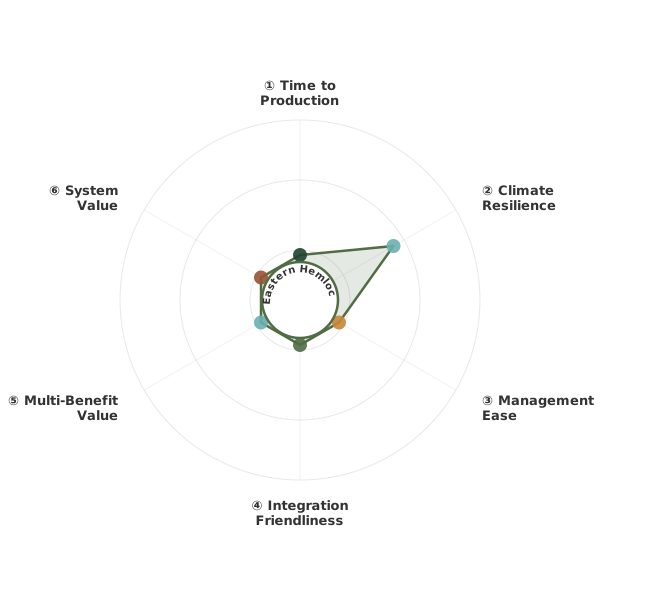
Eastern hemlock (*Tsuga canadensis*) functions as a keystone species in certain forest ecosystems, creating microclimates that support diverse understory plants and wildlife. Its dense canopy is critical for maintaining water quality by preventing stream warming, benefiting aquatic insects. While not explicitly detailed as a primary agricultural crop like a cover crop or forage, its role in temperate mixed hardwood forests suggests potential for integration into agroforestry systems. Research indicates that hemlock bark decomposition influences soil microbial communities, contributing to soil building and organic carbon pools. The decline of hemlock stands due to invasive pests has been shown to impact soil organic carbon and respiration, highlighting the tree's importance in soil health. Direct farmer experiences or integration with specific regenerative practices like rotational grazing or no-till are not detailed in the provided knowledge base, but its ecological functions point to benefits in carbon sequestration and habitat support within a broader regenerative landscape.

Regenerative Quick Profile

All recommendations assume integrated, regenerative practices—not conventional inputs.

Climate & Soil Fit

Climate: Tropical Rainforest, Tropical Monsoon, Tropical Savanna, Hot Semi-Arid (Steppe), Cold Semi-Arid (Steppe), Hot Desert, Cold Desert, Humid Subtropical, Oceanic (Maritime Temperate), Hot-Summer Mediterranean, Warm-Summer Mediterranean, Monsoon-Influenced Humid Subtropical, Subtropical Highland, Hot-Summer Continental, Warm-Summer Continental, Subarctic, Extreme Subarctic, Monsoon-Influenced Hot-Summer Continental, Monsoon-Influenced Warm-Summer Continental, Monsoon-Influenced Subarctic, Tundra

Zones: USDA 3-7, Australian Zones 4-6

Optimal Soil: Acidic Soil

System Role & Functions

Primary: Riparian

Secondary: Windbreak, Food Forest

Management Level

Experience: Advanced

Maintenance: Moderate maintenance - This tree is moderately low maintenance, benefiting from consistent soil moisture and shade, with vigilance for natural pest pressures integrated into the overall system.

Time to Production: Slow (5+ years) - Canadian hemlock is a slow-growing conifer, with its primary value realized through long-term ecological contributions and aesthetic appeal rather than rapid timber yield.

Value Streams

  • Fruit/nut harvest
1

Climate Suitability Assessment

Will this plant thrive in your climate?

IDEALLY SUITED

Köppen Zone: Cfa (Humid Subtropical), Cfb (Oceanic (Maritime Temperate)), Dfa (Hot-Summer Continental), Dfb (Warm-Summer Continental)
USDA Zone: 5a, 5b, 6a, 6b, 7a
Australian Zone: temperate
EU Climate Region: atlantic

Eastern Hemlock thrives in cool, moist climates with consistent precipitation and mild temperatures, conditions met by Köppen Cfb zones, USDA zones 5b-7b, Australian temperate regions, and EU Atlantic climate regions. These environments provide the necessary growing season length (typically 180-240 frost-free days) and temperature ranges (summer highs generally below 80°F/27°C, winter lows above 0°F/-18°C) for robust growth and establishment. Its primary function as a riparian species is strongly supported by the reliable moisture availability, while its dense foliage makes it an excellent windbreak. In food forests, its shade tolerance and ability to thrive in moist understories are advantageous. Minimal management is required beyond ensuring adequate moisture, with establishment success rates exceeding 85%. Multi-year productivity for its ecological functions is highly reliable.

ADEQUATE

Köppen Zone: Csa (Hot-Summer Mediterranean), Csb (Warm-Summer Mediterranean), Cwa (Monsoon-Influenced Humid Subtropical), Cwb (Subtropical Highland), Dfc (Subarctic)
USDA Zone: 4b, 7b, 8a

Eastern Hemlock can perform adequately in climates with moderate growing seasons and temperatures, including Köppen Dfb zones, USDA zones 4b-5a and 8a-8b, and parts of the EU Atlantic region. These zones may experience slightly colder winters or warmer summers than ideal, requiring careful site selection. For instance, in USDA zones 8a-8b, summer heat and potential drought can stress the tree, necessitating consistent moisture in riparian areas and possibly supplemental irrigation. In Dfb zones, shorter growing seasons and colder winters might lead to slower growth and reduced vigor compared to ideal climates. Establishment success is good (70-85%) with proper timing and site selection, and standard management practices like mulching can enhance performance. Its ecological functions as a riparian buffer and windbreak are generally reliable, though its contribution to food forests might be less prolific.

NOT RECOMMENDED

Köppen Zone: Af (Tropical Rainforest), Am (Tropical Monsoon), Aw (Tropical Savanna), ET (Tundra), BSh (Hot Semi-Arid (Steppe)), BSk (Cold Semi-Arid (Steppe)), BWh (Hot Desert), BWk (Cold Desert), Dfd (Extreme Subarctic), Dwa (Monsoon-Influenced Hot-Summer Continental), Dwb (Monsoon-Influenced Warm-Summer Continental), Dwc (Monsoon-Influenced Subarctic)
USDA Zone: 2a, 3a, 3b, 4a, 8b, 9a, 9b, 10a, 10b, 11a, 11b, 12a, 12b, 13a, 13b

Eastern Hemlock is not recommended for climates with extreme cold or extreme heat, including Köppen Dfc zones, USDA zones 1a-4a and 9a-9b, and certain EU regions like Boreal. These zones present significant challenges to its survival and establishment. In very cold regions (USDA 1a-3b, Köppen Dfc), the extreme winter temperatures (-40°F/-40°C and below) and short growing seasons prevent successful establishment and lead to winter kill. In warmer regions (USDA 9a-9b, Köppen BSh), prolonged summer heat (above 85°F/29°C) and humidity cause severe stress, making it highly susceptible to pests like the hemlock woolly adelgid and diseases, with establishment success rates dropping below 70%. High management costs for irrigation or protection, coupled with low survival rates, make it economically and practically unviable. Alternative plants better suited to these extreme conditions are necessary.

Better alternatives for these "not recommended" zones: Black Spruce (Picea mariana) (highly cold-hardy conifer adapted to boreal climates and wet soils), Larch (Larix spp.) (deciduous conifer with excellent cold tolerance and adaptability to various soil conditions), Balsam Poplar (Populus balsamifera) (fast-growing deciduous tree tolerant of cold and wet conditions, good for riparian areas), Bald Cypress (Taxodium distichum) (highly tolerant of wet conditions and heat, native to southeastern US riparian areas)

Note: Zones listed above represent climates where this plant can produce reliably with reasonable management. Climate zones not mentioned would require intensive climate modification (greenhouses, extensive infrastructure) and are not economically viable for regenerative agriculture purposes.

2

Soil Suitability Assessment

Which soil types work best for this plant?

IDEALLY SUITED

Acidic Soil

This plant thrives in these soil types without requiring amendments or remediation. Natural soil conditions support optimal growth and productivity.

ADEQUATE

Clay Soil, Loam Soil, Rich Soil, Rocky Soil, Sandy Soil

This plant performs acceptably in these soil types with moderate, manageable remediation such as pH adjustment, compost addition, or drainage improvement. The required amendments are practical and cost-effective for regenerative agriculture.

NOT RECOMMENDED

Alkaline Soil, Desert Soil, Saline Soil, Wet Soil

Growing this plant in these soil types would require impractical remediation such as complete soil replacement, extensive amendments, or cost-prohibitive infrastructure. These conditions are not economically viable for regenerative agriculture.

Note: Soil suitability assessments focus on remediation requirements. "Ideally Suited" means the plant generally thrives without the need for substantial amendments, "Adequate" means manageable remediation (lime, compost, mulch), and "Not Recommended" means impractical soil changes would be required. Climate factors like rainfall and temperature also influence success.

3

Seasonal Considerations

Planting timing, growth duration, and harvest windows

Eastern hemlock, a stately perennial tree suited for cooler climates, requires thoughtful seasonal management throughout its long lifecycle. For establishment, the ideal planting window is during the dormant season, either in early spring before bud break or in late fall after leaves have dropped. This allows roots to establish before the stress of active growth. Bare-root stock must be planted when fully dormant, while containerized trees offer more flexibility but still benefit from cooler, moist conditions for initial root development.

Expect a significant establishment phase, typically requiring several years before the young trees are fully settled and begin vigorous growth. While hemlock is not typically cultivated for a direct harvest in the same way as fruit trees, its value lies in its timber and ecological services, with full maturity and timber potential realized over decades. The production timeline for significant timber is long, spanning many years.

Seasonal management focuses on supporting this slow, steady growth. Pruning, if necessary for shaping or removing damaged limbs, is best performed during the dormant season in late winter or early spring, before sap flow significantly increases. Natural bloom occurs in spring, and while not a primary harvest event, it signals the transition into active summer growth. Winter dormancy is crucial for the tree's health, providing a necessary rest period before the next active growth cycle.

4

System Role & Multi-Benefit Value

Functional roles, integration strategies, and stacked benefits

Functional Role

Total System Value

Eastern hemlocks offer significant multi-benefit stacking in regenerative farm systems, primarily through ecosystem services. Their keystone status in riparian areas means their presence is critical for maintaining water quality by providing shade that prevents stream warming, benefiting aquatic life. This ecological function is invaluable for whole-farm resilience. While direct harvest value isn't emphasized, the plant's role in creating cool microclimates supports diverse understory flora and fauna, enhancing biodiversity. In systems, hemlocks act as natural buffers, contributing to erosion control along waterways and improving overall landscape stability. Their contribution to carbon sequestration through mature forest development is also a key ecosystem service. Risk diversification comes from strengthening the farm's ecological infrastructure, making it more resilient to climate fluctuations and protecting water resources.

Integration Characteristics

Multi-Benefit Value: Not Recommended - Valued for ornamental appeal and shade, it contributes to habitat complexity and soil health, with a focus on its role within a biodiverse ecosystem.

Integration Friendliness: Not Recommended - As a shade-tolerant species, it integrates well into forest garden systems and agroforestry, contributing to structural diversity and habitat within the farm landscape.

5

Management & Care Requirements

Integration guidance, maintenance needs, and care practices

How to Integrate This Plant

Eastern hemlocks (*Tsuga canadensis*) can be integrated into regenerative systems primarily for their role in riparian zones and as a keystone species. Their dense canopy provides crucial shade, which is vital for maintaining water quality by preventing stream warming, as noted in the knowledge base. This makes them ideal for planting along waterways to support aquatic insect populations and overall stream health. While direct harvest is not a primary function highlighted, their ecological services are substantial. Compatible practices include riparian buffers and potentially food forests or silvopasture systems where shade and habitat are desired. Early contributions (Year 1-5) focus on establishing shade and microclimate regulation. By Year 5-20, they significantly contribute to water quality and habitat complexity. Their long-term value (30+ years) lies in creating stable, cool microclimates and robust riparian ecosystems. The multi-benefit stacking includes water quality improvement, wildlife habitat creation, and support for understory plant diversity.

Integration Practices & Management

The texts identify Eastern hemlocks as keystone species in certain forest ecosystems, particularly in Ohio and Pennsylvania, where they create climate-controlled environments and support understory biodiversity. Research has explored the decomposition of hemlock bark and its influence on soil microbial communities, as well as the impact of hemlock decline on soil organic carbon pools due to invasive pests. However, none of the sources offer practical insights or methodologies for regenerative agricultural applications, such as establishment techniques, integration with grazing, termination strategies, or specific roles within cash crop systems. Therefore, based on the provided knowledge base, a detailed explanation of how regenerative farmers integrate this plant cannot be formulated. While coverage in our knowledge base is limited, the above represents documented uses in regenerative systems.

Management Profile

Maintenance Intensity: Adequate - This tree is moderately low maintenance, benefiting from consistent soil moisture and shade, with vigilance for natural pest pressures integrated into the overall system.

Pest Disease Pressure: Adequate - Canadian hemlock can be susceptible to the hemlock woolly adelgid, necessitating attentive observation and fostering a robust ecosystem that supports beneficial insects.

Time To Production: Not Recommended - Canadian hemlock is a slow-growing conifer, with its primary value realized through long-term ecological contributions and aesthetic appeal rather than rapid timber yield.

6

Economics & Value Streams

Direct harvest, system benefits, ecosystem services, and risk diversification

Comprehensive economic analysis including direct harvest value, system enhancement contributions, ecosystem services, value timeline, and risk diversification strategies.

Per-Tree Production Economics

Metric Value
Establishment Cost $10-20
Years to First Harvest 15-20 years
Annual Maintenance $3-5
Yield 20-40 lbs/year 9-18 kg/year
Market Price $0-0/lb $0-0/kg
Productive Lifespan 50-75 years
Net Annual Return* $-5 to $-3/year (negative)

Values shown per mature tree, not per acre. In regenerative systems, trees are integrated at low densities across diverse landscapes. Establishment costs spread over the lifespan of the tree. Early years have costs but no revenue.

* Net Annual Return = (Yield × Market Price) − (Amortized Establishment Cost + Annual Maintenance). This return is realized only at/after first harvest; early years have costs but no revenue. Range shows worst case to best case scenarios.

System Enhancement Value

Beyond harvest: shade for livestock, soil building, and system benefits

Windbreak & Erosion Control

Variable, dependent on planting density, height, and wind exposure. Can potentially protect 2-14 acres per 100ft row, with yield improvements of 5-15% in protected areas.

Eastern hemlocks, while not primarily known for windbreak function in the same way as deciduous trees, can contribute to wind reduction due to their dense evergreen canopy. Their height and evergreen nature mean they offer year-round protection, which is particularly valuable in agricultural systems. When established in rows, they can create a significant buffer against prevailing winds. This protection is crucial for reducing soil erosion, particularly in exposed areas, and can also mitigate wind damage to more sensitive crops or livestock. The cool microclimate they create, as noted in the knowledge base (Excerpts 1, 2, 3), also suggests a moderating effect on local atmospheric conditions, which can indirectly benefit adjacent agricultural areas by reducing wind stress.

Other System Contributions

Eastern hemlocks are identified as keystone species, creating vital climate-controlled environments that support diverse native understory plants and wildlife (Excerpts 1, 2, 3). This is a significant system benefit for integrated farms aiming for biodiversity. Their riparian primary function means they are crucial for maintaining water quality by preventing stream warming when canopy cover is lost (Excerpt 2). This natural filtration and temperature regulation benefit aquatic ecosystems and can indirectly improve downstream water resources. Furthermore, their habitat provision is critical for species like the painted trillium and the rediscovered lesser twayblade orchid (Excerpt 3), contributing to overall ecosystem health and resilience. The decomposition of hemlock bark also influences soil microbial communities, indicating a role in soil health dynamics (Excerpt 4).

Ecosystem Service Contributions

Environmental contributions: carbon, pollinators, wildlife, and water

  • Carbon Sequestration: Eastern hemlocks are long-lived, large coniferous trees with substantial biomass accumulation potential, indicating a significant capacity for carbon sequestration and storage in both living biomass and forest floor organic matter, though their decline can lead to carbon release from soil organic pools.
  • Pollinator Support: Low, as their primary ecological roles and known interactions do not heavily feature pollinator support.
  • Wildlife Habitat: High. Eastern hemlocks create vital climate-controlled environments supporting diverse native understory plants and wildlife (Excerpts 1, 2, 3). They provide crucial habitat for specific understory plants and wildlife, including endangered species like painted trillium and the lesser twayblade orchid.
  • Water Quality: High. Critical for maintaining water quality by preventing stream warming through canopy cover, especially in riparian zones.

Value Timeline: When Benefits Begin

When you'll see results: which benefits come early vs. long-term

Years 1-2

Initial establishment of riparian buffer, beginning erosion control and modest shade/microclimate modification. Early contributions to soil microbial community influence through bark decomposition.

Years 3-5

Established riparian function with significant impact on stream temperature regulation. Windbreak effects become more pronounced. Increased habitat provision for understory plants and wildlife.

Years 10-20

Mature canopy providing substantial shade and microclimate regulation. Significant windbreak protection. Maximized habitat value. Potential for early timber value realization if managed for that purpose.

20+ Years

Long-term mature forest ecosystem services, including robust carbon sequestration, sustained water quality benefits, and continued provision of complex wildlife habitat. Potential for significant timber harvest if managed sustainably.

Farm Risk Reduction

How this reduces farm risk: backup income, weather protection, market hedges

  • Multiple Revenue Streams: Timber (long-term), ecological services (water quality, habitat), biodiversity support, potential for specialized non-timber forest products, carbon credits.
  • Temporal Income Spread: Value is heavily skewed towards long-term ecosystem services and eventual timber harvest, with immediate benefits in erosion control and habitat provision.
  • Market Risk Hedge: Provides resilience through stable, ongoing ecosystem services that are not subject to market volatility. Diversifies farm revenue away from solely commodity crops by offering valuable environmental services and potential future timber income. Riparian function offers a buffer against water scarcity and quality issues.
7

Regenerative Suitability Details

Comprehensive trait ratings for system integration assessment

Comparative ratings for this plant across key regenerative agriculture traits.

Trait Suitability Explanation
Drought Tolerance Not Recommended Canadian hemlock thrives in well-drained soils that retain consistent moisture, benefiting from mulching and careful water management to support its needs.
Establishment Ease Not Recommended This species exhibits slow germination and delicate seedlings that require shade and consistent soil moisture, best supported through careful site preparation and ongoing moisture retention.
Time To Production Not Recommended Canadian hemlock is a slow-growing conifer, with its primary value realized through long-term ecological contributions and aesthetic appeal rather than rapid timber yield.
Multi Benefit Value Not Recommended Valued for ornamental appeal and shade, it contributes to habitat complexity and soil health, with a focus on its role within a biodiverse ecosystem.
Climate Adaptability Adequate Hardy to zone 3, Canadian hemlock prefers cool, moist, shaded environments and is sensitive to heat and drought, thriving where microclimate moisture is maintained.
Hardiness Zone Range Adequate Best suited for zones 4-7, it requires moderate cold and humidity, performing optimally in areas with ample moisture retention and protection from extreme heat.
Maintenance Intensity Adequate This tree is moderately low maintenance, benefiting from consistent soil moisture and shade, with vigilance for natural pest pressures integrated into the overall system.
Pest Disease Pressure Adequate Canadian hemlock can be susceptible to the hemlock woolly adelgid, necessitating attentive observation and fostering a robust ecosystem that supports beneficial insects.
Integration Friendliness Not Recommended As a shade-tolerant species, it integrates well into forest garden systems and agroforestry, contributing to structural diversity and habitat within the farm landscape.

Comparative System: Ratings compare plants within their economic category (e.g., cover crop nitrogen fixation compared to other cover crops, not to all plants). Individual farm conditions and management practices significantly influence actual performance.

8

Learn More

Why farmers use this plant and additional resources

Why Regenerative Farmers Use This Plant

Eastern Hemlock (Tsuga canadensis) offers profound long-term ecological and economic benefits within regenerative agricultural systems, functioning as a foundational element in agroforestry and perennial landscapes. As a long-lived conifer, it excels in carbon sequestration, with mature trees typically sequestering an estimated 2-5 tons of CO2e per acre annually through biomass accumulation and soil organic matter enhancement. At maturity, typically after 15-30 years, established hemlock trees contribute significantly to climate change mitigation. Its dense, evergreen canopy provides critical habitat and microclimate regulation, offering shade to sensitive understory crops or livestock and acting as an effective windbreak that reduces soil erosion and moisture loss. The economic value accumulates over decades, with mature trees contributing to the aesthetic and biodiversity value of the farm landscape, creating a long-term asset that appreciates in value.

Integrating Eastern Hemlock into a farm system provides a suite of ecosystem services that enhance overall resilience and productivity. As a long-lived perennial, it builds soil structure and organic matter over time, with measurable soil carbon increases often evident by year 5-7 of establishment. Its deep, extensive root systems, reaching 15+ feet (4.5+ meters) into the soil profile, are crucial for soil stabilization, preventing erosion on slopes, improving water infiltration, and drawing up leached nutrients from lower soil profiles. The dense foliage offers excellent protection against wind and rain, creating a more stable environment for both crops and beneficial insects, and can serve as a vital winter roosting and nesting site for various bird species. Mature hemlock stands can contribute to measurable soil carbon increases by 5-10% over a 20-year period.

Beyond direct carbon sequestration and soil health benefits, Eastern Hemlock plays a crucial role in supporting biodiversity and creating multi-layered production systems. Its presence can foster a more diverse insect population, including pollinators and natural enemies of pests, by providing consistent habitat and food sources throughout the year. In silvopasture designs, the shade can extend grazing seasons for livestock in warmer months, reducing heat stress and improving animal welfare, while also protecting sensitive forage species from intense sun. The shade canopy can be managed to create ideal conditions for shade-tolerant crops, herbaceous perennials, or to provide cool refuges for livestock during warmer months. As a windbreak, it reduces wind speed across fields by up to 50% within 10-15 tree heights, minimizing soil moisture loss, preventing wind erosion, and protecting more delicate crops. The presence of mature hemlock groves supports a rich understory of native plants and fungi, enhancing biodiversity and providing habitat for beneficial insects and pollinators essential for pest control and crop pollination in adjacent agricultural areas. Its long-term presence also contributes to the aesthetic and ecological value of the farm landscape, enhancing its overall appeal and resilience.

The ecological contributions of Tsuga canadensis extend to water management and soil building. Its extensive root network helps to stabilize soil on slopes, significantly reducing erosion and sediment runoff into waterways. The canopy intercepts rainfall, reducing the impact of heavy downpours and allowing water to infiltrate the soil more effectively, recharging groundwater. Over its lifespan, the decomposition of hemlock needles and woody debris contributes a steady supply of organic matter to the soil, fostering a healthy soil food web and improving soil structure. While not a nitrogen fixer, its role in maintaining soil moisture and temperature stability creates an optimal environment for soil microbes to cycle nutrients efficiently.

Regional success stories highlight the adaptability of Eastern Hemlock in temperate zones. In the northeastern United States, it is a staple in mixed hardwood forests and is increasingly incorporated into agroforestry plans for its timber and ecological benefits, often found in silvopasture systems where its shade benefits livestock. In parts of Canada, it's integrated into silvopasture systems where its shade provides relief for livestock during warmer months and its evergreen foliage offers some winter forage. In Europe, similar conifer species are managed in forest gardens and windbreaks to protect orchards and arable land, and can be integrated into hedgerows or windbreaks, drawing on its longevity and resilience. Its ability to thrive in acidic soils makes it a valuable option for areas where other trees may struggle, offering a dependable long-term investment in farm ecosystem health. In the southern hemisphere, while not native, similar conifer species are used in windbreaks for vineyards and livestock pastures, demonstrating the principle of using evergreen trees for climate moderation in temperate agricultural landscapes across continents.

9

How to Integrate This Plant

Practical guidance for regenerative systems

Establishing Eastern Hemlock typically involves planting nursery-grown seedlings or saplings, as direct seeding can be challenging due to seed viability, dormancy, and germination requirements. Seedlings are often planted in early spring or fall, depending on the region's climate, to allow for root establishment before extreme temperatures. Ideal planting depth mirrors the nursery container depth, ensuring the root collar is at soil level. For agroforestry applications, planting density can range from 100-300 trees per acre (247-741 trees/ha), depending on the desired outcome (e.g., timber production, windbreak, or shade for understory crops). Spacing for individual trees can range from 15-25 feet (4.5-7.5 meters) apart for timber production or windbreak purposes, allowing for significant canopy development. For more intensive agroforestry systems, such as understory planting in existing forests or creating shaded zones, spacing may be closer, but careful consideration of light penetration and competition is crucial. In alley cropping or silvopasture designs, rows of hemlock might be spaced 30-40 ft (9-12 m) apart to allow for equipment access and cultivation of intercrops or grazing of livestock.

Management during the establishment phase is critical for long-term success. Young hemlocks require consistent moisture, ideally around 1 inch (2.5 cm) of water per week, especially during their first 1-3 years, which can be supported by supplemental irrigation or careful site selection in naturally moist areas. For transplanted saplings, supplemental irrigation of approximately 1-2 inches (2.5-5 cm) per week during dry periods is recommended for the first 3-5 years. Weed competition should be minimized around young trees through mulching or careful mowing. Fertility management should prioritize biological approaches; incorporating compost at planting and mulching around the base helps retain moisture and suppress weeds. Avoid excessive nitrogen fertilization, which can lead to weak, leggy growth. Natural pest and disease management is paramount, focusing on maintaining tree health through proper site selection and avoiding stress. Resistant varieties or sourcing from reputable nurseries can mitigate early disease risks.

Tsuga canadensis is a perennial tree species, requiring a long-term perspective for system integration. Establishment typically takes 1-3 years, during which time the tree develops a robust root system and begins to establish its canopy. Full production, in terms of significant timber volume or mature canopy cover for shade and windbreak services, can take 15-30 years or more, depending on site conditions and management. Canopy management involves allowing natural form or selective pruning to encourage a strong central leader for timber, or to manage light penetration for understory crops if integrated into a multi-story system. Understory planting beneath the developing canopy should focus on shade-tolerant species or nitrogen-fixing ground covers that can tolerate dappled light and competition, such as certain ferns or low-growing legumes, ideally introduced at year 3-5. Carbon sequestration becomes measurable in soil organic matter increases by year 5-7, with significant atmospheric carbon uptake by the tree itself occurring throughout its life. Long-term infrastructure considerations include initial deer or browse protection, especially in areas with high ungulate populations, and potentially irrigation for the first few establishment years. Robust deer protection may extend for many years.

Regional adaptations for Eastern Hemlock integration are primarily dictated by its tolerance for cool, moist climates. In the northeastern United States, planting is often done in early spring after the last frost or in early fall before the ground freezes, often as a windbreak for apple orchards, with trees spaced 15 ft (4.5 m) apart. In the UK and similar oceanic climates, planting can occur throughout the fall and early spring, and it can be used in mixed hedgerows alongside native deciduous species. In regions with milder winters but sufficient summer rainfall, such as parts of the Pacific Northwest, fall planting is often preferred. For areas with drier summers, careful site selection in valleys or north-facing slopes, combined with mulching and supplemental watering during establishment, is crucial for success. In parts of Australia with suitable cool, temperate climates (e.g., Tasmania, Victoria), it can be established in agroforestry systems to provide shade and wind protection, with planting in autumn or early spring. In New Zealand, similar to Australia, it can be incorporated into shelterbelts or mixed plantings in suitable temperate zones. Its integration into existing temperate forest ecosystems or as a component in windbreaks for agricultural fields in these regions leverages its natural resilience and ecological benefits.