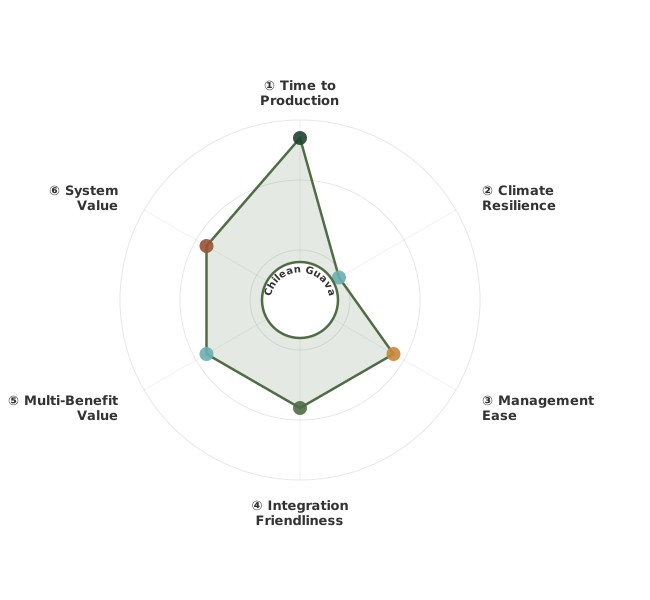
Insights suggest its potential within regenerative agriculture systems. Primarily, it is identified as a native South American berry, rich in beneficial bioactive compounds like anthocyanins, which contribute to its antioxidant properties. Its role in regenerative systems appears to be as a component of diverse polyculture systems, potentially contributing to soil health and biodiversity. While specific regenerative functions like nitrogen fixation or cover cropping are not explicitly detailed in the excerpts, its inclusion alongside other native berries in a review of South American flora implies its value in establishing resilient, biodiverse farm ecosystems. Further research and on-farm trials would be necessary to fully elucidate its contributions to soil building, carbon sequestration, and pollinator support within practices such as agroforestry or integrated rotational grazing systems. Direct farmer experiences within this knowledge base are not detailed, limiting practical insights into its integration into existing regenerative operations. While coverage in our knowledge base is limited, the above represents documented uses in regenerative systems.

Regenerative Quick Profile

All recommendations assume integrated, regenerative practices—not conventional inputs.

Climate & Soil Fit

Climate: Tropical Rainforest, Tropical Monsoon, Tropical Savanna, Hot Semi-Arid (Steppe), Cold Semi-Arid (Steppe), Hot Desert, Cold Desert, Humid Subtropical, Oceanic (Maritime Temperate), Hot-Summer Mediterranean, Warm-Summer Mediterranean, Monsoon-Influenced Humid Subtropical, Subtropical Highland, Hot-Summer Continental, Warm-Summer Continental, Subarctic, Monsoon-Influenced Hot-Summer Continental

Zones: USDA 8-10, Australian Zones 4-8, EU Atlantic, Oceanic, Mediterranean

Optimal Soil: Loam Soil

System Role & Functions

Primary: Cash Crop With Services

Secondary: Pollinator Support, Specialty

Key Benefits: Fast production

Management Level

Experience: Advanced

Maintenance: High maintenance - Maintaining healthy plant vigor for reliable fruiting is achieved through practices that enhance soil fertility and ensure consistent moisture, integrating with overall system health.

Time to Production: Fast (1-2 years) - Chilean guava offers early fruit production within 1-2 years, contributing to rapid system establishment and early ecological and economic returns.

Value Streams

  • Fruit/nut harvest
  • Pollinator habitat and support
1

Climate Suitability Assessment

Will this plant thrive in your climate?

IDEALLY SUITED

Köppen Zone: Cfa (Humid Subtropical), Cfb (Oceanic (Maritime Temperate)), Csa (Hot-Summer Mediterranean), Csb (Warm-Summer Mediterranean)
USDA Zone: 6a, 7a, 8a, 9a
Australian Zone: temperate
EU Climate Region: atlantic

Chilean Guava performs optimally in regions characterized by mild, temperate climates with consistent rainfall and moderate temperatures, scoring ≥0.80 across Köppen Cfb, USDA 7a-8b, Australian temperate, and EU Atlantic zones. These climates provide 150-200 frost-free days with average summer temperatures between 65-75°F (18-24°C) and winter lows rarely dropping below 20°F (-7°C). Such conditions minimize heat stress and winter damage, allowing for robust vegetative growth, consistent flowering, and high-quality fruit development. Annual rainfall of 30-50 inches (75-125 cm) is generally sufficient, though supplemental irrigation can enhance yields. Establishment is highly reliable, and the plant exhibits excellent perennial productivity, often yielding 5-15 lbs (2-7 kg) of fruit per mature plant annually. Minimal management is required beyond basic pruning and pest monitoring, making it a highly reliable cash crop with services in these zones.

ADEQUATE

Köppen Zone: Aw (Tropical Savanna), BSh (Hot Semi-Arid (Steppe)), BSk (Cold Semi-Arid (Steppe)), Cwa (Monsoon-Influenced Humid Subtropical), Cwb (Subtropical Highland), Dfa (Hot-Summer Continental), Dfb (Warm-Summer Continental)
USDA Zone: 5a, 5b, 10a, 11a
Australian Zone: subtropical

Chilean Guava can be successfully cultivated in regions with adequate suitability (0.60-0.79), including Köppen Cfa, Csb, USDA 6a-6b and 9a-9b, and Australian subtropical zones. These areas typically offer 120-180 frost-free days, but may experience more variable conditions. Summers can be warmer, potentially reaching 80-85°F (27-29°C) for extended periods, and winters can have occasional dips below 20°F (-7°C) in the cooler end of the range. This necessitates careful management, including supplemental irrigation during dry spells or heatwaves, and potential winter protection (mulching) for younger plants in the colder USDA zones. Fruit yield and quality may be slightly reduced compared to ideal zones due to intermittent stress. Establishment success is good (70-85%) with proper timing and initial care. Economic viability is maintained with standard inputs and management practices.

NOT RECOMMENDED

Köppen Zone: Af (Tropical Rainforest), Am (Tropical Monsoon), ET (Tundra), BWh (Hot Desert), BWk (Cold Desert), Dfc (Subarctic), Dwa (Monsoon-Influenced Hot-Summer Continental)
USDA Zone: 2a, 3a, 3b, 4a, 12a

Cultivation of Chilean Guava is not recommended (0.40-0.59) in zones experiencing significant climatic challenges, such as Köppen Csa, USDA 10a-10b, and EU Mediterranean-influenced areas. These regions often feature hot, dry summers with prolonged periods exceeding 90°F (32°C), which cause severe heat stress, drastically reducing flowering, fruit set, and overall plant health. Establishment success is risky (<70%) due to rapid soil drying and high temperatures. While technically possible with intensive intervention like extensive irrigation infrastructure (requiring 40-50 inches/100-125 cm of water annually) and shade structures, the economic and practical viability is questionable. The high management costs and low reliability of crop production make it an ill-advised choice for a cash crop. Alternative plants better adapted to heat and drought are strongly advised for these zones.

Better alternatives for these "not recommended" zones: Fig (highly drought-tolerant and heat-tolerant fruit tree adapted to Mediterranean climates), Pomegranate (excellent drought and heat tolerance, thrives in arid and semi-arid conditions), Feijoa (Pineapple Guava) (more heat and drought tolerant, adapted to similar subtropical conditions), Passion Fruit (tolerates heat and humidity well, productive in warmer climates)

Note: Zones listed above represent climates where this plant can produce reliably with reasonable management. Climate zones not mentioned would require intensive climate modification (greenhouses, extensive infrastructure) and are not economically viable for regenerative agriculture purposes.

2

Soil Suitability Assessment

Which soil types work best for this plant?

IDEALLY SUITED

Loam Soil

This plant thrives in these soil types without requiring amendments or remediation. Natural soil conditions support optimal growth and productivity.

ADEQUATE

Acidic Soil, Clay Soil, Rich Soil, Rocky Soil, Sandy Soil

This plant performs acceptably in these soil types with moderate, manageable remediation such as pH adjustment, compost addition, or drainage improvement. The required amendments are practical and cost-effective for regenerative agriculture.

NOT RECOMMENDED

Alkaline Soil, Desert Soil, Saline Soil, Wet Soil

Growing this plant in these soil types would require impractical remediation such as complete soil replacement, extensive amendments, or cost-prohibitive infrastructure. These conditions are not economically viable for regenerative agriculture.

Note: Soil suitability assessments focus on remediation requirements. "Ideally Suited" means the plant generally thrives without the need for substantial amendments, "Adequate" means manageable remediation (lime, compost, mulch), and "Not Recommended" means impractical soil changes would be required. Climate factors like rainfall and temperature also influence success.

3

Seasonal Considerations

Planting timing, growth duration, and harvest windows

Establishing Chilean guava requires careful timing to ensure young trees thrive. The ideal planting window is in early spring, after the last expected frost, when the soil begins to warm and active growth can commence. For bare-root stock, this timing is critical, while container-grown trees offer a bit more flexibility, though still best planted during this period of active soil warming.

Your Ugni molinae will spend its first few years in establishment, typically reaching a productive stage within two to three years of planting. Expect a significant increase in fruit yield starting around year four to five, moving towards full production. These resilient trees can remain productive for decades, offering a long-term harvest.

Seasonal management focuses on supporting this multi-year journey. Pruning is best undertaken during the dormant season, before new growth begins in spring, to shape the plant and encourage fruiting wood. Bloom typically occurs in late spring or early summer, leading to fruit ripening through the summer and into early fall. As temperatures cool in late fall, the trees will prepare for winter dormancy, a crucial rest period before the cycle of growth and harvest renews.

4

System Role & Multi-Benefit Value

Functional roles, integration strategies, and stacked benefits

Functional Role

Total System Value

Chilean guava offers significant whole-farm resilience by stacking multiple benefits. Its direct harvest value comes from nutritious, antioxidant-rich berries, providing a unique market opportunity. System enhancement is evident through its role in ground cover, potentially reducing erosion and improving soil organic matter as it matures. As a flowering shrub, it provides crucial support for pollinators, enhancing adjacent crop yields and overall farm ecosystem health. Wildlife can also benefit from the berries and habitat. While not a nitrogen fixer or a significant windbreak on its own, its inclusion in diverse plantings like food forests or hedgerows amplifies these functions. Risk diversification is achieved through its perennial nature and alternative income stream, making the farm less vulnerable to single-crop failures or market fluctuations. Its contribution to biodiversity further strengthens the farm's ecological stability.

Integration Characteristics

Multi-Benefit Value: Adequate - This plant provides edible berries, supports pollinators, and can be integrated into diverse planting designs, contributing to biodiversity and ecosystem function.

Integration Friendliness: Adequate - An excellent addition to multi-layered plantings, Chilean guava offers edible fruit and contributes to the structural diversity of mixed cropping systems.

5

Management & Care Requirements

Integration guidance, maintenance needs, and care practices

How to Integrate This Plant

Chilean guava (Ugni molinae) can be integrated into regenerative systems as a valuable understory component or in hedgerows. Its primary function is as a cash crop with ecological services. It supports pollinator populations due to its flowering habit, contributing to broader farm biodiversity. Compatible practices include food forests, alley cropping, and hedgerows, where it can be interplanted with other crops or trees. It can also be used in silvopasture systems, provided grazing is managed to prevent overconsumption. Timeline to contribution: Year 1-2, establishment and initial growth; Year 3-5, begins producing fruit and contributing to ground cover and pollinator support; Year 5+, consistent fruit production and mature contribution to system structure. Multi-benefit stacking includes direct fruit harvest, soil health improvement through root systems, and increased biodiversity attraction, particularly for pollinators.

Integration Practices & Management

However, the knowledge base offers very limited information on how regenerative farmers specifically integrate this plant into their farming systems. There is no data available within these sources regarding establishment methods such as seeding rates, timing, companion planting, or tillage practices. Similarly, the sources do not detail its integration with grazing systems, including mob or rotational grazing, or specific timing and rest periods for livestock. Termination strategies, fertility needs, competition management, succession planning, or its integration with cash crops through relay cropping, intercropping, or rotation sequences are also not discussed. Consequently, practical farmer experiences and insights directly related to the regenerative management of Ugni molinae are absent from this limited knowledge base. While coverage in our knowledge base is limited, the above represents documented uses in regenerative systems.

Management Profile

Maintenance Intensity: Not Recommended - Maintaining healthy plant vigor for reliable fruiting is achieved through practices that enhance soil fertility and ensure consistent moisture, integrating with overall system health.

Pest Disease Pressure: Adequate - Chilean guava generally exhibits good health, with organic production feasible through practices that promote airflow and resilient plant growth within a balanced ecosystem.

Time To Production: Ideally Suited - Chilean guava offers early fruit production within 1-2 years, contributing to rapid system establishment and early ecological and economic returns.

6

Economics & Value Streams

Direct harvest, system benefits, ecosystem services, and risk diversification

Comprehensive economic analysis including direct harvest value, system enhancement contributions, ecosystem services, value timeline, and risk diversification strategies.

Per-Tree Production Economics

Metric Value
Establishment Cost $10-20
Years to First Harvest 3-5 years
Annual Maintenance $4-8
Yield 10-20 lbs/year 4-9 kg/year
Market Price $2-5/lb $5-11/kg
Productive Lifespan 15-20 years
Net Annual Return* $10-$95/year

Values shown per mature tree, not per acre. In regenerative systems, trees are integrated at low densities across diverse landscapes. Establishment costs spread over the lifespan of the tree. Early years have costs but no revenue.

* Net Annual Return = (Yield × Market Price) − (Amortized Establishment Cost + Annual Maintenance). This return is realized only at/after first harvest; early years have costs but no revenue. Range shows worst case to best case scenarios.

System Enhancement Value

Beyond harvest: ecosystem services from regenerative cash crop practices

Ecological Service Contributions

Chilean guava (Ugni molinae) offers significant pollinator support, a crucial ecosystem service for integrated farm systems. The excerpts highlight its potential as a 'Specialty' crop with secondary functions including 'Pollinator Support'. While specific details on bloom time and nectar/pollen production are not provided, its classification as a berry-producing plant suggests it likely flowers and provides resources for bees and other beneficial insects. This support is vital for the pollination of other crops on the farm, enhancing their yield and quality. Additionally, the berries themselves, rich in bioactive compounds, have potential for human health benefits, as noted in the abstract focusing on South American berries, presenting an opportunity for value-added products or niche markets that contribute to farm revenue diversification. Its ornamental value, attractive foliage, and ease of pruning also contribute to aesthetic and management benefits within a diversified landscape. The plant's pest resistance and drought tolerance further enhance its value by reducing input needs and increasing resilience.

Erosion Control (if applicable)

Variable, dependent on planting density and maturity. Potential for 5-15% crop yield improvement in protected areas.

While not explicitly detailed as a windbreak species in the provided excerpts, Chilean guava (Ugni molinae) is discussed in the context of creating microclimates for year-round food production in Zone 9. The strategy involves an outer ring of evergreens for wind protection, suggesting that denser, potentially multi-stemmed shrubs or small trees like Chilean guava could contribute to wind reduction. Its growth habit, described as potentially flopping and requiring staking in one excerpt, implies a moderately dense structure that, when planted in rows or clusters, could offer some degree of wind buffering. This wind protection can mitigate soil erosion, reduce desiccation of crops and livestock, and create more favorable microclimates for sensitive plants, particularly in exposed areas. The effectiveness would depend on planting density and maturity.

Ecosystem Service Contributions

Environmental contributions: carbon, pollinators, wildlife, and water

  • Carbon Sequestration: As a shrub or small tree, Chilean guava contributes to carbon sequestration through biomass accumulation in its foliage, branches, and root system. Its perennial nature allows for ongoing carbon storage over its lifespan.
  • Pollinator Support: High. The plant is explicitly mentioned as providing 'Pollinator Support' and is a berry-producing species, which typically flowers and attracts pollinators.
  • Wildlife Habitat: Provides potential habitat and food sources for small birds and insects attracted to its flowers and berries. Its dense foliage could offer some nesting or shelter opportunities.
  • Water Quality: Not applicable

Value Timeline: Production & Services

When you'll see results: varies by crop (annual harvest vs. perennial establishment)

Years 1-2

Establishment of root system contributing to soil stabilization and early wind buffering (if planted for this purpose). Initial attractive foliage and potential for early, limited flowering and pollinator attraction.

Years 3-5

Increased pollinator support as the plant matures. First significant berry production, offering a niche cash crop and contributing to farm income diversification. Enhanced windbreak effect with denser foliage. Ornamental value becomes more pronounced.

Years 10-20

Full production of berries, maximizing cash crop revenue. Established windbreak providing consistent protection to surrounding areas. Significant contribution to local biodiversity through sustained pollinator support and potential wildlife habitat.

20+ Years

Long-term, consistent provision of ecosystem services including wind reduction and pollinator support. Ongoing niche market revenue from berries. Potential for increased biomass and carbon sequestration over extended periods.

Farm Risk Reduction

How this reduces farm risk: backup income, weather protection, market hedges

  • Multiple Revenue Streams: Specialty berry sales, potential value-added products (jams, preserves), pollinator support services (indirectly enhancing other crop yields), ornamental value.
  • Temporal Income Spread: Provides ongoing ecosystem services (windbreak, pollination) year-round, with a distinct harvest period for berries. This creates a continuous flow of value and a periodic income stream.
  • Market Risk Hedge: Offers a niche market product that may be less susceptible to commodity price fluctuations. Its drought tolerance and pest resistance reduce reliance on external inputs and mitigate risks associated with adverse weather or pest outbreaks. Diversifies farm revenue beyond primary commodity crops.
7

Regenerative Suitability Details

Comprehensive trait ratings for system integration assessment

Comparative ratings for this plant across key regenerative agriculture traits.

Trait Suitability Explanation
Drought Tolerance Not Recommended Chilean guava thrives with consistent soil moisture, emphasizing the importance of soil health for moisture retention through practices like mulching and cover cropping.
Establishment Ease Not Recommended Chilean guava benefits from a well-prepared seedbed that encourages consistent moisture and minimizes early competition, supported by healthy soil biology.
Time To Production Ideally Suited Chilean guava offers early fruit production within 1-2 years, contributing to rapid system establishment and early ecological and economic returns.
Multi Benefit Value Adequate This plant provides edible berries, supports pollinators, and can be integrated into diverse planting designs, contributing to biodiversity and ecosystem function.
Climate Adaptability Not Recommended Chilean guava performs best in mild temperate to subtropical climates, thriving in environments that support consistent soil moisture and offer protection from extreme conditions.
Hardiness Zone Range Not Recommended Adapted to zones 8-10, Chilean guava thrives in regions with mild winters, indicating its suitability for systems prioritizing moderate temperature fluctuations.
Maintenance Intensity Not Recommended Maintaining healthy plant vigor for reliable fruiting is achieved through practices that enhance soil fertility and ensure consistent moisture, integrating with overall system health.
Pest Disease Pressure Adequate Chilean guava generally exhibits good health, with organic production feasible through practices that promote airflow and resilient plant growth within a balanced ecosystem.
Integration Friendliness Adequate An excellent addition to multi-layered plantings, Chilean guava offers edible fruit and contributes to the structural diversity of mixed cropping systems.

Comparative System: Ratings compare plants within their economic category (e.g., cover crop nitrogen fixation compared to other cover crops, not to all plants). Individual farm conditions and management practices significantly influence actual performance.

8

Learn More

Why farmers use this plant and additional resources

Why Regenerative Farmers Use This Plant

Ugni molinae, commonly known as Chilean guava or murta, is a valuable perennial shrub for regenerative agriculture systems, offering multi-decade returns and significant ecological services. This evergreen shrub is a slow-growing but highly rewarding perennial, contributing to soil health and biodiversity over decades. It typically reaches its first fruit production within 2-4 years of planting, with full commercial yields achieved by year 5-10. At maturity, Ugni molinae can sequester an estimated 1-3 tons of CO2e per acre per year, contributing to long-term carbon drawdown and enhancing soil organic matter. Its dense foliage provides valuable canopy services, offering shade regulation for sensitive understory crops or livestock, acting as an effective windbreak, and creating a more stable microclimate that can buffer against temperature extremes. The accumulation of biomass from pruning and leaf litter further enriches the soil, building asset value over its productive lifespan of 20-30 years or more.

Integrating Ugni molinae into diverse farming systems enhances overall farm resilience and productivity. As a fruiting shrub, it provides a high-value niche crop with a unique flavor profile, appealing to specialty markets. Its berries are rich in Vitamin C and antioxidants, offering a unique, high-value market opportunity. Its dense, evergreen habit makes it an excellent candidate for hedgerows or border plantings, offering habitat for beneficial insects and birds, and contributing to biodiversity. The plant's ability to tolerate partial shade also makes it suitable for intercropping in agroforestry systems, potentially alongside larger fruit trees or timber species, maximizing land use efficiency. Furthermore, its deep root system, which can extend 3-10 feet (0.9-3 meters) into the soil at maturity, helps to stabilize soil, improve water infiltration, and scavenge nutrients from lower soil profiles, reducing erosion and enhancing soil health over time.

The ecosystem benefits of Ugni molinae are substantial. Its prolific flowering period, typically in late spring to early summer, provides a crucial nectar and pollen source for a wide array of pollinators, including bees, butterflies, and hoverflies, supporting broader ecosystem health. Studies on similar evergreen shrubs suggest that mature plantings can support significant populations of beneficial insects that aid in natural pest control for surrounding crops. The decomposition of its leaf litter and woody material contributes valuable organic matter to the soil, improving soil structure, water-holding capacity, and nutrient cycling, leading to measurable soil organic matter increases within 5-7 years of establishment. Its evergreen nature also provides year-round ground cover and habitat, contributing to continuous ecosystem services.

Regional success stories highlight the adaptability of Ugni molinae. In the cooler, wetter regions of the Pacific Northwest of North America, it is increasingly incorporated into permaculture designs and small-scale fruit farms, often interplanted with berries like blueberries and raspberries. In parts of Australia, particularly in Tasmania and Victoria, it is being explored for its potential in agroforestry systems and as a hardy, productive shrub for home gardens and commercial ventures. In Chile, its native range, it is a traditional food source and is being revitalized in agricultural landscapes for its economic and ecological contributions. Its adaptability to Mediterranean climates also makes it a promising candidate for similar regions in Europe and California. In the temperate rainforest regions of its native range, it is a staple in traditional food forests.

9

How to Integrate This Plant

Practical guidance for regenerative systems

Establishing Ugni molinae can be achieved through seed, cuttings, or grafting. Planting typically occurs in early spring after the last frost or in early autumn before the first frost. For seed propagation, sowing occurs in a well-draining seed-starting mix at a depth of approximately 0.25-0.5 inches (0.6-1.3 cm). For direct seeding, rates are typically around 1-2 ounces per 100 square feet (30-60 g/10 m²). Cuttings are best taken from semi-hardwood in summer and rooted in a moist medium. For faster and more predictable fruiting, grafted plants are recommended. Transplants are often the most reliable method for quicker establishment. Spacing for individual plants can range from 3-5 feet (0.9-1.5 meters) apart, allowing for ample growth and air circulation. In hedgerow or intercropping systems, spacing can be adjusted to 2-3 feet (0.6-0.9 meters) within the row. For commercial production, rows are typically spaced 8-10 feet (2.4-3 meters) apart, allowing for adequate light penetration and air circulation.

Initial watering is crucial, providing about 1 inch (2.5 cm) of water per week during the establishment phase (first 1-2 years), with reduced frequency once plants are mature. Mature plants are moderately drought-tolerant but benefit from supplemental watering during prolonged dry periods. Fertility is best managed through organic means, such as top-dressing with compost annually and incorporating cover crop residue from interplanted species. Avoid excessive nitrogen fertilization, as it can lead to lush foliage at the expense of fruit production. Pruning is essential for maintaining plant health, shape, and fruit production. Light annual pruning in late winter or early spring, before new growth begins, helps to remove dead or crossing branches, improve light penetration into the canopy, and encourage vigorous fruiting wood. This typically involves shaping the plant to a manageable size, often reaching a mature height of 3-8 feet (0.9-2.4 meters) and a similar spread. Pest and disease management should prioritize biological controls and cultural practices, such as ensuring good air circulation and avoiding overwatering, to prevent issues like fungal diseases. Resistant varieties are generally robust, but vigilance against aphids or fungal issues can be managed with beneficial insect habitats and proper pruning.

For category-specific integration as a perennial agroforestry species, establishment and system design are key. Ugni molinae typically establishes within 1-3 years, with full production realized between 3-10 years. Canopy management involves annual pruning to maintain a dense but open structure, ensuring adequate light penetration for any understory crops or ground cover. In year 2-3, consider planting nitrogen-fixing ground cover, such as clover or vetch, beneath the canopy to enhance soil fertility and provide habitat for beneficial insects. For alley cropping or silvopasture designs, Ugni molinae can be planted in hedgerows or as scattered shrubs within pastures, with wider spacing between rows or trees (e.g., 15-25 ft or 4.5-7.5 m) to allow for grazing or equipment access. Measurable soil carbon increases can be observed by year 5-7 as the plant matures and contributes organic matter. Long-term infrastructure considerations include initial irrigation for establishment, and potentially deer or browse protection in the early years.

Regional adaptations offer diverse integration strategies. In the temperate oceanic climates of the UK and New Zealand, Ugni molinae can be integrated into mixed berry plantings or as a component of mixed shrub borders, benefiting from consistent rainfall and mild winters. In the Mediterranean climates of Southern Europe and California, its drought tolerance once established makes it suitable for drier orchard systems or as a component of low-input hedgerows, potentially interplanted with drought-hardy herbs. In regions with more distinct continental climates, such as parts of the US Midwest or Southern Canada, careful site selection for good drainage and winter protection may be necessary, potentially utilizing it in more sheltered microclimates or as part of a multi-species windbreak system. In its native South America, it can be incorporated into existing coffee or fruit plantations as an understory shrub to improve soil health and biodiversity. In Australia's cooler southern regions, similar autumn planting (May-June) is recommended. In the UK, planting can occur from October to November or February to April. In the Pacific Northwest of the USA, spring planting (April-May) is standard.