
Chinese Wisteria
While Wisteria Sinensis has limited documented use within our regenerative agriculture knowledge base, its potential benefits warrant consideration. Primarily, as a nitrogen-fixing legume, it can contribute to soil fertility, reducing the need for synthetic inputs and supporting soil building in polyculture systems. Its vigorous growth suggests a role in ground cover and potentially as a forage source, though specific applications in rotational grazing or no-till systems are not detailed. The plant's ability to sequester carbon through biomass production is a general benefit of woody perennials in agroforestry setups. Direct farmer experiences within our knowledge base are absent, so practical insights on integration, success, or challenges are not available. Further research and on-farm trials would be necessary to fully understand Wisteria Sinensis's specific contributions to regenerative agricultural practices and its impact on soil health and biodiversity.
For a full botanical description see: Wikipedia(opens in new window) (external link)
Regenerative Quick Profile
All recommendations assume integrated, regenerative practices—not conventional inputs.
Climate & Soil Fit
Climate: Tropical Rainforest, Tropical Monsoon, Tropical Savanna, Hot Semi-Arid (Steppe), Cold Semi-Arid (Steppe), Hot Desert, Cold Desert, Humid Subtropical, Oceanic (Maritime Temperate), Hot-Summer Mediterranean, Warm-Summer Mediterranean, Monsoon-Influenced Humid Subtropical, Subtropical Highland, Hot-Summer Continental, Warm-Summer Continental, Subarctic, Monsoon-Influenced Hot-Summer Continental, Tundra
Zones: USDA 5-9, Australian Zones 3-6
Optimal Soil: Loam Soil
System Role & Functions
Primary: Nitrogen Fixer
Secondary: Cover Crop System, Forage Integration
Management Level
Experience: Advanced
Maintenance: High maintenance - Vigorous growth necessitates regular pruning to integrate it within the farm system and prevent it from overwhelming other plants. Managing root suckers contributes to soil cover and biomass.
Time to Production: Slow (5+ years) - Primarily valued for its ornamental bloom, edible pod production is minimal and delayed, making it unsuitable for systems focused on rapid yields. Its contribution lies in ecological services rather than direct food output.
Value Streams
- Fruit/nut harvest
- Nitrogen fixation
- Livestock forage value
Know the Debate
- Establishment time varies from 1-7 years based on conditions and management.
- Climate tolerance ranges from Zone 5 to 9, with Zones 5-6 requiring protection.
- Thrives in well-drained soil but shows drought tolerance once established.
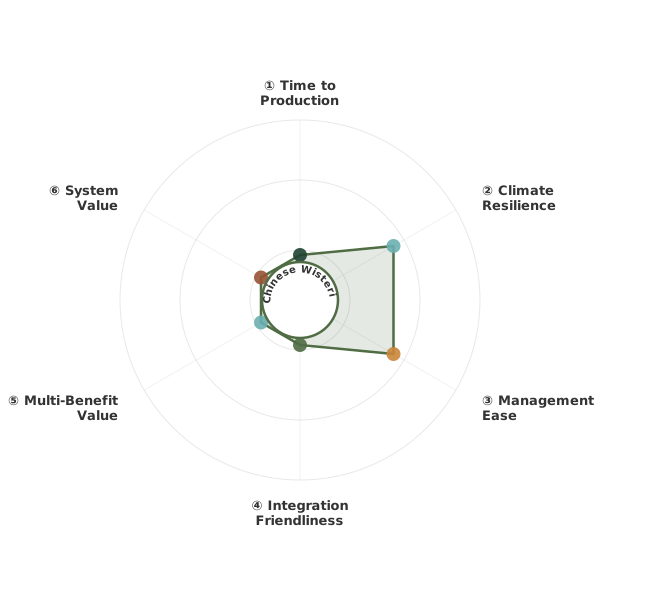
How These Traits Are Calculated
Trait dimensions are ordered clockwise starting from the top of the chart (12 o'clock position):
1. Time to Production
Years from planting to first harvestable yields
WHAT: Measures the waiting period from tree establishment to first meaningful production. Fast-producing trees yield within 2-5 years; slow producers require 8-15+ years before significant harvests.
WHY: Time to production determines cash flow timing and financial feasibility for farm businesses. Long wait times create significant opportunity costs—land and labor tied up for years without income. Fast producers allow quicker experimentation and cash flow recovery, reducing risk for new tree crop farmers.
HOW: Ratings based on years to first harvest documented in economics data. Exceptional (3.0): Production within 2-4 years (elderberry, mulberry, some nut bushes). Typical (2.0): 5-8 years (many fruit trees). Limited (1.0): 10-15+ years (hardwood timber, some nut trees like pecan, walnut).
2. Climate Resilience
Weighted: hardiness zones (50%) + drought tolerance (30%) + adaptability (20%)
WHAT: Combines temperature tolerance (hardiness zone range), water stress resilience (drought tolerance), and overall climate flexibility. Multi-decade tree investments require reliable climate matching to prevent total loss.
WHY: Wrong climate choices mean complete failure for permanent plantings. A tree that dies in year 5 from unexpected cold or prolonged drought represents catastrophic loss of 5 years' investment. Climate resilience determines geographic range and weather variability tolerance—critical as climate patterns become less predictable.
HOW: Weighted formula prioritizes hardiness zone range (50% weight) for core temperature tolerance, drought tolerance (30% weight) for water stress, and overall adaptability (20% weight) for general climate flexibility. Exceptional (3.0): Wide hardiness range (8+ zones) with strong drought tolerance. Typical (2.0): Moderate range and tolerance. Limited (1.0): Narrow climate requirements.
3. Management Ease
Weighted: establishment (40%) + low maintenance (30%) + pest resistance (30%)
WHAT: Combines establishment difficulty, ongoing maintenance requirements, and disease/pest pressure into overall management workload. Low-maintenance trees fit easily into busy farm operations without specialized expertise or intensive inputs.
WHY: Labor is the limiting factor for most diversified farms. High-maintenance trees requiring pruning expertise, disease management, and intensive pest control compete for limited time with other farm enterprises. Easy-care trees deliver production with minimal intervention, making them viable for time-constrained farmers.
HOW: Weighted formula balances establishment ease (40% weight) for startup success, inverted maintenance intensity (30% weight) for ongoing care, and inverted pest/disease pressure (30% weight) for health management. Exceptional (3.0): Easy to establish, self-sufficient growth, naturally pest-resistant. Typical (2.0): Moderate care needs. Limited (1.0): Difficult establishment, intensive maintenance, or heavy pest pressure.
4. Integration Friendliness
Compatibility with silvopasture, alley cropping, and multi-species systems
WHAT: Measures how well the tree integrates with other farm enterprises—grazing livestock, annual crops, or other perennials. Integration-friendly trees tolerate livestock browsing, don't heavily shade out crops, and coexist with diverse plantings.
WHY: Integrated tree systems (silvopasture, alley cropping, food forests) provide higher total returns per acre than monoculture plantings. Trees that work well with livestock provide shade + forage + production simultaneously. Integration flexibility allows farmers to stack enterprises and adapt to market opportunities.
HOW: Ratings based on the integration_friendliness trait documenting compatibility with grazing, cropping, and multi-species systems. Exceptional (3.0): Tolerates livestock browsing, provides livestock benefits (shade, browse), compatible with understory crops. Typical (2.0): Some integration possible with management. Limited (1.0): Requires isolation, incompatible with livestock or cropping.
5. Multi-Benefit Value
Stacked benefits beyond primary product—shade, wildlife, nitrogen, erosion control
WHAT: Measures the diversity of ecosystem services provided beyond the main harvest product. Multi-benefit trees deliver shade, windbreak, wildlife habitat, nitrogen fixation, erosion control, pollinator support, and aesthetic value simultaneously.
WHY: Single-purpose trees are economically fragile—market price swings or production failures eliminate all value. Multi-benefit trees provide resilience through diverse value streams. A nitrogen-fixing tree that produces nuts, provides shade for livestock, supports wildlife, and controls erosion delivers 4-5x the system value of a production-only tree.
HOW: Ratings based on the multi_benefit_value trait documenting service diversity. Exceptional (3.0): 4+ significant services stacked (nitrogen-fixing legume trees providing nuts + shade + wildlife + windbreak). Typical (2.0): 2-3 moderate services. Limited (1.0): Single-purpose production trees with minimal additional benefits.
6. System Value
Total ecosystem and economic value across short, medium, and long timeframes
WHAT: Synthesizes the total regenerative value delivered across multiple decades, including immediate ecosystem services (years 1-5), medium-term production value (years 5-15), and long-term system transformation (years 15-50). Captures the compounding benefits of permanent plantings.
WHY: Trees are multi-decade investments requiring patient capital. System value measures whether the total package—early ecosystem services, eventual production, and long-term legacy benefits—justifies the wait time and land commitment. High system value trees pay back investment through diverse, stacking, compounding benefits.
HOW: Scored via LLM synthesis of economics timelines, ecosystem service diversity, and long-term soil/water/carbon impacts. Exceptional (3.0): Strong early services + valuable production + transformative long-term impacts. Typical (2.0): Moderate benefits across timeframes. Limited (1.0): Long wait with limited service stacking or weak economic returns.
Ratings are based on documented performance in regenerative systems, not conventional high-input scenarios. All traits assume integrated management practices focused on soil health and ecosystem services.
5
Management & Care Requirements
Integration guidance, maintenance needs, and care practices
Management & Care Requirements
Integration guidance, maintenance needs, and care practices
How to Integrate This Plant
Chinese wisteria (Wisteria sinensis) can be integrated into regenerative systems primarily for its nitrogen-fixing capabilities, enhancing soil fertility. As a vigorous vine, it can serve as a living mulch or groundcover, suppressing weeds and preventing erosion on slopes or disturbed areas. Its dense foliage offers some shade, potentially benefiting understory plants in a food forest or providing temporary shade in silvopasture systems, though its aggressive growth requires careful management. While not a primary windbreak, its mass can offer localized protection. It also supports pollinators with its abundant blooms. In Year 1-2, it begins establishing and fixing nitrogen. By Year 5, its biomass contributes significantly to soil organic matter and weed suppression. Long-term, it can continue to improve soil structure and fertility, though its management becomes crucial to prevent overrunning other components. Stacking benefits, it improves soil health, supports pollinators, and reduces erosion, contributing to a more resilient farm ecosystem.
Integration Practices & Management
Information regarding the specific integration of Wisteria sinensis into regenerative agriculture systems is limited within the provided knowledge base. The available sources do not detail establishment methods such as seeding rates, timing, companion planting, or tillage practices. Similarly, there is no information on how Wisteria sinensis is integrated with grazing, including mob grazing, rotational systems, timing of grazing, or rest periods. Termination strategies like natural winterkill, grazing down, crimping, mowing, or herbicide termination are also not discussed. Management considerations, including fertility needs, competition management, and succession planning, are not elaborated upon. Furthermore, the knowledge base does not offer insights into its integration with cash crops through relay cropping, intercropping, or rotation sequences, nor does it present practical farmer experiences or specific insights related to its use in regenerative agriculture. Due to this limited coverage, a comprehensive explanation of how regenerative farmers integrate Wisteria sinensis cannot be provided based on this knowledge base.
Management Profile
Maintenance Intensity: Not Recommended - Vigorous growth necessitates regular pruning to integrate it within the farm system and prevent it from overwhelming other plants. Managing root suckers contributes to soil cover and biomass.
Pest Disease Pressure: Adequate - Generally resilient to pests and diseases, it can be supported by fostering beneficial insect populations and maintaining plant health through good soil biology. Vigilance and organic interventions are key.
Time To Production: Not Recommended - Primarily valued for its ornamental bloom, edible pod production is minimal and delayed, making it unsuitable for systems focused on rapid yields. Its contribution lies in ecological services rather than direct food output.
Sources behind this view
 Community
-
Wisteria is valuable in permaculture as a 'chop and drop' nitrogen fixer and biomass producer, providing fertility when managed in 'zone 1' garden areas and used as mulch.
Read more (opens in new window) permies.com
6
Economics & Value Streams
Direct harvest, system benefits, ecosystem services, and risk diversification
Economics & Value Streams
Direct harvest, system benefits, ecosystem services, and risk diversification
Comprehensive economic analysis including direct harvest value, system enhancement contributions, ecosystem services, value timeline, and risk diversification strategies.
Per-Tree Production Economics
| Metric | Value |
|---|---|
| Establishment Cost | $10-20 |
| Years to First Harvest | 3-5 years |
| Annual Maintenance | $3-5 |
| Yield | 5-10 lbs/year 2-4 kg/year |
| Market Price | $0-1/lb $1-2/kg |
| Productive Lifespan | 15-25 years |
| Net Annual Return* | $-6 to $6/year |
Values shown per mature tree, not per acre. In regenerative systems, trees are integrated at low densities across diverse landscapes. Establishment costs spread over the lifespan of the tree. Early years have costs but no revenue.
* Net Annual Return = (Yield × Market Price) − (Amortized Establishment Cost + Annual Maintenance). This return is realized only at/after first harvest; early years have costs but no revenue. Range shows worst case to best case scenarios.
System Enhancement Value
Beyond harvest: nitrogen fixation replacing fertilizer costs
Nitrogen Fixation Value
80-150 lbs N/acre/year = $48-135/acre fertilizer replacement (assuming $0.60/lb N)
As a legume, Chinese Wisteria (Wisteria sinensis) functions as a primary nitrogen fixer, contributing significant organic nitrogen to the soil system. This directly reduces the farm's reliance on synthetic nitrogen fertilizers, which are energy-intensive to produce and can have negative environmental impacts. The nitrogen fixed by wisteria can become available to companion crops or subsequent plantings through decomposition and microbial activity. This biological nitrogen input enhances soil fertility and supports robust plant growth, particularly for nitrogen-demanding crops. The quantitative range for nitrogen fixation in legumes can vary widely, but for established woody legumes like wisteria, it can be substantial, supporting the overall nutrient cycling within an integrated farm system. This natural fertilization process is a cornerstone of regenerative agriculture, promoting soil health and reducing external input costs.
Additional Soil Building Benefits
Chinese Wisteria offers several other system benefits beyond nitrogen fixation. It can serve as a cover crop system, with its vigorous growth helping to suppress weeds and prevent soil erosion, especially when managed as a chop-and-drop mulch. While care must be taken to dry cut vines to prevent rooting, this practice recycles biomass and nutrients back into the soil. Furthermore, wisteria is noted as a 'decent catch crop' for kudzu bugs, suggesting a potential role in integrated pest management strategies by drawing pests away from primary crops. Its flowering period can attract pollinators, including larger bees like carpenter bees and bumble bees, contributing to biodiversity and supporting pollination services within the farm ecosystem. The potential for aggressive growth, while a management challenge, also indicates a high biomass production capacity that can be leveraged for soil organic matter enhancement.
Ecosystem Service Contributions
Environmental contributions: carbon, pollinators, wildlife, and water
- Carbon Sequestration: Chinese Wisteria, with its vigorous woody growth habit, has the potential for significant carbon sequestration in its biomass and root systems, especially as it matures. Its rapid growth rate allows for substantial carbon capture over time.
- Pollinator Support: High - Wisteria flowers are known to attract pollinators, including honey bees and larger bees like carpenter bees and bumble bees, offering a valuable nectar and pollen source during its bloom period.
- Wildlife Habitat: Provides some habitat and forage for pollinators and potentially insects. Its dense growth can offer some cover, though its primary value is not as a food source for larger wildlife.
- Water Quality: Not applicable
Value Timeline: N Fixation & Production
When you'll see results: nitrogen fixation begins immediately, harvest at maturity
Years 1-2
Initial nitrogen fixation begins, contributing to soil fertility. Weed suppression and early soil building through biomass accumulation (if managed as chop-and-drop). Potential as a 'catch crop' for certain pests like kudzu bugs.
Years 3-5
Established nitrogen fixation contributes significantly to soil nutrient pools. Increased biomass for chop-and-drop mulch enhances soil organic matter. Pollinator support becomes more pronounced as the plant matures and flowers prolifically.
Years 10-20
Mature nitrogen fixation capacity is realized, potentially supporting a range of crops. Significant contribution to soil organic matter and structure. Continued and robust pollinator attraction. Potential for extensive biomass to be managed for nutrient cycling.
20+ Years
Long-term soil enrichment through sustained nitrogen fixation and organic matter addition. Established, mature plant contributing consistently to ecosystem services. Management challenges related to aggressive growth may require ongoing attention, but the underlying ecosystem benefits are substantial.
Farm Risk Reduction
How this reduces farm risk: fertilizer cost hedge and rotation benefits
- Multiple Revenue Streams: Reduced fertilizer costs (via nitrogen fixation), pest management support (as a catch crop), ecosystem service provision (pollinator support, soil health enhancement).
- Temporal Income Spread: Ongoing soil fertility improvement through nitrogen fixation and organic matter addition provides a continuous benefit. Pollinator support is seasonal but valuable. Pest management benefits can be year-round if the plant is maintained.
- Market Risk Hedge: Reduces reliance on volatile synthetic fertilizer markets. Provides a biological buffer against certain pest outbreaks. Enhances overall farm resilience through improved soil health, making crops more tolerant to stress.
Sources behind this view
Community
-
Wisteria is highly valued as a nitrogen-fixing biomass producer in permaculture, best utilized via 'chop and drop' mulching in managed 'zone 1' garden areas to enrich soil with organic matter.
Read more (opens in new window) permies.com -
Wisteria is valuable in permaculture as a 'chop and drop' nitrogen fixer and biomass producer, providing fertility when managed in 'zone 1' garden areas and used as mulch.
Read more (opens in new window) permies.com
8
Know the Debate
Wisteria sinensis integration into regenerative systems is influenced by its establishment timeline, climate adaptability, and management needs. Wh...
Know the Debate
Wisteria sinensis integration into regenerative systems is influenced by its establishment timeline, climate adaptability, and management needs. Wh...
Wisteria sinensis integration into regenerative systems is influenced by its establishment timeline, climate adaptability, and management needs. While considered a legume for potential soil fertility benefits, its establishment speed and vigor vary significantly between documented research and practical farmer experience. Success is highly dependent on climate conditions, with USDA Zones 5-9 identified as optimal, though established plants show some drought tolerance. Proper species selection and understanding of its vigorous growth habit are key for sustainable integration.
How fast does Wisteria sinensis establish and grow?
Slow & steady establishment (3-7 yrs)
Academic and horticultural sources suggest Wisteria sinensis requires 3-7 years for full maturity and reliable flowering, emphasizing controlled establishment with initial support and consistent pruning for optimal bloom and structure.
Sources behind this view
Sources behind this view
 Research
-
Breeding for cold tolerance in common annual legume cover crops (opens in new window)
This study found: More farmers are using winter cover crops, especially legumes like hairy vetch, crimson clover, and winter peas. These plants help control weeds, prevent soil erosion, and provide nitrogen for the next crop. However, they often struggle to survive harsh winters, especially in colder regions (Zone 6 and below), making them less reliable than hardy grasses like cereal rye. While some progress has been made in breeding hardier winter peas, hairy vetch and crimson clover need more attention. To make these legumes more dependable, we need to select and breed better varieties, find new sources of cold resistance, and improve how we manage them. Scientists are exploring how these plants naturally adapt to cold, freeze, and then recover, using methods like visual checks and plant stress tests.
 From the Web
-
Guidance on growing Kentucky wisteria: prefers sun, needs support, blooms in June. Slow to establish and bloom; prune minimally after flowering or late winter. Cultivars 'Blue Moon' and 'Amethyst Falls' are recommended.
Rapid & vigorous establishment (1-3 yrs)
Field observations indicate Wisteria sinensis establishes rapidly, often within 1-3 years, demonstrating robust initial root growth and vigorous vine development that requires management to control its spread and encourage flowering.
Sources behind this view
Sources behind this view
 Videos & Podcasts
-
Recommends winter-hardy cover crops for cold climates: hairy vetch and winter rye for nitrogen fixation and biomass; crimson clover for adaptability; winter peas for nitrogen; winter wheat and barley as cash crops; and various bean varieties for nitrogen and yield.

-
Compares hairy vetch varieties ('au merit', Montana) and woolly pod vetch. Emphasizes critical planting timing: avoid early spring planting if overwintering is desired (wait until August). Spring planting (March/April) maximizes growth before termination. Vetch is valuable for nitrogen fixation and beneficial insects.
Making Sense of the Differences
Wisteria establishment appears to vary based on planting method, cultivar, and environmental factors. Horticultural sources often describe a longer timeline for optimal flowering and maturity, while farmer experience in ideal conditions notes faster growth. Management intensity, including watering during establishment and consistent pruning, likely influences perceived vigor and time to significant development.
What are the climate and soil requirements for Wisteria sinensis?
Optimal in Zones 5-9 with well-drained soil
Academic and horticultural guidance suggests optimal growth and flowering in USDA Zones 5-9, emphasizing well-drained soil and adequate sunlight for best results, though some cold climate challenges are noted.
Sources behind this view
Sources behind this view
Research
-
Breeding for cold tolerance in common annual legume cover crops (opens in new window)
This study found: More farmers are using winter cover crops, especially legumes like hairy vetch, crimson clover, and winter peas. These plants help control weeds, prevent soil erosion, and provide nitrogen for the next crop. However, they often struggle to survive harsh winters, especially in colder regions (Zone 6 and below), making them less reliable than hardy grasses like cereal rye. While some progress has been made in breeding hardier winter peas, hairy vetch and crimson clover need more attention. To make these legumes more dependable, we need to select and breed better varieties, find new sources of cold resistance, and improve how we manage them. Scientists are exploring how these plants naturally adapt to cold, freeze, and then recover, using methods like visual checks and plant stress tests.
From the Web
-
Guidance on growing Kentucky wisteria: prefers sun, needs support, blooms in June. Slow to establish and bloom; prune minimally after flowering or late winter. Cultivars 'Blue Moon' and 'Amethyst Falls' are recommended.
-
Cold climate farming (Zone 5a or lower) faces challenges from temperature fluctuations and short growing seasons. Focus on cool-season crops like brassicas and lettuce, and use season extension techniques like hoop houses for warm-season crops. Specific planting intervals and crop suitability are detailed.
Hardy in Zone 5 and drought-tolerant once established
Field experience indicates Wisteria sinensis is hardy in Zone 5 and can be drought-tolerant once established, growing in 'most soils' and adapting to varied conditions beyond strict horticultural recommendations.
Sources behind this view
Sources behind this view
Videos & Podcasts
-
In Zone 6b Kentucky, improve winter soil health with overwintered cover crops (rye, vetch, clover), cold-hardy greens in low tunnels, or mulch (leaves, straw, wood chips). Animals like sheep and chickens can also add fertility and manage cover crops, respecting organic manure rules. Avoid leaving soil barren.
Making Sense of the Differences
Wisteria sinensis shows adaptability across a range of climates, performing optimally in USDA Zones 5-9 with well-drained soils. While horticultural guides suggest specific needs, farmer experience indicates established plants can tolerate Zone 5 and exhibit drought tolerance, suggesting a broader practical window than strict academic recommendations might imply.
9
Learn More
Why farmers use this plant and additional resources
Learn More
Why farmers use this plant and additional resources
Why Regenerative Farmers Use This Plant
Wisteria sinensis, when integrated into regenerative agricultural systems, offers significant long-term ecological and economic benefits. As a perennial woody vine, it contributes to multi-decade asset accumulation and ecosystem stability. Mature Wisteria plants are capable of sequestering an estimated 1.5-3 tons of CO2e per acre per year, contributing substantially to carbon drawdown and soil organic matter enrichment over their lifespan. Its dense, extensive root system, often reaching 10-20 feet (3-6 meters) or more, plays a crucial role in soil stabilization, preventing erosion on slopes, improving water infiltration, and breaking up compacted soils. It also scavenges nutrients from lower soil horizons, making them available to shallower-rooted companion plants. The substantial woody biomass produced annually, often exceeding 1-2 tons dry matter per acre, can be harvested for bioenergy, mulch, or compost, further cycling nutrients within the farm ecosystem.
Beyond carbon sequestration and soil building, Wisteria sinensis provides invaluable canopy services. Its vigorous growth creates a significant shade canopy, offering microclimate regulation for understory crops or livestock, reducing heat stress in summer and potentially moderating frost in cooler months. This shade can reduce irrigation needs and moderate soil temperatures, leading to more stable growing conditions. As a windbreak, it can protect sensitive crops and reduce soil desiccation. The prolific flowering of Wisteria is a major boon for pollinators, attracting a wide array of bees, butterflies, and other beneficial insects throughout its blooming period, which can last for several weeks. This enhanced pollinator activity can benefit adjacent fruit and seed crops, increasing yields and quality. The vine's structure also offers habitat and shelter for beneficial insects, such as ladybugs and lacewings, which can aid in natural pest control for surrounding agricultural areas.
The economic returns from Wisteria sinensis can be multi-faceted and sustained over decades. While primarily known for its ornamental value and the production of fragrant flowers for the cut flower industry or essential oils, its pods and seeds have also been historically used in some cultures for food or medicinal purposes, though careful identification and preparation are crucial. In agroforestry designs, it can be trained over pergolas or trellises to create productive spaces for shade-tolerant crops or to enhance the aesthetic and ecological value of farm boundaries. The long-lived nature of the plant (50 years or more) means it becomes an accumulating asset, providing consistent returns and reducing the need for annual replanting common in annual cropping systems. Initial establishment costs are amortized over a very long period, making it a sustainable long-term investment in land stewardship and diversified farm income.
Regional integration of Wisteria sinensis can leverage its unique characteristics. In the humid subtropics of the Southeastern United States, it can be trained on sturdy structures to provide shade for shade-tolerant vegetables or herbs, with its flowers contributing to local floral markets. In the temperate oceanic climates of Western Europe, it can be incorporated into hedgerows or as a component of mixed orchards, offering pollinator support and biomass. In Australia's temperate zones, it can be used in silvopasture systems, providing shade for livestock and contributing to landscape aesthetics, while its vigorous growth can help stabilize soil on undulating terrain. In the Midwestern United States (USDA Zones 5-6), planting in well-drained soil and providing winter protection for young plants is advisable. In the Mediterranean climate of Southern Europe, it thrives with its heat tolerance and can be integrated into vineyard or olive grove border plantings. In the temperate regions of the UK and northern Europe, it is often trained along walls or over pergolas, benefiting from the thermal mass of buildings. In Australia, it can be used in dryland farming systems to provide shade and windbreak benefits, requiring minimal supplemental irrigation once established. In South Africa's Western Cape, its drought tolerance once established makes it suitable for landscape integration and drier farm edges, provided it receives adequate water during its initial establishment phase. In Brazilian coffee plantations, while not a direct intercrop, its ornamental value and potential for habitat creation can complement shade-grown coffee systems, provided its competitive root growth is managed.
Sources behind this view
Community
-
Wisteria is highly valued as a nitrogen-fixing biomass producer in permaculture, best utilized via 'chop and drop' mulching in managed 'zone 1' garden areas to enrich soil with organic matter.
Read more (opens in new window) permies.com