Available data suggests its role in regenerative systems primarily centers on its nitrogen-fixing capabilities, benefiting soil health. Studies indicate that *A. saligna* canopies positively correlate with soil properties like pH and available phosphorus, though findings were not always statistically significant. Its presence, even as an invasive species in some contexts, influences soil chemistry, with removal sometimes leading to improvements in soil pH and phosphorus. The plant's impact on native plant communities and pollinator networks is also noted, hinting at potential roles in supporting biodiversity within agricultural landscapes. Further research is needed to fully understand its integration into practices like agroforestry or cover cropping, but its nitrogen-fixing ability is a key regenerative benefit. Farmer experiences and practical integration strategies are not detailed in these excerpts. While coverage in our knowledge base is limited, the above represents documented uses in regenerative systems.

Regenerative Quick Profile

All recommendations assume integrated, regenerative practices—not conventional inputs.

Climate & Soil Fit

Climate: Tropical Rainforest, Tropical Monsoon, Tropical Savanna, Hot Semi-Arid (Steppe), Cold Semi-Arid (Steppe), Hot Desert, Cold Desert, Humid Subtropical, Oceanic (Maritime Temperate), Hot-Summer Mediterranean, Warm-Summer Mediterranean, Monsoon-Influenced Humid Subtropical, Subtropical Highland, Hot-Summer Continental, Warm-Summer Continental, Subarctic, Monsoon-Influenced Hot-Summer Continental, Tundra

Zones: USDA 8-11, Australian Zones 3-14

Optimal Soil: Sandy Soil

System Role & Functions

Primary: Nitrogen Fixer

Secondary: Pollinator Support, Specialty

Key Benefits: Multi-benefit value, Easy establishment, Nitrogen Fixation

Management Level

Experience: Beginner-Friendly

Maintenance: Moderate maintenance - Once established, it integrates seamlessly into the farming system, with any necessary adjustments supporting its role in soil health and ecological function.

Value Streams

  • Nitrogen fixation
  • Pollinator habitat and support

Know the Debate

  • Soil improvement vs. ecological disruption
  • Nitrogen fixation benefits vs. invasive spread concerns
  • Context drives success and risk
  • Management crucial for positive outcomes
1

Climate Suitability Assessment

Will this plant thrive in your climate?

IDEALLY SUITED

Köppen Zone: Af (Tropical Rainforest), Am (Tropical Monsoon), Aw (Tropical Savanna), Cfa (Humid Subtropical), Cwa (Monsoon-Influenced Humid Subtropical)
USDA Zone: 6a, 7a, 8a, 9a, 10a, 11a, 12a
Australian Zone: temperate, subtropical

Golden Wattle thrives in climates with warm to hot temperatures and adequate moisture, performing optimally in regions with long growing seasons and minimal frost. These conditions are met across USDA Zones 8a-12, Australian Subtropical and Temperate zones, and Köppen Cfa climates. In these areas, the plant establishes readily, exhibits vigorous growth, and maximizes its nitrogen-fixing capabilities, contributing significantly to soil fertility. Its secondary functions, such as pollinator support and specialty uses, are also fully realized. Minimal management is required beyond initial establishment, and the plant is expected to be a reliable perennial, persisting for many years and providing consistent benefits to the agricultural system. The warm, frost-free or near frost-free environments allow for continuous growth and nitrogen fixation throughout much of the year, making it a highly valuable component for regenerative agriculture in these suitable zones.

ADEQUATE

Köppen Zone: BSh (Hot Semi-Arid (Steppe)), BSk (Cold Semi-Arid (Steppe)), Cfb (Oceanic (Maritime Temperate)), Csa (Hot-Summer Mediterranean), Csb (Warm-Summer Mediterranean), Cwb (Subtropical Highland), Dfa (Hot-Summer Continental), Dfb (Warm-Summer Continental)
USDA Zone: 5a, 5b
Australian Zone: grassland
EU Climate Region: atlantic

Golden Wattle can perform adequately in climates with moderate temperatures and sufficient rainfall, though it may not reach its full potential. This includes USDA Zones 7a-7b, Australian Grassland zones, Köppen Cfb, and EU Atlantic regions. While establishment is generally successful, performance can be limited by cooler summers, seasonal dryness, or less intense sunlight compared to its native habitat. Nitrogen fixation may be reduced by 10-20%, and stand persistence might be slightly shorter than in ideal zones. Supplemental irrigation may be beneficial during dry spells to ensure optimal growth and nitrogen contribution. Despite these limitations, the plant still offers valuable nitrogen-fixing and pollinator support functions, making it a viable, though not optimal, choice for regenerative agriculture in these regions. Careful site selection and management can help mitigate some of the environmental challenges.

NOT RECOMMENDED

Köppen Zone: ET (Tundra), BWh (Hot Desert), BWk (Cold Desert), Dfc (Subarctic), Dwa (Monsoon-Influenced Hot-Summer Continental)
USDA Zone: 2a, 3a, 3b, 4a
Australian Zone: arid
EU Climate Region: mediterranean

Golden Wattle is not recommended for climates that are too cold, too dry, or experience extreme temperature fluctuations that fall outside its optimal range. This includes USDA Zones 6a-6b, Köppen Csa, Csb, and BSh, as well as Australian Arid zones and EU Mediterranean regions. In cold zones, winter temperatures are too low for reliable perennial survival, leading to high mortality rates and limiting its effectiveness as a long-term nitrogen fixer. In hot, dry climates (Mediterranean and semi-arid), severe summer heat and drought stress significantly impair growth, reduce nitrogen fixation by 30-50%, and make establishment challenging, often requiring intensive and costly irrigation. Arid conditions lack the necessary moisture for survival. While technically possible to grow in some of these zones with significant intervention, the economic viability and practical success rates are low, making alternative, better-adapted species a more prudent choice for regenerative agriculture.

Better alternatives for these "not recommended" zones: Acacia aneura (Mulga) (Highly drought-tolerant Australian native, nitrogen fixer, provides fodder), Atriplex spp. (Saltbush) (Drought-tolerant native Australian shrub, excellent for arid/semi-arid regions, provides fodder), Hairy Vetch (Cold-hardy annual legume for nitrogen fixation, can overwinter in milder parts of Zone 6), Ceratonia siliqua (Carob) (Drought-tolerant nitrogen-fixing tree well-adapted to Mediterranean climates)

Note: Zones listed above represent climates where this plant can produce reliably with reasonable management. Climate zones not mentioned would require intensive climate modification (greenhouses, extensive infrastructure) and are not economically viable for regenerative agriculture purposes.

2

Soil Suitability Assessment

Which soil types work best for this plant?

IDEALLY SUITED

Sandy Soil

This plant thrives in these soil types without requiring amendments or remediation. Natural soil conditions support optimal growth and productivity.

ADEQUATE

Acidic Soil, Alkaline Soil, Clay Soil, Desert Soil, Loam Soil, Rich Soil, Rocky Soil

This plant performs acceptably in these soil types with moderate, manageable remediation such as pH adjustment, compost addition, or drainage improvement. The required amendments are practical and cost-effective for regenerative agriculture.

NOT RECOMMENDED

Saline Soil, Wet Soil

Growing this plant in these soil types would require impractical remediation such as complete soil replacement, extensive amendments, or cost-prohibitive infrastructure. These conditions are not economically viable for regenerative agriculture.

Note: Soil suitability assessments focus on remediation requirements. "Ideally Suited" means the plant generally thrives without the need for substantial amendments, "Adequate" means manageable remediation (lime, compost, mulch), and "Not Recommended" means impractical soil changes would be required. Climate factors like rainfall and temperature also influence success.

3

Seasonal Considerations

Planting timing, growth duration, and harvest windows

Establishing Acacia saligna is best initiated in the nursery during the dormant season, allowing seedlings to develop a robust root system before the active growth period. For bare-root stock, planting should occur in early spring, after the risk of hard frost has passed. Containerized trees offer more flexibility, with planting possible throughout the active growing season, though early spring remains optimal for minimizing transplant shock.

Expect Acacia saligna to reach establishment within the first one to two years. First noticeable harvests or significant biomass production typically occur around year three to five, with full production often realized by year seven to ten. These resilient trees can maintain productive lifespans for several decades.

Seasonal management focuses on supporting this long-term growth. Pruning is best undertaken during the dormant season to minimize stress and disease risk, ideally in late fall or winter. While bloom timing varies by region, expect flowering to generally occur in late winter or early spring, attracting beneficial pollinators. Harvest cycles should align with the plant's growth phase, avoiding major pruning during active flowering or fruiting if those are desired outcomes. Winter dormancy is a period of reduced activity, crucial for the tree's perennial cycle.

4

System Role & Multi-Benefit Value

Functional roles, integration strategies, and stacked benefits

Functional Role

Total System Value

Acacia saligna offers substantial multi-benefit stacking in regenerative systems. Its primary contribution is nitrogen fixation, directly enhancing soil fertility and reducing reliance on external inputs, as suggested by studies examining its impact on soil chemistry. Beyond nitrogen, its rapid growth provides significant biomass, contributing to soil organic matter and carbon sequestration. As a legume, it can support pollinator networks, as indicated by research on its interactions with native plants and pollinators. In silvopasture or agroforestry systems, it can provide shade and shelter for livestock. While direct harvest value might be limited to biomass or fodder, its ecosystem services—soil improvement, carbon sequestration, and pollinator support—are substantial. Diversifying the farm system with nitrogen-fixing trees like golden wattle enhances resilience by creating more robust soil ecosystems and reducing input costs, thereby mitigating risks associated with market fluctuations or environmental changes.

Integration Characteristics

Multi-Benefit Value: Ideally Suited - As a nitrogen fixer, it stabilizes soil, provides biomass for soil building, and supports biodiversity, offering a holistic contribution to the farm ecosystem.

5

Management & Care Requirements

Integration guidance, maintenance needs, and care practices

How to Integrate This Plant

Golden wattle (Acacia saligna) can be integrated into regenerative systems primarily for its nitrogen-fixing capabilities, enhancing soil fertility in pastures, silvopasture, or alley cropping systems. As a fast-growing pioneer species, it can quickly establish cover, providing biomass and habitat. Its potential roles include nitrogen fixation, biomass production, and potentially acting as a nurse crop for slower-growing species. Compatible practices include silvopasture, where it can be incorporated into grazing areas to improve soil and provide fodder, and alley cropping, where it can be planted in rows with crops. It can also contribute to hedgerows for windbreak and biodiversity. Early contributions (Year 1-2) include rapid biomass accumulation and initial nitrogen fixation. By Year 5, it will significantly contribute to soil nitrogen and organic matter. Long-term (Year 10+), it provides sustained soil improvement and woody biomass. The total system value is stacked through improved soil health, reduced need for synthetic nitrogen, increased biodiversity, and potential for fodder or biomass utilization.

Integration Practices & Management

The provided knowledge base offers limited direct insight into the specific methods regenerative farmers use to integrate Acacia saligna. The sources primarily focus on the ecological impacts of *A. saligna*, particularly its invasive nature in South Africa and its correlation with soil properties in Ethiopia. What can be inferred is that *A. saligna*'s presence influences soil characteristics. For instance, its removal in South Africa led to increased soil pH and phosphorus in some areas, suggesting it can alter soil chemistry. In Ethiopia, *A. saligna* canopies were correlated with species richness and available phosphorus, though these correlations were not always significant. However, the knowledge base does not detail establishment techniques like seeding rates, companion planting, or tillage methods for *A. saligna*. Similarly, its integration with grazing systems, including mob or rotational grazing, timing, and rest periods, is not discussed. Termination strategies and management considerations such as fertility needs, competition, or succession planning are also absent. Furthermore, the integration of *A. saligna* with cash crops through relay cropping, intercropping, or rotation sequences is not covered. Therefore, practical farmer experiences and specific integration strategies within a regenerative agriculture framework are not available in these sources.

Management Profile

Maintenance Intensity: Adequate - Once established, it integrates seamlessly into the farming system, with any necessary adjustments supporting its role in soil health and ecological function.

6

Economics & Value Streams

Direct harvest, system benefits, ecosystem services, and risk diversification

Comprehensive economic analysis including direct harvest value, system enhancement contributions, ecosystem services, value timeline, and risk diversification strategies.

Cover Crop Investment

Metric Value
Seed Cost $15-30/acre $37-74/ha
Termination Cost 20-50 49-124
Biomass Production 2-5 4-11
N Fixation Value 50-100 56-112
Weed Control Savings 15-40 37-99

Cover crops are soil investments, not cash crops. Economics measured in soil health gains, input reduction, and subsequent crop performance. Values show direct costs and estimated benefits.

System Enhancement Value

Beyond harvest: nitrogen fixation replacing fertilizer costs

Nitrogen Fixation Value

80-150 lbs N/acre/year (average of reference data) = $48-135/acre fertilizer replacement (using an estimated N cost of $0.60/lb).

As a legume belonging to the Acacia family, Golden Wattle (Acacia saligna) is a primary nitrogen fixer, significantly contributing to soil fertility. This process enriches the soil with essential nitrogen, reducing the need for synthetic nitrogen fertilizers, which are costly and can have negative environmental impacts. Livestock, such as goats and sheep, readily consume Acacia saligna branches, as noted in the Winelands/Breede River area of South Africa. When these animals digest the plant material, the fixed nitrogen is cycled through their manure, further fertilizing pastures and surrounding areas. This symbiotic relationship enhances the overall nutrient cycling within the farm ecosystem. The quantitative reference data suggests a nitrogen fixation range of 50-150 lbs N/acre/year (56-168 kg N/ha/year), which translates to a substantial fertilizer replacement value.

Additional Soil Building Benefits

Acacia saligna offers several valuable secondary functions. It provides significant support for pollinators; studies in South Africa's fynbos habitat have shown that native flowers adjacent to flowering Acacia saligna received significantly more insect visits, particularly from beetles and flies, albeit with more generalized visitation patterns. This suggests it can act as a vital pollen and nectar source, especially when native floral resources are scarce. While potentially beneficial for pollination, the study also noted that some native species experienced reduced seed set when adjacent to flowering Acacia saligna, highlighting the need for careful management in mixed planting scenarios. Furthermore, as an invasive species in some regions, its utilization as fodder for goats, sheep, and oxen represents a permaculture approach to problem-solving, transforming a weed into a resource. The high protein content is beneficial for milking animals, and there is speculation that its high tannin levels might act as a natural de-wormer or worm inhibitor for livestock.

Erosion Control

Variable, but potential for protecting 3-5 acres per tree row and 5-15% crop yield improvement in suitable conditions.

While not explicitly detailed in the provided knowledge base excerpts, the dense growth habit of Acacia saligna suggests potential for windbreak and erosion control functions, especially when planted in rows or as hedgerows. Its ability to establish on formerly barren, eroding land indicates resilience and soil-binding capabilities. In integrated farm systems, windbreaks formed by woody species like Golden Wattle can protect crops and livestock from harsh winds, reducing soil erosion and moisture loss. This protection can lead to improved microclimates within the farm, fostering healthier plant growth and reducing stress on animals. The quantitative benefits of windbreaks often include yield improvements for adjacent crops and reduced livestock heat or cold stress, though specific figures for this species in this context are not provided in the current knowledge base.

Ecosystem Service Contributions

Environmental contributions: carbon, pollinators, wildlife, and water

  • Carbon Sequestration: Acacia saligna is a fast-growing legume, capable of significant biomass production, which contributes to carbon sequestration in both aboveground and belowground biomass, as well as in the soil through organic matter accumulation.
  • Pollinator Support: High. Studies indicate Acacia saligna significantly increases insect visits to native flowers, acting as a substantial pollen and nectar source.
  • Wildlife Habitat: Provides browse for livestock and potentially nesting or shelter for some wildlife, though its invasive nature may impact native habitat structure.
  • Water Quality: Not applicable

Value Timeline: N Fixation & Production

When you'll see results: nitrogen fixation begins immediately, harvest at maturity

Years 1-2

Initial nitrogen fixation begins, contributing to soil fertility. Establishment as a fodder source for livestock becomes available, with animals consuming branches. Potential for initial erosion control due to root establishment.

Years 3-5

Established nitrogen fixation provides significant soil enrichment. Fodder production is more substantial. Pollinator support becomes more pronounced as the plant matures and flowers. Potential for developing into a living fence or windbreak structure.

Years 10-20

Mature nitrogen fixation capacity is realized. Significant biomass for fodder and potential for coppicing. Established windbreak and erosion control benefits are maximized. Continued, robust pollinator support.

20+ Years

Long-term soil fertility enhancement from sustained nitrogen fixation. Potential for timber or biomass harvest if managed for such purposes. Continued provision of ecosystem services like pollinator support and habitat.

Farm Risk Reduction

How this reduces farm risk: fertilizer cost hedge and rotation benefits

  • Multiple Revenue Streams: Livestock fodder (direct consumption), fertilizer replacement (reduced input cost), potential for specialty products (e.g., tannins, if extracted), ecosystem services (pollinator support, soil health).
  • Temporal Income Spread: Ongoing provision of nitrogen fixation and pollinator support. Periodic fodder harvest. Potential for longer-term biomass or timber harvest. Value is delivered continuously through ecosystem services and periodically through harvest.
  • Market Risk Hedge: Reduces reliance on purchased fertilizers, mitigating price volatility. Provides a valuable fodder source, especially during dry periods or when other forage is scarce. Its ability to grow on challenging land makes it resilient to certain environmental stresses.
7

Regenerative Suitability Details

Comprehensive trait ratings for system integration assessment

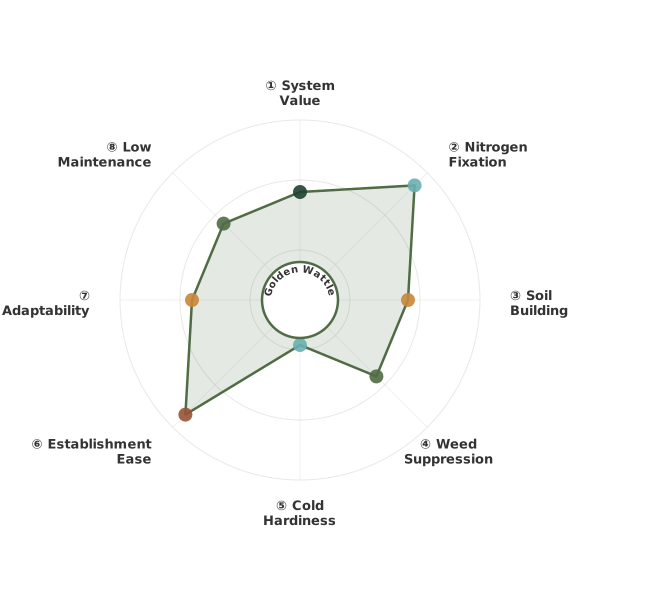
Comparative ratings for this plant across key regenerative agriculture traits.

Trait Suitability Explanation
Cold Hardiness Not Recommended Functions as a summer cover crop, contributing to soil health during warmer months and integrating into seasonal soil building cycles.
Weed Suppression Adequate Establishes a beneficial canopy that shades out competitive weeds, enhancing the soil's capacity to support desired crops.
Nitrogen Fixation Ideally Suited Actively enriches soil fertility by fixing atmospheric nitrogen, providing a natural source of fertility for subsequent crops and improving soil structure.
Root System Depth Ideally Suited Its deep root system aerates compacted soils and accesses deeper moisture and nutrients, contributing to improved soil structure and water infiltration.
Biomass Production Adequate Generates valuable biomass that can be incorporated into the soil, enhancing soil organic matter and supporting a thriving soil ecosystem.
Establishment Ease Ideally Suited Rapidly establishes even in challenging soils, requiring minimal external support and demonstrating resilience to drought and salinity.
Multi Benefit Value Ideally Suited As a nitrogen fixer, it stabilizes soil, provides biomass for soil building, and supports biodiversity, offering a holistic contribution to the farm ecosystem.
Climate Adaptability Adequate Thrives in a range of conditions, demonstrating resilience to coastal environments and periods of dryness, contributing to a robust farming system.
Maintenance Intensity Adequate Once established, it integrates seamlessly into the farming system, with any necessary adjustments supporting its role in soil health and ecological function.

Comparative System: Ratings compare plants within their economic category (e.g., cover crop nitrogen fixation compared to other cover crops, not to all plants). Individual farm conditions and management practices significantly influence actual performance.

8

Know the Debate

Acacia saligna offers significant regenerative benefits, particularly its nitrogen-fixing capacity and biomass production, aiding soil health and f...

Acacia saligna offers significant regenerative benefits, particularly its nitrogen-fixing capacity and biomass production, aiding soil health and fertility across various agricultural systems. Its suitability, however, varies by context, with its role as a soil builder often contrasted with concerns about its invasiveness in certain regions. Understanding these differing outcomes based on climate, management, and ecological setting is crucial for effective integration.

Is Acacia saligna a regenerative benefit or an invasive threat?

Soil Improver (0.2-1.5% SOM increase)

Acacia saligna's nitrogen-fixing ability and high biomass production actively improve soil health by enriching organic matter and nutrient content. In degraded or arid lands, it proves vital for soil restoration and fertility, where its presence leads to measurable increases in soil carbon and improved structure, making it a valuable tool for regenerative agriculture.

Sources behind this view

Sources behind this view

Research
  • Correlations between Tree/Shrub Diversity and Herbaceous Biomass with Soil Physico-chemical Properties under Acacia saligna Canopy (opens in new window)

    This study found: A study in Ethiopia looked at how the diversity of plants and the amount of ground cover (herbaceous biomass) relate to soil properties under and around Acacia saligna trees. They found that while plant diversity and ground cover varied, there were some interesting connections. For instance, areas with more plant species tended to have higher ground cover, and areas with more ground cover had less dense plant growth. The researchers suggest that the fallen leaves from the Acacia saligna trees might be adding nutrients to the soil. This highlights how managing these trees and the plants beneath them can help improve soil conditions.

  • Linkages between soil carbon, soil fertility and nitrogen fixation in<i>Acacia senegal</i>plantations of varying age in Sudan (opens in new window)

    This study found: A study in dry regions of Sudan found that planting *Acacia senegal* trees (gum arabic trees) significantly improved soil health over time compared to grasslands. The older the tree plantations, the higher the soil organic matter and nutrient levels, especially in the topsoil. While the trees themselves didn't appear to be fixing much atmospheric nitrogen directly, the study suggests that nutrients are being brought up from deeper soil layers by the tree roots. Additionally, the presence of grazing animals in the plantations likely contributes to soil nitrogen through their droppings. The research indicates that these trees are crucial for improving soil fertility in these dry environments, with the plantations potentially being limited by phosphorus and the grasslands by nitrogen.

  • Effect of planting density on root biomass and distribution, and soil organic carbon stock of Acacia decurrens stands in Northwestern Ethiopia (opens in new window)

    This study found: In Northwestern Ethiopia, a study looked at how planting <ns4:italic>Acacia decurrens</ns4:italic> (black wattle) trees at different spacings affected their roots and soil carbon. The research found that planting the trees closer together significantly increased the amount of root material and the amount of soil organic carbon. Closer spacing also encouraged more roots to grow deeper into the soil. The study recommends planting <ns4:italic>Acacia decurrens</ns4:italic> at higher densities to boost root growth and soil carbon, especially in deeper soil layers.

Ecological Disrupter (Native plant reduction)

In certain ecosystems, Acacia saligna is recognized as an invasive species that can negatively impact native plant diversity and insect specificity. Its aggressive growth can displace native flora, leading to 'spillover' ecological effects and altering the balance of natural communities.

Sources behind this view

Sources behind this view

Videos & Podcasts
Research
  • Spillover effects from invasive alter the plant-pollinator networks and seed production of native plants. (opens in new window)

    This study found: Invasive flowering plants, like certain Australian Acacias, can negatively impact local ecosystems even when they aren't directly growing in native plant areas. A study in South Africa's fynbos found that native plants located near flowering invasive Acacias received more insect visits, but these visits were less specific, and the native plants actually produced fewer seeds. This 'spillover' effect means that invasive plants can disrupt the delicate balance of pollination and reproduction for native species in adjacent areas, which is important information for managing landscapes with invasive species.

  • Seed Germination Ecophysiology of Acacia dealbata Link and Acacia mearnsii De Wild.: Two Invasive Species in the Mediterranean Basin (opens in new window)

    This study found: Acacia dealbata and A. mearnsii are two invasive species found in coastal, mountain, and riparian Mediterranean habitats. Seed biology and germination traits are important drivers of the competitive performance of plants and may significantly contribute to biological invasions. The seeds of Acacia s.l. have physical dormancy due to an impermeable epidermal layer. The aim of this study was to assess the germination capacity of scarified and non-scarified seeds of A. dealbata and A. mearnsii from different areas of the Mediterranean Basin. To test the seed imbibition capacity, the increase in mass was evaluated. Non-scarified seeds were tested at 15, 20, and 25 °C in light conditions. Scarified seeds were tested at 5, 10, 15, 20, and 25 °C and 25/10 °C in light and dark conditions. Scarified seeds increased in mass more than non-scarified seeds. Both species showed a higher germination capacity at 25 °C in non-scarified seeds; A. dealbata reached a germination maximum of 55%, while A. mearnsii reached 40%, showing a difference among these populations. Scarified seeds of both species reached germination percentages &gt;95% at all temperatures except at 5 °C in dark conditions. Scarification was necessary to break dormancy and promote germination. The present study provides new knowledge about the seed ecology and germinative behaviour of the two Acacia species under different pre-treatment, temperature, and photoperiod regimes, contributing to the understanding of their invasive behaviour.

Making Sense of the Differences

The effectiveness and impact of Acacia saligna depend heavily on its ecological context and management. In degraded or nutrient-poor soils, its nitrogen-fixing and biomass-producing traits offer substantial regenerative benefits, enhancing soil fertility and structure. However, in biodiverse native ecosystems or where it is not managed, it can outcompete native flora, disrupt pollinator networks, and alter ecological balance. Farmers should carefully consider local climate, soil conditions, native biodiversity, and their management capacity to determine whether Acacia saligna will act as a beneficial soil builder or an ecological disruptor, prioritizing its use in restoration or controlled agroforestry settings.

9

Learn More

Why farmers use this plant and additional resources

Why Regenerative Farmers Use This Plant

Acacia saligna, commonly known as Golden Wattle, is a valuable multi-purpose legume in regenerative agriculture, particularly for its nitrogen-fixing capabilities and prolific biomass production. As a legume, it actively collaborates with soil bacteria to convert atmospheric nitrogen into plant-available forms, typically fixing between 40-100 lbs of nitrogen per acre (45-112 kg/ha) annually. This biological process significantly reduces or eliminates the need for synthetic nitrogen fertilizers, leading to potential savings of $20-$70 per acre ($49-$173/ha) depending on current fertilizer prices and crop requirements.

Its rapid growth allows for substantial biomass accumulation, with established plants capable of yielding 5-15 tons of dry matter per acre (11-34 metric tons/ha) under optimal conditions, reaching heights of 10-25 feet (3-7.5 meters). When incorporated into the soil, this biomass contributes significantly to soil organic matter. Over a 3-5 year rotation, consistent use of Acacia saligna can increase soil organic carbon by 0.2-1.5%, improving soil structure, water holding capacity, and nutrient cycling. Studies indicate that its presence can improve soil structure, leading to increased water infiltration rates by 20-30%.

Beyond its direct soil-building benefits, Acacia saligna integrates seamlessly into diverse farming systems, offering multiple ecological advantages. It serves as an excellent cover crop, providing a protective layer that shields the soil from wind and rain erosion, effectively suppressing weeds and reducing erosion by an estimated 70-80% compared to bare fallow. Its dense growth habit also provides excellent ground cover.

Its deep root system, which can reach depths of 6-20 feet (1.8-6 meters) or more, helps to break up compacted soil layers and scavenge nutrients from deeper soil profiles, making them available to subsequent cash crops. Furthermore, its flowers provide a vital nectar and pollen source for a wide array of beneficial insects and pollinators, including bees and native insect species, supporting biodiversity within the agricultural landscape. In silvopasture systems, it can be managed as a fodder source, offering protein-rich forage for livestock while simultaneously improving soil health.

The quantitative ecosystem benefits of integrating Acacia saligna are substantial. The significant biomass it produces decomposes readily, releasing nutrients and organic matter back into the soil. Studies indicate that the decomposition of its woody material can take 6-12 months, with a significant portion of its fixed nitrogen becoming available to the following crop within 3-9 months of incorporation. This slow-release nutrient profile helps to prevent leaching and provides a steady supply of fertility. Its presence can also attract and sustain populations of beneficial insects that prey on common agricultural pests, contributing to natural pest control.

Acacia saligna has demonstrated success across various agricultural regions globally. In the Mediterranean basin, it is utilized in agroforestry systems to stabilize slopes and improve soil fertility in olive and grape vineyards. Australian farmers, particularly in wheat-belt regions, incorporate it into their cropping rotations and sheep grazing systems, benefiting from its nitrogen fixation and drought tolerance. In parts of South Africa, it is used for land rehabilitation and as a component in fodder production systems. Its adaptability also makes it suitable for use in arid and semi-arid regions of the Middle East and North Africa, where it helps to combat desertification and improve soil health in marginal lands. It is used in alley cropping systems in Europe and North Africa to provide nitrogen for fruit trees. In South America, it is integrated into coffee plantations as a nitrogen-fixing understory plant and used in agroforestry designs to stabilize hillsides and provide nitrogen for surrounding vegetation.

10

How to Integrate This Plant

Practical guidance for regenerative systems

Establishing Acacia saligna is typically achieved through direct seeding or planting seedlings. For direct seeding, rates typically range from 1-3 lbs per acre (1.1-3.4 kg/ha) when sown into prepared soil, or up to 5-25 lbs/acre (5.6-28 kg/ha) for broadcast seeding on less prepared ground or for dense cover. When drilling, slightly lower rates of 5-10 lbs/acre (6-11 kg/ha) are recommended. The optimal planting depth is shallow, around 0.25-0.5 inches (0.6-1.3 cm), as its seeds require good soil contact and light for germination. Pre-treatment of seeds, such as scarification or soaking, can improve germination rates.

Spacing can vary greatly depending on the intended use; for dense cover, it can be broadcast. For hedgerows, windbreaks, or timber, plants might be spaced 6-10 feet (1.8-3 meters) apart, while for biomass or erosion control, denser plantings of 3-6 feet (0.9-1.8 meters) can be employed.

In the Northern Hemisphere, planting is best done in early spring (March-May) after the last frost, or late autumn (September-October) to take advantage of cooler, moist conditions. In the Southern Hemisphere, this translates to planting in autumn (March-May) or early spring (September-November). The plant establishes relatively quickly, often showing significant growth within 30-60 days, depending on moisture and temperature conditions. It typically reaches a height of 10-20 feet (3-6 meters) within 2-3 years and can mature to 20-30 feet (6-9 meters) or more.

Management practices for Acacia saligna should prioritize biological fertility and minimal soil disturbance. While it is drought-tolerant once established, providing approximately 1 inch (2.5 cm) of water per week during the initial establishment phase will promote vigorous growth, especially if sown during a dry period. Fertility management should focus on biological sources; compost, well-rotted manure, or the incorporation of its own nitrogen-rich residue are preferred. Synthetic inputs should be minimal and used only during a transitional phase if absolutely necessary. Pest and disease management should focus on encouraging beneficial insects and maintaining plant health through optimal growing conditions, rather than chemical interventions.

Termination and residue management for Acacia saligna as a cover crop should follow the established regenerative hierarchy. Ideally, it should be terminated at or before flowering to prevent unwanted reseeding, especially in sensitive ecosystems. Natural winterkill can be an option in regions with consistently cold winters where temperatures drop below 10°F (-12°C). In milder climates, grazing by livestock, such as sheep or cattle, is an effective method to reduce biomass and incorporate residue into the soil through hoof action. Mowing can also be employed, ideally before seed set to prevent unwanted spread. Roller-crimping at the late flowering stage is highly effective for creating a dense mulch mat that suppresses weeds and conserves moisture. If herbicide termination is considered, it should be used as a last resort, during a transition phase only, and applied 2-3 weeks before planting the subsequent cash crop to allow for residue breakdown and nutrient release. Biomass decomposition typically occurs over 3-12 months, with an estimated 50-70% of its fixed nitrogen becoming available for the following crop. Farmers can choose to manage for volunteer establishment in subsequent years or prevent reseeding by ensuring termination occurs before seed maturity.

View Full Document (Printable single-page version)