Italian Alder
While Alnus cordata (Italian Alder) has limited mentions in our regenerative agriculture knowledge base, its known characteristics suggest significant potential. Primarily, it functions as a valuable nitrogen fixer, contributing fertility to agricultural systems. This makes it suitable for use in polyculture layers within agroforestry designs, enhancing soil health and reducing the need for synthetic inputs. Its biomass production also points to potential as a cover crop or for mulching, aiding in soil building and carbon sequestration. While specific farmer experiences regarding Alnus cordata in regenerative systems are not detailed in the knowledge base, its role as a nitrogen fixer aligns with practices like no-till farming and integrated rotational grazing, where soil fertility and structure are paramount. Further research and on-farm trials would be beneficial to fully understand its integration and benefits within diverse regenerative landscapes.
For a full botanical description see: Wikipedia↗(opens in new window) (external link)
Regenerative Quick Profile
All recommendations assume integrated, regenerative practices—not conventional inputs.
Climate & Soil Fit
Climate: Tropical Rainforest, Tropical Monsoon, Tropical Savanna, Hot Semi-Arid (Steppe), Cold Semi-Arid (Steppe), Hot Desert, Cold Desert, Humid Subtropical, Oceanic (Maritime Temperate), Hot-Summer Mediterranean, Warm-Summer Mediterranean, Monsoon-Influenced Humid Subtropical, Subtropical Highland, Hot-Summer Continental, Warm-Summer Continental, Subarctic, Monsoon-Influenced Hot-Summer Continental, Tundra
Zones: USDA 5-9, Australian Zones 3-5
Optimal Soil: Loam Soil
System Role & Functions
Primary: Nitrogen Fixer
Secondary: Food Forest, Silvopasture
Key Benefits: Multi-benefit value, Low maintenance, Nitrogen Fixation
Management Level
Experience: Beginner-Friendly
Maintenance: Very low maintenance - Italian alder's nitrogen-fixing capability and thriving habit in less-than-ideal soils minimize external inputs, presenting a low-labor, self-sufficient component within the agricultural system.
Value Streams
- Nitrogen fixation
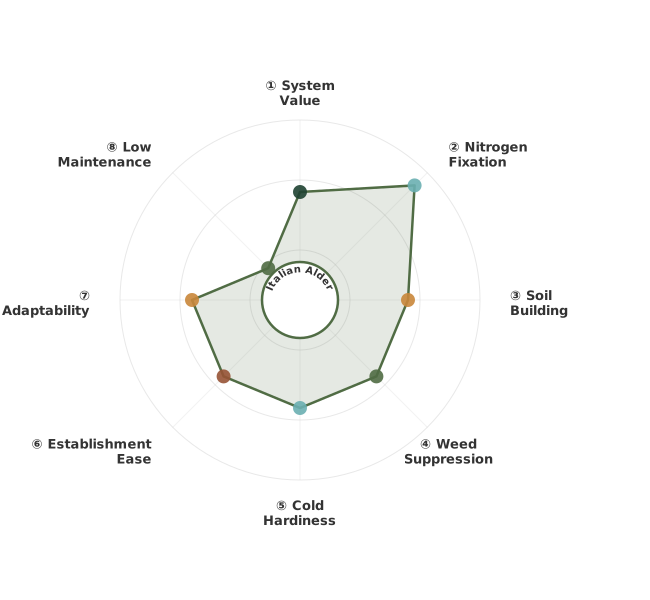
Regenerative Trait Ratings
How These Traits Are Calculated
Trait dimensions are ordered clockwise starting from the top of the chart (12 o'clock position):
1. System Value
Ecosystem service stacking across nitrogen, carbon, water, biodiversity
WHAT: Synthesizes the compounding value of multiple ecosystem services delivered simultaneously—nitrogen fixation, soil organic matter building, pollinator support, erosion control, and water infiltration improvement. This is the total regenerative impact beyond single-function metrics.
WHY: The highest-value cover crops deliver 3-5 significant ecosystem services at once. A legume that fixes nitrogen, builds biomass, supports pollinators, and improves water infiltration provides $150-300/acre in combined benefits versus $30-60 for single-function covers. This service stacking is the core principle of regenerative agriculture.
HOW: Scored via LLM synthesis of economics data, timeline benefits, and trait combinations. Exceptional (3.0): 4-5 major services stacked with strong economic value ratios. Typical (2.0): 2-3 moderate services. Limited (1.0): Single-function covers with minimal service stacking. Considers seed cost relative to benefit value.
2. Nitrogen Fixation
Biological nitrogen production via legume root nodule bacteria
WHAT: Measures the ability to convert atmospheric nitrogen (N₂) into plant-available ammonia through symbiotic bacteria in root nodules. Legumes form partnerships with rhizobium bacteria that fix 60-150 lbs N/acre/year, reducing or eliminating synthetic fertilizer needs for following crops.
WHY: Nitrogen is the most expensive fertilizer input in crop production ($0.50-1.00/lb). Cover crops with exceptional nitrogen fixation can provide $60-150/acre worth of fertility while building soil organic matter. This biological process also reduces groundwater contamination from nitrogen runoff and lowers farm carbon footprint.
HOW: Ratings based on annual nitrogen fixation capacity and reliability across soil conditions. Exceptional (3.0): Legumes like hairy vetch, crimson clover, and field peas fixing >100 lbs N/acre/year. Typical (2.0): Moderate fixers like red clover at 60-100 lbs N/acre/year. Limited (1.0): Non-legumes (grasses, brassicas) with zero fixation capacity.
3. Soil Building
Weighted: biomass production (60%) + root system depth (40%)
WHAT: Combines above-ground biomass production with root depth to measure total soil organic matter contribution. Biomass provides surface organic matter, while deep roots deposit carbon at depth and break up compaction layers.
WHY: Soil organic matter is the foundation of regenerative agriculture, improving water retention, nutrient cycling, and biological activity. Each 1% increase in soil organic matter holds an additional 20,000 gallons of water per acre and represents $500-1,000 in fertility value. Deep roots access subsoil nutrients and create channels for water infiltration.
HOW: Weighted formula prioritizes biomass production (60% weight) for immediate organic matter contribution, with root depth (40% weight) for long-term soil structure. Exceptional (3.0): High-biomass crops with deep roots like cereal rye (8+ tons biomass, 5+ ft roots). Typical (2.0): Moderate on both factors. Limited (1.0): Low biomass or shallow roots.
4. Weed Suppression
Physical competition through rapid establishment and dense growth
WHAT: Measures the ability to outcompete weeds through rapid germination, aggressive early growth, and dense canopy formation. Physical smothering and light competition reduce weed pressure without herbicides.
WHY: Weed management is a major labor and cost burden for farmers. Cover crops that effectively suppress weeds reduce herbicide costs ($20-60/acre), decrease cultivation passes (fuel + labor), and provide clean seedbeds for cash crops. This is especially valuable in organic systems where herbicide options are limited.
HOW: Ratings based on germination speed, tillering density, and canopy closure timing. Exceptional (3.0): Fast-establishing, dense-tillering crops like cereal rye, oilseed radish that close canopy within 3-4 weeks. Typical (2.0): Moderate establishment and coverage. Limited (1.0): Slow-establishing or sparse crops that allow weed competition.
5. Cold Hardiness
Winter survival for fall planting and spring green manure value
WHAT: Measures tolerance to freezing temperatures and ability to survive winter conditions. Winter-hardy cover crops can be fall-planted, overwinter as living mulch, and provide early spring growth before cash crop planting.
WHY: Fall-planted winter-hardy covers extend the growing season into unused months, capturing solar energy and preventing erosion during wet periods. Spring green manure from overwintered covers provides early nitrogen and biomass. This timing flexibility is critical in cold climates with short growing seasons.
HOW: Ratings based on minimum survival temperature and winter active growth. Exceptional (3.0): Winter-hardy crops like cereal rye, hairy vetch, crimson clover surviving to -20°F with active growth in spring. Typical (2.0): Moderate cold tolerance. Limited (1.0): Warm-season crops like buckwheat, cowpea killed by first frost.
6. Establishment Ease
Germination speed, soil requirement flexibility, planting window breadth
WHAT: Measures how easily the cover crop establishes from seed, including germination speed, tolerance for variable soil conditions, and flexibility in planting timing. Easy establishment means reliable stands without intensive management.
WHY: Difficult-to-establish covers increase risk of stand failure, wasted seed costs, and reduced benefits. Easy establishment crops tolerate late planting, poor seedbed preparation, and variable moisture—critical when cover cropping windows are narrow between cash crops. Reliable establishment ensures consistent soil building and weed suppression benefits.
HOW: Ratings based on days to emergence, soil condition sensitivity, and planting window breadth. Exceptional (3.0): Fast germinators like buckwheat (3-5 days) and cereal rye (5-7 days) with wide planting windows. Typical (2.0): Moderate establishment requirements. Limited (1.0): Slow or finicky establishers requiring precise conditions.
7. Adaptability
Weighted: climate tolerance (60%) + multi-benefit versatility (40%)
WHAT: Combines climate adaptability (temperature and rainfall range) with multi-benefit versatility (diverse ecosystem services) to measure overall system flexibility. High adaptability means the cover works across farm regions and provides multiple functions.
WHY: Farmers need cover crops that work reliably across diverse fields and provide stacked benefits. Climate-adaptable covers reduce risk in variable weather, while multi-benefit crops deliver nitrogen fixation + pollinator support + forage value simultaneously. This versatility maximizes return on cover crop investment.
HOW: Weighted formula prioritizes climate tolerance (60% weight) for geographic reliability, with multi-benefit value (40% weight) for functional stacking. Exceptional (3.0): Wide climate range + multiple significant benefits. Typical (2.0): Moderate on both factors. Limited (1.0): Narrow climate range or single-function crops.
8. Low Maintenance
Inverted from maintenance intensity—low inputs mean high scores
WHAT: Measures minimal input requirements for successful cover cropping. Low-maintenance covers require no irrigation, minimal fertility, easy termination, and tolerate variable management timing.
WHY: Cover crops compete for resources with cash crops in tight rotations. Low-maintenance covers fit easily into existing systems without adding labor, equipment, or input costs. Easy termination is especially critical—covers that are difficult to kill can become weeds and delay cash crop planting.
HOW: Inverted score from maintenance intensity trait (4.0 minus raw score). Exceptional (3.0): Self-sufficient crops like cereal rye, field peas requiring no irrigation or fertility, easily terminated by mowing or winter-kill. Typical (2.0): Moderate input needs. Limited (1.0): High-maintenance crops needing irrigation, heavy fertility, or difficult termination (herbicides, multiple tillage passes).
Ratings are based on documented performance in regenerative systems, not conventional high-input scenarios. All traits assume integrated management practices focused on soil health and ecosystem services.
1
Climate Suitability Assessment
Will this plant thrive in your climate?
Climate Suitability Assessment
Will this plant thrive in your climate?
Köppen Zone: Cfa (Humid Subtropical), Cfb (Oceanic (Maritime Temperate)), Cwa (Monsoon-Influenced Humid Subtropical), Dfb (Warm-Summer Continental)
USDA Zone: 6a, 7a, 8a, 9a
Australian Zone: temperate, subtropical
EU Climate Region: atlantic
Italian Alder excels in climates with mild winters and sufficiently long, warm growing seasons, typically experiencing fewer than 20-30 days below 0°F (-18°C) and ample rainfall (30-50 inches/75-125 cm annually). These conditions are met across Köppen zones Cfa and Cfb, USDA zones 6b through 9b, and Australian subtropical and temperate regions, as well as the EU Atlantic climate. In these zones, establishment is highly successful, with plants reaching maturity and effectively fixing nitrogen (contributing 50-100 lbs/acre or 56-112 kg/ha annually). The long growing seasons support robust development for food forest and silvopasture applications, with minimal need for supplemental irrigation or protection. Its vigorous growth and soil-enriching properties make it a cornerstone for regenerative agriculture, promoting biodiversity and long-term soil health with high reliability and low input costs.
Köppen Zone: Af (Tropical Rainforest), Am (Tropical Monsoon), Aw (Tropical Savanna), Csa (Hot-Summer Mediterranean), Csb (Warm-Summer Mediterranean), Cwb (Subtropical Highland), Dfa (Hot-Summer Continental)
USDA Zone: 5a, 5b, 10a, 11a, 12a
Italian Alder can perform adequately in climates with moderate winters and growing seasons that allow for establishment but may experience some limitations. This includes Köppen zones Dfb, Csb, and USDA zones 5b, 6a, 10a, and 10b. While generally hardy, these zones may experience occasional colder snaps or drier periods that can stress the plant, slightly reducing nitrogen fixation efficiency (by 10-20%) and growth rates. Supplemental irrigation may be necessary during dry spells, particularly in USDA zones 10a/10b and Csb, to ensure optimal performance. Despite these considerations, the plant can still provide significant benefits for soil fertility and ecosystem services in food forests and silvopasture, with establishment success rates of 70-85% when managed appropriately. Long-term productivity is reliable but may require more attention to water management than in ideally suited zones.
Köppen Zone: ET (Tundra), BSh (Hot Semi-Arid (Steppe)), BSk (Cold Semi-Arid (Steppe)), BWh (Hot Desert), BWk (Cold Desert), Dfc (Subarctic), Dwa (Monsoon-Influenced Hot-Summer Continental)
USDA Zone: 2a, 3a, 3b, 4a
Italian Alder is not recommended for climates with extreme winter cold (below -15°F/-26°C) or prolonged hot, dry summers, making cultivation economically and practically questionable. This includes Köppen zones Csa, USDA zones 3a through 5a, and potentially some drier continental fringes not explicitly listed but implied by the cold/heat extremes. In very cold zones (USDA 3a-4b), winter kill is highly probable, rendering perennial establishment unreliable and nitrogen fixation negligible. In hot, dry zones (Köppen Csa), extended periods above 90°F (32°C) with insufficient rainfall (less than 20 inches/50 cm) severely stress the plant, drastically reducing nitrogen fixation (by 50-70%) and potentially leading to mortality. Establishment success rates fall below 60%, and the need for intensive irrigation or protection makes it an uneconomical choice for regenerative agriculture. Alternative nitrogen-fixing species adapted to these specific harsh conditions are strongly advised.
Note: Zones listed above represent climates where this plant can produce reliably with reasonable management. Climate zones not mentioned would require intensive climate modification (greenhouses, extensive infrastructure) and are not economically viable for regenerative agriculture purposes.
2
Soil Suitability Assessment
Which soil types work best for this plant?
Soil Suitability Assessment
Which soil types work best for this plant?
Loam Soil
This plant thrives in these soil types without requiring amendments or remediation. Natural soil conditions support optimal growth and productivity.
Clay Soil, Rich Soil, Rocky Soil, Sandy Soil
This plant performs acceptably in these soil types with moderate, manageable remediation such as pH adjustment, compost addition, or drainage improvement. The required amendments are practical and cost-effective for regenerative agriculture.
Acidic Soil, Alkaline Soil, Desert Soil, Saline Soil, Wet Soil
Growing this plant in these soil types would require impractical remediation such as complete soil replacement, extensive amendments, or cost-prohibitive infrastructure. These conditions are not economically viable for regenerative agriculture.
Note: Soil suitability assessments focus on remediation requirements. "Ideally Suited" means the plant generally thrives without the need for substantial amendments, "Adequate" means manageable remediation (lime, compost, mulch), and "Not Recommended" means impractical soil changes would be required. Climate factors like rainfall and temperature also influence success.
3
Seasonal Considerations
Planting timing, growth duration, and harvest windows
Seasonal Considerations
Planting timing, growth duration, and harvest windows
Italian alder thrives across a range of temperate climates, offering a long-term investment for regenerative farms. For establishment, the ideal planting window for nursery stock is during its dormant season, typically in early spring before bud break, or in late fall after leaf drop. Bare-root trees must be planted during this dormant period, while container-grown trees offer more flexibility, though planting after last expected frost is always safest to minimize transplant shock. Expect your Alnus cordata to require several years for thorough establishment, often two to three, before it begins to yield significantly. The first meaningful harvest can typically be anticipated around year four to six, with full production, where the trees reach their mature fruiting potential, usually occurring within seven to ten years. These trees are long-lived, with productive lifespans stretching for decades.
Seasonal management is key. Pruning is best undertaken during the dormant season, after leaf fall and before the onset of new growth in spring, to shape the tree and remove any dead or crossing branches. The main harvest season will generally be in the late summer or early fall, timed to coincide with fruit maturation. Observe the trees closely; bloom timing typically occurs in early to mid-spring, signaling the start of the growing season. Throughout the cooler months, the trees will enter a period of winter dormancy, a critical phase for their rest and preparation for the following year's growth and production.
4
System Role & Multi-Benefit Value
Functional roles, integration strategies, and stacked benefits
System Role & Multi-Benefit Value
Functional roles, integration strategies, and stacked benefits
Functional Role
Total System Value
The multi-benefit potential of Italian alder in regenerative agriculture is substantial. Its primary role as a nitrogen fixer directly enhances soil fertility, reducing the need for external nitrogen inputs and supporting the growth of companion crops or forage. This nitrogen contribution is a key component of system enhancement. Beyond this, its biomass contributes to soil organic matter and structure over time. As a tree, it offers shade and potential windbreak effects, critical for livestock management and crop protection. Ecosystem services include carbon sequestration through biomass accumulation and providing habitat for pollinators and wildlife, especially if allowed to mature. Risk diversification is achieved by adding a perennial, nitrogen-fixing component to the farm landscape, which is less susceptible to annual crop failures and provides a stable source of soil fertility. Direct harvest value is typically minimal unless managed for biomass or timber, but its indirect contributions to the farm's ecological and economic health are significant.
Integration Characteristics
Multi-Benefit Value: Ideally Suited - This nitrogen fixer excels in challenging conditions, improving soil fertility and providing habitat benefits that surpass many other nitrogen-fixing trees.
5
Management & Care Requirements
Integration guidance, maintenance needs, and care practices
Management & Care Requirements
Integration guidance, maintenance needs, and care practices
How to Integrate This Plant
Italian alder (Alnus cordata) is a valuable asset for regenerative farm systems, primarily functioning as a nitrogen fixer. Its integration can be multifaceted. In silvopasture systems, it can provide shade and browse for livestock while enriching the soil with nitrogen, benefiting surrounding forage. As part of an alley cropping system, it can be interplanted with crops, offering nitrogen inputs and potential windbreak effects. In food forests, its nitrogen-fixing capability supports companion plants and contributes to the overall soil health and nutrient cycling. The timeline to contribution begins early; expect noticeable nitrogen fixation and modest growth within the first 1-2 years. By years 3-5, it will provide more substantial biomass and soil improvement. Over 10-20 years, it matures into a significant nitrogen source and potential small timber resource. The total system value extends beyond nitrogen, offering habitat for beneficial insects and contributing to soil structure improvement, thereby enhancing overall farm resilience.
Integration Practices & Management
Knowledge base coverage regarding the specific integration of Alnus cordata in regenerative agriculture practices is limited. Therefore, detailed insights into establishment methods such as seeding rates, timing, or specific companion planting strategies within no-till or minimal tillage systems are not extensively documented. Similarly, the provided sources do not offer practical farmer experiences on integrating Alnus cordata with grazing systems like mob or rotational grazing, including optimal timing or rest periods. Termination strategies, including natural winterkill, grazing down, crimping, mowing, or herbicide use, are also not elaborated upon in the context of this species. Management considerations, such as specific fertility needs, competition management, or succession planning for Alnus cordata, are not detailed. Furthermore, its integration with cash crops through relay cropping, intercropping, or specific rotation sequences is not a prominent theme in the available excerpts. Due to the limited knowledge base, a comprehensive explanation of how regenerative farmers practically integrate Alnus cordata is not feasible.
Management Profile
Maintenance Intensity: Ideally Suited - Italian alder's nitrogen-fixing capability and thriving habit in less-than-ideal soils minimize external inputs, presenting a low-labor, self-sufficient component within the agricultural system.
6
Economics & Value Streams
Direct harvest, system benefits, ecosystem services, and risk diversification
Economics & Value Streams
Direct harvest, system benefits, ecosystem services, and risk diversification
Comprehensive economic analysis including direct harvest value, system enhancement contributions, ecosystem services, value timeline, and risk diversification strategies.
Cover Crop Investment
| Metric | Value |
|---|---|
| Seed Cost | $15-30/acre $37-74/ha |
| Termination Cost | 20-50 49-124 |
| Biomass Production | 2-5 4-11 |
| N Fixation Value | 50-100 56-112 |
| Weed Control Savings | 15-40 37-99 |
Cover crops are soil investments, not cash crops. Economics measured in soil health gains, input reduction, and subsequent crop performance. Values show direct costs and estimated benefits.
System Enhancement Value
Beyond harvest: nitrogen fixation replacing fertilizer costs
Nitrogen Fixation Value
80-150 lbs N/acre/year = $48-135/acre fertilizer replacement (estimated, dependent on soil conditions and tree density)
As a primary function, Italian Alder is a nitrogen fixer, a crucial role in integrated farm systems seeking to reduce reliance on synthetic fertilizers. Through its symbiotic relationship with rhizobia bacteria in its root nodules, Alnus cordata effectively converts atmospheric nitrogen into a usable form for plant uptake. This nitrogen is then released into the soil primarily through leaf fall (as noted in knowledge base excerpt) and root exudation. This biological process significantly enhances soil fertility, providing a sustainable source of nitrogen for surrounding plants within a food forest or silvopasture system. The economic benefit stems directly from the reduced need to purchase nitrogenous fertilizers, which can be a substantial input cost for conventional agriculture. The continuous input of nitrogen from alder contributes to higher yields and improved plant health in companion species, creating a more resilient and self-sufficient agroecosystem.
Additional Soil Building Benefits
Beyond direct contributions to shade, nitrogen fixation, and windbreaks, Italian Alder offers multifaceted system benefits. It is recognized as a pioneer species suitable for establishing dense, multi-layered food forests (excerpt), contributing significantly to biomass generation and nutrient cycling. Its rapid growth makes it valuable for coppicing for charcoal production (excerpt), providing a renewable energy source or income stream. As a nitrogen fixer, it enriches soil, improving its structure and water-holding capacity, which is foundational for overall farm health and resilience. The plant also provides habitat and potential food sources for various wildlife and beneficial insects, contributing to biodiversity. In silvopasture, its biomass can supplement animal feed or be incorporated as mulch. The establishment of such diverse plantings, including Alnus cordata, supports the creation of a self-regulating system with reduced reliance on external inputs.
Erosion Control
Protects 3-5 acres per tree row, 5-15% crop yield improvement (variable based on wind intensity, tree density, and row configuration)
Italian Alder can serve as an effective component of windbreaks, especially when planted in dense rows or as a shelterbelt. As mentioned in knowledge base excerpt, fast-growing Italian Alders are utilized for this purpose. Windbreaks are critical in agricultural landscapes for mitigating the damaging effects of strong winds, which can lead to soil erosion, desiccation of crops, and physical damage to plants and livestock. By reducing wind speed, these plantings can create a more stable microclimate, conserving soil moisture and protecting delicate crops or forage. The economic advantage of windbreaks is often realized through increased crop yields, improved livestock comfort, and reduced soil loss, which preserves long-term land productivity. The area of protection can be substantial, with a single row of trees potentially influencing a significant acreage downwind.
Ecosystem Service Contributions
Environmental contributions: carbon, pollinators, wildlife, and water
- Carbon Sequestration: Italian Alder is a fast-growing pioneer species, indicating a good potential for carbon sequestration in biomass and soil, particularly during its early to mid-life stages. Its role in establishing dense plantings further enhances this capacity.
- Pollinator Support: Low to Medium. While not primarily known as a major nectar or pollen producer for commercial beekeeping, it can offer some support, especially in early succession stages or as part of a diverse planting mix.
- Wildlife Habitat: Provides habitat through its woody structure and leaf litter. As a nitrogen fixer, it supports a healthier understory, which can attract insects and provide browse for some herbivores.
- Water Quality: Not applicable (unless planted in specific riparian buffer contexts, which is not a primary focus in the provided excerpts).
Value Timeline: N Fixation & Production
When you'll see results: nitrogen fixation begins immediately, harvest at maturity
Years 1-2
Initial establishment of nurse crop function, beginning nitrogen fixation, early soil stabilization, and modest windbreak effect begins.
Years 3-5
Established nitrogen contribution to surrounding plants, noticeable shade developing, windbreak effectiveness increases, potential for initial coppicing cycles for biomass/charcoal.
Years 10-20
Significant contribution to soil fertility, mature shade provision in silvopasture, substantial windbreak protection, development of a robust food forest structure, potential for timber harvest if managed for that purpose.
20+ Years
Long-term, stable nitrogen cycling, continued ecosystem services (biodiversity, soil health), potential for mature timber value, and continued role in a resilient, multi-layered agroecosystem.
Farm Risk Reduction
How this reduces farm risk: fertilizer cost hedge and rotation benefits
- Multiple Revenue Streams: Renewable energy/charcoal production, soil fertility enhancement (fertilizer cost savings), potential timber harvest, improved livestock welfare (shade), increased crop yields (windbreak).
- Temporal Income Spread: Ongoing ecosystem services (nitrogen, soil health) combined with periodic harvestable products (biomass, charcoal, timber) and yield improvements.
- Market Risk Hedge: Reduces reliance on purchased inputs (fertilizers), provides alternative energy sources (charcoal), enhances resilience to environmental stressors (wind, heat), and diversifies farm output, making the system less vulnerable to single-product market fluctuations.
7
Regenerative Suitability Details
Comprehensive trait ratings for system integration assessment
Regenerative Suitability Details
Comprehensive trait ratings for system integration assessment
Comparative ratings for this plant across key regenerative agriculture traits.
| Trait | Suitability | Explanation |
|---|---|---|
| Cold Hardiness | Adequate | Italian alder is resilient to Zone 6-7, contributing to the ecosystem's biomass. Its deciduous nature means winter ground cover is minimal, but it generally withstands cold well. |
| Weed Suppression | Adequate | As a nitrogen fixer, it enhances soil health, and its canopy provides moderate weed suppression. Its growth rate complements a system focused on long-term soil building. |
| Nitrogen Fixation | Ideally Suited | This alder species efficiently captures atmospheric nitrogen through symbiosis, making significant contributions to soil fertility, often exceeding 120 lbs N/acre annually. |
| Root System Depth | Ideally Suited | Italian alder's deep taproot and extensive lateral root system effectively ameliorate soil compaction and enrich subsoil with captured nitrogen. |
| Biomass Production | Adequate | Italian alder offers valuable biomass and nitrogen contributions, serving as an excellent soil builder that reliably augments organic matter in suitable environments. |
| Establishment Ease | Adequate | Establishes well in well-drained soils and tolerates some dryness once mature, requiring thoughtful site preparation for optimal integration. |
| Multi Benefit Value | Ideally Suited | This nitrogen fixer excels in challenging conditions, improving soil fertility and providing habitat benefits that surpass many other nitrogen-fixing trees. |
| Climate Adaptability | Adequate | Adaptable across zones 5-9, it thrives in diverse soil types and moisture levels, showing good cold hardiness while preferring moderate climates and tolerating some heat stress. |
| Maintenance Intensity | Ideally Suited | Italian alder's nitrogen-fixing capability and thriving habit in less-than-ideal soils minimize external inputs, presenting a low-labor, self-sufficient component within the agricultural system. |
Comparative System: Ratings compare plants within their economic category (e.g., cover crop nitrogen fixation compared to other cover crops, not to all plants). Individual farm conditions and management practices significantly influence actual performance.
8
Learn More
Why farmers use this plant and additional resources
Learn More
Why farmers use this plant and additional resources
Why Regenerative Farmers Use This Plant
Italian Alder, Alnus cordata, is a valuable nitrogen-fixing tree species that significantly enhances soil health and biodiversity in regenerative agricultural systems. As a legume, it forms a symbiotic relationship with Frankia bacteria in root nodules, enabling it to convert atmospheric nitrogen into plant-available forms. This process can contribute substantial nitrogen credits to the soil, potentially reducing the need for synthetic nitrogen fertilizers by 40-120 lbs N/acre (45-134 kg/ha) annually once established, translating to direct cost savings for farmers. Its vigorous growth habit allows it to produce considerable biomass, with mature trees reaching heights of 30-60 feet (9-18 meters) and contributing to soil organic matter accumulation. The extensive root system, which can penetrate 6-25+ feet (2-7.5+ meters), helps to break up compacted soils, improve water infiltration, and scavenge nutrients from deeper soil profiles, making them available to shallower-rooted cash crops.
Beyond its direct soil-building capabilities, Italian Alder offers numerous system integration benefits. When incorporated into agroforestry systems, such as windbreaks, hedgerows, or silvopasture designs, it provides valuable habitat and food sources for beneficial insects and pollinators, contributing to natural pest control and ecosystem resilience. Its dense foliage offers excellent shade and wind protection, which can benefit adjacent crops and livestock. As a component of a diverse planting, it can improve the microclimate, reduce soil erosion on slopes, and enhance the overall aesthetic and ecological function of the farm landscape. Its ability to thrive in less-than-ideal soil conditions, including poor or eroded sites, makes it a robust choice for land restoration and improvement projects.
The quantitative ecosystem benefits of establishing Italian Alder are substantial. The nitrogen fixation alone contributes significantly to the nutrient cycle, fueling plant growth and soil microbial activity. The substantial biomass produced annually, when managed appropriately (e.g., through lopping or pruning for mulch), directly increases soil organic matter content, improving soil structure, water-holding capacity, and nutrient retention. Studies on similar alder species indicate that their presence can lead to a 10-20% increase in soil organic carbon in the top 6 inches (15 cm) of soil within a decade. Furthermore, the deep root channels created by alder trees improve water infiltration rates, reducing surface runoff and the risk of erosion, especially in areas with heavy rainfall. The decomposition of its leaf litter and woody material enriches the soil with organic matter, improving soil aggregation, water infiltration, and retention. Over a 3-5 year rotation, the consistent addition of organic matter from Italian Alder can increase soil organic matter content by 0.5-1.5%. Its flowers provide an early season nectar and pollen source for bees and other pollinators, contributing to a healthy insect population vital for crop pollination and pest control.
Regional success stories highlight the adaptability of Italian Alder. In the Mediterranean regions of Europe, it has long been used for erosion control on steep slopes and as a biomass producer in coppice systems, and is often used in agroforestry systems to stabilize soils and provide nitrogen for adjacent crops. Farmers in the UK have integrated it into hedgerows and riparian buffer strips to improve water quality, provide habitat for wildlife, prevent erosion, and enhance biodiversity. In Australia, while less common, its potential for nitrogen fixation and soil improvement makes it a candidate for revegetation projects in degraded agricultural lands, particularly in temperate zones with sufficient rainfall. In South America, particularly in regions with suitable climates like parts of Chile, Argentina, and Brazil, it can be employed in silvopasture systems to provide shade and nitrogen for grazing lands. In North America, it is recognized for its utility in reforestation projects, as a component in riparian buffer zones where its root system stabilizes soil and its nitrogen fixation enhances riparian ecosystem health, and is planted in windbreaks for orchards and vegetable farms, offering protection and contributing to soil fertility.
Sources behind this view
-
Discusses various alder species, including Italian and Black Alder, for their soil-building and nitrogen-fixing capabilities, noting their suitability for different climates and management practices l
Read more (opens in new window) permies.com -
Alder trees are fast-growing nurse crops for wildlife and other trees, suitable for various soils, and coppice well. They fix nitrogen, improving soil health, and their wood is useful for crafts.
Read more (opens in new window) permies.com
-
Potential of Alnus acuminata based agroforestry for carbon sequestration and other ecosystem services in Rwanda (opens in new window)
Alder trees (*Alnus acuminata*) in Rwandan agroforestry systems store significant carbon (approx. 13.6 tons/ha), improve soil fertility, and provide farm resources like stakes and firewood.
9
How to Integrate This Plant
Practical guidance for regenerative systems
How to Integrate This Plant
Practical guidance for regenerative systems
Establishing Italian Alder typically involves planting seedlings or saplings, as direct seeding can be less reliable. For direct seeding, a rate of 0.5-2 lbs/acre (0.56-2.2 kg/ha) is generally recommended, with seeds sown at a depth of 0.25-0.5 inches (0.6-1.3 cm). It is crucial to ensure good seed-to-soil contact. Germination can be enhanced by stratification. Alternatively, planting bare-root saplings or containerized seedlings is often more reliable and provides quicker establishment.
Spacing can vary significantly depending on the intended use, ranging from 6-10 feet (1.8-3 meters) for windbreaks or hedgerows to 15-30 feet (4.5-9 meters) for individual tree plantings or silvopasture systems. The ideal planting time is in early spring (typically March-April in the Northern Hemisphere and September-October in the Southern Hemisphere) or late autumn, to allow roots to establish before summer heat or winter frost.
Once established, Italian Alder requires minimal management, aligning with regenerative principles. Water needs during establishment are about 1 inch (2.5 cm) per week, but mature trees are relatively drought-tolerant, though supplemental watering during prolonged dry spells, especially in the first few years, may be beneficial. Fertility is primarily managed through its own nitrogen fixation and the decomposition of its organic matter. In systems where it is integrated with other crops or pastures, the nitrogen released from alder can significantly reduce the need for supplemental fertilization. If synthetic inputs are used during a transitional phase, they should be applied judiciously.
Italian Alder typically reaches a significant size within 5-10 years, with mature trees reaching heights of 30-60 feet (9-18 meters) over 20-30 years. Pest and disease management should focus on promoting tree vigor through proper site selection and avoiding stress; biological controls and natural predator populations are generally sufficient. Companion planting with species that benefit from nitrogen or tolerate some shade can further enhance system productivity.
As a woody perennial, Italian Alder's integration differs from annual cover crops, focusing on its long-term role. Termination is not a typical concern as it is usually intended to remain as a permanent feature. However, if pruning is necessary for management or biomass collection, the prunings can be chipped and used as mulch, further contributing to soil organic matter and moisture retention. The woody debris decomposes slowly, providing a sustained release of nutrients and habitat for soil organisms. If Italian Alder is used in a system where it might volunteer too aggressively, preventing seed set through pruning or managing its spread can be considered. Relay or intercropping is not applicable to this tree species.