
Red Alder
Insights into its regenerative agriculture applications are emerging. Primarily, red alder functions as a significant nitrogen fixer, enriching soil fertility, a foundational practice in regenerative systems. Its leaf litter contributes to soil building through accelerated decomposition, as evidenced by local bacterial communities possessing specialized capacities to break down its compounds. This process enhances soil organic matter and supports microbial health. Although not explicitly detailed as a cover crop or forage in these excerpts, its role in agroforestry systems, potentially as a nurse crop or polyculture layer, is implied by its interaction with local ecosystems and decomposition processes. Further research is needed to fully understand its integration with practices like rotational grazing or no-till farming. The observed 'home-field advantage' of local bacteria in decomposing its leaves suggests that planting red alder in proximity to where its benefits are most needed could optimize nutrient cycling and soil regeneration. While coverage in our knowledge base is limited, the above represents documented uses in regenerative systems.
For a full botanical description see: Wikipedia(opens in new window) (external link)
Regenerative Quick Profile
All recommendations assume integrated, regenerative practices—not conventional inputs.
Climate & Soil Fit
Climate: Tropical Rainforest, Tropical Monsoon, Tropical Savanna, Hot Semi-Arid (Steppe), Cold Semi-Arid (Steppe), Hot Desert, Cold Desert, Humid Subtropical, Oceanic (Maritime Temperate), Hot-Summer Mediterranean, Warm-Summer Mediterranean, Monsoon-Influenced Humid Subtropical, Subtropical Highland, Hot-Summer Continental, Warm-Summer Continental, Subarctic, Monsoon-Influenced Hot-Summer Continental, Tundra
Zones: USDA 5-9, Australian Zones 3-5, EU Atlantic, Oceanic, Mediterranean (coastal)
System Role & Functions
Primary: Nitrogen Fixer
Secondary: Riparian, Food Forest
Key Benefits: Multi-benefit value, Low maintenance, Nitrogen Fixation
Management Level
Experience: Beginner-Friendly
Maintenance: Very low maintenance - Red alder's inherent nitrogen-fixing capabilities and preference for moist soils minimize the need for external fertility management, showcasing its role as a self-sufficient pioneer species.
Value Streams
- Nitrogen fixation
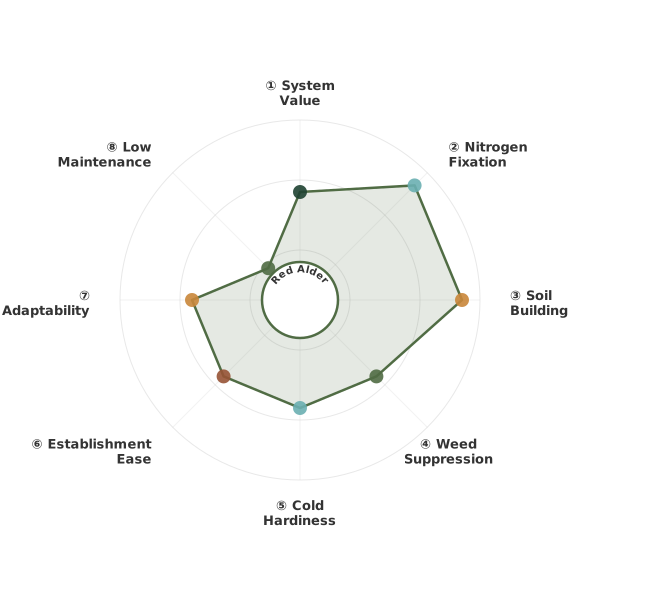
How These Traits Are Calculated
Trait dimensions are ordered clockwise starting from the top of the chart (12 o'clock position):
1. System Value
Ecosystem service stacking across nitrogen, carbon, water, biodiversity
WHAT: Synthesizes the compounding value of multiple ecosystem services delivered simultaneously—nitrogen fixation, soil organic matter building, pollinator support, erosion control, and water infiltration improvement. This is the total regenerative impact beyond single-function metrics.
WHY: The highest-value cover crops deliver 3-5 significant ecosystem services at once. A legume that fixes nitrogen, builds biomass, supports pollinators, and improves water infiltration provides $150-300/acre in combined benefits versus $30-60 for single-function covers. This service stacking is the core principle of regenerative agriculture.
HOW: Scored via LLM synthesis of economics data, timeline benefits, and trait combinations. Exceptional (3.0): 4-5 major services stacked with strong economic value ratios. Typical (2.0): 2-3 moderate services. Limited (1.0): Single-function covers with minimal service stacking. Considers seed cost relative to benefit value.
2. Nitrogen Fixation
Biological nitrogen production via legume root nodule bacteria
WHAT: Measures the ability to convert atmospheric nitrogen (N₂) into plant-available ammonia through symbiotic bacteria in root nodules. Legumes form partnerships with rhizobium bacteria that fix 60-150 lbs N/acre/year, reducing or eliminating synthetic fertilizer needs for following crops.
WHY: Nitrogen is the most expensive fertilizer input in crop production ($0.50-1.00/lb). Cover crops with exceptional nitrogen fixation can provide $60-150/acre worth of fertility while building soil organic matter. This biological process also reduces groundwater contamination from nitrogen runoff and lowers farm carbon footprint.
HOW: Ratings based on annual nitrogen fixation capacity and reliability across soil conditions. Exceptional (3.0): Legumes like hairy vetch, crimson clover, and field peas fixing >100 lbs N/acre/year. Typical (2.0): Moderate fixers like red clover at 60-100 lbs N/acre/year. Limited (1.0): Non-legumes (grasses, brassicas) with zero fixation capacity.
3. Soil Building
Weighted: biomass production (60%) + root system depth (40%)
WHAT: Combines above-ground biomass production with root depth to measure total soil organic matter contribution. Biomass provides surface organic matter, while deep roots deposit carbon at depth and break up compaction layers.
WHY: Soil organic matter is the foundation of regenerative agriculture, improving water retention, nutrient cycling, and biological activity. Each 1% increase in soil organic matter holds an additional 20,000 gallons of water per acre and represents $500-1,000 in fertility value. Deep roots access subsoil nutrients and create channels for water infiltration.
HOW: Weighted formula prioritizes biomass production (60% weight) for immediate organic matter contribution, with root depth (40% weight) for long-term soil structure. Exceptional (3.0): High-biomass crops with deep roots like cereal rye (8+ tons biomass, 5+ ft roots). Typical (2.0): Moderate on both factors. Limited (1.0): Low biomass or shallow roots.
4. Weed Suppression
Physical competition through rapid establishment and dense growth
WHAT: Measures the ability to outcompete weeds through rapid germination, aggressive early growth, and dense canopy formation. Physical smothering and light competition reduce weed pressure without herbicides.
WHY: Weed management is a major labor and cost burden for farmers. Cover crops that effectively suppress weeds reduce herbicide costs ($20-60/acre), decrease cultivation passes (fuel + labor), and provide clean seedbeds for cash crops. This is especially valuable in organic systems where herbicide options are limited.
HOW: Ratings based on germination speed, tillering density, and canopy closure timing. Exceptional (3.0): Fast-establishing, dense-tillering crops like cereal rye, oilseed radish that close canopy within 3-4 weeks. Typical (2.0): Moderate establishment and coverage. Limited (1.0): Slow-establishing or sparse crops that allow weed competition.
5. Cold Hardiness
Winter survival for fall planting and spring green manure value
WHAT: Measures tolerance to freezing temperatures and ability to survive winter conditions. Winter-hardy cover crops can be fall-planted, overwinter as living mulch, and provide early spring growth before cash crop planting.
WHY: Fall-planted winter-hardy covers extend the growing season into unused months, capturing solar energy and preventing erosion during wet periods. Spring green manure from overwintered covers provides early nitrogen and biomass. This timing flexibility is critical in cold climates with short growing seasons.
HOW: Ratings based on minimum survival temperature and winter active growth. Exceptional (3.0): Winter-hardy crops like cereal rye, hairy vetch, crimson clover surviving to -20°F with active growth in spring. Typical (2.0): Moderate cold tolerance. Limited (1.0): Warm-season crops like buckwheat, cowpea killed by first frost.
6. Establishment Ease
Germination speed, soil requirement flexibility, planting window breadth
WHAT: Measures how easily the cover crop establishes from seed, including germination speed, tolerance for variable soil conditions, and flexibility in planting timing. Easy establishment means reliable stands without intensive management.
WHY: Difficult-to-establish covers increase risk of stand failure, wasted seed costs, and reduced benefits. Easy establishment crops tolerate late planting, poor seedbed preparation, and variable moisture—critical when cover cropping windows are narrow between cash crops. Reliable establishment ensures consistent soil building and weed suppression benefits.
HOW: Ratings based on days to emergence, soil condition sensitivity, and planting window breadth. Exceptional (3.0): Fast germinators like buckwheat (3-5 days) and cereal rye (5-7 days) with wide planting windows. Typical (2.0): Moderate establishment requirements. Limited (1.0): Slow or finicky establishers requiring precise conditions.
7. Adaptability
Weighted: climate tolerance (60%) + multi-benefit versatility (40%)
WHAT: Combines climate adaptability (temperature and rainfall range) with multi-benefit versatility (diverse ecosystem services) to measure overall system flexibility. High adaptability means the cover works across farm regions and provides multiple functions.
WHY: Farmers need cover crops that work reliably across diverse fields and provide stacked benefits. Climate-adaptable covers reduce risk in variable weather, while multi-benefit crops deliver nitrogen fixation + pollinator support + forage value simultaneously. This versatility maximizes return on cover crop investment.
HOW: Weighted formula prioritizes climate tolerance (60% weight) for geographic reliability, with multi-benefit value (40% weight) for functional stacking. Exceptional (3.0): Wide climate range + multiple significant benefits. Typical (2.0): Moderate on both factors. Limited (1.0): Narrow climate range or single-function crops.
8. Low Maintenance
Inverted from maintenance intensity—low inputs mean high scores
WHAT: Measures minimal input requirements for successful cover cropping. Low-maintenance covers require no irrigation, minimal fertility, easy termination, and tolerate variable management timing.
WHY: Cover crops compete for resources with cash crops in tight rotations. Low-maintenance covers fit easily into existing systems without adding labor, equipment, or input costs. Easy termination is especially critical—covers that are difficult to kill can become weeds and delay cash crop planting.
HOW: Inverted score from maintenance intensity trait (4.0 minus raw score). Exceptional (3.0): Self-sufficient crops like cereal rye, field peas requiring no irrigation or fertility, easily terminated by mowing or winter-kill. Typical (2.0): Moderate input needs. Limited (1.0): High-maintenance crops needing irrigation, heavy fertility, or difficult termination (herbicides, multiple tillage passes).
Ratings are based on documented performance in regenerative systems, not conventional high-input scenarios. All traits assume integrated management practices focused on soil health and ecosystem services.
5
Management & Care Requirements
Integration guidance, maintenance needs, and care practices
Management & Care Requirements
Integration guidance, maintenance needs, and care practices
How to Integrate This Plant
Red alder (Alnus rubra) is a valuable nitrogen-fixing tree for regenerative systems. Its primary role is soil enrichment through atmospheric nitrogen fixation, enhancing fertility for surrounding plants and reducing the need for synthetic fertilizers. It can be integrated into silvopasture systems, providing shade and browse for livestock while improving pasture quality with its nitrogen-rich leaf litter. In alley cropping, it can be planted in hedgerows between crop rows to boost soil health and act as a windbreak. Food forests can benefit from its soil-building capacity, creating a more robust and resilient understory. Red alder begins contributing to nitrogen fixation within its first few years, with significant soil improvement becoming evident by year 5. Beyond direct nitrogen benefits, it supports local bacterial communities crucial for decomposition (as seen in research on leaf litter breakdown), contributing to a healthier soil food web and improved water infiltration, thus enhancing overall farm resilience and reducing input costs.
Integration Practices & Management
Knowledge base coverage on the specific integration of red alder (Alnus rubra) by regenerative farmers is limited. The provided sources primarily focus on the ecological role of red alder in riparian ecosystems, particularly its contribution to leaf litter decomposition and associated microbial communities. For instance, one study highlights accelerated decomposition rates of red alder leaves due to local bacterial adaptation, suggesting its potential role in nutrient cycling within these environments. However, the knowledge base does not detail practical methods for establishment, such as seeding rates, timing, or companion planting. Similarly, information regarding its integration with grazing systems, including mob grazing or rotational practices, timing, and rest periods, is absent. Termination strategies, management considerations like fertility needs or competition, and specific applications in cash crop systems (relay cropping, intercropping, rotation sequences) are also not addressed. Consequently, the knowledge base offers limited insight into the direct, hands-on techniques regenerative farmers employ when incorporating red alder into their operations.
Management Profile
Maintenance Intensity: Ideally Suited - Red alder's inherent nitrogen-fixing capabilities and preference for moist soils minimize the need for external fertility management, showcasing its role as a self-sufficient pioneer species.
Sources behind this view
 Community
-
Red alder (Alnus rubra) is a nitrogen-fixing pioneer tree that builds soil through rapid growth and decomposition, making it ideal for hugelkultur. It also serves as a substrate for mushrooms like oys
Read more (opens in new window) permies.com -
Discusses Sitka and red alder for nitrogen fixation and permaculture. Explores coppicing and pollarding techniques, noting younger red alder may respond better. Sitka alder is valuable for nitrogen su
Read more (opens in new window) permies.com
6
Economics & Value Streams
Direct harvest, system benefits, ecosystem services, and risk diversification
Economics & Value Streams
Direct harvest, system benefits, ecosystem services, and risk diversification
Comprehensive economic analysis including direct harvest value, system enhancement contributions, ecosystem services, value timeline, and risk diversification strategies.
Cover Crop Investment
| Metric | Value |
|---|---|
| Seed Cost | $20-50/acre $49-124/ha |
| Termination Cost | 25-75 62-185 |
| Biomass Production | 3-8 7-18 |
| N Fixation Value | N/A N/A |
| Weed Control Savings | 15-40 37-99 |
Cover crops are soil investments, not cash crops. Economics measured in soil health gains, input reduction, and subsequent crop performance. Values show direct costs and estimated benefits.
System Enhancement Value
Beyond harvest: nitrogen fixation replacing fertilizer costs
Nitrogen Fixation Value
80-150 lbs N/acre/year = $48-135/acre fertilizer replacement (based on general legume fixation rates and estimated nitrogen costs, as specific quantitative data for red alder's economic value in this context is not provided).
Red Alder (Alnus rubra) is a highly effective nitrogen-fixing species, crucial for enhancing soil fertility in agricultural and silvicultural systems. As a legume, it forms symbiotic relationships with Frankia bacteria, enabling it to convert atmospheric nitrogen into usable forms for plants. Knowledge base excerpts indicate that red alder can fix over 200 kg of atmospheric nitrogen per hectare annually. This natural fertilization significantly reduces the need for synthetic nitrogen fertilizers, which are costly and can have negative environmental impacts. In managed forests, leaving approximately 200 red alder per acre is advised to maintain adequate nitrogen levels for subsequent conifer growth, preventing nitrogen limitations that can hinder the development of crops like Douglas fir. This biological nitrogen input contributes to overall soil health, promoting better plant growth and resilience within integrated farm systems.
Additional Soil Building Benefits
Red Alder offers a multitude of ecosystem services beyond nitrogen fixation. Its riparian presence, as noted in the knowledge base, contributes to bank stabilization and water filtration in aquatic ecosystems. Alder wood, while fast-rotting, is excellent for fuel and for use in hugelkultur beds, contributing to soil building and water retention. The bark can be used for dye, adding a potential value-added product. Furthermore, red alder serves as a nurse crop for other species, facilitating succession. Its branch slash piles can be utilized as trellises and future planting sites, and logs can be inoculated with oyster mushrooms, creating a food source and a substrate for further decomposition. Chickens and ducks can also benefit from foraging opportunities in and around alder clumps, controlling pests like slugs. The fallen leaves contribute organic matter, supporting rich soil communities crucial for nutrient cycling. Its ability to thrive in disturbed areas and transition out of Eurasian pasture highlights its role in ecological restoration and farm diversification.
Ecosystem Service Contributions
Environmental contributions: carbon, pollinators, wildlife, and water
- Carbon Sequestration: Red Alder is a fast-growing deciduous tree that can sequester significant amounts of carbon in its biomass and soil through its nitrogen-fixing capabilities and leaf litter. Its rapid growth rate in suitable conditions contributes to substantial carbon storage over its lifespan.
- Pollinator Support: Medium. While not typically recognized as a primary pollinator attractant, alder flowers do provide pollen and nectar for early-season pollinators. Its role in supporting a diverse understory ecosystem can indirectly benefit pollinators by providing habitat and food sources.
- Wildlife Habitat: Red Alder provides habitat and food sources for various wildlife. Its leaves and twigs can be browsed by some animals, and its dense structure offers nesting sites and shelter. The associated understory plants that thrive in its presence, such as native rubus and huckleberry, offer additional food resources.
- Water Quality: Applicable. As a riparian species, Red Alder plays a vital role in filtering water, stabilizing stream banks, and improving water quality by reducing erosion and trapping sediment.
Value Timeline: N Fixation & Production
When you'll see results: nitrogen fixation begins immediately, harvest at maturity
Years 1-2
Initial nitrogen fixation begins, contributing to soil fertility improvement. Erosion control along riparian areas is established. Some habitat and shelter for wildlife are provided. Potential for firewood or hugelkultur material from early coppicing attempts or natural branch fall.
Years 3-5
Nitrogen contribution becomes more substantial, reducing the need for external fertilizers. Increased biomass for mulch (chop-and-drop) and fuel. Established shade over time can start to influence microclimates. Potential for early oyster mushroom cultivation on fallen logs. Understory plants begin to thrive.
Years 10-20
Full nitrogen fixation potential is realized, significantly enriching soil. Mature trees provide substantial biomass for timber or bioenergy if managed. Established riparian buffer provides robust water filtration and bank stabilization. Significant contribution to the overall farm ecosystem's resilience and biodiversity. Potential for more consistent harvests of secondary products like mushrooms.
20+ Years
Long-term timber value if managed for wood production. Continued significant ecosystem services including carbon sequestration, water filtration, and soil building. The established alder stand contributes to a mature, resilient agroforestry system, providing ongoing habitat and nutrient cycling benefits.
Farm Risk Reduction
How this reduces farm risk: fertilizer cost hedge and rotation benefits
- Multiple Revenue Streams: Nitrogen fixation (fertilizer replacement), firewood, hugelkultur material, dye (bark), oyster mushroom cultivation, enhanced growth of companion crops, potential timber harvest (long-term), wildlife habitat benefits (which can support hunting leases or ecotourism).
- Temporal Income Spread: Value is spread across multiple time horizons: immediate benefits from nitrogen fixation and erosion control, medium-term value from biomass for fuel and soil improvement, and long-term value from timber and sustained ecosystem services. This provides a continuous stream of benefits rather than relying on single, annual harvests.
- Market Risk Hedge: Reduces reliance on volatile synthetic fertilizer markets by providing on-farm nitrogen. Offers alternative revenue streams beyond traditional crops, diversifying farm income. Its resilience in disturbed areas and potential for ecological restoration can provide a buffer against market fluctuations or environmental challenges affecting other farm enterprises.
Sources behind this view
Community
-
Red Alder (Alnus rubra) is a key nitrogen-fixing tree in the Pacific Northwest, crucial for soil fertility in conifer forests and managed tree farms, fixing over 200 kg/ha annually.
Read more (opens in new window) permies.com -
Red alder (Alnus rubra) is a nitrogen-fixing pioneer tree that builds soil through rapid growth and decomposition, making it ideal for hugelkultur. It also serves as a substrate for mushrooms like oys
Read more (opens in new window) permies.com
 Research
-
Potential of Alnus acuminata based agroforestry for carbon sequestration and other ecosystem services in Rwanda (opens in new window)
Alder trees (*Alnus acuminata*) in Rwandan agroforestry systems store significant carbon (approx. 13.6 tons/ha), improve soil fertility, and provide farm resources like stakes and firewood.
8
Learn More
Why farmers use this plant and additional resources
Learn More
Why farmers use this plant and additional resources
Why Regenerative Farmers Use This Plant
Red Alder (Alnus rubra) is a cornerstone species for regenerative agriculture, particularly in temperate and coastal regions, due to its exceptional nitrogen-fixing capabilities and rapid biomass production. As a legume, it forms a symbiotic relationship with Frankia bacteria in its root nodules, converting atmospheric nitrogen into a plant-available form. This process can enrich soils by an estimated 60-100 lbs of nitrogen per acre (67-112 kg/ha) annually, with some estimates reaching 100-200 lbs/acre (112-224 kg/ha) per year. This significantly reduces the need for synthetic nitrogen fertilizers and their associated costs, potentially saving farmers $30-$100 per acre depending on current fertilizer prices and application rates.
Its vigorous growth habit allows it to accumulate substantial above-ground biomass, typically ranging from 5,000 to 15,000 lbs per acre (5,600 to 16,800 kg/ha) when managed as a short-rotation coppice or hedgerow. Mature trees can produce an estimated 10-20 tons of dry matter per acre (22-44 metric tons/ha) annually. Its deep root systems, extending 6-15+ feet (1.8-4.5+ meters) and in some cases up to 15-30 feet (4.5-9 meters), improve soil structure, water infiltration, and scavenge nutrients from lower soil profiles, preventing leaching and making them available to shallower-rooted cash crops or forages as the alder decomposes.
Integrating Red Alder into farming systems offers multifaceted benefits beyond nitrogen. Its dense foliage and rapid growth make it an effective tool for weed suppression, outcompeting many common agricultural weeds. As a pioneer species, it excels in erosion control, stabilizing slopes and riparian areas with its extensive root network, particularly valuable in areas prone to heavy rainfall or wind. In agroforestry and silvopasture systems, Red Alder can be strategically planted as a nitrogen-fixing component within windbreaks, hedgerows, or as an understory species in conifer plantations, providing shade, habitat for beneficial insects, and a nutrient boost to companion crops or forage. Its presence also supports a diverse range of pollinators and beneficial insects by providing habitat and, in some cases, early-season pollen and nectar.
The ecological contributions of Red Alder extend to enhancing soil health and carbon sequestration. The decomposition of its leaf litter and woody biomass contributes significantly to soil organic matter, typically adding 0.5-1.5% to topsoil organic matter content over a 5-10 year period when managed appropriately. This increased organic matter improves soil structure, water-holding capacity, and nutrient cycling. Furthermore, its rapid growth and woody structure make it an effective carbon sink, sequestering atmospheric carbon dioxide into biomass and soil. Studies indicate that well-managed alder stands can sequester upwards of 2-4 tons of carbon dioxide per acre per year. The physical structure of alder stands can improve water infiltration rates by 20-50% compared to bare or conventionally tilled land, reducing surface runoff and erosion.
Red Alder has demonstrated success in various global agricultural contexts. In the Pacific Northwest of North America, it is widely used in reforestation and agroforestry projects, often interplanted with Douglas fir or used in riparian buffer zones to improve soil fertility and stability. In New Zealand, it is employed in silvopasture systems to provide nitrogen for pasture and shelter for livestock, and in erosion control on steep slopes and riparian plantings. European farmers, particularly in regions with similar temperate oceanic climates, are increasingly exploring its use in agroforestry systems and as a biomass source for bioenergy. In South America, its adaptability to moist temperate zones makes it a candidate for similar agroforestry applications, particularly in regions like southern Chile and southern Brazil, where it is used in reforestation efforts on degraded lands. In Australia, its use is more experimental but shows promise in wetter temperate zones for erosion control and soil improvement.
Sources behind this view
 Videos & Podcasts
-
Red alder acts as a nitrogen fixer, significantly improving soil quality within its root zone. Experimentation with burying trunks led to successful suckering and layering for propagation.
Community
-
Red alder (Alnus rubra) is a nitrogen-fixing pioneer tree that builds soil through rapid growth and decomposition, making it ideal for hugelkultur. It also serves as a substrate for mushrooms like oys
Read more (opens in new window) permies.com -
Red Alder (Alnus rubra) is a key nitrogen-fixing tree in the Pacific Northwest, crucial for soil fertility in conifer forests and managed tree farms, fixing over 200 kg/ha annually.
Read more (opens in new window) permies.com
Research
-
Potential of Alnus acuminata based agroforestry for carbon sequestration and other ecosystem services in Rwanda (opens in new window)
Alder trees (*Alnus acuminata*) in Rwandan agroforestry systems store significant carbon (approx. 13.6 tons/ha), improve soil fertility, and provide farm resources like stakes and firewood.