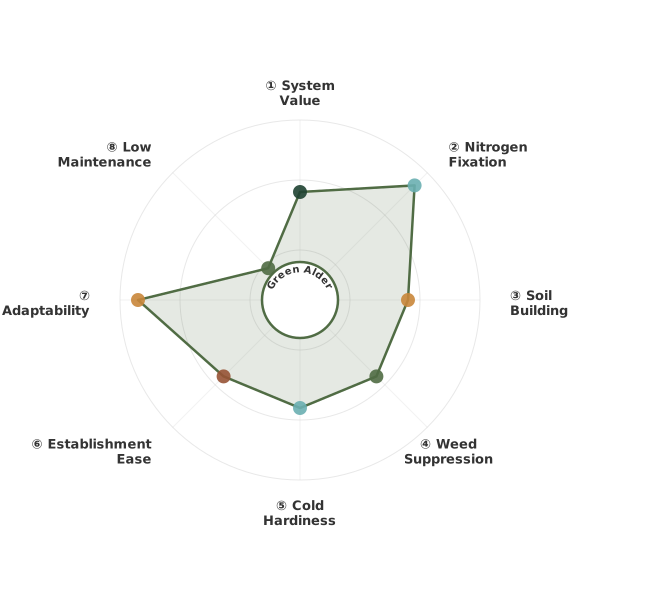
Existing excerpts highlight its potential in regenerative agriculture, particularly as a nitrogen fixer. Studies in Arctic regions show it influencing soil organic carbon turnover, suggesting a role in soil building and carbon sequestration. As a pioneer riparian species, Alnus viridis can contribute to ecosystem recovery and potentially support beneficial fungal endophyte communities. Although specific regenerative practices like cover cropping or integration into polycultures aren't detailed in these excerpts, its nitrogen-fixing ability naturally lends itself to improving soil fertility. This characteristic is foundational for many regenerative systems aiming to reduce synthetic inputs and build healthy soil. Further research would be beneficial to explore its broader applications in agroforestry systems or as a component in diverse farm plantings, but its capacity to enhance soil health through nitrogen fixation is a key regenerative benefit. While coverage in our knowledge base is limited, the above represents documented uses in regenerative systems.

Regenerative Quick Profile

All recommendations assume integrated, regenerative practices—not conventional inputs.

Climate & Soil Fit

Climate: Tropical Rainforest, Tropical Monsoon, Tropical Savanna, Hot Semi-Arid (Steppe), Cold Semi-Arid (Steppe), Hot Desert, Cold Desert, Humid Subtropical, Oceanic (Maritime Temperate), Hot-Summer Mediterranean, Warm-Summer Mediterranean, Monsoon-Influenced Humid Subtropical, Subtropical Highland, Hot-Summer Continental, Warm-Summer Continental, Subarctic, Monsoon-Influenced Hot-Summer Continental, Monsoon-Influenced Warm-Summer Continental, Tundra

Zones: USDA 2-8, Australian Zones 1-5

Optimal Soil: Loam Soil

System Role & Functions

Primary: Nitrogen Fixer

Secondary: Riparian, Soil Remediation

Key Benefits: Multi-benefit value, Climate adaptable, Low maintenance

Management Level

Experience: Beginner-Friendly

Maintenance: Very low maintenance - Green alder's nitrogen-fixing capacity and adaptability mean it thrives with minimal intervention, functioning as a robust, self-sustaining component of the agroecosystem.

Value Streams

  • Nitrogen fixation
1

Climate Suitability Assessment

Will this plant thrive in your climate?

IDEALLY SUITED

Köppen Zone: Cfb (Oceanic (Maritime Temperate)), Dfa (Hot-Summer Continental), Dfb (Warm-Summer Continental), Dfc (Subarctic)
USDA Zone: 3b, 4a, 4b, 5a, 5b, 6a, 6b
Australian Zone: temperate
EU Climate Region: atlantic, continental

Green Alder performs optimally in climates characterized by mild to warm summers and cold to moderate winters, with adequate moisture. This includes Köppen zones Cfb, Dfb, and Dfc, USDA zones 4b through 8b, Australian temperate zones, and EU Atlantic and Continental regions. These areas provide a growing season of 120-180 frost-free days with average summer temperatures between 60-75°F (15-24°C), ideal for vigorous growth and nitrogen fixation. Precipitation patterns of 30-50 inches (75-125 cm) annually are generally sufficient, though supplemental irrigation may be beneficial during extended dry spells. Establishment success is high (>85%) with minimal management required, and its perennial nature ensures multi-year productivity for nitrogen fixation and soil remediation. Its cold hardiness allows it to overwinter successfully, resuming growth vigorously in spring. These conditions allow Green Alder to fully express its primary function as a nitrogen fixer and secondary functions as a riparian and soil remediation species, contributing significantly to regenerative agriculture practices with high reliability and low input costs.

ADEQUATE

Köppen Zone: BSk (Cold Semi-Arid (Steppe)), Cfa (Humid Subtropical), Csb (Warm-Summer Mediterranean), Cwa (Monsoon-Influenced Humid Subtropical), Cwb (Subtropical Highland), Dwa (Monsoon-Influenced Hot-Summer Continental), Dwb (Monsoon-Influenced Warm-Summer Continental)
USDA Zone: 3a, 7a, 7b
Australian Zone: subtropical

Green Alder can perform adequately in a range of climates that present some challenges but are not prohibitive. This includes Köppen zones Cfa, Dfa, and Cfc, USDA zones 9a through 10b, Australian subtropical zones, and EU alpine regions. These zones often feature longer growing seasons but may experience more extreme summer heat (above 85°F/29°C) or require more consistent moisture management (15-30 inches/38-75 cm supplemental irrigation). While growth and nitrogen fixation may be reduced by 10-20% compared to ideal conditions, establishment is still good (70-85%) with proper timing and site selection, particularly in riparian areas or where soil moisture is naturally higher. Winter survival is generally reliable, but performance can be inconsistent year-to-year due to temperature fluctuations or water stress. These conditions allow Green Alder to still provide valuable nitrogen fixation and soil improvement, but economic viability may depend on careful management and potentially higher input costs for irrigation or site preparation to mitigate environmental stressors.

NOT RECOMMENDED

Köppen Zone: Af (Tropical Rainforest), Am (Tropical Monsoon), Aw (Tropical Savanna), ET (Tundra), BSh (Hot Semi-Arid (Steppe)), BWh (Hot Desert), BWk (Cold Desert), Csa (Hot-Summer Mediterranean)
USDA Zone: 2a, 8a, 8b, 9a, 9b, 10a, 10b, 11a, 11b, 12a, 12b, 13a, 13b
EU Climate Region: alpine

Green Alder is not recommended for climates that are too cold or too dry for its survival and effective function. This includes Köppen zones Dfd, Dwd, and ET, USDA zones 1a through 4a, and EU alpine regions. These zones are characterized by extremely short growing seasons, severe winter cold (below -10°F/-23°C), and often permafrost or arid conditions that prevent establishment and survival. In these extreme cold environments, winter kill is almost certain, and the limited warm period is insufficient for growth or nitrogen fixation. Even in marginally cold zones (USDA 3a-4a), perennial survival is highly questionable, and its effectiveness as a nitrogen fixer is severely limited. Establishment success drops below 70%, and high management costs or intensive protection would be required, making it economically and practically unviable. Alternative plants better adapted to extreme cold or specific arid conditions are necessary for these regions.

Better alternatives for these "not recommended" zones: Arctic Willow (Salix arctica) (native to extreme cold, tolerates permafrost, provides some soil stabilization), Dwarf Birch (Betula nana) (cold-hardy shrub adapted to tundra and permafrost conditions), Hairy Vetch (cold-hardy annual legume for nitrogen fixation in marginal cold zones), Winter Rye (extremely cold-hardy cover crop for biomass and soil protection)

Note: Zones listed above represent climates where this plant can produce reliably with reasonable management. Climate zones not mentioned would require intensive climate modification (greenhouses, extensive infrastructure) and are not economically viable for regenerative agriculture purposes.

2

Soil Suitability Assessment

Which soil types work best for this plant?

IDEALLY SUITED

Loam Soil

This plant thrives in these soil types without requiring amendments or remediation. Natural soil conditions support optimal growth and productivity.

ADEQUATE

Acidic Soil, Alkaline Soil, Clay Soil, Rich Soil, Rocky Soil, Sandy Soil

This plant performs acceptably in these soil types with moderate, manageable remediation such as pH adjustment, compost addition, or drainage improvement. The required amendments are practical and cost-effective for regenerative agriculture.

NOT RECOMMENDED

Desert Soil, Saline Soil, Wet Soil

Growing this plant in these soil types would require impractical remediation such as complete soil replacement, extensive amendments, or cost-prohibitive infrastructure. These conditions are not economically viable for regenerative agriculture.

Note: Soil suitability assessments focus on remediation requirements. "Ideally Suited" means the plant generally thrives without the need for substantial amendments, "Adequate" means manageable remediation (lime, compost, mulch), and "Not Recommended" means impractical soil changes would be required. Climate factors like rainfall and temperature also influence success.

3

Seasonal Considerations

Planting timing, growth duration, and harvest windows

Green alder offers robust nitrogen fixation and biomass potential across a wide range of cool and cold climates. For spring planting, sow after the risk of hard frost has passed, allowing ample time for establishment before your primary cash crop. This species is quite frost-tolerant, so early spring sowing is feasible in many regions. Fall planting is best undertaken in late autumn, several weeks before the first expected hard frost, to allow for initial establishment before winter dormancy. While not typically a summer cover crop in the traditional sense, its resilience allows it to persist through warmer months if planted earlier.

Expect green alder to establish within several weeks, with significant growth occurring through the spring and summer. Overwinter survival is excellent in zones Dfb, Dfc, Dfd, and Dwd, and generally good in Cfb and Cfc zones. Termination is most effective in late spring or early summer, ideally several weeks before planting your main cash crop, to allow for decomposition and nutrient release. Aim to terminate when the plant is actively growing for maximum biomass and nitrogen. Frost seeding in early spring, before soil has fully thawed, can also be an effective strategy to leverage its cold tolerance. Its peak biomass period usually occurs in mid-summer to early fall.

4

System Role & Multi-Benefit Value

Functional roles, integration strategies, and stacked benefits

Functional Role

Total System Value

Green alder offers significant value in regenerative systems by enhancing soil fertility through nitrogen fixation, a crucial ecosystem service that reduces the need for external inputs. As a pioneer species, it excels at stabilizing soil and preventing erosion, particularly in challenging or disturbed landscapes. While direct harvest value is minimal (some traditional uses exist, but are not primary for modern ag), its contribution to system enhancement is substantial. It improves the growth of companion plants through nutrient cycling, acting as a living fertilizer. In a multi-benefit stacking approach, green alder contributes to carbon sequestration in biomass and soil, provides habitat for wildlife and beneficial insects, and can improve water infiltration. Risk diversification is achieved by building a more resilient, self-fertilizing system less susceptible to market fluctuations in fertilizer prices and improving overall farm ecological health.

Integration Characteristics

Multi-Benefit Value: Ideally Suited - As a nitrogen fixer on challenging sites, green alder offers crucial erosion control and habitat, delivering a comprehensive range of ecological benefits to the landscape.

5

Management & Care Requirements

Integration guidance, maintenance needs, and care practices

How to Integrate This Plant

Green alder (Alnus viridis) can be integrated into regenerative systems primarily as a nitrogen-fixing component, enhancing soil fertility and supporting the growth of companion plants. Its role as a pioneer species makes it valuable for establishing ground cover and preventing erosion in disturbed areas. While not a tree, its shrubby form can offer some limited shade and windbreak effects in younger stages. Compatible practices include intercropping with other species in alley cropping systems or as part of a diverse planting in food forests and hedgerows, where its nitrogen-fixing ability benefits adjacent plants. It can also be used in silvopasture systems, provided grazing is managed to allow establishment and growth. Contribution timeline: Year 1-2: Establishment and initial nitrogen fixation. Year 3-5: Increased biomass production and soil improvement, minor shade/windbreak. Year 10-20: Significant soil fertility enhancement, dense shrub structure providing habitat and further erosion control. Total system value beyond direct harvest includes improved soil health through nitrogen fixation, enhanced biodiversity by providing habitat, and reduced reliance on synthetic fertilizers.

Integration Practices & Management

The provided knowledge base offers limited insight into the specific integration methods of Alnus viridis (green alder) within regenerative agriculture systems. The sources primarily focus on its ecological roles, such as in Arctic soil carbon turnover and its presence as a pioneer species in post-eruption landscapes. One study notes Alnus viridis ssp. sinuata's association with other pioneer species in volcanic recovery zones. Another mentions Phytophthora species affecting subalpine vegetation, including potential hosts like alder, but does not detail agricultural integration. Therefore, specific establishment, grazing, termination, or cash crop integration strategies as practiced by regenerative farmers cannot be extracted from this text. The knowledge base does not contain practical farmer experiences or detailed management considerations for Alnus viridis in a regenerative farming context. Further research would be needed to understand its application in regenerative systems.

Management Profile

Maintenance Intensity: Ideally Suited - Green alder's nitrogen-fixing capacity and adaptability mean it thrives with minimal intervention, functioning as a robust, self-sustaining component of the agroecosystem.

6

Economics & Value Streams

Direct harvest, system benefits, ecosystem services, and risk diversification

Comprehensive economic analysis including direct harvest value, system enhancement contributions, ecosystem services, value timeline, and risk diversification strategies.

Cover Crop Investment

Metric Value
Seed Cost $15-30/acre $37-74/ha
Termination Cost 20-50 49-124
Biomass Production 1.5-3.0 3-7
N Fixation Value 40-80 45-90
Weed Control Savings 10-30 25-74

Cover crops are soil investments, not cash crops. Economics measured in soil health gains, input reduction, and subsequent crop performance. Values show direct costs and estimated benefits.

System Enhancement Value

Beyond harvest: nitrogen fixation replacing fertilizer costs

Nitrogen Fixation Value

80-150 lbs N/acre/year = $48-135/acre fertilizer replacement (variable based on density and management)

Green alder (Alnus viridis) is a nitrogen-fixing legume, a primary function that significantly enhances soil fertility in integrated farm systems. Its root nodules house symbiotic bacteria capable of converting atmospheric nitrogen into a plant-available form. This process directly enriches the soil, reducing the need for synthetic nitrogen fertilizers, which are costly and have environmental impacts. The heavy leaf and twig drop from green alder, as noted in, further contributes to soil organic matter and nutrient cycling. Pruning at a young age can encourage bushiness, potentially increasing the surface area for nitrogen fixation and litter production. This biological nitrogen input is crucial for supporting the growth of companion crops or for improving the productivity of less fertile soils within an agroforestry or silvopasture context. The sustained release of nitrogen through decomposition of alder biomass provides a continuous nutrient supply, bolstering the overall health and productivity of the farm ecosystem.

Additional Soil Building Benefits

Green alder serves multiple roles beyond nitrogen fixation. Its riparian function, as mentioned, is critical for stabilizing stream banks and preventing erosion in sensitive areas, contributing to water quality by reducing sediment runoff. Studies suggest that pioneer species like Sitka alder (Alnus viridis ssp. sinuata) can act as microbial reservoirs, potentially supporting fungal endophyte communities that aid in soil organic matter development and host stress tolerance in early successional environments. While not explicitly detailed in the provided excerpts, its dense growth habit and litter production can contribute to soil remediation by improving soil structure and sequestering carbon. Furthermore, as a woody shrub, it can offer habitat and browse for wildlife. The identification of Phytophthora pseudogregata associated with Alnus viridis suggests a need for careful species selection and monitoring in certain regions to manage potential disease risks, but its ecological contributions are substantial.

Ecosystem Service Contributions

Environmental contributions: carbon, pollinators, wildlife, and water

  • Carbon Sequestration: Green alder, as a woody shrub, contributes to carbon sequestration through biomass accumulation in its stems, roots, and foliage, as well as through the incorporation of organic matter into the soil. Its role in riparian zones and disturbed areas can help stabilize soils and prevent carbon release. The rate of sequestration is dependent on stand density, age, and environmental conditions.
  • Pollinator Support: Low (Not explicitly mentioned in knowledge base excerpts, but typical for alder species to provide early season pollen/nectar in limited amounts)
  • Wildlife Habitat: Provides habitat and potential browse for wildlife, particularly in riparian areas and disturbed landscapes. Its dense structure can offer nesting sites and shelter.
  • Water Quality: Applicable due to its riparian function, helping to filter sediment and nutrients from water runoff, thereby improving water quality in adjacent water bodies.

Value Timeline: N Fixation & Production

When you'll see results: nitrogen fixation begins immediately, harvest at maturity

Years 1-2

Initial nitrogen fixation begins, contributing to soil fertility. Erosion control and basic riparian stabilization commence. Pioneer species may start establishing microbial communities.

Years 3-5

Nitrogen contribution becomes more substantial as the plant grows. Established riparian functions provide significant erosion control. Increased biomass contributes to soil organic matter. Potential for early habitat development for wildlife.

Years 10-20

Mature nitrogen fixation capacity is realized, significantly enriching soil fertility. Robust riparian ecosystem services are in full effect. Substantial contribution to soil carbon sequestration and organic matter. Habitat value for wildlife becomes more significant.

20+ Years

Long-term soil fertility enhancement and sustained ecosystem services. Potential for coppicing or pollarding, as suggested by anecdotal evidence for related species, could provide biomass for other farm uses or continued nutrient cycling. Continued contribution to biodiversity and ecological stability.

Farm Risk Reduction

How this reduces farm risk: fertilizer cost hedge and rotation benefits

  • Multiple Revenue Streams: Reduced fertilizer costs (nitrogen fixation), improved soil health leading to higher yields in companion crops, potential for biomass harvest (e.g., for bioenergy or mulch if managed for coppicing/pollarding), enhanced ecosystem services like water filtration contributing to farm resilience.
  • Temporal Income Spread: Ongoing benefits from nitrogen fixation and soil improvement are continuous. Ecosystem services like erosion control and water filtration are also persistent. Potential for periodic biomass harvesting if managed.
  • Market Risk Hedge: Reduces reliance on external inputs (fertilizers), mitigating price volatility. Enhances farm resilience to environmental stresses through improved soil and water management. Diversifies farm functions beyond primary crop production by integrating ecological services.
7

Regenerative Suitability Details

Comprehensive trait ratings for system integration assessment

Comparative ratings for this plant across key regenerative agriculture traits.

Trait Suitability Explanation
Cold Hardiness Adequate Green alder thrives in Zones 2-3, providing valuable seasonal biomass that contributes to soil organic matter and moisture retention once shed.
Weed Suppression Adequate Its canopy offers moderate weed suppression by shading the soil, while its growth contributes to a healthy soil ecosystem that naturally outcompetes unwanted vegetation.
Nitrogen Fixation Ideally Suited This alder species actively enriches the soil with significant nitrogen, enhancing the fertility of the surrounding ecosystem through symbiotic relationships.
Root System Depth Ideally Suited The deep root system of green alder effectively decompacts soil and improves subsoil moisture and nutrient availability, acting as a powerful soil builder.
Biomass Production Adequate Green alder reliably produces biomass and fixes nitrogen, significantly contributing to soil organic matter and enhancing the overall health and fertility of its habitat.
Establishment Ease Adequate Adaptable to diverse soil conditions, green alder establishes readily with good moisture retention, benefiting from well-prepared soil to maximize early vigor.
Multi Benefit Value Ideally Suited As a nitrogen fixer on challenging sites, green alder offers crucial erosion control and habitat, delivering a comprehensive range of ecological benefits to the landscape.
Climate Adaptability Ideally Suited Resilient across Zones 2-8, green alder thrives in varied moisture and soil conditions, demonstrating remarkable adaptability and contributing to ecosystem stability.
Maintenance Intensity Ideally Suited Green alder's nitrogen-fixing capacity and adaptability mean it thrives with minimal intervention, functioning as a robust, self-sustaining component of the agroecosystem.

Comparative System: Ratings compare plants within their economic category (e.g., cover crop nitrogen fixation compared to other cover crops, not to all plants). Individual farm conditions and management practices significantly influence actual performance.

8

Learn More

Why farmers use this plant and additional resources

Why Regenerative Farmers Use This Plant

Alnus viridis, or Green Alder, is a cornerstone species for regenerative systems, primarily due to its exceptional nitrogen-fixing capabilities and robust soil-building properties. Through a symbiotic relationship with Frankia bacteria in its root nodules, it converts atmospheric nitrogen into a plant-available form. This biological process can contribute an estimated 50 to 150 pounds of nitrogen per acre annually (56 to 168 kg/ha). This biological fertility input significantly reduces or even eliminates the need for synthetic nitrogen fertilizers, offering substantial cost savings. For farmers transitioning away from high-input systems, this can translate to direct cost savings of $25 to $100 or more per acre per year on nitrogen alone, depending on current fertilizer prices. Beyond nitrogen, Green Alder produces substantial biomass, typically yielding 2 to 5 tons of dry matter per acre annually (4,480 to 11,200 kg/ha). This biomass, upon decomposition, contributes valuable organic matter to the soil, improving its structure, water-holding capacity, and nutrient retention, laying the foundation for a more resilient and productive farm.

Integrating Green Alder into diverse farming operations offers a suite of systemic benefits that enhance ecological function and farm resilience. As an early successional species, it excels at stabilizing disturbed or nutrient-poor soils, making it ideal for reclaiming mine spoils, eroded slopes, or marginal lands. Its dense, fibrous root system acts as a natural erosion control measure, binding soil and preventing costly losses from wind and water, making it invaluable in watershed protection and maintaining soil integrity. Green Alder can be strategically planted in hedgerows, windbreaks, or on field margins, providing a consistent nitrogen source for adjacent crops or pastures without direct competition. In agroforestry systems, it can be intercropped with non-leguminous trees or shrubs, accelerating their establishment and growth by improving soil fertility. Its presence also contributes to biodiversity by offering habitat and food sources for various wildlife, including birds and beneficial insects. Furthermore, its dense growth can contribute to weed suppression, reducing the need for mechanical or chemical weed control and creating a more competitive environment for undesirable species.

The ecological contributions of Green Alder extend to broader ecosystem health and carbon sequestration. By fixing atmospheric nitrogen, it reduces the reliance on energy-intensive synthetic fertilizer production, thereby lowering the farm's carbon footprint. The significant biomass production and subsequent decomposition contribute directly to soil organic matter accumulation, a critical component of healthy soils and effective carbon sequestration. Studies on similar woody perennials suggest that well-managed stands can sequester substantial amounts of carbon below and above ground over their lifespan. By improving soil structure and water infiltration, Green Alder enhances the landscape's resilience to extreme weather events like droughts and heavy rainfall, promoting healthier water cycles and reducing runoff. Its role as a pioneer species in ecological restoration amplifies these benefits by kickstarting soil development and supporting the establishment of more complex plant communities. The nitrogen fixation process also indirectly supports a wider array of soil microbial communities, fostering a healthier soil food web.

Green Alder has demonstrated its value across a range of agricultural landscapes and systems. In the cooler regions of the Pacific Northwest of North America, it is utilized in silvopasture systems to improve forage quality and soil fertility for livestock grazing. Farmers in the UK and Northern Europe incorporate it into riparian buffer zones and on marginal land to prevent erosion and enhance biodiversity, benefiting from its cold hardiness. In mountainous regions of Europe, it is a key species for stabilizing slopes and restoring degraded areas. Brazilian coffee plantations have explored its use as an understory nitrogen fixer, improving soil health and reducing the need for chemical inputs in a challenging tropical highland environment. In the drier, temperate regions of Australia, it can be integrated into wheat-sheep systems on marginal lands to stabilize soil and provide supplemental forage during dry periods, with careful management to prevent overgrazing. Its adaptability to challenging conditions makes it a versatile tool for regenerative farmers globally.

Sources behind this view

Community
  • Red Alder (Alnus rubra) is a key nitrogen-fixing tree in the Pacific Northwest, crucial for soil fertility in conifer forests and managed tree farms, fixing over 200 kg/ha annually.

  • Planting red alder in gardens can improve soil via nitrogen fixation, managed by coppicing or pollarding. Potential challenges include its coppicing ability and impact on nearby plants, with yellowing

9

How to Integrate This Plant

Practical guidance for regenerative systems

Integrating Alnus viridis into a farming system begins with careful site selection and establishment. It thrives in well-drained soils and can tolerate a range of light conditions from full sun to partial shade, though consistent moisture is beneficial. The species is highly cold-hardy, suitable for USDA zones 2-7. For establishment, seeds can be sown directly, typically at a rate of 50 to 100 lbs per acre (56 to 112 kg/ha) when broadcast, or 30 to 50 lbs per acre (34 to 56 kg/ha) when drilled. Planting depth should be shallow, around 0.25 to 0.5 inches (0.6 to 1.3 cm), ensuring good seed-to-soil contact. Planting is best undertaken in early spring as soon as the soil can be worked, or in the fall in milder climates, allowing for establishment before winter. In temperate regions, planting in March-April (Northern Hemisphere) or September-October (Southern Hemisphere) is recommended. Seedlings or cuttings are typically spaced 3 to 6 feet (0.9 to 1.8 meters) apart, depending on the desired density and end-use. Adequate moisture is crucial during the establishment phase, with approximately 1 inch (2.5 cm) of water per week needed, either through rainfall or irrigation. Protection from browsing animals may be necessary during the first few years.

Management practices for Green Alder focus on maximizing its regenerative benefits while integrating it harmoniously into the farm ecosystem. While it prefers moist conditions, established plants exhibit reasonable drought tolerance, especially in cooler climates. Its nitrogen-fixing capacity means that synthetic fertilizer inputs are generally unnecessary and can even be detrimental to the symbiotic bacteria. Instead, focus on building soil health through compost, manure integration, or by allowing the alder's own leaf litter to decompose. If severe nutrient deficiencies are identified through soil testing, synthetic fertilizers can be used as a transitional input, aiming to reduce reliance by 40-60%. The plant typically establishes within 30-45 days and can reach a mature height of 5 to 20 feet (1.5 to 6 meters) within 2 to 5 years, depending on site conditions and management. Pruning can be employed to manage its size, encourage denser growth for biomass production, or shape it for specific roles like windbreaks. Pest and disease management should focus on biological controls and maintaining plant health through proper site selection and care.

For cover crop integration, termination and residue management are key. The preferred termination hierarchy begins with natural winterkill in regions where temperatures consistently drop below -10°F (-23°C), requiring no intervention. Where winterkill is unreliable, mechanical termination methods are preferred. Roller-crimping at the onset of flowering, typically in late spring or early summer, is a highly effective method that creates a dense mulch mat, suppressing weeds and retaining soil moisture. Mowing or grazing can also be employed to reduce biomass before cash crop planting, with the residue left to decompose. Herbicide termination should only be considered as a last resort during a transitional phase, when other regenerative methods are not feasible, and always prioritizing biological and mechanical methods. Ideally, termination should occur 2 to 3 weeks before planting the subsequent cash crop to allow for initial residue breakdown and nitrogen release. Residue decomposition typically takes 30 to 60 days, releasing 50-70% of the fixed nitrogen for the following crop. Expect a nitrogen credit of approximately 60 to 80 lbs N/acre (67 to 90 kg/ha) for the subsequent crop, though this can vary based on residue quantity and decomposition rates. Farmers should decide whether to allow reseeding or manage for containment based on their cropping system goals.

Regional adaptations highlight Green Alder's versatility. In the Canadian Prairies, it can be sown in late spring or early summer on marginal lands or field margins, establishing over the summer to provide erosion control and nitrogen for subsequent rotations. In the UK, farmers might interseed Alnus viridis into established pastures or plant it on field edges in autumn, allowing it to overwinter and provide nitrogen benefits in spring. In Australian dryland systems, it can be established with autumn rains on slopes or in gullies to combat erosion and improve soil fertility over time, though its water needs should be carefully considered. In the Midwestern United States, it can be planted as a component of a multi-species cover crop mix in corn-soybean rotations, terminated in spring before planting corn to provide a nitrogen boost. In the US Northeast, it's sown in late summer as a cover crop in orchards and vineyards, providing nitrogen and erosion control before winter termination. In New Zealand's North Island, it's integrated into sheep and beef farming systems on steeper pastures to improve soil fertility and reduce erosion.

View Full Document (Printable single-page version)