
Pigeon Pea
Pigeon pea (*Cajanus cajan*) is a valuable perennial legume in regenerative agriculture, primarily utilized as a cover crop and for its nitrogen-fixing capabilities. Its rapid biomass production makes it ideal for "chop and drop" mulching, effectively building soil organic matter and improving soil structure, especially in no-till and reduced tillage systems. Pigeon pea serves as a pioneer species, adept at establishing new garden systems and contributing to soil health. It is integrated into polyculture systems, such as syntropic agroforestry designs alongside cacao, and cropping systems with grains like wheat and maize. Studies indicate its role in conservation agriculture (CA) systems, where it can enhance soil microbial communities and improve crop yields when used as a cover crop in rotation with other species. While specific farmer experiences are limited in the provided excerpts, its inclusion in diverse cropping and agroforestry setups highlights its adaptability and utility in building soil fertility and biomass within regenerative frameworks.
For a full botanical description see: Plants For A Future(opens in new window) (external link)
Regenerative Quick Profile
All recommendations assume integrated, regenerative practices—not conventional inputs.
Climate & Soil Fit
Climate: Tropical Rainforest, Tropical Monsoon, Tropical Savanna, Hot Semi-Arid (Steppe), Hot Desert, Humid Subtropical, Oceanic (Maritime Temperate), Hot-Summer Mediterranean, Warm-Summer Mediterranean, Monsoon-Influenced Humid Subtropical, Subtropical Highland
Zones: USDA 9-11, Australian Zones 11-14, EU Mediterranean, Subtropical
System Role & Functions
Primary: Cover Crop System
Secondary: Nitrogen Fixer, Cash Crop With Services
Key Benefits: Multi-benefit value, Nitrogen Fixation
Management Level
Experience: Beginner-Friendly
Maintenance: Moderate maintenance - As a drought-tolerant, nitrogen-fixing legume, pigeon pea requires minimal external inputs, benefiting from healthy soil biology and judicious use of compost or mulch for optimal system integration.
Value Streams
- Cover crop (soil investment)
- Soil building and erosion control
Know the Debate
- Nitrogen fixation ranges from 60-150 lbs/acre annually.
- Biomass production: 2-4+ tons/acre dry matter.
- Thrives in warm climates, needs 150-200 frost-free days.
- Optimal planting April-June (N. Hem.), Oct-Dec (S. Hem.).
- Deep roots break compaction, improve soil tilth.
- Serves as nitrogen source, weed suppressor, and forage.
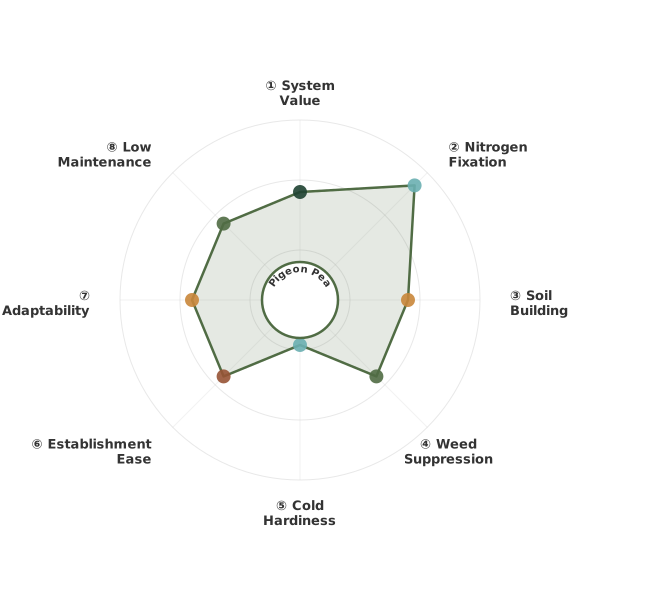
How These Traits Are Calculated
Trait dimensions are ordered clockwise starting from the top of the chart (12 o'clock position):
1. System Value
Ecosystem service stacking across nitrogen, carbon, water, biodiversity
WHAT: Synthesizes the compounding value of multiple ecosystem services delivered simultaneously—nitrogen fixation, soil organic matter building, pollinator support, erosion control, and water infiltration improvement. This is the total regenerative impact beyond single-function metrics.
WHY: The highest-value cover crops deliver 3-5 significant ecosystem services at once. A legume that fixes nitrogen, builds biomass, supports pollinators, and improves water infiltration provides $150-300/acre in combined benefits versus $30-60 for single-function covers. This service stacking is the core principle of regenerative agriculture.
HOW: Scored via LLM synthesis of economics data, timeline benefits, and trait combinations. Exceptional (3.0): 4-5 major services stacked with strong economic value ratios. Typical (2.0): 2-3 moderate services. Limited (1.0): Single-function covers with minimal service stacking. Considers seed cost relative to benefit value.
2. Nitrogen Fixation
Biological nitrogen production via legume root nodule bacteria
WHAT: Measures the ability to convert atmospheric nitrogen (N₂) into plant-available ammonia through symbiotic bacteria in root nodules. Legumes form partnerships with rhizobium bacteria that fix 60-150 lbs N/acre/year, reducing or eliminating synthetic fertilizer needs for following crops.
WHY: Nitrogen is the most expensive fertilizer input in crop production ($0.50-1.00/lb). Cover crops with exceptional nitrogen fixation can provide $60-150/acre worth of fertility while building soil organic matter. This biological process also reduces groundwater contamination from nitrogen runoff and lowers farm carbon footprint.
HOW: Ratings based on annual nitrogen fixation capacity and reliability across soil conditions. Exceptional (3.0): Legumes like hairy vetch, crimson clover, and field peas fixing >100 lbs N/acre/year. Typical (2.0): Moderate fixers like red clover at 60-100 lbs N/acre/year. Limited (1.0): Non-legumes (grasses, brassicas) with zero fixation capacity.
3. Soil Building
Weighted: biomass production (60%) + root system depth (40%)
WHAT: Combines above-ground biomass production with root depth to measure total soil organic matter contribution. Biomass provides surface organic matter, while deep roots deposit carbon at depth and break up compaction layers.
WHY: Soil organic matter is the foundation of regenerative agriculture, improving water retention, nutrient cycling, and biological activity. Each 1% increase in soil organic matter holds an additional 20,000 gallons of water per acre and represents $500-1,000 in fertility value. Deep roots access subsoil nutrients and create channels for water infiltration.
HOW: Weighted formula prioritizes biomass production (60% weight) for immediate organic matter contribution, with root depth (40% weight) for long-term soil structure. Exceptional (3.0): High-biomass crops with deep roots like cereal rye (8+ tons biomass, 5+ ft roots). Typical (2.0): Moderate on both factors. Limited (1.0): Low biomass or shallow roots.
4. Weed Suppression
Physical competition through rapid establishment and dense growth
WHAT: Measures the ability to outcompete weeds through rapid germination, aggressive early growth, and dense canopy formation. Physical smothering and light competition reduce weed pressure without herbicides.
WHY: Weed management is a major labor and cost burden for farmers. Cover crops that effectively suppress weeds reduce herbicide costs ($20-60/acre), decrease cultivation passes (fuel + labor), and provide clean seedbeds for cash crops. This is especially valuable in organic systems where herbicide options are limited.
HOW: Ratings based on germination speed, tillering density, and canopy closure timing. Exceptional (3.0): Fast-establishing, dense-tillering crops like cereal rye, oilseed radish that close canopy within 3-4 weeks. Typical (2.0): Moderate establishment and coverage. Limited (1.0): Slow-establishing or sparse crops that allow weed competition.
5. Cold Hardiness
Winter survival for fall planting and spring green manure value
WHAT: Measures tolerance to freezing temperatures and ability to survive winter conditions. Winter-hardy cover crops can be fall-planted, overwinter as living mulch, and provide early spring growth before cash crop planting.
WHY: Fall-planted winter-hardy covers extend the growing season into unused months, capturing solar energy and preventing erosion during wet periods. Spring green manure from overwintered covers provides early nitrogen and biomass. This timing flexibility is critical in cold climates with short growing seasons.
HOW: Ratings based on minimum survival temperature and winter active growth. Exceptional (3.0): Winter-hardy crops like cereal rye, hairy vetch, crimson clover surviving to -20°F with active growth in spring. Typical (2.0): Moderate cold tolerance. Limited (1.0): Warm-season crops like buckwheat, cowpea killed by first frost.
6. Establishment Ease
Germination speed, soil requirement flexibility, planting window breadth
WHAT: Measures how easily the cover crop establishes from seed, including germination speed, tolerance for variable soil conditions, and flexibility in planting timing. Easy establishment means reliable stands without intensive management.
WHY: Difficult-to-establish covers increase risk of stand failure, wasted seed costs, and reduced benefits. Easy establishment crops tolerate late planting, poor seedbed preparation, and variable moisture—critical when cover cropping windows are narrow between cash crops. Reliable establishment ensures consistent soil building and weed suppression benefits.
HOW: Ratings based on days to emergence, soil condition sensitivity, and planting window breadth. Exceptional (3.0): Fast germinators like buckwheat (3-5 days) and cereal rye (5-7 days) with wide planting windows. Typical (2.0): Moderate establishment requirements. Limited (1.0): Slow or finicky establishers requiring precise conditions.
7. Adaptability
Weighted: climate tolerance (60%) + multi-benefit versatility (40%)
WHAT: Combines climate adaptability (temperature and rainfall range) with multi-benefit versatility (diverse ecosystem services) to measure overall system flexibility. High adaptability means the cover works across farm regions and provides multiple functions.
WHY: Farmers need cover crops that work reliably across diverse fields and provide stacked benefits. Climate-adaptable covers reduce risk in variable weather, while multi-benefit crops deliver nitrogen fixation + pollinator support + forage value simultaneously. This versatility maximizes return on cover crop investment.
HOW: Weighted formula prioritizes climate tolerance (60% weight) for geographic reliability, with multi-benefit value (40% weight) for functional stacking. Exceptional (3.0): Wide climate range + multiple significant benefits. Typical (2.0): Moderate on both factors. Limited (1.0): Narrow climate range or single-function crops.
8. Low Maintenance
Inverted from maintenance intensity—low inputs mean high scores
WHAT: Measures minimal input requirements for successful cover cropping. Low-maintenance covers require no irrigation, minimal fertility, easy termination, and tolerate variable management timing.
WHY: Cover crops compete for resources with cash crops in tight rotations. Low-maintenance covers fit easily into existing systems without adding labor, equipment, or input costs. Easy termination is especially critical—covers that are difficult to kill can become weeds and delay cash crop planting.
HOW: Inverted score from maintenance intensity trait (4.0 minus raw score). Exceptional (3.0): Self-sufficient crops like cereal rye, field peas requiring no irrigation or fertility, easily terminated by mowing or winter-kill. Typical (2.0): Moderate input needs. Limited (1.0): High-maintenance crops needing irrigation, heavy fertility, or difficult termination (herbicides, multiple tillage passes).
Ratings are based on documented performance in regenerative systems, not conventional high-input scenarios. All traits assume integrated management practices focused on soil health and ecosystem services.
4
System Role & Multi-Benefit Value
Functional roles, integration strategies, and stacked benefits
System Role & Multi-Benefit Value
Functional roles, integration strategies, and stacked benefits
Functional Role
Total System Value
Pigeon pea offers substantial system value by acting as a nitrogen-fixing cover crop, improving soil structure, and increasing organic matter. Its ability to produce significant biomass, utilized via chop-and-drop, directly enhances soil fertility and moisture retention, reducing the need for external inputs. As a pioneer species, it accelerates the establishment of more complex agroecosystems. The edible seeds provide a direct harvest value, diversifying farm income. By fixing atmospheric nitrogen, it benefits companion crops, a key aspect of agroecological synergy. Furthermore, its perennial nature contributes to long-term soil health and provides habitat and forage opportunities, enhancing overall farm resilience and reducing ecological risks associated with monocultures. Its role in syntropic systems and as a cover crop contributes to carbon sequestration and water management.
Integration Characteristics
Multi-Benefit Value: Ideally Suited - Beyond edible yields, pigeon pea enhances soil fertility, improves soil structure, provides biomass for organic matter, and supports beneficial insects, offering a holistic contribution to farm ecosystems.
Sources behind this view
 Research
-
Influence of Crops and Different Production Systems on Soil Carbon Fractions and Carbon Sequestration in Rainfed Areas of Semiarid Tropics in India (opens in new window)
This study found: Seven-year Indian study: Pigeon peas improved soil health and carbon storage. Organic farming reduced compaction, increased water retention, and boosted soil carbon fractions and yields compared to co
5
Management & Care Requirements
Integration guidance, maintenance needs, and care practices
Management & Care Requirements
Integration guidance, maintenance needs, and care practices
How to Integrate This Plant
Pigeon pea (Cajanus cajan) is a highly versatile legume, primarily functioning as a cover crop and nitrogen fixer within regenerative systems. Its rapid biomass production makes it excellent for building soil organic matter and can be utilized through 'chop and drop' methods as mulch or incorporated into the soil. It's a pioneer species, ideal for establishing new garden systems or intercropped in orchards and diverse cropping systems. Its primary functions include nitrogen fixation, soil organic matter enhancement, and biomass generation. Compatible practices include alley cropping, syntropic farming systems, and intercropping within grain or fruit production. Pigeon pea begins contributing soil fertility and biomass in Year 1 and can continue to provide benefits for 3-5 years as a perennial. The total system value extends beyond its direct use as a food source, significantly enhancing soil health, providing nitrogen for companion plants, and contributing to overall farm biodiversity.
Integration Practices & Management
Regenerative farmers integrate pigeon pea (*Cajanus cajan*) primarily as a versatile cover crop and intercropping component. As a pioneer species, it excels in establishing new systems by rapidly building soil organic matter and biomass through 'chop and drop' mulching. Studies demonstrate its utility in no-till and reduced tillage systems, often intercropped with cash crops like maize, soybean, and wheat. For instance, it's integrated into syntropic orchard designs, planted alongside cacao and Poro posts. Its nitrogen-fixing capabilities are a key benefit. While specific seeding rates, timing, and termination strategies like natural winterkill, mowing, or grazing are not detailed in the provided text, its perennial nature suggests a multi-year presence. Its role in semi-arid cropping systems alongside castor bean under conservation agriculture highlights its resilience. Pigeon pea is well-suited for subtropical climates and hot, humid areas as a cover crop option. Its leaves are valued for mulch, and seeds are an edible food source.
Management Profile
Maintenance Intensity: Adequate - As a drought-tolerant, nitrogen-fixing legume, pigeon pea requires minimal external inputs, benefiting from healthy soil biology and judicious use of compost or mulch for optimal system integration.
Sources behind this view
 Videos & Podcasts
-
Pigeon pea is a versatile permaculture plant for soil building, food, fodder, and habitat. It fixes nitrogen, provides biomass via 'chop and drop', and thrives in warm climates, growing up to 3.5m and

-
Pigeon pea thrives in various soils and partial shade, improving soil fertility (0.3% SOC increase in trials) and fixing significant nitrogen (100-200 lb/acre). It requires frost-free conditions and m
Research
-
Influence of Crops and Different Production Systems on Soil Carbon Fractions and Carbon Sequestration in Rainfed Areas of Semiarid Tropics in India (opens in new window)
This study found: Seven-year Indian study: Pigeon peas improved soil health and carbon storage. Organic farming reduced compaction, increased water retention, and boosted soil carbon fractions and yields compared to co
-
Legume-based intercropping systems promote beneficial rhizobacterial community and crop yield under stressing conditions (opens in new window)
This study found: Legume-based intercropping enhances soil health and crop yields by promoting beneficial soil bacteria, improving resilience to drought and nutrient deficiency for sustainable farming.
-
Comparative assessment of conventional, conservation, and organic agriculture for productivity and profitability of pigeonpea under pigeonpea(Cajanus cajan)-wheat (Triticum aestivum) system (opens in new window)
This study found: Conservation agriculture, especially no-till on narrow beds (CA2), significantly boosted pigeon pea growth, yield (24-36% higher), and net profits (39-54% higher) compared to conventional and organic
-
Soil organic carbon, carbon sequestration, soil microbial biomass carbon and nitrogen, and soil enzymatic activity as influenced by conservation agriculture in pigeonpea (Cajanus cajan) + soybean (Gycine max) intercropping system (opens in new window)
This study found: Conservation agriculture in pigeon pea + soybean intercropping in India significantly boosted soil organic carbon, carbon storage, microbial activity, and soil enzyme function compared to conventional
6
Economics & Value Streams
Direct harvest, system benefits, ecosystem services, and risk diversification
Economics & Value Streams
Direct harvest, system benefits, ecosystem services, and risk diversification
Comprehensive economic analysis including direct harvest value, system enhancement contributions, ecosystem services, value timeline, and risk diversification strategies.
Cover Crop Investment
| Metric | Value |
|---|---|
| Seed Cost | $15-30/acre $37-74/ha |
| Termination Cost | 20-50 49-124 |
| Biomass Production | 2-5 4-11 |
| N Fixation Value | 50-100 56-112 |
| Weed Control Savings | 10-30 25-74 |
Cover crops are soil investments, not cash crops. Economics measured in soil health gains, input reduction, and subsequent crop performance. Values show direct costs and estimated benefits.
System Enhancement Value
Beyond cost recovery: soil building, nitrogen, biomass, and weed suppression
Nitrogen Fixation & Cycling
30-100 lbs N/acre/year = $18-60/acre fertilizer replacement (based on $0.60/lb N)
Pigeon pea (Cajanus cajan) is a highly effective nitrogen fixer, contributing significantly to soil fertility within integrated farm systems. As a legume, it forms symbiotic relationships with Rhizobium bacteria, converting atmospheric nitrogen into a usable form for plants. This biological process reduces the farm's reliance on synthetic nitrogen fertilizers, which are energy-intensive to produce and can have negative environmental impacts. The nitrogen fixed by pigeon pea becomes available to subsequent crops or to companion plants, improving soil health and reducing input costs. Knowledge base excerpts consistently highlight its nitrogen-fixing capability. The quantitative reference data indicates a range of 30-100 lbs N/acre/year, which translates to substantial savings in fertilizer replacement costs. For a mid-range estimate of 65 lbs N/acre/year and assuming a fertilizer cost of $0.60/lb N, this represents an annual value of approximately $39/acre.
Soil Building & Weed Suppression
Beyond nitrogen fixation and windbreak potential, pigeon pea offers a multitude of other system benefits. It is a prolific biomass producer, contributing to soil organic matter through 'chop and drop' methods, enhancing soil structure and water retention. Its flowers attract pollinators like bees, crucial for the productivity of other crops and the broader ecosystem. Pigeon pea also serves as a valuable food source with high protein content (25%) and vitamins, and as excellent fodder for livestock, including cows, pigs, and chickens, creating an internal farm nutrient cycle and reducing external feed costs. In new garden systems, it acts as a pioneer species, rapidly improving soil conditions. Its hardiness and multi-functional utility make it invaluable during initial garden establishment and for ongoing system resilience.
Erosion Control
Variable; can protect adjacent crops by reducing wind speed, potentially improving yields by 5-15% in protected areas.
Pigeon pea can function effectively as a windbreak, particularly when planted in dense rows or as a border hedge, as noted in knowledge base excerpt. Its relatively rapid growth and ability to reach heights of up to 3.5 meters in warmer climates allow it to establish a protective barrier relatively quickly. This windbreak function is crucial for protecting more delicate crops from strong winds, thereby reducing physical damage, preventing soil erosion, and minimizing moisture loss through evapotranspiration. In silvopasture systems or areas prone to wind, a well-established pigeon pea windbreak can create a more favorable microclimate for livestock and cultivated plants. The reduction in wind speed can also lead to improved yields for susceptible crops by preventing lodging and reducing stress. While specific acreage protection varies by density and wind intensity, its role in creating sheltered zones is a valuable system service.
Ecosystem Service Contributions
Environmental contributions: carbon, pollinators, wildlife, and water
- Carbon Sequestration: Pigeon pea contributes to carbon sequestration through biomass production, which can be incorporated into the soil or used as mulch. As a legume, it enhances soil organic carbon (OC) levels, as demonstrated in studies of similar cropping systems. Its rapid growth rate allows for significant carbon capture during its lifespan.
- Pollinator Support: High, as its flowers are noted to attract pollinators like bees, which are vital for the reproductive success of many agricultural crops and wild plants.
- Wildlife Habitat: Offers habitat for beneficial insectivorous birds and provides a food source (seeds, foliage) for various wildlife, depending on the agroecosystem context.
- Water Quality: Not applicable
Value Timeline: Soil Building Process
When you'll see results: immediate soil benefits, compounding over seasons
Years 1-2
Establishment of nitrogen fixation, initial biomass production for 'chop and drop', potential for early windbreak effects, and habitat provision for beneficial insects and birds.
Years 3-5
Full nitrogen fixation capacity, significant biomass contribution to soil organic matter, established windbreak function, and commencement of potential cash crop harvest (if managed for that purpose). Perennial varieties may begin to decline around this time.
Years 10-20
Ongoing soil fertility improvements from residual nitrogen and organic matter. If managed as part of a longer-term system, its contributions to soil health and microclimate regulation continue. If grown as an annual, its value is limited to its growth cycle.
20+ Years
Long-term soil health improvements and ecosystem services continue to benefit the system, particularly if it has contributed significantly to soil organic matter accumulation. Its role as a pioneer species means its legacy can be seen in improved soil structure and fertility for future plantings.
Farm Risk Reduction
How this reduces farm risk: lower input costs and better soil resilience
- Multiple Revenue Streams: Potential cash crop revenue (grain), livestock fodder, nitrogen fertilizer replacement, soil organic matter enhancement, pollinator support, and habitat provision.
- Temporal Income Spread: Provides immediate benefits like nitrogen fixation and biomass in the early years, with potential for harvests in subsequent years or as an annual. Ongoing ecosystem services (soil health, microclimate) are long-term.
- Market Risk Hedge: Reduces reliance on purchased inputs (fertilizers, animal feed), diversifying revenue streams beyond primary crops, and enhancing soil resilience against drought and erosion due to improved soil health.
Sources behind this view
Videos & Podcasts
-
Pigeon pea thrives in various soils and partial shade, improving soil fertility (0.3% SOC increase in trials) and fixing significant nitrogen (100-200 lb/acre). It requires frost-free conditions and m
-
Pigeon pea is a versatile permaculture plant for soil building, food, fodder, and habitat. It fixes nitrogen, provides biomass via 'chop and drop', and thrives in warm climates, growing up to 3.5m and
-
Pigeon pea, a 1-4m perennial legume, is a valuable mid-level permaculture species that fixes nitrogen to improve soil fertility and produces edible, protein-rich seeds.
Research
-
Influence of Crops and Different Production Systems on Soil Carbon Fractions and Carbon Sequestration in Rainfed Areas of Semiarid Tropics in India (opens in new window)
This study found: Seven-year Indian study: Pigeon peas improved soil health and carbon storage. Organic farming reduced compaction, increased water retention, and boosted soil carbon fractions and yields compared to co
-
Long-term impact of pulses and organic amendments inclusion in cropping system on soil physical and chemical properties (opens in new window)
This study found: Including pulses in crop rotations with smart nutrient management improved soil health, increased organic matter by up to 50%, and boosted corn/wheat yields by over 20% in a 13-year study in the Indo-
7
Regenerative Suitability Details
Comprehensive trait ratings for system integration assessment
Regenerative Suitability Details
Comprehensive trait ratings for system integration assessment
Comparative ratings for this plant across key regenerative agriculture traits.
| Trait | Suitability | Explanation |
|---|---|---|
| Cold Hardiness | Not Recommended | As a tropical/subtropical legume, pigeon pea thrives in warm conditions and functions as a summer annual where frost occurs, naturally cycling with the seasons. |
| Weed Suppression | Adequate | Once established, pigeon pea's substantial growth forms a canopy that offers effective competition, contributing to natural weed management within the integrated system. |
| Nitrogen Fixation | Ideally Suited | Pigeon pea is a premier nitrogen fixer, significantly enhancing soil fertility through symbiotic relationships, and its drought tolerance ensures residual nitrogen availability. |
| Root System Depth | Adequate | The strong taproot of pigeon pea penetrates deeply, actively scavenging for nutrients, improving soil structure through aeration and aggregation, and supporting soil biology. |
| Biomass Production | Adequate | This nitrogen-fixing legume generates moderate to good biomass in warm climates, contributing valuable organic matter that nourishes soil life and enhances soil health. |
| Establishment Ease | Adequate | Pigeon pea establishes readily in warm climates with appropriate soil preparation, demonstrating good early vigor and contributing to a resilient, self-sustaining system. |
| Multi Benefit Value | Ideally Suited | Beyond edible yields, pigeon pea enhances soil fertility, improves soil structure, provides biomass for organic matter, and supports beneficial insects, offering a holistic contribution to farm ecosystems. |
| Climate Adaptability | Adequate | Thriving in warm to hot climates, pigeon pea is well-suited to regions with adequate moisture but also exhibits drought tolerance, integrating seamlessly into systems adapted to these conditions. |
| Maintenance Intensity | Adequate | As a drought-tolerant, nitrogen-fixing legume, pigeon pea requires minimal external inputs, benefiting from healthy soil biology and judicious use of compost or mulch for optimal system integration. |
Comparative System: Ratings compare plants within their economic category (e.g., cover crop nitrogen fixation compared to other cover crops, not to all plants). Individual farm conditions and management practices significantly influence actual performance.
Sources behind this view
Videos & Podcasts
-
Pigeon pea thrives in various soils and partial shade, improving soil fertility (0.3% SOC increase in trials) and fixing significant nitrogen (100-200 lb/acre). It requires frost-free conditions and m
Research
-
Influence of Crops and Different Production Systems on Soil Carbon Fractions and Carbon Sequestration in Rainfed Areas of Semiarid Tropics in India (opens in new window)
This study found: Seven-year Indian study: Pigeon peas improved soil health and carbon storage. Organic farming reduced compaction, increased water retention, and boosted soil carbon fractions and yields compared to co
8
Know the Debate
Pigeon pea offers significant regenerative benefits, particularly in warmer climates. Its efficacy as a nitrogen-fixing cover crop and biomass prod...
Know the Debate
Pigeon pea offers significant regenerative benefits, particularly in warmer climates. Its efficacy as a nitrogen-fixing cover crop and biomass prod...
Pigeon pea offers significant regenerative benefits, particularly in warmer climates. Its efficacy as a nitrogen-fixing cover crop and biomass producer is well-documented, with nitrogen credits and residue amounts varying based on environmental conditions and management. While establishing pigeon pea is generally straightforward, its success hinges on warm soil temperatures and adequate frost-free periods, making timing and regional climate critical factors. Its deep taproot is highly effective at improving soil structure and breaking compaction, contributing to better water infiltration and overall soil health when integrated sustainably into crop rotations or agroforestry systems.
How much nitrogen does pigeon pea fix?
Significant N fixer (60-150 lbs/acre)
Pigeon pea is a robust nitrogen fixer, commonly contributing 60-150 lbs N/acre annually, substantially reducing the need for synthetic fertilizers. This benefit is well-supported by academic research and institute guides, making it a reliable component of fertility management.
Sources behind this view
Sources behind this view
Videos & Podcasts
-
Pigeon pea thrives in various soils and partial shade, improving soil fertility (0.3% SOC increase in trials) and fixing significant nitrogen (100-200 lb/acre). It requires frost-free conditions and management to avoid woody stems (coppicing recommended). Inoculation may be needed for full N fixation. Proper grazing prevents overgrazing and stand burnout.
Research
-
Influence of Crops and Different Production Systems on Soil Carbon Fractions and Carbon Sequestration in Rainfed Areas of Semiarid Tropics in India (opens in new window)
This study found: A seven-year study in India's dry tropical regions found that planting pigeon peas significantly improved soil health, including reducing compaction and increasing its ability to hold water, compared to sunflowers or mung beans. Pigeon pea fields also had about 15% more total soil carbon and a faster rate of carbon storage. Organic farming practices, compared to conventional or integrated systems, consistently led to less soil compaction and better water retention throughout the soil profile. Both organic and integrated farming systems boosted soil carbon fractions and resulted in higher crop yields (measured as pigeon pea equivalent) than the control fields. The findings suggest that organic farming and specific crops like pigeon peas can effectively improve soil properties, store more carbon, and increase yields in dry, tropical areas.
-
Legume-based intercropping systems promote beneficial rhizobacterial community and crop yield under stressing conditions (opens in new window)
This study found: Growing different crops together, especially with legumes (like beans or peas), can significantly boost farm productivity and soil health, particularly in areas with limited resources. Legumes help improve soil fertility and nutrient cycling, and they work with beneficial soil bacteria (called PGPR) that promote plant growth. This combination helps crops, like corn grown with pigeon peas, produce better yields and become more resilient to tough conditions such as drought or lack of nutrients. Intercropping with legumes is a smart way to farm sustainably.
 From the Web
-
Pigeon peas fix nitrogen (20% available to next crop), efficiently utilize phosphorus via piscidic acid, build organic matter, and suppress weeds through shade, allelopathic litter, and drought tolerance. Young seedlings need weed protection.
Variable N contribution (context-dependent)
Observed nitrogen fixation from pigeon pea varies significantly due to factors like soil type, microbial presence, and climate. While potential for high fixation exists, farmers should rely on soil tests and strategic management for predictable results.
Sources behind this view
Sources behind this view
Videos & Podcasts
-
Pigeon pea is a versatile permaculture plant for soil building, food, fodder, and habitat. It fixes nitrogen, provides biomass via 'chop and drop', and thrives in warm climates, growing up to 3.5m and lasting 5 years. Requires warm soil (25°C) and soaking seeds before planting.
Research
-
Effect of Soil Mineral N Levels and Inoculation on Nodulation, Nitrogenase Activity, and Grain Yield of Pigeon Pea<sup>1</sup> (opens in new window)
This study found: AbstractSince pigeon pea [Cajanus cajan L. (Millsp.)] has a considerable potential as a tropical legume, intensive research in the Caribbean is being undertaken with a view to increase production. There is a scarcity of information on the effectiveness of Rhizobium of the pigeon pea to fix atmospheric N and to meet the N needs of the crop. Moreover, conflicting results have been reported on the effect of fertilizer N on grain yield, presumably because of variable mineral N levels in soil. Therefore the present investigation was designed to study the effect of changes in soil mineral N levels (brought about initially by incorporation of coconut fibre and bagasse with soil at the rate of 25 metric tons/ha each) and five Rhizobium strains (two local, UWI 10004 and UWI 10013, and three exotic, iCPE(a), CB756 and CIAM/1001) on nodulation, nitrogenase activity and grain yield of the crop. Greenhouse and field experiments were conducted on a River Estate Loam, a fluventic eutropept, at the University Field Station, Trinidad. The results showed that the incorporation of coconut fibre and begasse reduced soil mineral N levels through immobilization and led to early nodule formation and nitrogenase activity. Although the incorporation of coconut fibre increased plant shoot weight after 14 weeks growth, that of bagasse immobilized so much mineral N (from initial level of 50 ppm N to 6 ppm N at 7 weeks after application) that plants were N starved. The dry pod yield was increased by all Rhizobium strains. However the grain yield was significantly increased by the exotic strains, iCPE(a) and CIAM/1001. Thus, by manipulating soil mineral N levels and by using effective Rhizobium strains, the pigeon pea grain yields can be increased.
-
Conservation Agriculture Strategies Evaluation under Rainfed Conditions (opens in new window)
This study found: A study in dry, rainfed areas looked at different farming methods to grow pigeon pea (also known as arhar or toor dal). The best results for plant growth and yield came from using conventional tillage (plowing) along with planting horse gram as a green manure crop that was then incorporated into the soil. This practice improved soil health and plant development. While this method was best for yield, a slightly less intensive tillage system (one plowing plus one cultivation and a pre-emergent herbicide) offered a better financial return. Farming with absolutely no tillage (zero tillage) led to too many weeds and compacted soil, reducing the harvest. The research suggests that finding the right balance of tillage operations is key to keeping soil healthy and making the most money from farming.
Making Sense of the Differences
The range of nitrogen fixation estimates, from 60 to 150 lbs N/acre, largely depends on soil microbial populations, moisture availability, and management. In regions with ideal conditions and robust native rhizobia, higher fixation rates are achievable. Farmers should monitor soil tests for subsequent crops and consider inoculating seeds if native soil rhizobia are suspected to be low, particularly in novel environments or after long fallows.
How much biomass does pigeon pea produce?
High biomass producer (2-4+ tons/acre)
Pigeon pea generates substantial dry matter, typically 2 to over 4 tons per acre, providing significant organic matter for soil health. This high biomass is well-supported by field practitioner reports and institute guides advocating for its use in 'chop and drop' systems.
Sources behind this view
Sources behind this view
Videos & Podcasts
-
Pigeon pea is a versatile permaculture plant for soil building, food, fodder, and habitat. It fixes nitrogen, provides biomass via 'chop and drop', and thrives in warm climates, growing up to 3.5m and lasting 5 years. Requires warm soil (25°C) and soaking seeds before planting.
-
Pigeon pea provides protein and mulch via chop-and-drop. Yacon offers edible roots, and turmeric is used for culinary and immune benefits. Aromatic plants are used for companion planting to deter pests.

From the Web
-
Plant pigeon peas with 10-15 inch row spacing, 8 inch plant spacing, and a seeding rate of 20+ lbs/acre due to 50% germination. Plant 1 inch deep with adequate moisture. They fix 90 lbs N/acre, produce 2.2 tons dry matter, and are good for erosion control.
Variable biomass (2-3 tons/acre baseline)
While pigeon pea is a good biomass producer, actual yields can range based on conditions, often cited around 2 tons/acre. Management practices like coppicing influence its contribution to soil organic matter and subsequent nutrient release.
Sources behind this view
Sources behind this view
Videos & Podcasts
-
Pigeon pea, a 1-4m perennial legume, is a valuable mid-level permaculture species that fixes nitrogen to improve soil fertility and produces edible, protein-rich seeds.
Research
-
Conservation Agriculture Strategies Evaluation under Rainfed Conditions (opens in new window)
This study found: A study in dry, rainfed areas looked at different farming methods to grow pigeon pea (also known as arhar or toor dal). The best results for plant growth and yield came from using conventional tillage (plowing) along with planting horse gram as a green manure crop that was then incorporated into the soil. This practice improved soil health and plant development. While this method was best for yield, a slightly less intensive tillage system (one plowing plus one cultivation and a pre-emergent herbicide) offered a better financial return. Farming with absolutely no tillage (zero tillage) led to too many weeds and compacted soil, reducing the harvest. The research suggests that finding the right balance of tillage operations is key to keeping soil healthy and making the most money from farming.
-
Comparative assessment of conventional, conservation, and organic agriculture for productivity and profitability of pigeonpea under pigeonpea(Cajanus cajan)-wheat (Triticum aestivum) system (opens in new window)
This study found: A two-year study in New Delhi compared traditional farming (conventional), soil-conserving practices (conservation agriculture), and organic farming for growing pigeon peas and wheat together. Practices like no-till farming on permanent narrow beds (called CA2) led to better pigeon pea growth, with taller plants and more dry matter compared to conventional and organic methods. These conservation methods also showed improved root nodule activity, suggesting better natural nitrogen fixation and soil health. Pigeon pea yields were significantly higher with conservation agriculture, especially CA2, which produced 24-36% more grain than conventional or organic systems. While conservation agriculture had slightly higher initial costs (8-9%), it generated substantially more profit. CA2 provided the highest net income, with profits 39-54% higher than conventional farming over the two years. The study suggests that conservation agriculture, particularly the CA2 approach, is a more profitable and productive option for farmers growing pigeon peas in this region of India.
Making Sense of the Differences
Biomass production for pigeon pea, ranging from 2 to over 4 tons/acre dry matter, is influenced by climate, soil fertility, and management. In more arid or nutrient-limited conditions, yields may be on the lower end, whereas in humid, fertile environments with adequate phosphorus, higher biomass is achievable. 'Chop and drop' and coppicing management strategies specifically aim to maximize residue for soil health, ensuring its availability for decomposition and nutrient release.
What are the optimal planting conditions for pigeon pea?
Warm climate, adequate moisture, suitable soil
Pigeon pea thrives in warm, frost-free environments with adequate moisture during establishment. Ideal planting occurs in late spring/early summer (April-June N. Hem.) when soil temperatures reach 25°C, requiring proper inoculation for maximum nitrogen fixation.
Sources behind this view
Sources behind this view
Videos & Podcasts
-
Pigeon pea thrives in various soils and partial shade, improving soil fertility (0.3% SOC increase in trials) and fixing significant nitrogen (100-200 lb/acre). It requires frost-free conditions and management to avoid woody stems (coppicing recommended). Inoculation may be needed for full N fixation. Proper grazing prevents overgrazing and stand burnout.
-
Cowpeas are recommended as a summer green manure for nitrogen fixation and biomass accumulation. Soaking seeds aids germination in dry climates, and inoculating with Rhizobium bacteria is crucial for nitrogen fixation. They are easy to manage via chop-and-drop and pair well with other crops.
Research
-
Comparative assessment of conventional, conservation, and organic agriculture for productivity and profitability of pigeonpea under pigeonpea(Cajanus cajan)-wheat (Triticum aestivum) system (opens in new window)
This study found: A two-year study in New Delhi compared traditional farming (conventional), soil-conserving practices (conservation agriculture), and organic farming for growing pigeon peas and wheat together. Practices like no-till farming on permanent narrow beds (called CA2) led to better pigeon pea growth, with taller plants and more dry matter compared to conventional and organic methods. These conservation methods also showed improved root nodule activity, suggesting better natural nitrogen fixation and soil health. Pigeon pea yields were significantly higher with conservation agriculture, especially CA2, which produced 24-36% more grain than conventional or organic systems. While conservation agriculture had slightly higher initial costs (8-9%), it generated substantially more profit. CA2 provided the highest net income, with profits 39-54% higher than conventional farming over the two years. The study suggests that conservation agriculture, particularly the CA2 approach, is a more profitable and productive option for farmers growing pigeon peas in this region of India.
From the Web
-
Pigeon peas fix nitrogen (20% available to next crop), efficiently utilize phosphorus via piscidic acid, build organic matter, and suppress weeds through shade, allelopathic litter, and drought tolerance. Young seedlings need weed protection.
Adaptable to varied conditions, drought tolerant once established
Pigeon pea exhibits drought tolerance once established and can grow in various soil types and partial shade. While warmer conditions are ideal, its adaptability allows for use in diverse environments with careful management and seed selection.
Sources behind this view
Sources behind this view
Videos & Podcasts
-
Pigeon pea (Cajanus cajan) is a heat and drought-tolerant legume forage that outperforms alfalfa in hot conditions. Its deep roots improve soil, and it provides multi-season feed with high protein, reducing reliance on grain and fertilizer in warm climates.
-
Pigeon pea thrives in various soils and partial shade, improving soil fertility (0.3% SOC increase in trials) and fixing significant nitrogen (100-200 lb/acre). It requires frost-free conditions and management to avoid woody stems (coppicing recommended). Inoculation may be needed for full N fixation. Proper grazing prevents overgrazing and stand burnout.
-
Pigeon pea is a versatile permaculture plant for soil building, food, fodder, and habitat. It fixes nitrogen, provides biomass via 'chop and drop', and thrives in warm climates, growing up to 3.5m and lasting 5 years. Requires warm soil (25°C) and soaking seeds before planting.
Making Sense of the Differences
Pigeon pea thrives in warm, frost-free environments and benefits from fertile, well-drained soils. While some drought tolerance exists once established, adequate moisture is critical during germination. The need for specific soil temperatures (around 25°C) and frost-free periods dictates planting windows, usually late spring to early summer in temperate zones. Inoculation with effective *Rhizobium* strains is vital for maximizing nitrogen fixation, particularly if the soil has no prior history of legumes. Farmers in cooler or drier regions must carefully select varieties and planting timings, or consider it an annual crop where winters are harsh.
9
Learn More
Why farmers use this plant and additional resources
Learn More
Why farmers use this plant and additional resources
Why Regenerative Farmers Use This Plant
Cajanus cajan, commonly known as pigeon pea, is a highly valuable legume for regenerative agriculture, particularly in warmer climates. Its primary regenerative contribution lies in its exceptional nitrogen-fixing capabilities. As a legume, pigeon pea forms a symbiotic relationship with Rhizobium bacteria in the soil, converting atmospheric nitrogen into a plant-available form. This process can fix between 60-150 lbs of nitrogen per acre (67-168 kg/ha) annually, significantly reducing or even eliminating the need for synthetic nitrogen fertilizers for subsequent crops. This nitrogen credit can translate to direct savings for farmers, potentially reducing fertilizer costs by $30-$100 per acre ($74-$247/ha) depending on current market prices.
Beyond nitrogen, pigeon pea produces substantial above-ground biomass, typically ranging from 2,000 to 6,000 lbs/acre (2,240 to 6,720 kg/ha) when managed as a cover crop, and often exceeding 2-4 tons per acre (4.5-9 metric tons/ha) of dry matter. This biomass, when incorporated into the soil, contributes significantly to soil organic matter, enhancing soil structure, water-holding capacity, and microbial activity over time. Consistent use over 3-5 year rotations can lead to a measurable increase in soil organic matter, often by 0.1-0.5% annually, and potentially increasing soil organic carbon by 0.5-1.5% with consistent use. Its deep taproot system, reaching depths of 4-6 feet (1.2-1.8 meters), also helps to break up compacted soil layers, improving aeration and water infiltration, and scavenging nutrients from deeper soil profiles.
Integrating pigeon pea into farming systems offers a multitude of benefits beyond its direct soil-enriching properties. As a cover crop, it provides excellent ground cover, suppressing weeds by outcompeting them for light, water, and nutrients, thereby reducing the need for costly and environmentally impactful herbicides. This weed suppression is particularly effective during its rapid growth phase, often outperforming bare fallow periods by 70-80% in terms of weed biomass reduction. Its dense foliage also plays a crucial role in erosion control, protecting the soil surface from wind and water erosion, especially on sloped land. Furthermore, pigeon pea is a valuable source of forage for livestock, offering high protein content, and its flowers attract a variety of beneficial pollinators and insects, contributing to biodiversity within the agricultural landscape. In intercropping systems, it can be grown alongside staple crops like maize, sorghum, or cassava, providing nitrogen and improving the overall yield and resilience of the combined system.
The ecosystem services provided by pigeon pea extend to enhancing overall farm sustainability and resilience. The decomposition of its substantial biomass, typically occurring within 60-90 days after termination, releases a significant portion of its fixed nitrogen and other scavenged nutrients back into the soil, making them available for the following cash crop. This nutrient cycling is a cornerstone of regenerative agriculture, reducing reliance on external inputs. Studies have shown that cover crops like pigeon pea can increase water infiltration rates by 20-50%, making farms more resilient to both drought and heavy rainfall events. The slow-release nutrient profile is crucial for building stable soil organic matter, which leads to improved water-holding capacity and reduced erosion.
Pigeon pea has a long history of successful integration in diverse agricultural settings and demonstrates remarkable regional adaptations. In Indian agricultural systems, it is a staple crop and is widely used as a cover crop in rain-fed agriculture to improve soil fertility and prevent erosion, often intercropped with cereals. In Kenyan smallholder farmers, pigeon pea is utilized in intercropping systems with maize and beans, enhancing food security and soil health, and is a vital source of food and fodder in dryland farming. In Brazilian agroforestry systems, it is employed as an understory legume in coffee and cocoa plantations, fixing nitrogen and providing ground cover, and is also used as a cover crop in coffee and sugarcane plantations to combat soil erosion and enhance soil nitrogen levels. In Australian dryland farming, it can be used as a fallow crop or in rotation with cereals to build soil nitrogen and break disease cycles, and farmers in semi-arid regions have found success using pigeon pea in crop rotations to improve soil structure and provide a nitrogen boost for subsequent cereal crops. In the corn-soybean rotations of the US Midwest, it can be planted as a summer cover crop after small grains or as a component in a multi-species mix, terminated by crimping before soybean planting. In the UK, it can be sown in late spring and terminated by mowing in late summer or autumn, providing soil cover and nutrient cycling benefits, though its frost sensitivity needs careful consideration. In tropical regions of Southeast Asia, it is a staple intercrop in rainfed agriculture, significantly improving yields and soil fertility in sorghum and millet systems.
Sources behind this view
Videos & Podcasts
-
Pigeon pea is a versatile permaculture plant for soil building, food, fodder, and habitat. It fixes nitrogen, provides biomass via 'chop and drop', and thrives in warm climates, growing up to 3.5m and
-
Pigeon pea (Cajanus cajan) is a heat and drought-tolerant legume forage that outperforms alfalfa in hot conditions. Its deep roots improve soil, and it provides multi-season feed with high protein, re
-
Pigeon pea, a 1-4m perennial legume, is a valuable mid-level permaculture species that fixes nitrogen to improve soil fertility and produces edible, protein-rich seeds.
 Community
-
Inquires about pigeon pea (*Cajanus cajan*) nitrogen fixation in the Dominican Republic, questioning the need for commercial inoculants and exploring if wild *Rhizobium* from native legumes like *Glir
Read more (opens in new window) permies.com
Research
-
Influence of Crops and Different Production Systems on Soil Carbon Fractions and Carbon Sequestration in Rainfed Areas of Semiarid Tropics in India (opens in new window)
This study found: Seven-year Indian study: Pigeon peas improved soil health and carbon storage. Organic farming reduced compaction, increased water retention, and boosted soil carbon fractions and yields compared to co
-
Role of Pigeonpea Cultivation on Soil Fertility and Farming System Sustainability in Ghana (opens in new window)
This study found: Pigeonpea cultivation in Ghana can boost maize yields by 75-200% by improving soil fertility. Adoption is hindered by land tenure, market access, and variety availability.
-
Legume-based intercropping systems promote beneficial rhizobacterial community and crop yield under stressing conditions (opens in new window)
This study found: Legume-based intercropping enhances soil health and crop yields by promoting beneficial soil bacteria, improving resilience to drought and nutrient deficiency for sustainable farming.
-
Comparative assessment of conventional, conservation, and organic agriculture for productivity and profitability of pigeonpea under pigeonpea(Cajanus cajan)-wheat (Triticum aestivum) system (opens in new window)
This study found: Conservation agriculture, especially no-till on narrow beds (CA2), significantly boosted pigeon pea growth, yield (24-36% higher), and net profits (39-54% higher) compared to conventional and organic