These excerpts suggest its potential role in regenerative agriculture, particularly in soil health studies. One study investigated the impact of Calendula officinalis as a summer oilseed crop within a rotational system, examining its effects on soil aggregation alongside other oilseeds and corn following soybean harvest. Another study explored its use in a vineyard soil column, grown with copper applied to the surface, to assess the influence of compost tea on nutrient transfer and phytoavailability. These applications highlight Calendula officinalis's potential as a component in crop rotations and soil amendment experiments aimed at improving soil structure and nutrient cycling. Further research is needed to fully understand its broader applications as a cover crop, forage, or in polyculture systems within regenerative frameworks, and to gather specific farmer experiences regarding its integration into practices like no-till or agroforestry. While coverage in our knowledge base is limited, the above represents documented uses in regenerative systems.

Regenerative Quick Profile

All recommendations assume integrated, regenerative practices—not conventional inputs.

Climate & Soil Fit

Climate: Tropical Rainforest, Tropical Monsoon, Tropical Savanna, Hot Semi-Arid (Steppe), Cold Semi-Arid (Steppe), Hot Desert, Cold Desert, Humid Subtropical, Oceanic (Maritime Temperate), Hot-Summer Mediterranean, Warm-Summer Mediterranean, Monsoon-Influenced Humid Subtropical, Subtropical Highland, Hot-Summer Continental, Warm-Summer Continental, Subarctic, Monsoon-Influenced Hot-Summer Continental, Tundra

Zones: USDA 4-10, Australian Zones 1-14

Optimal Soil: Loam Soil

System Role & Functions

Primary: Cover Crop System

Secondary: Cash Crop With Services, Pollinator Support

Management Level

Experience: Beginner-Friendly

Maintenance: Moderate maintenance - This easy-to-grow annual integrates seamlessly into garden systems, readily self-seeding and thriving with a focus on building soil fertility through compost and mulch, enhancing its flowering and medicinal qualities.

Value Streams

  • Cover crop (soil investment)
  • Soil building and erosion control
  • Pollinator habitat and support
1

Climate Suitability Assessment

Will this plant thrive in your climate?

IDEALLY SUITED

Köppen Zone: Af (Tropical Rainforest), Am (Tropical Monsoon), Aw (Tropical Savanna), Cfa (Humid Subtropical), Cfb (Oceanic (Maritime Temperate)), Cwa (Monsoon-Influenced Humid Subtropical)
USDA Zone: 6a, 7a, 8a, 9a, 10a, 11a, 12a
Australian Zone: temperate
EU Climate Region: atlantic

Pot marigold thrives in climates with mild temperatures, typically between 60-75°F (15-24°C), and consistent moisture. These conditions are met in Köppen Cfb zones, USDA zones 7a-8b, Australian temperate zones, and the EU Atlantic climate region. In these areas, it establishes readily, exhibits vigorous vegetative growth, and produces abundant flowers, fulfilling its roles as a cover crop and pollinator support plant with minimal intervention. The long frost-free periods and moderate summers allow for maximum biomass accumulation and extended flowering periods. Establishment is highly reliable, and the plant is well-adapted to the environmental conditions, requiring little to no supplemental irrigation or protection. Its performance in these zones is consistently high, leading to excellent outcomes for regenerative agriculture practices, including soil health improvement and biodiversity enhancement.

ADEQUATE

Köppen Zone: BSh (Hot Semi-Arid (Steppe)), Csa (Hot-Summer Mediterranean), Csb (Warm-Summer Mediterranean), Cwb (Subtropical Highland), Dfa (Hot-Summer Continental), Dfb (Warm-Summer Continental)
USDA Zone: 5a, 5b
Australian Zone: subtropical
EU Climate Region: continental

Pot marigold can perform adequately in climates with a wider range of temperatures and moisture patterns, provided some management considerations are in place. This includes Köppen Cfa, Cfb, Dfa, Dfb zones, USDA zones 5b-6b and 9a-10b, Australian subtropical zones, and EU continental regions. In these areas, it can establish and grow, but may experience limitations such as reduced flowering or vigor during extreme summer heat (above 85°F/29°C) or periods of drought. As an annual, it requires timely planting to maximize its growth cycle before the first frost in colder continental zones. While not always reaching its full potential without some intervention like supplemental watering or shade, it still provides valuable cover crop benefits and supports pollinators. Its economic viability is good, but requires more careful planning and potentially slightly higher input costs compared to ideal zones.

NOT RECOMMENDED

Köppen Zone: ET (Tundra), BSk (Cold Semi-Arid (Steppe)), BWh (Hot Desert), BWk (Cold Desert), Dfc (Subarctic), Dwa (Monsoon-Influenced Hot-Summer Continental)
USDA Zone: 2a, 3a, 3b, 4a

Pot marigold is not recommended for climates with extreme temperature fluctuations, very short growing seasons, or prolonged periods of intense heat and drought. This includes Köppen Csa, Dwa, and Dwb zones, USDA zones 3a-5a, Australian arid/semi-arid regions (not explicitly listed but implied by contrast), and EU Boreal regions. In hot, dry Mediterranean climates (Csa), summer heat and lack of moisture severely limit growth and flowering. In monsoon-influenced continental climates (Dwa), extreme temperature swings and heavy rainfall can hinder establishment and performance. Subarctic and very cold continental climates (Dwb, USDA 3a-5a) have growing seasons too short and winters too harsh for even annual success. Economically and practically, the plant's performance is too unreliable, requiring significant inputs for minimal return, making alternative, better-adapted species a far superior choice for regenerative agriculture in these challenging environments.

Better alternatives for these "not recommended" zones: Cowpea (Heat-tolerant legume for hot, dry zones), Sunn Hemp (Tropical nitrogen fixer adapted to hot, dry conditions), Hairy Vetch (Cold-hardy annual legume for nitrogen fixation in cold zones), Winter Rye (Extremely cold-hardy cover crop for biomass and soil protection)

Note: Zones listed above represent climates where this plant can produce reliably with reasonable management. Climate zones not mentioned would require intensive climate modification (greenhouses, extensive infrastructure) and are not economically viable for regenerative agriculture purposes.

2

Soil Suitability Assessment

Which soil types work best for this plant?

IDEALLY SUITED

Loam Soil

This plant thrives in these soil types without requiring amendments or remediation. Natural soil conditions support optimal growth and productivity.

ADEQUATE

Clay Soil, Rich Soil, Rocky Soil, Sandy Soil

This plant performs acceptably in these soil types with moderate, manageable remediation such as pH adjustment, compost addition, or drainage improvement. The required amendments are practical and cost-effective for regenerative agriculture.

NOT RECOMMENDED

Acidic Soil, Alkaline Soil, Desert Soil, Saline Soil, Wet Soil

Growing this plant in these soil types would require impractical remediation such as complete soil replacement, extensive amendments, or cost-prohibitive infrastructure. These conditions are not economically viable for regenerative agriculture.

Note: Soil suitability assessments focus on remediation requirements. "Ideally Suited" means the plant generally thrives without the need for substantial amendments, "Adequate" means manageable remediation (lime, compost, mulch), and "Not Recommended" means impractical soil changes would be required. Climate factors like rainfall and temperature also influence success.

3

Seasonal Considerations

Planting timing, growth duration, and harvest windows

Calendula offers flexible cover cropping options across a range of climates. For spring planting, sow seeds as soon as the soil can be worked, as calendula exhibits good frost tolerance. This allows for early establishment and biomass accumulation before your primary cash crop is ready for planting. In the fall, plant calendula before the first expected frost to allow for several weeks of growth and establishment. It can overwinter in many of the supported zones, providing a living mulch and soil protection through winter dormancy before terminating it in early spring.

Calendula typically establishes within two to three weeks, with peak biomass occurring in the warmer months. While it can be grown as a summer cover, its preference leans towards cooler temperatures. If aiming for a winter cover, ensure fall planting allows sufficient time for root development. Termination is generally straightforward; mechanical methods or light tillage a week or two before planting your next cash crop are usually effective. Consider frost-seeding calendula in early spring into overwintering cash crops or pastures for a seamless transition.

4

System Role & Multi-Benefit Value

Functional roles, integration strategies, and stacked benefits

Functional Role

Total System Value

Pot marigold offers a multi-faceted contribution to whole-farm resilience. Beyond its direct use as an oilseed crop with potential for harvest, its value lies significantly in system enhancement and ecosystem services. As a cover crop, it aids in erosion control and can improve soil aggregation, as indicated by its inclusion in studies analyzing soil structure. The plant's flowering period provides valuable support for pollinators, a critical component of farm-level biodiversity and a key ecosystem service. While not a nitrogen fixer, its root system can help break up soil, improving water infiltration and aeration. Integrating pot marigold into diverse crop rotations or cover crop mixes diversifies farm activities, reducing reliance on monocultures and contributing to a more robust and resilient agricultural system. Its ability to thrive in various soil conditions further enhances its utility in different farm contexts.

Integration Characteristics

Multi-Benefit Value: Adequate - Valued for medicinal and culinary uses, calendula significantly supports pollinator and beneficial insect populations, contributing to the overall health and resilience of the agroecosystem.

5

Management & Care Requirements

Integration guidance, maintenance needs, and care practices

How to Integrate This Plant

Pot marigold (Calendula officinalis) can be integrated into regenerative systems primarily as a cover crop, offering benefits in soil health and pollinator support. Its role as a summer oilseed in crop rotation, as seen in studies following soybean harvest, suggests its potential for improving soil aggregation and providing a break crop. While not a nitrogen fixer, it can contribute to biodiversity and attract beneficial insects, enhancing the overall ecosystem services of a farm. Its primary function as a cover crop means it's best utilized in annual cropping systems, intercropping, or as part of a diverse cover crop mix. It can be sown after spring cash crop harvest and tilled in before the next planting, or allowed to overwinter in milder climates. The timeline to contribution is immediate for soil cover and weed suppression, with pollinator benefits becoming apparent during its flowering period within the first growing season.

Integration Practices & Management

The provided knowledge base offers limited insight into the specific methods regenerative farmers use to integrate Calendula officinalis (pot marigold) into their systems. One study utilized Calendula officinalis as a summer oilseed crop in a rotational system following soybean harvest, alongside other oilseed crops and corn, within a no-till or minimal tillage context for soil aggregation analysis. Another study explored its use in a vineyard soil column experiment, growing Calendula officinalis with compost tea to assess copper transfer and phytoavailability. These examples suggest its potential as a component in crop rotations and soil health investigations. However, the knowledge base does not detail specific establishment methods such as seeding rates, timing, or companion planting strategies. Similarly, information regarding integration with grazing, termination strategies, fertility needs, competition management, or succession planning is not present. Therefore, practical farmer experiences and detailed management insights for incorporating Calendula officinalis into regenerative agricultural practices are not covered by these sources.

Management Profile

Maintenance Intensity: Adequate - This easy-to-grow annual integrates seamlessly into garden systems, readily self-seeding and thriving with a focus on building soil fertility through compost and mulch, enhancing its flowering and medicinal qualities.

6

Economics & Value Streams

Direct harvest, system benefits, ecosystem services, and risk diversification

Comprehensive economic analysis including direct harvest value, system enhancement contributions, ecosystem services, value timeline, and risk diversification strategies.

Cover Crop Investment

Metric Value
Seed Cost $25-50/acre $62-124/ha
Termination Cost 10-30 25-74
Biomass Production 1.5-3.0 3-7
N Fixation Value N/A N/A
Weed Control Savings 15-40 37-99

Cover crops are soil investments, not cash crops. Economics measured in soil health gains, input reduction, and subsequent crop performance. Values show direct costs and estimated benefits.

System Enhancement Value

Beyond cost recovery: soil building, nitrogen, biomass, and weed suppression

Soil Building & Weed Suppression

Pot marigold (Calendula officinalis) offers significant system value beyond direct harvest. As a secondary function, it acts as a 'Cash Crop With Services' and provides crucial pollinator support. Excerpt highlights that Calendula is pollinated by bees and butterflies, and attracts beneficial insects, thus enhancing biodiversity within the farm ecosystem. This pollinator support is vital for the reproductive success of many other crops on the farm, potentially increasing yields of fruits and vegetables. Furthermore, excerpt mentions its use as a companion plant in a home garden polyculture, contributing to an overall increase in vegetable yield and promoting soil health through increased microbial activity. Its resilience, ability to grow in various soil types (including poor soils), and low water requirements, as per excerpt, make it a dependable component in diverse cropping systems, contributing to soil stabilization and organic matter input. Its medicinal properties, as described in excerpt, also offer potential for value-added products, further diversifying farm outputs.

Erosion Control

Variable, dependent on integration into a comprehensive cover cropping strategy. Potential for reduced wind erosion in specific zones.

While pot marigold (Calendula officinalis) is a low-growing annual, its inclusion in polyculture and cover cropping systems can indirectly contribute to soil aggregation and resilience against wind erosion. As noted in excerpt, summer oilseed rotations, specifically mentioning Calendula officinalis, demonstrated improved dry aggregate size distribution (DASD) with a higher proportion of larger aggregates compared to some other oilseeds and corn rotations. This enhancement in soil structure suggests an increased ability of the soil to resist wind erosion. In systems where Calendula is used as a cover crop, particularly in combination with other species, it can contribute to building a more robust soil surface. This improved soil structure can lead to reduced dust and particulate matter movement, indirectly offering a form of localized wind protection by stabilizing the soil surface. The benefits are most pronounced when Calendula is part of a diverse cover cropping strategy that promotes a continuous living cover and enhances soil organic matter over time, leading to greater soil cohesion and resistance to erosive forces.

Ecosystem Service Contributions

Environmental contributions: carbon, pollinators, wildlife, and water

  • Carbon Sequestration: As a fast-growing annual, Calendula officinalis contributes to carbon sequestration through biomass production during its growth cycle. Its role as a cover crop can help increase soil organic matter over time, further enhancing carbon storage in the soil. The extent of sequestration is dependent on the scale of cultivation and integration into longer-term soil health strategies.
  • Pollinator Support: High. Calendula officinalis is noted in excerpt to be pollinated by bees and butterflies and to attract beneficial insects, making it a valuable resource for farm-level pollinator populations.
  • Wildlife Habitat: Provides habitat and food resources for beneficial insects, including pollinators like bees and butterflies. Its flowers offer nectar and pollen. As a low-growing plant, it offers limited direct habitat for larger wildlife.
  • Water Quality: Not applicable

Value Timeline: Soil Building Process

When you'll see results: immediate soil benefits, compounding over seasons

Years 1-2

Initial soil aggregation improvement (as per excerpt), attraction of beneficial insects and pollinators (excerpt), potential for early harvest of flowers for medicinal or cosmetic use (excerpt), and contribution to living cover for erosion control.

Years 3-5

Established pollinator support, potential for increased yields in neighboring crops due to enhanced pollination, continued soil health benefits, and development of a reliable niche market for harvested flowers.

Years 10-20

Long-term contributions to soil organic matter accumulation and improved soil structure, potentially leading to greater farm resilience against drought and erosion. Sustained and enhanced ecosystem services.

20+ Years

Mature soil health benefits, potentially leading to reduced input needs for other crops. Continued role in biodiversity enhancement and ecosystem stability.

Farm Risk Reduction

How this reduces farm risk: lower input costs and better soil resilience

  • Multiple Revenue Streams: Direct sale of fresh or dried flowers (cash crop), value-added products (balms, tinctures), enhanced yields of other farm crops due to pollinator support, soil health improvement reducing input costs, and potential for seed sales.
  • Temporal Income Spread: Annual harvest of flowers provides a regular income stream. Soil health benefits and pollinator support are ongoing services. Potential for a longer harvest window through successive plantings or by managing for reblooming.
  • Market Risk Hedge: Diversifies farm revenue beyond primary crops. Its resilience to varying soil conditions (excerpt) and low input requirements reduce vulnerability to adverse weather or soil degradation. Provides a consistent source of pollinators, hedging against potential declines in wild pollinator populations.
7

Regenerative Suitability Details

Comprehensive trait ratings for system integration assessment

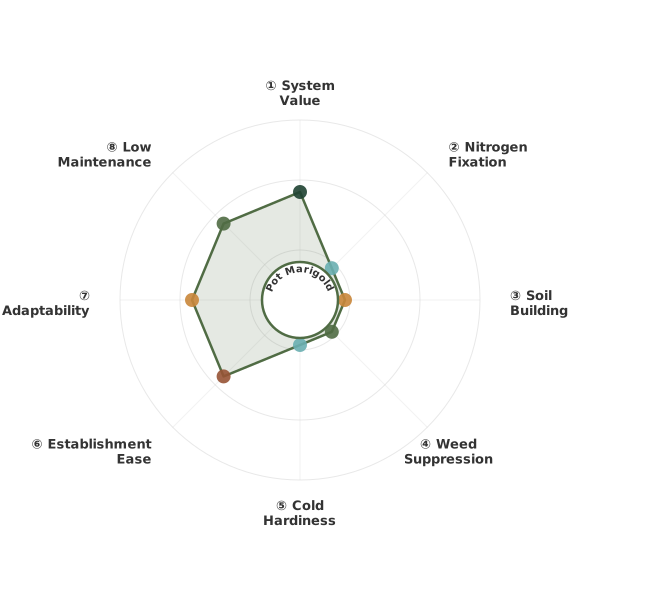
Comparative ratings for this plant across key regenerative agriculture traits.

Trait Suitability Explanation
Cold Hardiness Not Recommended Calendula officinalis, a reseeding annual, offers frost tolerance, providing valuable living mulch and soil disturbance during its growth cycle before typically overwintering in colder zones.
Weed Suppression Not Recommended As a smaller annual, calendula integrates into the living mulch layer, offering some competition to early germinating weeds and contributing to a diverse ground cover.
Nitrogen Fixation Not Recommended Pot marigold is an annual flower, not a legume, and does not contribute to nitrogen fixation; however, it actively supports beneficial insect populations that enhance the broader ecosystem's soil health.
Root System Depth Not Recommended Pot marigold possesses a shallow root system, contributing to surface soil structure and acting as a living mulch to enhance moisture retention and support surface microbial communities.
Biomass Production Not Recommended Primarily grown for ornamental or medicinal purposes, calendula's modest biomass production can be thoughtfully incorporated into compost systems or left as a surface mulch to enrich soil organic matter.
Establishment Ease Adequate Calendula germinates reliably, demonstrating good early vigor and integrating well into established garden systems with minimal soil disturbance, contributing to early season ground cover.
Multi Benefit Value Adequate Valued for medicinal and culinary uses, calendula significantly supports pollinator and beneficial insect populations, contributing to the overall health and resilience of the agroecosystem.
Climate Adaptability Adequate Adaptable across a wide range of climates, calendula thrives with good drainage and adequate moisture retention through mulching, demonstrating resilience in cooler conditions and tolerating some warmth.
Maintenance Intensity Adequate This easy-to-grow annual integrates seamlessly into garden systems, readily self-seeding and thriving with a focus on building soil fertility through compost and mulch, enhancing its flowering and medicinal qualities.

Comparative System: Ratings compare plants within their economic category (e.g., cover crop nitrogen fixation compared to other cover crops, not to all plants). Individual farm conditions and management practices significantly influence actual performance.

8

Learn More

Why farmers use this plant and additional resources

Why Regenerative Farmers Use This Plant

Calendula, commonly known as Pot Marigold, offers significant regenerative benefits when integrated into agricultural systems, primarily through its role in enhancing soil health and supporting beneficial insect populations. While not a nitrogen-fixing legume, Calendula contributes to soil organic matter accumulation through its substantial biomass production, which decomposes relatively quickly, feeding soil microbes. Its fibrous root system helps to break up soil compaction and improve aeration, facilitating better water infiltration and reducing erosion. In rotations, Calendula can be a valuable component for building resilient soil structures, contributing to improved soil tilth and water-holding capacity over a 3-5 year cycle.

Integrating Calendula into farming systems provides a suite of ecological advantages. It acts as an effective biofumigant, with its decomposition releasing compounds that can suppress certain soil-borne pathogens and nematodes, thereby reducing the reliance on synthetic soil treatments. Furthermore, Calendula is a magnet for beneficial insects, including pollinators like bees and hoverflies, as well as predatory insects such as ladybugs and lacewings, which play a crucial role in natural pest control. This attraction of beneficials can significantly enhance biodiversity within the agroecosystem and contribute to a more balanced pest management strategy, potentially reducing the need for chemical interventions by up to 40-60% in subsequent cash crops.

The quantitative ecosystem benefits of Calendula are notable. Its vibrant flowers attract a high density of pollinators, with studies indicating thousands of pollinator visits per acre during its blooming period, supporting local bee populations and improving the pollination of nearby crops. A single calendula plant can attract dozens of pollinator visits per hour during peak bloom. The presence of Calendula also fosters a habitat for a diverse array of beneficial arthropods, contributing to a more robust and self-regulating ecosystem. Over time, the consistent addition of its organic matter to the soil profile enhances soil structure, leading to improved water infiltration rates, which can be as much as 20-30% higher in soils with good organic matter content compared to bare or conventionally managed soils. Studies have shown that the presence of calendula can increase populations of ladybugs and lacewings, which are voracious predators of aphids. The decomposition of its plant matter contributes to the soil's organic carbon pool, with estimates suggesting it can increase soil organic matter by 0.1-0.3% over a 3-5 year rotation when managed effectively.

Beyond its direct ecological contributions, Calendula can be integrated into crop rotations to improve soil structure and provide a readily decomposable source of organic matter. When allowed to go to seed, it can self-sow, providing continuous ground cover and habitat, though careful management is needed to prevent it from becoming overly competitive. The plant's residues decompose relatively quickly, contributing to the nutrient cycle and feeding soil microbes. In systems aiming to build soil organic matter over time, the consistent addition of diverse plant biomass, like that from Calendula, is a cornerstone of long-term soil fertility and health improvement. In a typical season, Calendula can produce between 1,000-3,000 lbs/acre (1,120-3,360 kg/ha) of above-ground biomass. Its root system, reaching depths of 6-12 inches (15-30 cm), aids in improving soil structure and water infiltration in the upper soil profile.

The aesthetic appeal and medicinal properties of Calendula also present opportunities for value-added products, such as herbal remedies, salves, or culinary ingredients, offering farmers diversified income streams. This can be particularly beneficial in smaller-scale or diversified farming operations seeking to maximize the utility of every crop grown. By supporting a healthier insect population and contributing to soil structure, Calendula plays a supporting role in creating a more robust and self-sustaining agricultural landscape, reducing the need for external inputs and fostering a more balanced agroecosystem.

Sources behind this view

Community
  • Calendula officinalis petals are used culinarily for color and nutrition (lutein, beta carotene), and in chicken feed to enhance egg yolk color. It grows year-round in Mediterranean climates and bloom

9

How to Integrate This Plant

Practical guidance for regenerative systems

Establishing Calendula is straightforward, making it accessible for farmers of all scales. For broadcast seeding, a rate of 5-10 lbs/acre (5.6-11.2 kg/ha) is generally recommended, with seeds sown at a shallow depth of 0.125-0.5 inches (0.3-1.3 cm) to ensure good seed-to-soil contact and rapid germination. If drilling, a slightly lower rate of 3-6 lbs/acre (3.4-6.7 kg/ha) can be used with row spacing of 6-12 inches (15-30 cm). For best results, Calendula can be sown in early spring, from March to April in the Northern Hemisphere, or in early autumn, from September to October in the Southern Hemisphere, allowing it to establish before extreme heat or cold sets in. In the Northern Hemisphere, sowing can also occur in late summer (August-September) for a fall bloom and overwintering stand. In the Southern Hemisphere, these timings are reversed, with planting in September-October or February-March.

Once established, Calendula is relatively drought-tolerant but benefits from approximately 1 inch (2.5 cm) of water per week during its initial growth phase. In dry spells, providing 0.5-1 inch (1.3-2.5 cm) of water per week will promote vigorous growth and flowering. Fertility management should prioritize biological approaches; residual nutrients from cover crop decomposition, compost applications, or integrated manure management are ideal. If supplemental fertility is desired, incorporating compost or well-rotted manure at a rate of 5-10 cubic yards/acre (3-6 cubic meters/hectare) before planting is sufficient. Excessive nitrogen can lead to lush foliage at the expense of flowers. Calendula typically establishes within 20-30 days under favorable conditions and can reach flowering maturity within 45-60 days of sowing. Plants generally grow to a height of 1-2 feet (0.3-0.6 m) with a similar spread.

Pest and disease management should focus on cultural practices and encouraging beneficial insect populations. For instance, maintaining good air circulation and avoiding overwatering can help prevent fungal issues, while companion planting with pest-repelling herbs can deter common garden pests. Attracting natural enemies is the primary method; companion planting and crop rotation are key cultural practices.

As a cover crop or component of a polyculture, Calendula's termination and residue management are straightforward. Natural winterkill is the preferred method in regions with sufficiently cold winters, where temperatures drop below 10°F (-12°C), eliminating the need for intervention. If Calendula is used as a short-season cover crop, it can be terminated by mowing or crimping once it has reached full bloom, typically 60-75 days after sowing. If the goal is to allow reseeding, termination should be delayed until after seed set. For systems aiming to build soil organic matter, allowing the plants to mature and then crimping or lightly tilling them into the top 1-2 inches (2.5-5 cm) of soil is an option, though its biomass contribution is modest. If reseeding is desired for subsequent seasons, allow some plants to go to seed and then manage residue to facilitate volunteer germination. In systems where Calendula is a more permanent feature, such as in hedgerows or as a living mulch, minimal intervention is needed, allowing it to self-perpetuate. If it becomes too dense or weedy, mowing can be used to manage its height and density. If herbicide termination is considered, it should be a last resort, used only during a transitional phase when moving towards more biological termination methods, and applied when the plant is actively growing. Residue from Calendula typically breaks down within 30-45 days, releasing its captured nutrients back into the soil.

Calendula demonstrates regional adaptability. In the corn-soybean rotations of the US Midwest, it can be sown as a late-season cover after soybean harvest in September, providing soil cover and attracting beneficials through the autumn. In the UK's mixed farming systems, it can be incorporated into annual flower mixes sown in spring (April-May) for pollinator support and soil health benefits throughout the summer. It is often sown in spring borders around vegetable gardens or intercropped with brassicas to attract pollinators and deter cabbage butterflies. In Australian dryland farming, it can be established with autumn rains (March-April) to provide early season forage and improve soil structure before the main cash crop. In the temperate regions of North America, farmers in the Pacific Northwest and Northeast integrate Calendula into vegetable rotations, benefiting from its pest-deterring qualities and its appeal to beneficial insects. In Australia, it's used in market gardens and small-scale organic farms, particularly in cooler southern regions, to enhance biodiversity and attract pollinators for fruit and vegetable crops. In Brazilian coffee plantations, Calendula can be planted as an understory cover crop to suppress weeds, improve soil structure, and attract beneficial insects that help manage coffee pests. In Brazilian agroforestry systems, it can be planted in the understory of young fruit trees to attract pollinators and deter pests, contributing to the overall health of the agroecosystem. In tropical regions with distinct wet and dry seasons, Calendula can be grown during the cooler, wetter periods as a short-term cover crop. In the Mediterranean climate of Southern Europe, it is often grown as an intercrop in olive groves and vineyards, providing pollinator support and pest management.

View Full Document (Printable single-page version)