Existing research highlights its potential within regenerative agriculture systems. Studies indicate its use as a green manure, incorporated into soil to improve nutrient content and crop yield, as seen in trials with paddy rice. It has also been evaluated alongside organic manures like poultry and cattle manure for their combined impact on soil properties and carrot growth, suggesting a role in nutrient management strategies. In tropical agroecosystems, *Chromolaena odorata* fallows are compared in slash-and-burn versus slash-and-mulch systems, where the latter avoids significant nutrient and carbon losses associated with burning. Though not explicitly detailed as a nitrogen fixer in these excerpts, its application as a green manure implies nutrient contribution. Further research is needed to fully understand its benefits in soil building and carbon sequestration within diverse regenerative practices. While coverage in our knowledge base is limited, the above represents documented uses in regenerative systems.

Regenerative Quick Profile

All recommendations assume integrated, regenerative practices—not conventional inputs.

Climate & Soil Fit

Climate: Tropical Rainforest, Tropical Monsoon, Tropical Savanna, Hot Semi-Arid (Steppe), Cold Semi-Arid (Steppe), Hot Desert, Humid Subtropical, Oceanic (Maritime Temperate), Hot-Summer Mediterranean, Warm-Summer Mediterranean, Monsoon-Influenced Humid Subtropical, Subtropical Highland, Hot-Summer Continental, Warm-Summer Continental, Subarctic, Monsoon-Influenced Hot-Summer Continental

Zones: USDA 9-11, Australian Zones 11-13, EU Mediterranean

Optimal Soil: Loam Soil

System Role & Functions

Primary: Cover Crop System

Secondary: Cash Crop With Services, Forage Integration

Key Benefits: Weed Suppression, Nitrogen Fixation, Biomass Production

Management Level

Experience: Advanced

Maintenance: High maintenance - Its vigorous growth necessitates thoughtful integration and management within the agroecosystem to ensure it complements, rather than competes with, other desired components.

Value Streams

  • Cover crop (soil investment)
  • Soil building and erosion control
  • Livestock forage value

Know the Debate

  • Valuable green manure vs. aggressive invasive weed.
  • Boosts crop yields and soil fertility in specific contexts.
  • Integrated management required to prevent unwanted spread.
1

Climate Suitability Assessment

Will this plant thrive in your climate?

IDEALLY SUITED

Köppen Zone: Af (Tropical Rainforest), Am (Tropical Monsoon), Aw (Tropical Savanna), Cfa (Humid Subtropical), Cwa (Monsoon-Influenced Humid Subtropical)
USDA Zone: 7a, 8a, 9a, 10a, 11a, 12a
Australian Zone: tropical, subtropical

Siam Weed thrives in consistently warm and humid environments with ample rainfall, conditions met in Köppen zones Aw, As, Am, and Cwa, and regional zones USDA 9a-13a, Australian subtropical and tropical, and EU Mediterranean (though invasive risk is high). These climates provide 180-365 frost-free days and average temperatures of 70-85°F (21-29°C) year-round, facilitating rapid growth and significant biomass accumulation. High annual precipitation (40-80 inches/100-200 cm) supports its vigorous development, allowing it to establish quickly and provide excellent ground cover for weed suppression and soil health benefits. Its ability to tolerate a range of soil types, provided they are not waterlogged, further enhances its suitability. In these zones, Siam Weed can be a highly effective cover crop, contributing significantly to regenerative agriculture practices by improving soil structure, increasing organic matter, and suppressing weeds with minimal need for intensive management or supplemental irrigation.

ADEQUATE

Köppen Zone: BSh (Hot Semi-Arid (Steppe)), Cfb (Oceanic (Maritime Temperate)), Csa (Hot-Summer Mediterranean), Csb (Warm-Summer Mediterranean), Cwb (Subtropical Highland), Dfa (Hot-Summer Continental), Dfb (Warm-Summer Continental)
USDA Zone: 6a
Australian Zone: temperate
EU Climate Region: atlantic

Siam Weed performs adequately in climates with distinct wet and dry seasons or moderate temperature fluctuations, found in Köppen zones Aw, As, Cfa, and Cwa, and regional zones USDA 7a-8b, Australian temperate, and EU Atlantic. These zones typically offer 120-180 frost-free days with average temperatures ranging from 60-80°F (15-27°C) during the growing season. While rainfall is generally sufficient, prolonged dry spells or cooler periods can limit its maximum biomass production and persistence compared to ideal tropical conditions. Management may involve timing plantings to coincide with rainfall or utilizing supplemental irrigation during dry periods. Its effectiveness as a cover crop is still considerable, providing good weed suppression and soil improvement, but yields may be reduced by 10-25% due to less optimal environmental conditions. Stand persistence might be shorter, often functioning more effectively as an annual or biennial cover crop in these regions.

NOT RECOMMENDED

Köppen Zone: ET (Tundra), BSk (Cold Semi-Arid (Steppe)), BWh (Hot Desert), BWk (Cold Desert), Dfc (Subarctic), Dwa (Monsoon-Influenced Hot-Summer Continental)
USDA Zone: 2a, 3a, 3b, 4a, 5a, 5b
EU Climate Region: mediterranean

Siam Weed is not recommended for climates with hot, dry summers and mild, wet winters, such as Köppen Csa, and EU Mediterranean regions. These zones experience prolonged periods of drought (less than 20 inches/50 cm annual rainfall) and high summer temperatures exceeding 90°F (32°C) for extended durations, which severely inhibit its growth and biomass production. Establishment is risky, with success rates below 70%, and its performance as a cover crop is unreliable, often failing to provide adequate ground cover or soil benefits. Furthermore, in these sensitive ecosystems, Siam Weed poses a significant invasive risk, outcompeting native vegetation and disrupting ecological balance. The high management costs associated with irrigation and the potential for negative environmental impacts make it an economically and practically unviable choice for regenerative agriculture in these specific regions. Alternative plants better adapted to drought and heat, with lower invasive potential, are strongly advised.

Better alternatives for these "not recommended" zones: Sorghum-Sudangrass (drought-tolerant, fast-growing annual for biomass and weed suppression), Cowpea (drought-tolerant legume that fixes nitrogen and tolerates heat), Millet (drought-tolerant grain that can provide good ground cover)

Note: Zones listed above represent climates where this plant can produce reliably with reasonable management. Climate zones not mentioned would require intensive climate modification (greenhouses, extensive infrastructure) and are not economically viable for regenerative agriculture purposes.

2

Soil Suitability Assessment

Which soil types work best for this plant?

IDEALLY SUITED

Loam Soil

This plant thrives in these soil types without requiring amendments or remediation. Natural soil conditions support optimal growth and productivity.

ADEQUATE

Clay Soil, Rich Soil, Rocky Soil, Sandy Soil

This plant performs acceptably in these soil types with moderate, manageable remediation such as pH adjustment, compost addition, or drainage improvement. The required amendments are practical and cost-effective for regenerative agriculture.

NOT RECOMMENDED

Acidic Soil, Alkaline Soil, Desert Soil, Saline Soil, Wet Soil

Growing this plant in these soil types would require impractical remediation such as complete soil replacement, extensive amendments, or cost-prohibitive infrastructure. These conditions are not economically viable for regenerative agriculture.

Note: Soil suitability assessments focus on remediation requirements. "Ideally Suited" means the plant generally thrives without the need for substantial amendments, "Adequate" means manageable remediation (lime, compost, mulch), and "Not Recommended" means impractical soil changes would be required. Climate factors like rainfall and temperature also influence success.

3

Seasonal Considerations

Planting timing, growth duration, and harvest windows

Chromolaena odorata thrives in warmer climates, offering versatile cover cropping opportunities. For a spring planting, aim for after the last expected frost, allowing ample time for establishment before summer cash crops. This species needs warm soil temperatures to initiate rapid growth, typically establishing within 2-4 weeks under ideal conditions.

If a fall planting is desired, sow it late in the season, several weeks before the first expected frost. While it can provide some winter cover in milder zones (Aw, As, Am, Cfa, Cwa), it is not reliably frost-tolerant for overwintering in colder areas. Termination should occur in late spring, well before planting your main cash crop, to avoid competition. Peak biomass is generally achieved during the warmest summer months.

In regions with extended warm periods, Chromolaena odorata can also be utilized as a summer cover crop, planted after an early spring cash crop harvest and terminated before a fall planting. Frost-seeding is generally not recommended due to its specific warm-season requirements. Focus on planting windows that allow for significant vegetative growth before soil temperatures drop or before your next cash crop needs the space.

4

System Role & Multi-Benefit Value

Functional roles, integration strategies, and stacked benefits

Functional Role

Total System Value

Siam weed offers substantial whole-farm resilience through a variety of integrated benefits. While direct harvest value is not typically emphasized, its primary contribution lies in system enhancement as a potent green manure and cover crop. Studies show it can significantly improve soil physical properties, increase moisture content, and boost soil organic carbon and total nitrogen when used in fallows or incorporated into the soil. This directly supports crop production, as seen in improved rice yields. Ecosystem services are also significant; by increasing soil organic matter, it contributes to carbon sequestration. Its dense growth can offer erosion control. Risk diversification is achieved by improving soil health, making the system less reliant on external inputs and more resilient to environmental stresses. It acts as a living mulch, protecting the soil surface and contributing to a more robust agricultural landscape.

Integration Characteristics

Multi-Benefit Value: Adequate - A quick source of biomass for mulch and compost, it also offers some pollinator support and ground cover, enhancing the overall system's resource cycling.

5

Management & Care Requirements

Integration guidance, maintenance needs, and care practices

How to Integrate This Plant

Siam weed (Chromolaena odorata) can be integrated into regenerative systems primarily as a cover crop and green manure, enhancing soil fertility and health. Its roles include improving soil physical properties like porosity and moisture content, as well as contributing organic matter and nutrients. Compatible practices include its use in fallows for subsequent cropping systems (slash-and-mulch) and as a component in green manure applications to improve soil fertility index and crop yields, such as for rice production. It can also be incorporated into composting systems. Siam weed starts providing value from Year 1 as a fast-growing ground cover and soil improver. By Year 3-5, its biomass contributes significantly to soil organic matter, and its nutrient cycling benefits become more pronounced. Its multi-benefit stacking includes soil erosion control, nutrient scavenging, and potential weed suppression, creating a more resilient agricultural ecosystem beyond direct harvest.

Integration Practices & Management

However, the studies do indicate its use as a green manure and a component in fallow systems. For instance, research in Côte d'Ivoire compared slash-and-burn with slash-and-mulch techniques on C. odorata dominated fallows, highlighting biomass burning's significant nutrient loss. Another study in Indonesia evaluated C. odorata as a green manure treatment for vertisols, alongside other plant materials and fertilizers, to enhance soil fertility and crop production. A separate experiment assessed the impact of C. odorata, alongside various organic manures and NPK fertilizer, on soil properties and crop yield. While these studies demonstrate C. odorata's role in improving soil conditions and its use in agricultural systems, they do not detail establishment techniques, integration with grazing, termination strategies, or specific management considerations like fertility needs or competition management within a regenerative farming context. Further research would be needed to elucidate practical farmer applications in these areas. While coverage in our knowledge base is limited, the above represents documented uses in regenerative systems.

Management Profile

Maintenance Intensity: Not Recommended - Its vigorous growth necessitates thoughtful integration and management within the agroecosystem to ensure it complements, rather than competes with, other desired components.

6

Economics & Value Streams

Direct harvest, system benefits, ecosystem services, and risk diversification

Comprehensive economic analysis including direct harvest value, system enhancement contributions, ecosystem services, value timeline, and risk diversification strategies.

Cover Crop Investment

Metric Value
Seed Cost $15-30/acre $37-74/ha
Termination Cost 20-50 49-124
Biomass Production 3-7 7-16
N Fixation Value 50-100 56-112
Weed Control Savings 25-75 62-185

Cover crops are soil investments, not cash crops. Economics measured in soil health gains, input reduction, and subsequent crop performance. Values show direct costs and estimated benefits.

System Enhancement Value

Beyond cost recovery: soil building, nitrogen, biomass, and weed suppression

Soil Building & Weed Suppression

Variable, dependent on biomass production and incorporation rate. Indirect fertilizer replacement value through nutrient retention and organic matter addition.

Siam weed (Chromolaena odorata) offers significant soil health benefits when managed as a mulch. Knowledge Base Excerpt highlights that slash-and-mulch practices, compared to slash-and-burn, result in higher soil organic carbon, total nitrogen, and magnesium post-burning. This directly translates to improved soil fertility and reduced reliance on synthetic inputs for subsequent crops. For instance, the reduced loss of critical nutrients like nitrogen (95% loss in slash-and-burn) in mulch systems means more available nitrogen for the following crop, potentially reducing fertilizer costs. Additionally, Excerpt demonstrates that Chromolaena odorata, when integrated with organic manures, significantly improves soil physical properties such as reducing bulk density and increasing porosity and moisture content. This enhanced soil structure promotes better root development and water infiltration, contributing to overall farm resilience and productivity beyond direct harvest revenue. The potential for nutrient cycling and soil organic matter accumulation positions Siam weed as a valuable component in integrated nutrient management strategies.

Ecosystem Service Contributions

Environmental contributions: carbon, pollinators, wildlife, and water

  • Carbon Sequestration: Siam weed, as a fast-growing biomass producer, has the potential to sequester carbon when managed appropriately, particularly through mulching practices that increase soil organic matter. The biomass itself stores carbon, and its decomposition contributes to soil carbon pools.
  • Pollinator Support: Medium. While not its primary function, Chromolaena odorata can flower and provide nectar and pollen resources, particularly in its natural or less intensively managed states, supporting local pollinator populations.
  • Wildlife Habitat: Low to Medium. While dense stands can provide some cover, its primary role in agricultural systems is not typically as a dedicated wildlife habitat. However, it can offer some foraging opportunities for certain insects and small animals.
  • Water Quality: Not applicable

Value Timeline: Soil Building Process

When you'll see results: immediate soil benefits, compounding over seasons

Years 1-2

Initial soil organic matter improvement and nutrient retention through mulching. Suppression of competing weeds in fallow periods. Potential for early biomass production for mulch.

Years 3-5

Established improvement in soil physical properties (bulk density, porosity, moisture content). Increased nutrient availability for cash crops. Potential for Siam weed to be managed as a cash crop itself (e.g., forage).

Years 10-20

Sustained soil fertility benefits. Significant contributions to organic matter accumulation, leading to long-term soil health improvements and potential for reduced synthetic input reliance. Established integration into crop rotation or intercropping systems.

20+ Years

Mature soil health and resilience. Continued provision of ecosystem services such as enhanced water holding capacity and nutrient cycling. Potential for reduced vulnerability to climate variability.

Farm Risk Reduction

How this reduces farm risk: lower input costs and better soil resilience

  • Multiple Revenue Streams: Potential cash crop (e.g., forage), soil fertility enhancement (reducing input costs), biomass for mulching, weed suppression (reducing labor/herbicide costs).
  • Temporal Income Spread: Provides ongoing soil health benefits and nutrient cycling throughout the year, alongside potential periodic harvests if managed as a cash or forage crop.
  • Market Risk Hedge: Reduces reliance on volatile synthetic fertilizer markets by improving natural soil fertility. Enhances crop resilience through improved soil structure and moisture retention, mitigating risks associated with drought or erratic rainfall. Provides an alternative revenue stream if managed as a cash crop.
7

Regenerative Suitability Details

Comprehensive trait ratings for system integration assessment

Comparative ratings for this plant across key regenerative agriculture traits.

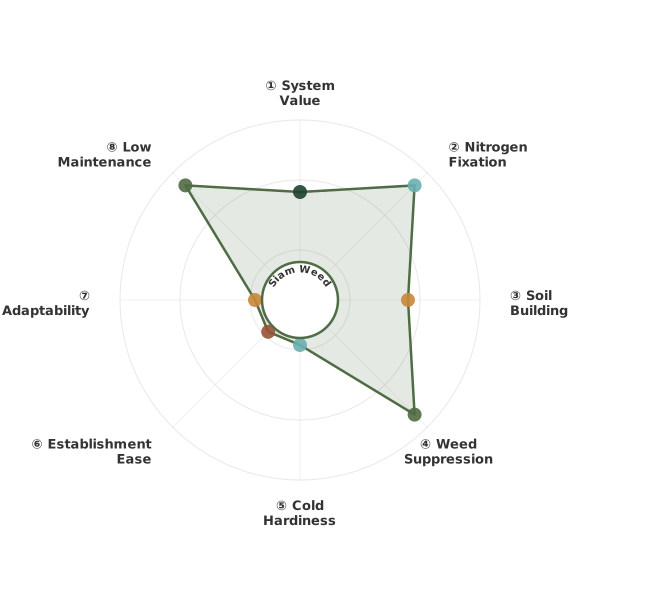
Trait Suitability Explanation
Cold Hardiness Not Recommended A frost-sensitive tropical perennial, best suited for warm climates or integrated into summer growth cycles to avoid cold damage.
Weed Suppression Ideally Suited Its rapid canopy closure and dense foliage effectively outcompete and suppress undesirable vegetation, contributing to a balanced ground cover.
Nitrogen Fixation Ideally Suited A significant contributor to soil fertility in tropical/subtropical regions, its high biomass production enriches the soil with fixed nitrogen through symbiotic relationships.
Root System Depth Adequate Its moderately deep roots enhance soil structure and aeration, facilitating nutrient cycling within the upper soil profile.
Biomass Production Ideally Suited Generates substantial organic matter rapidly in suitable climates, contributing to soil building and enhancing the soil's capacity to hold moisture and nutrients.
Establishment Ease Not Recommended While vigorous, its establishment may require careful integration into the system to prevent it from dominating, especially from seed.
Multi Benefit Value Adequate A quick source of biomass for mulch and compost, it also offers some pollinator support and ground cover, enhancing the overall system's resource cycling.
Climate Adaptability Not Recommended Thrives in tropical and subtropical zones where frost is absent, demonstrating its suitability for integrated systems in these specific warm, humid environments.
Maintenance Intensity Not Recommended Its vigorous growth necessitates thoughtful integration and management within the agroecosystem to ensure it complements, rather than competes with, other desired components.

Comparative System: Ratings compare plants within their economic category (e.g., cover crop nitrogen fixation compared to other cover crops, not to all plants). Individual farm conditions and management practices significantly influence actual performance.

8

Know the Debate

Chromolaena odorata, a prolific biomass producer, is celebrated in tropical and subtropical regenerative agriculture for its potential as a green m...

Chromolaena odorata, a prolific biomass producer, is celebrated in tropical and subtropical regenerative agriculture for its potential as a green manure and cover crop. Research and field experience highlight its ability to enhance soil fertility, suppress weeds, and improve soil structure. However, its aggressive growth habit necessitates careful management to harness its benefits without allowing it to become an unmanageable invader. Understanding the ideal conditions, management techniques, and termination strategies is crucial for its successful integration.

Is Chromolaena Odorata a weed or a beneficial cover crop?

Beneficial Green Manure and Cover Crop

In managed tropical agricultural systems, Chromolaena odorata is highly valued for its rapid biomass production and nutrient scavenging. Studies show significant yield increases in crops like rice when used as a green manure, contributing to soil fertility and reducing fertilizer needs.

Sources behind this view

Sources behind this view

Videos & Podcasts
Research
  • Influence of Weeds as Nutrient Source on Paddy Yield, Residual Soil Properties and Economics 234 (opens in new window)

    This study found: A three-year study in Karnataka, India, explored using common weeds like Parthenium and Chromolaena as green manure and compost for rice crops. The research found that combining the recommended amount of synthetic fertilizer with compost made from Chromolaena (at 7.5 tons per hectare) significantly boosted rice yields, increasing them by nearly 89% compared to no treatment. This combination also improved soil health after harvest and provided the best economic returns, with a net profit of nearly Rs. 40,000 per hectare and a benefit-cost ratio of 2.29. Using Parthenium compost also showed positive economic results.

  • Potential of Chromolaena odorata, Ipomoea carnea and Eichhornia crassipes as green manures on soil fertility index and rice production on vertisols (opens in new window)

    This study found: A study in Indonesia tested how three plant species – Chromolaena odorata (Siam weed), Ipomoea carnea (rosewood), and Eichhornia crassipes (water hyacinth) – could be used as green manures to improve soil health and rice yields on heavy clay soils. When applied at 10 tons per hectare, these plants significantly boosted soil fertility, moving it from 'high' to 'very high' levels. They also increased rice yields, with Chromolaena odorata showing the greatest benefit, adding over 2 tons per hectare to the harvest. Combining these green manures with a reduced amount of synthetic fertilizer also showed positive results. The research highlights the potential of these plants to build soil fertility and increase crop production.

Aggressive Invasive Species

Outside of intentional agricultural use, Chromolaena odorata is a highly aggressive invasive plant that outcompetes native flora by altering soil nitrogen cycling. Its rapid spread can transform ecosystems and disrupt biodiversity, creating significant ecological challenges.

Sources behind this view

Sources behind this view

Research
  • Chromolaena odorata affects soil nitrogen transformations and competition in tropical coral islands by altering soil ammonia oxidizing microbes. (opens in new window)

    This study found: Researchers studied how the invasive plant Siam weed (Chromolaena odorata) competes with native plants on tropical islands by looking at how it affects soil nitrogen. They found that Siam weed is better at competing for resources, partly because it puts more of its growth into above-ground parts. When Siam weed grew alongside native plants like Pisonia grandis and Scaevola taccada, the soil around Siam weed had more available nitrogen and processed nitrogen faster. This was linked to a higher population of specific soil bacteria that help convert ammonia. These findings suggest that Siam weed's ability to influence soil nitrogen cycling and its associated microbes is a key factor in its invasive success on these islands.

  • Invasive Chromolaena odorata species specifically affects growth of its co-occurring weeds. (opens in new window)

    This study found: Researchers in South China studied how an invasive plant, siamweed (Chromolaena odorata), interacts with other weeds growing alongside it. They found that siamweed competes strongly with a native weed called cadillo, suppressing its growth. With another exotic weed, Praxelis clematidea, the competition was more balanced, with both plants showing some changes in growth patterns. When siamweed grew with cadillo, it captured more light and nutrients, and this affected soil enzymes, increasing some and decreasing others. Understanding these specific plant interactions helps explain how invasive plants can work together and outcompete native vegetation, impacting soil health.

Context-Dependent Management Tool

Recognizes the plant's dual nature, advocating for its use as a beneficial cover crop and weed suppressor within managed systems, while emphasizing controlled termination to prevent invasive spread. Organic weed management literature highlights diverse practices for controlling weeds and building soil, with cover crops playing a key role.

Sources behind this view

Sources behind this view

From the Web
  • Organic weed management relies on crop rotation to disrupt weed cycles and enhance soil fertility, incorporating fast-growing cash crops. Cover crops like cereal rye, crimson clover, and hairy vetch suppress weeds through allelopathy and dense residue, which serves as mulch in no-till systems, managed mechanically via methods like roll-crimping.

  • Effective organic weed management uses a 'many little hammers' approach with diverse cultural and physical practices like cover crops, crop rotations, and mechanical cultivation. Research shows organic crops can tolerate some weeds, and strategic planning can significantly reduce weed populations.

  • Bare ground encourages weeds, which are nature's way of healing disturbed soil. Regenerative farming harnesses this by turning weeds into beneficial cover crops, preventing bare soil to reduce erosion and conserve water, and managing rather than eradicating weeds.

Making Sense of the Differences

The perception and utility of Chromolaena odorata depend greatly on context, primarily its origin and management. In tropical agricultural settings, it functions effectively as a managed green manure and cover crop, demonstrably boosting yields and soil fertility. However, its aggressive invasive nature and tendency to outcompete native species in non-managed or introduced environments underscore the critical necessity of controlled application and timely termination. Its value as a regenerative tool is conditional on preventing uncontrolled spread, particularly outside its native range.

9

Learn More

Why farmers use this plant and additional resources

Why Regenerative Farmers Use This Plant

Chromolaena odorata, commonly known as Siam weed, devil weed, or bitter bush, is a prolific biomass producer that, when managed intentionally, offers significant benefits as a cover crop and green manure in tropical and subtropical regenerative agriculture systems. Its primary regenerative value lies in its exceptional biomass production and its ability to scavenge nutrients, thereby contributing to soil organic matter enhancement and reducing reliance on external inputs.

Biomass Production and Nutrient Cycling: Under optimal conditions, Chromolaena odorata can produce substantial above-ground biomass, estimated to be between 5-15 tons per acre (12-37 metric tons per hectare) annually, with some estimates reaching 10-20 tons per acre (22-45 metric tons/ha) annually. This biomass decomposes relatively quickly (typically within 30-60 days, or 4-8 weeks), releasing scavenged nutrients back into the soil profile, making them available for subsequent cash crops. While not a legume, its decomposition enriches the soil with organic carbon and essential nutrients, including nitrogen, phosphorus, and potassium. This nutrient cycling contributes to improved soil fertility and can reduce the need for synthetic fertilizers by an estimated 20-40% over time, depending on the intensity of its use and the specific crop rotation.

Soil Health and Structure: Its dense root system, reaching depths of up to 6 feet (1.8 meters), helps to break up compacted soils and access nutrients from deeper soil profiles, contributing to improved soil structure and water infiltration over time. This enhanced soil structure leads to improved water-holding capacity and increased infiltration rates, which can reduce irrigation needs and improve drought resilience. The improved soil aggregation from its root activity also enhances its capacity to store water and resist erosion, a critical benefit in regions prone to heavy rainfall and on sloped terrains.

Weed Suppression and Cover: Its rapid growth and dense canopy offer significant weed suppression benefits, outcompeting many common agricultural weeds and invasive species, thereby reducing the need for mechanical or chemical weed control measures, particularly during fallow periods. Its dense foliage provides excellent ground cover, significantly reducing soil erosion from wind and rain.

Biodiversity and Ecosystem Services: The dense flowering can attract a variety of pollinators and beneficial insects, contributing to biodiversity within the agricultural landscape. Its dense vegetative cover offers habitat and forage for a range of arthropods.

Land Reclamation and Rehabilitation: Its ability to thrive in disturbed areas makes it a valuable tool for land reclamation and rehabilitation, quickly establishing cover and preventing further soil degradation.

Potential Forage: In silvopasture systems, managed grazing of Chromolaena odorata can provide a nutritious forage source for livestock, though careful management is required to prevent overgrazing and potential toxicity.

10

How to Integrate This Plant

Practical guidance for regenerative systems

Integrating Chromolaena odorata requires careful consideration of its aggressive growth potential and strategic management.

Establishment:

  • Seeding:
  • Broadcast seeding: Rates typically range from 5-10 lbs/acre (5.6-11.2 kg/ha) for dense ground cover, ensuring good seed-to-soil contact. Some sources suggest 1-3 lbs/acre (1.1-3.4 kg/ha) for broadcast sowing to ensure good ground cover, though higher rates may be used for faster establishment.
  • Drilled seed rates: Can be slightly lower, around 3-7 lbs/acre (3.4-7.8 kg/ha).
  • Planting depth: Optimal planting depth is shallow, about 0.25-0.5 inches (0.6-1.3 cm), as its seeds require light for germination.
  • Timing: Planting is best timed with the onset of the rainy season to ensure rapid establishment. In the Northern Hemisphere's tropical zones, this might be March-May, while in the Southern Hemisphere, it would be September-November.
  • Vegetative Propagation: Stem cuttings are also highly effective and common, allowing for rapid establishment and clonal selection of desirable traits. Spacing for individual plants or cuttings can range from 2-4 feet (0.6-1.2 meters) apart, depending on the desired density and management goals.
  • Initial Fertility: While it can scavenge nutrients effectively, initial establishment can be enhanced with compost or well-composted manure.

Growth and Development:

  • Moisture Requirements: Requires approximately 1 inch (2.5 cm) of rainfall or irrigation per week, especially during its establishment and active growth phases.
  • Growth Timeline: It establishes within 30-60 days and can reach maturity (for biomass production) in 60-90 days, often growing to heights of 4-8 feet (1.2-2.4 meters).

Management and Termination:

Management of Chromolaena odorata is crucial to harness its benefits without allowing it to become an unmanageable invasive. A strict hierarchy should be followed for termination to prevent unwanted spread and maximize regenerative benefits.

  1. Natural Winterkill: The most desirable method in regions with frost.
  2. Grazing: Livestock, particularly sheep, cattle, or goats, can effectively reduce biomass and prepare the field for the next crop. Hoof action can also help incorporate some residue.
  3. Mowing/Slashing: Can be employed, ideally before the plant sets seed. Cutting the plants at or near ground level is an effective mechanical method.
  4. Roller-Crimping: A highly effective mechanical method for terminating dense stands, creating a thick mulch layer that suppresses weeds and conserves soil moisture. This may require multiple passes for dense growth and is most effective when the plant has reached a suitable growth stage (e.g., flowering).
  5. Herbicide Application: Considered a last resort, used only during a transitional phase if other regenerative methods are insufficient to manage its aggressive spread. Always apply with careful consideration of non-target impacts and follow label instructions and local regulations.
  • Termination Timing: Should ideally occur 2-3 weeks before planting the subsequent cash crop to allow for initial decomposition and nutrient release. Preventing unwanted reseeding is important; if seed production is a concern, termination should occur before flowering or seed set.
  • Residue Decomposition: Typically takes 30-60 days, releasing a significant portion of its captured nutrients.

Pest and Disease Management:

  • Primarily relies on healthy soil biology and crop rotation. Biological control agents are naturally present in diverse ecosystems.
  • Encouraging beneficial insects and maintaining a diverse ecosystem is key.
  • Vigorous growth often outcompetes many pests, and maintaining crop rotation can help prevent disease buildup. Chemical interventions are rarely necessary and should be avoided to preserve ecological balance.

Regional Adaptations

  • Brazilian Coffee Plantations: Managed as a living mulch or understory cover crop, suppressing weeds, improving soil organic matter, and providing nutrient cycling between coffee rows.
  • Southeast Asian Rice-Based Systems: Used as a cover crop or green manure, incorporated into rice paddies to boost fertility and soil structure during fallow periods or in rotation.
  • Australian Sugarcane Fields: Managed as a cover crop during fallow periods between ratoons, providing weed suppression, soil cover, and contributing to soil organic matter improvement when incorporated.
  • Malaysian Oil Palm Plantations: Allowed to grow in inter-row spaces and managed through slashing to contribute to ground cover and organic matter.
  • Parts of Africa: Utilized for land reclamation and rehabilitation, as a source of biomass for mulching, helping to conserve soil moisture and suppress weeds in smallholder farming contexts. Also used in agroforestry systems.
  • Humid Subtropics (e.g., Southeastern USA): Planted after a spring vegetable harvest, terminated with mowing before a fall planting.
  • Tropical Regions of Central America: Managed as a living mulch in coffee or cacao plantations, providing ground cover and nutrient cycling, with periodic mowing to manage height.
  • Caribbean: Used for erosion control on steep slopes and as a biomass source for composting. Also used in agroforestry systems to provide ground cover and nutrient cycling benefits in the understory of fruit trees.
  • Australian Tropical Grazing Systems: While invasive potential is a concern, managed stands can provide rapid forage growth during the wet season.
  • India: Explored for use as a green manure crop in rice-fallow systems, incorporating biomass to improve soil fertility. Also used in intercropping systems with annual crops.
  • Malaysia and Indonesia: Managed as a cover crop in rubber and oil palm plantations.
  • Australia (Warmer, Coastal Regions): Managed in grazing systems or as a green manure crop in horticultural rotations, requiring careful management to prevent it from becoming a weed.