Chicory
Chicory (Cichorium intybus) is a valuable component in regenerative agriculture, primarily utilized as a deep-rooted component in multispecies cover crop mixes and perennial pastures. Its taproot is key to breaking up soil compaction, improving water infiltration, and feeding the soil with root exudates, thereby contributing to soil building and carbon sequestration. Chicory's drought tolerance makes it a reliable forage option, especially when integrated into diverse pasture systems alongside grasses, legumes, and other herbs like yarrow and plantain. Farmers have observed significant deep soil carbon accumulation (40-50 tons per hectare) in such diverse pastures. It is often incorporated using no-till drills, either as a cover crop to extend grazing seasons or as part of a 'perennial break' strategy to enhance soil health before returning land to cropping. While not a nitrogen fixer itself, its inclusion in diverse mixes supports overall soil fertility. Farmer experience highlights chicory's nutritional benefits for livestock and its resilience in various systems.
For a full botanical description see: Plants For A Future(opens in new window) (external link)
Regenerative Quick Profile
All recommendations assume integrated, regenerative practices—not conventional inputs.
Climate & Soil Fit
Climate: Tropical Rainforest, Tropical Monsoon, Tropical Savanna, Hot Semi-Arid (Steppe), Cold Semi-Arid (Steppe), Hot Desert, Cold Desert, Humid Subtropical, Oceanic (Maritime Temperate), Hot-Summer Mediterranean, Warm-Summer Mediterranean, Monsoon-Influenced Humid Subtropical, Subtropical Highland, Hot-Summer Continental, Warm-Summer Continental, Subarctic, Monsoon-Influenced Hot-Summer Continental, Tundra
Zones: USDA 4-10, Australian Zones 1-12
Optimal Soil: Loam Soil
System Role & Functions
Primary: Cover Crop System
Secondary: Forage Integration, Soil Remediation
Key Benefits: Multi-benefit value, Climate adaptable, Root System Depth
Management Level
Experience: Beginner-Friendly
Maintenance: Moderate maintenance - As a durable perennial, chicory requires minimal intervention once established, benefiting from mulch and occasional mowing to support optimal root development and system integration.
Value Streams
- Cover crop (soil investment)
- Soil building and erosion control
- Livestock forage value
Know the Debate
- Establishment range: 30 days to 3-5 years for full benefits
- Soil carbon gains vary from structural to significant accumulation estimates
- Antiparasitic benefits are complementary, not a sole dewormer
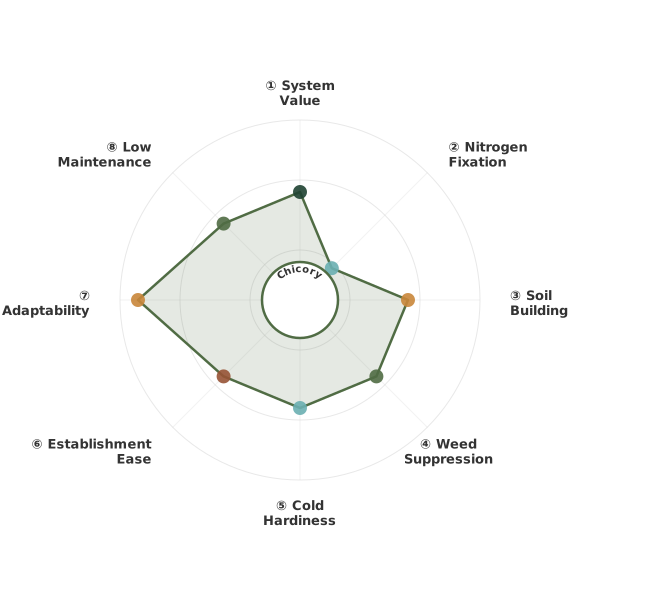
How These Traits Are Calculated
Trait dimensions are ordered clockwise starting from the top of the chart (12 o'clock position):
1. System Value
Ecosystem service stacking across nitrogen, carbon, water, biodiversity
WHAT: Synthesizes the compounding value of multiple ecosystem services delivered simultaneously—nitrogen fixation, soil organic matter building, pollinator support, erosion control, and water infiltration improvement. This is the total regenerative impact beyond single-function metrics.
WHY: The highest-value cover crops deliver 3-5 significant ecosystem services at once. A legume that fixes nitrogen, builds biomass, supports pollinators, and improves water infiltration provides $150-300/acre in combined benefits versus $30-60 for single-function covers. This service stacking is the core principle of regenerative agriculture.
HOW: Scored via LLM synthesis of economics data, timeline benefits, and trait combinations. Exceptional (3.0): 4-5 major services stacked with strong economic value ratios. Typical (2.0): 2-3 moderate services. Limited (1.0): Single-function covers with minimal service stacking. Considers seed cost relative to benefit value.
2. Nitrogen Fixation
Biological nitrogen production via legume root nodule bacteria
WHAT: Measures the ability to convert atmospheric nitrogen (N₂) into plant-available ammonia through symbiotic bacteria in root nodules. Legumes form partnerships with rhizobium bacteria that fix 60-150 lbs N/acre/year, reducing or eliminating synthetic fertilizer needs for following crops.
WHY: Nitrogen is the most expensive fertilizer input in crop production ($0.50-1.00/lb). Cover crops with exceptional nitrogen fixation can provide $60-150/acre worth of fertility while building soil organic matter. This biological process also reduces groundwater contamination from nitrogen runoff and lowers farm carbon footprint.
HOW: Ratings based on annual nitrogen fixation capacity and reliability across soil conditions. Exceptional (3.0): Legumes like hairy vetch, crimson clover, and field peas fixing >100 lbs N/acre/year. Typical (2.0): Moderate fixers like red clover at 60-100 lbs N/acre/year. Limited (1.0): Non-legumes (grasses, brassicas) with zero fixation capacity.
3. Soil Building
Weighted: biomass production (60%) + root system depth (40%)
WHAT: Combines above-ground biomass production with root depth to measure total soil organic matter contribution. Biomass provides surface organic matter, while deep roots deposit carbon at depth and break up compaction layers.
WHY: Soil organic matter is the foundation of regenerative agriculture, improving water retention, nutrient cycling, and biological activity. Each 1% increase in soil organic matter holds an additional 20,000 gallons of water per acre and represents $500-1,000 in fertility value. Deep roots access subsoil nutrients and create channels for water infiltration.
HOW: Weighted formula prioritizes biomass production (60% weight) for immediate organic matter contribution, with root depth (40% weight) for long-term soil structure. Exceptional (3.0): High-biomass crops with deep roots like cereal rye (8+ tons biomass, 5+ ft roots). Typical (2.0): Moderate on both factors. Limited (1.0): Low biomass or shallow roots.
4. Weed Suppression
Physical competition through rapid establishment and dense growth
WHAT: Measures the ability to outcompete weeds through rapid germination, aggressive early growth, and dense canopy formation. Physical smothering and light competition reduce weed pressure without herbicides.
WHY: Weed management is a major labor and cost burden for farmers. Cover crops that effectively suppress weeds reduce herbicide costs ($20-60/acre), decrease cultivation passes (fuel + labor), and provide clean seedbeds for cash crops. This is especially valuable in organic systems where herbicide options are limited.
HOW: Ratings based on germination speed, tillering density, and canopy closure timing. Exceptional (3.0): Fast-establishing, dense-tillering crops like cereal rye, oilseed radish that close canopy within 3-4 weeks. Typical (2.0): Moderate establishment and coverage. Limited (1.0): Slow-establishing or sparse crops that allow weed competition.
5. Cold Hardiness
Winter survival for fall planting and spring green manure value
WHAT: Measures tolerance to freezing temperatures and ability to survive winter conditions. Winter-hardy cover crops can be fall-planted, overwinter as living mulch, and provide early spring growth before cash crop planting.
WHY: Fall-planted winter-hardy covers extend the growing season into unused months, capturing solar energy and preventing erosion during wet periods. Spring green manure from overwintered covers provides early nitrogen and biomass. This timing flexibility is critical in cold climates with short growing seasons.
HOW: Ratings based on minimum survival temperature and winter active growth. Exceptional (3.0): Winter-hardy crops like cereal rye, hairy vetch, crimson clover surviving to -20°F with active growth in spring. Typical (2.0): Moderate cold tolerance. Limited (1.0): Warm-season crops like buckwheat, cowpea killed by first frost.
6. Establishment Ease
Germination speed, soil requirement flexibility, planting window breadth
WHAT: Measures how easily the cover crop establishes from seed, including germination speed, tolerance for variable soil conditions, and flexibility in planting timing. Easy establishment means reliable stands without intensive management.
WHY: Difficult-to-establish covers increase risk of stand failure, wasted seed costs, and reduced benefits. Easy establishment crops tolerate late planting, poor seedbed preparation, and variable moisture—critical when cover cropping windows are narrow between cash crops. Reliable establishment ensures consistent soil building and weed suppression benefits.
HOW: Ratings based on days to emergence, soil condition sensitivity, and planting window breadth. Exceptional (3.0): Fast germinators like buckwheat (3-5 days) and cereal rye (5-7 days) with wide planting windows. Typical (2.0): Moderate establishment requirements. Limited (1.0): Slow or finicky establishers requiring precise conditions.
7. Adaptability
Weighted: climate tolerance (60%) + multi-benefit versatility (40%)
WHAT: Combines climate adaptability (temperature and rainfall range) with multi-benefit versatility (diverse ecosystem services) to measure overall system flexibility. High adaptability means the cover works across farm regions and provides multiple functions.
WHY: Farmers need cover crops that work reliably across diverse fields and provide stacked benefits. Climate-adaptable covers reduce risk in variable weather, while multi-benefit crops deliver nitrogen fixation + pollinator support + forage value simultaneously. This versatility maximizes return on cover crop investment.
HOW: Weighted formula prioritizes climate tolerance (60% weight) for geographic reliability, with multi-benefit value (40% weight) for functional stacking. Exceptional (3.0): Wide climate range + multiple significant benefits. Typical (2.0): Moderate on both factors. Limited (1.0): Narrow climate range or single-function crops.
8. Low Maintenance
Inverted from maintenance intensity—low inputs mean high scores
WHAT: Measures minimal input requirements for successful cover cropping. Low-maintenance covers require no irrigation, minimal fertility, easy termination, and tolerate variable management timing.
WHY: Cover crops compete for resources with cash crops in tight rotations. Low-maintenance covers fit easily into existing systems without adding labor, equipment, or input costs. Easy termination is especially critical—covers that are difficult to kill can become weeds and delay cash crop planting.
HOW: Inverted score from maintenance intensity trait (4.0 minus raw score). Exceptional (3.0): Self-sufficient crops like cereal rye, field peas requiring no irrigation or fertility, easily terminated by mowing or winter-kill. Typical (2.0): Moderate input needs. Limited (1.0): High-maintenance crops needing irrigation, heavy fertility, or difficult termination (herbicides, multiple tillage passes).
Ratings are based on documented performance in regenerative systems, not conventional high-input scenarios. All traits assume integrated management practices focused on soil health and ecosystem services.
4
System Role & Multi-Benefit Value
Functional roles, integration strategies, and stacked benefits
System Role & Multi-Benefit Value
Functional roles, integration strategies, and stacked benefits
Functional Role
Total System Value
Chicory offers significant system value through its deep taproot, which improves soil structure, aeration, and water infiltration, contributing to soil carbon sequestration. As a component of multispecies pastures and cover crops, it enhances forage diversity and nutritional quality for livestock, with mentions of drought tolerance benefiting pasture resilience. Its inclusion in diverse mixes, alongside legumes and grasses, supports a robust soil food web and continuous carbon feeding. Beyond direct harvest as a forage or salad green, chicory's ecosystem services include enhancing soil health, moisture retention, and potentially supporting beneficial insects within a diverse agricultural landscape, contributing to whole-farm resilience and risk diversification by reducing reliance on single-species systems.
Integration Characteristics
Multi-Benefit Value: Ideally Suited - This deep-rooted plant mines nutrients, improves soil structure, provides excellent forage, and supports pollinators, offering multifaceted ecological contributions.
Sources behind this view
 Videos & Podcasts
-
Chicory, a deep-rooted forb, is valuable for bringing calcium up from lower soil profiles to improve soil health and livestock nutrition, especially in southern climates. It's also a summer forage and

5
Management & Care Requirements
Integration guidance, maintenance needs, and care practices
Management & Care Requirements
Integration guidance, maintenance needs, and care practices
How to Integrate This Plant
Chicory, a non-tree plant, functions primarily as a cover crop system component, offering deep taproots that break soil compaction and enhance water infiltration, as noted in multispecies mixes for silage and pasture. It is compatible with practices like multispecies pasture systems and perennial breaks for transitioning cropland to grazing. Chicory provides early value in Year 1 through soil health improvements and weed suppression in cover crops. By Year 3-5, its deep root system further aids in soil structure and moisture retention, becoming a valuable forage component. Its multi-benefit stacking includes improving soil carbon sequestration, providing drought-tolerant forage, and enhancing overall pasture diversity, contributing to a more resilient farming system beyond direct harvest.
Integration Practices & Management
Chicory (Cichorium intybus) is integrated into regenerative agriculture systems primarily as a component of diverse multispecies cover crop and pasture mixes. While specific establishment methods like seeding rates and precise timing are not detailed in the provided sources, its inclusion in mixes alongside species like radishes, yarrow, and various legumes and grasses is highlighted for improving soil health. Taprooted species such as chicory are noted for their ability to break up soil compaction and contribute to soil carbon through root exudates, feeding the soil continuously. In grazing systems, chicory's deep roots are beneficial for building significant deep soil carbon, enhancing moisture retention, and contributing to the stability of pastures, as seen in New Zealand examples where such diverse pastures achieved high levels of soil carbon. Its role in extending grazing seasons and increasing plant diversity is also mentioned. Termination strategies for chicory are not explicitly detailed, but its integration within managed grazing systems implies that natural winterkill, grazing down, or mowing could be applicable, depending on the overall pasture management plan. Management considerations such as fertility needs and competition are not elaborated upon in these sources. However, the focus on multispecies mixes suggests an approach that leverages plant diversity to manage fertility and competition naturally. Integration with cash crops is not discussed. Farmer experiences emphasize the value of deep-rooted herbs like chicory in building resilient, carbon-rich soils within biodiverse pasture and cover crop systems.
Management Profile
Maintenance Intensity: Adequate - As a durable perennial, chicory requires minimal intervention once established, benefiting from mulch and occasional mowing to support optimal root development and system integration.
Sources behind this view
Videos & Podcasts
-
Chicory, a deep-rooted forb, is valuable for bringing calcium up from lower soil profiles to improve soil health and livestock nutrition, especially in southern climates. It's also a summer forage and
-
Beach Grove Farm uses cover crop mixes where rye acts as a nurse crop for longer-term sod. Chicory, included for its deep taproot, trace mineral uptake, and root exudates, showed drought tolerance and

-
Forage chicory's deep taproot breaks up soil and brings up nutrients, offering drought tolerance and long-lasting mulch. Mowing before seed set is crucial for palatability and preventing dormancy.

-
Highlights forage radish for its soil-loosening taproot and nutrient cycling, and chicory for mining trace minerals and naturally suppressing parasites in livestock. Both offer extended grazing and so

 Research
-
Companion cropping chicory with winter forage cereals for grazing and forage conservation. Dry matter yields, nutritive characteristics and mineral content (opens in new window)
This study found: Limitations to the current perennial ryegrass-based pasture system on dryland dairy farms in southern Australia has led to research into alternatives that can produce either additional DM, out of seas
-
Determination in Forage Yield and Quality of Chicory and Different Plants Mixtures in Grazing Maturity Period (opens in new window)
This study found: Mixed pastures of chicory with orchardgrass or red clover in North Türkiye yielded more forage than pure chicory stands over two years, with red clover mixes showing highest production.
6
Economics & Value Streams
Direct harvest, system benefits, ecosystem services, and risk diversification
Economics & Value Streams
Direct harvest, system benefits, ecosystem services, and risk diversification
Comprehensive economic analysis including direct harvest value, system enhancement contributions, ecosystem services, value timeline, and risk diversification strategies.
Cover Crop Investment
| Metric | Value |
|---|---|
| Seed Cost | $25-50/acre $62-124/ha |
| Termination Cost | 15-40 37-99 |
| Biomass Production | 2-5 4-11 |
| N Fixation Value | N/A N/A |
| Weed Control Savings | 20-60 49-148 |
Cover crops are soil investments, not cash crops. Economics measured in soil health gains, input reduction, and subsequent crop performance. Values show direct costs and estimated benefits.
System Enhancement Value
Beyond cost recovery: soil building, nitrogen, biomass, and weed suppression
Soil Building & Weed Suppression
Chicory's value extends significantly beyond direct harvest, particularly in integrated systems. Its deep taproot, as highlighted by Kevin, is crucial for breaking up soil compaction, improving water infiltration, and feeding the soil with root exudates. This remediation function is vital for soil health, especially in areas prone to compaction. Furthermore, chicory's inclusion in multispecies cover crops and pastures, as noted by Walter Jeffries and others, contributes to a more diverse and resilient forage base. This diversity enhances animal health and performance by providing a wider range of nutrients and palatability. In systems like those described by Jeffries, it's a key component of a pasture-based diet for livestock, reducing reliance on external inputs. The plant's ability to regrow after grazing or cutting ensures continuous soil cover and carbon input, contributing to soil organic matter accumulation and improved nutrient cycling. Its integration into crop rotations, as seen in 'The Synergistic Garden', also aids in nutrient management and soil structure improvement over time.
Ecosystem Service Contributions
Environmental contributions: carbon, pollinators, wildlife, and water
- Carbon Sequestration: Chicory, with its deep taproot and consistent regrowth potential when managed appropriately, contributes to soil carbon sequestration. As part of diverse multispecies pastures and cover crops, it enhances soil organic matter through root exudates and biomass decomposition, leading to stable deep soil carbon accumulation, as observed in New Zealand systems.
- Pollinator Support: Medium. Chicory produces flowers that can attract pollinators, though it is not typically considered a primary pollinator-attracting plant compared to dedicated wildflower mixes or certain legumes.
- Wildlife Habitat: Chicory can provide browse for livestock and potentially some wildlife, especially in pasture settings. Its root system can also offer habitat for soil organisms.
- Water Quality: Not applicable
Value Timeline: Soil Building Process
When you'll see results: immediate soil benefits, compounding over seasons
Years 1-2
Initial soil structure improvement through taproot action, early contributions to soil organic matter, provision of forage in multispecies mixes, and potential for early remediation of compaction.
Years 3-5
Established soil health benefits, consistent forage availability within diverse systems, and continued contribution to soil organic matter and carbon sequestration. If used in crop rotations, it contributes to nutrient cycling and disease suppression.
Years 10-20
Significant improvement in soil structure and water infiltration, substantial accumulation of soil organic matter and deep soil carbon, and a more resilient and biologically active soil ecosystem. Long-term forage contribution to livestock systems.
20+ Years
Mature ecosystem services, including highly improved soil fertility, water retention, and a robust biological community. Sustained contribution to farm resilience and reduced input needs.
Farm Risk Reduction
How this reduces farm risk: lower input costs and better soil resilience
- Multiple Revenue Streams: Forage for livestock (reducing feed costs and potentially increasing livestock carrying capacity), soil remediation services (reducing need for costly interventions), contribution to carbon credits (if applicable), and potential direct sales if grown as a crop.
- Temporal Income Spread: Ongoing provision of forage and soil health benefits throughout the growing season and across years. Its resilience contributes to year-round foraging potential in integrated systems, reducing reliance on stored feed.
- Market Risk Hedge: Reduces reliance on external inputs like commercial feed and fertilizers. Enhances drought resilience through improved soil water retention, mitigating risks associated with dry periods. Diversifies farm output beyond single commodities.
Sources behind this view
Videos & Podcasts
-
Chicory, a deep-rooted forb, is valuable for bringing calcium up from lower soil profiles to improve soil health and livestock nutrition, especially in southern climates. It's also a summer forage and
8
Know the Debate
Chicory's deep taproot and nutritional profile offer significant regenerative potential across many climates. In areas with reliable rainfall and m...
Know the Debate
Chicory's deep taproot and nutritional profile offer significant regenerative potential across many climates. In areas with reliable rainfall and m...
Chicory's deep taproot and nutritional profile offer significant regenerative potential across many climates. In areas with reliable rainfall and moderate temperatures, such as the UK or New Zealand, it establishes quickly and provides immediate forage benefits within 30-90 days. However, achieving its full potential for soil health and sustained high-quality forage often requires 3-5 years of dedicated management, particularly in more challenging climates or when focused on deep soil carbon. Entry costs for seed are typically low ($10-20/acre), but integration into existing systems may require adjustments in rotational grazing or pasture mixes. While its antiparasitic properties are a noted benefit, they are best viewed as part of a holistic animal health strategy.
How long before chicory provides its full benefits?
Early establishment (30-90 days)
Academic sources and field observations note that chicory can establish and provide initial benefits within 30-90 days, offering early grazing and some soil structure improvement. This timeline is achievable with optimal spring or fall planting in favorable climates with adequate moisture.
Sources behind this view
Sources behind this view
Videos & Podcasts
-
Practical guidance on grazing chicory: cows graze moderately, pigs readily consume it (including roots); best in diverse mixes. Seeding via frost seeding or drills (shallow depth) at 2-7 lbs/acre. Adds pasture diversity and value.
Research
-
Time of sowing and the presence of a cover-crop determine the productivity and persistence of perennial pastures in mixed farming systems (opens in new window)
This study found: A three-year study in southern New South Wales, Australia, investigated the best ways to establish long-term pastures. Researchers found that planting perennial pasture species like lucerne (alfalfa) and chicory in the autumn generally led to better yields and more of the desired pasture species in the field after two years, compared to planting in the spring. Planting without a cover crop (like a grain crop) was more reliable for getting the pasture established, especially in dry conditions. Using a cover crop sometimes led to pasture failure in dry years and reduced pasture growth in later years, even when it worked in wet years. The study suggests that non-legume perennials like chicory and phalaris might need companion annual legumes when sown in autumn, but lucerne can be sown in either autumn or spring because it makes its own nitrogen. Cocksfoot was found to be less suitable for this region.
-
Determination in Forage Yield and Quality of Chicory and Different Plants Mixtures in Grazing Maturity Period (opens in new window)
This study found: A two-year study in North Türkiye looked at how much feed different pasture mixes produced. They compared pure stands of chicory with mixes of chicory, orchardgrass, and red clover. The study found that mixtures, especially those with red clover, produced significantly more fresh forage, with some mixes yielding over 7000 kg per decare (about 1.5 acres) in the second year. When they looked at overall land use efficiency, all the mixed pastures performed better than planting just one type of forage. This suggests that combining different plants can lead to higher overall pasture productivity.
 From the Web
-
Cold climate farming (Zone 5a or lower) faces challenges from temperature fluctuations and short growing seasons. Focus on cool-season crops like brassicas and lettuce, and use season extension techniques like hoop houses for warm-season crops. Specific planting intervals and crop suitability are detailed.
Full potential (3-5 years)
Field practitioners and some extended trials indicate that reaching chicory's full regenerative potential, including significant soil organic matter build-up and consistent high-quality forage, often requires 3-5 years. This accounts for its establishment phase and iterative soil improvement.
Sources behind this view
Sources behind this view
Videos & Podcasts
-
Highlights forage radish for its soil-loosening taproot and nutrient cycling, and chicory for mining trace minerals and naturally suppressing parasites in livestock. Both offer extended grazing and soil benefits in specific zones.
-
Chicory, a deep-rooted forb, is valuable for bringing calcium up from lower soil profiles to improve soil health and livestock nutrition, especially in southern climates. It's also a summer forage and pollinator resource.
-
Forage chicory's deep taproot breaks up soil and brings up nutrients, offering drought tolerance and long-lasting mulch. Mowing before seed set is crucial for palatability and preventing dormancy.
-
Chicory acts as a natural dewormer for cattle, reducing parasite load and improving weight gain. Its deep taproot also enhances soil structure and water infiltration. It supports postpartum health and is a valuable soil-building forage.

Making Sense of the Differences
Chicory establishment and effectiveness vary by climate and management. Early benefits like initial grazing and some soil structure improvement can appear within 30-90 days in ideal conditions. However, maximizing its deep soil integration, significant carbon accumulation, and consistent high-quality forage production typically requires a 3-5 year commitment, especially in less favorable climates or when transitioning from degraded soils.
What is the quantitative impact of chicory on soil organic matter?
Structural contribution, unspecified OM gain
Academic and institute sources acknowledge chicory's deep taproot improves soil structure and adds biomass, contributing to soil organic matter. However, they lack specific quantitative estimates for SOM increase directly attributable to chicory alone.
Sources behind this view
Sources behind this view
Research
-
Companion cropping chicory with winter forage cereals for grazing and forage conservation. Dry matter yields, nutritive characteristics and mineral content (opens in new window)
This study found: Limitations to the current perennial ryegrass-based pasture system on dryland dairy farms in southern Australia has led to research into alternatives that can produce either additional DM, out of season feed or can improve nutritive characteristics. The use of winter annual crops followed by a summer crop have the potential to achieve these goals but often result in considerable periods where new crops are establishing and feed is not available for consumption. Companion cropping offers an option to overcome these limitations. The experiment reported in this paper examines the DM yields, nutritive characteristics and mineral content of companion cropping wheat or triticale at different sowing rates into an existing chicory monoculture over a 2-year period. We hypothesised that oversowing cereal crops in autumn into an existing stand of chicory would result in improvements in nutritive characteristics at ensiling, without adversely affecting DM yield or subsequent chicory DM yields following harvesting, thus negating the need to sow a new summer forage crop each year. Total DM yields for the chicory and cereal monocultures were similar over the experimental period, while DM yields for all triticale mixtures were higher than the chicory only treatment. Chicory produced lower DM yields for silage but higher DM yields at most grazing events. The crude protein and estimated metabolisable energy content of the chicory only treatment was higher than the cereal monocultures and all triticale/chicory mixtures at both silage harvests with wheat/chicory mixes being intermediate. The proportion of chicory in the mixed swards declined over the course of the experiment. The use of chicory with cereals resulted in no adverse effects on total DM yields, some improvements in nutritive characteristics and mineral content and a more continuous supply of DM compared with double cropping with annual species in winter and summer. This experiment has highlighted the potential of oversowing cereal forages into an existing chicory sward to contribute to DM production on dairy farms in southern Australia. Such forage mixes can provide flexibility into forage systems through the provision of forage for grazing in early winter, the production of high DM yield silage harvests and then subsequent feed supply over summer and early autumn.
-
Evaluation of perennial pasture legumes and herbs to identify species with high herbage production and persistence in mixed farming zones in southern Australia (opens in new window)
This study found: A three-year study across southern Australia tested 91 different perennial plants (legumes and herbs) to find the best ones for pastures. The best overall performer was lucerne (alfalfa) variety Sceptre. Chicory variety Grasslands Puna was also very good at producing forage and surviving, especially in general and acidic soils. For areas with heavy clay soils that get waterlogged, strawberry clover (Palestine) and birdsfoot trefoil (SA833) did the best. Some plants like Dorycnium hirsutum did well on acidic soils but took a while to get going. Shorter-lived plants like sainfoin and sulla were good for high yields in the first couple of years, making them suitable for crop-pasture rotations. The study identified lucerne, chicory, strawberry clover, and birdsfoot trefoil as having the most promise for improving pasture diversity in the region.
-
Evaluating Cover Crops for Benefits, Costs and Performance within Cropping System Niches (opens in new window)
This study found: This review looks at the pros and cons of using cover crops in farming systems, drawing on literature and Michigan farmer experiences. Cover crops can help control pests, improve soil and water, make nutrients cycle better, and boost the yield of your main crops. However, they also come with costs like extra expenses, potentially lower income if they interfere with other crops, slower soil warming, and uncertainty about when nitrogen will become available. The benefits tend to be greater in irrigated fields. The review highlights the best cover crops for different seasons and regions in the US (USDA Zones 5-8). For warm summer growing periods, C4 grasses are top performers, producing a lot of biomass. For winter cover, cereal rye is a strong choice across all zones. Mixtures of legumes (like clover or vetch) with cereal grains (like wheat or rye) can create large amounts of diverse organic matter. Legumes are good at fixing nitrogen from the air and can also support beneficial insects. Plants from the Brassica family (like radishes) can help suppress soil pests and diseases. Legume cover crops are the most dependable way to increase the yield of your main crops compared to leaving fields bare. If soil pests are a big problem, brassicas are a good option. If building soil organic matter quickly is the goal, cereal cover crops are best. Combining different types of cover crops, like legumes with cereals or brassicas with cereals, shows promise for various situations.
From the Web
-
Strategies for extending the grazing season include using annual forages like ryegrass, oats, and brassicas, and stockpiling forages. Drought management involves adjusting stocking rates and rotations, with a caution on plant toxicity in stressed forages.
Significant SOM accumulation (40-50 tons/ha)
Field practitioners report substantial soil carbon accumulation (up to 40-50 tons/ha), citing chicory's deep taproot as key to accessing and incorporating deeper organic matter and improving fertility in diverse pastures.
Sources behind this view
Sources behind this view
Videos & Podcasts
-
Highlights forage radish for its soil-loosening taproot and nutrient cycling, and chicory for mining trace minerals and naturally suppressing parasites in livestock. Both offer extended grazing and soil benefits in specific zones.
-
Chicory, a deep-rooted forb, is valuable for bringing calcium up from lower soil profiles to improve soil health and livestock nutrition, especially in southern climates. It's also a summer forage and pollinator resource.
-
Forage chicory's deep taproot breaks up soil and brings up nutrients, offering drought tolerance and long-lasting mulch. Mowing before seed set is crucial for palatability and preventing dormancy.
-
Beach Grove Farm uses cover crop mixes where rye acts as a nurse crop for longer-term sod. Chicory, included for its deep taproot, trace mineral uptake, and root exudates, showed drought tolerance and added diversity to the mix.
Making Sense of the Differences
While academic sources confirm chicory's positive impact on soil structure and biomass addition, quantitative estimates for soil organic matter increase vary. Field practitioners report potential for significant deep soil carbon accumulation (up to 40-50 tons/ha), attributing this to the taproot's ability to access and incorporate deeper organic matter, especially in diverse, long-term pasture systems. Actual SOM gains depend on the initial soil conditions, duration of use, climate, and management intensity.
Does chicory effectively reduce livestock parasites?
Potentially aids parasite management
Academic and institute sources suggest chicory may have antiparasitic properties due to compounds like sesquiterpene lactones. Field experience notes it can reduce parasite load and improve animal health, acting as a complementary strategy rather than a sole dewormer.
Sources behind this view
Sources behind this view
Videos & Podcasts
-
Highlights forage radish for its soil-loosening taproot and nutrient cycling, and chicory for mining trace minerals and naturally suppressing parasites in livestock. Both offer extended grazing and soil benefits in specific zones.
-
Chicory is highlighted for its anti-parasitic properties (tannins) beneficial for small ruminants, high protein content, and drought tolerance. Palatability is key, with the vegetative stage being preferred over the flowering stage, and caution advised against high pasture percentages due to low effective fiber.

-
Chicory acts as a natural dewormer for cattle, reducing parasite load and improving weight gain. Its deep taproot also enhances soil structure and water infiltration. It supports postpartum health and is a valuable soil-building forage.
Research
-
Time of sowing and the presence of a cover-crop determine the productivity and persistence of perennial pastures in mixed farming systems (opens in new window)
This study found: A three-year study in southern New South Wales, Australia, investigated the best ways to establish long-term pastures. Researchers found that planting perennial pasture species like lucerne (alfalfa) and chicory in the autumn generally led to better yields and more of the desired pasture species in the field after two years, compared to planting in the spring. Planting without a cover crop (like a grain crop) was more reliable for getting the pasture established, especially in dry conditions. Using a cover crop sometimes led to pasture failure in dry years and reduced pasture growth in later years, even when it worked in wet years. The study suggests that non-legume perennials like chicory and phalaris might need companion annual legumes when sown in autumn, but lucerne can be sown in either autumn or spring because it makes its own nitrogen. Cocksfoot was found to be less suitable for this region.
From the Web
-
Ohio State University researchers studied forage chicory for controlling gastrointestinal parasites in grazing sheep, finding it reduced fecal egg counts compared to sorghum-sudangrass, likely due to sesquiterpene lactones.
Making Sense of the Differences
Chicory shows potential as part of a natural livestock parasite management strategy. Research points to compounds within chicory that may reduce fecal egg counts in sheep. Field experience often highlights its deworming properties for cattle and its contribution to improved gut health through inulin. While valuable as a complementary forage, it is generally not recommended as a sole deworming treatment, emphasizing its role in a holistic animal health approach.
9
Learn More
Why farmers use this plant and additional resources
Learn More
Why farmers use this plant and additional resources
Why Regenerative Farmers Use This Plant
Chicory, particularly forage chicory varieties (Cichorium intybus), offers significant regenerative benefits when integrated into agricultural systems. As a deep-rooted perennial, its most notable contribution is its remarkable ability to scavenge nutrients from lower soil profiles, bringing them to the surface for subsequent crops. Its robust root system, capable of reaching depths of 3-6 feet (0.9-1.8 meters), excels at breaking up soil compaction, improving water infiltration, and enhancing aeration. Chicory is instrumental in accessing immobile phosphorus, potassium, and trace minerals that are otherwise unavailable to shallow-rooted plants. While not a legume, it can contribute to soil organic matter accumulation through its substantial above-ground biomass, which decomposes to release nutrients and feed soil microbial communities. Over a 3-5 year rotation, consistent use of chicory can lead to measurable improvements in soil structure and fertility, reducing the reliance on synthetic inputs. This nutrient-scavenging capacity can reduce the need for synthetic fertilizer inputs by an estimated 20-30% over time, depending on soil type and existing nutrient levels.
Beyond its direct soil-building capabilities, chicory provides valuable ecosystem services. Its extended flowering period, typically from late spring through fall, makes it an excellent source of nectar and pollen for a diverse array of beneficial insects, including pollinators like bees and hoverflies, as well as predatory insects that help manage pest populations. Studies have shown that diverse floral resources like chicory can support up to 30% more beneficial insect species in agricultural landscapes. This pollinator support can directly benefit adjacent cash crops. Furthermore, its dense foliage offers excellent ground cover, effectively suppressing weeds by outcompeting them for light, water, and nutrients, thereby reducing the need for costly and environmentally impactful herbicides. In pasture systems, chicory's high palatability and nutritional content make it a valuable forage component, improving livestock health and productivity. Crude protein levels typically range between 15-20%.
The regenerative impact of chicory is amplified when used in strategic crop rotations. For instance, planting chicory after a heavy feeder like corn can help recover residual nutrients, while its subsequent termination can provide a nutrient-rich residue for a following small grain. In mixed pastures, it can be integrated with grasses and legumes to create a more resilient and diverse forage sward, capable of withstanding a wider range of environmental conditions and offering improved animal nutrition. Its ability to thrive in less fertile soils also makes it a viable option for marginal lands, where it can initiate soil improvement processes and increase overall farm productivity. The deep taproot acts as a natural subsoiler, improving water infiltration rates by an estimated 15-25% in compacted soils, thereby reducing drought stress and the risk of waterlogging. The decomposition of its substantial biomass, typically ranging from 2 to 5 tons per acre (4,480 to 11,200 kg/ha) under optimal conditions, contributes to soil organic matter build-up, with consistent use over 3-5 year rotations potentially increasing SOM by 0.5-1.0%. By bringing up immobile nutrients, chicory can also reduce the leaching of applied fertilizers, further protecting water quality.
Farmers in regions like the UK and New Zealand have successfully integrated forage chicory into dairy and sheep systems. In the UK, it's often sown in a perennial pasture mix, providing high-quality forage during summer dry spells and contributing to soil health through its deep root penetration. In New Zealand's temperate climate, chicory is a staple in dairy pastures, valued for its drought tolerance and high dry matter production, typically yielding 10-15 tons of dry matter per acre (25-37 metric tons per hectare) annually. Farmers report increased carrying capacity of 10-15% on pastures containing chicory. In Australia's dryland farming systems, its drought tolerance and deep root system make it valuable for improving soil structure and water retention in wheat-barley rotations. In Brazilian coffee plantations, chicory can be used as an understory cover crop, improving soil health in the shaded environment. In the humid subtropical regions of Brazil, it is used in silvopasture systems beneath coffee or citrus trees, providing ground cover and forage for livestock.
Sources behind this view
Videos & Podcasts
-
Chicory, a deep-rooted forb, is valuable for bringing calcium up from lower soil profiles to improve soil health and livestock nutrition, especially in southern climates. It's also a summer forage and
-
Chicory acts as a natural dewormer for cattle, reducing parasite load and improving weight gain. Its deep taproot also enhances soil structure and water infiltration. It supports postpartum health and
-
Forage chicory's deep taproot breaks up soil and brings up nutrients, offering drought tolerance and long-lasting mulch. Mowing before seed set is crucial for palatability and preventing dormancy.
-
Chicory is a palatable, high-protein feed with a taproot beneficial for soil and drought tolerance. It thrives in organic systems and is part of multispecies swards including plantain, red/white clove