
Guar
Studies show its effectiveness when intercropped with crops like elephant foot yam, leading to improved soil chemical properties, nutrient content, and microbial activity. Its integration into no-till, rainfed systems, alongside residue management practices, has also been investigated, with results indicating potential for increased yields under certain conditions. Research has explored optimizing its nutrient content through organic nitrogen sources like FYM, vermicompost, and castor cake, alongside bio-fertilizers, demonstrating its responsiveness to regenerative fertility management. Furthermore, studies indicate that cluster bean can enhance carbon accumulation in soils when part of an intercropping strategy. While specific farmer experiences are not detailed, the plant's performance in trials suggests its utility in multi-layered cropping and soil-building initiatives within regenerative frameworks. While coverage in our knowledge base is limited, the above represents documented uses in regenerative systems.
For a full botanical description see: Wikipedia(opens in new window) (external link)
Regenerative Quick Profile
All recommendations assume integrated, regenerative practices—not conventional inputs.
Climate & Soil Fit
Climate: Tropical Rainforest, Tropical Monsoon, Tropical Savanna, Hot Semi-Arid (Steppe), Cold Semi-Arid (Steppe), Hot Desert, Cold Desert, Humid Subtropical, Oceanic (Maritime Temperate), Hot-Summer Mediterranean, Warm-Summer Mediterranean, Monsoon-Influenced Humid Subtropical, Subtropical Highland, Hot-Summer Continental, Warm-Summer Continental, Subarctic, Monsoon-Influenced Hot-Summer Continental, Tundra
Zones: USDA 8-11, Australian Zones 3-14, EU Mediterranean, Subtropical
Optimal Soil: Loam Soil
System Role & Functions
Primary: Nitrogen Fixer
Secondary: Cover Crop System, Cash Crop With Services
Key Benefits: Easy establishment
Management Level
Experience: Beginner-Friendly
Maintenance: Moderate maintenance - This drought-tolerant legume requires minimal external inputs, thriving within the holistic fertility and moisture management of a regenerative system.
Value Streams
- Nitrogen fixation
Know the Debate
- Nitrogen fixation varies by inoculation and conditions.
- Biomass production depends on termination timing and method.
- Dual use as forage and soil builder.
- Drought tolerance is high, but moisture aids establishment.
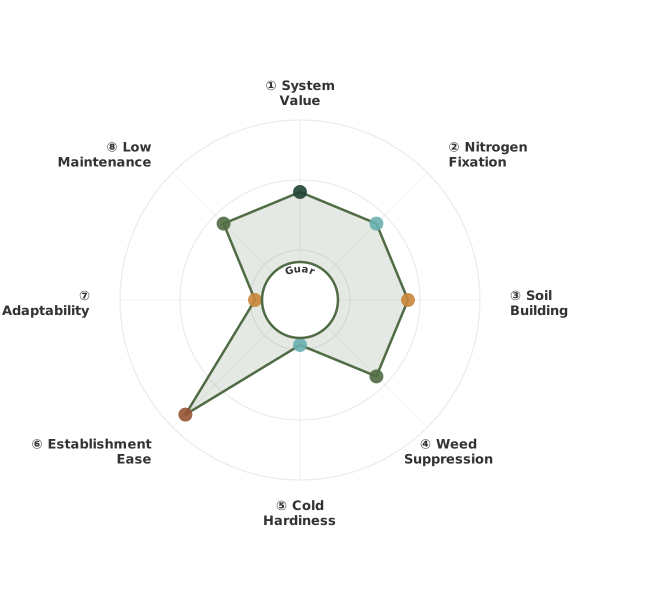
How These Traits Are Calculated
Trait dimensions are ordered clockwise starting from the top of the chart (12 o'clock position):
1. System Value
Ecosystem service stacking across nitrogen, carbon, water, biodiversity
WHAT: Synthesizes the compounding value of multiple ecosystem services delivered simultaneously—nitrogen fixation, soil organic matter building, pollinator support, erosion control, and water infiltration improvement. This is the total regenerative impact beyond single-function metrics.
WHY: The highest-value cover crops deliver 3-5 significant ecosystem services at once. A legume that fixes nitrogen, builds biomass, supports pollinators, and improves water infiltration provides $150-300/acre in combined benefits versus $30-60 for single-function covers. This service stacking is the core principle of regenerative agriculture.
HOW: Scored via LLM synthesis of economics data, timeline benefits, and trait combinations. Exceptional (3.0): 4-5 major services stacked with strong economic value ratios. Typical (2.0): 2-3 moderate services. Limited (1.0): Single-function covers with minimal service stacking. Considers seed cost relative to benefit value.
2. Nitrogen Fixation
Biological nitrogen production via legume root nodule bacteria
WHAT: Measures the ability to convert atmospheric nitrogen (N₂) into plant-available ammonia through symbiotic bacteria in root nodules. Legumes form partnerships with rhizobium bacteria that fix 60-150 lbs N/acre/year, reducing or eliminating synthetic fertilizer needs for following crops.
WHY: Nitrogen is the most expensive fertilizer input in crop production ($0.50-1.00/lb). Cover crops with exceptional nitrogen fixation can provide $60-150/acre worth of fertility while building soil organic matter. This biological process also reduces groundwater contamination from nitrogen runoff and lowers farm carbon footprint.
HOW: Ratings based on annual nitrogen fixation capacity and reliability across soil conditions. Exceptional (3.0): Legumes like hairy vetch, crimson clover, and field peas fixing >100 lbs N/acre/year. Typical (2.0): Moderate fixers like red clover at 60-100 lbs N/acre/year. Limited (1.0): Non-legumes (grasses, brassicas) with zero fixation capacity.
3. Soil Building
Weighted: biomass production (60%) + root system depth (40%)
WHAT: Combines above-ground biomass production with root depth to measure total soil organic matter contribution. Biomass provides surface organic matter, while deep roots deposit carbon at depth and break up compaction layers.
WHY: Soil organic matter is the foundation of regenerative agriculture, improving water retention, nutrient cycling, and biological activity. Each 1% increase in soil organic matter holds an additional 20,000 gallons of water per acre and represents $500-1,000 in fertility value. Deep roots access subsoil nutrients and create channels for water infiltration.
HOW: Weighted formula prioritizes biomass production (60% weight) for immediate organic matter contribution, with root depth (40% weight) for long-term soil structure. Exceptional (3.0): High-biomass crops with deep roots like cereal rye (8+ tons biomass, 5+ ft roots). Typical (2.0): Moderate on both factors. Limited (1.0): Low biomass or shallow roots.
4. Weed Suppression
Physical competition through rapid establishment and dense growth
WHAT: Measures the ability to outcompete weeds through rapid germination, aggressive early growth, and dense canopy formation. Physical smothering and light competition reduce weed pressure without herbicides.
WHY: Weed management is a major labor and cost burden for farmers. Cover crops that effectively suppress weeds reduce herbicide costs ($20-60/acre), decrease cultivation passes (fuel + labor), and provide clean seedbeds for cash crops. This is especially valuable in organic systems where herbicide options are limited.
HOW: Ratings based on germination speed, tillering density, and canopy closure timing. Exceptional (3.0): Fast-establishing, dense-tillering crops like cereal rye, oilseed radish that close canopy within 3-4 weeks. Typical (2.0): Moderate establishment and coverage. Limited (1.0): Slow-establishing or sparse crops that allow weed competition.
5. Cold Hardiness
Winter survival for fall planting and spring green manure value
WHAT: Measures tolerance to freezing temperatures and ability to survive winter conditions. Winter-hardy cover crops can be fall-planted, overwinter as living mulch, and provide early spring growth before cash crop planting.
WHY: Fall-planted winter-hardy covers extend the growing season into unused months, capturing solar energy and preventing erosion during wet periods. Spring green manure from overwintered covers provides early nitrogen and biomass. This timing flexibility is critical in cold climates with short growing seasons.
HOW: Ratings based on minimum survival temperature and winter active growth. Exceptional (3.0): Winter-hardy crops like cereal rye, hairy vetch, crimson clover surviving to -20°F with active growth in spring. Typical (2.0): Moderate cold tolerance. Limited (1.0): Warm-season crops like buckwheat, cowpea killed by first frost.
6. Establishment Ease
Germination speed, soil requirement flexibility, planting window breadth
WHAT: Measures how easily the cover crop establishes from seed, including germination speed, tolerance for variable soil conditions, and flexibility in planting timing. Easy establishment means reliable stands without intensive management.
WHY: Difficult-to-establish covers increase risk of stand failure, wasted seed costs, and reduced benefits. Easy establishment crops tolerate late planting, poor seedbed preparation, and variable moisture—critical when cover cropping windows are narrow between cash crops. Reliable establishment ensures consistent soil building and weed suppression benefits.
HOW: Ratings based on days to emergence, soil condition sensitivity, and planting window breadth. Exceptional (3.0): Fast germinators like buckwheat (3-5 days) and cereal rye (5-7 days) with wide planting windows. Typical (2.0): Moderate establishment requirements. Limited (1.0): Slow or finicky establishers requiring precise conditions.
7. Adaptability
Weighted: climate tolerance (60%) + multi-benefit versatility (40%)
WHAT: Combines climate adaptability (temperature and rainfall range) with multi-benefit versatility (diverse ecosystem services) to measure overall system flexibility. High adaptability means the cover works across farm regions and provides multiple functions.
WHY: Farmers need cover crops that work reliably across diverse fields and provide stacked benefits. Climate-adaptable covers reduce risk in variable weather, while multi-benefit crops deliver nitrogen fixation + pollinator support + forage value simultaneously. This versatility maximizes return on cover crop investment.
HOW: Weighted formula prioritizes climate tolerance (60% weight) for geographic reliability, with multi-benefit value (40% weight) for functional stacking. Exceptional (3.0): Wide climate range + multiple significant benefits. Typical (2.0): Moderate on both factors. Limited (1.0): Narrow climate range or single-function crops.
8. Low Maintenance
Inverted from maintenance intensity—low inputs mean high scores
WHAT: Measures minimal input requirements for successful cover cropping. Low-maintenance covers require no irrigation, minimal fertility, easy termination, and tolerate variable management timing.
WHY: Cover crops compete for resources with cash crops in tight rotations. Low-maintenance covers fit easily into existing systems without adding labor, equipment, or input costs. Easy termination is especially critical—covers that are difficult to kill can become weeds and delay cash crop planting.
HOW: Inverted score from maintenance intensity trait (4.0 minus raw score). Exceptional (3.0): Self-sufficient crops like cereal rye, field peas requiring no irrigation or fertility, easily terminated by mowing or winter-kill. Typical (2.0): Moderate input needs. Limited (1.0): High-maintenance crops needing irrigation, heavy fertility, or difficult termination (herbicides, multiple tillage passes).
Ratings are based on documented performance in regenerative systems, not conventional high-input scenarios. All traits assume integrated management practices focused on soil health and ecosystem services.
5
Management & Care Requirements
Integration guidance, maintenance needs, and care practices
Management & Care Requirements
Integration guidance, maintenance needs, and care practices
How to Integrate This Plant
Guar (Cyamopsis tetragonoloba) is a valuable legume for regenerative systems, primarily functioning as a nitrogen fixer. It can be integrated into alley cropping systems, intercropped with vegetables as demonstrated in Tamil Nadu, or used as a preceding crop in rotation with crops like wheat or mustard. Its role as a nitrogen fixer is crucial for building soil fertility, reducing the need for synthetic inputs. In alley cropping, guar can be planted in the alleys between trees or perennial crops, enhancing soil health and providing biomass. Its benefits begin in Year 1, with nitrogen fixation and soil improvement, and continue with biomass production. The total system value extends beyond direct harvest to include significant soil health enhancement through nitrogen deposition and improved soil structure, contributing to carbon sequestration and overall farm resilience.
Integration Practices & Management
However, they do highlight its potential as a cover crop and in crop rotations. Source demonstrates its success as an intercrop with elephant foot yam, suggesting benefits for soil health, carbon accumulation, and nutrient content when integrated with another crop. Source details experiments evaluating different organic nitrogen sources for cluster bean, indicating its response to organic amendments and bio-fertilizers like Rhizobium and Phosphate Solubilizing Bacteria (PSB), implying management considerations around fertility and microbial activity. Source focuses on optimizing cluster bean yield through potassium fertilization and foliar nutrient sprays, pointing to specific fertility needs for the crop itself. While establishment methods, grazing integration, termination strategies, and detailed succession planning are not explicitly covered, the existing information suggests cluster bean can be a valuable component in diversified cropping systems aimed at improving soil biological and chemical properties. While coverage in our knowledge base is limited, the above represents documented uses in regenerative systems.
Management Profile
Maintenance Intensity: Adequate - This drought-tolerant legume requires minimal external inputs, thriving within the holistic fertility and moisture management of a regenerative system.
Sources behind this view
 Research
-
Long Term Benefits of Legume Based Cropping Systems on Soil Health and Productivity. An Overview (opens in new window)
This study found: Legume-based cropping systems enhance soil health by increasing organic matter and nutrients, reducing compaction, and providing natural nitrogen. This reduces reliance on external inputs and boosts c
8
Know the Debate
Cowpeas and guar are valuable legumes for regenerative systems, particularly in warmer climates. Their effectiveness in nitrogen fixation and bioma...
Know the Debate
Cowpeas and guar are valuable legumes for regenerative systems, particularly in warmer climates. Their effectiveness in nitrogen fixation and bioma...
Cowpeas and guar are valuable legumes for regenerative systems, particularly in warmer climates. Their effectiveness in nitrogen fixation and biomass production can vary significantly based on soil conditions, inoculation practices, and termination timing. While offering drought tolerance, adequate moisture aids establishment. These crops are adaptable to various regions, from the US Midwest and Great Plains to Australia, Brazil, India, and parts of Africa, providing adaptable solutions for soil fertility, weed suppression, and forage.
What is the expected nitrogen fixation from cowpeas and guar?
High fixation in optimal conditions (60-100 lbs N/acre)
In ideal environments with proper inoculation and adequate moisture, cowpeas and guar can fix substantial amounts of nitrogen, significantly reducing fertilizer needs for subsequent crops. This makes them cost-effective for improving soil fertility.
Sources behind this view
Sources behind this view
 Videos & Podcasts
-
Discusses warm-season legumes: cowpeas, mung beans, soybeans, sun hemp, guar, and Hubam sweet clover. Highlights their heat/drought tolerance, nitrogen fixation, and suitability for hay/grazing, with specific notes on growth habits, maturity, and inoculant needs.

Research
-
Evaluating Cover Crops for Benefits, Costs and Performance within Cropping System Niches (opens in new window)
This study found: This review looks at the pros and cons of using cover crops in farming systems, drawing on literature and Michigan farmer experiences. Cover crops can help control pests, improve soil and water, make nutrients cycle better, and boost the yield of your main crops. However, they also come with costs like extra expenses, potentially lower income if they interfere with other crops, slower soil warming, and uncertainty about when nitrogen will become available. The benefits tend to be greater in irrigated fields. The review highlights the best cover crops for different seasons and regions in the US (USDA Zones 5-8). For warm summer growing periods, C4 grasses are top performers, producing a lot of biomass. For winter cover, cereal rye is a strong choice across all zones. Mixtures of legumes (like clover or vetch) with cereal grains (like wheat or rye) can create large amounts of diverse organic matter. Legumes are good at fixing nitrogen from the air and can also support beneficial insects. Plants from the Brassica family (like radishes) can help suppress soil pests and diseases. Legume cover crops are the most dependable way to increase the yield of your main crops compared to leaving fields bare. If soil pests are a big problem, brassicas are a good option. If building soil organic matter quickly is the goal, cereal cover crops are best. Combining different types of cover crops, like legumes with cereals or brassicas with cereals, shows promise for various situations.
 From the Web
-
Legumes fix atmospheric nitrogen via Rhizobium bacteria, crucial for subsequent crops. Key species include hairy vetch, crimson clover, and Austrian winter peas, which can supply over 100 lbs N/acre. Proper seed inoculation is essential. Selection depends on climate, soil, and goals, with various winter, summer, biennial, and perennial options available.
Variable fixation (near-zero to 100+ lbs N/acre)
Nitrogen fixation rates are highly variable due to native soil rhizobia populations, specific cultivars used, drought stress, and other environmental factors. Without proper inoculation or in challenging conditions, fixation can be minimal.
Sources behind this view
Sources behind this view
Videos & Podcasts
-
Warm-season legumes like cowpeas, mung beans, and sunn hemp offer heat tolerance and nitrogen fixation. Cowpeas are good for grazing and interceding. Mung beans are cost-effective with shorter maturity. Sunn hemp has deep roots for compaction but requires early termination to prevent woody growth and excessive residue.
Research
-
Potential Nitrogen Contributions by Tropical Legume Summer Cover Crops in Mediterranean-Type Cropping Systems (opens in new window)
This study found: Legume cover crops in temperate cropping systems can fix substantial amounts of nitrogen (N) and reduce N fertiliser requirements for subsequent crops. However, little is known about potential biological N2 fixation by summer cover crop legumes in the short summer fallow in Mediterranean-type cropping systems. Six legume species (balansa clover, barrel medic, mung bean, sunn hemp, lablab and cowpea) were grown for 8–9 weeks in the field in semi-arid southern Australia during the summer fallow, and in a glasshouse experiment, to estimate N2 fixation using the 15N natural abundance method. Cowpea, sunn hemp and lablab produced 1.2–3.0 t ha−1 biomass in the field while balansa clover and barrel medic produced < 1.0 t ha−1. The percent of N derived from the atmosphere (%Ndfa) in the field ranged from 39% in barrel medic to 73% in sunn hemp, but only 15% (balansa clover) to 33% (sunn hemp) in the glasshouse experiment, likely due to higher soil mineral N availability in the glasshouse study. Biological N2 fixation of cowpea and sunn hemp in the field was 46–55 kg N ha−1, while N2 fixation in lablab and mung bean was lower (around 26 kg N ha−1). The N2 fixation in cowpea and sunn hemp of around 50 kg N ha−1 with supplementary irrigation in the field trial likely represents the upper limit of N contributions in the field in typically hot, dry summer conditions in Mediterranean-type climates. Given that any increase in summer cover crop biomass will have implications for water balances and subsequent cash crop growth, maximising N benefits of legume cover crops will rely on increasing the %Ndfa through improved rhizobium strains or inoculation technologies. This study provides the first known estimates of biological N2 fixation by legume cover crops in the summer fallow period in cropping systems in Mediterranean-type environments, providing a benchmark for further studies.
-
Relative Nitrogen Utilization by Legume Cover Crop Species at Three Soil Temperatures (opens in new window)
This study found: AbstractWhen selecting a legume cover crop, one should know relative N‐fixing and N uptake capabilities, as well as growth and water use characteristics, to identify the species best adapted to the growth period and soil temperatures (season) during which the cover is crop grown. We provide information on these characteristics for eight inoculated legume species at soil temperatures of 10, 20, and 30 °C. Plants were grown in constant‐temperature water baths in a greenhouse for 105 d after establishment in 1.1 kg of Alliance silt loam (fine silty, mixed, mesic, Aridic Argiustoll) per pot. Plant samples were taken every 21 d for determinations of dry weight, total N uptake, and N2 fixed (isotope dilution method). Water use was measured daily by weighing. Total N uptake and N2 fixation were usually greatest for large‐seeded annual species during the first 42 to 63 d of the experiment. At 10 °C total N uptake and N2 fixation were greatest for hairy vetch (HV), Vicia villosa Roth and faba bean (FB), Vicia faba L. At later sampling dates, N uptake and fixation for white clover (WC), Trifolium repens L., was also relatively high. At 20 °C, soybean (SB), [Glycine max (L.) Merr.] exhibited outstanding growth and N uptake throughout the 105 d. For the first 42 d, FB performance also was superior to other species. At 30 °C, N uptake and fixation by SB was more than double that of any other species at all sampling dates. Quantity of N2 fixed per unit water used was greatest at 10 °C for WC, followed closely by HV and field pea (FP) Pisum sativum L.; at 20 °C, SB followed by WC and lespedeza (LD), Lespedeza stipulacea Maxim.; and at 30 °C, LD followed by SB. Our results suggest that under many situations (early spring) some grain legumes, such as and FB, may be a better cover crop than many species commonly used.
Making Sense of the Differences
Nitrogen fixation rates for cowpeas and guar are highly context-dependent. Optimal conditions, including appropriate soil pH, adequate moisture, correct *Rhizobium* inoculation, and suitable temperatures, are critical for achieving high N-fixation. In consistently dry or poorly inoculated soils, rates can be significantly lower. Farmers should test soil for rhizobia and inoculate seeds, especially in land with no prior legume history, to maximize nitrogen credit.
What are the expected biomass production and residue breakdown rates?
Substantial biomass, relatively fast breakdown (30-75 days)
Cowpeas and guar can produce significant biomass, contributing to soil organic matter. When terminated at the right stage (early flowering), their residue decomposes relatively quickly (30-75 days), making nutrients available for subsequent crops.
Sources behind this view
Sources behind this view
Videos & Podcasts
-
Warm-season legumes like cowpeas, mung beans, and sunn hemp offer heat tolerance and nitrogen fixation. Cowpeas are good for grazing and interceding. Mung beans are cost-effective with shorter maturity. Sunn hemp has deep roots for compaction but requires early termination to prevent woody growth and excessive residue.
Research
-
Land Evaluation for Alternate Land Use Planning of Soils in Tatrakallu Village of Anantapuramu District, Andhra Pradesh (opens in new window)
This study found: A study in Tatrakallu village, Andhra Pradesh, India, assessed soils to determine their suitability for different crops. They found that some soils are only marginally suitable for common crops like groundnuts, pigeonpeas, chickpeas, and castor due to issues with fertility, wetness, and salt content. The research suggests several practices to improve soil health and productivity, including leaving crop residues on the field, reusing nutrients, reducing tillage, rotating crops, planting cover crops, and growing multiple crops together. These methods can help conserve soil and water, build organic matter, and make fertilizers more effective. The study highlights that farmers often grow crops on land not best suited for them, and adopting these recommended practices can lead to better yields and healthier, more productive soils.
From the Web
-
Sunnhemp (*Crotalaria juncea*) is a valuable green manure for nitrogen fixation and soil improvement, best incorporated at early flowering. Seed production is challenging, and its suitability as livestock forage is controversial due to potential toxicity.
Variable biomass & slower breakdown if terminated late
The amount of biomass and its decomposition rate depend heavily on termination timing and method. Late termination, especially with guar becoming fibrous, can create a woody residue that breaks down slowly, potentially slowing nutrient release and making planting difficult.
Sources behind this view
Sources behind this view
Videos & Podcasts
-
Sunhemp is a heat-loving legume cover crop that produces nitrogen but becomes fibrous and difficult to manage after flowering begins (late Aug/mid-Sept). It requires a specific inoculant and careful termination planning to avoid equipment issues. Plant in June or later.

-
Recommends sorghum-sudangrass, sunhemp, and cowpeas for summer cover cropping, noting their benefits for soil carbon, nitrogen fixation, and mycorrhizal health. Advises on mix formulation and considering buckwheat's competition.

-
Warm-season legumes like cowpeas, mung beans, and sunn hemp offer heat tolerance and nitrogen fixation. Cowpeas are good for grazing and interceding. Mung beans are cost-effective with shorter maturity. Sunn hemp has deep roots for compaction but requires early termination to prevent woody growth and excessive residue.
Making Sense of the Differences
Biomass yield and decomposition rates for cowpeas and guar are strongly influenced by termination timing and method. Early termination, ideally at or before the onset of flowering, produces more manageable residue that breaks down faster (30-60 days). Terminating after flowering, especially with guar that becomes fibrous, can significantly slow decomposition (up to 75 days or more). Practices like roller-crimping create a beneficial mulch, while mowing can also be effective. In drier conditions or with delayed decomposition, nutrients may be less available for the immediate following crop.
9
Learn More
Why farmers use this plant and additional resources
Learn More
Why farmers use this plant and additional resources
Why Regenerative Farmers Use This Plant
Cowpeas and Guar are cornerstone legumes for regenerative systems, offering substantial nitrogen fixation that directly benefits soil health and reduces reliance on synthetic inputs.
Nitrogen Fixation: In optimal conditions, these legumes can fix 60-100 lbs of nitrogen per acre (67-112 kg/ha) over their growing season. This translates to significant fertilizer cost savings, potentially reducing nitrogen fertilizer expenses for subsequent crops by $30-70 per acre.
Biomass Production: Their vigorous growth habit produces abundant aboveground biomass, typically ranging from 2,000 to 6,000 lbs/acre (2,240-6,720 kg/ha) of dry matter. When incorporated into the soil, this biomass significantly contributes to soil organic matter over a 3-5 year rotation, improving soil structure, water-holding capacity, and nutrient cycling. Research indicates that cover cropping with legumes like these can increase soil organic carbon by 0.1-0.3% per year.
Weed Suppression: They are highly effective at outcompeting many common weeds, providing a crucial weed suppression benefit compared to bare fallow periods, thus reducing the need for mechanical or chemical weed control.
Soil Structure and Nutrient Scavenging: Their extensive root systems, which can reach depths of 2-6 feet (0.6-1.8 meters), help to break up compaction and improve water infiltration. Their ability to scavenge phosphorus and potassium from deeper soil layers also makes these nutrients more available to subsequent cash crops.
Biodiversity and Forage: The flowering period attracts a variety of beneficial insects and pollinators, contributing to on-farm biodiversity and natural pest control. They are also valuable as a forage crop for livestock, providing nutritious feed with good protein content, and can be grazed or harvested for hay.
Ecosystem Services: The nitrogen fixed by these legumes is gradually released as residue decomposes (typically over 30-75 days), providing a slow-release nutrient source for the following cash crop and minimizing nutrient losses. Improved soil aggregation and increased organic matter enhance water infiltration rates, reducing runoff and erosion, particularly in regions prone to heavy rainfall or drought. This improved soil health leads to greater resilience against extreme weather events.
Regional Success:
- United States: In the Midwestern United States, farmers plant cowpeas as a summer cover crop after small grains or in corn-soybean rotations, terminating them with roller-crimping before planting a fall crop, benefiting from their nitrogen credits and weed suppression. In the Great Plains, guar is planted in the fallow year to build soil fertility and break disease cycles. In the Texas High Plains, guar is used as a summer fallow crop to build soil nitrogen and organic matter.
- Australia: In Australian dryland farming systems, cowpeas are utilized in rotation with wheat and barley, sown with the autumn rains to provide nitrogen and biomass before winter. Australian farmers in semi-arid regions are exploring guar as a summer fallow crop or in mixed pastures to improve soil health and provide drought-tolerant forage.
- Brazil: Brazilian coffee and sugarcane plantations frequently use cowpeas as a shade-tolerant intercrop or cover crop. In Brazilian Cerrado regions, guar can be integrated into pasture systems or used as a cover crop between coffee or citrus cycles.
- India: In West African subsistence farming, cowpeas are a vital food staple and a key component of intercropping systems with millets and sorghum. In India, guar is a traditional crop grown for its seed gum and as a fodder, where its drought tolerance is crucial for maintaining productivity in arid regions. Guar is also interseeded into millet or sorghum crops during the monsoon season.
- Mediterranean Basin: In the Mediterranean basin, cowpeas are sown in spring after early vegetables and terminated before the hot, dry summer. Guar can be grown as a summer crop in rotation with cereals, benefiting from dry conditions.
- Africa: In tropical regions like parts of India or Africa, cowpeas are a staple food crop and are often intercropped with maize or sorghum.
Sources behind this view
Research
-
Arbuscular Mycorrhizal Fungi and Plant Growth-Promoting Rhizobacteria Enhance Soil Key Enzymes, Plant Growth, Seed Yield, and Qualitative Attributes of Guar (opens in new window)
This study found: Biofertilizers with root fungi and beneficial bacteria significantly improved guar bean growth, yield, and seed quality, while reducing chemical fertilizer needs by 25% and boosting soil biological ac