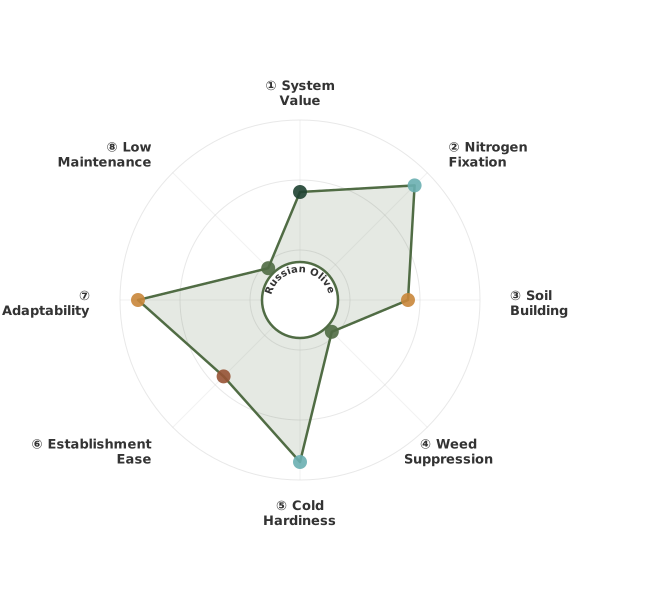
Elaeagnus angustifolia, commonly known as Russian olive, demonstrates utility in regenerative agriculture primarily as a nitrogen-fixing plant, contributing to on-site fertility generation within food forests and other agroforestry systems. When incorporated into a 'chop and drop' system, its biomass provides valuable mulch and nutrients, enhancing soil health and potentially sequestering carbon. Excerpt highlights its role as a 'fertility pump,' emphasizing that hard cutting stimulates regrowth and biomass production. Field experiments, as noted in excerpt, indicate its strong adaptation and suitability for improving challenging saline-alkali soils, showing high survival and rapid growth where other species falter. While not explicitly detailed in the provided excerpts, its role as a biomass producer suggests potential for pollinator support and as a component in polyculture layers. Farmer experience points to a need to check for invasiveness and notes its use in areas needing a fertility boost, particularly when combined with concentrated animal manures.

Regenerative Quick Profile

All recommendations assume integrated, regenerative practices—not conventional inputs.

Climate & Soil Fit

Climate: Tropical Rainforest, Tropical Monsoon, Tropical Savanna, Hot Semi-Arid (Steppe), Cold Semi-Arid (Steppe), Hot Desert, Cold Desert, Humid Subtropical, Oceanic (Maritime Temperate), Hot-Summer Mediterranean, Warm-Summer Mediterranean, Monsoon-Influenced Humid Subtropical, Subtropical Highland, Hot-Summer Continental, Warm-Summer Continental, Subarctic, Extreme Subarctic, Monsoon-Influenced Hot-Summer Continental, Monsoon-Influenced Warm-Summer Continental, Ice Cap, Tundra

Zones: USDA 2-8, Australian Zones 1-14

Optimal Soil: Loam Soil

System Role & Functions

Primary: Nitrogen Fixer

Secondary: Food Forest, Soil Remediation

Key Benefits: Multi-benefit value, Climate adaptable, Low maintenance

Management Level

Experience: Beginner-Friendly

Maintenance: Very low maintenance - As a nitrogen fixer, it thrives in poor soils with minimal intervention, requiring little labor and demonstrating self-sufficiency once established, contributing to a low-input system.

Value Streams

  • Nitrogen fixation
1

Climate Suitability Assessment

Will this plant thrive in your climate?

IDEALLY SUITED

Köppen Zone: BSk (Cold Semi-Arid (Steppe)), Cfa (Humid Subtropical), Cfb (Oceanic (Maritime Temperate)), Dfa (Hot-Summer Continental), Dfb (Warm-Summer Continental)
USDA Zone: 4a, 4b, 5a, 5b, 6a, 6b, 7a, 7b
Australian Zone: temperate, subtropical
EU Climate Region: atlantic, continental

Russian Olive performs exceptionally well in climates characterized by warm to hot summers and mild to cold winters, with adequate moisture. This includes Köppen zones Cfa, Dfa, Dwa, and Dfb, USDA zones 5b through 10b, and Australian subtropical and temperate regions, as well as EU Atlantic and Continental climates. These zones provide a growing season of 150-240 frost-free days with average summer temperatures between 70-85°F (21-29°C), optimal for robust nitrogen fixation and fruit production. Annual precipitation of 30-50 inches (75-125 cm) is generally sufficient, though supplemental irrigation can enhance performance in drier periods. Establishment success is high (>85%) with minimal management required, and the plant exhibits excellent winter hardiness in zones with cold winters. Its resilience and productivity in these zones make it a highly valuable species for nitrogen fixation and food forestry applications, contributing significantly to soil health and biodiversity.

ADEQUATE

Köppen Zone: BSh (Hot Semi-Arid (Steppe)), BWk (Cold Desert), Csa (Hot-Summer Mediterranean), Csb (Warm-Summer Mediterranean), Cwa (Monsoon-Influenced Humid Subtropical), Cwb (Subtropical Highland), Dfc (Subarctic), Dwa (Monsoon-Influenced Hot-Summer Continental), Dwb (Monsoon-Influenced Warm-Summer Continental)
USDA Zone: 3a, 3b, 8a, 8b

Russian Olive is adequately suited to climates with moderate temperature extremes and variable moisture, including Köppen zones Bsk, Cfb, Csa, Csb, and Dwb, USDA zones 4b through 5a, and EU continental regions with cooler summers. These zones typically offer growing seasons of 120-180 frost-free days, with summer temperatures ranging from 60-75°F (15-24°C). While Russian Olive can establish and provide nitrogen fixation, performance may be slightly reduced due to cooler summers, shorter growing seasons, or periods of drought. For instance, in Mediterranean climates (Csa, Csb), dry summers necessitate supplemental irrigation for optimal fruit production and nitrogen fixation. In cooler continental or oceanic climates (Cfb, Dfb), growth rates might be slower. Establishment success is good (70-85%) with proper site selection and initial watering. Its adaptability allows it to contribute to regenerative agriculture, though yields and reliability may be less consistent than in 'ideally suited' zones.

NOT RECOMMENDED

Köppen Zone: Af (Tropical Rainforest), Am (Tropical Monsoon), Aw (Tropical Savanna), EF (Ice Cap), ET (Tundra), BWh (Hot Desert), Dfd (Extreme Subarctic)
USDA Zone: 2a, 9a, 9b, 10a, 10b, 11a, 11b, 12a, 12b, 13a, 13b

Russian Olive is not recommended for climates with extreme winter cold and very short growing seasons, specifically Köppen zone Dwb (in its coldest extremes), USDA zones 3a, 3b, and 4a, and potentially very cold continental EU regions. These zones experience winter temperatures below -25°F (-30°C) and growing seasons often less than 100 frost-free days, making perennial survival and reliable nitrogen fixation highly improbable. Establishment success is low (<70%), and winter kill is common, rendering its primary functions unreliable. While technically possible to grow as an annual with intensive management, the economic and practical viability is extremely low, with high costs for minimal return. Alternative nitrogen-fixing plants that are specifically adapted to extreme cold and short growing seasons, such as Hairy Vetch or Siberian Peashrub, are far more suitable and cost-effective for regenerative agriculture in these challenging environments.

Better alternatives for these "not recommended" zones: Hairy Vetch (Cold-hardy annual legume for nitrogen fixation, better suited to short growing seasons and extreme cold.), Winter Rye (Extremely cold-hardy cover crop providing biomass and soil protection, though not a nitrogen fixer.), Siberian Peashrub (Caragana arborescens) (Extremely cold-hardy nitrogen-fixing shrub, more resilient to extreme winters and drought.)

Note: Zones listed above represent climates where this plant can produce reliably with reasonable management. Climate zones not mentioned would require intensive climate modification (greenhouses, extensive infrastructure) and are not economically viable for regenerative agriculture purposes.

2

Soil Suitability Assessment

Which soil types work best for this plant?

IDEALLY SUITED

Loam Soil

This plant thrives in these soil types without requiring amendments or remediation. Natural soil conditions support optimal growth and productivity.

ADEQUATE

Alkaline Soil, Clay Soil, Desert Soil, Rich Soil, Rocky Soil, Sandy Soil

This plant performs acceptably in these soil types with moderate, manageable remediation such as pH adjustment, compost addition, or drainage improvement. The required amendments are practical and cost-effective for regenerative agriculture.

NOT RECOMMENDED

Acidic Soil, Saline Soil, Wet Soil

Growing this plant in these soil types would require impractical remediation such as complete soil replacement, extensive amendments, or cost-prohibitive infrastructure. These conditions are not economically viable for regenerative agriculture.

Note: Soil suitability assessments focus on remediation requirements. "Ideally Suited" means the plant generally thrives without the need for substantial amendments, "Adequate" means manageable remediation (lime, compost, mulch), and "Not Recommended" means impractical soil changes would be required. Climate factors like rainfall and temperature also influence success.

3

Seasonal Considerations

Planting timing, growth duration, and harvest windows

Establishing Russian olive requires careful timing to leverage its perennial lifecycle. For nursery stock, bare-root trees are best planted during the dormant season, typically in early spring before bud break, or in late fall after leaf drop. Container-grown trees offer more flexibility, allowing planting throughout the growing season, though early spring and early fall are ideal to minimize transplant shock and allow root establishment before extreme temperatures.

Russian olive reaches establishment within 2-3 years, with the first significant harvest usually occurring around year 4-5. Full production, where the trees yield abundantly, is typically achieved by year 7-10 and can continue for several decades, making it a long-term investment.

Seasonal management focuses on supporting this growth. Pruning is best performed during the dormant season, anytime from late fall through early spring, to shape the tree and remove dead or crossing branches. Bloom occurs in late spring, usually preceding fruit development. The fruit ripens in late summer to early fall, marking the harvest season. Throughout winter, the trees enter a period of dormancy, conserving energy for the following year's growth.

4

System Role & Multi-Benefit Value

Functional roles, integration strategies, and stacked benefits

Functional Role

Total System Value

Russian olive offers significant system value beyond direct harvest, acting as a crucial fertility enhancer in regenerative agriculture. Its primary benefit is nitrogen fixation, directly contributing to soil health and reducing the need for external fertilizer inputs. This function is vital in establishing self-sustaining systems like food forests, where its biomass, generated through 'chop and drop', provides essential organic matter and nutrients. Its remarkable adaptability to saline-alkali soils (94.71% survival rate noted in one study) makes it a valuable tool for land reclamation and improving productivity on challenging sites. While not explicitly mentioned for direct harvest in the excerpts, its potential for biomass production contributes to carbon sequestration. As a tree, it will eventually provide shade and habitat. By improving soil fertility and providing biomass, Russian olive enhances the resilience and self-sufficiency of the farm, diversifying its functional capacity within the ecosystem.

Integration Characteristics

Multi-Benefit Value: Ideally Suited - This resilient plant offers edible fruit and wildlife support, while its deep roots enhance soil structure and provide windbreak benefits, representing significant ecological value.

5

Management & Care Requirements

Integration guidance, maintenance needs, and care practices

How to Integrate This Plant

Russian olive (Elaeagnus angustifolia) can be integrated into regenerative systems primarily as a nitrogen-fixing 'fertility pump'. Its role is to enhance on-site fertility, particularly in less productive areas. This plant is well-suited for food forests, where its biomass can be utilized through the 'chop and drop' method to generate mulch and nutrients, stimulating new growth and improving soil health. It also demonstrates strong adaptability to saline-alkali soils, making it a candidate for challenging sites. In orchards, it can be strategically placed in weaker soil zones to receive fertility boosts, such as from poultry manure, to help it thrive alongside other crops. Its high survival and growth rates in difficult conditions suggest its utility in establishing biomass quickly for soil improvement. As a tree, it will eventually offer shade and potentially habitat. Its primary contribution is in building soil fertility and biomass, supporting the overall health and self-sufficiency of the farming system.

Integration Practices & Management

Elaeagnus angustifolia, commonly known as Russian olive, is integrated into regenerative agriculture primarily for its nitrogen-fixing capabilities and resilience in challenging environments. Source highlights its role as a 'fertility pump' in food forest systems, where it can be cut back hard to stimulate growth and provide biomass for mulch through the 'chop and drop' method, thereby enhancing on-site fertility. Source provides a practical farmer insight, detailing how a struggling Russian olive tree was strategically fertilized with poultry manure to improve its vigor, demonstrating its use in soil amendment. Furthermore, research in saline-alkali soils shows E. angustifolia exhibits high survival rates and rapid growth, making it a suitable candidate for soil improvement in such conditions, outperforming other tested species like Ziziphus jujuba var. spinose. While specific details on establishment methods, grazing integration, termination strategies, or cash crop intercropping are not extensively covered in the provided knowledge base, its function as a nitrogen-fixer and its hardiness are key management considerations for regenerative farmers seeking to build soil fertility and establish resilient perennial systems.

Management Profile

Maintenance Intensity: Ideally Suited - As a nitrogen fixer, it thrives in poor soils with minimal intervention, requiring little labor and demonstrating self-sufficiency once established, contributing to a low-input system.

6

Economics & Value Streams

Direct harvest, system benefits, ecosystem services, and risk diversification

Comprehensive economic analysis including direct harvest value, system enhancement contributions, ecosystem services, value timeline, and risk diversification strategies.

Cover Crop Investment

Metric Value
Seed Cost $5-15/acre $12-37/ha
Termination Cost 15-40 37-99
Biomass Production 3-8 7-18
N Fixation Value N/A N/A
Weed Control Savings 20-60 49-148

Cover crops are soil investments, not cash crops. Economics measured in soil health gains, input reduction, and subsequent crop performance. Values show direct costs and estimated benefits.

System Enhancement Value

Beyond harvest: nitrogen fixation replacing fertilizer costs

Nitrogen Fixation Value

40-100 lbs N/acre/year = $24-112/acre fertilizer replacement (assuming $0.60/lb N, variable based on fertilizer prices and fixation rates)

Russian olive (Elaeagnus angustifolia) is a nitrogen-fixing plant, contributing significantly to on-site fertility generation, a core strategy for creating self-sustaining food forests. As an actinorhizal (non-legume) nitrogen fixer, it plays a crucial role in building soil organic matter and nutrient reserves, reducing reliance on external inputs like compost or synthetic fertilizers. When utilizing the 'chop and drop' method, as suggested in the knowledge base, cutting back Russian olive stimulates new growth and provides biomass that breaks down into rich soil, feeding microorganisms. This process also encourages root die-off, further enhancing soil organic matter. The nitrogen fixed by Russian olive directly supports the growth of other plants within an integrated system, increasing overall system productivity and resilience. This natural fertility enhancement is a key component of regenerative agriculture, fostering a closed-loop nutrient cycle.

Additional Soil Building Benefits

Beyond nitrogen fixation, Russian olive offers several valuable secondary functions within integrated farm systems. It is recognized as a component of food forests, contributing to on-site fertility generation through 'chop and drop' methods. Its tough cuttings allow for highly successful propagation, making it an accessible plant for establishing these systems. The plant's secondary compounds have demonstrated antiparasitic activity, making it beneficial in silvopasture systems for livestock parasite management. This reduces the need for external deworming agents, contributing to animal health and potentially lowering veterinary costs. As a pioneer species, it aids in soil remediation, particularly on challenging sites like sandy soils, building fertility over time and improving soil structure. Its ability to thrive in less-than-ideal conditions and contribute multiple benefits makes it a valuable asset for farm resilience.

Erosion Control

Variable, but can protect 3-5 acres per tree row, potentially leading to 5-15% crop yield improvement in protected areas (general estimates for windbreaks)

While not explicitly detailed in the provided excerpts, Russian olive is a woody shrub that can contribute to windbreak and erosion control functions, particularly when planted in hedgerows or as part of a multi-species buffer. Its dense growth habit and deep root system, implied by its successful propagation via deep cuttings and the need to encourage root penetration into native soil, allow it to stabilize soil, especially on sandy or degraded land. The physical barrier created by Russian olive can reduce wind speed across agricultural fields, thereby minimizing soil erosion and protecting young crops or vulnerable livestock from harsh weather conditions. This reduction in wind erosion preserves topsoil and its inherent fertility, contributing to long-term land productivity. Furthermore, by buffering fields from wind, Russian olive can create microclimates that enhance crop growth and reduce water loss through evaporation, indirectly improving overall farm productivity and resource efficiency.

Ecosystem Service Contributions

Environmental contributions: carbon, pollinators, wildlife, and water

  • Carbon Sequestration: Russian olive is a woody perennial, and through its biomass production and root system development, it sequesters atmospheric carbon in both above-ground and below-ground biomass, as well as in the soil through organic matter accumulation. Its nitrogen-fixing ability also enhances soil health, which can further improve carbon sequestration potential.
  • Pollinator Support: Medium. While not explicitly detailed in the excerpts, many woody shrubs provide nectar and pollen resources for pollinators, especially during their flowering period.
  • Wildlife Habitat: Russian olive provides habitat and potential food sources (though fruits are not a primary focus in excerpts) for wildlife. Its dense growth can offer nesting sites and shelter. As noted, it's common in silvopasture, indicating its integration into environments supporting livestock and associated wildlife.
  • Water Quality: Not applicable

Value Timeline: N Fixation & Production

When you'll see results: nitrogen fixation begins immediately, harvest at maturity

Years 1-2

Establishment of nitrogen fixation, initial soil binding and erosion control, beginning of 'chop and drop' biomass contribution. Potential for early antiparasitic benefits in silvopasture.

Years 3-5

Significant nitrogen contribution supporting surrounding vegetation, increased biomass for mulching, more established windbreak and erosion control, noticeable soil remediation effects.

Years 10-20

Mature nitrogen fixation rates, substantial contribution to soil fertility and structure, well-developed windbreak/shelterbelt functions, long-term soil remediation benefits, sustained antiparasitic effects in livestock systems.

20+ Years

Continued high level of ecosystem services, mature woody biomass potentially offering alternative uses (e.g., biochar feedstock if managed appropriately), long-term enhancement of soil health and farm resilience.

Farm Risk Reduction

How this reduces farm risk: fertilizer cost hedge and rotation benefits

  • Multiple Revenue Streams: Reduced fertilizer costs, potential reduction in livestock health treatment costs (antiparasitic benefits), enhanced crop yields due to improved soil fertility and microclimate, potential for future timber/biomass harvest.
  • Temporal Income Spread: Ongoing ecosystem services (nitrogen fixation, soil improvement, windbreak) provide continuous value, while antiparasitic benefits offer periodic risk mitigation for livestock. Long-term potential for biomass or timber adds a future revenue stream.
  • Market Risk Hedge: Reduces reliance on volatile input markets (fertilizers, dewormers). Enhances on-farm resilience to environmental stressors (drought, wind) through improved soil health and microclimate. Diversifies the farm's productive base beyond primary commodity crops.
7

Regenerative Suitability Details

Comprehensive trait ratings for system integration assessment

Comparative ratings for this plant across key regenerative agriculture traits.

Trait Suitability Explanation
Cold Hardiness Ideally Suited Russian olive is exceptionally hardy to Zone 3, contributing to soil building and reliable overwintering through its nitrogen-fixing ability and dense growth.
Weed Suppression Not Recommended As a woody shrub with an open structure, it has limited capacity to suppress weeds through canopy competition, necessitating complementary management strategies.
Nitrogen Fixation Ideally Suited This legume significantly enhances soil fertility by fixing substantial amounts of nitrogen, contributing to a more self-sustaining nutrient cycle.
Root System Depth Ideally Suited Its deep and extensive root system effectively alleviates soil compaction and mines nutrients from deeper soil layers, improving overall soil health.
Biomass Production Not Recommended Russian olive's slow biomass accumulation can contribute to soil organic matter over time, enhancing soil health when managed within a cover cropping system.
Establishment Ease Adequate Tolerant of challenging conditions, it establishes well in poor soils and with limited water management once mature, though initial germination may require careful attention.
Multi Benefit Value Ideally Suited This resilient plant offers edible fruit and wildlife support, while its deep roots enhance soil structure and provide windbreak benefits, representing significant ecological value.
Climate Adaptability Ideally Suited Extremely hardy across a wide zone range, it thrives in diverse conditions including drought, heat, cold, and saline soils, showcasing remarkable resilience and adaptability.
Maintenance Intensity Ideally Suited As a nitrogen fixer, it thrives in poor soils with minimal intervention, requiring little labor and demonstrating self-sufficiency once established, contributing to a low-input system.

Comparative System: Ratings compare plants within their economic category (e.g., cover crop nitrogen fixation compared to other cover crops, not to all plants). Individual farm conditions and management practices significantly influence actual performance.

8

Learn More

Why farmers use this plant and additional resources

Why Regenerative Farmers Use This Plant

Elaeagnus angustifolia, commonly known as Russian Olive, is a valuable nitrogen-fixing woody perennial that offers significant regenerative benefits when integrated into diverse agricultural systems. As a legume, it forms a symbiotic relationship with Rhizobium bacteria in the soil, converting atmospheric nitrogen into a plant-available form. This process can contribute substantially to soil fertility, potentially providing nitrogen credits of 50-100 lbs N/acre (56-112 kg/ha) annually once established, thereby reducing reliance on synthetic nitrogen fertilizers. Over a 3-5 year rotation, this nitrogen input can translate into direct savings of $25-$100 per acre annually, depending on current fertilizer prices and crop needs.

Its extensive and robust root system, which can reach depths of 10-20 feet (3-6 meters), plays a crucial role in soil structure improvement. It enhances water infiltration and aeration, scavenges nutrients from deeper soil profiles, and can break up compacted soil layers, making these nutrients available to shallower-rooted plants. The substantial woody biomass produced, often exceeding 5-10 tons dry matter per acre (11-22 metric tons/ha) per year in mature stands, contributes significantly to soil organic matter when managed appropriately. The decomposition of its woody residue, while slower than herbaceous cover crops, steadily adds stable organic matter to the soil, enhancing soil structure, water-holding capacity, and microbial activity over the long term. This continuous improvement in soil health is a cornerstone of regenerative agriculture, leading to more resilient and productive farming landscapes.

Beyond its direct soil-building capabilities, Elaeagnus angustifolia offers a suite of ecosystem services that enhance farm resilience. Its dense growth habit and thorny branches make it an effective natural barrier, providing excellent windbreak protection and reducing soil erosion, particularly in arid and semi-arid regions. Established windbreaks can demonstrably reduce wind speed by up to 50% for a distance of 10-15 times their height, leading to a reported 20-30% reduction in wind damage to cash crops in some regions. This also translates to improved microclimates for adjacent crops, potentially increasing yields and reducing wind damage. Furthermore, its flowers are a valuable early-season nectar and pollen source for a wide array of pollinators, including bees, butterflies, and other beneficial insects, supporting biodiversity on the farm and contributing to crop pollination services.

The quantitative ecosystem benefits are multifaceted. In mixed plantings with other nitrogen-fixing species or as part of a diverse hedgerow, it can support a robust population of beneficial insects that aid in natural pest control for nearby fields. Studies on similar woody legumes in hedgerows have shown increases in soil infiltration rates by up to 50%. The nitrogen fixed by Russian Olive is gradually released as its biomass decomposes, providing a slow-release source of fertility that synchronizes well with the nutrient demands of many crops, minimizing nutrient losses to leaching. Its dense growth habit also makes it an effective tool for weed suppression, outcompeting many annual and perennial weeds. In silvopasture systems, the foliage and fallen fruits can offer supplemental forage for livestock, while also providing shade and habitat, creating a more resilient and biodiverse farm ecosystem.

Farmers across diverse regions have successfully integrated Elaeagnus angustifolia. In the semi-arid plains of North America, it is widely used in windbreaks to protect crops and reduce soil erosion. In Australian dryland farming systems and wheat-sheep belts, it is planted on farm boundaries, in alley cropping, and in degraded areas to stabilize soils, improve water retention, and provide shade and shelter for livestock. Farmers in parts of Europe, particularly in regions with sandy soils and Mediterranean climates, utilize it in agroforestry systems, hedgerows, and buffer zones to improve soil fertility, enhance biodiversity, and provide supplemental fodder. In South America, it is being explored for use in buffer zones around agricultural fields to prevent soil degradation and enhance biodiversity, and in Brazilian coffee plantations on contour lines to improve soil fertility and reduce erosion on slopes. In the Canadian prairies, it is a key component of shelterbelts, providing crucial protection against wind erosion and harsh winter conditions. In the UK, it can be integrated into hedgerow systems to boost nitrogen input and provide habitat. Its ability to tolerate saline conditions also makes it suitable for coastal or irrigated areas with salinity challenges.

9

How to Integrate This Plant

Practical guidance for regenerative systems

Establishing Elaeagnus angustifolia can be achieved through seed or cuttings. For direct seeding, rates typically range from 1-3 lbs/acre (1.1-3.4 kg/ha), with a broadcast seeding rate of 5-10 lbs/acre (5.6-11.2 kg/ha) also being common. Seeds should be planted at a depth of 0.25-0.5 inches (0.6-1.3 cm). For drilled seeds, the same depth is recommended. Planting can occur in early spring, from March to May in the Northern Hemisphere, or in early autumn, from September to November in the Southern Hemisphere, to take advantage of natural rainfall and the start of the growing season. Germination can be slow and erratic, often benefiting from stratification of seeds.

Spacing can vary greatly depending on the intended use. For windbreaks or hedgerows, plants are often spaced 6-10 feet (1.8-3 meters) apart on center, or planted in rows 10-20 feet (3-6 m) apart with plants spaced 5-15 feet (1.5-4.5 m) within the row. For ground cover, soil stabilization, or biomass production, denser plantings or broadcast seeding may be employed, with spacing of 5-10 feet (1.5-3 m) being typical for mixed plantings. Establishment is generally rapid, with noticeable growth within 30-60 days.

Once established, Elaeagnus angustifolia requires minimal management, especially in regenerative systems. It is highly drought-tolerant, with established plants needing supplemental water only during extreme prolonged dry spells. Its water needs are moderate, often thriving on annual rainfall of 15-20 inches (38-50 cm). Fertility management should prioritize biological approaches; the nitrogen fixed by the plant is the primary nutrient source. In systems where it is not intended to spread aggressively, pruning can be used to manage its size and shape, particularly when used in hedgerows or as a component of silvopasture systems.

Russian Olive typically establishes within 1-3 years, with significant growth and nitrogen fixation occurring thereafter. Mature plants can reach heights of 15-25 feet (4.5-7.5 meters) and a spread of 10-20 feet (3-6 meters) within 5-10 years, with a lifespan that can exceed 50 years. Pest and disease management is generally not a significant concern due to its natural resilience and thorny defenses; it is remarkably resistant to most common agricultural threats, aligning with the regenerative principle of choosing resilient species. Occasional aphid infestations can occur, which are typically managed by natural predators. Monitoring for potential issues like fungal diseases in overly wet conditions or certain insect borers is prudent, with biological controls and cultural practices being the preferred methods.

For cover cropping and soil building purposes, Elaeagnus angustifolia is best managed as a woody perennial that contributes to long-term soil health rather than a rapidly terminating annual cover. Termination is typically not required in the traditional sense for its role as a nitrogen fixer and biomass producer. If a stand needs to be removed or thinned, mechanical methods such as mowing or chipping are effective. For systems focused on rapid nitrogen release for a cash crop, it is less suitable than annual legumes. However, its woody residue, when chipped or shredded, decomposes slowly over 6-12 months, providing a sustained release of nutrients and significantly contributing to stable soil organic matter. If volunteer establishment is undesirable or seed production is a concern, managing seed production through timely mowing before seed set or removing seed heads before maturity can prevent unwanted establishment. It can be interseeded into established pastures or used in agroforestry systems, where its nitrogen-fixing capability benefits companion crops or forage.

View Full Document (Printable single-page version)