Existing mentions highlight its potential within regenerative agriculture. Primarily, it functions as a nitrogen-fixing plant, contributing to soil fertility and reducing the need for synthetic inputs. This makes it a valuable component in polyculture systems and as a groundcover or understory layer in agroforestry designs. Its ability to fix nitrogen directly benefits adjacent crops and improves overall soil structure. Elaeagnus x ebbingei also offers support for pollinators, enhancing biodiversity within the farm ecosystem. Although specific farmer experiences and integration details are scarce in our current data, its role as a nitrogen fixer suggests compatibility with practices like no-till farming and cover cropping, where soil health and nutrient cycling are paramount. Further research would be beneficial to fully understand its integration into rotational grazing or its specific carbon sequestration potential. While coverage in our knowledge base is limited, the above represents documented uses in regenerative systems.

Regenerative Quick Profile

All recommendations assume integrated, regenerative practices—not conventional inputs.

Climate & Soil Fit

Climate: Tropical Rainforest, Tropical Monsoon, Tropical Savanna, Hot Semi-Arid (Steppe), Cold Semi-Arid (Steppe), Hot Desert, Cold Desert, Humid Subtropical, Oceanic (Maritime Temperate), Hot-Summer Mediterranean, Warm-Summer Mediterranean, Monsoon-Influenced Humid Subtropical, Subtropical Highland, Hot-Summer Continental, Warm-Summer Continental, Subarctic, Monsoon-Influenced Hot-Summer Continental, Tundra

Zones: USDA 7-9, Australian Zones 3-5

Optimal Soil: Loam Soil

System Role & Functions

Primary: Nitrogen Fixer

Secondary: Cover Crop System, Pollinator Support

Key Benefits: Multi-benefit value, Low maintenance, Nitrogen Fixation

Management Level

Experience: Beginner-Friendly

Maintenance: Very low maintenance - This adaptable, nitrogen-fixing shrub integrates seamlessly into a low-input system, requiring minimal attention as it contributes to soil fertility and ecosystem resilience.

Value Streams

  • Nitrogen fixation
  • Pollinator habitat and support
1

Climate Suitability Assessment

Will this plant thrive in your climate?

IDEALLY SUITED

Köppen Zone: Cfa (Humid Subtropical), Cfb (Oceanic (Maritime Temperate)), Dfa (Hot-Summer Continental), Dfb (Warm-Summer Continental)
USDA Zone: 5a, 5b, 6a, 7a, 8a
Australian Zone: temperate
EU Climate Region: atlantic

Silverberry thrives in climates with moderate winters and sufficient growing season length, performing optimally in USDA zones 6a-8b, Australian temperate zones, and EU Atlantic regions. These areas typically experience 150-250 frost-free days with winter lows rarely dropping below 0°F (-18°C). Consistent rainfall (30-50 inches/75-125 cm annually) supports vigorous growth and nitrogen fixation, with optimal temperatures for vegetative growth ranging from 60-80°F (15-27°C). Establishment is highly reliable, leading to robust perennial stands that provide significant nitrogen fixation (80-150 lbs/acre or 90-170 kg/ha annually), excellent ground cover, and substantial pollinator support. Minimal management is required beyond initial establishment, making it a highly cost-effective and reliable component for regenerative agriculture systems, contributing significantly to soil health and biodiversity with minimal inputs.

ADEQUATE

Köppen Zone: Aw (Tropical Savanna), BSh (Hot Semi-Arid (Steppe)), BSk (Cold Semi-Arid (Steppe)), Csa (Hot-Summer Mediterranean), Csb (Warm-Summer Mediterranean), Cwa (Monsoon-Influenced Humid Subtropical), Cwb (Subtropical Highland), Dfc (Subarctic), Dwa (Monsoon-Influenced Hot-Summer Continental)
USDA Zone: 4a, 9a, 10a
Australian Zone: subtropical
EU Climate Region: continental

Silverberry demonstrates adequate performance in a broader range of climates, including USDA zones 5b, 9a-10b, Australian subtropical zones, and EU continental regions. These zones often feature longer growing seasons (180-300 days) but may have more variable winter temperatures (down to -10°F/-23°C in 5b) or hotter, drier summers. While it can establish and provide nitrogen fixation, cover, and pollinator support, its productivity and perennial survival may be reduced by 10-25% compared to ideal zones. Supplemental irrigation during dry spells (especially in zones with less than 30 inches/75 cm annual rainfall) and careful species selection for cold hardiness are often necessary. Management costs can increase by $20-50/acre/year ($50-125/ha/year) due to these considerations, but the plant still offers significant benefits for soil improvement and ecosystem services.

NOT RECOMMENDED

Köppen Zone: Af (Tropical Rainforest), Am (Tropical Monsoon), ET (Tundra), BWh (Hot Desert), BWk (Cold Desert)
USDA Zone: 2a, 3a, 3b, 11a, 12a

Silverberry is not recommended for climates with extreme winter cold or prolonged summer drought, specifically USDA zones 3a-5a, Köppen Csa, and EU Boreal regions. These zones experience winter lows below -15°F (-26°C) or hot, dry summers with less than 20 inches (50 cm) of annual rainfall. In cold zones, winter kill is highly probable, preventing reliable perennial establishment and thus limiting its nitrogen-fixing and cover crop functions to a single, often unproductive, growing season. In hot, dry zones, severe heat stress and water scarcity drastically reduce growth and nitrogen fixation efficiency, requiring intensive irrigation that is often economically unfeasible. Establishment success rates can drop below 60% in these challenging conditions, making it a risky and inefficient choice for regenerative agriculture compared to better-adapted alternatives. The cost-benefit analysis strongly favors other species in these environments.

Better alternatives for these "not recommended" zones: Hairy Vetch (Vicia villosa) (Cold-hardy annual legume for nitrogen fixation in cold zones.), Winter Rye (Secale cereale) (Extremely cold-hardy cover crop for biomass and soil protection in cold zones.), Atriplex spp. (Saltbush) (Drought-tolerant nitrogen fixer for arid/semi-arid zones.), Acacia spp. (Wattles) (Nitrogen-fixing species adapted to dry Mediterranean-like climates.)

Note: Zones listed above represent climates where this plant can produce reliably with reasonable management. Climate zones not mentioned would require intensive climate modification (greenhouses, extensive infrastructure) and are not economically viable for regenerative agriculture purposes.

2

Soil Suitability Assessment

Which soil types work best for this plant?

IDEALLY SUITED

Loam Soil

This plant thrives in these soil types without requiring amendments or remediation. Natural soil conditions support optimal growth and productivity.

ADEQUATE

Clay Soil, Rich Soil, Rocky Soil, Sandy Soil

This plant performs acceptably in these soil types with moderate, manageable remediation such as pH adjustment, compost addition, or drainage improvement. The required amendments are practical and cost-effective for regenerative agriculture.

NOT RECOMMENDED

Acidic Soil, Alkaline Soil, Desert Soil, Saline Soil, Wet Soil

Growing this plant in these soil types would require impractical remediation such as complete soil replacement, extensive amendments, or cost-prohibitive infrastructure. These conditions are not economically viable for regenerative agriculture.

Note: Soil suitability assessments focus on remediation requirements. "Ideally Suited" means the plant generally thrives without the need for substantial amendments, "Adequate" means manageable remediation (lime, compost, mulch), and "Not Recommended" means impractical soil changes would be required. Climate factors like rainfall and temperature also influence success.

3

Seasonal Considerations

Planting timing, growth duration, and harvest windows

Elaeagnus x ebbingei offers a robust option for versatile cover cropping across a wide range of climates. For spring planting, establish silverberry after the last expected frost, allowing it ample time to develop before fall. Its excellent frost tolerance means it can also be sown in late fall, well before the first hard freeze, to provide overwintering ground cover, particularly in zones Cfa, Cfb, and Dfa. While not typically a summer cover crop in the same vein as annuals, its drought tolerance can be beneficial during drier mid-summer periods if established earlier.

Expect establishment within a few weeks, with significant biomass accumulation occurring over its first growing season. Overwinter survival is generally good in zones Cfa, Cfb, Csa, Csb, Dfa, and Dfb, entering dormancy naturally with colder temperatures. Termination should occur when you need the field for your next cash crop, ideally several weeks before planting to allow for decomposition. For winter cover, plant in late fall; for spring benefits, sow after the last frost. While not a candidate for frost-seeding due to its woody nature, its perennial habit means it will return to production year after year, offering long-term soil building benefits.

4

System Role & Multi-Benefit Value

Functional roles, integration strategies, and stacked benefits

Functional Role

Total System Value

Silverberry offers substantial multi-benefit stacking within a regenerative farm. Its primary contribution is nitrogen fixation, directly enhancing soil fertility and reducing input costs. Beyond this, it provides habitat and food sources for pollinators and beneficial insects, crucial for crop health and ecosystem stability. As a shrub, it can serve as a windbreak, offering protection to crops or livestock and reducing soil erosion, particularly on slopes. While direct harvest value may be secondary (edible berries), its role in building soil health, supporting biodiversity, and potentially providing biomass for mulch or compost contributes significantly to whole-farm resilience. This diversification of function means that even if direct harvest is limited, the plant continues to deliver essential ecosystem services and improve the overall productivity and stability of the farming system.

Integration Characteristics

Multi-Benefit Value: Ideally Suited - Beyond nitrogen fixation, it provides edible fruit and wildlife habitat, acting as a functional element in hedgerows, windbreaks, and erosion control for a resilient agroecosystem.

5

Management & Care Requirements

Integration guidance, maintenance needs, and care practices

How to Integrate This Plant

Silverberry (Elaeagnus x ebbingei) is a valuable non-tree shrub for regenerative systems, primarily functioning as a nitrogen fixer. Integrate it into hedgerows, windbreaks, or as understory planting in silvopasture or food forest designs. Its nitrogen-fixing capability directly enriches soil, reducing the need for synthetic fertilizers and supporting the growth of companion plants. Silverberry also provides habitat and food for wildlife and pollinators, enhancing overall farm biodiversity. It can be used for erosion control on slopes due to its dense root system. The plant starts contributing nitrogen and providing habitat in Year 1, with significant growth and potential for fruit production by Year 3-5. Long-term, it forms a robust component of a diversified farming landscape, offering continuous soil improvement and ecological benefits.

Integration Practices & Management

Information regarding the specific integration methods of Elaeagnus x ebbingei by regenerative farmers is notably limited within the provided knowledge base. Existing sources do not detail establishment techniques such as seeding rates, timing, or specific no-till versus minimal tillage approaches for this species. Similarly, its integration with grazing systems, including mob grazing, rotational patterns, or the timing and duration of rest periods, is not elucidated. Termination strategies, whether through natural winterkill, grazing, crimping, mowing, or herbicide application, are also absent from the knowledge base. Management considerations like fertility requirements, competition control, or succession planning in relation to Elaeagnus x ebbingei are not discussed. Furthermore, its role in cash crop systems, such as relay or intercropping, or its placement within rotation sequences, remains undocumented in these sources. Consequently, practical farmer experiences and insights specifically detailing the 'how' of integrating Elaeagnus x ebbingei into regenerative agricultural systems cannot be extracted from the available text.

Management Profile

Maintenance Intensity: Ideally Suited - This adaptable, nitrogen-fixing shrub integrates seamlessly into a low-input system, requiring minimal attention as it contributes to soil fertility and ecosystem resilience.

6

Economics & Value Streams

Direct harvest, system benefits, ecosystem services, and risk diversification

Comprehensive economic analysis including direct harvest value, system enhancement contributions, ecosystem services, value timeline, and risk diversification strategies.

Cover Crop Investment

Metric Value
Seed Cost $20-50/acre $49-124/ha
Termination Cost 15-30 37-74
Biomass Production 2-5 4-11
N Fixation Value N/A N/A
Weed Control Savings 10-30 25-74

Cover crops are soil investments, not cash crops. Economics measured in soil health gains, input reduction, and subsequent crop performance. Values show direct costs and estimated benefits.

System Enhancement Value

Beyond harvest: nitrogen fixation replacing fertilizer costs

Nitrogen Fixation Value

80-150 lbs N/acre/year = $48-135/acre fertilizer replacement (if applicable)

Silverberry (Elaeagnus x ebbingei) functions as a nitrogen fixer, a crucial role in integrated farm systems. This ability directly reduces the need for synthetic nitrogen fertilizers, which are energy-intensive to produce and can have negative environmental impacts. By fixing atmospheric nitrogen into a plant-available form, silverberry enhances soil fertility and supports the growth of companion crops or trees. This biological process mimics natural ecosystems and contributes to a more sustainable and self-sufficient farming operation. The nitrogen contribution also aids in building soil organic matter over time, improving soil structure, water retention, and overall soil health, creating a positive feedback loop for nutrient cycling.

Additional Soil Building Benefits

Silverberry provides significant value beyond nitrogen fixation and potential windbreak. It is recognized as a valuable support for pollinator populations, contributing to biodiversity and the pollination services essential for many agricultural crops. Its role as a cover crop system, as mentioned in the primary functions, implies its ability to suppress weeds, improve soil structure, and prevent nutrient leaching. The edible berries, though not the primary focus for this analysis, represent an additional, albeit secondary, income or food source. The plant's ability to thrive in poor soils makes it an excellent candidate for land reclamation or improving degraded areas within the farm landscape. Furthermore, its dense structure can offer habitat for beneficial insects and small wildlife.

Erosion Control

variable (dependent on planting density and scale)

While not explicitly detailed as a windbreak in the provided excerpts, silverberry's dense growth habit, particularly when managed as a hedge (as suggested by 'Limelight' cultivar mention), can offer some degree of windbreak and erosion control. Its evergreen nature would provide year-round protection. In an integrated farm system, strategically planted silverberry could buffer agricultural fields from prevailing winds, reducing soil erosion, minimizing wind-induced crop damage, and potentially moderating microclimates. This protection can lead to improved crop establishment and yield stability, especially in exposed areas. The woody biomass also contributes to soil organic matter when pruned and applied as mulch, further enhancing soil structure and water infiltration.

Ecosystem Service Contributions

Environmental contributions: carbon, pollinators, wildlife, and water

  • Carbon Sequestration: Silverberry, as a woody perennial, has the potential for moderate to significant carbon sequestration through biomass accumulation in its roots, trunk, and branches. Its evergreen nature allows for continuous carbon uptake throughout the year.
  • Pollinator Support: High, as it is explicitly mentioned as a secondary function and supports pollinator populations, which are vital for agricultural productivity.
  • Wildlife Habitat: Provides habitat and food sources (berries) for various wildlife, contributing to biodiversity within the farm ecosystem.
  • Water Quality: Not applicable

Value Timeline: N Fixation & Production

When you'll see results: nitrogen fixation begins immediately, harvest at maturity

Years 1-2

Nitrogen fixation begins, contributing to soil fertility. Early cover crop benefits (weed suppression, soil structure improvement) are established. Some pollinator support is provided.

Years 3-5

Nitrogen fixation becomes more substantial. Established cover crop system provides significant soil health benefits. Pollinator support is robust. Potential for early berry production and initial windbreak effects.

Years 10-20

Full nitrogen contribution is realized. Mature plants offer significant windbreak and erosion control. Established habitat for wildlife. Consistent pollinator support. Berries become a more reliable secondary harvest.

20+ Years

Long-term soil health improvements are evident. Mature woody biomass contributes to sustained carbon sequestration. Continued provision of ecosystem services. Potential for coppicing or utilization of mature biomass.

Farm Risk Reduction

How this reduces farm risk: fertilizer cost hedge and rotation benefits

  • Multiple Revenue Streams: Nitrogen fixation (fertilizer replacement value), pollinator support (enhanced crop yields), cover crop benefits (soil health, weed suppression), potential berry harvest, wildlife habitat, carbon sequestration.
  • Temporal Income Spread: Ongoing soil fertility improvement and pollinator support provide continuous value. Berry harvest offers a periodic income/food source. Long-term establishment contributes to stable ecosystem services.
  • Market Risk Hedge: Reduces reliance on external fertilizer inputs, hedging against price volatility. Enhances overall farm resilience through improved soil health and biodiversity, making the system less susceptible to extreme weather or pest outbreaks. Provides alternative revenue streams beyond primary crops.
7

Regenerative Suitability Details

Comprehensive trait ratings for system integration assessment

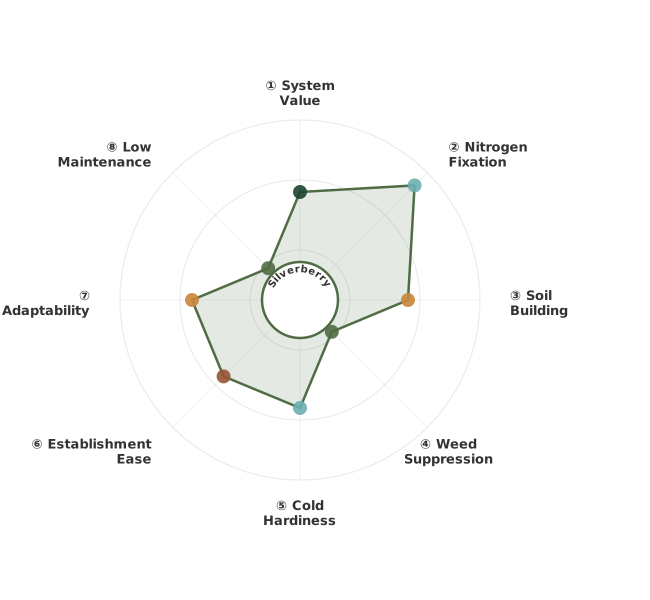
Comparative ratings for this plant across key regenerative agriculture traits.

Trait Suitability Explanation
Cold Hardiness Adequate Ebbing's silverberry offers evergreen cover in suitable climates, contributing to soil protection and habitat. Its success relies on matching its needs to local microclimates within the broader system.
Weed Suppression Not Recommended While a woody shrub, its canopy architecture requires integration with other groundcover strategies or companion planting to enhance its weed-suppressing potential.
Nitrogen Fixation Ideally Suited As a hybrid legume, Ebbing's silverberry actively enhances soil fertility by fixing atmospheric nitrogen, enriching the soil ecosystem and reducing the need for external nutrient inputs.
Root System Depth Ideally Suited Its deep, extensive root system actively improves soil structure, alleviates compaction, and accesses water and nutrients from deeper soil horizons, contributing to overall soil health.
Biomass Production Not Recommended This woody shrub contributes to soil organic matter over time, building soil carbon and structure when managed as part of a longer-term cover cropping or biomass integration strategy.
Establishment Ease Adequate Easily established through vegetative propagation, this shrub quickly integrates into the landscape, contributing to soil stabilization and ecosystem function with minimal intervention.
Multi Benefit Value Ideally Suited Beyond nitrogen fixation, it provides edible fruit and wildlife habitat, acting as a functional element in hedgerows, windbreaks, and erosion control for a resilient agroecosystem.
Climate Adaptability Adequate Thriving in zones 7-9, it demonstrates resilience to heat and periods of low moisture, adapting well to varied microclimates within a regenerative landscape design.
Maintenance Intensity Ideally Suited This adaptable, nitrogen-fixing shrub integrates seamlessly into a low-input system, requiring minimal attention as it contributes to soil fertility and ecosystem resilience.

Comparative System: Ratings compare plants within their economic category (e.g., cover crop nitrogen fixation compared to other cover crops, not to all plants). Individual farm conditions and management practices significantly influence actual performance.

8

Learn More

Why farmers use this plant and additional resources

Why Regenerative Farmers Use This Plant

Elaeagnus x ebbingei, commonly known as Ebbinge's silverberry, offers significant regenerative benefits when integrated into agricultural systems, particularly as a component of hedgerows, windbreaks, or multi-functional buffer zones. While not a nitrogen-fixing legume, its robust growth habit, dense foliage, and resilient nature make it an excellent choice for improving soil health, farm resilience, and biodiversity.

Soil Health and Nutrient Cycling: This shrub produces substantial biomass, with mature plants reaching heights of 6-10 feet (1.8-3 meters) and spreading to a similar width. Its decomposition, though slower than herbaceous cover crops, provides a sustained release of nutrients and carbon into the soil profile, contributing significantly to soil organic matter over time. Its deep root system, extending to 3-6 feet (0.9-1.8 meters), effectively scavenges nutrients from deeper soil layers, preventing leaching and making them available to shallower-rooted cash crops or beneficial soil microbes. Over a 3-5 year rotation, its consistent biomass production and nutrient scavenging contribute to a measurable increase in soil organic matter, typically by 0.1-0.3% annually in well-managed systems. While it does not fix atmospheric nitrogen, its extensive root system effectively captures mobile nutrients like nitrates from the soil profile, preventing their loss.

Ecosystem Services and Biodiversity: As a dense shrub, it provides crucial habitat and food sources for a wide array of beneficial insects, including pollinators and natural predators of common agricultural pests. Its small, fragrant flowers bloom in autumn, offering a vital nectar and pollen source for pollinators during a time when other floral resources may be scarce, supporting populations well into the cooler months. The persistent berries offer food for birds throughout winter. This can lead to a reduction in pest pressure on cash crops, potentially decreasing the need for chemical interventions. Its dense foliage also acts as an effective windbreak, reducing wind erosion and creating microclimates that can benefit adjacent crops, potentially increasing yields by 5-15% by mitigating wind stress. In leeward areas, wind speed can be reduced by up to 50%.

Resilience and Input Reduction: Its ability to tolerate poor soils, drought once established, and coastal salt spray makes it a reliable choice for marginal lands, preventing erosion on slopes and stabilizing soil in areas prone to wind damage. The plant's resilience means it requires minimal external inputs once established, aligning with regenerative principles of reducing reliance on synthetic fertilizers and pesticides. By scavenging nutrients and contributing to organic matter, it can reduce reliance on synthetic fertilizers, potentially saving farmers $40-80 per acre annually depending on specific crop needs and shrub density. Its vigorous growth habit also makes it a highly effective weed suppressor, outcompeting many common annual and perennial weeds, thereby reducing the need for mechanical cultivation or herbicide applications.

Livestock Integration: In silvopasture systems, its dense structure can provide shade and shelter for livestock, improving animal welfare and reducing heat stress. It can also offer browse and forage diversity for livestock.

9

How to Integrate This Plant

Practical guidance for regenerative systems

Establishing Elaeagnus x ebbingei is typically done through vegetative propagation, such as cuttings, or by planting nursery-grown container specimens. Seed propagation can be slow and may not result in true-to-type plants.

Planting and Spacing: For hedgerow, windbreak, or buffer plantings, spacing of 3-6 feet (0.9-1.8 meters) apart is recommended to allow for mature growth and dense coverage. For shelterbelts in drier regions, planting at intervals of 10-16 feet (3-5 meters) is effective. Planting depth should ensure the root ball is fully covered, with the top of the root ball level with the surrounding soil surface. Established plants may require planting holes around 6-12 inches (15-30 cm) deep.

Planting Time: The ideal planting window is typically in early spring or fall, depending on the region's climate, to allow roots to establish before extreme temperatures.

  • Northern Hemisphere: March-April or September-October; alternatively, March-May or September-November.
  • Southern Hemisphere: May-June or September-October; alternatively, March-May or September-November.

Avoid planting during extreme heat or frost.

Establishment and Initial Care: Initial watering is crucial for establishment. Young plants benefit from approximately 1-2 inches (2.5-5 cm) of water per week during the first growing season, especially in drier climates, to establish a strong root system. Planting holes can be backfilled with a mix of native soil and compost to provide initial nutrients and improve soil structure.

Ongoing Management: Once established, Elaeagnus x ebbingei is remarkably low-maintenance.

  • Fertilization: Fertility needs are generally low; it thrives in average to poor soils and does not require significant fertilization, as its nutrient-scavenging ability and decomposition of its own fallen leaves and branches contribute to its nutrient supply.
  • Pruning: Pruning can be done to manage size and shape, encourage bushier growth, or for harvesting biomass. This is typically done after flowering in late spring or early summer, or in late winter before new growth begins. Pruned material can be chipped and used as mulch or incorporated into compost piles. Coppicing or pollarding can be employed if significant growth reduction is needed.
  • Pest and Disease: Pest and disease issues are rare due to its inherent hardiness. Ensuring good air circulation through proper spacing and avoiding waterlogged soils are key cultural practices.

Integration as a Perennial Component: Elaeagnus x ebbingei is not typically used as a short-term annual cover crop due to its woody perennial nature. Instead, it is strategically planted as a permanent or semi-permanent component within a regenerative system.

  • Termination: Termination is generally not required in the conventional sense. Its biomass can be managed through pruning, with the prunings incorporated into the soil as organic matter or left as mulch. If removal is necessary, mechanical methods such as grubbing or repeated cutting at the base over several seasons would be required.
  • Seed Management: Seed production is typically minimal and not a concern for reseeding in agricultural contexts.

Regional Integration Examples:

  • Mediterranean regions (Spain, Italy, Southern France): Utilized in olive groves, vineyards, and agroforestry systems as part of integrated pest management strategies, for soil stabilization on terraced slopes, to protect vineyards and orchards from wind and soil erosion, and to improve microclimates.
  • United Kingdom: Incorporated into mixed hedgerows alongside native species to enhance biodiversity, provide year-round cover for wildlife, and offer windbreaks for arable fields.
  • Australia (Temperate and Dryland regions): Used for revegetation projects, buffer strips in dryland farming areas, and as a key component of shelterbelts to protect crops like wheat and barley from wind erosion and prevent topsoil loss. Its drought tolerance and ability to grow in saline soils are advantageous.
  • United States (Pacific Northwest, Great Plains, Southeast): Used in silvopasture systems, as a component of riparian buffers to protect waterways from agricultural runoff, and incorporated into windbreaks for conservation tillage systems to reduce soil erosion and improve moisture retention.
  • Canada (Vancouver area): Suitable for integration into agricultural landscapes.
  • South Africa (Western Cape): Excellent choice for buffer strips in wine-growing regions, helping to reduce soil erosion and improve biodiversity, particularly its tolerance to coastal conditions.
  • Netherlands: Valuable for coastal agricultural areas where salt spray can be a challenge.
  • Brazil: Integrated into the understory or along field edges of coffee plantations to improve soil fertility and provide habitat for beneficial insects.
  • New Zealand (Christchurch area): Suitable for integration into agricultural landscapes.

Growth Timeline: Its growth timeline is steady to rapid, reaching significant size and providing a substantial windbreak effect within 3-5 years. Mature plants typically grow 6-10 feet (1.8-3 meters) tall and wide, though they can be pruned to maintain smaller dimensions. Full maturity for maximum biomass and structural benefit may take 5-10 years.