Existing research points to its potential value within regenerative agricultural systems. Study highlights its influence on soil microbial communities, noting differences between bulk and rhizosphere soil, and suggesting a positive impact on soil nutrients like available phosphorus and total nitrogen. This indicates potential for soil building and nutrient cycling, key regenerative benefits. Though not explicitly stated as a cover crop or forage, its role in supporting beneficial soil life is a significant regenerative aspect. Adaptogenic properties, mentioned in study, suggest a potential for integration into functional food systems within regenerative agriculture, offering health benefits beyond basic nutrition. Further research is needed to explore its specific applications in polycultures, agroforestry, or as a nitrogen fixer, and to gather practical farmer experiences regarding its integration with practices like rotational grazing or no-till farming. Current insights primarily focus on its soil health contributions. While coverage in our knowledge base is limited, the above represents documented uses in regenerative systems.

Regenerative Quick Profile

All recommendations assume integrated, regenerative practices—not conventional inputs.

Climate & Soil Fit

Climate: Tropical Rainforest, Tropical Monsoon, Tropical Savanna, Hot Semi-Arid (Steppe), Cold Semi-Arid (Steppe), Hot Desert, Cold Desert, Humid Subtropical, Oceanic (Maritime Temperate), Hot-Summer Mediterranean, Warm-Summer Mediterranean, Monsoon-Influenced Humid Subtropical, Subtropical Highland, Hot-Summer Continental, Warm-Summer Continental, Subarctic, Monsoon-Influenced Hot-Summer Continental, Tundra

Zones: USDA 4-8, Australian Zones 3-5

Optimal Soil: Loam Soil

System Role & Functions

Primary: Cash Crop With Services

Secondary: Specialty, Cover Crop System

Management Level

Experience: Advanced

Maintenance: Moderate maintenance - This adaptable shrub integrates well into established systems, preferring well-drained soils. Its moderate growth and natural pest resistance minimize the need for external interventions, aligning with holistic system management.

Value Streams

  • Cash crop production
1

Climate Suitability Assessment

Will this plant thrive in your climate?

IDEALLY SUITED

Köppen Zone: Dfa (Hot-Summer Continental), Dfb (Warm-Summer Continental)
USDA Zone: 5a, 5b, 6a
EU Climate Region: atlantic

Siberian Ginseng performs exceptionally well in climates offering mild winters and a long, temperate growing season, characterized by consistent moisture and moderate temperatures. These conditions are met in Köppen Cfb zones and EU Atlantic regions, as well as USDA zones 6b through 7b. In these ideal settings, the plant establishes readily, exhibits excellent winter hardiness (tolerating down to 0°F/-18°C with snow cover), and benefits from extended periods for robust root development. The absence of extreme heat stress and sufficient growing days (180-240 frost-free days) allow for optimal accumulation of medicinal compounds in the roots. Yields are consistently high, and the plant exhibits good perenniality, requiring minimal specialized management beyond ensuring adequate soil moisture. These zones provide the most reliable and economically viable environment for cultivating Siberian Ginseng for its medicinal properties.

ADEQUATE

Köppen Zone: BSk (Cold Semi-Arid (Steppe)), BWk (Cold Desert), Cfa (Humid Subtropical), Cfb (Oceanic (Maritime Temperate)), Cwb (Subtropical Highland), Dfc (Subarctic), Dwa (Monsoon-Influenced Hot-Summer Continental)
USDA Zone: 4a, 7a
Australian Zone: temperate
EU Climate Region: continental

Siberian Ginseng can be successfully cultivated in climates with a defined growing season, though it may require some management considerations. This includes Köppen Dfb and Cfb zones, EU Continental regions, USDA zones 4b through 6a and 8a-8b, and Australian temperate zones. These areas typically have sufficient frost-free days (120-180 days) and temperatures that support growth, but may experience colder winters or warmer summers than ideal. In colder zones, winter survival can be a concern, potentially requiring snow cover or slight winter protection. In warmer zones, summer heat above 85°F (29°C) can cause stress, necessitating partial shade and consistent irrigation to maintain root quality and yield. While not as consistently productive as in ideal zones, these regions offer a viable option for cultivation with appropriate site selection and management practices.

NOT RECOMMENDED

Köppen Zone: Af (Tropical Rainforest), Am (Tropical Monsoon), Aw (Tropical Savanna), ET (Tundra), BSh (Hot Semi-Arid (Steppe)), BWh (Hot Desert), Csa (Hot-Summer Mediterranean), Csb (Warm-Summer Mediterranean), Cwa (Monsoon-Influenced Humid Subtropical)
USDA Zone: 2a, 3a, 3b, 8a, 9a, 10a, 11a, 12a

Siberian Ginseng is not recommended for cultivation in climates with extreme winter cold and very short growing seasons, or in regions with prolonged, intense summer heat. This includes Köppen Dwb and Dwc zones, and USDA zones 1a through 4a, as well as USDA 9a and 9b. In the extreme cold zones, the severe winter temperatures (-40°F/-40°C and below) and insufficient growing days (less than 90-100 frost-free days) make reliable establishment and perennial survival highly improbable, leading to near-certain winter kill and minimal yield. In hot summer zones (USDA 9a-9b), temperatures consistently exceeding 85-90°F (29-32°C) cause significant heat stress, reducing root quality, medicinal compound concentration, and overall yield to uneconomical levels. While technically possible to grow as an annual in some of these marginal zones with intensive intervention (e.g., greenhouses, extensive shade, irrigation), the economic viability is extremely low, making alternative, better-suited plants a more practical choice for regenerative agriculture.

Note: Zones listed above represent climates where this plant can produce reliably with reasonable management. Climate zones not mentioned would require intensive climate modification (greenhouses, extensive infrastructure) and are not economically viable for regenerative agriculture purposes.

2

Soil Suitability Assessment

Which soil types work best for this plant?

IDEALLY SUITED

Loam Soil

This plant thrives in these soil types without requiring amendments or remediation. Natural soil conditions support optimal growth and productivity.

ADEQUATE

Acidic Soil, Alkaline Soil, Clay Soil, Rich Soil, Rocky Soil, Sandy Soil

This plant performs acceptably in these soil types with moderate, manageable remediation such as pH adjustment, compost addition, or drainage improvement. The required amendments are practical and cost-effective for regenerative agriculture.

NOT RECOMMENDED

Desert Soil, Saline Soil, Wet Soil

Growing this plant in these soil types would require impractical remediation such as complete soil replacement, extensive amendments, or cost-prohibitive infrastructure. These conditions are not economically viable for regenerative agriculture.

Note: Soil suitability assessments focus on remediation requirements. "Ideally Suited" means the plant generally thrives without the need for substantial amendments, "Adequate" means manageable remediation (lime, compost, mulch), and "Not Recommended" means impractical soil changes would be required. Climate factors like rainfall and temperature also influence success.

3

Seasonal Considerations

Planting timing, growth duration, and harvest windows

This hardy perennial offers versatile cover cropping options across cool climates. For spring planting, sow Eleutherococcus senticosus as soon as the soil is workable and the risk of hard frost has passed. It tolerates light frosts during establishment, reaching good vegetative cover within 6-8 weeks. Consider a mid-spring planting for robust growth throughout the summer, allowing it to build significant biomass before fall.

Fall planting is also viable, aiming for several weeks of growth before the ground freezes, ideally before the first expected hard frost. In zones Dfb and Dfc, it will likely enter dormancy over winter, with overwinter survival being good once established. Termination is best achieved in early spring, before the onset of your cash crop's critical growth stages. Allow at least 2-3 weeks between termination and cash crop planting to ensure full decomposition.

While not a typical summer annual cover crop, its perennial nature means it can provide ground cover for multiple years if left undisturbed. Frost-seeding in late winter or very early spring can be an effective method for establishing stands, allowing the seeds to stratify naturally and germinate with warming soils. Its slow initial growth means it might not provide immediate weed suppression, but its long-term soil-building benefits are substantial.

4

System Role & Multi-Benefit Value

Functional roles, integration strategies, and stacked benefits

Functional Role

Total System Value

Siberian ginseng offers a layered approach to whole-farm resilience. Its direct harvest value lies in its medicinal properties, providing a niche cash crop. Beyond this, it contributes to system enhancement by acting as a groundcover in perennial systems, potentially improving soil structure and reducing erosion due to its root system. As a shade-tolerant plant, it can thrive in the understory of food forests or agroforestry systems, maximizing land productivity. Ecosystem services include supporting soil microbial communities, as hinted at by studies on its rhizosphere (Excerpt 1), and potentially providing habitat or food for specific wildlife. The cultivation of Siberian ginseng also diversifies farm income streams, reducing reliance on monocultures and offering a hedge against market fluctuations for other crops. This diversification, combined with its contribution to soil health and biodiversity, strengthens overall farm resilience against environmental and economic challenges.

Integration Characteristics

Multi-Benefit Value: Adequate - Beyond its valued medicinal properties, Siberian ginseng offers moderate support for beneficial wildlife and ground cover, complementing the ecological functions of other plants in the system.

5

Management & Care Requirements

Integration guidance, maintenance needs, and care practices

How to Integrate This Plant

Siberian ginseng (Eleutherococcus senticosus) can be integrated into regenerative systems primarily as a shade-tolerant understory cash crop or medicinal herb, fitting well into food forests or perennial polycultures. Its primary function as a cash crop with services suggests it can be grown for direct harvest while simultaneously contributing to system health. While not a nitrogen fixer or a primary windbreak species, its dense root system can aid in soil structure improvement and erosion control, particularly in established perennial systems. Compatible practices include alley cropping, where it could be planted between rows of larger, faster-growing trees, or as part of a food forest understory. It begins providing value through soil health contributions and potential early harvest of leaves or aerial parts in Year 1-2. By Year 5, root development for medicinal harvest would be more significant. The total system value extends beyond direct harvest to include its role in creating a diverse, multi-layered perennial system that enhances soil biology and offers a unique product, contributing to risk diversification and potentially supporting beneficial insects attracted to its flowers.

Integration Practices & Management

The provided knowledge base offers limited insight into the specific regenerative agriculture integration methods for *Eleutherococcus senticosus*. While source details microbial community analysis in its soil, it does not elaborate on farming practices. Source broadly categorizes *Eleutherococcus senticosus* as an adaptogen and mentions functional foods, but lacks practical farming integration details. Therefore, based solely on these sources, specific information regarding establishment methods (seeding rate, timing, companion planting, tillage), integration with grazing (mob grazing, rotational systems, timing, rest periods), termination strategies (natural winterkill, grazing, crimping, mowing, herbicide), management considerations (fertility, competition, succession), or integration with cash crops (relay cropping, intercropping, rotation sequences) cannot be provided. The knowledge base does not contain practical farmer experiences or insights related to the regenerative cultivation of this plant.

Management Profile

Maintenance Intensity: Adequate - This adaptable shrub integrates well into established systems, preferring well-drained soils. Its moderate growth and natural pest resistance minimize the need for external interventions, aligning with holistic system management.

6

Economics & Value Streams

Direct harvest, system benefits, ecosystem services, and risk diversification

Comprehensive economic analysis including direct harvest value, system enhancement contributions, ecosystem services, value timeline, and risk diversification strategies.

Cover Crop Investment

Metric Value
Seed Cost N/A N/A
Termination Cost N/A N/A
Biomass Production N/A N/A
N Fixation Value N/A N/A
Weed Control Savings N/A N/A

Cover crops are soil investments, not cash crops. Economics measured in soil health gains, input reduction, and subsequent crop performance. Values show direct costs and estimated benefits.

System Enhancement Value

Beyond harvest: ecosystem services from regenerative cash crop practices

Ecological Service Contributions

Siberian ginseng's primary system value beyond its cash crop function lies in its adaptogenic properties, which contribute to 'functional food' and 'medicinal herb' system integration. As an adaptogen, it helps the body resist stress and normalize physiological responses, as noted in the knowledge base. This positions it as a high-value additive in human health-focused agricultural systems, potentially supporting farm resilience by catering to niche markets. Furthermore, research into its soil microbial ecology suggests that *Acanthopanax senticosus* (Siberian ginseng) can influence soil nutrient dynamics, particularly in the rhizosphere, showing higher levels of available phosphorus and nitrogen. This indicates a potential for improving soil fertility and microbial health within the farm ecosystem, especially when managed in conjunction with other soil-building practices. Its establishment can also contribute to biodiversity as a perennial species.

Erosion Control (if applicable)

Variable, dependent on integration within larger windbreak systems.

While Siberian ginseng (Eleutherococcus senticosus) is not typically recognized for its windbreak or erosion control properties due to its herbaceous perennial nature and moderate height, its role as a component within a larger integrated system could indirectly contribute to soil health and stability. As a root crop, its extensive root system, when established, can help bind soil, reducing superficial erosion, particularly on slopes or in areas prone to disturbance. When interplanted or used as a cover crop in certain sequences, it can contribute to ground cover, further mitigating the impact of wind and rain on exposed soil surfaces. However, its primary contribution to windbreak functions would be through its integration into polycultures or agroforestry systems where taller woody species provide the main windbreak, with Siberian ginseng benefiting from the microclimate created by these structures. Its presence would enhance the biodiversity and overall resilience of the system, indirectly supporting soil integrity.

Ecosystem Service Contributions

Environmental contributions: carbon, pollinators, wildlife, and water

  • Carbon Sequestration: As a perennial herbaceous plant, Siberian ginseng contributes to carbon sequestration through its root biomass and the organic matter it adds to the soil annually. Its root system, while not as substantial as woody perennials, provides a stable underground carbon sink. The perennial nature of the plant ensures continuous carbon uptake and storage over its lifespan.
  • Pollinator Support: Low. The knowledge base does not mention Siberian ginseng's role in supporting pollinators.
  • Wildlife Habitat: Minimal. As a herbaceous perennial, it offers limited direct habitat value for wildlife, such as nesting or significant browse, compared to woody plants or dense understory vegetation.
  • Water Quality: Not applicable

Value Timeline: Production & Services

When you'll see results: varies by crop (annual harvest vs. perennial establishment)

Years 1-2

Establishment of herbaceous perennial root system, contributing to minor soil binding and initial organic matter addition. Early stages of potential rhizosphere microbial community enhancement.

Years 3-5

First potential harvest of the cash crop. Continued development of root system, enhancing soil binding and organic matter contribution. Established presence in the system contributing to biodiversity.

Years 10-20

Mature plant stands contributing consistently to soil health, organic matter, and potential for improved soil nutrient cycling. Continued harvest of the cash crop. Maximized contribution to the functional food/medicinal herb niche.

20+ Years

Long-term establishment of a resilient perennial system component. Sustained soil health benefits, consistent contribution to the functional food/medicinal herb market, and ongoing ecosystem service provision from established root biomass.

Farm Risk Reduction

How this reduces farm risk: backup income, weather protection, market hedges

  • Multiple Revenue Streams: Primary: Cash crop (Siberian ginseng roots). Secondary: Functional food ingredient, medicinal herb market. Potential: Integration into value-added products (tinctures, teas).
  • Temporal Income Spread: Harvest of roots can occur over a defined period each year, while the plant's perennial nature provides ongoing ecosystem services (soil health, organic matter) year-round. Its long-term establishment offers a stable, recurring income stream and consistent environmental benefits.
  • Market Risk Hedge: Diversifies farm revenue beyond traditional commodity crops by tapping into the growing demand for adaptogens and functional foods. Its perennial nature reduces annual planting risks and labor inputs. As a specialty crop, it may be less susceptible to commodity price volatility. Its adaptogenic properties suggest resilience in challenging environmental conditions, though specific drought tolerance data is not provided.
7

Regenerative Suitability Details

Comprehensive trait ratings for system integration assessment

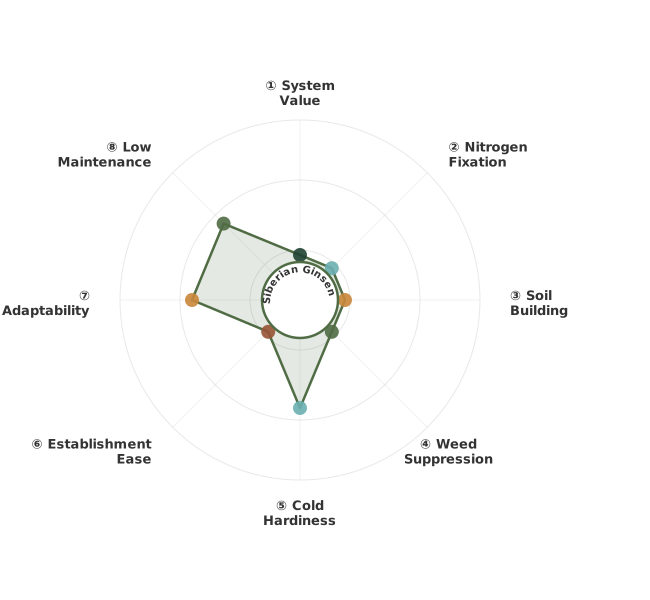
Comparative ratings for this plant across key regenerative agriculture traits.

Trait Suitability Explanation
Cold Hardiness Adequate Siberian ginseng thrives in Zone 4, contributing to ground cover and soil structure. Its growth and density are best leveraged alongside other beneficial plants within a diverse system.
Weed Suppression Not Recommended As a slow-growing shrub with a moderate canopy, Siberian ginseng's effectiveness in competitive weed suppression is enhanced when integrated with denser, faster-growing companion plants or through strategic mulching.
Nitrogen Fixation Not Recommended Siberian ginseng, being a shrub and not a legume, does not contribute to atmospheric nitrogen fixation. Its primary value lies in its medicinal properties, not direct soil fertility enhancement.
Root System Depth Adequate Its moderately deep roots, reaching 2-4 feet, significantly stabilize soil structure and enhance nutrient cycling, contributing to overall soil health and resilience.
Biomass Production Not Recommended Siberian ginseng produces limited biomass due to its slow growth. Its contribution to soil organic matter is best viewed as a component within a broader strategy of building soil health through diverse plant life.
Establishment Ease Not Recommended Establishment from seed can be slow, often benefiting from division or grafting for improved vigor. Careful site selection and nurturing during establishment are key to its integration.
Multi Benefit Value Adequate Beyond its valued medicinal properties, Siberian ginseng offers moderate support for beneficial wildlife and ground cover, complementing the ecological functions of other plants in the system.
Climate Adaptability Adequate Hardy in zones 4-8, this adaptable shrub tolerates cold and shade, with optimal performance in consistently moist conditions; thoughtful water management is beneficial in drier periods.
Maintenance Intensity Adequate This adaptable shrub integrates well into established systems, preferring well-drained soils. Its moderate growth and natural pest resistance minimize the need for external interventions, aligning with holistic system management.

Comparative System: Ratings compare plants within their economic category (e.g., cover crop nitrogen fixation compared to other cover crops, not to all plants). Individual farm conditions and management practices significantly influence actual performance.

8

Learn More

Why farmers use this plant and additional resources

Why Regenerative Farmers Use This Plant

Eleutherococcus senticosus, commonly known as Siberian ginseng, is a valuable perennial shrub for regenerative agriculture, particularly in agroforestry and perennial cropping systems. While not a nitrogen-fixing legume, its deep root system, reaching 6-10 feet (1.8-3 meters), excels at scavenging nutrients from lower soil profiles. This process prevents leaching and makes these nutrients available to shallower-rooted cash crops or forage species, significantly reducing reliance on synthetic fertilizers by an estimated 20-30% and potentially saving farmers $40-80 per acre annually in purchased inputs.

Its dense foliage contributes significant above-ground biomass, averaging 2-4 tons per acre (4.5-9 metric tons/ha) annually once mature. This biomass decomposes to enrich soil organic matter over time, increasing soil organic matter by 0.5-1.5% over a 3-5 year rotation. This biomass also provides excellent ground cover, suppressing weeds and significantly reducing soil erosion, especially on slopes. The continuous addition of organic matter improves soil structure, water holding capacity, and overall soil health, reducing reliance on external inputs. Its extensive root network can improve water infiltration rates by 10-20% over time.

Integrating Eleutherococcus senticosus into mixed farming systems offers multiple synergistic benefits. As an understory plant in silvopasture or orchard systems, it provides valuable forage for livestock while improving soil fertility. Its presence enhances biodiversity by providing habitat and food sources for beneficial insects and pollinators. When intercropped with certain vegetables or berries, it can act as a natural pest deterrent and improve microclimate conditions. Its robust growth habit makes it an effective natural barrier for windbreaks or hedgerows, further protecting crops and livestock.

The ecological contributions extend to enhancing ecosystem services. Its deep root structure improves soil aggregation and water infiltration rates, reducing runoff and the risk of soil compaction. The dense canopy offers shade and moisture retention, creating a more stable microclimate. While direct carbon sequestration data is limited, perennial woody plants are known to store significant carbon in their biomass and root systems, contributing to long-term soil carbon sequestration. The flowers, typically blooming in mid-summer through autumn, attract a variety of pollinators, supporting local insect populations and contributing to overall ecosystem resilience. Its flowering period often coincides with periods when other plants are not blooming, offering a valuable nectar and pollen source for beneficial insects, including pollinators and predatory insects that help manage pest populations in adjacent cash crops, potentially leading to a 15-25% increase in beneficial insect populations within the agroecosystem.

9

How to Integrate This Plant

Practical guidance for regenerative systems

Establishment:

  • Methods: Planting young shrubs, direct seeding, or root cuttings.
  • Seed Rates:
  • Broadcast seeding: 1-2 lbs/acre (1.1-2.2 kg/ha).
  • Drilled seeds: 0.5-1 lb/acre (0.55-1.1 kg/ha).
  • Dense plantings (per 100 sq ft): 1-2 ounces (28-56 grams).
  • Planting Depth: 0.25-0.5 inches (0.6-1.3 cm).
  • Spacing:
  • Individual plants: 3-6 feet (0.9-1.8 meters) apart.
  • Mature plant spacing: 4-8 feet (1.2-2.4 meters).
  • Rows for dense ground cover: 12-24 inches (30-60 cm) apart.
  • Root cuttings: 18-36 inches (45-90 cm) apart.
  • Timing:
  • Northern Hemisphere: Early spring, March to May.
  • Southern Hemisphere: September to November.
  • Root cuttings: Early spring or late autumn.
  • Germination: Can be slow and erratic, often requiring stratification. Young plants or transplants are often established in nurseries for 1-2 years before field planting.

Management:

  • Watering: Minimal once established. Requires approximately 1 inch (2.5 cm) of rainfall or irrigation per week during dry spells or the first growing season for robust root development. Relatively drought-tolerant once mature.
  • Fertility: Prioritize biological approaches. Compost applications and incorporation of nearby cover crop residue are ideal. Supplemental organic matter will enhance growth and contribution to soil organic matter. Incorporating compost or well-rotted manure into the planting bed before establishment provides a slow-release nutrient source.
  • Growth Timeline:
  • Root system establishment: Within the first year.
  • Mature height (3-5 feet / 0.9-1.5 meters): Within 2-3 years.
  • Full maturity and medicinal quality: 4-6 years.
  • Mature height (5-10 feet / 1.5-3 meters): Within 3-5 years.
  • Pest and Disease Management: Generally minimal. Healthy plants are resistant. Biological controls and maintaining plant vigor through good cultural practices and encouraging beneficial insect populations are preferred.

Integration and Termination:

  • System Integration: Best suited as an understory plant in agroforestry or silvopasture systems, or as a component of perennial hedgerows.
  • Termination: Not typically terminated annually due to its perennial nature. It is managed as a long-term component of the system.
  • Natural Winterkill: Ideal in colder climates (below -10°F or -23°C).
  • Grazing: Livestock can effectively reduce biomass and incorporate residue into the soil.
  • Mowing: Can be done at 50% bloom, allowing residue to decompose over 60-90 days.
  • Mechanical Methods: Repeated mowing or tilling over several seasons can weaken and eventually kill plants if clearing is necessary.
  • Chemical Termination: A last resort during a transition phase, but for a perennial, integration is the goal.
  • Harvest: For medicinal purposes, typically done in the autumn of the fourth or fifth year.

Regional Adaptations:

  • Pacific Northwest, USA: Integrated into agroforestry systems alongside timber species, berry crops, hazelnut, and orchard systems; used in silvopasture with livestock. Enhances soil health, provides diversified income, and offers shade for animals.
  • UK and Western Europe: Integrated into hedgerows, mixed perennial pastures, woodland edges, or as an understory crop in established orchards. Benefits from temperate oceanic climate, ample rainfall, and dappled shade.
  • Midwestern United States: Incorporated into silvopasture systems with deciduous trees, providing valuable ground cover and forage.
  • Australian Wheat-Sheep Belt / Cooler Regions: Planted in strategic locations within pastures or in perennial pasture mixes in cooler, higher rainfall areas (e.g., Tasmania, Victoria). Improves soil fertility, provides shade for livestock, and addresses areas prone to erosion.
  • Brazilian Cerrado: Incorporated into coffee plantations as an understory plant, contributing to soil health and biodiversity in a humid subtropical climate.