Sheep's Fescue
Available data suggests its utility in regenerative agricultural systems. Excerpt highlights its inclusion in a no-till seeding mix for degraded alpine grasslands, where it contributed to significant increases in aboveground biomass, species richness, and diversity. This indicates its potential as a component in soil-building cover crop strategies. Additionally, excerpt positions Festuca ovina as a rangeland cover that, after 30 years, was compared to forest cover for its impact on soil organic matter (SOM) and microbial activity. Although the tree cover showed greater enhancement of SOM, the inclusion of Festuca ovina in rangeland management suggests its role in maintaining or improving soil health under grazing pressures. Excerpt notes its resistance to snow molds, implying resilience in certain climates. Further research would be beneficial to fully understand its regenerative contributions, such as in forage systems or as a polyculture layer. While coverage in our knowledge base is limited, the above represents documented uses in regenerative systems.
For a full botanical description see: Wikipedia↗(opens in new window) (external link)
Regenerative Quick Profile
All recommendations assume integrated, regenerative practices—not conventional inputs.
Climate & Soil Fit
Climate: Tropical Rainforest, Tropical Monsoon, Tropical Savanna, Hot Semi-Arid (Steppe), Cold Semi-Arid (Steppe), Hot Desert, Cold Desert, Humid Subtropical, Oceanic (Maritime Temperate), Hot-Summer Mediterranean, Warm-Summer Mediterranean, Monsoon-Influenced Humid Subtropical, Subtropical Highland, Hot-Summer Continental, Warm-Summer Continental, Subarctic, Monsoon-Influenced Hot-Summer Continental, Tundra
Zones: USDA 3-9, Australian Zones 1-14
Optimal Soil: Sandy Soil
System Role & Functions
Primary: Cover Crop System
Secondary: Forage Integration, Soil Remediation
Key Benefits: Climate adaptable, Low maintenance, Cold Hardiness
Management Level
Experience: Beginner-Friendly
Maintenance: Very low maintenance - Sheep fescue's inherent resilience requires minimal intervention, relying on natural fertility cycles and moisture retention to maintain its dense, beneficial ground cover.
Value Streams
- Cover crop (soil investment)
- Soil building and erosion control
- Livestock forage value
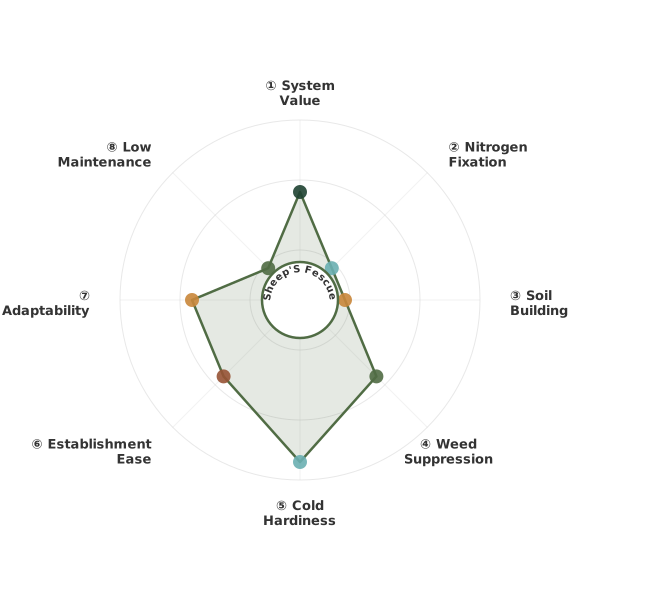
Regenerative Trait Ratings
How These Traits Are Calculated
Trait dimensions are ordered clockwise starting from the top of the chart (12 o'clock position):
1. System Value
Ecosystem service stacking across nitrogen, carbon, water, biodiversity
WHAT: Synthesizes the compounding value of multiple ecosystem services delivered simultaneously—nitrogen fixation, soil organic matter building, pollinator support, erosion control, and water infiltration improvement. This is the total regenerative impact beyond single-function metrics.
WHY: The highest-value cover crops deliver 3-5 significant ecosystem services at once. A legume that fixes nitrogen, builds biomass, supports pollinators, and improves water infiltration provides $150-300/acre in combined benefits versus $30-60 for single-function covers. This service stacking is the core principle of regenerative agriculture.
HOW: Scored via LLM synthesis of economics data, timeline benefits, and trait combinations. Exceptional (3.0): 4-5 major services stacked with strong economic value ratios. Typical (2.0): 2-3 moderate services. Limited (1.0): Single-function covers with minimal service stacking. Considers seed cost relative to benefit value.
2. Nitrogen Fixation
Biological nitrogen production via legume root nodule bacteria
WHAT: Measures the ability to convert atmospheric nitrogen (N₂) into plant-available ammonia through symbiotic bacteria in root nodules. Legumes form partnerships with rhizobium bacteria that fix 60-150 lbs N/acre/year, reducing or eliminating synthetic fertilizer needs for following crops.
WHY: Nitrogen is the most expensive fertilizer input in crop production ($0.50-1.00/lb). Cover crops with exceptional nitrogen fixation can provide $60-150/acre worth of fertility while building soil organic matter. This biological process also reduces groundwater contamination from nitrogen runoff and lowers farm carbon footprint.
HOW: Ratings based on annual nitrogen fixation capacity and reliability across soil conditions. Exceptional (3.0): Legumes like hairy vetch, crimson clover, and field peas fixing >100 lbs N/acre/year. Typical (2.0): Moderate fixers like red clover at 60-100 lbs N/acre/year. Limited (1.0): Non-legumes (grasses, brassicas) with zero fixation capacity.
3. Soil Building
Weighted: biomass production (60%) + root system depth (40%)
WHAT: Combines above-ground biomass production with root depth to measure total soil organic matter contribution. Biomass provides surface organic matter, while deep roots deposit carbon at depth and break up compaction layers.
WHY: Soil organic matter is the foundation of regenerative agriculture, improving water retention, nutrient cycling, and biological activity. Each 1% increase in soil organic matter holds an additional 20,000 gallons of water per acre and represents $500-1,000 in fertility value. Deep roots access subsoil nutrients and create channels for water infiltration.
HOW: Weighted formula prioritizes biomass production (60% weight) for immediate organic matter contribution, with root depth (40% weight) for long-term soil structure. Exceptional (3.0): High-biomass crops with deep roots like cereal rye (8+ tons biomass, 5+ ft roots). Typical (2.0): Moderate on both factors. Limited (1.0): Low biomass or shallow roots.
4. Weed Suppression
Physical competition through rapid establishment and dense growth
WHAT: Measures the ability to outcompete weeds through rapid germination, aggressive early growth, and dense canopy formation. Physical smothering and light competition reduce weed pressure without herbicides.
WHY: Weed management is a major labor and cost burden for farmers. Cover crops that effectively suppress weeds reduce herbicide costs ($20-60/acre), decrease cultivation passes (fuel + labor), and provide clean seedbeds for cash crops. This is especially valuable in organic systems where herbicide options are limited.
HOW: Ratings based on germination speed, tillering density, and canopy closure timing. Exceptional (3.0): Fast-establishing, dense-tillering crops like cereal rye, oilseed radish that close canopy within 3-4 weeks. Typical (2.0): Moderate establishment and coverage. Limited (1.0): Slow-establishing or sparse crops that allow weed competition.
5. Cold Hardiness
Winter survival for fall planting and spring green manure value
WHAT: Measures tolerance to freezing temperatures and ability to survive winter conditions. Winter-hardy cover crops can be fall-planted, overwinter as living mulch, and provide early spring growth before cash crop planting.
WHY: Fall-planted winter-hardy covers extend the growing season into unused months, capturing solar energy and preventing erosion during wet periods. Spring green manure from overwintered covers provides early nitrogen and biomass. This timing flexibility is critical in cold climates with short growing seasons.
HOW: Ratings based on minimum survival temperature and winter active growth. Exceptional (3.0): Winter-hardy crops like cereal rye, hairy vetch, crimson clover surviving to -20°F with active growth in spring. Typical (2.0): Moderate cold tolerance. Limited (1.0): Warm-season crops like buckwheat, cowpea killed by first frost.
6. Establishment Ease
Germination speed, soil requirement flexibility, planting window breadth
WHAT: Measures how easily the cover crop establishes from seed, including germination speed, tolerance for variable soil conditions, and flexibility in planting timing. Easy establishment means reliable stands without intensive management.
WHY: Difficult-to-establish covers increase risk of stand failure, wasted seed costs, and reduced benefits. Easy establishment crops tolerate late planting, poor seedbed preparation, and variable moisture—critical when cover cropping windows are narrow between cash crops. Reliable establishment ensures consistent soil building and weed suppression benefits.
HOW: Ratings based on days to emergence, soil condition sensitivity, and planting window breadth. Exceptional (3.0): Fast germinators like buckwheat (3-5 days) and cereal rye (5-7 days) with wide planting windows. Typical (2.0): Moderate establishment requirements. Limited (1.0): Slow or finicky establishers requiring precise conditions.
7. Adaptability
Weighted: climate tolerance (60%) + multi-benefit versatility (40%)
WHAT: Combines climate adaptability (temperature and rainfall range) with multi-benefit versatility (diverse ecosystem services) to measure overall system flexibility. High adaptability means the cover works across farm regions and provides multiple functions.
WHY: Farmers need cover crops that work reliably across diverse fields and provide stacked benefits. Climate-adaptable covers reduce risk in variable weather, while multi-benefit crops deliver nitrogen fixation + pollinator support + forage value simultaneously. This versatility maximizes return on cover crop investment.
HOW: Weighted formula prioritizes climate tolerance (60% weight) for geographic reliability, with multi-benefit value (40% weight) for functional stacking. Exceptional (3.0): Wide climate range + multiple significant benefits. Typical (2.0): Moderate on both factors. Limited (1.0): Narrow climate range or single-function crops.
8. Low Maintenance
Inverted from maintenance intensity—low inputs mean high scores
WHAT: Measures minimal input requirements for successful cover cropping. Low-maintenance covers require no irrigation, minimal fertility, easy termination, and tolerate variable management timing.
WHY: Cover crops compete for resources with cash crops in tight rotations. Low-maintenance covers fit easily into existing systems without adding labor, equipment, or input costs. Easy termination is especially critical—covers that are difficult to kill can become weeds and delay cash crop planting.
HOW: Inverted score from maintenance intensity trait (4.0 minus raw score). Exceptional (3.0): Self-sufficient crops like cereal rye, field peas requiring no irrigation or fertility, easily terminated by mowing or winter-kill. Typical (2.0): Moderate input needs. Limited (1.0): High-maintenance crops needing irrigation, heavy fertility, or difficult termination (herbicides, multiple tillage passes).
Ratings are based on documented performance in regenerative systems, not conventional high-input scenarios. All traits assume integrated management practices focused on soil health and ecosystem services.
1
Climate Suitability Assessment
Will this plant thrive in your climate?
Climate Suitability Assessment
Will this plant thrive in your climate?
Köppen Zone: Cfa (Humid Subtropical), Cfb (Oceanic (Maritime Temperate)), Csb (Warm-Summer Mediterranean), Dfa (Hot-Summer Continental), Dfb (Warm-Summer Continental)
USDA Zone: 5a, 5b, 6a, 7a
Australian Zone: temperate
EU Climate Region: atlantic
Sheep's fescue performs optimally in climates with mild summers and winters, ample precipitation, and a long growing season, conditions met in Köppen zones Cfb and Dfb, USDA zones 5b-7b, Australian temperate zones, and EU Atlantic regions. These environments provide temperatures conducive to establishment and sustained growth (typically 50-75°F/10-24°C), with sufficient moisture (25-50 inches/60-125 cm annually) to support its needs for cover cropping, forage integration, and soil remediation. Establishment success is high (>85%) with minimal need for supplemental irrigation or intensive management. Its cold hardiness ensures reliable overwintering and spring regrowth, contributing to consistent biomass production and soil protection throughout the year. Stand persistence is excellent, often lasting multiple years, making it a highly reliable and cost-effective choice for regenerative agriculture practices in these regions.
Köppen Zone: BSk (Cold Semi-Arid (Steppe)), Csa (Hot-Summer Mediterranean), Cwa (Monsoon-Influenced Humid Subtropical), Cwb (Subtropical Highland)
USDA Zone: 4a, 8a
Australian Zone: subtropical
EU Climate Region: continental
Sheep's fescue can perform adequately in climates with moderate temperature fluctuations and variable moisture, including Köppen zones Cfa, Dfa, Cfc, and Bsk, USDA zones 3b-5a and 8a-9b, Australian subtropical zones, and EU continental regions. These zones may experience periods of summer heat stress (above 80°F/27°C) or require careful management of winter cold (below 0°F/-18°C) and precipitation (15-30 inches/38-75 cm annually). Establishment success is good (70-85%) but may necessitate timing considerations to avoid extreme temperatures or dry spells, and supplemental irrigation might be beneficial. While not as consistently productive as in ideal zones, it can still provide valuable cover crop benefits, contribute to soil remediation, and offer forage integration with appropriate management strategies. Stand persistence may be reduced compared to ideal conditions, requiring occasional reseeding or management adjustments.
Köppen Zone: Af (Tropical Rainforest), Am (Tropical Monsoon), Aw (Tropical Savanna), ET (Tundra), BSh (Hot Semi-Arid (Steppe)), BWh (Hot Desert), BWk (Cold Desert), Dfc (Subarctic), Dwa (Monsoon-Influenced Hot-Summer Continental)
USDA Zone: 2a, 3a, 3b, 9a, 10a, 11a, 12a
Sheep's fescue is not recommended for climates with extreme temperature fluctuations, very short growing seasons, or severe drought, encompassing Köppen zones Dfd, Dwd, Dsd, and Bsk, USDA zones 1a-3b and 10a-10b, and parts of Australian subtropical and EU continental regions where conditions are exceptionally harsh. In extremely cold zones (USDA 1-3, Köppen Dfd/Dwd/Dsd), winter kill is virtually guaranteed, and the growing season is too short for meaningful establishment or biomass production, rendering it functionally useless for cover cropping or forage. In hot, arid zones (USDA 10, Köppen Bsk/BSh), prolonged summer heat and low precipitation prevent establishment and survival, requiring intensive irrigation and management that is economically unviable. Establishment success drops below 70%, and its ability to provide consistent soil cover or forage is severely compromised, making alternative, better-adapted species essential for regenerative agriculture in these challenging environments.
Note: Zones listed above represent climates where this plant can produce reliably with reasonable management. Climate zones not mentioned would require intensive climate modification (greenhouses, extensive infrastructure) and are not economically viable for regenerative agriculture purposes.
2
Soil Suitability Assessment
Which soil types work best for this plant?
Soil Suitability Assessment
Which soil types work best for this plant?
Sandy Soil
This plant thrives in these soil types without requiring amendments or remediation. Natural soil conditions support optimal growth and productivity.
Acidic Soil, Alkaline Soil, Desert Soil, Loam Soil, Rocky Soil
This plant performs acceptably in these soil types with moderate, manageable remediation such as pH adjustment, compost addition, or drainage improvement. The required amendments are practical and cost-effective for regenerative agriculture.
Clay Soil, Rich Soil, Saline Soil, Wet Soil
Growing this plant in these soil types would require impractical remediation such as complete soil replacement, extensive amendments, or cost-prohibitive infrastructure. These conditions are not economically viable for regenerative agriculture.
Note: Soil suitability assessments focus on remediation requirements. "Ideally Suited" means the plant generally thrives without the need for substantial amendments, "Adequate" means manageable remediation (lime, compost, mulch), and "Not Recommended" means impractical soil changes would be required. Climate factors like rainfall and temperature also influence success.
3
Seasonal Considerations
Planting timing, growth duration, and harvest windows
Seasonal Considerations
Planting timing, growth duration, and harvest windows
Sheep's fescue offers remarkable flexibility for regenerative rotations across a wide range of climates. For spring planting, aim for early spring, once soil temperatures consistently reach above 40°F (4°C) and the risk of hard frost has passed. It establishes well in cooler conditions and can tolerate light frosts, making it a resilient choice. Fall planting is ideal late summer into early autumn, at least 6-8 weeks before the first expected frost, allowing for good root development before winter dormancy. While not typically used as a summer cover, its cold tolerance makes it an excellent winter cover crop, overwintering reliably in most of the listed climate zones.
Expect sheep's fescue to establish within 2-3 weeks under favorable conditions. Its peak biomass is typically reached in the late spring or early summer, depending on planting time. For termination, plan to incorporate it 2-3 weeks before planting your main cash crop to allow for decomposition. In milder climates, it can be frost-seeded into early spring cash crops, providing ground cover and nutrient cycling benefits. Its robust cold-season growth makes it a valuable tool for protecting soil through the colder months and preparing it for the next season's production.
4
System Role & Multi-Benefit Value
Functional roles, integration strategies, and stacked benefits
System Role & Multi-Benefit Value
Functional roles, integration strategies, and stacked benefits
Functional Role
Total System Value
Sheep's fescue, when integrated into cover cropping or rangeland management, offers significant whole-farm resilience. Its primary value lies in its function as a ground cover, providing erosion control and contributing to soil organic matter accumulation, as suggested by its use in degraded grassland restoration (excerpt). The dense root system enhances soil structure and water infiltration, crucial ecosystem services. While direct harvest value is minimal, its role in enhancing system productivity is substantial. By improving soil health, it supports the growth of other desirable species and reduces the need for external inputs. In grazing systems, it can provide forage, contributing to animal nutrition. Its inclusion in diverse mixes diversifies the farm's ecological functions, reducing risks associated with monocultures and improving the farm's ability to withstand environmental stressors. The resilience is further bolstered by its known resistance to snow molds (excerpt), indicating its robustness in challenging conditions.
Integration Characteristics
Multi-Benefit Value: Adequate - This grass provides excellent erosion control, forage, and moderate soil structure improvement, contributing to a more robust and interconnected ecosystem.
5
Management & Care Requirements
Integration guidance, maintenance needs, and care practices
Management & Care Requirements
Integration guidance, maintenance needs, and care practices
How to Integrate This Plant
Sheep's fescue (Festuca ovina) can be integrated into regenerative systems primarily as a component of cover crop mixes or rangeland restoration. Its role as a ground cover is crucial for erosion control and suppressing weeds, especially in degraded grasslands as seen in excerpt. It can be used in no-till seeding mixes to improve soil health and biomass production. While not a nitrogen fixer or shade provider, its dense root system contributes to soil structure and organic matter. Compatible practices include alley cropping (as part of a cover crop mix) and potentially in silvopasture systems for grazing. It starts providing value in Year 1 by establishing ground cover and improving soil surface conditions. By Year 3-5, it contributes significantly to soil organic matter and biomass production, enhancing the overall health of the system. Its multi-benefit stacking comes from soil stabilization, improved water infiltration, and providing forage, all contributing to a more resilient agricultural landscape.
Integration Practices & Management
While Festuca ovina is mentioned as a component in no-till seeding mixes for degraded grasslands and compared alongside other rangeland covers, detailed practices regarding its establishment, integration with grazing, termination, or management are not elaborated upon. Source indicates its use in a 2:1:1 mix with other grasses in a no-till system, which significantly boosted biomass and diversity in an alpine setting. However, the knowledge base does not detail seeding rates, specific timing, companion planting strategies, or its role in succession planning. Similarly, information on its integration within grazing systems, such as mob or rotational grazing, including timing and rest periods, is absent. Termination strategies and its management in relation to fertility needs or competition are also not discussed. Consequently, practical farmer experiences and direct insights into how regenerative farmers actively integrate Festuca ovina into their systems are not available within this knowledge base. While coverage in our knowledge base is limited, the above represents documented uses in regenerative systems.
Management Profile
Maintenance Intensity: Ideally Suited - Sheep fescue's inherent resilience requires minimal intervention, relying on natural fertility cycles and moisture retention to maintain its dense, beneficial ground cover.
6
Economics & Value Streams
Direct harvest, system benefits, ecosystem services, and risk diversification
Economics & Value Streams
Direct harvest, system benefits, ecosystem services, and risk diversification
Comprehensive economic analysis including direct harvest value, system enhancement contributions, ecosystem services, value timeline, and risk diversification strategies.
Cover Crop Investment
| Metric | Value |
|---|---|
| Seed Cost | $25-50/acre $62-124/ha |
| Termination Cost | 15-30 37-74 |
| Biomass Production | 1.5-3.0 3-7 |
| N Fixation Value | N/A N/A |
| Weed Control Savings | 10-25 25-62 |
Cover crops are soil investments, not cash crops. Economics measured in soil health gains, input reduction, and subsequent crop performance. Values show direct costs and estimated benefits.
System Enhancement Value
Beyond cost recovery: soil building, nitrogen, biomass, and weed suppression
Soil Building & Weed Suppression
Festuca ovina demonstrates significant value in soil remediation and enhancement. Excerpt highlights its presence in areas with high metal concentrations, suggesting a degree of metal tolerance. Crucially, it was observed that Soil Organic Matter (SOM) mitigated heavy metal toxicity, and Festuca ovina grasslands shifted from metal-tolerant communities towards less polluted site communities as SOM increased. This implies that Festuca ovina can be part of a strategy to improve soil conditions in contaminated areas, potentially by contributing to SOM accumulation or by acting as a pioneer species that facilitates succession. Furthermore, excerpt indicates that in degraded alpine grazing grasslands, a mix including Festuca ovina, when combined with no-till seeding, significantly increased aboveground biomass and species richness. This suggests its role in ecological restoration and increasing biodiversity. The mention of its use as a low-maintenance ground cover also points to its utility in reducing management inputs, such as mowing frequency, which can translate to reduced fuel and labor costs in an integrated system.
Erosion Control
Variable, depending on density and establishment. Can contribute to reduced soil loss, estimated at 10-30% in some erosion-prone areas.
While not directly mentioned in the provided excerpts, Festuca ovina, as a grass species, can contribute to erosion control through its fibrous root system. This is particularly relevant in contexts of soil remediation, as noted in excerpt, where it's found in fallow fields adjacent to mining sites. Its dense growth can help stabilize soil surfaces, reducing wind and water erosion. This effect is amplified when planted in monocultures or mixtures for ground cover, as suggested by excerpt for lawn-like applications. The stabilization of topsoil is crucial for maintaining soil fertility and preventing the loss of valuable organic matter, which is identified as a key predictor of microbial health and function in contaminated sites. Therefore, while not a primary function, the soil stabilization aspect of Festuca ovina contributes indirectly to the overall health and productivity of the agricultural system by preserving soil resources.
Ecosystem Service Contributions
Environmental contributions: carbon, pollinators, wildlife, and water
- Carbon Sequestration: Festuca ovina, as a perennial grass, contributes to carbon sequestration primarily through the accumulation of organic matter in its root system and the soil. Its perennial nature allows for continuous carbon input into the soil over time, especially when managed to promote biomass production and decomposition.
- Pollinator Support: Low. While grasses can provide some limited pollen and nectar, Festuca ovina is not a primary attractor for most pollinators compared to flowering plants.
- Wildlife Habitat: Provides low-level habitat and forage for some grazing animals, as indicated by its use in rangeland covers. Its dense growth can offer some ground cover for small wildlife.
- Water Quality: Not applicable
Value Timeline: Soil Building Process
When you'll see results: immediate soil benefits, compounding over seasons
Years 1-2
Initial establishment of ground cover, contributing to erosion control and soil stabilization. Potential for early soil remediation benefits in contaminated sites. Increased species richness and aboveground biomass in degraded areas.
Years 3-5
Established ground cover providing sustained erosion control. Continued contribution to soil health and potential for increased SOM. If integrated into forage systems, it can begin to provide a consistent forage source.
Years 10-20
Mature perennial stand contributing significantly to soil organic matter accumulation and long-term soil health. Established resilience in challenging environments (e.g., mining sites). May contribute to the development of more complex plant communities.
20+ Years
Long-term soil health benefits, including improved water infiltration and retention. Sustained contribution to ecological restoration and biodiversity. Potential for persistent presence in low-maintenance ground cover systems.
Farm Risk Reduction
How this reduces farm risk: lower input costs and better soil resilience
- Multiple Revenue Streams: Forage for livestock (in integrated systems), soil remediation services, erosion control (reduced infrastructure damage), potential for sale as seed or plant material.
- Temporal Income Spread: Ongoing ecosystem services (erosion control, soil health) are continuous. Forage production can be seasonal or continuous depending on management. The establishment and maturation of the plant provide increasing benefits over time.
- Market Risk Hedge: Reduces reliance on single income streams by providing multiple ecological and potential economic benefits. Its resilience in less fertile or contaminated soils can provide a stable base in challenging agricultural landscapes. Its low-maintenance aspect can reduce input costs and labor demands, hedging against rising operational expenses.
7
Regenerative Suitability Details
Comprehensive trait ratings for system integration assessment
Regenerative Suitability Details
Comprehensive trait ratings for system integration assessment
Comparative ratings for this plant across key regenerative agriculture traits.
| Trait | Suitability | Explanation |
|---|---|---|
| Cold Hardiness | Ideally Suited | Sheep fescue's exceptional cold hardiness (Zone 3) ensures evergreen ground cover, contributing to soil protection and habitat resilience through winter. |
| Weed Suppression | Adequate | Its dense, fine-bladed growth forms a protective canopy that naturally moderates weed competition by enhancing soil health and competition. |
| Nitrogen Fixation | Not Recommended | As a grass, sheep fescue does not fix nitrogen but significantly enhances soil structure and organic matter through its root exudates and decomposition. |
| Root System Depth | Adequate | Sheep fescue's dense, fibrous roots reach 2-3 feet, powerfully stabilizing soil, improving aggregation, and enhancing moisture retention. |
| Biomass Production | Not Recommended | While producing lower biomass, sheep fescue's fine-leaved structure contributes valuable organic matter to the soil surface for nutrient cycling and moisture retention. |
| Establishment Ease | Adequate | Sheep fescue establishes moderately well with good seedbed preparation, tolerating challenging conditions and contributing to soil health once integrated into the system. |
| Multi Benefit Value | Adequate | This grass provides excellent erosion control, forage, and moderate soil structure improvement, contributing to a more robust and interconnected ecosystem. |
| Climate Adaptability | Ideally Suited | Remarkably resilient across zones 3-9, sheep fescue thrives in varied temperatures and moisture levels, enhancing the overall stability and productivity of diverse landscapes. |
| Maintenance Intensity | Ideally Suited | Sheep fescue's inherent resilience requires minimal intervention, relying on natural fertility cycles and moisture retention to maintain its dense, beneficial ground cover. |
Comparative System: Ratings compare plants within their economic category (e.g., cover crop nitrogen fixation compared to other cover crops, not to all plants). Individual farm conditions and management practices significantly influence actual performance.
8
Learn More
Why farmers use this plant and additional resources
Learn More
Why farmers use this plant and additional resources
Why Regenerative Farmers Use This Plant
Festuca ovina is a foundational perennial grass for regenerative agriculture, primarily valued for its exceptional ability to improve soil structure and health. Its dense, fibrous root system penetrates 12-36 inches (30-91 cm) deep, effectively binding soil particles, significantly reducing wind and water erosion, and enhancing soil aggregation. This extensive root network improves aeration and water infiltration, crucial for drought resilience and nutrient cycling. While it does not fix nitrogen, Sheep's Fescue is an efficient scavenger of residual nutrients, particularly nitrogen, preventing leaching and making them available for subsequent crops. Its annual biomass production, typically ranging from 2-5 tons per acre (4.5-11.2 metric tons/ha), contributes substantially to soil organic matter when managed appropriately through decomposition. Consistent integration over a 3-5 year rotation can increase soil organic matter by 0.5-1.5%, leading to improved fertility and water-holding capacity, thereby reducing reliance on synthetic inputs.
Beyond its direct soil-building capabilities, Festuca ovina offers significant system integration benefits. It excels as a component in permanent pastures and mixed swards, providing durable, palatable, and nutritious forage for livestock, particularly sheep, cattle, and horses. Its dense growth habit offers excellent weed suppression, outcompeting many annual and perennial weeds by occupying space and limiting light penetration. In silvopasture systems, it serves as an effective ground cover under trees, protecting tree roots and competing with undesirable undergrowth. Its ability to establish and persist in less fertile or disturbed soils makes it a resilient choice for reclaiming degraded land or as a buffer strip along waterways to prevent sediment runoff.
The ecological contributions of Festuca ovina extend to supporting beneficial insect populations and enhancing biodiversity. Its dense sward provides habitat and nesting sites for various ground-dwelling beneficial insects, including predatory beetles and spiders that help manage pest populations. While not a primary nectar source, its flowering heads can offer some pollen for pollinators. The improved soil structure and organic matter content fostered by its root system directly enhance water infiltration rates, potentially increasing water holding capacity by 10-20% over time, which is vital for buffering against extreme weather events. This improved soil health also supports a more robust soil microbial community, further driving nutrient cycling and disease suppression.
Farmers across various regions have successfully integrated Festuca ovina. In the UK's temperate climate, it is a staple in sheep pastures, contributing to animal health and soil fertility in rotational grazing systems. In the Pacific Northwest of the USA, it is used in dryland pasture mixes and as a cover crop to stabilize soils on slopes and reduce erosion. Australian farmers in cooler, higher rainfall zones and drier Mediterranean climate zones utilize it in pasture renovation, for erosion control on marginal lands, and in wheat-sheep systems. Its resilience also makes it suitable for intercropping in certain fruit orchards in continental Europe and for low-input grazing systems across North America. In New Zealand, it is a common pasture species, particularly on hill country, valued for its persistence and ability to withstand grazing pressure.
9
How to Integrate This Plant
Practical guidance for regenerative systems
How to Integrate This Plant
Practical guidance for regenerative systems
Establishing Festuca ovina typically involves seeding, with rates varying based on the desired stand density and method. For broadcast seeding, a rate of 15-30 lbs/acre (17-34 kg/ha) is recommended to account for potential seed loss. Drilled seeding can be slightly lower, at 10-25 lbs/acre (11-28 kg/ha), for more reliable results. The optimal planting depth is shallow, between 0.25-0.5 inches (0.6-1.3 cm), to ensure good seed-to-soil contact and emergence, as seeds require light for germination.
Planting is best timed for the cooler, moister periods of the year. In the Northern Hemisphere, this is typically late summer to early autumn (August-September) or early spring (March-April). In the Southern Hemisphere, equivalent timings are late winter to early spring (February-April) or late summer (August-September). Adequate moisture is crucial during the establishment phase, which generally takes 30-45 days, with approximately 1 inch (2.5 cm) of water per week recommended until plants are well-rooted. A mature, dense stand is typically achieved within its first growing season.
Once established, Festuca ovina is relatively low-maintenance. It thrives in a variety of well-drained soil types. While moderately drought-tolerant once mature, consistent moisture will promote optimal growth and forage quality, requiring approximately 1 inch (2.5 cm) of water per week during active growth. Fertility management should prioritize biological approaches; the decomposition of its own residue, integration with animal manures or compost, and rotational grazing to distribute animal waste will significantly contribute to soil nutrient levels. Supplemental fertility needs can be met through these practices. Its growth timeline allows for multiple harvests or grazing cycles annually, with mature plants reaching heights of 1-3 feet (0.3-0.9 m). Pest and disease management is best achieved through maintaining a healthy, diverse ecosystem; robust stands are naturally more resistant, and encouraging beneficial insect populations through habitat management is key.
As a cover crop, Festuca ovina's termination and residue management are critical. Following the Termination Hierarchy, natural winterkill is the preferred method in regions with sufficiently cold winters (below -5°C / 23°F). Where winterkill is unreliable, grazing with livestock, particularly sheep, in late winter or early spring can reduce biomass and prepare the soil. Mechanical termination through mowing or crimping is effective, ideally performed when the grass is mature or at a growth stage that maximizes crimping success. Roller-crimping can be effective for older, more mature stands. If herbicide termination is deemed necessary during a transitional phase, it should be applied judiciously, timed to allow for adequate residue breakdown before cash crop planting, and with a clear plan to transition away from chemical reliance. Residue from Festuca ovina typically decomposes over 60-90 days, gradually releasing scavenged nutrients and contributing to soil organic matter. Seed management is important to prevent unwanted volunteer establishment; if reseeding is not desired, ensure termination occurs before seed set.