Regenerative Quick Profile

All recommendations assume integrated, regenerative practices—not conventional inputs.

Climate & Soil Fit

Climate: Tropical Rainforest, Tropical Monsoon, Tropical Savanna, Hot Semi-Arid (Steppe), Cold Semi-Arid (Steppe), Hot Desert, Cold Desert, Humid Subtropical, Oceanic (Maritime Temperate), Hot-Summer Mediterranean, Warm-Summer Mediterranean, Monsoon-Influenced Humid Subtropical, Subtropical Highland, Hot-Summer Continental, Warm-Summer Continental, Subarctic, Monsoon-Influenced Hot-Summer Continental, Tundra

Zones: USDA 4-8, Australian Zones 3-5

Optimal Soil: Loam Soil

System Role & Functions

Primary: Cover Crop System

Secondary: Nitrogen Fixer, Forage Integration

Key Benefits: Multi-benefit value, Easy establishment, Nitrogen Fixation

Management Level

Experience: Beginner-Friendly

Maintenance: Moderate maintenance - Peas integrate seamlessly into regenerative systems, benefiting from healthy soil biology and moisture retention, with their primary 'maintenance' being the ongoing improvement of soil fertility and structure.

Value Streams

  • Cover crop (soil investment)
  • Soil building and erosion control
  • Livestock forage value
1

Climate Suitability Assessment

Will this plant thrive in your climate?

IDEALLY SUITED

Köppen Zone: Cfa (Humid Subtropical), Dfa (Hot-Summer Continental), Dfb (Warm-Summer Continental)
USDA Zone: 5a, 5b, 6a, 7a
EU Climate Region: atlantic

Field peas perform optimally in regions with mild winters and cool to warm summers, characterized by 180-240 frost-free days and average temperatures between 60-75°F (15-24°C) during the growing season. These conditions are met in Köppen Cfb zones and regional zones like USDA 5b-8b, Australian temperate (with favorable microclimates), and EU Atlantic regions. Reliable spring establishment occurs when soil temperatures reach 45°F (7°C), allowing for robust root development before summer heat. Adequate precipitation (25-40 inches/65-100 cm annually) is crucial, though these zones often provide it naturally or with minimal supplemental irrigation. Nitrogen fixation is highly efficient, contributing significantly to soil fertility. Overwintering is generally successful, providing early spring biomass and nitrogen. Yields of forage or seed are high, and stand persistence as a cover crop can extend for 2-3 years with proper management. Minimal inputs are required, making it an economically sound choice for regenerative agriculture.

ADEQUATE

Köppen Zone: BSk (Cold Semi-Arid (Steppe)), Cfb (Oceanic (Maritime Temperate)), Csa (Hot-Summer Mediterranean), Csb (Warm-Summer Mediterranean), Cwa (Monsoon-Influenced Humid Subtropical), Cwb (Subtropical Highland)
USDA Zone: 4a, 8a
Australian Zone: temperate
EU Climate Region: continental

Field peas can be grown successfully in regions with adequate growing seasons (120-180 frost-free days) and moderate temperature ranges, typically between 55-75°F (13-24°C), but may require some management considerations. This includes Köppen Dfb zones, USDA 4b-5a and 9a-9b, Australian temperate, and EU continental regions. While establishment is generally good, winter survival is less reliable than in 'ideally suited' zones, often necessitating annual planting or careful variety selection for overwintering. Summer heat in warmer zones (USDA 9a-9b) can stress the plants, reducing nitrogen fixation and yield, requiring heat-tolerant varieties and potentially supplemental irrigation. Conversely, shorter growing seasons or late spring frosts in some continental or subarctic-influenced areas can limit full maturation and biomass production. Yields are good but may be 10-20% lower than optimal, and stand persistence might be reduced to 1-2 years. Management costs can increase slightly due to the need for frost protection or irrigation.

NOT RECOMMENDED

Köppen Zone: Af (Tropical Rainforest), Am (Tropical Monsoon), Aw (Tropical Savanna), ET (Tundra), BSh (Hot Semi-Arid (Steppe)), BWh (Hot Desert), BWk (Cold Desert), Dfc (Subarctic), Dwa (Monsoon-Influenced Hot-Summer Continental)
USDA Zone: 2a, 3a, 3b, 9a, 10a, 11a, 12a

Field peas are not recommended in climates with extreme temperature fluctuations, very short growing seasons, or severe moisture deficits, making cultivation technically possible but economically and practically questionable. This includes Köppen Dfc, Dwc, and Dwb zones, and USDA zones 1a through 4a. In these regions, extreme winter cold (-40°F/-40°C and below) makes overwintering impossible, and the short growing season (often less than 90 days) is insufficient for reliable annual maturation and nitrogen fixation. Establishment is risky due to late thaws, early frosts, and dry soil conditions. Yields are likely to be very low, and nitrogen fixation minimal, negating the primary benefits as a cover crop or forage. High inputs for replanting, irrigation, or protection would be required, making it uneconomical. Alternative plants like Hairy Vetch or Winter Rye offer better cold tolerance and resilience for these challenging environments, or heat and drought-tolerant legumes like Cowpea and Sunn Hemp are better suited for dry continental conditions.

Better alternatives for these "not recommended" zones: Hairy Vetch (More cold-hardy annual legume for nitrogen fixation.), Winter Rye (Extremely cold-hardy cover crop for biomass and soil protection.), Cowpea (Heat and drought tolerant nitrogen fixer, better suited to drier, warmer conditions.), Sunn Hemp (Tropical legume that thrives in heat and can tolerate some dryness.)

Note: Zones listed above represent climates where this plant can produce reliably with reasonable management. Climate zones not mentioned would require intensive climate modification (greenhouses, extensive infrastructure) and are not economically viable for regenerative agriculture purposes.

2

Soil Suitability Assessment

Which soil types work best for this plant?

IDEALLY SUITED

Loam Soil

This plant thrives in these soil types without requiring amendments or remediation. Natural soil conditions support optimal growth and productivity.

ADEQUATE

Acidic Soil, Alkaline Soil, Clay Soil, Desert Soil, Rich Soil, Rocky Soil, Sandy Soil

This plant performs acceptably in these soil types with moderate, manageable remediation such as pH adjustment, compost addition, or drainage improvement. The required amendments are practical and cost-effective for regenerative agriculture.

NOT RECOMMENDED

Saline Soil, Wet Soil

Growing this plant in these soil types would require impractical remediation such as complete soil replacement, extensive amendments, or cost-prohibitive infrastructure. These conditions are not economically viable for regenerative agriculture.

Note: Soil suitability assessments focus on remediation requirements. "Ideally Suited" means the plant generally thrives without the need for substantial amendments, "Adequate" means manageable remediation (lime, compost, mulch), and "Not Recommended" means impractical soil changes would be required. Climate factors like rainfall and temperature also influence success.

3

Seasonal Considerations

Planting timing, growth duration, and harvest windows

Austrian winter peas offer excellent flexibility for regenerative rotations across a broad range of climates. For spring planting, aim for early spring, soon after the ground can be worked and before the last expected frost, especially in cooler zones where they exhibit good frost tolerance. This allows for ample growth before summer cash crops. If you’re considering a fall planting, sow late summer or early autumn, at least four to six weeks before the first expected frost. This gives them sufficient time for establishment before winter dormancy.

Peas typically establish within two to three weeks, forming a dense mat that suppresses weeds and adds nitrogen. In colder zones (Dfb, Dfc, Dfd, Dwd, Dwa, Dwb, Dwc), they can overwinter, resuming growth vigorously in early spring. Termination is best accomplished when the plants are actively growing but before they reach full maturity and set seed, typically a few weeks before planting your cash crop. This ensures maximum biomass and nutrient availability. While not a primary summer cover crop, they can be included in a spring mix or sown for a short-season cover in cooler regions with adequate moisture. Frost-seeding in early spring, as snowmelt begins, is also a viable strategy to establish peas ahead of your main planting window.

4

System Role & Multi-Benefit Value

Functional roles, integration strategies, and stacked benefits

Functional Role

Integration Characteristics

Multi-Benefit Value: Ideally Suited - Peas are a multi-functional crop, building soil fertility through nitrogen fixation, providing edible pods, attracting beneficial insects, and contributing biomass for soil improvement.

5

Economics & Value Streams

Direct harvest, system benefits, ecosystem services, and risk diversification

Comprehensive economic analysis including direct harvest value, system enhancement contributions, ecosystem services, value timeline, and risk diversification strategies.

Cover Crop Investment

Metric Value
Seed Cost $25-50/acre $62-124/ha
Termination Cost 15-40 37-99
Biomass Production 1.5-3.0 3-7
N Fixation Value 60-120 67-135
Weed Control Savings 20-50 49-124

Cover crops are soil investments, not cash crops. Economics measured in soil health gains, input reduction, and subsequent crop performance. Values show direct costs and estimated benefits.

System Enhancement Value

Beyond cost recovery: soil building, nitrogen, biomass, and weed suppression

Nitrogen Fixation & Cycling

40-80 lbs N/acre/year = $24-96/acre fertilizer replacement (based on ~$0.60/lb N fertilizer cost)

As a legume, field pea (Pisum sativum) possesses the inherent ability to fix atmospheric nitrogen through a symbiotic relationship with rhizobia bacteria in its root nodules. This biological process significantly reduces the farm's reliance on synthetic nitrogen fertilizers, leading to substantial cost savings and a reduced environmental footprint. The quantitative reference data indicates that cool-season annual legumes like peas can contribute between 40-80 lbs of nitrogen per acre per year. This nitrogen becomes available to subsequent crops in the rotation as the pea biomass decomposes. This not only enhances soil fertility but also improves soil structure and microbial activity, creating a more robust and resilient cropping system. For instance, research has explored nitrogen credits from legumes like red clover interseeded into corn, suggesting a tangible economic benefit from reduced fertilizer inputs.

Soil Building & Weed Suppression

Field peas, when integrated into a cover cropping system, offer several valuable secondary benefits beyond nitrogen fixation. As highlighted by farmer Justin (transcript), field peas can be part of a diverse cover crop mix utilized for grazing livestock. This forage integration provides a nutritious feed source, contributing to animal weight gain and overall herd health, thereby generating direct economic returns through improved livestock productivity. Furthermore, the presence of peas in a cover crop mix, particularly when interseeded (transcript), can help suppress weeds by outcompeting them for light, water, and nutrients. This reduces the need for costly and potentially harmful herbicides. The rapid growth of pea shoots, as noted by speaker for other fast-maturing crops, suggests potential for quick biomass accumulation, which aids in soil organic matter enhancement and erosion control when incorporated or grazed.

Ecosystem Service Contributions

Environmental contributions: carbon, pollinators, wildlife, and water

  • Carbon Sequestration: Field peas, as a cool-season annual legume, contribute to carbon sequestration through biomass production and subsequent incorporation into the soil organic matter. Their relatively fast growth cycle allows for significant carbon capture during their vegetative phase.
  • Pollinator Support: Medium. While not a primary pollinator attractant like some flowering species, peas do produce flowers that can attract a variety of beneficial insects, including some pollinators.
  • Wildlife Habitat: Low to Medium. Provides some browse for small wildlife and potentially nesting habitat for certain ground-nesting birds if allowed to mature. Its primary value is as a forage for livestock.
  • Water Quality: Not applicable

Value Timeline: Soil Building Process

When you'll see results: immediate soil benefits, compounding over seasons

Years 1-2

Nitrogen fixation begins immediately, contributing to soil fertility for subsequent crops. Forage integration for grazing livestock can commence within the first growing season, providing immediate feed value. Weed suppression benefits also start to accrue.

Years 3-5

Established nitrogen contributions become more predictable, potentially allowing for reduced synthetic fertilizer applications. The soil health improvements from repeated cover cropping with peas will begin to manifest more notably in improved soil structure and water infiltration.

Years 10-20

Long-term soil health benefits, including enhanced microbial activity and organic matter accumulation, become significant. The consistent nitrogen contribution from a legume rotation can lead to substantial savings on fertilizer inputs. The resilience of the farm system to drought and other stresses may increase.

20+ Years

Sustained high soil fertility and a robust soil ecosystem, characterized by excellent water retention and nutrient cycling, will likely be a hallmark. The farm's overall productivity and economic stability are enhanced by the deep-seated improvements in soil health and reduced reliance on external inputs.

Farm Risk Reduction

How this reduces farm risk: lower input costs and better soil resilience

  • Multiple Revenue Streams: Forage for livestock grazing (direct economic value), reduced fertilizer costs (cost savings), improved soil health (long-term productivity and resilience), potential for earlier crop establishment due to improved soil conditions.
  • Temporal Income Spread: Provides value throughout the growing season as a cover crop and forage. Nitrogen contribution is released over time as the plant residues decompose, benefiting subsequent crops. Risk reduction is an ongoing service.
  • Market Risk Hedge: Reduces reliance on volatile synthetic fertilizer markets. Provides a domestic, on-farm feed source, mitigating risks associated with feed procurement and price fluctuations. Improved soil health enhances the farm's resilience to adverse weather events, reducing crop loss risk.
6

Regenerative Suitability Details

Comprehensive trait ratings for system integration assessment

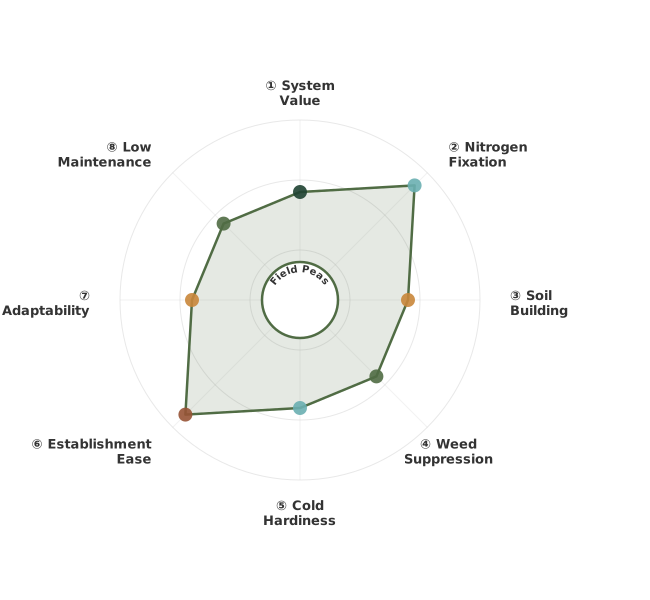
Comparative ratings for this plant across key regenerative agriculture traits.

Trait Suitability Explanation
Cold Hardiness Adequate Peas offer valuable cool-season growth and can extend the cover crop window in milder climates, contributing to soil protection during shoulder seasons.
Weed Suppression Adequate Peas develop a beneficial canopy, outcompeting emerging weeds and contributing to a healthier, more resilient soil ecosystem through competition.
Nitrogen Fixation Ideally Suited Field peas specifically fix 80-150 lbs N/acre, significantly contributing to soil fertility and reducing the need for synthetic nitrogen inputs for subsequent crops.
Root System Depth Adequate Peas cultivate a robust root system that enhances soil structure and water infiltration, while also contributing to the build-up of organic matter.
Biomass Production Adequate Peas provide valuable biomass that enriches the soil with organic matter and contributes to nutrient cycling, supporting a thriving soil food web.
Establishment Ease Ideally Suited Peas germinate quickly and grow vigorously in cool conditions, establishing a protective cover and contributing to soil health with minimal disturbance.
Multi Benefit Value Ideally Suited Peas are a multi-functional crop, building soil fertility through nitrogen fixation, providing edible pods, attracting beneficial insects, and contributing biomass for soil improvement.
Climate Adaptability Adequate Peas thrive in cooler periods, making them ideal for spring or fall planting windows to maximize soil cover and integrate with seasonal weather patterns.
Maintenance Intensity Adequate Peas integrate seamlessly into regenerative systems, benefiting from healthy soil biology and moisture retention, with their primary 'maintenance' being the ongoing improvement of soil fertility and structure.

Comparative System: Ratings compare plants within their economic category (e.g., cover crop nitrogen fixation compared to other cover crops, not to all plants). Individual farm conditions and management practices significantly influence actual performance.

7

Learn More

Why farmers use this plant and additional resources

Why Regenerative Farmers Use This Plant

This versatile cover crop is a cornerstone for building soil health and reducing input costs in regenerative agricultural systems. As a legume, it excels at biological nitrogen fixation, capable of adding 80-150 lbs of nitrogen per acre (90-168 kg/ha) to the soil profile. This significant nitrogen credit can translate to direct savings on synthetic fertilizer purchases, potentially reducing costs by $40-100 per acre annually, depending on current fertilizer prices. Beyond nitrogen, it contributes substantial biomass, typically ranging from 2,000-8,000 lbs/acre (2,240-9,000 kg/ha) of dry matter, which, upon decomposition, fuels soil microbial activity and enhances soil organic matter content over a 3-5 year rotation. Studies have shown that cover cropping with legumes can increase soil organic matter by 0.1-0.3% per year, leading to improved water-holding capacity, better aeration, and enhanced nutrient availability over time.

Integrating this plant into a cropping system offers a multitude of synergistic benefits. As a cover crop, it protects the soil from erosion by wind and water, especially during vulnerable periods after cash crop harvest or before spring planting. Its dense growth habit also provides excellent weed suppression, outcompeting many common weeds and reducing the need for costly and environmentally impactful herbicides. Its extensive root system, which can reach depths of 2-5 feet (0.6-1.5 m), improves soil structure, enhances water infiltration by up to 20-50%, and scavenges nutrients from deeper soil layers, making them available to subsequent cash crops. This plant also serves as a valuable forage source for livestock, offering high-quality protein and digestible energy, allowing for integrated crop-livestock systems that further enhance nutrient cycling and farm resilience.

The ecological contributions of this cover crop extend to supporting beneficial insect populations and improving overall farm biodiversity. Its flowers provide a crucial nectar and pollen source for pollinators, including bees, hoverflies, and other beneficial insects, during its blooming period. This increased pollinator activity can benefit adjacent cash crops that rely on insect pollination. The decomposition of its biomass enriches the soil microbiome, fostering a more robust and resilient soil ecosystem. The substantial biomass produced and incorporated into the soil serves as a carbon sink, sequestering atmospheric carbon dioxide and contributing to long-term soil organic matter accumulation. Its nitrogen-fixing capabilities not only reduce fertilizer inputs but also enrich the soil for subsequent cash crops, often leading to improved yields and quality.

Farmers across diverse regions have successfully leveraged this plant for regenerative outcomes. In the upper Midwest of the USA, it is often planted in a mix with cereal rye after corn harvest, providing winter cover and significant nitrogen for the following soybean crop, or sown after soybean harvest in late August or early September for nitrogen credits for the subsequent corn crop. In the UK, it's a common component of ley pastures and is sown in autumn for grazing livestock before being terminated in spring for wheat, or sown in early autumn and terminated in spring for spring barley or maize. Australian dryland farmers utilize it in wheat-sheep rotations, sowing it with the autumn rains to provide grazing and improve soil fertility for the subsequent cereal crop, and in semi-arid regions, often with cereal rye, relying on autumn rains for establishment and terminating with grazing or mowing in early spring before planting a summer crop. In Brazil, it's employed as a shade-tolerant cover crop in coffee and sugarcane plantations, fixing nitrogen and suppressing weeds in the inter-rows, or interseeded as a living mulch to provide nitrogen and erosion control without significant competition. In Iowa's corn-soy rotations, planting this legume after corn harvest can provide a nitrogen boost for the following soybean crop while also building soil health.

8

How to Integrate This Plant

Practical guidance for regenerative systems

Establishment of this cover crop is typically achieved through seeding, with rates varying based on the method and desired stand density. For broadcast seeding, rates of 50-100 lbs/acre (56-112 kg/ha) are common, ensuring good seed-to-soil contact through light tillage or rolling. When drilled, a slightly lower rate of 30-70 lbs/acre (34-78 kg/ha) is sufficient due to more precise seed placement. The optimal planting depth is shallow, between 0.25-0.5 inches (0.6-1.3 cm), as the seeds require good soil contact and moisture for germination and the seedlings are delicate and require proximity to the soil surface for emergence. Spacing for drilled seed is typically 6-12 inches (15-30 cm) between rows, allowing for good plant development.

Planting timing is crucial and depends on the hemisphere and local climate. In the Northern Hemisphere, late summer to early autumn (August-September) is ideal for overwintering, allowing for establishment before winter dormancy, or early spring (March-April) for a full growing season or shorter growing season. In the Southern Hemisphere, this translates to late winter to early spring (August-September) or late summer (February-March) or early autumn (April-May).

Management practices focus on maximizing its benefits while preparing for the subsequent cash crop. Adequate moisture is essential for establishment, with approximately 1 inch (2.5 cm) of rainfall or irrigation per week during the initial growth phase being beneficial. While this plant is relatively drought-tolerant once established, adequate moisture is crucial for biomass production and nitrogen fixation. Fertility should primarily be addressed through biological means; incorporating compost, utilizing the residue from previous cover crops, or integrating animal manures are preferred methods. Synthetic fertilizer inputs should only be considered as a transitional tool while biological fertility is being built, and their use should be progressively reduced. This cover crop typically establishes within 30-45 days and can reach a height of 3-5 feet (0.9-1.5 m) at maturity, depending on growing conditions and cultivar. Pest and disease management should prioritize preventative measures such as crop rotation, maintaining plant diversity, fostering beneficial insect populations through habitat planting, and ensuring good air circulation, resorting to chemical interventions only as a last resort during a transition phase.

Termination and residue management are critical for successful integration. The preferred termination hierarchy begins with natural winterkill in regions where temperatures reliably drop below its hardiness threshold (typically below -10°C or 14°F, or below 0°F or -18°C). Where winterkill is unreliable, grazing with livestock (sheep or cattle) can effectively reduce biomass and incorporate residue into the soil surface through hoof action, ideally occurring 2-3 weeks before cash crop planting. Mowing can also be employed to reduce stand height, though it may require multiple passes. Roller-crimping at the onset of flowering is a highly effective mechanical method that creates a dense mulch mat, suppressing weeds for 4-8 weeks and conserving moisture. If these regenerative methods are exhausted or not feasible, herbicide application can be considered as a last resort, applied when the cover crop is at its most vulnerable stage, typically late flowering or early seed set, to ensure effective control. Termination should ideally occur 2-3 weeks before planting the following cash crop, or at the stage of 50% bloom for optimal nitrogen release, allowing the residue to decompose and release approximately 50-70% of its fixed nitrogen. This typically results in a nitrogen credit of 60-80 lbs/acre (67-90 kg/ha) for the subsequent crop. The residue typically breaks down within 30-60 days. Seed management involves preventing reseeding if volunteer plants are undesirable in the next crop, or allowing for controlled volunteer establishment in specific systems; this plant generally does not reseed aggressively, but if volunteer establishment is undesirable, ensure termination occurs before seed set.